
How Much a Hyundai Elantra Weighs

Contents
- 1 Key Takeaways
- 2 📑 Table of Contents
- 3 How Much Does a Hyundai Elantra Weigh? A Complete Guide
- 4 Why Does the Weight of a Hyundai Elantra Matter?
- 5 Hyundai Elantra Weight by Model Year and Trim
- 6 How Engine Type Affects Elantra Weight
- 7 How Weight Impacts Performance and Efficiency
- 8 How to Find the Exact Weight of Your Hyundai Elantra
- 9 Tips for Managing Weight and Maximizing Efficiency
- 10 Conclusion: Weight Is Just One Piece of the Puzzle
- 11 Frequently Asked Questions


The Hyundai Elantra weighs between 2,800 and 3,100 pounds depending on the model year, trim level, and engine type. Knowing the exact weight helps you understand fuel efficiency, handling, and overall driving performance.
Key Takeaways
- Weight varies by trim and engine: The Elantra’s weight depends on features like turbocharged engines, all-wheel drive (in hybrid models), and added tech packages.
- Base models are lighter: The standard 2.0L engine Elantra typically weighs around 2,800–2,900 lbs, making it fuel-efficient and nimble.
- Hybrid models are heavier: Due to the battery and electric motor, Elantra hybrids can weigh up to 3,100 lbs but still deliver excellent gas mileage.
- Weight affects fuel economy: Lighter cars generally use less fuel, so base models often get better MPG than turbo or hybrid versions.
- Safety and handling improve with weight: A slightly heavier chassis can enhance stability at high speeds and during cornering.
- Always check the door jamb sticker: The most accurate weight for your specific Elantra is listed on the driver’s side door placard.
- Weight impacts insurance and maintenance: Heavier vehicles may have different tire wear patterns and braking needs, affecting long-term costs.
📑 Table of Contents
- How Much Does a Hyundai Elantra Weigh? A Complete Guide
- Why Does the Weight of a Hyundai Elantra Matter?
- Hyundai Elantra Weight by Model Year and Trim
- How Engine Type Affects Elantra Weight
- How Weight Impacts Performance and Efficiency
- How to Find the Exact Weight of Your Hyundai Elantra
- Tips for Managing Weight and Maximizing Efficiency
- Conclusion: Weight Is Just One Piece of the Puzzle
How Much Does a Hyundai Elantra Weigh? A Complete Guide
If you’re shopping for a Hyundai Elantra—or already own one—you’ve probably wondered: *How much does this car actually weigh?* It’s not just a random curiosity. The weight of your Elantra plays a big role in how it drives, how much gas it uses, and even how safe it feels on the road. Whether you’re comparing trims, planning a road trip, or just trying to understand your car better, knowing the weight gives you valuable insight.
The Hyundai Elantra is a compact sedan that’s been a favorite among budget-conscious drivers for years. It’s known for its sleek design, modern tech, and strong fuel economy. But under the hood—and beneath the chassis—there’s more going on than meets the eye. From the base model to the sporty N Line and the eco-friendly hybrid, each version of the Elantra has a different weight. And that difference matters.
In this guide, we’ll break down exactly how much a Hyundai Elantra weighs across all recent model years and trims. We’ll explain why weight varies, how it affects performance, and what you should know before making a decision. Whether you’re a first-time buyer or a long-time Elantra owner, this article will give you the full picture—no fluff, no jargon, just clear, useful info.
Why Does the Weight of a Hyundai Elantra Matter?

Visual guide about How Much a Hyundai Elantra Weighs
Image source: hyundaicanada.com
You might be thinking, “It’s just a number on a spec sheet—why should I care?” But car weight is more important than you think. It influences almost every aspect of your driving experience, from how quickly the car accelerates to how smoothly it handles bumps in the road.
Let’s start with fuel economy. Lighter cars need less energy to move, which means they burn less fuel. That’s why the base Hyundai Elantra, which weighs around 2,800 pounds, often gets better gas mileage than heavier trims. If you drive a lot or live in a city with stop-and-go traffic, that extra efficiency can save you hundreds of dollars a year at the pump.
Weight also affects handling. A lighter car feels more responsive and agile, especially when making quick lane changes or navigating tight turns. On the flip side, a slightly heavier car can feel more planted and stable at highway speeds. That’s why performance-oriented models like the Elantra N Line—while heavier due to upgraded suspension and brakes—still deliver a confident, sporty ride.
Then there’s safety. Heavier vehicles tend to perform better in crashes because they have more mass to absorb impact. Modern Elantras are built with high-strength steel and advanced safety features, but the overall weight still plays a role in crash test performance. The National Highway Traffic Safety Administration (NHTSA) and the Insurance Institute for Highway Safety (IIHS) both consider vehicle weight when evaluating safety ratings.
Finally, weight impacts maintenance and wear. Heavier cars put more stress on tires, brakes, and suspension components. If you’re driving an Elantra hybrid with a battery pack, for example, you might notice slightly faster tire wear compared to a base model. Knowing your car’s weight helps you plan for long-term upkeep and avoid surprises down the road.
Hyundai Elantra Weight by Model Year and Trim

Visual guide about How Much a Hyundai Elantra Weighs
Image source: hyundainewspecs.com
Now let’s get into the numbers. The weight of a Hyundai Elantra isn’t a one-size-fits-all figure. It changes depending on the year it was made, the trim level you choose, and the engine under the hood. Below, we’ll break down the curb weight—the weight of the car with a full tank of gas, all fluids, and standard equipment, but no passengers or cargo—for recent Elantra models.
2023–2024 Hyundai Elantra Weight
The latest generation of the Elantra (introduced in 2021) offers several powertrains and trim levels. Here’s how they stack up:
– **Elantra SE (2.0L 4-cylinder):** Approximately 2,822 lbs
This is the lightest version, perfect for drivers who prioritize fuel efficiency and a smooth, quiet ride.
– **Elantra SEL and Limited (2.0L 4-cylinder):** Around 2,870–2,920 lbs
These trims add features like larger wheels, upgraded infotainment, and more interior materials, which slightly increase weight.
– **Elantra N Line (1.6L turbocharged 4-cylinder):** About 2,970–3,020 lbs
The N Line is the sportiest non-hybrid option. It comes with a turbo engine, sport-tuned suspension, and performance brakes—adding weight but improving driving dynamics.
– **Elantra Hybrid (1.6L + electric motor):** Roughly 3,050–3,100 lbs
The hybrid version includes a battery pack and electric motor, making it the heaviest Elantra. Despite the extra weight, it still delivers up to 54 MPG in the city thanks to its efficient powertrain.
2020–2022 Hyundai Elantra Weight
The previous generation (2020–2022) had a slightly different design and fewer hybrid options. Here’s a quick rundown:
– **Elantra SE, SEL, and Value Edition (2.0L):** 2,800–2,880 lbs
These models were lighter than their 2023 counterparts, partly due to simpler tech and smaller wheels.
– **Elantra Limited (2.0L):** Around 2,900 lbs
The top trim added leather seats, a premium sound system, and more safety features, pushing the weight up.
– **Elantra GT (hatchback version, discontinued in 2021):** 2,850–2,950 lbs
The GT offered more cargo space and a slightly sportier feel, with weight similar to the sedan.
2017–2019 Hyundai Elantra Weight
Older models were generally lighter, especially before the major redesign in 2021:
– **Elantra SE and Eco (1.4L turbo or 1.6L):** 2,750–2,850 lbs
The Eco trim, with its smaller turbo engine, was the lightest and most fuel-efficient.
– **Elantra Limited (2.0L):** Approximately 2,900 lbs
Even back then, the top trim packed in features that added weight.
Why the Numbers Vary
You’ll notice that even within the same model year, weights can differ by 100 pounds or more. That’s because Hyundai offers optional packages—like the Premium Package or the Tech Package—that include things like sunroofs, heated seats, and advanced driver aids. Each of these adds a few pounds.
Also, wheel size matters. A base Elantra with 15-inch steel wheels will weigh less than one with 17-inch alloy wheels. And if you opt for all-weather tires or a spare tire (some models now use tire inflators instead), that changes the total weight too.
How Engine Type Affects Elantra Weight
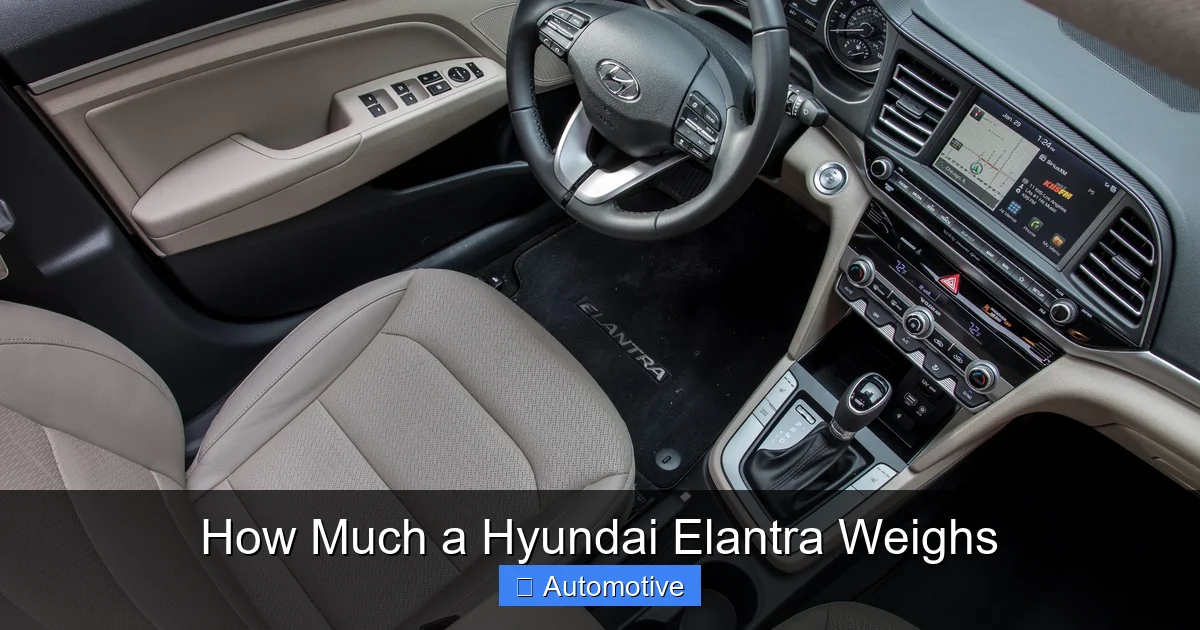
Visual guide about How Much a Hyundai Elantra Weighs
Image source: static.carsdn.co
The engine is one of the biggest factors in a car’s weight. The Hyundai Elantra has used several engines over the years, and each has its own impact on curb weight.
2.0L Naturally Aspirated 4-Cylinder
This is the standard engine in most Elantras. It’s reliable, fuel-efficient, and relatively lightweight. Because it doesn’t have a turbocharger or complex emissions equipment, it keeps the car’s overall weight down. That’s why base models with this engine are usually under 2,900 lbs.
1.6L Turbocharged 4-Cylinder (N Line)
The turbo engine in the Elantra N Line is more powerful—delivering 201 horsepower compared to the 2.0L’s 147 hp. But it also adds weight. The turbocharger, intercooler, and reinforced engine components all contribute. Plus, the N Line comes with upgraded brakes, sport suspension, and a dual-clutch transmission, all of which add mass. That’s why the N Line weighs around 3,000 lbs—nearly 200 pounds more than the base model.
1.6L Hybrid Powertrain
The Elantra Hybrid combines a 1.6L gasoline engine with an electric motor and a lithium-ion polymer battery. While the electric motor itself isn’t extremely heavy, the battery pack is. It’s mounted under the rear seats and adds significant weight—around 100–150 lbs compared to a non-hybrid Elantra.
But here’s the trade-off: the hybrid system allows the car to run on electric power at low speeds, reducing fuel consumption. Even with the extra weight, the Elantra Hybrid achieves up to 54 MPG in the city, making it one of the most efficient compact sedans on the market.
1.4L Turbo (Eco Trim, 2017–2019)
The Eco trim used a smaller 1.4L turbo engine to maximize fuel economy. It was lighter than the 2.0L and delivered impressive MPG—up to 40 on the highway. However, it had less low-end torque, which some drivers found lacking during acceleration. This engine was discontinued after 2019, but it’s still a good option if you find a used Elantra Eco.
How Weight Impacts Performance and Efficiency
Now that we’ve covered the numbers, let’s talk about what they mean in real life. How does the Elantra’s weight affect how it drives?
Acceleration and Power-to-Weight Ratio
A lighter car accelerates faster, all else being equal. That’s why the base Elantra with the 2.0L engine feels peppier than you might expect, even though it’s not a performance car. The power-to-weight ratio—how much horsepower the engine produces per pound of vehicle weight—is a key metric.
For example:
– Base Elantra (2.0L, 147 hp, 2,822 lbs): ~19.2 lbs per hp
– Elantra N Line (1.6T, 201 hp, 3,020 lbs): ~15.0 lbs per hp
Even though the N Line is heavier, it has a better power-to-weight ratio, so it accelerates faster. That’s why it can go from 0 to 60 mph in about 6.5 seconds, compared to over 9 seconds for the base model.
Fuel Economy and Efficiency
Weight is a major factor in fuel economy. The EPA estimates that every 100 pounds of extra weight reduces fuel efficiency by about 1–2%. That’s why the base Elantra often gets 33 MPG combined, while the hybrid—despite its advanced tech—gets around 50 MPG combined. The hybrid’s efficiency comes from regenerative braking and electric-only driving, which offset the weight penalty.
If you’re trying to maximize MPG, the lightest Elantra (base 2.0L) is your best bet. But if you want the best of both worlds—great mileage and low emissions—the hybrid is worth the extra weight.
Handling and Ride Quality
Lighter cars tend to feel more nimble and responsive. They change direction quickly and feel more connected to the road. That’s great for city driving and winding back roads.
Heavier cars, on the other hand, feel more stable at high speeds. They’re less affected by crosswinds and rough pavement. The Elantra N Line, with its sport suspension and added weight, strikes a balance—offering sharp handling without sacrificing comfort.
The hybrid’s weight is centered low in the chassis (thanks to the under-seat battery), which improves balance and reduces body roll during cornering. So even though it’s heavier, it doesn’t feel clumsy.
Braking and Safety
Heavier cars need more braking force to stop quickly. That’s why the Elantra N Line comes with larger brakes and performance tires. The hybrid also has regenerative braking, which uses the electric motor to slow the car and recharge the battery. This reduces wear on the brake pads and improves efficiency.
In crash tests, the Elantra has earned high marks from the IIHS and NHTSA. Its high-strength steel frame and advanced safety features (like automatic emergency braking and lane-keeping assist) help protect occupants. While weight alone doesn’t determine safety, a well-engineered heavier car can perform just as well—or better—than a lighter one in a collision.
How to Find the Exact Weight of Your Hyundai Elantra
So, how do you know how much your specific Elantra weighs? There are a few ways to find out.
Check the Door Jamb Sticker
The most accurate source is the tire and loading information sticker on the driver’s side door jamb. This sticker lists the vehicle’s curb weight, gross vehicle weight rating (GVWR), and recommended tire pressure. It’s updated for your exact model, including any optional equipment.
Use the Owner’s Manual
The owner’s manual includes detailed specifications, including curb weight, payload capacity, and towing limits (though the Elantra isn’t designed for towing). Look in the “Specifications” or “Technical Data” section.
Visit Hyundai’s Official Website
Hyundai’s website has a build-and-price tool where you can select your model year, trim, and options. It will show you the estimated weight and other specs. This is especially helpful if you’re shopping for a new Elantra.
Third-Party Resources
Websites like Edmunds, Kelley Blue Book (KBB), and Cars.com list curb weights for most vehicles. Just make sure you’re looking at the right year, trim, and engine. Sometimes the numbers are rounded or based on averages, so they might not be exact.
Weigh It Yourself (Optional)
If you’re really curious, you can weigh your Elantra at a truck scale or commercial weigh station. Just make sure the tank is full, all fluids are topped off, and there’s no extra cargo inside. This gives you the most accurate curb weight for your specific car.
Tips for Managing Weight and Maximizing Efficiency
Even if you already own an Elantra, there are ways to manage weight and improve performance.
Remove Unnecessary Cargo
Every extra pound counts. If you’re carrying around golf clubs, tools, or gym bags you don’t need, take them out. A lighter car uses less fuel and handles better.
Choose the Right Tires
Larger, heavier wheels and low-profile tires can add 20–30 pounds per corner. If you’re replacing tires, consider lightweight alloys or eco-friendly tires designed for low rolling resistance.
Maintain Proper Tire Pressure
Underinflated tires increase rolling resistance, which reduces fuel economy. Check your tire pressure monthly and keep it at the level recommended on the door jamb sticker.
Use the Right Oil
Hyundai recommends specific oil grades for each engine. Using the correct oil reduces engine friction and helps maintain efficiency—especially in turbocharged or hybrid models.
Drive Smoothly
Aggressive driving—rapid acceleration and hard braking—wastes fuel and increases wear. Smooth, steady driving helps you get the most out of your Elantra’s weight and powertrain.
Conclusion: Weight Is Just One Piece of the Puzzle
So, how much does a Hyundai Elantra weigh? The answer depends on the model, but most fall between 2,800 and 3,100 pounds. The base models are light and efficient, while the N Line and hybrid versions are heavier but offer more power or better fuel economy.
Weight affects everything from fuel efficiency and handling to safety and maintenance. But it’s not the only factor. The Elantra’s design, engineering, and technology all work together to deliver a balanced driving experience.
Whether you’re choosing between trims or just curious about your current car, knowing the weight gives you a clearer picture of what to expect. And now, with this guide, you have all the info you need to make smart decisions—on the road and at the pump.
Frequently Asked Questions
What is the lightest Hyundai Elantra model?
The lightest Hyundai Elantra is the base SE trim with the 2.0L engine, weighing around 2,822 lbs. It’s designed for maximum fuel efficiency and a smooth, comfortable ride.
Why is the Elantra Hybrid heavier than the gas model?
The Elantra Hybrid is heavier because it includes a battery pack and electric motor. These components add about 100–150 lbs compared to the non-hybrid version, but they enable electric-only driving and better fuel economy.
Does a heavier Elantra get worse gas mileage?
Not necessarily. While extra weight can reduce efficiency, the Elantra Hybrid uses advanced technology to offset the weight penalty. It still achieves up to 54 MPG in the city, making it one of the most efficient compact sedans.
Can I reduce my Elantra’s weight to improve performance?
You can remove unnecessary cargo and choose lighter wheels or tires, but major weight reduction isn’t practical or safe. Focus on maintenance and driving habits to maximize efficiency instead.
Where can I find the exact weight of my Elantra?
Check the tire and loading information sticker on the driver’s side door jamb. It lists the curb weight, GVWR, and other important specs for your specific vehicle.
Is the Elantra N Line too heavy for daily driving?
No, the Elantra N Line weighs about 3,020 lbs—only slightly more than other trims. Its sport-tuned suspension and powerful engine make it fun and practical for everyday use.