How Many Miles Can You Drive When the Gas Light Comes on in a Toyota Camry?

Contents
- 1 Key Takeaways
- 2 📑 Table of Contents
- 3 How Many Miles Can You Drive When the Gas Light Comes On in a Toyota Camry?
- 4 Understanding the Toyota Camry’s Fuel System
- 5 Real-World Mileage After the Gas Light Comes On
- 6 Factors That Affect Your Remaining Range
- 7 Risks of Driving on Low Fuel
- 8 Tips for Managing Low Fuel Situations
- 9 When to Be Extra Cautious
- 10 Conclusion: Drive Smart, Stay Safe
- 11 Frequently Asked Questions

OBD2 Scanner Tool

Car Wireless Charger Mount

Radiator Coolant

Car Armrest Cushion
When the gas light comes on in a Toyota Camry, you typically have 30 to 50 miles of driving range left, depending on driving conditions and model year. While it’s possible to go a little further, experts strongly recommend refueling as soon as possible to avoid engine damage and being stranded.
Key Takeaways
- Typical Reserve Range: Most Toyota Camrys have a fuel reserve of 30–50 miles once the low fuel warning light activates.
- Model and Year Matter: Newer Camry models (2018–2024) may have slightly different reserve capacities due to updated fuel systems and efficiency.
- Driving Conditions Impact Range: Highway driving at steady speeds extends your range; stop-and-go city traffic or aggressive acceleration reduces it.
- Avoid Running on Empty: Consistently driving with low fuel can damage the fuel pump and clog the fuel filter.
- Use the Trip Computer: Many Camrys display estimated range after the light comes on—use this as a guide, not a guarantee.
- Plan Ahead: Always refuel when the gauge hits ¼ tank to stay safe and maintain your vehicle’s health.
- Emergency Preparedness: Keep a gas can or roadside assistance contact handy if you frequently push your fuel limits.
📑 Table of Contents
- How Many Miles Can You Drive When the Gas Light Comes On in a Toyota Camry?
- Understanding the Toyota Camry’s Fuel System
- Real-World Mileage After the Gas Light Comes On
- Factors That Affect Your Remaining Range
- Risks of Driving on Low Fuel
- Tips for Managing Low Fuel Situations
- When to Be Extra Cautious
- Conclusion: Drive Smart, Stay Safe
How Many Miles Can You Drive When the Gas Light Comes On in a Toyota Camry?
Picture this: You’re cruising down the highway, music playing, windows down, and suddenly—a small orange light flickers on your dashboard. Your heart skips a beat. The gas light is on. Now what?
If you drive a Toyota Camry, you’re not alone. Millions of drivers rely on this reliable sedan for daily commutes, road trips, and everything in between. But when that dreaded low fuel warning appears, it’s natural to wonder: *How far can I really go before I’m stuck on the side of the road?*
The short answer? Most Toyota Camrys allow you to drive **30 to 50 miles** after the gas light comes on. But that number isn’t set in stone. It depends on several factors—your driving habits, road conditions, weather, and even the age of your vehicle. While it might be tempting to push your luck and squeeze out a few extra miles, doing so regularly can harm your car and leave you stranded at the worst possible moment.
In this guide, we’ll dive deep into how the fuel system works in a Toyota Camry, what triggers the low fuel warning, and how you can make the most of your remaining miles—without risking your safety or your car’s health. Whether you’re a new Camry owner or a long-time fan, this information will help you drive smarter and more confidently.
Understanding the Toyota Camry’s Fuel System
Visual guide about How Many Miles Can You Drive When the Gas Light Comes on in a Toyota Camry?
Image source: adventurejeep.com
To understand how far you can drive on empty, it helps to know how your Camry’s fuel system works. The Toyota Camry is known for its fuel efficiency, with most recent models averaging between 28 and 39 miles per gallon (mpg), depending on whether you’re driving a four-cylinder or hybrid version.
The fuel tank in a standard Toyota Camry holds about **15.8 gallons** of gasoline. However, not all of that fuel is usable. Automakers design fuel tanks with a small reserve—typically 10–15% of total capacity—that remains below the fuel pump’s intake level. This reserve is what powers your car after the low fuel light comes on.
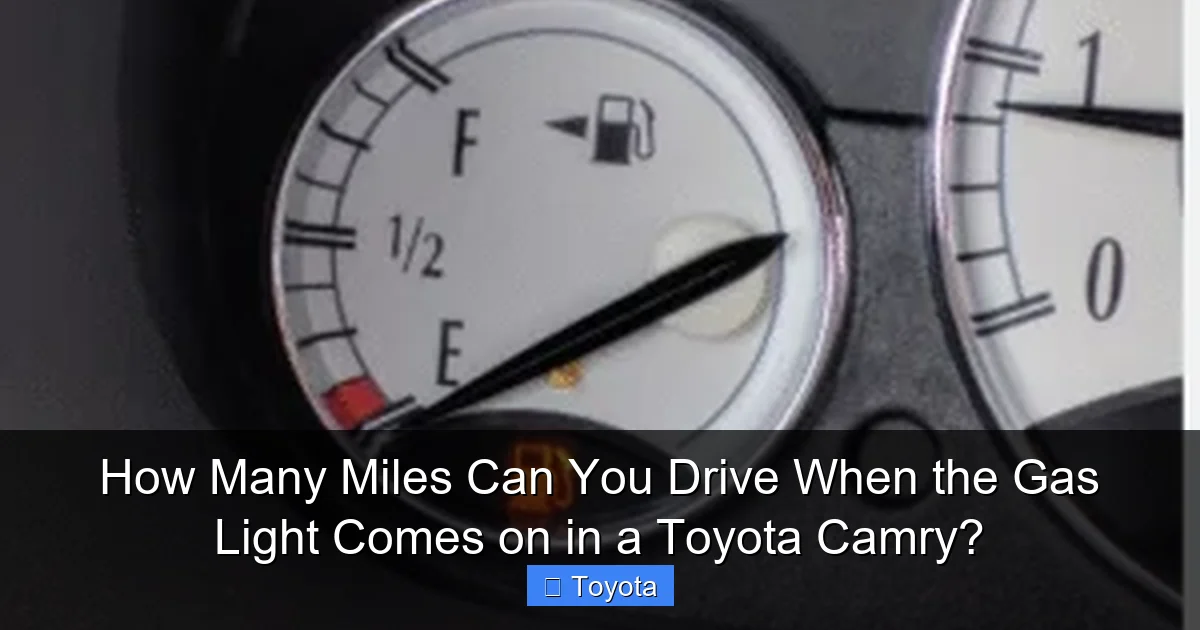
When your fuel level drops to around **1–1.5 gallons remaining**, the low fuel warning light illuminates. This is your car’s way of saying, “Hey, it’s time to find a gas station—soon.” At this point, the fuel pump is still submerged enough to function, but it’s getting close to drawing in air, which can cause performance issues.
How the Low Fuel Light Is Triggered
The low fuel warning isn’t random. It’s controlled by a fuel level sensor (also called a fuel sender unit) located inside the fuel tank. This sensor measures the amount of fuel and sends data to your dashboard. When the fuel drops below a certain threshold—usually around 10–12% of total capacity—the sensor triggers the warning light.
In newer Camry models (2018 and later), the system may also integrate with the vehicle’s trip computer. This means your dashboard might display an estimated range, such as “42 miles to empty.” While this is helpful, it’s based on your recent driving patterns and can change quickly if you start driving aggressively or uphill.
Why the Reserve Exists
You might wonder why car manufacturers don’t let you use every last drop of fuel. The reason is simple: protecting the fuel pump. The fuel pump relies on gasoline to stay cool and lubricated. When the fuel level gets too low, the pump can overheat or draw in air, leading to premature wear or failure.
Additionally, sediment and debris tend to settle at the bottom of the fuel tank. Running on empty increases the chance of sucking up this gunk, which can clog the fuel filter or injectors. That’s why experts recommend never letting your fuel level drop below ¼ tank—especially in older vehicles.
Real-World Mileage After the Gas Light Comes On
Visual guide about How Many Miles Can You Drive When the Gas Light Comes on in a Toyota Camry?
Image source: vehicleanswers.com
Now, let’s talk numbers. How many miles can you *actually* drive after the gas light comes on in a Toyota Camry?
Based on owner reports, mechanic insights, and Toyota’s design specifications, the average range is **30 to 50 miles**. But this can vary widely depending on several factors.
For example, a 2023 Toyota Camry Hybrid might get closer to 50 miles due to its superior fuel efficiency (up to 52 mpg in the city). Meanwhile, a 2015 Camry LE with a 2.5L four-cylinder engine might only manage 30–35 miles, especially if it’s been driven hard or has high mileage.
Let’s break it down with a few real-world scenarios:
– **Highway Driving (Steady 65 mph):** You’re likely to get the full 50 miles or more. Consistent speed and minimal braking help maximize fuel economy.
– **City Driving (Stop-and-Go Traffic):** Expect closer to 30–35 miles. Frequent acceleration and idling burn fuel faster.
– **Hilly or Mountainous Terrain:** Uphill climbs increase fuel consumption, potentially reducing your range to 25–30 miles.
– **Cold Weather:** In winter, your engine takes longer to warm up, and fuel efficiency drops. You might lose 10–15% of your range.
Example: A 2020 Toyota Camry SE
Let’s say you drive a 2020 Camry SE with the 2.5L engine. It averages about 32 mpg combined. With 1.3 gallons remaining (a typical reserve), you’d have roughly 42 miles of range. If you’re on the highway, that could stretch to 45–50 miles. But if you’re stuck in rush-hour traffic, you might only get 30.
One Camry owner shared their experience: “I once drove 47 miles after the light came on—mostly highway—and made it to the gas station with just a few drops left. But the next time, in city traffic, I only got 31 miles. It really depends.”
Hybrid vs. Gas-Only Models
If you drive a Toyota Camry Hybrid, you may have a slight advantage. Hybrids recover energy through regenerative braking, which can improve efficiency in stop-and-go driving. Additionally, the electric motor assists the gasoline engine, reducing fuel consumption.
For example, the 2024 Camry Hybrid LE gets up to 52 mpg in the city. With a 1.3-gallon reserve, that could translate to over 65 miles in ideal conditions. However, most experts still recommend treating the reserve range conservatively—aim for 40–50 miles to be safe.
Factors That Affect Your Remaining Range

Visual guide about How Many Miles Can You Drive When the Gas Light Comes on in a Toyota Camry?
Image source: media.cheggcdn.com
While the 30–50 mile estimate is a good rule of thumb, your actual range can vary based on several key factors. Understanding these can help you make smarter decisions when the gas light comes on.
Driving Style and Habits
How you drive has a huge impact on fuel efficiency. Aggressive acceleration, speeding, and hard braking can reduce your mileage by 15–30%. On the flip side, smooth, steady driving—especially at consistent speeds—can help you squeeze out extra miles.
For example, accelerating gently from a stop and coasting to red lights can save fuel. Using cruise control on the highway also helps maintain a steady speed, which improves efficiency.
Road and Weather Conditions
Terrain and weather play a big role. Driving uphill requires more power, which burns more fuel. Similarly, cold weather reduces engine efficiency and increases warm-up time. Winter driving can cut your range by 10–20%, especially if you’re using the heater frequently.
Rain and snow also increase rolling resistance, making your engine work harder. And if you’re driving with snow tires or carrying extra weight (like a roof rack or heavy cargo), that further reduces efficiency.
Vehicle Maintenance
A well-maintained Camry will perform better on low fuel. Regular oil changes, clean air filters, and properly inflated tires all contribute to optimal fuel economy. Neglecting maintenance can reduce your mileage and shorten your reserve range.
For instance, underinflated tires increase rolling resistance, which burns more fuel. A clogged air filter forces the engine to work harder. And old spark plugs can cause misfires, wasting gasoline.
Fuel Tank Design and Age
Older Camrys (pre-2015) may have slightly different fuel tank designs or worn fuel pumps, which can affect how efficiently the remaining fuel is delivered. Additionally, sediment buildup in older tanks can reduce the usable reserve.
Newer models often have improved fuel systems and better sensors, which can provide more accurate range estimates. Some even include low-fuel alerts that appear before the light comes on, giving you extra warning.
Risks of Driving on Low Fuel
While it’s technically possible to drive 30–50 miles after the gas light comes on, consistently pushing your fuel limits comes with risks. Here’s why you should avoid making a habit of running on empty.
Fuel Pump Damage
The fuel pump is submerged in gasoline, which keeps it cool and lubricated. When the fuel level drops too low, the pump can overheat or draw in air, leading to premature wear or failure. Replacing a fuel pump can cost $500–$1,000, including labor—far more than the cost of a fill-up.
Clogged Fuel Filter or Injectors
Dirt, rust, and debris settle at the bottom of the fuel tank. When you run on empty, the fuel pump may suck up this gunk, clogging the fuel filter or injectors. This can cause poor engine performance, stalling, or even engine damage.
Stranding and Safety Hazards
The biggest risk? Running out of gas. Being stranded on a busy highway, in bad weather, or in a remote area is not only inconvenient—it can be dangerous. You could be exposed to traffic, extreme temperatures, or unsafe conditions while waiting for help.
Even if you make it to a gas station, you might arrive with just fumes left, which can damage the fuel system over time.
Increased Emissions and Engine Stress
Running on low fuel can cause the engine to run lean (too much air, not enough fuel), which increases emissions and stresses internal components. This can lead to long-term damage and reduced engine life.
Tips for Managing Low Fuel Situations
So, what should you do when the gas light comes on? Here are some practical tips to help you stay safe and protect your Camry.
Refuel as Soon as Possible
The best advice? Don’t wait. As soon as the light comes on, start looking for the nearest gas station. Even if you think you have 40 miles left, traffic, detours, or unexpected delays could leave you stranded.
Aim to refuel when your tank hits ¼ full. This gives you a comfortable buffer and reduces the risk of running out.
Use the Trip Computer Wisely
If your Camry has a trip computer or “miles to empty” display, use it as a guide—but don’t rely on it completely. The estimate is based on recent driving patterns and can change quickly. If you suddenly start driving uphill or in heavy traffic, your range could drop fast.
Drive Efficiently
If you’re low on fuel and need to stretch your miles, adopt fuel-saving habits:
– Drive at steady speeds (55–65 mph on highways)
– Avoid rapid acceleration and hard braking
– Use cruise control when safe
– Turn off the air conditioning if possible
– Remove unnecessary weight from the trunk
These small changes can add up and help you reach the next gas station.
Plan Your Routes
If you’re on a long trip, plan your fuel stops in advance. Use apps like GasBuddy or Google Maps to find gas stations along your route. This way, you’ll know exactly where to stop before the light comes on.
Keep Emergency Supplies
Even the most careful drivers can run into trouble. Keep a few essentials in your car:
– A portable gas can (if legal in your area)
– A roadside assistance card (like AAA)
– A charged phone and car charger
– Water and snacks
– A flashlight and reflective triangles
These items can make a big difference if you’re stranded.
When to Be Extra Cautious
There are certain situations where you should be especially careful about fuel levels.
Long Commutes or Road Trips
If you drive long distances regularly, don’t wait for the light to come on. Refuel when you’re halfway through your tank. This ensures you always have enough fuel, even if traffic or detours slow you down.
Rural or Remote Areas
In rural areas, gas stations may be far apart. If you’re driving through a remote region, fill up whenever you see a station—even if your tank isn’t low. It’s better to have extra fuel than to risk running out.
Extreme Weather
In winter, cold temperatures reduce fuel efficiency and increase the risk of fuel line freezing. In summer, high heat can cause fuel to evaporate faster. Always keep your tank at least half full during extreme weather.
Conclusion: Drive Smart, Stay Safe
So, how many miles can you drive when the gas light comes on in a Toyota Camry? The answer is typically **30 to 50 miles**, but it’s not a guarantee. Your actual range depends on your driving habits, road conditions, and vehicle maintenance.
While it’s tempting to push your luck and squeeze out a few extra miles, the risks—fuel pump damage, engine stress, and being stranded—far outweigh the convenience. The best strategy is to refuel as soon as possible after the light comes on, and ideally, before it even appears.
By understanding your Camry’s fuel system, driving efficiently, and planning ahead, you can avoid low-fuel emergencies and keep your car running smoothly for years to come. Remember: a little caution today can save you a lot of trouble tomorrow.
Drive smart, stay safe, and never let that gas light catch you off guard again.
Frequently Asked Questions
How many miles can I drive after the gas light comes on in a Toyota Camry?
Most Toyota Camrys allow you to drive 30 to 50 miles after the low fuel warning light activates. This range depends on your driving conditions, model year, and fuel efficiency.
Is it safe to drive with the gas light on?
It’s safe for a short distance, but not recommended long-term. Driving on low fuel can damage the fuel pump and increase the risk of being stranded. Refuel as soon as possible.
Does the Camry Hybrid have a longer range on low fuel?
Yes, the Camry Hybrid may offer a slightly longer range—up to 50–65 miles—due to its superior fuel efficiency, especially in city driving. However, conservative estimates still apply.
Why does my gas light come on so early?
The light typically comes on when 1–1.5 gallons remain. If it seems early, check for fuel leaks, a faulty sensor, or changes in driving habits that reduce efficiency.
Can I reset the gas light without refueling?
No, the light will only turn off after you add fuel. Some vehicles may allow a temporary reset via the trip computer, but the light will return if fuel remains low.
What happens if I run out of gas in my Camry?
Your engine will stall, and you’ll need to call for roadside assistance. Running out of fuel can also damage the fuel pump and require costly repairs. Always refuel before it’s too late.