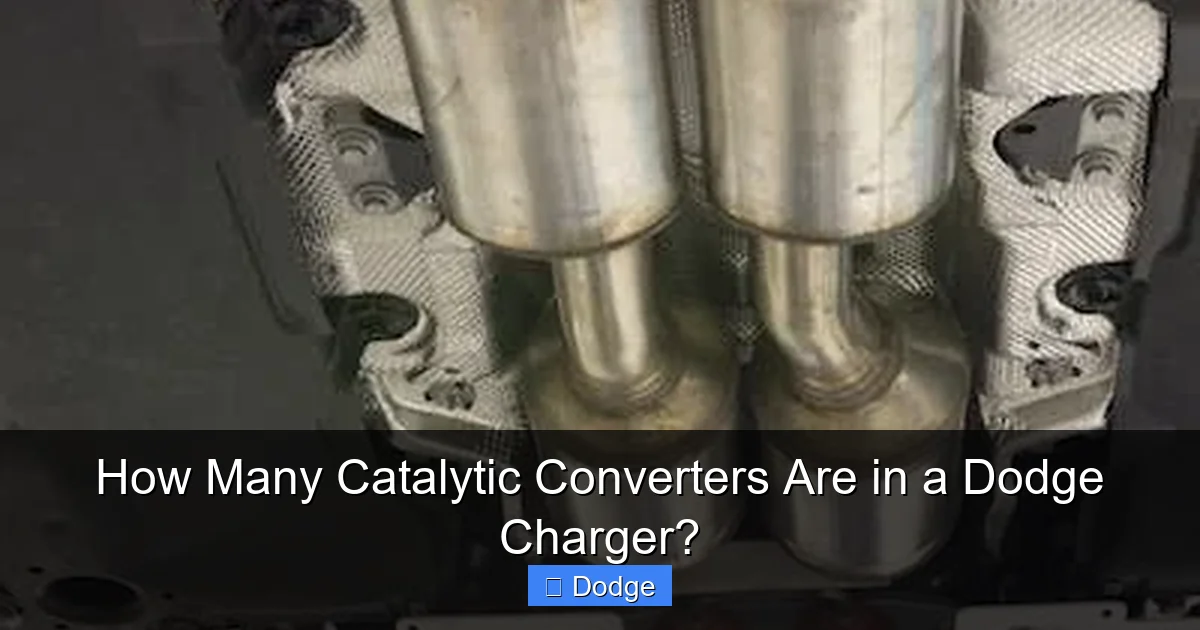
How Many Catalytic Converters Are in a Dodge Charger?

Contents
- 1 Key Takeaways
- 2 📑 Table of Contents
- 3 Understanding the Role of Catalytic Converters in Modern Vehicles
- 4 Dodge Charger Engine Types and Their Catalytic Converter Configurations
- 5 Model Year Differences: How Converter Count Has Evolved
- 6 All-Wheel Drive and Drivetrain Considerations
- 7 Signs of Catalytic Converter Problems in Your Charger
- 8 Replacement and Upgrade Options
- 9 Legal and Environmental Considerations
- 10 Conclusion: Know Your Charger’s Exhaust System
- 11 Frequently Asked Questions

Anti-Slip Dashboard Mat

Engine Flush Cleaner

Parking Sensor Kit

Tire Pressure Monitoring System (TPMS)
The number of catalytic converters in a Dodge Charger varies by engine type, model year, and drivetrain configuration. Most modern Chargers come equipped with two or four catalytic converters, depending on whether they have a V6 or V8 engine and if they’re rear-wheel or all-wheel drive. Understanding your Charger’s setup helps with maintenance, emissions compliance, and potential upgrades.
If you’re a proud Dodge Charger owner—or considering becoming one—you’ve probably wondered about the inner workings of your muscle car. One component that often flies under the radar, yet plays a critical role in both performance and environmental compliance, is the catalytic converter. You might be asking: How many catalytic converters are in a Dodge Charger? The answer isn’t one-size-fits-all. It depends on several factors, including the engine size, model year, and even the drivetrain.
The catalytic converter is a key part of your vehicle’s exhaust system. Its job is to reduce harmful emissions by converting toxic gases like carbon monoxide, nitrogen oxides, and unburned hydrocarbons into less harmful substances such as carbon dioxide and water vapor. While it doesn’t directly boost horsepower, a properly functioning catalytic converter ensures your Charger runs cleanly and passes emissions tests. Over the years, as emissions regulations have tightened, automakers like Dodge have increased the number and complexity of catalytic converters in their vehicles.
In this guide, we’ll break down exactly how many catalytic converters you can expect in various Dodge Charger models, why the number varies, and what it means for maintenance, performance, and legality. Whether you drive a base-model SXT or a fire-breathing Hellcat Redeye, understanding your exhaust system helps you make smarter decisions about repairs, upgrades, and long-term ownership.
Key Takeaways
- Engine Type Matters: V6 engines typically have two catalytic converters, while V8 engines—especially in high-performance models like the R/T, Scat Pack, and Hellcat—often use four.
- Model Year Impacts Configuration: Emissions standards have evolved, so older Chargers (pre-2000s) may have fewer converters than newer, stricter-compliance models.
- Dual Exhaust = Dual Systems: Chargers with dual exhaust systems usually have a catalytic converter on each side, doubling the count in some cases.
- All-Wheel Drive Adds Complexity: AWD models may have additional exhaust routing, potentially increasing the number of catalytic converters.
- Replacement Costs Vary: OEM catalytic converters are expensive; aftermarket or used options can save money but may affect emissions compliance.
- Regular Maintenance Helps: Keeping your engine tuned and using quality fuel reduces clogging and extends converter life.
- Legal and Environmental Impact: Tampering with or removing catalytic converters is illegal in most states and harms the environment.
📑 Table of Contents
- Understanding the Role of Catalytic Converters in Modern Vehicles
- Dodge Charger Engine Types and Their Catalytic Converter Configurations
- Model Year Differences: How Converter Count Has Evolved
- All-Wheel Drive and Drivetrain Considerations
- Signs of Catalytic Converter Problems in Your Charger
- Replacement and Upgrade Options
- Legal and Environmental Considerations
- Conclusion: Know Your Charger’s Exhaust System
Understanding the Role of Catalytic Converters in Modern Vehicles
Before diving into the specifics of the Dodge Charger, it’s important to understand what catalytic converters do and why they matter. Introduced in the 1970s in response to growing environmental concerns, catalytic converters became mandatory in the U.S. by 1975. Since then, they’ve evolved from simple two-way designs to advanced three-way systems that handle multiple pollutants simultaneously.
A typical modern catalytic converter contains a ceramic or metallic honeycomb structure coated with precious metals like platinum, palladium, and rhodium. As exhaust gases pass through this structure, chemical reactions occur that break down harmful emissions. The “three-way” designation refers to the three main pollutants it targets: carbon monoxide (CO), hydrocarbons (HC), and nitrogen oxides (NOx).
In high-performance vehicles like the Dodge Charger, the exhaust system is designed to balance power output with emissions compliance. This means engineers must carefully place catalytic converters to minimize backpressure—which can hurt performance—while still meeting strict environmental standards. As a result, many modern Chargers use multiple converters strategically located along the exhaust path.
How Emissions Standards Influence Converter Count
Emissions regulations have become increasingly strict over the decades. The Clean Air Act and subsequent amendments pushed automakers to innovate, leading to more sophisticated exhaust systems. In the 1990s and early 2000s, most vehicles had one or two catalytic converters. But by the 2010s, especially with the rise of turbocharged and high-output engines, manufacturers began using multiple converters to meet Tier 3 and LEV III standards.
For the Dodge Charger, this means that newer models—particularly those with V8 engines—often feature four catalytic converters. This setup allows for more efficient pollution control without sacrificing the aggressive exhaust note and power delivery that Charger fans love. Even V6 models, which are more fuel-efficient, now commonly use dual catalytic converters to stay compliant.
Dodge Charger Engine Types and Their Catalytic Converter Configurations
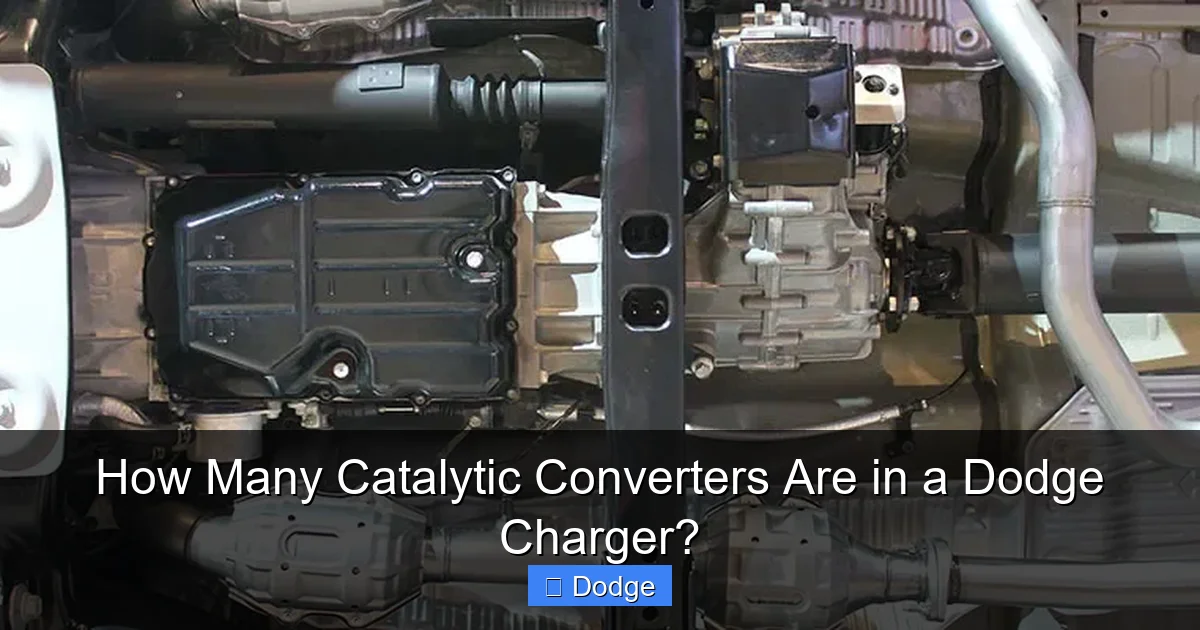
Visual guide about How Many Catalytic Converters Are in a Dodge Charger?
Image source: moparmax.com
The number of catalytic converters in your Dodge Charger is largely determined by its engine. Dodge has offered several powertrains over the years, and each comes with a different exhaust layout. Let’s break it down by engine type.
V6 Engines: Typically Two Catalytic Converters
Most Dodge Chargers equipped with the 3.6L Pentastar V6 engine—found in models like the SXT, GT, and base R/T—come with two catalytic converters. This engine is known for its balance of power and efficiency, producing around 292 to 300 horsepower depending on the model year and tuning.
The V6 uses a dual exhaust system, meaning there’s one exhaust manifold on each side of the engine. Each manifold feeds into its own catalytic converter, usually located close to the engine (called “pre-cats” or “manifold cats”). These are often integrated into the exhaust manifolds themselves, making them compact and efficient.
For example, a 2020 Dodge Charger SXT with the 3.6L V6 will have two catalytic converters—one on the driver’s side and one on the passenger side. This setup helps reduce emissions early in the exhaust flow, improving overall efficiency.
V8 Engines: Often Four Catalytic Converters
When it comes to V8-powered Chargers, the story changes. Models like the R/T, Scat Pack, and Hellcat are built for performance, and their exhaust systems reflect that. These vehicles typically use a 5.7L, 6.4L, or supercharged 6.2L HEMI V8 engine, all of which produce significantly more exhaust flow and emissions.
To manage this, Dodge engineers install four catalytic converters. Here’s how it works: each cylinder bank (left and right) has its own exhaust manifold, and each manifold feeds into a catalytic converter. So, you get two “pre-cats” near the engine. Then, further down the exhaust system, before the mufflers, there are often two additional “post-cats” or “underfloor cats.” This dual-stage setup ensures maximum emissions reduction.
For instance, a 2023 Dodge Charger Scat Pack with the 6.4L HEMI V8 will have four catalytic converters—two near the engine and two under the car. This configuration helps the Charger meet stringent emissions standards while still delivering that iconic V8 rumble.
Supercharged and High-Performance Variants
The Dodge Charger SRT Hellcat and Hellcat Redeye take things a step further. These models feature a supercharged 6.2L HEMI V8 engine producing over 700 horsepower. The increased exhaust volume and temperature require even more robust emissions control.
As a result, Hellcat models also use four catalytic converters, but they’re often larger and more durable to handle the extreme conditions. Some owners report that the converters on Hellcats are positioned slightly differently to accommodate the supercharger’s intake and exhaust routing. Additionally, the exhaust system may include heat shielding and reinforced mounting points to protect the converters from excessive heat.
It’s worth noting that while the number of converters remains the same as other V8 models, the materials and design are upgraded for performance and longevity.
Model Year Differences: How Converter Count Has Evolved
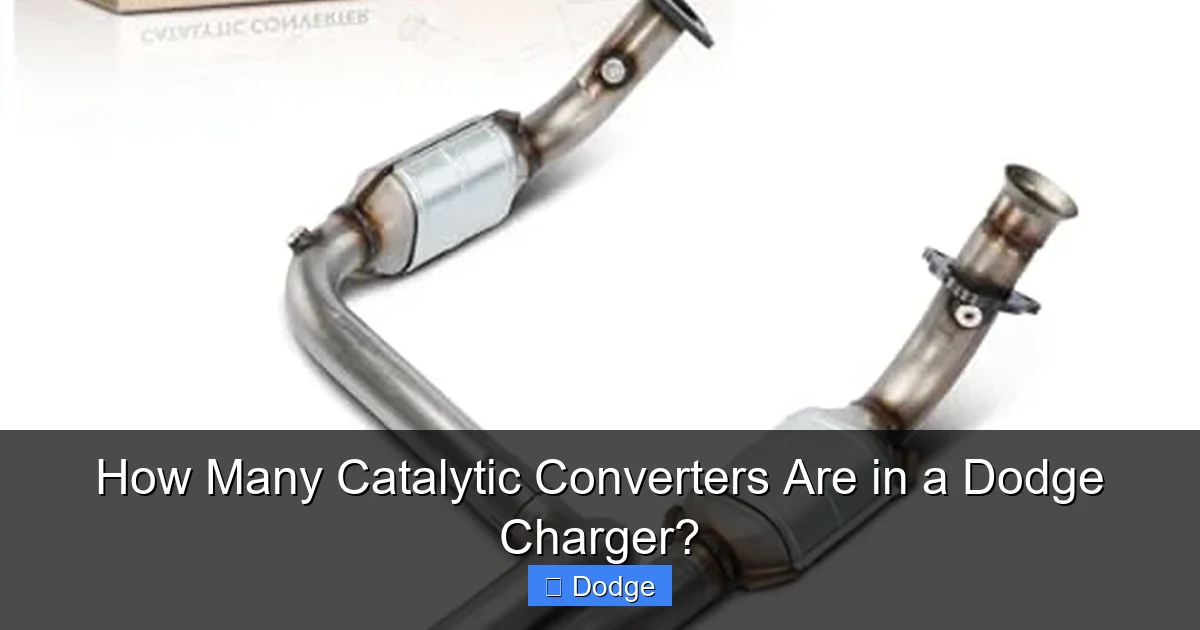
Visual guide about How Many Catalytic Converters Are in a Dodge Charger?
Image source: m.media-amazon.com
The number of catalytic converters in a Dodge Charger hasn’t stayed constant over the years. Changes in emissions regulations, engine technology, and manufacturing practices have led to variations across model years.
Pre-2000s Chargers: Simpler Systems
Older Dodge Chargers, such as those from the 1990s and early 2000s, often had fewer catalytic converters. For example, a 1999 Dodge Charger R/T with a 5.2L V8 might have only two catalytic converters—one per exhaust bank. These early systems were less sophisticated and didn’t require the same level of emissions control as modern vehicles.
However, even in these older models, the converters were essential for passing emissions tests. They were typically located under the car, downstream of the exhaust manifolds, and were prone to clogging or damage due to road debris.
2000s to 2010s: The Shift to Dual and Quad Systems
As emissions standards tightened in the 2000s, Dodge began equipping Chargers with more catalytic converters. By the mid-2000s, most V8 models had at least two converters, and some high-output versions started using four.
The 2006–2010 Dodge Charger SRT8, for example, featured a 6.1L HEMI V8 and used four catalytic converters. This was a significant upgrade from earlier models and reflected the industry-wide move toward cleaner, more efficient exhaust systems.
2011–Present: Modern Standards and Consistency
From 2011 onward, Dodge standardized its catalytic converter setup across most Charger trims. V6 models consistently use two converters, while V8 models use four. This consistency makes it easier for owners to identify and replace components when needed.
One exception is the 2015–2019 Dodge Charger SRT Hellcat, which introduced a unique exhaust system with active valves and tuned resonators. Despite the advanced design, it still uses four catalytic converters to meet emissions requirements.
All-Wheel Drive and Drivetrain Considerations
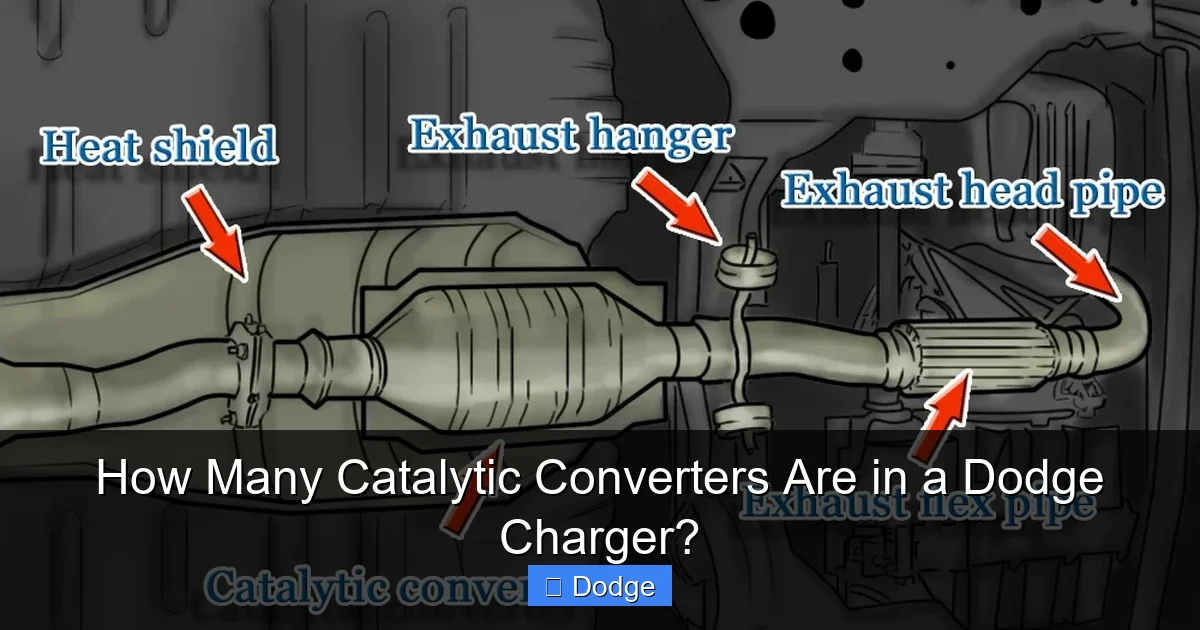
Visual guide about How Many Catalytic Converters Are in a Dodge Charger?
Image source: res.cloudinary.com
Another factor that can influence the number of catalytic converters is the drivetrain. While most Dodge Chargers are rear-wheel drive (RWD), some models—particularly the GT and GT Plus trims—come with all-wheel drive (AWD).
Does AWD Affect Converter Count?
In most cases, AWD does not increase the number of catalytic converters. The exhaust system is primarily determined by the engine, not the drivetrain. However, AWD models may have slightly different exhaust routing due to the presence of a front differential and driveshaft tunnel.
This can affect the placement of the converters, especially the underfloor ones. For example, on an AWD Charger, the rear catalytic converters might be positioned slightly forward or angled differently to clear the drivetrain components. But the total number remains the same: two for V6, four for V8.
Practical Implications for Maintenance
If you own an AWD Charger, it’s important to be aware of these routing differences when performing maintenance or repairs. Accessing the underfloor converters may require removing heat shields or adjusting the exhaust hangers. Always consult your owner’s manual or a trusted mechanic to avoid damaging components.
Signs of Catalytic Converter Problems in Your Charger
Even with multiple converters, issues can still arise. A failing catalytic converter can hurt performance, increase emissions, and even cause your Charger to fail an emissions test. Here are some common signs to watch for:
- Check Engine Light: A lit CEL is often the first sign of a problem. Code P0420 or P0430 indicates low catalytic converter efficiency.
- Reduced Fuel Economy: A clogged converter restricts exhaust flow, forcing the engine to work harder and burn more fuel.
- Loss of Power: If the converter is severely blocked, you may notice sluggish acceleration or difficulty reaching high speeds.
- Rattling Noise: A broken internal substrate can cause a rattling sound, especially when the engine is cold.
- Excessive Heat Under the Car: A failing converter may overheat, causing the undercarriage to feel unusually hot.
If you experience any of these symptoms, have your Charger inspected by a professional. Early diagnosis can prevent more serious damage to the engine or exhaust system.
DIY Inspection Tips
While catalytic converters are located under the car, you can perform a basic visual inspection. Look for:
– Physical damage like dents or cracks
– Signs of overheating (discolored metal)
– Loose or broken mounting brackets
Use a infrared thermometer to check temperatures before and after the converters. A healthy converter will be hotter on the outlet side than the inlet side. If temperatures are similar, the converter may not be working properly.
Replacement and Upgrade Options
When a catalytic converter fails, replacement is necessary—not optional. But you have choices: OEM, aftermarket, or used.
OEM vs. Aftermarket
OEM (Original Equipment Manufacturer) converters are made by Dodge or its suppliers. They’re designed to match the original specs and are guaranteed to pass emissions tests. However, they’re expensive—often costing $1,000 to $2,500 per converter.
Aftermarket converters are cheaper and widely available. High-quality brands like MagnaFlow, Walker, and Eastern Catalytic offer direct-fit replacements that meet or exceed OEM standards. Prices range from $300 to $800 per converter.
Used converters can be found at salvage yards or online, but they come with risks. You can’t always verify their condition, and they may fail shortly after installation.
Performance Upgrades
Some Charger owners upgrade to high-flow catalytic converters to improve exhaust flow and boost performance. These units use less restrictive substrates and precious metal coatings, allowing for better horsepower and torque.
Popular options include:
– MagnaFlow 49-State Legal Catalytic Converters: Offer improved flow while remaining emissions-compliant in most states.
– Flowmaster American Thunder Systems: Include high-flow cats and aggressive exhaust notes.
– JBA Performance Cat-Back Systems: Combine headers, high-flow cats, and mufflers for maximum gains.
Note: High-flow converters are not legal in California or states that follow CARB regulations. Always check local laws before upgrading.
Installation Tips
Replacing a catalytic converter is a complex job that typically requires:
– Jacking up the vehicle and securing it on jack stands
– Removing heat shields and exhaust hangers
– Unbolting the old converter and installing the new one
– Reconnecting oxygen sensors and wiring
Due to the complexity and safety risks, most owners should have this done by a professional mechanic. Labor costs can range from $200 to $500, depending on accessibility.
Legal and Environmental Considerations
Tampering with or removing catalytic converters is illegal in the United States under the Clean Air Act. Federal law prohibits the removal of emissions control devices, and most states enforce this with strict penalties.
Why You Shouldn’t Remove Your Converters
Removing catalytic converters may seem tempting for performance gains, but it comes with serious consequences:
– Fines and Penalties: You can be fined hundreds or thousands of dollars for violating emissions laws.
– Failed Inspections: Your Charger won’t pass state emissions tests, making it illegal to drive.
– Environmental Harm: Increased emissions contribute to air pollution, smog, and climate change.
– Voided Warranty: Modifying the exhaust system can void your vehicle’s warranty.
Even if you live in a state without emissions testing, federal law still applies. Law enforcement and repair shops are required to report tampering.
What About “Test Pipes” or “Cat Deletes”?
Some enthusiasts install test pipes—straight pipes that replace the catalytic converters—for track use. While this may be legal on closed courses, it’s illegal for street use. If caught, you could face fines, vehicle impoundment, or even criminal charges.
Always prioritize legality and environmental responsibility. If you want more power, consider legal upgrades like cold air intakes, performance tuners, or high-flow cats.
Conclusion: Know Your Charger’s Exhaust System
So, how many catalytic converters are in a Dodge Charger? The answer depends on your specific model, but here’s the general rule:
– V6 Chargers: Two catalytic converters (one per bank)
– V8 Chargers: Four catalytic converters (two pre-cats, two post-cats)
Understanding this setup helps you maintain your vehicle, diagnose problems, and make informed decisions about repairs and upgrades. Whether you’re cruising in a V6 SXT or unleashing the fury of a Hellcat, your catalytic converters play a vital role in keeping your Charger running clean and compliant.
Regular maintenance, quality fuel, and timely repairs will extend the life of your converters and keep your Charger performing at its best. And remember: while it’s tempting to modify for performance, always stay within legal and environmental boundaries.
Your Dodge Charger is more than just a car—it’s a symbol of American muscle and engineering. Treat its exhaust system with care, and it will reward you with years of thrilling drives.
Frequently Asked Questions
How many catalytic converters does a 2023 Dodge Charger have?
A 2023 Dodge Charger with a V6 engine has two catalytic converters, while models with a V8 engine (like the R/T or Scat Pack) have four. The number depends on the engine and exhaust configuration.
Can I remove the catalytic converters from my Dodge Charger?
No, removing catalytic converters is illegal under federal law and most state regulations. It can result in fines, failed inspections, and environmental harm.
Why does my Charger have four catalytic converters?
V8-powered Chargers use four catalytic converters to meet strict emissions standards. Two are near the engine (pre-cats), and two are under the car (post-cats) for maximum pollution control.
How much does it cost to replace a catalytic converter on a Dodge Charger?
Replacement costs vary: OEM converters can cost $1,000–$2,500 each, while aftermarket options range from $300–$800. Labor adds $200–$500.
Will a high-flow catalytic converter improve my Charger’s performance?
Yes, high-flow converters can improve exhaust flow and increase horsepower, but they must be emissions-legal in your state. Check local laws before installing.
What happens if my catalytic converter fails?
A failed converter can cause reduced power, poor fuel economy, a check engine light, and failed emissions tests. It should be replaced promptly to avoid engine damage.