How Long Will a Toyota 4.7 V8 Last?

Contents
- 1 Key Takeaways
- 2 📑 Table of Contents
- 3 Introduction: The Legend of the Toyota 4.7 V8
- 4 Real-World Mileage: How Long Do They Actually Last?
- 5 Maintenance: The Secret to Long Life
- 6 Common Problems and How to Address Them
- 7 Driving Habits That Extend Engine Life
- 8 Upgrades and Modifications: Do They Help or Hurt?
- 9 Conclusion: A Lifetime Companion
- 10 Frequently Asked Questions



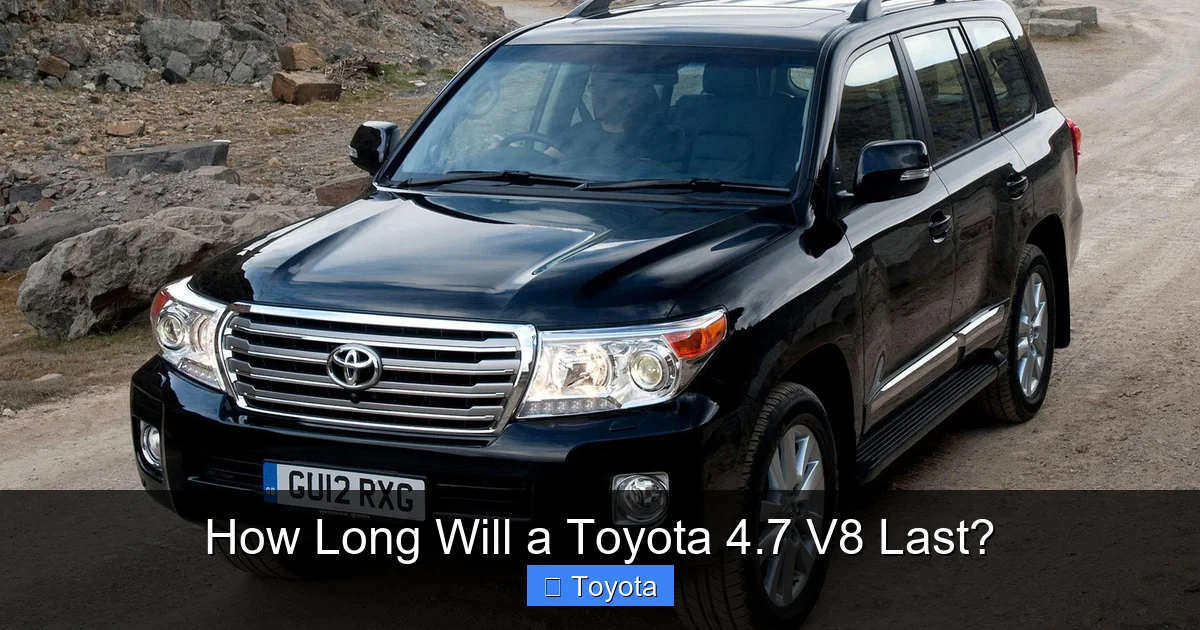
The Toyota 4.7L V8 is one of the most durable engines ever built, often lasting 250,000 to 300,000 miles or more with proper care. Known for its robust design and reliability, this engine powers popular models like the Land Cruiser, Tundra, and Sequoia, making it a favorite among off-roaders and long-distance drivers.
Key Takeaways
- Exceptional Longevity: The Toyota 4.7 V8 routinely exceeds 250,000 miles and can reach 300,000+ with consistent maintenance.
- Proven Track Record: Used in high-mileage fleets and overland vehicles, it’s trusted for durability in extreme conditions.
- Simple, Rugged Design: With fewer electronic complexities than modern engines, it’s easier to maintain and repair.
- Regular Maintenance is Key: Oil changes, timing belt replacements, and coolant flushes are critical to extending engine life.
- Common Issues Are Manageable: Oil consumption, VVT-i solenoid problems, and exhaust manifold leaks can be addressed early.
- Resale Value Holds Strong: Vehicles with the 4.7 V8 retain value due to their reputation for reliability.
- Ideal for Long-Term Ownership: Perfect for drivers who want a dependable, long-lasting vehicle without frequent upgrades.
📑 Table of Contents
Introduction: The Legend of the Toyota 4.7 V8
If you’ve ever driven a Toyota Land Cruiser, Tundra, or Sequoia from the early 2000s to mid-2010s, chances are you’ve experienced the smooth, throaty rumble of the 4.7-liter V8 engine. This powerplant isn’t just loud and capable—it’s a mechanical workhorse that has earned a near-mythical reputation among truck and SUV enthusiasts. But how long will a Toyota 4.7 V8 last? That’s the million-dollar question, and the answer might surprise you.
Unlike many modern engines packed with turbochargers, direct injection, and complex emissions systems, the 4.7 V8 is refreshingly simple. It’s a naturally aspirated, pushrod-style V8 with a cast-iron block and aluminum heads—built like a tank and designed to endure. Toyota engineered it for reliability, not just performance, which is why it’s still found in vehicles with well over 200,000 miles on the odometer. Whether you’re hauling trailers across the desert or navigating mountain trails, this engine has proven time and again that it can handle the abuse.
Real-World Mileage: How Long Do They Actually Last?
Visual guide about How Long Will a Toyota 4.7 V8 Last?
Image source: toyota-guadeloupe.fr
So, what’s the real-world lifespan of a Toyota 4.7 V8? The short answer: a very, very long time. Most experts and long-term owners agree that this engine can easily surpass 250,000 miles with proper maintenance. In fact, it’s not uncommon to find examples with 300,000 miles or more still running strong. Some have even cracked 400,000 miles—especially in well-cared-for fleet vehicles or overland rigs.
Case Studies and Owner Reports
Take, for example, a 2005 Toyota Tundra owned by a contractor in Arizona. After 320,000 miles of hauling construction materials across dusty desert roads, the engine still runs smoothly. The owner followed a strict maintenance schedule: oil changes every 5,000 miles, coolant flushes every 60,000 miles, and timing belt replacements at 90,000 and 180,000 miles. No major internal repairs were ever needed.
Another example is a 2001 Land Cruiser used for overlanding in Alaska. With 285,000 miles, it’s been through freezing winters, muddy trails, and long highway hauls. The owner replaced the water pump and alternator along the way, but the original engine block and heads remain intact. These stories aren’t rare—they’re the norm for well-maintained 4.7 V8s.
Why This Engine Lasts So Long
Several design factors contribute to the 4.7 V8’s longevity. First, it has a robust cast-iron engine block, which is far more durable than aluminum blocks used in some competitors. The rotating assembly—crankshaft, rods, and pistons—is built with generous tolerances, meaning less stress on internal components. The engine also uses a traditional timing belt (not a chain), which, while requiring periodic replacement, is easier and cheaper to service than timing chains that can stretch or fail.
Additionally, the 4.7 V8 operates at lower RPMs under normal driving conditions, reducing wear and tear. It’s not a high-strung performance engine, but a torque-rich, low-end grunt machine perfect for towing and hauling. This relaxed operating style helps it last longer than engines designed for high-speed performance.
Maintenance: The Secret to Long Life
Visual guide about How Long Will a Toyota 4.7 V8 Last?
Image source: media.autoexpress.co.uk
While the Toyota 4.7 V8 is inherently durable, it won’t last forever without proper care. Maintenance is the single most important factor in determining how long your engine will survive. Think of it like this: even the toughest truck will break down if you never change the oil or ignore warning lights.
Oil Changes: The Lifeline of the Engine
Regular oil changes are non-negotiable. Toyota recommends changing the oil every 5,000 miles under normal driving conditions, and every 3,000 miles if you frequently tow, drive in extreme heat, or operate in dusty environments. Use high-quality synthetic or conventional oil (5W-30 is standard), and always replace the oil filter.
Why is this so important? Over time, oil breaks down and loses its ability to lubricate, clean, and cool engine components. Sludge buildup can clog oil passages, leading to increased wear on bearings, camshafts, and lifters. A clean oil system ensures that all moving parts stay protected, especially in high-mileage engines.
Timing Belt and Water Pump Replacement
The 4.7 V8 uses a timing belt, not a chain. While timing chains typically last the life of the engine, belts must be replaced periodically. Toyota recommends replacing the timing belt every 90,000 to 100,000 miles. However, many mechanics suggest doing it closer to 90,000 miles to be safe.
Why the urgency? If the timing belt fails, the pistons can collide with the valves, causing catastrophic engine damage. This is known as “interference engine” design—meaning the valves and pistons occupy the same space at different times. A broken belt can destroy the engine in seconds.
When replacing the timing belt, it’s smart to replace the water pump, tensioner, and idler pulleys at the same time. These components are accessed during the same procedure, so doing them together saves labor costs and ensures everything is in top condition.
Coolant and Radiator Care
Coolant doesn’t last forever. Over time, it breaks down and loses its ability to prevent corrosion and regulate temperature. Toyota recommends flushing the cooling system every 60,000 miles or every five years, whichever comes first.
Neglecting coolant can lead to overheating, which is one of the leading causes of engine failure. A clogged radiator, failing water pump, or leaking hoses can all cause the engine to run hot. In extreme cases, overheating can warp cylinder heads or blow head gaskets.
To check your coolant, look at the reservoir tank. The fluid should be clean and brightly colored (usually green, pink, or blue). If it’s rusty, cloudy, or has floating debris, it’s time for a flush. Always use the correct Toyota-approved coolant mix (typically a 50/50 blend with distilled water).
Air Filter and Fuel System Maintenance
A dirty air filter restricts airflow to the engine, reducing power and fuel efficiency. It can also allow dirt and debris to enter the combustion chamber, causing premature wear. Replace the air filter every 15,000 to 30,000 miles, depending on driving conditions.
The fuel system also needs attention. Over time, fuel injectors can become clogged with carbon deposits, leading to rough idling, hesitation, and poor fuel economy. Using a quality fuel injector cleaner every 10,000 to 15,000 miles can help maintain performance. For high-mileage engines, consider having the injectors professionally cleaned or replaced if issues persist.
Common Problems and How to Address Them

Visual guide about How Long Will a Toyota 4.7 V8 Last?
Image source: kong-proxy-aws.toyota-europe.com
No engine is perfect, and the Toyota 4.7 V8 has a few known issues. The good news? Most are preventable or easily fixable with early detection.
Oil Consumption
One of the most common complaints about the 4.7 V8 is oil consumption. Some owners report burning a quart of oil every 1,000 to 2,000 miles. This isn’t necessarily a sign of imminent failure, but it should be monitored.
Oil consumption is often caused by worn piston rings or valve stem seals. These components allow small amounts of oil to enter the combustion chamber and burn off. While not immediately dangerous, excessive oil consumption can lead to low oil levels, which increases wear.
To manage this, check your oil level regularly—at least once a month. Keep a quart of oil in the trunk for top-offs. If consumption exceeds one quart per 1,000 miles, have a compression test and leak-down test performed to assess engine health.
VVT-i Solenoid Issues
The 4.7 V8 uses Toyota’s Variable Valve Timing with intelligence (VVT-i) system to improve performance and efficiency. However, the VVT-i solenoids can become clogged with sludge or fail over time, leading to rough idling, poor fuel economy, and check engine lights.
Symptoms include a P1349 or P1351 trouble code. The fix is usually straightforward: clean or replace the solenoids and ensure the engine is using clean, high-quality oil. Regular oil changes are the best prevention.
Exhaust Manifold Leaks
Some 4.7 V8s, particularly in earlier models, are prone to exhaust manifold cracks or warping. This can cause a ticking or popping noise, especially when the engine is cold. Over time, the leak can worsen, leading to reduced performance and increased emissions.
The fix involves removing the manifold, inspecting for cracks, and either repairing or replacing it. Using high-temperature exhaust sealant can help in minor cases, but a full replacement is often the best long-term solution.
Throttle Body and MAF Sensor Cleaning
The mass airflow (MAF) sensor and throttle body can accumulate carbon deposits over time, leading to rough idling, hesitation, and reduced fuel efficiency. Cleaning these components with a specialized cleaner can restore performance.
Remove the air intake tube, spray the MAF sensor gently with MAF cleaner (do not touch the wires), and clean the throttle body with throttle body cleaner and a soft brush. This simple maintenance task can make a noticeable difference in how your engine runs.
Driving Habits That Extend Engine Life
How you drive your Toyota with a 4.7 V8 can significantly impact its lifespan. While the engine is tough, it still benefits from gentle treatment.
Avoid Short Trips When Possible
Short trips prevent the engine from reaching optimal operating temperature, leading to moisture buildup in the oil and increased wear. If you only drive a few miles at a time, consider combining errands or taking longer routes occasionally to let the engine warm up fully.
Warm Up the Engine Before Hard Driving
While modern engines don’t need long warm-up periods, it’s still wise to let the engine idle for 30 seconds to a minute before driving aggressively. This allows oil to circulate and reach critical components. Avoid revving the engine when cold—this can cause premature wear on bearings and lifters.
Towing and Hauling Tips
The 4.7 V8 is designed for towing, but overloading can shorten its life. Always stay within the vehicle’s rated towing capacity (typically 7,000 to 8,000 pounds for Tundra and Sequoia models). Use a weight-distributing hitch and trailer brakes when needed.
When towing, monitor engine temperature closely. If the gauge starts to climb, reduce speed or pull over to let the engine cool. Consider installing an aftermarket transmission cooler if you frequently tow heavy loads—this helps protect both the engine and transmission.
Use Quality Fuel and Additives
Always use top-tier gasoline with a high detergent rating. These fuels contain additives that help keep fuel injectors and intake valves clean. Avoid cheap, low-quality gas stations, especially in rural areas.
Occasionally, use a fuel system cleaner like Techron or Sea Foam to remove carbon deposits. This is especially helpful for older engines or those with high mileage.
Upgrades and Modifications: Do They Help or Hurt?
Many 4.7 V8 owners consider performance upgrades to boost power or efficiency. While some modifications can enhance the driving experience, others may reduce engine life if not done properly.
Cold Air Intakes and Exhaust Systems
Upgrading to a cold air intake or performance exhaust can improve airflow and sound. These mods are generally safe and can add 10–15 horsepower. However, avoid overly aggressive intakes that draw in hot underhood air or allow water ingestion during off-roading.
Engine Tuning and Chips
Performance chips and tuners can increase horsepower and torque by adjusting fuel and timing maps. However, aggressive tuning can cause detonation (engine knocking), which damages pistons and bearings over time. If you tune your engine, use a reputable tuner and avoid pushing the limits.
Forced Induction (Supercharging)
Some enthusiasts supercharge the 4.7 V8 for serious power gains. While impressive, forced induction significantly increases stress on the engine. Internal upgrades (stronger rods, pistons, head gaskets) are usually required to handle the extra power. Without them, engine failure is likely.
Unless you’re building a dedicated performance vehicle, it’s best to keep the engine naturally aspirated for maximum longevity.
Conclusion: A Lifetime Companion
So, how long will a Toyota 4.7 V8 last? The answer is clear: with proper care, this engine can easily last 250,000 to 300,000 miles—and often much more. It’s one of the most reliable V8 engines ever built, trusted by overlanders, contractors, and families alike.
Its secret? Simplicity, robust construction, and Toyota’s legendary engineering. While it’s not immune to problems, most issues are manageable with regular maintenance and early intervention. Whether you’re driving a 2000 Land Cruiser or a 2010 Tundra, the 4.7 V8 is built to go the distance.
If you’re looking for a vehicle that can handle years of hard use without constant repairs, a Toyota with the 4.7 V8 is an excellent choice. Just remember: longevity isn’t just about the engine—it’s about how you treat it. Change the oil, replace the timing belt, and drive with care. Do that, and your 4.7 V8 might just outlast you.
Frequently Asked Questions
How many miles can a Toyota 4.7 V8 engine last?
A Toyota 4.7 V8 can last 250,000 to 300,000 miles or more with proper maintenance. Many examples have surpassed 300,000 miles and continue running strong.
What is the most common problem with the Toyota 4.7 V8?
Oil consumption is the most common issue, with some engines burning a quart every 1,000–2,000 miles. This is often due to worn piston rings or valve seals and can be managed with regular oil top-offs.
Do I need to replace the timing belt on a 4.7 V8?
Yes, the timing belt should be replaced every 90,000 to 100,000 miles. Failure to do so can result in catastrophic engine damage if the belt breaks.
Can I use synthetic oil in a Toyota 4.7 V8?
Yes, synthetic oil is safe and recommended for the 4.7 V8. It provides better protection, especially in extreme temperatures and high-mileage engines.
Is the Toyota 4.7 V8 good for towing?
Absolutely. The 4.7 V8 produces strong low-end torque, making it ideal for towing trailers, boats, and campers. Just stay within the vehicle’s rated towing capacity.
Should I buy a high-mileage Toyota with a 4.7 V8?
Yes, if it has a solid maintenance history. These engines are known for their durability, and a well-cared-for high-mileage example can still have plenty of life left.