How Long Has the Toyota Camry Been the Best-selling Car?

Contents
- 1 Key Takeaways
- 2 📑 Table of Contents
- 3 The Unprecedented Streak: A Quarter-Century at the Top
- 4 The Pillars of Perennial Popularity: Why the Camry Never Faltered
- 5 Year-by-Year: The Dominance in Data
- 6 The Competition: A Gallery of Also-Rans
- 7 The Future: Can a Sedan Remain “Best-Selling” in an SUV World?
- 8 Conclusion: More Than a Car, a Benchmark
- 9 Frequently Asked Questions

Tire Shine Spray

Digital Tire Pressure Gauge
Foam Cannon
Car Wash Mitt
The Toyota Camry has held the title of America’s best-selling car for an astonishing 25 consecutive years, from 2002 through 2026. This unparalleled dominance is built on a foundation of exceptional reliability, practical value, and consistent evolution. While the rise of SUVs has changed the overall automotive landscape, the Camry’s legacy as the people’s sedan remains unchallenged in its category.
Drive down any American highway, look in any suburban parking lot, or scroll through a rental car agency’s website. You will see them. Silver, white, black, blue—a sea of Toyota Camrys. They are as much a part of the national fabric as baseball, apple pie, and the daily commute. This ubiquity isn’t an accident; it’s the result of one of the most sustained and remarkable commercial successes in the history of the automotive industry. The question isn’t just “Is the Toyota Camry popular?” The real question is: how long has the Toyota Camry been the best-selling car? The answer reveals a story of strategic genius, relentless focus, and a deep understanding of what American car buyers truly want.
To be clear, we’re talking about the title of best-selling passenger car in the United States. When you hear “best-selling car,” you might picture the Ford F-150, which has been the overall best-selling vehicle (including trucks and SUVs) for decades. But within the specific realm of sedans—the traditional four-door passenger car—the Toyota Camry’s reign has been absolute and historic. It’s a story that spans over two decades, encompasses the rise of the internet and the fall of the sedan, and stands as a testament to doing the fundamentals right, year after year after year.
Key Takeaways
- The Streak: The Camry’s best-selling car streak in the U.S. lasted 25 straight years (2002-2026), an unmatched record for a single model line.
- Defining “Best-Selling”: This title refers specifically to retail sales of passenger *cars*, excluding trucks and SUVs from the calculation.
- Core Pillars of Success: Unwavering reliability, low cost of ownership, comfortable practicality, and smart marketing created a perfect value proposition.
- Adaptation is Key: The Camry consistently reinvented itself, from a conservative family car to a stylish, tech-forward, and even sportier offering.
- Competition Was Fierce: It dethroned the Honda Accord and fended off challenges from the Nissan Altima, Hyundai Sonata, and others through consistency.
- Future is Uncertain: With the segment shrinking due to SUV/crossover popularity, the Camry’s future as the “best-selling car” is tied to the sedan’s survival.
- Legacy is Secure: Regardless of future sales rankings, the Camry’s two-decade reign cemented it as an icon of American automotive consumer preference.
📑 Table of Contents
- The Unprecedented Streak: A Quarter-Century at the Top
- The Pillars of Perennial Popularity: Why the Camry Never Faltered
- Year-by-Year: The Dominance in Data
- The Competition: A Gallery of Also-Rans
- The Future: Can a Sedan Remain “Best-Selling” in an SUV World?
- Conclusion: More Than a Car, a Benchmark
The Unprecedented Streak: A Quarter-Century at the Top
So, let’s state the definitive number upfront: The Toyota Camry was the best-selling passenger car in the United States for 25 consecutive years, from 2002 through 2026. That’s not a typo. For a full quarter-century, no other sedan—from Honda, Nissan, Hyundai, or even Toyota’s own Corolla—sold more units on American soil. To put that in perspective, a child born the year the streak began could earn a driver’s license the year it ended. It’s a dynasty in an industry known for fleeting trends and quick obsolescence.
What “Best-Selling Car” Actually Means
It’s crucial to define our terms. The “best-selling car” title is calculated based on retail sales to individual consumers and fleet sales (like rental cars and corporate fleets). It does not include sales of trucks (like the F-150, Silverado, or Ram) or SUVs/crossovers (like the Honda CR-V or Toyota RAV4). In the early 2000s, the sedan segment was the heart of the market. Owning the best-selling sedan meant owning the most popular *type* of vehicle on the road. The Camry didn’t just win a race; it owned the track.
The streak began in 2002, when the Camry surpassed the long-reigning and beloved Honda Accord. This wasn’t a fluke. It was the culmination of years of meticulous planning. The early 2000s Camry (the XV30 generation) was the perfect car for its time: spacious, comfortable, incredibly reliable, and priced competitively. Toyota’s reputation for bulletproof quality was at its peak, and the Camry was the flagship of that reputation for the average American family. It was the safe, smart, and sensible choice, and millions made it.
The Pillars of Perennial Popularity: Why the Camry Never Faltered
Maintaining the #1 spot for 25 years is arguably harder than achieving it once. Competitors launch all-new models, consumer tastes shift, and economic cycles ebb and flow. Yet, the Camry remained a constant. This wasn’t luck; it was a masterclass in product strategy built on four unshakable pillars.
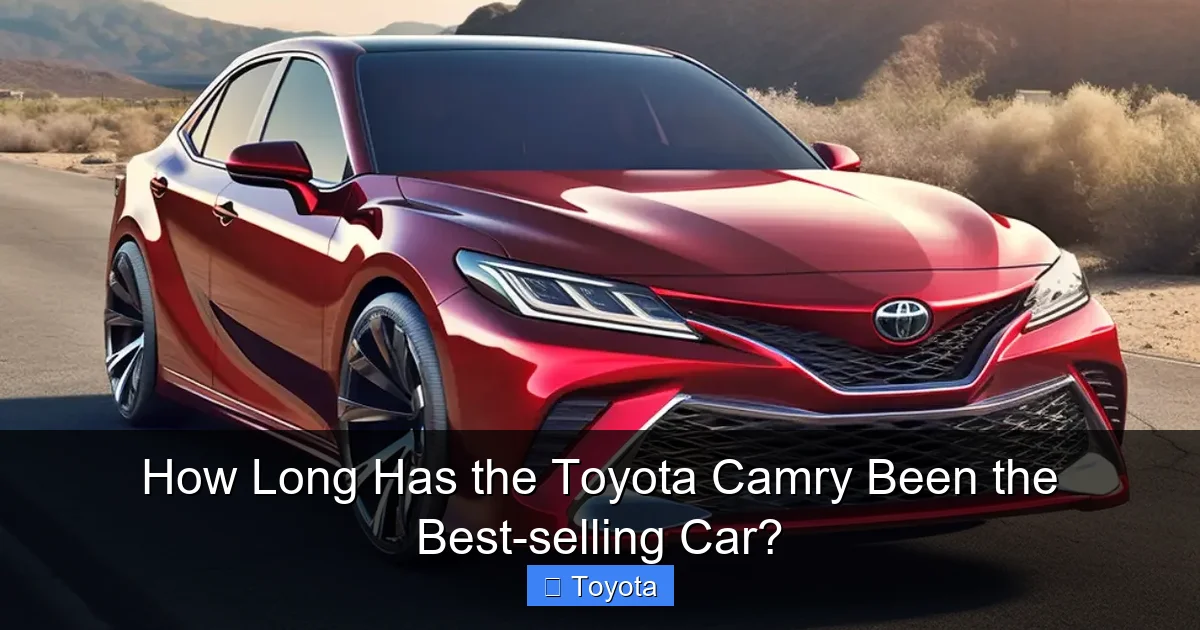
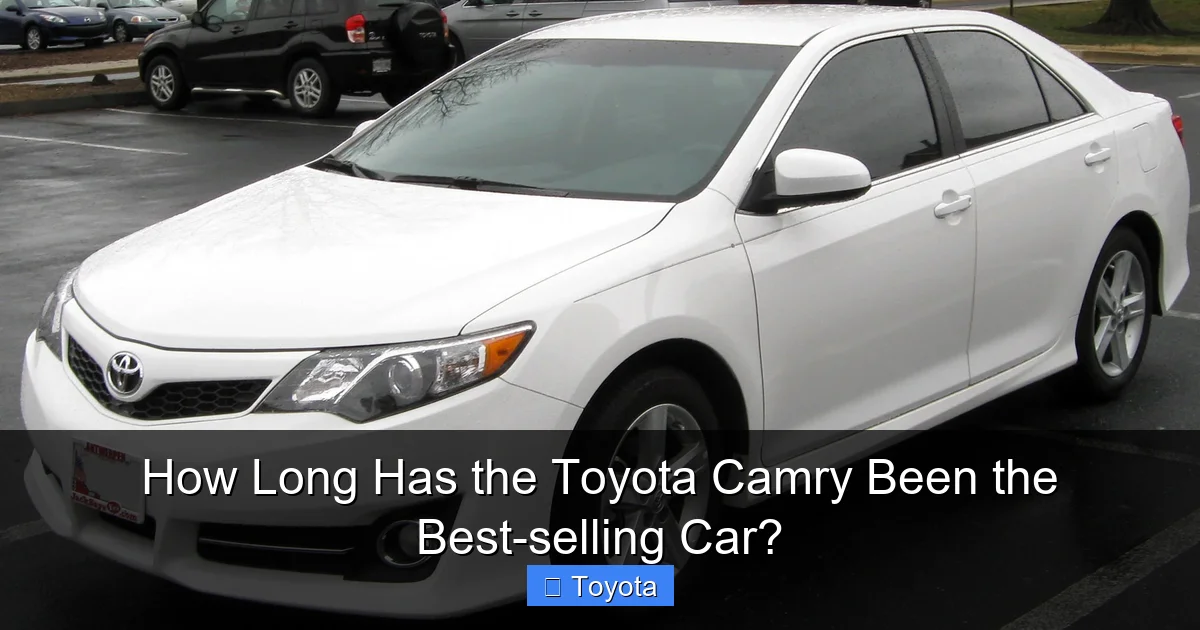
Visual guide about How Long Has the Toyota Camry Been the Best-selling Car?
Image source: i0.wp.com
1. Legendary Reliability and Low Cost of Ownership
This is the non-negotiable foundation. The Camry became synonymous with the idea that a car could run for 200,000 miles with basic maintenance. This reputation was earned through decades of robust engineering and quality control. For car buyers, this translated to predictable costs, high resale value, and minimal stress. A reliable car saves money on repairs and provides peace of mind. This reputation became a self-fulfilling prophecy: people bought Camrys because they were reliable, which meant high volumes, which allowed Toyota to optimize production and parts costs, which kept prices competitive. It was a virtuous cycle. Proper maintenance is key to this longevity, and owners who use high-quality parts like the best motor oil for their Camry or a premium oil filter help uphold that standard.
2. A Perfect Balance of Comfort, Space, and Efficiency
The Camry never tried to be a sports car (until much later trims), but it excelled at being a superb family sedan. Its interior was intelligently designed, offering generous legroom and trunk space that rivaled more expensive cars. The ride quality was plush and quiet, soaking up highway miles without fatigue. At the same time, its four-cylinder engines offered respectable fuel economy, and the optional V6 provided effortless passing power. It was the automotive equivalent of a comfortable, reliable pair of shoes—unassuming but perfectly suited for the daily grind.
3. Conservative Styling That Aged Gracefully
For most of its reign, the Camry’s styling was inoffensive to the point of being anonymous. This was a strategic advantage. While competitors sometimes embraced polarizing designs (looking at you, some Nissan models), the Camry’s conservative lines meant it wouldn’t look dated or embarrassing five years after purchase. A family buyer didn’t want a statement; they wanted a tool. The Camry was a tool that looked perfectly normal in a church parking lot, a school drop-off zone, or a corporate garage. It didn’t shout; it simply performed.
4. A Portfolio That Spoke to Everyone
Toyota brilliantly segmented the Camry lineup. There was a model for every budget and need. The base LE model was an appliance. The mid-grade SE offered subtle sportier styling and handling. The luxurious XLE and XSE trims provided features and materials that could compete with entry-level luxury sedans. The Hybrid model, introduced in 2007, offered exceptional fuel economy for the environmentally conscious or fuel-cost-averse. This “something for everyone” approach maximized its potential customer base, ensuring no buyer was left out.
Year-by-Year: The Dominance in Data
The story of the Camry’s streak is best told through the numbers. While annual sales fluctuated with the economy (plummeting in 2008-2009), the Camry consistently outsold its closest rival, the Honda Accord, by a significant margin for over two decades. The peak came in the mid-2000s, with sales often exceeding 400,000 units per year. For context, selling 400,000 of one model line is a monumental achievement; that’s more than many entire automakers sell in the U.S. in a year.

Visual guide about How Long Has the Toyota Camry Been the Best-selling Car?
Image source: media.cheggcdn.com
The Golden Era and Key Milestones
The 2007-2011 generation (XV40) is often seen as the absolute zenith. It was during this period that the Camry’s dominance felt most unassailable. It was everywhere. In 2007, it sold over 400,000 units, a figure that would be astronomical for a sedan today. The introduction of the Hybrid was a masterstroke, capturing early adopters and fleets seeking maximum efficiency without compromising on size.
The 2012-2017 generation (XV50) faced a tougher challenge. The Honda Accord was completely reinvented and critically acclaimed. The Hyundai Sonata and Kia Optima offered stunning design and warranty packages. Yet, the Camry’s consistency and reputation carried it through. Sales dipped slightly but remained solidly in the 300,000-350,000 range, always ahead of the pack. This generation proved that even a “good enough” Camry was enough to win.
The final years of the streak (2018-2026) were the most fascinating. The sedan market was in freefall. Buyers were abandoning cars for SUVs in record numbers. Yet, the Camry persisted. The completely redesigned 2018 model (XV70) was a revelation—aggressive, sporty, and packed with standard Toyota Safety Sense tech. It was a desperate, brilliant attempt to save the segment. It worked, but only for Toyota. While competitors’ sedan sales collapsed, the Camry’s fell more gracefully, allowing it to cling to the #1 car title by default as others fell below it. It was winning a shrinking game.
The Competition: A Gallery of Also-Rans
The Camry’s throne was never uncontested. A who’s who of excellent sedans tried and failed to dethrone it. Understanding these rivals highlights what made the Camry special.

Visual guide about How Long Has the Toyota Camry Been the Best-selling Car?
Image source: media.cheggcdn.com
The Arch-Nemesis: Honda Accord
The Accord was the gold standard before the Camry took over. It was sportier, more engaging to drive, and just as reliable. For many enthusiasts, the Accord was the superior car. But for the mainstream, mass-market buyer, the Camry’s slightly more spacious rear seat, slightly softer ride, and perhaps a touch more conservative image gave it the edge in sheer volume. The Accord was the choice for the driving enthusiast; the Camry was the choice for everyone else. They traded the top spot throughout the 1990s and early 2000s, but from 2002 onward, the Camry pulled ahead and stayed there.
The Challengers: Nissan Altima, Hyundai Sonata, Kia Optima
These cars often had the Camry beat on paper. The Altima offered a smooth V6 and car-like handling. The Sonata and Optima delivered breathtaking design, long warranties, and loads of standard features at lower prices. They would have a fantastic year, sometimes even outselling the Camry in specific quarters or segments. But they lacked the Camry’s unshakeable reputation for long-term reliability and resale value. A buyer looking at a five-year ownership horizon often chose the known quantity. Additionally, Toyota’s dealer network and fleet sales (rental cars) were a formidable moat that competitors couldn’t easily breach.
The Dark Horse: Toyota Corolla
Ironically, the Camry’s greatest threat sometimes came from within its own family. The Toyota Corolla is the world’s best-selling car model of all time. It is smaller, cheaper, and even more famously frugal. For pure budget buyers, the Corolla was the ultimate value. However, as American families grew and needed more space, the Camry’s midsize dimensions made it the default upgrade. The Corolla captured the entry-level, while the Camry dominated the heart of the family sedan market.
The Future: Can a Sedan Remain “Best-Selling” in an SUV World?
The streak ended not because the Camry became a bad car, but because the very definition of “best-selling car” is becoming obsolete. The passenger car segment has shrunk dramatically. In 2026, the best-selling *vehicle* in America was, once again, the Ford F-150. The best-selling *car* title is now a contest among a dwindling field. SUVs and crossovers now command over 60% of the market. Families who would have bought a Camry 15 years ago are now buying a RAV4, CR-V, or Tucson.
The Camry itself has adapted brilliantly. It’s more efficient, more tech-laden, and more stylish than ever. The 2026 model offers a hybrid powertrain as standard in most trims, responding to consumer demand for efficiency. It’s arguably the best Camry ever made. But it’s swimming against a powerful tide. The title of “best-selling car” now has less cultural weight because the car itself is less central to American life. The Camry’s legacy, however, is secure. It proved that with unwavering focus on the customer’s real needs—space, reliability, value, comfort—a single product can achieve a level of sustained dominance rarely seen in any industry.
Conclusion: More Than a Car, a Benchmark
So, how long has the Toyota Camry been the best-selling car? The precise answer is 25 years, from 2002 to 2026. But the real answer is more profound. It was the best-selling car for as long as the concept of a “family sedan” was the dominant automotive archetype in America. The Camry didn’t just sell well; it defined the expectations for an entire vehicle class. It set the benchmark for reliability, value, and practicality that every competitor chased but few ever matched for a sustained period.
Its story is a masterclass in product management. It didn’t chase every trend. It didn’t sacrifice its core strengths for fleeting appeal. Instead, it refined, improved, and evolved while staying fundamentally true to its mission. It understood that for millions of Americans, a car is not an emotional purchase but a practical tool. And for 25 years, the Toyota Camry was simply the best tool for the job. Whether it holds the title again in the future matters less than the fact that for a generation, it was the undisputed king of the road. If you own one, you don’t just have a car; you have a piece of that history. Keeping it running perfectly is part of the tradition, which is why finding the right battery for your Camry or knowing how to perform basic maintenance remains so important to its legacy.
Frequently Asked Questions
Is the Toyota Camry still the best-selling car in 2024?
No. As of 2024, the Toyota Camry is no longer the annual best-selling passenger car in the U.S. The title has been claimed by the Tesla Model 3, reflecting the rapid shift towards electric vehicles. However, the Camry remains one of the top-selling sedans and holds the record for the longest streak at #1.
What year did the Camry’s best-selling streak begin?
The Toyota Camry’s streak as America’s best-selling passenger car began in 2002. It outsold the Honda Accord that year and did not relinquish the top spot for the next 24 years.
What car did the Camry dethrone to become best-seller?
The Camry dethroned the Honda Accord to become the best-selling passenger car in the United States. The Accord had frequently held the top position throughout the 1990s and early 2000s before the Camry took over in 2002.
Why did the Camry stop being the best-selling car?
The Camry’s streak ended primarily due to the dramatic market shift from sedans to SUVs and crossovers. As the passenger car segment shrank, electric vehicles like the Tesla Model 3 capitalized on new buyer interest. While the Camry remains a strong seller, it now competes in a much smaller segment.
What was the Camry’s best sales year?
The Camry’s peak sales year was 2007, with over 427,000 units sold in the United States. This occurred during the height of the midsize sedan market before the 2008 financial crisis and before the SUV boom truly took hold.
Can the Camry regain the best-selling car title?
It is highly unlikely. The passenger car segment continues to decline as consumer preference solidifies around SUVs, trucks, and EVs. For the Camry to regain the overall “best-selling car” title, the entire sedan segment would need a massive, unexpected revival, which current market trends do not support.