
How Long Does It Take to Charge a Toyota Forklift Battery?

Charging a Toyota forklift battery isn’t a one-size-fits-all process. The time varies significantly based on battery chemistry, capacity, depth of discharge, and charger specifications. Typically, lead-acid batteries take 8-12 hours for a full charge, while lithium-ion variants can recharge in 1-3 hours. Understanding these variables is key to optimizing your warehouse operations and battery lifespan.
Key Takeaways
- No Fixed Time: Charging duration depends on battery type, capacity, discharge level, and charger output. There is no single answer.
- Battery Chemistry is Key: Traditional lead-acid batteries require 8-12 hours, whereas lithium-ion (Li-ion) batteries can charge in 1-3 hours due to different chemistry and faster acceptance rates.
- Charger Compatibility is Critical: Using the correct Toyota-specified or compatible industrial charger with the right output (amps/volts) and smart charging algorithms is essential for both speed and battery health.
- Charge After Every Shift: The best practice is to charge the battery after each work shift or when the battery reaches 20-30% charge, avoiding deep discharges that harm longevity.
- Safety Cannot Be Compromised: Always charge in a well-ventilated area, wear PPE (gloves, goggles), and ensure the area is free of sparks or flames, especially with lead-acid batteries that emit hydrogen gas.
- Maintenance Extends Life: For lead-acid batteries, regular equalization charging and checking electrolyte levels are vital. For Li-ion, keep terminals clean and avoid extreme temperatures.
- Troubleshooting Slow Charging: If charging takes unusually long, check for poor connections, a failing battery, an incorrect charger setting, or a battery that has reached the end of its service life.
📑 Table of Contents
- Introduction: The $64,000 Question for Warehouse Managers
- The Core Factors That Dictate Charging Time
- Comparing Battery Types: Charging Profiles and Time Estimates
- The Charging Cycle: What Actually Happens Inside the Battery
- Optimizing Your Charging Strategy: Best Practices for Efficiency and Battery Life
- Safety First: Non-Negotiable Charging Precautions
- Troubleshooting: When Charging Takes Too Long or Fails
- Conclusion: Making Charging Time Work For You
Introduction: The $64,000 Question for Warehouse Managers
If you manage a fleet of Toyota forklifts, you’ve likely asked this question a hundred times: “How long does it take to charge this battery?” It’s a critical question because charging time directly impacts your operational uptime, labor scheduling, and battery replacement costs. An unexpected long charge cycle can idle a truck and disrupt your entire workflow. The simple answer is: it depends. But don’t worry, by the end of this guide, you’ll know exactly what factors influence charging time for your specific Toyota forklift battery and how to manage the process efficiently.
Toyota Material Handling offers a wide range of electric forklifts, from compact pallet jacks to heavy-duty counterbalance trucks. Each model uses batteries of different voltages (typically 24V, 36V, 48V, or 80V) and capacities (measured in amp-hours, or Ah). Furthermore, Toyota forklifts can use either flooded lead-acid batteries or lithium-ion (Li-ion) batteries. These variables create a spectrum of charging times. Our goal here is to break down that spectrum, giving you clear, actionable information tailored to real-world warehouse environments.
The Core Factors That Dictate Charging Time
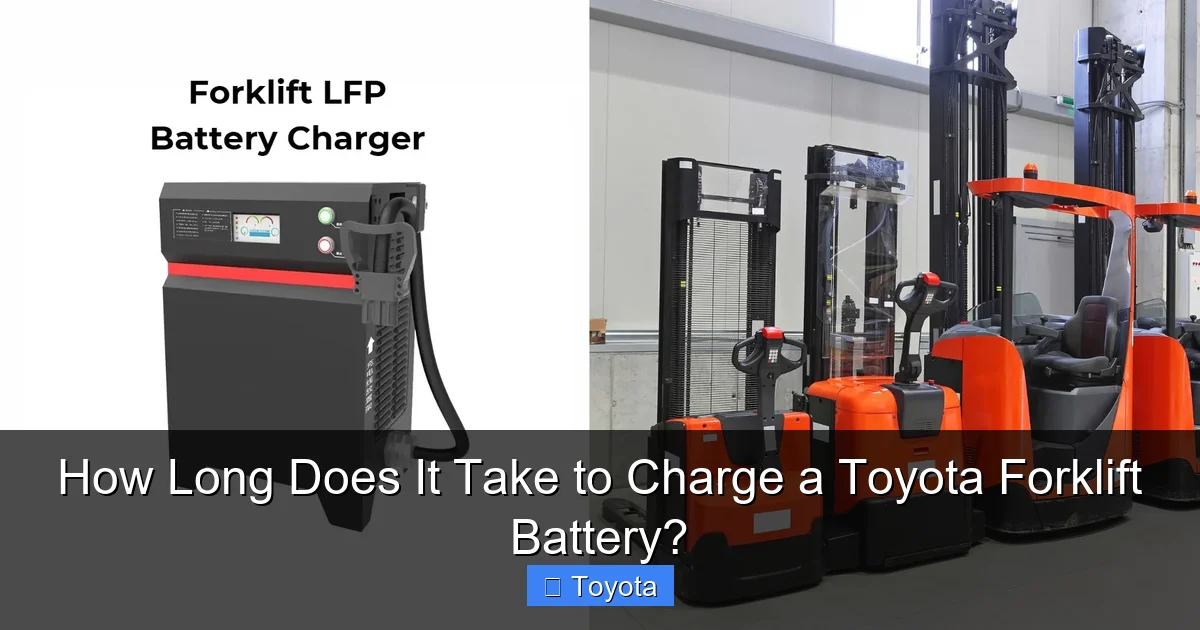
Before we dive into specific numbers, you must understand the five key variables that determine how long your Toyota forklift battery will take to reach a full charge. Think of it like baking a cake—the recipe (battery type), oven temperature (charger output), and size of the cake (battery capacity) all change the cooking time.
Visual guide about How Long Does It Take to Charge a Toyota Forklift Battery?
Image source: redway-tech.com
Battery Capacity (Amp-Hours)
This is the most straightforward factor. Capacity, measured in amp-hours (Ah), is the total energy storage of the battery. A larger capacity battery (e.g., 1000Ah) stores more energy and therefore takes longer to fill than a smaller one (e.g., 500Ah), assuming the same charger. For example, a Toyota 8FGU25 forklift might use a 48V, 800Ah battery, while a smaller model like the 6FBMU15 might use a 48V, 500Ah battery. All else being equal, the larger battery will need more time.
Depth of Discharge (DoD)
How “empty” is the battery when you plug it in? This is the Depth of Discharge. If you consistently run your forklift until it’s completely dead (100% DoD), it will take much longer to charge than if you plug it in after a light shift where it’s only at 50% charge. A good rule of thumb is to avoid discharging below 20-30% for both lead-acid and Li-ion batteries to preserve health and reduce charge time.
Charger Output (Amperage)
Your charger is the fuel pump. Its output, measured in amps (A), determines the flow rate of energy into the battery. A charger with a higher amperage rating will charge a battery faster, but it must be properly matched to the battery’s specifications. Using a charger with too high an output can damage the battery. Toyota’s recommended chargers are designed to pair perfectly with their batteries. The formula is simple: Charging Time (hours) ≈ Battery Capacity (Ah) / Charger Output (A). So, an 800Ah battery with a 100A charger would theoretically take 8 hours for a full charge from empty, but real-world factors like charging stages add time.
Battery Chemistry: Lead-Acid vs. Lithium-Ion
This is the biggest differentiator. Flooded Lead-Acid Batteries: These are the traditional, heavy, and less expensive batteries. They charge relatively slowly due to their chemical limitations and require a specific multi-stage charging profile. They also need regular watering and ventilation. Lithium-Ion (Li-ion) Batteries: These are the newer, lighter, and maintenance-free option. They accept charge much faster, can be charged to 100% quickly without the same degradation, and have a much flatter voltage curve. This fundamental difference means a Li-ion battery of the same capacity will charge in a fraction of the time of a lead-acid battery when paired with a compatible fast charger.
Battery Age and Health
An old or poorly maintained battery will charge slower and hold less energy. Sulfation (in lead-acid) or cell degradation (in Li-ion) increases internal resistance, making it harder for the charger to push energy in. A battery that’s near the end of its life might take 50% longer to charge and still not reach full capacity. Regular maintenance and avoiding deep discharges are key to preserving charge speed.
Comparing Battery Types: Charging Profiles and Time Estimates
Now let’s get specific. Here’s a breakdown of what you can typically expect from each battery type used in Toyota forklifts.
Visual guide about How Long Does It Take to Charge a Toyota Forklift Battery?
Image source: tontio.com
Flooded Lead-Acid Batteries: The Workhorse
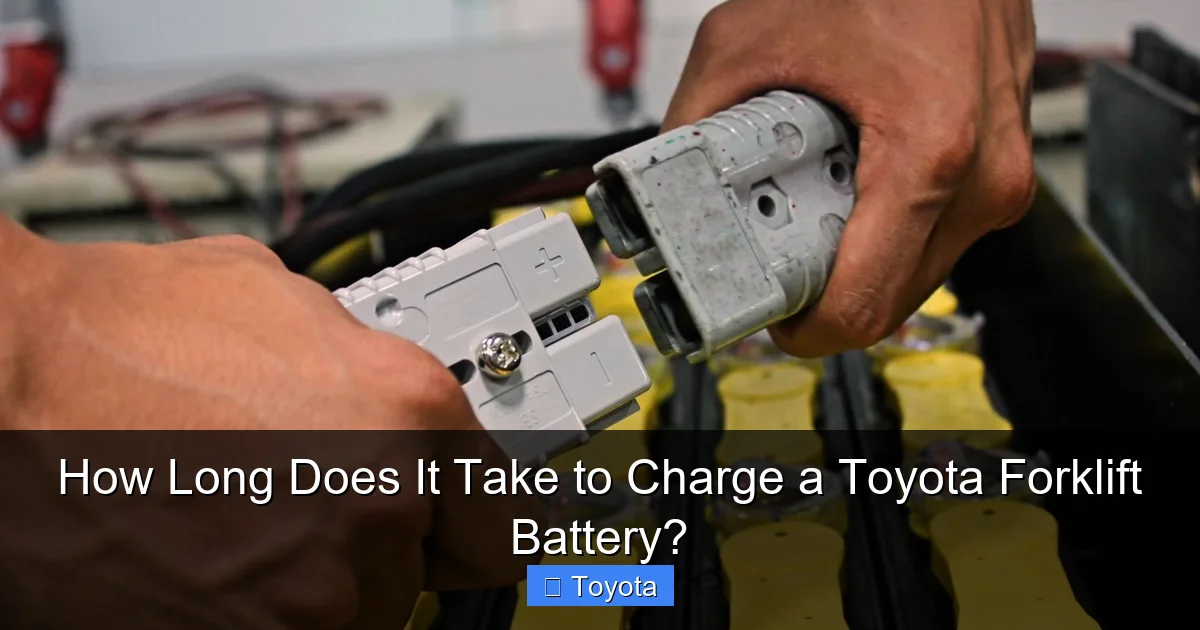
These are the most common in older fleets and for heavy-duty applications. Their charging process is not linear; it happens in three distinct stages that a smart charger manages automatically.
- Bulk Charge: The charger delivers maximum constant current (amps) until the battery voltage reaches a preset level (e.g., ~2.4V per cell for a 48V battery). This stage is the fastest and recovers about 70-80% of the capacity.
- Absorption Charge: The charger switches to a constant voltage. Current gradually tapers off as the battery becomes fuller. This stage tops off the battery and can take several hours.
- Float/Finish Charge: A low, constant voltage is applied to maintain full charge and counteract self-discharge without overcharging. This stage is often continuous while the battery is connected.
Typical Full Charge Time (from 80% DoD): 8 to 12 hours. A completely dead (100% DoD) lead-acid battery can take 12-16 hours or more. The key is to use a charger specifically designed for industrial lead-acid batteries with these three-stage algorithms. Using a simple automotive trickle charger, which is designed for different purposes, is ineffective and dangerous. The principles of charging a car battery are similar in stages, but industrial forklift batteries require much more robust and precise equipment. If you’re dealing with a deeply discharged battery, the recovery phase alone can add significant time, similar to the extended periods sometimes needed to charge a dead car battery.
Lithium-Ion (Li-ion) Batteries: The Fast-Charging Modern Solution
Toyota offers Li-ion batteries on select models for their advantages: longer life, no maintenance, and faster charging. Their charging profile is simpler: constant current until near full, then a brief constant voltage topping-off phase. They also have a much higher charge acceptance rate, meaning they can safely accept more power (amps) from the charger without damage.
- Fast Charging (0-80%): Can be very rapid, often in 1-2 hours with a high-output charger.
- Full Charge (0-100%): Typically 2-3 hours total.
Important Note: Li-ion batteries do not require a float charge and can be left on a charger without harm, as the charger will stop or switch to a very low maintenance mode. However, for maximum longevity, it’s often recommended not to keep them at 100% constantly if not needed. The charging speed is so fast that it dramatically reduces downtime—a forklift can be charged during a lunch break or between shifts.
The Charging Cycle: What Actually Happens Inside the Battery
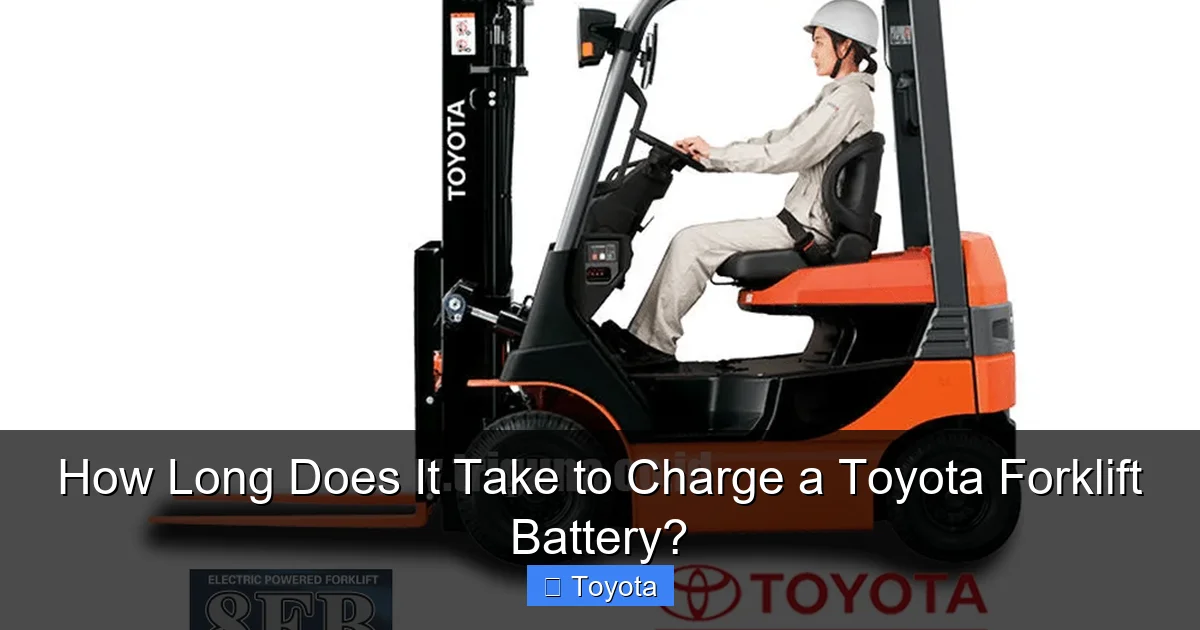
Understanding the stages helps you interpret charger lights and battery behavior. A proper charger for your Toyota forklift battery will have indicators for these stages.
Visual guide about How Long Does It Take to Charge a Toyota Forklift Battery?
Image source: triguna.co.id
Stage 1: Bulk (Fast Charge)
This is the “fill ‘er up” phase. The charger pushes maximum current into the battery. Voltage rises steadily. For a 48V lead-acid system, you might see the charger outputting full amps (e.g., 100A) until the battery voltage hits about 57.6V. For Li-ion, this stage is much shorter and more aggressive.
Stage 2: Absorption (Topping Off)
Once the voltage hits the absorption setpoint (e.g., 57.6V for lead-acid), the charger holds that voltage constant. The current slowly decreases as the battery becomes saturated. This is a slower, more energy-intensive phase for the battery. You’ll notice the charger’s amperage readout dropping gradually. This stage ensures a complete charge.
Stage 3: Float (Maintenance)
For lead-acid only. Once absorption is complete (current drops to a low threshold), the charger reduces its voltage to a float level (e.g., 54.0V for a 48V system). This maintains the charge without causing gassing or water loss. The charger may switch to a “finished” or “float” light. Li-ion chargers typically switch to a “done” or “maintenance” mode with minimal current.
Typical Timeframes for Common Toyota Models
Let’s make it real with some hypothetical but realistic examples based on common Toyota electric forklift configurations:
- Toyota 8FGU25 (48V, 800Ah Lead-Acid): With a 100A industrial charger, expect 9-12 hours from a typical 80% discharge. A full 100% discharge could push it to 14 hours.
- Toyota 8FBCU32 (80V, 1000Ah Lead-Acid): Requires a larger charger (e.g., 150A). Charge time from 80% DoD: 10-14 hours.
- Toyota 8FBE13U (48V, 600Ah Li-ion): With a compatible fast charger (e.g., 200A output), a full charge from 80% DoD can be achieved in 2-3 hours.
Remember: These are estimates. Always consult your specific battery and charger manuals. The charger’s built-in algorithm is the ultimate authority—it will determine the exact endpoint based on voltage, current, and time parameters.
Optimizing Your Charging Strategy: Best Practices for Efficiency and Battery Life
Knowing the “how long” is only half the battle. The “how to” is what protects your investment. Following these practices will ensure consistent, predictable charging times and maximize your battery’s lifespan (often 5+ years for lead-acid, 10+ for Li-ion with proper care).
Charge After Every Shift (Opportunity Charging)
This is the golden rule. Don’t wait for the battery to be completely empty. Plug it in at the end of every workday or shift. This practice:
- Reduces daily charge time (less depth of discharge).
- Prevents harmful deep discharges.
- Keeps the battery in a healthy state of charge.
- For Li-ion, this is the ideal use case—short, frequent charges are better than full cycles.
For lead-acid, a full charge every night is still recommended to maintain battery health and equalize the cells.
Use the Correct, Manufacturer-Recommended Charger
Never substitute a charger. Use the charger that came with the battery or one specifically recommended by Toyota or the battery manufacturer (e.g., Crown, EnerSys). An incorrect charger can:
- Charge too slowly (under-sized charger).
- Overheat and destroy the battery (over-sized or wrong profile charger).
- Fail to enter the proper float stage, leading to under- or over-charging.
Industrial chargers have complex algorithms. A simple automotive or marine charger lacks these and is unsafe for industrial batteries.
Maintain Ideal Charging Temperature
Battery chemistry is temperature-sensitive. Charging in extremely cold (<50°F/10°C) or hot (>100°F/38°C) environments slows the process and can damage the battery.
- Cold: Increases internal resistance, slowing acceptance. Some chargers have a temperature compensation feature that adjusts voltage. If possible, charge in a temperature-controlled area.
- Heat: Accelerates water loss and grid corrosion in lead-acid. Ensure the charging area is well-ventilated. Avoid charging immediately after heavy use when the battery is hot.
For Lead-Acid: Perform Regular Equalization Charging
Equalization is a deliberate, controlled overcharge (once per week or month, per manufacturer specs) that stirs the electrolyte and eliminates sulfation on the plates. It helps balance cell voltages and restores capacity. This is typically initiated manually on the charger and adds 1-3 hours to the cycle. It’s a critical maintenance step for flooded batteries but is not done on sealed AGM, gel, or Li-ion batteries.
Keep Batteries and Chargers Clean and Inspected
Corroded terminals or loose connections create high resistance, which wastes energy and slows charging. Clean terminals with a baking soda/water solution and a wire brush. Check and tighten all connections regularly. Inspect the battery case for cracks and the charger cables for wear. A clean, well-connected system charges faster and safer.
Safety First: Non-Negotiable Charging Precautions
Charging industrial batteries involves high currents and, in the case of lead-acid, explosive hydrogen gas. Safety is paramount.
- Ventilation is Mandatory: Charge lead-acid batteries only in a well-ventilated area, preferably with exhaust fans. Hydrogen gas is colorless, odorless, and explosive at concentrations as low as 4%.
- Personal Protective Equipment (PPE): Always wear safety goggles and acid-resistant gloves. Have an eyewash station and emergency shower nearby.
- No Open Flames or Sparks: No smoking, welding, or creating sparks near the charging area. Turn off the forklift and all accessories before connecting.
- Proper Connection Sequence: Connect the charger to the battery first, then plug the charger into the wall outlet. This prevents arcing. Disconnect in reverse order: unplug from wall, then disconnect from battery.
- Never Charge a Frozen Battery: If the electrolyte in a lead-acid battery is frozen, it has likely been deeply discharged and is damaged. Do not attempt to charge it; replace it.
- For Li-ion: While safer, they still require care. Use only the specified charger. Do not charge a physically damaged (punctured, swollen) Li-ion battery. Monitor for unusual heat.
Following these rules prevents accidents, protects your team, and safeguards your equipment.
Troubleshooting: When Charging Takes Too Long or Fails
If your charging time suddenly increases or the battery doesn’t seem to get full, here’s a diagnostic checklist.
1. Check the Charger and Connections
Ensure the charger is set to the correct battery type (lead-acid vs. Li-ion) and voltage. A wrong setting is a common error. Inspect all cables and connectors for corrosion, looseness, or damage. Clean and tighten. Verify the charger itself is functioning—its fans should run, and it should have output voltage/amperage.
2. Assess the Battery’s State of Health
An old or failed battery will not accept a charge. Use a battery analyzer or hydrometer (for lead-acid) to check specific gravity and voltage. A fully charged 48V lead-acid battery should read about 50.4-51.0V (2.1-2.125V per cell). A Li-ion 48V battery will read around 54.4V at full charge. If voltage is low after a long charge, the battery is likely sulfated or has a bad cell.
3. Evaluate the Depth of Discharge
Did the operator run the forklift until it was completely dead? Deep discharges (<80% DoD) cause sulfation in lead-acid and stress Li-ion, leading to longer recovery times. Implement operator training to plug in at shift end.
4. Consider Environmental Factors
Is the battery being charged in a cold garage? Cold drastically increases charge time. If possible, move charging to a warmer area or use a battery blanket to pre-warm the battery before charging.
5. The Charger Itself Might Be Faulty
Chargers wear out. If it’s not reaching its specified output voltages or currents, it may need repair or replacement. Compare its output to the manufacturer’s specs.
Conclusion: Making Charging Time Work For You
The time it takes to charge a Toyota forklift battery is a variable you can manage, not a fixed mystery. By understanding the interplay between battery type (lead-acid vs. lithium-ion), capacity, depth of discharge, and charger output, you can set realistic expectations and optimize your charging schedule. The shift from 8-12 hour overnight charges for lead-acid to 1-3 hour fast charges for lithium-ion represents a monumental leap in operational flexibility. Your best strategy is simple: invest in the correct charger for your battery type, enforce a “charge after every shift” policy, perform diligent maintenance, and never compromise on safety. When you do, you’ll minimize downtime, extend battery life for years, and keep your Toyota forklift fleet running at peak productivity. Remember, a well-charged battery is a reliable battery, and a reliable battery is the heart of your material handling operation.
Frequently Asked Questions
What is the average charging time for a standard Toyota lead-acid forklift battery?
For a typical 48V or 80V flooded lead-acid battery that is discharged to 80%, expect 8 to 12 hours using the correct industrial charger. A full charge from completely empty (100% DoD) can take 12-16 hours or more.
Can I overcharge a Toyota forklift battery?
Yes, but modern smart chargers are designed to prevent this. They automatically switch to a float or maintenance mode after the battery is full. Using an outdated, non-automatic, or incorrect charger can cause overcharging, leading to excessive gassing, water loss, and heat in lead-acid batteries, or stress in Li-ion packs.
How do I know when my Toyota forklift battery is fully charged?
The primary indicator is your charger’s status lights. A “Full,” “Float,” or “Done” light signifies completion. For a manual check, use a voltmeter: a fully charged 48V lead-acid battery reads ~50.4-51.0V, and a 48V Li-ion reads ~54.4V. Always follow your charger’s manual.
Does cold weather affect charging time?
Absolutely. Cold temperatures increase the battery’s internal resistance, drastically slowing the charging process. A battery that normally charges in 8 hours might take 12-16 hours in a cold garage. If possible, charge in a temperature-controlled area or use a pre-heat function if your charger supports it.
Can I use a different charger on my Toyota forklift battery?
Only if it is explicitly recommended by the battery or forklift manufacturer and matches the battery’s voltage, capacity, and chemistry (lead-acid vs. Li-ion). Using an incompatible charger is dangerous, can damage the battery, and will likely result in very slow or failed charging.
What is “opportunity charging” and is it good for my battery?
Opportunity charging means plugging in the forklift for short top-up charges during breaks or between shifts, rather than waiting for a full discharge. This is excellent practice, especially for lithium-ion batteries, which thrive on shallow cycles. For lead-acid, it’s fine as long as you still perform one full charge cycle per week to equalize the cells.