How Long Can You Leave Your Car on Before the Battery Dies
Leaving your car running while parked might seem harmless, but it can quickly drain your battery—especially if the engine isn’t actually moving the vehicle. Most cars can idle for 30 minutes to a few hours before the battery starts to weaken, but this depends on several key factors like battery age, electrical load, and weather conditions.
Have you ever pulled into a parking spot, turned off the engine, and then thought, “Wait—I should leave it running for a few minutes to keep the AC on”? Or maybe you’ve been stuck in a drive-thru and decided to let the car idle while you wait. It’s a common scenario, but one that raises an important question: how long can you leave your car on before the battery dies?
At first glance, it might seem like leaving your car running is harmless—after all, the engine is on, the alternator is spinning, and the battery should be getting recharged. But the reality is more complicated. While the alternator does recharge the battery while the engine runs, it doesn’t do so at full capacity when the car is idling. Add in the power demands of modern electronics—like climate control, infotainment systems, and charging ports—and you’ve got a recipe for a drained battery, even with the engine running.
So, how long is too long? The answer isn’t one-size-fits-all. It depends on your car’s age, battery condition, electrical load, and even the weather. But understanding the mechanics behind battery drain can help you make smarter decisions and avoid getting stranded with a dead battery.
In This Article
- 1 Key Takeaways
- 2 📑 Table of Contents
- 3 How Car Batteries Work When Idling
- 4 Factors That Affect How Long You Can Idle
- 5 Real-World Examples: How Long Can You Actually Idle?
- 6 Risks of Leaving Your Car Idling Too Long
- 7 Tips to Protect Your Battery While Idling
- 8 When to Avoid Idling Altogether
- 9 Conclusion
- 10 Frequently Asked Questions
- 10.1 How long can I leave my car running with the AC on?
- 10.2 Will my car battery recharge while idling?
- 10.3 Can I leave my car running overnight?
- 10.4 Does idling in winter harm my battery?
- 10.5 How can I tell if my battery is too weak to idle safely?
- 10.6 Is it better to turn the car off and on or leave it idling?
Key Takeaways
- Battery life while idling varies widely: A healthy battery in a modern car may last 30–60 minutes at idle before showing signs of drain, but older or weaker batteries can die in under 20 minutes.
- Electrical accessories drain power fast: Using the radio, AC, headlights, or phone chargers while parked significantly shortens how long you can leave your car on before the battery dies.
- Cold weather reduces battery efficiency: In freezing temperatures, your battery’s capacity drops by up to 50%, meaning it will die much faster when idling.
- Alternator output matters: The alternator recharges the battery while the engine runs, but at idle speeds, it produces less power—especially in older vehicles.
- Short idling is usually safe: Letting your car run for 5–10 minutes to warm up or cool down is generally fine and won’t harm a healthy battery.
- Repeated deep discharges damage batteries: Frequently draining your battery below 50% charge shortens its lifespan and can lead to premature failure.
- Prevention is better than replacement: Use a battery maintainer, avoid unnecessary idling, and get regular battery checks to extend its life.
📑 Table of Contents
How Car Batteries Work When Idling
To understand how long you can leave your car on before the battery dies, it helps to know how your car’s electrical system functions. Your car battery doesn’t just start the engine—it powers all the electronics when the engine is off. Once the engine starts, the alternator takes over, generating electricity to run the car’s systems and recharge the battery.
But here’s the catch: the alternator only produces enough power to meet the car’s current electrical needs. At idle, especially in older vehicles, the alternator spins more slowly and generates less electricity. That means if your car is using a lot of power—say, running the AC, headlights, and stereo—the alternator might not be able to keep up. In that case, the battery starts supplying the extra power, slowly draining itself.
Think of it like a water tank with a slow inlet and multiple outlets. If the outlets (your car’s electronics) are using more water than the inlet (the alternator) can refill, the tank (your battery) will eventually run dry.
The Role of the Alternator
The alternator is the heart of your car’s charging system. It converts mechanical energy from the engine into electrical energy. Most alternators are designed to produce peak output at higher engine speeds—typically around 2,000 RPM or more. At idle, which is usually around 600–1,000 RPM, the alternator’s output drops significantly.
For example, a typical alternator might produce 100 amps at 2,500 RPM but only 40–50 amps at idle. If your car’s electrical system is drawing 60 amps (due to AC, heated seats, and a phone charger), the alternator can’t keep up. The extra 10–20 amps come from the battery, slowly depleting it.
Battery Capacity and State of Charge
Car batteries are rated in amp-hours (Ah), which tells you how much current they can deliver over time. A typical 12-volt car battery might have a capacity of 48–70 Ah. But that doesn’t mean it can power a 60-amp load for an hour. In fact, deep-cycle batteries (used in RVs or boats) are better suited for sustained loads, while car batteries are designed for short, high-current bursts—like starting the engine.
When you leave your car idling, you’re asking the battery to support a continuous load, which isn’t what it’s built for. Even if the alternator is helping, repeated deep discharges can damage the battery over time, reducing its lifespan.
Factors That Affect How Long You Can Idle
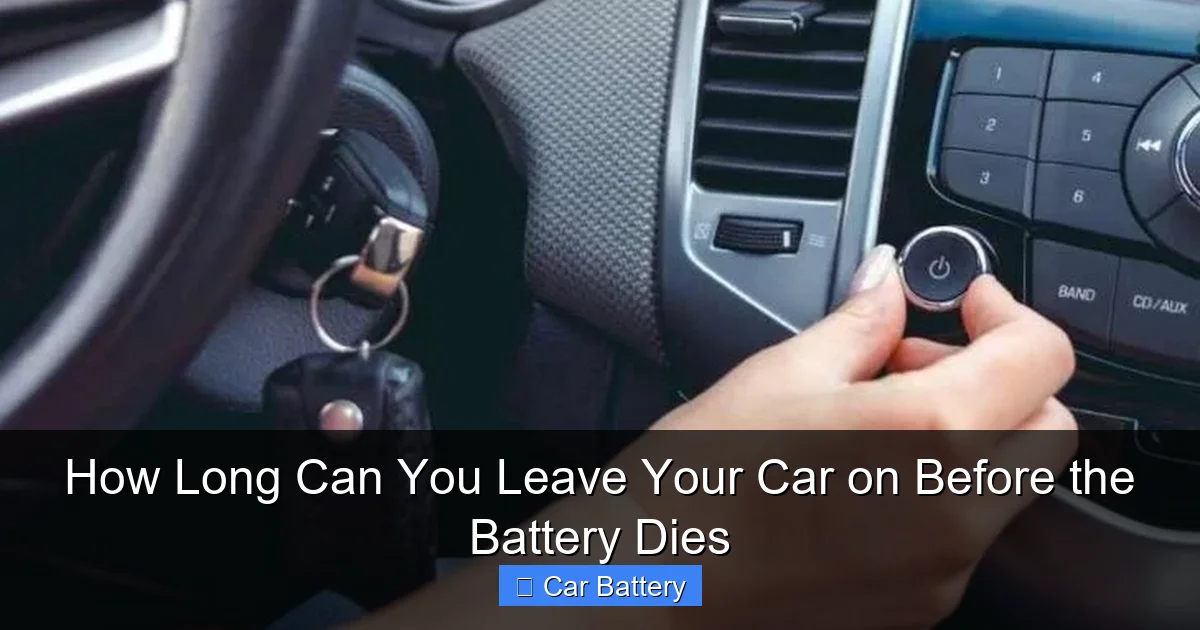
Visual guide about How Long Can You Leave Your Car on Before the Battery Dies
Image source: trucksauthority.com
Now that you understand the basics, let’s look at the real-world factors that determine how long you can leave your car on before the battery dies. These variables can make a huge difference—sometimes cutting your safe idling time in half.
Battery Age and Condition
A brand-new, fully charged battery will last much longer at idle than an old, weak one. Most car batteries last 3–5 years, and their capacity declines gradually over time. A battery that’s 4 years old might only hold 70% of its original charge, meaning it will drain faster.
Signs of a weak battery include slow engine cranking, dim headlights, and frequent need for jump-starts. If your battery is more than 3 years old, it’s wise to get it tested at an auto parts store—many offer free battery checks.
Electrical Load
This is one of the biggest factors. The more electronics you use while idling, the faster your battery will drain. Here’s a rough estimate of power draw for common accessories:
– Headlights: 10–15 amps
– Air conditioning (blower on high): 20–30 amps
– Radio/infotainment system: 5–10 amps
– Phone charger: 2–5 amps
– Heated seats: 5–10 amps each
If you’re running the AC, headlights, and charging two phones, you could be drawing 40–60 amps. If your alternator is only producing 45 amps at idle, the battery is making up the difference—about 5–15 amps of drain per hour.
Engine and Alternator Efficiency
Newer cars often have more efficient alternators and better engine management systems that optimize power output at idle. Some vehicles even have “smart charging” systems that adjust alternator output based on demand and battery state.
Older cars, especially those with high-mileage engines, may have worn alternators that can’t keep up. If your alternator is failing, you might notice flickering lights, a battery warning light, or difficulty starting the car.
Weather Conditions
Cold weather is a major enemy of car batteries. At 32°F (0°C), a battery’s capacity drops by about 20%. At 0°F (-18°C), it can lose up to 50% of its power. That means in freezing temperatures, your battery will die much faster when idling.
Heat isn’t much better. High temperatures accelerate chemical reactions inside the battery, which can lead to faster degradation and water loss. In hot climates, batteries often fail sooner than in cooler regions.
Idling Duration and Frequency
Short bursts of idling—like 5–10 minutes—are generally safe and won’t harm a healthy battery. But if you frequently leave your car running for 20–30 minutes or more, you’re increasing the risk of deep discharge.
Repeated deep discharges (dropping below 50% charge) can cause sulfation, a buildup of lead sulfate crystals on the battery plates that reduces capacity and lifespan.
Real-World Examples: How Long Can You Actually Idle?
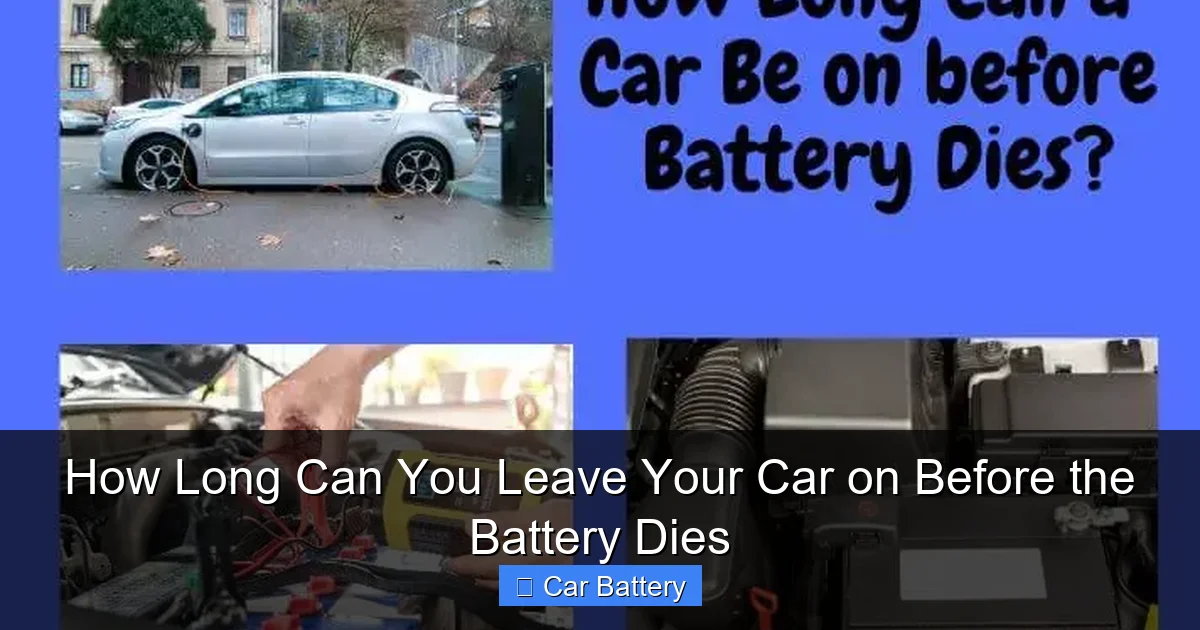
Visual guide about How Long Can You Leave Your Car on Before the Battery Dies
Image source: thepowerfacts.com
Let’s look at some practical scenarios to give you a better idea of how long you can leave your car on before the battery dies.
Scenario 1: Modern Car, Light Load
You’re in a 2020 sedan with a healthy battery. You turn on the engine and let it idle with just the radio on (5 amps). The alternator produces 50 amps at idle, so it easily covers the load and recharges the battery.
In this case, you could idle for 60–90 minutes without issue. The battery might lose a small amount of charge, but not enough to prevent starting the car later.
Scenario 2: Older Car, High Load
You’re in a 2005 SUV with a 4-year-old battery. You leave the engine running with the AC on high (25 amps), headlights (12 amps), and two phone chargers (4 amps each). Total draw: 45 amps.
The alternator produces 40 amps at idle, so the battery is supplying 5 amps. At that rate, the battery will lose about 5 amp-hours per hour. If the battery has a 60 Ah capacity and is at 80% charge (48 Ah), it could last around 8–10 hours—but only if nothing else drains it. In reality, parasitic drains (like the clock or alarm system) and battery inefficiency mean it might die in 4–6 hours.
But here’s the catch: most people don’t idle that long. The real danger is shorter idling sessions that still cause cumulative damage.
Scenario 3: Cold Weather Idling
It’s -10°F (-23°C), and you’re warming up your car. The battery is already weakened by the cold, holding only 50% of its normal capacity. You run the heater (20 amps) and defroster (10 amps). The alternator struggles to produce 30 amps at idle.
The battery is now supplying 0–5 amps, but because it’s cold, it can’t deliver power efficiently. After 20–30 minutes, the battery voltage drops, and the car may not restart.
Risks of Leaving Your Car Idling Too Long
Visual guide about How Long Can You Leave Your Car on Before the Battery Dies
Image source: dd06uqodq6kyk.cloudfront.net
While it might seem convenient to leave your car running, doing so for extended periods comes with several risks—beyond just a dead battery.
Battery Damage
As mentioned, frequent deep discharges can shorten your battery’s life. Most batteries are designed to be recharged quickly after a short discharge (like starting the engine). When you idle for long periods, the battery discharges slowly but deeply, which is harder on its chemistry.
Over time, this leads to reduced capacity and eventual failure. Replacing a car battery can cost $100–$300, depending on the vehicle.
Fuel Waste and Environmental Impact
Idling burns fuel without moving the car. A typical car uses about 0.5–1 gallon of gas per hour at idle. That’s money down the drain and unnecessary emissions. In fact, idling for more than 10 seconds uses more fuel than restarting the engine.
Safety and Security Risks
Leaving your car running unattended increases the risk of theft. Even if you’re nearby, a running car is an easy target. Some states have laws against “vehicle idling” or leaving a car unattended with the engine running.
Engine Wear
Contrary to popular belief, idling doesn’t “warm up” the engine efficiently. Modern engines warm up faster under light load (i.e., driving gently). Idling can also lead to incomplete combustion, which causes carbon buildup in the engine and exhaust system.
Tips to Protect Your Battery While Idling
If you do need to leave your car running, here are some smart tips to minimize battery drain and protect your vehicle.
Limit Electrical Use
Turn off unnecessary accessories. If you’re just waiting in a parking lot, skip the AC and radio. Use heated seats instead of the cabin heater—they use less power and warm you directly.
Keep Idling Short
Aim for 5–10 minutes max. That’s enough to warm up the cabin or defrost windows in most cases. If you need more time, consider using a remote starter with a timer or a block heater in winter.
Use a Battery Maintainer
If you frequently idle your car (like for work or deliveries), consider a smart battery maintainer or trickle charger. These devices keep your battery at full charge without overcharging it.
Get Regular Battery Checks
Have your battery tested annually, especially before winter. Most auto parts stores offer free testing. Replace the battery if it’s more than 4–5 years old or showing signs of weakness.
Consider a Dual-Battery System
For commercial vehicles or RVs, a dual-battery setup can help. One battery starts the engine, while the other powers accessories. This prevents deep discharges on the main battery.
When to Avoid Idling Altogether
There are times when idling is not just unnecessary—it’s a bad idea.
In Extreme Cold
If it’s below freezing, your battery is already weakened. Idling for long periods may not generate enough heat to warm the engine efficiently, and the battery could die before you even start driving.
Instead, use a block heater or remote starter to warm the engine before you leave.
In Hot Weather
Running the AC at idle is inefficient. The engine doesn’t cool as well when stationary, and the AC compressor puts extra strain on the engine and electrical system.
If you’re parked in the heat, consider parking in the shade or using a sunshade to keep the interior cooler.
When the Battery Is Old or Weak
If your battery is more than 3 years old or has been jump-started recently, avoid long idling sessions. The risk of a dead battery is too high.
Conclusion
So, how long can you leave your car on before the battery dies? The short answer: it depends. A healthy battery in a modern car with minimal electrical load might last 60–90 minutes at idle. But an older battery in cold weather with the AC and headlights on could die in under 30 minutes.
The key is to be mindful of your car’s electrical demands and battery condition. Short idling is usually safe, but prolonged idling—especially with high electrical loads—can drain your battery and shorten its life.
Instead of relying on idling, consider alternatives like remote starters, battery maintainers, or simply planning your trips to minimize wait times. Your battery—and your wallet—will thank you.
Remember: your car battery is designed to start the engine, not to power your electronics indefinitely. Treat it well, and it’ll keep you moving for years to come.
Frequently Asked Questions
How long can I leave my car running with the AC on?
You can typically leave your car running with the AC on for 20–40 minutes before the battery starts to drain significantly. However, this depends on your battery’s health, the alternator’s output, and outdoor temperature. In hot weather, the AC draws more power, so monitor your battery voltage if idling for long periods.
Will my car battery recharge while idling?
Yes, but not efficiently. The alternator recharges the battery while the engine runs, but at idle speeds, it produces less power. If your car’s electrical load is high (like running AC or headlights), the alternator may not fully recharge the battery, leading to a net loss over time.
Can I leave my car running overnight?
It’s not recommended. Even with a healthy battery, leaving your car running overnight wastes fuel, increases emissions, and risks theft or mechanical issues. Most cars will eventually drain the battery or run out of gas, especially if electrical loads are high.
Does idling in winter harm my battery?
Yes, especially in extreme cold. Cold temperatures reduce battery capacity and alternator efficiency. Idling may not generate enough heat to warm the engine properly, and the battery can die faster due to increased internal resistance and higher electrical demands for heating.
How can I tell if my battery is too weak to idle safely?
Signs include slow engine cranking, dim headlights when idling, and a battery warning light on the dashboard. If your car struggles to start or has been jump-started recently, avoid long idling sessions and get your battery tested.
Is it better to turn the car off and on or leave it idling?
For stops under 10 seconds, it’s usually fine to leave the car running. For longer stops, turning it off saves fuel and reduces wear. Modern cars with start-stop systems are designed to handle frequent restarts, so don’t worry about engine damage from turning the key.