How Long Can a Car Battery Last with the Radio On
Leaving your car radio on while the engine is off can drain your battery faster than you think. Depending on your battery’s health and the radio’s power draw, you might only get a few hours—or even less—before the battery dies. Understanding how car electronics impact battery life helps prevent unexpected breakdowns.
In This Article
- 1 Key Takeaways
- 2 📑 Table of Contents
- 3 How Long Can a Car Battery Last with the Radio On?
- 4 Understanding Car Battery Basics
- 5 How Much Power Does a Car Radio Use?
- 6 Factors That Affect Battery Drain
- 7 Real-World Examples and Scenarios
- 8 How to Prevent a Dead Battery
- 9 What to Do If Your Battery Dies
- 10 Conclusion
- 11 Frequently Asked Questions
- 11.1 Can I leave my car radio on overnight?
- 11.2 Does turning up the volume drain the battery faster?
- 11.3 Will a new battery last longer with the radio on?
- 11.4 Can I use my car as a power source for camping?
- 11.5 Why does my battery die even when I don’t use the radio?
- 11.6 Is it bad to jump-start a car battery often?
Key Takeaways
- Battery life with the radio on varies: A healthy car battery can typically power a standard radio for 3 to 6 hours with the engine off, but this drops significantly if the battery is old or weak.
- Radio power consumption matters: Modern infotainment systems use more power (50–100+ watts) than older AM/FM radios (10–30 watts), reducing battery life.
- Battery age and condition are critical: A battery older than 3–4 years holds less charge and drains faster, even with minimal electrical load.
- Extreme temperatures affect performance: Cold weather reduces battery capacity, while heat accelerates internal degradation, both shortening runtime.
- Parasitic drain adds up: Other electronics like clocks, alarms, and sensors continue drawing power even when the car is off, reducing available energy for the radio.
- Prevention is key: Use a battery maintainer, avoid long radio sessions with the engine off, and test your battery regularly to avoid surprises.
- Jump-starting isn’t always safe: Repeated deep discharges can permanently damage your battery, so it’s better to prevent drain than rely on jump-starts.
📑 Table of Contents
How Long Can a Car Battery Last with the Radio On?
You’re parked at the park, enjoying your favorite playlist while waiting for a friend. The sun is shining, the windows are down, and life feels good—until you go to start the car and… nothing. The engine won’t turn over. Your battery is dead. Sound familiar?
It’s a common scenario, especially during summer road trips or long waits in parking lots. Many drivers don’t realize that even small electrical devices like the car radio can slowly drain the battery when the engine isn’t running. The truth is, your car battery isn’t designed to power accessories indefinitely. It’s meant to start the engine and then recharge via the alternator. Once the engine is off, the battery becomes the sole power source—and it has limits.
So, how long can a car battery actually last with the radio on? The answer isn’t one-size-fits-all. It depends on several factors: the battery’s age and health, the type of radio or infotainment system, ambient temperature, and whether other electronics are also drawing power. On average, a fully charged, healthy car battery can run a standard radio for about 3 to 6 hours with the engine off. But that number can drop to just 1–2 hours if the battery is older or the system is power-hungry.
Understanding these dynamics helps you make smarter decisions about using your car’s electronics. Whether you’re waiting in a parking lot, camping, or just enjoying some quiet time with music, knowing your battery’s limits can save you from a frustrating—and potentially costly—situation.
Understanding Car Battery Basics
Visual guide about How Long Can a Car Battery Last with the Radio On
Image source: autolovins.com
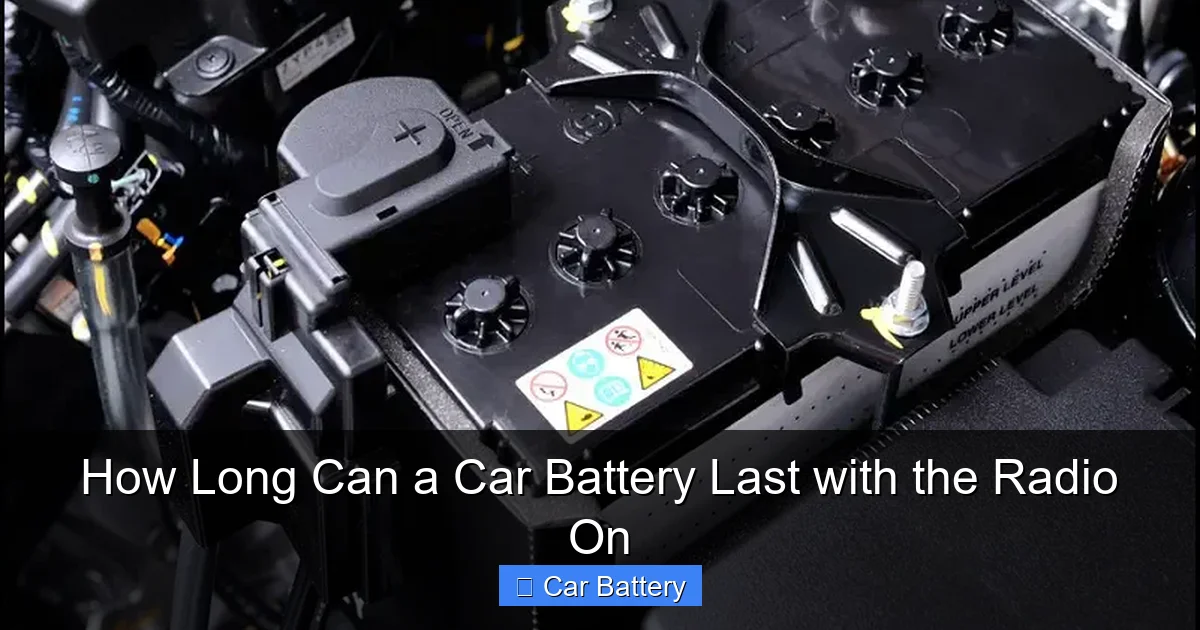
Before diving into how long your radio can run, it helps to understand how a car battery works. Think of your car battery as a rechargeable energy storage unit. It stores electrical energy in chemical form and releases it when needed—primarily to start the engine. Once the engine is running, the alternator takes over, generating electricity to power the car’s systems and recharge the battery.
Most modern cars use a 12-volt lead-acid battery. These batteries are reliable, affordable, and well-suited for the high current demands of starting an engine. A typical car battery has a capacity of around 40 to 70 amp-hours (Ah). This means it can theoretically deliver 1 amp of current for 40 to 70 hours, or 40 to 70 amps for one hour. But in real-world conditions, especially with intermittent loads like a radio, the usable capacity is lower.
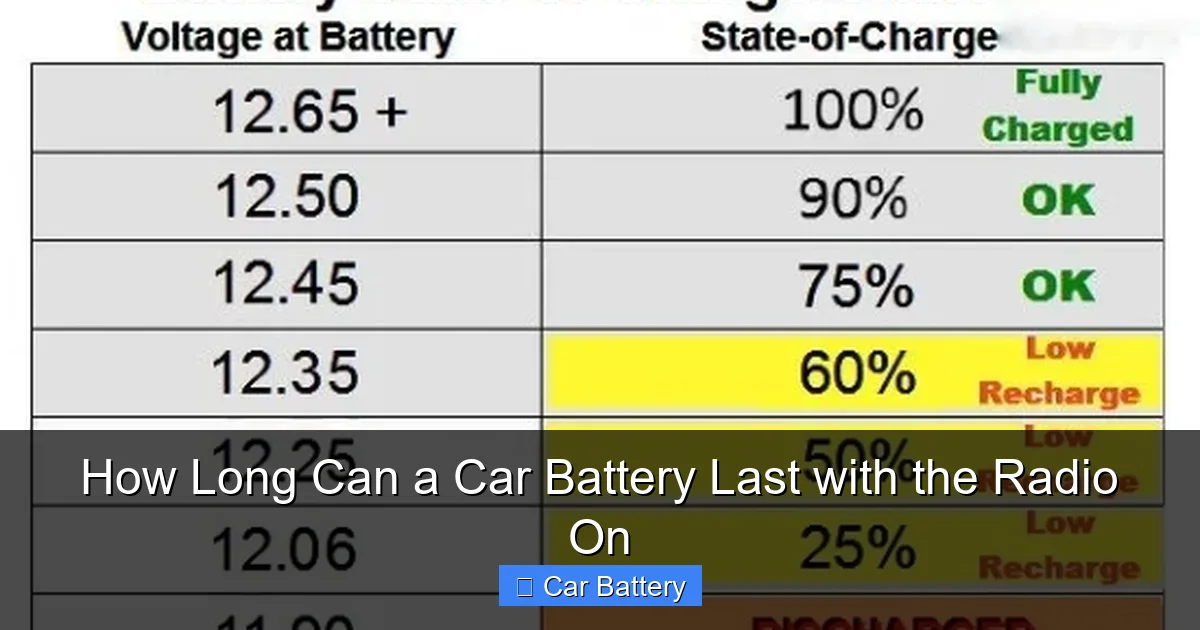
One key concept is the battery’s state of charge (SoC). A fully charged battery is at 100% SoC. As you use electrical devices with the engine off, the SoC drops. Most experts recommend not letting the battery drop below 50% SoC to avoid deep discharge, which can shorten its lifespan. Once the SoC falls too low—usually below 20–30%—the battery may not have enough power to start the engine.
Another important factor is cold cranking amps (CCA), which measures how well a battery can start an engine in cold weather. While CCA doesn’t directly affect how long the radio runs, it’s a good indicator of overall battery health. A battery with low CCA is likely older and less capable of sustaining electrical loads.
How Car Batteries Store and Release Energy
Car batteries use a chemical reaction between lead plates and sulfuric acid electrolyte to store and release energy. When you turn the key, the battery sends a burst of electricity to the starter motor, which cranks the engine. This process consumes a lot of power quickly.
Once the engine starts, the alternator generates electricity to recharge the battery and power the car’s electrical systems. This is why driving for at least 20–30 minutes helps maintain battery charge. Short trips, especially in stop-and-go traffic, don’t give the alternator enough time to fully recharge the battery.
When the engine is off, the battery is the only power source. Devices like the radio, interior lights, clock, and security system draw small amounts of current continuously. This is called parasitic drain. While each device uses only a little power, together they can slowly deplete the battery over time.
The Role of the Alternator
The alternator is like the battery’s partner. It converts mechanical energy from the engine into electrical energy. When the engine runs, the alternator produces 13.5 to 14.5 volts—enough to power the car and recharge the battery.
But when the engine is off, the alternator stops working. That means no new energy is being added to the system. Any electricity used by the radio or other devices comes directly from the battery. This is why leaving the radio on for too long can lead to a dead battery.
How Much Power Does a Car Radio Use?
Visual guide about How Long Can a Car Battery Last with the Radio On
Image source: explorebatteries.net
Not all car radios are created equal. The amount of power your radio consumes depends on its type, age, and features. Older AM/FM radios with basic speakers typically use less power—around 10 to 30 watts. That’s similar to a few LED light bulbs.
But modern infotainment systems are a different story. These systems include large touchscreens, Bluetooth connectivity, navigation, smartphone integration (like Apple CarPlay or Android Auto), and premium sound systems. They can draw 50 to 100 watts or more, especially when the screen is on and the volume is high.
To put this in perspective, a 50-watt radio running on a 12-volt system draws about 4.2 amps (watts ÷ volts = amps). A 100-watt system draws around 8.3 amps. If your battery has a 50 Ah capacity, a 4.2-amp draw could theoretically run for about 12 hours—but that’s under ideal conditions. In reality, battery efficiency drops as the charge depletes, and other factors reduce usable runtime.
Comparing Old vs. New Radios
Let’s compare two scenarios:
– **Older AM/FM Radio (20 watts):** Draws about 1.7 amps. On a 50 Ah battery, it could run for roughly 30 hours in theory. But due to inefficiencies and the need to keep the battery above 50% SoC, safe runtime is closer to 10–15 hours.
– **Modern Infotainment System (80 watts):** Draws about 6.7 amps. On the same battery, theoretical runtime is about 7.5 hours. Realistically, you’d want to limit use to 3–4 hours to avoid deep discharge.
These examples show how much more power modern systems consume. If you have a newer car with a large screen and advanced features, your radio will drain the battery faster than in older vehicles.
Volume and Screen Brightness Matter
Even within the same radio, power use varies. Turning up the volume increases power draw because the amplifier works harder to push more sound through the speakers. Similarly, a bright screen uses more energy than a dim one.
For example, playing music at low volume with the screen off might use 30 watts. Crank the volume and turn on the navigation screen, and it could jump to 70 watts or more. This means your battery will drain faster the more you use the system’s features.
Factors That Affect Battery Drain
Visual guide about How Long Can a Car Battery Last with the Radio On
Image source: radiocodescalculator.com
While the radio’s power draw is important, it’s not the only factor. Several other elements influence how long your battery can last with the radio on.
Battery Age and Health
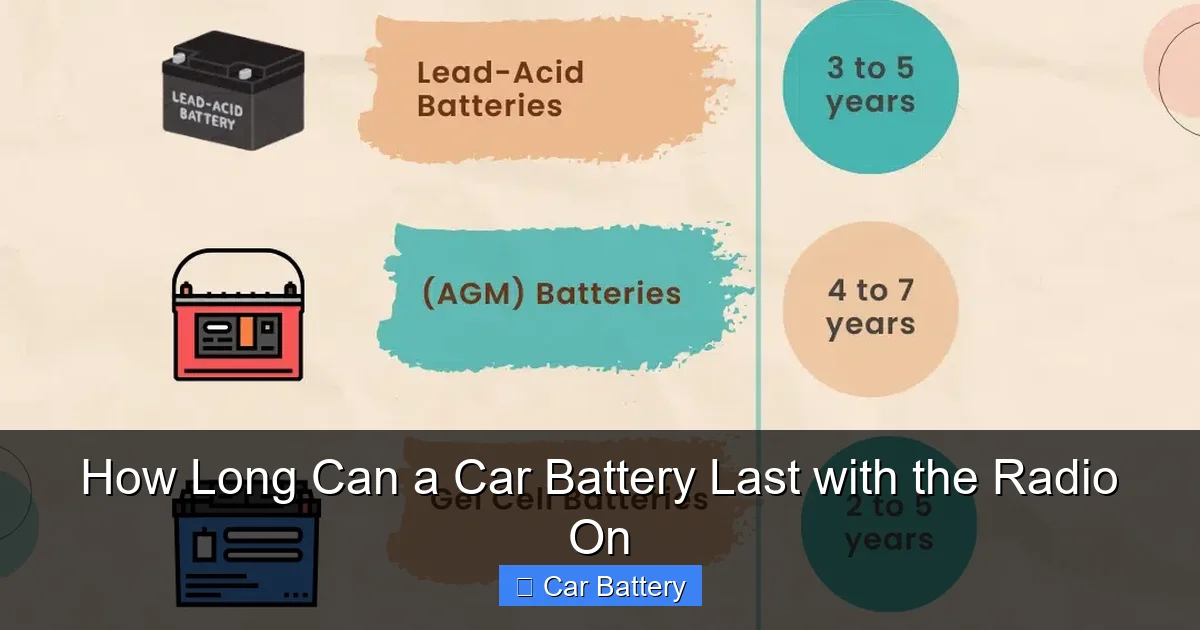
A brand-new battery holds its charge well and can sustain electrical loads longer. But as batteries age—typically after 3 to 5 years—their capacity decreases. Sulfation, a buildup of lead sulfate crystals, reduces the battery’s ability to hold a charge. An old battery might only hold 60–70% of its original capacity.
If your battery is more than 4 years old, it may not last as long with the radio on. Even a small load can drain it quickly. Regular testing at an auto parts store can help you monitor its health.
Temperature Extremes
Temperature plays a huge role in battery performance. In cold weather, chemical reactions slow down, reducing the battery’s ability to deliver power. A battery that works fine in summer might struggle in winter.
Conversely, extreme heat accelerates internal corrosion and evaporation of the electrolyte. This shortens the battery’s lifespan. In hot climates, batteries often fail sooner than in cooler regions.
Both cold and heat reduce the effective capacity of the battery, meaning you’ll get less runtime with the radio on in extreme temperatures.
Parasitic Drain from Other Electronics
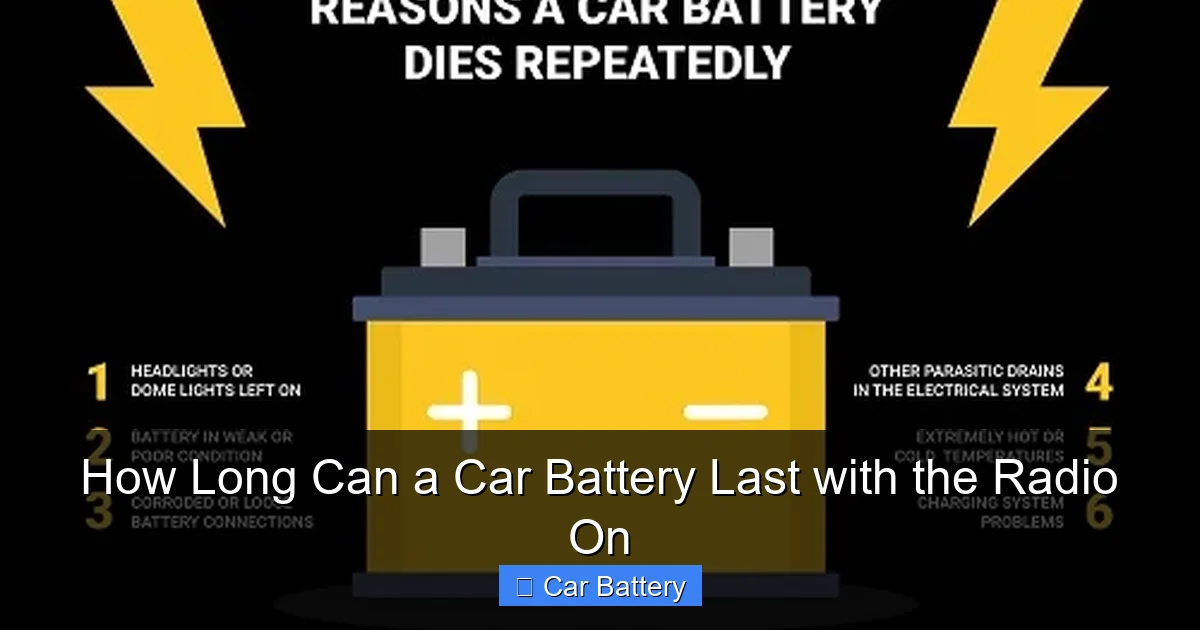
Your car has many systems that draw power even when it’s off. The clock, security system, key fob receiver, and onboard computers all use small amounts of electricity. This is called parasitic drain.
While each device uses only a few milliamps, together they can add up. A typical parasitic drain is 20–50 milliamps. Over 24 hours, that’s 0.5 to 1.2 amp-hours. It might not seem like much, but it reduces the battery’s available capacity for other uses like the radio.
If your car has a faulty component—like a stuck relay or a malfunctioning module—parasitic drain can be much higher, draining the battery in just a day or two.
State of Charge and Driving Habits
How often you drive and how long your trips are also matter. Short trips don’t give the alternator enough time to fully recharge the battery. If you only drive 10 minutes at a time, the battery may never reach full charge.
This means there’s less energy available when you turn off the engine. Even a small load like the radio can drain a partially charged battery faster.
Conversely, long drives help maintain a healthy charge. If you regularly take highway trips, your battery is more likely to stay fully charged and last longer with accessories on.
Real-World Examples and Scenarios
Let’s look at a few real-life situations to see how long a car battery might last with the radio on.
Scenario 1: Weekend Camping Trip
You’re camping and want to listen to music while sitting in your car at night. You have a modern SUV with an 80-watt infotainment system. Your battery is 2 years old and in good condition.
– Radio draw: ~6.7 amps
– Battery capacity: 60 Ah (healthy)
– Safe discharge limit: 50% (30 Ah usable)
Theoretical runtime: 30 Ah ÷ 6.7 A ≈ 4.5 hours
But you also have parasitic drain (~0.03 A) and the screen on, which adds a bit more load. Realistically, you might get 3–4 hours before the battery is too weak to start the car.
Tip: Use a portable power bank or battery maintainer if you plan to use electronics for long periods.
Scenario 2: Waiting in a Parking Lot
You’re waiting for a friend at a mall and turn on the radio to pass the time. Your car has an older AM/FM radio (20 watts). The battery is 4 years old and slightly degraded.
– Radio draw: ~1.7 amps
– Battery capacity: 50 Ah (degraded to ~70% = 35 Ah)
– Usable capacity: 17.5 Ah (50% of 35 Ah)
Runtime: 17.5 Ah ÷ 1.7 A ≈ 10 hours
But with parasitic drain and reduced efficiency, safe runtime is closer to 6–8 hours.
Tip: If you’re waiting longer than an hour, consider turning off the radio or starting the engine periodically to recharge.
Scenario 3: Winter Morning Warm-Up
It’s a cold winter morning. You start the car, turn on the radio and seat heaters, then wait 10 minutes for the engine to warm up. The battery is 5 years old.
Even though the engine is running, the alternator may not fully recharge an old battery, especially in cold weather. If you then turn off the engine and leave the radio on, the battery is already partially drained.
In this case, the radio might only run for 1–2 hours before the battery dies.
Tip: Avoid using high-draw accessories during warm-up. Let the engine run without extra loads to help recharge the battery.
How to Prevent a Dead Battery
The best way to avoid a dead battery is prevention. Here are practical tips to keep your battery healthy and avoid unexpected shutdowns.
Limit Radio Use with Engine Off
The simplest solution is to avoid using the radio (or any accessory) for long periods with the engine off. If you need music or navigation, start the engine periodically to recharge the battery.
A good rule of thumb: don’t use the radio for more than 30–60 minutes at a time with the engine off, especially if your battery is older.
Use a Battery Maintainer or Trickle Charger
If you plan to leave your car unused for days or weeks—like during vacation or winter storage—use a battery maintainer. These devices plug into a wall outlet and provide a slow, steady charge to keep the battery at full capacity.
They’re especially useful for classic cars, RVs, or vehicles that sit for long periods.
Test Your Battery Regularly
Most auto parts stores offer free battery testing. Have your battery checked once a year, or more often if it’s over 3 years old. Testing can reveal issues before they leave you stranded.
Look for signs of a weak battery: slow engine crank, dim headlights, or frequent need for jump-starts.
Reduce Parasitic Drain
If your battery drains quickly even without using the radio, you might have excessive parasitic drain. Common culprits include:
– Faulty door switches (interior lights stay on)
– Aftermarket alarms or stereos
– Malfunctioning modules (like the radio or climate control)
A mechanic can perform a parasitic drain test to identify the source.
Upgrade to a Deep-Cycle Battery (If Needed)
Standard car batteries are designed for short, high-current bursts (starting the engine). They’re not meant for prolonged discharge.
If you frequently use electronics with the engine off—like in an RV or camper—consider a deep-cycle battery. These are built to handle long, steady discharges and recharge well.
Note: Deep-cycle batteries aren’t a direct replacement for starting batteries in most cars. Some vehicles use dual-battery systems for this purpose.
What to Do If Your Battery Dies
Even with precautions, batteries can die. Here’s what to do if you find yourself with a dead battery after leaving the radio on.
Jump-Start the Car
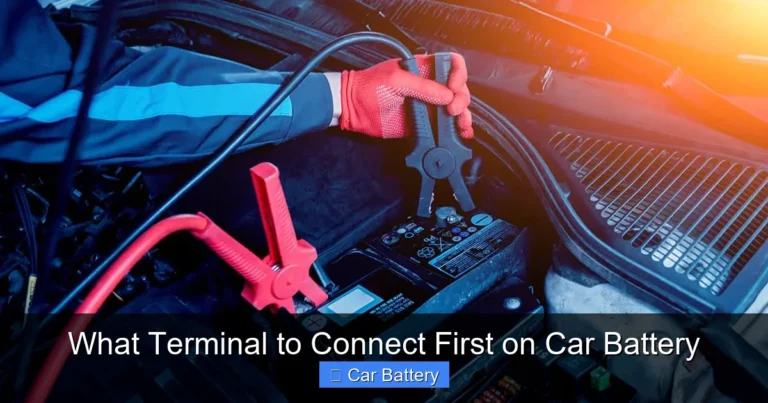
Use jumper cables and another vehicle to jump-start your car. Connect the cables in this order:
1. Red clamp to dead battery’s positive (+) terminal
2. Red clamp to good battery’s positive (+) terminal
3. Black clamp to good battery’s negative (-) terminal
4. Black clamp to an unpainted metal surface on the dead car (ground)
Start the working car, let it run for a few minutes, then try starting the dead car. Once running, leave it on for at least 20–30 minutes to recharge the battery.
Use a Portable Jump Starter
A portable jump starter is a battery-powered device that can jump-start your car without another vehicle. It’s a great backup for emergencies.
Keep one in your trunk, especially if you live in a cold climate or drive an older car.
Call for Roadside Assistance
If you can’t jump-start the car or don’t have the tools, call your roadside assistance service. Most auto clubs offer battery jump services.
Replace the Battery If Needed
If your battery dies frequently—even after recharging—it may be time for a replacement. Most car batteries last 3–5 years. If yours is older, consider replacing it proactively.
Conclusion
So, how long can a car battery last with the radio on? The answer depends on your battery’s health, the radio’s power draw, and other electrical loads. On average, a healthy battery can power a standard radio for 3 to 6 hours with the engine off. But modern infotainment systems, older batteries, and extreme temperatures can reduce that time significantly.
The key takeaway is awareness. Knowing how your car’s electronics affect battery life helps you avoid unexpected breakdowns. Limit radio use when the engine is off, test your battery regularly, and use tools like maintainers or jump starters when needed.
Your car battery is a vital part of your vehicle’s operation. Treat it well, and it will keep you moving—music and all.
Frequently Asked Questions
Can I leave my car radio on overnight?
It’s not recommended. Even a low-power radio can drain your battery overnight, especially if it’s older or the battery is weak. Most batteries won’t have enough charge left to start the car after 8–12 hours.
Does turning up the volume drain the battery faster?
Yes. Higher volume increases power draw because the amplifier works harder. The brighter the screen and the louder the music, the faster your battery will drain.
Will a new battery last longer with the radio on?
Generally, yes. A new, fully charged battery has more capacity and can sustain electrical loads longer than an old or degraded one. But even new batteries have limits.
Can I use my car as a power source for camping?
You can, but with caution. Use a battery maintainer or portable power station for longer trips. Running high-draw devices like coolers or lights can drain your car battery quickly.
Why does my battery die even when I don’t use the radio?
Parasitic drain from clocks, alarms, or faulty electronics can slowly drain the battery over time. If your battery dies frequently, have a mechanic check for excessive drain.
Is it bad to jump-start a car battery often?
Frequent jump-starts can indicate a weak battery or charging system issue. While occasional jumps are fine, repeated deep discharges can shorten the battery’s lifespan.