
How Fast Can a Kia Sportage Go?

The Kia Sportage is a stylish and reliable compact SUV that balances everyday practicality with surprising performance. While not built as a speed demon, its top speed ranges from 115 to 130 mph depending on the engine and model year, making it more than capable for highway driving and daily commutes.
[FEATURED_IMAGE_PLACEOLDER]
Key Takeaways
- Top Speed Range: The Kia Sportage reaches speeds between 115 and 130 mph, depending on the engine and trim level.
- Engine Options: From efficient 2.0L four-cylinders to turbocharged 2.4L and hybrid powertrains, engine choice greatly affects performance.
- Acceleration: 0-60 mph times range from 8.5 to 10.5 seconds, with turbo models offering quicker launches.
- Transmission Impact: Automatic and dual-clutch transmissions influence how quickly the Sportage reaches its top speed.
- AWD vs FWD: All-wheel drive models may feel slightly slower off the line due to added weight, but offer better traction.
- Model Year Differences: Newer models (2023–2024) are more powerful and refined than earlier generations.
- Real-World Usability: While top speed is limited, the Sportage excels in comfort, safety, and fuel efficiency over raw speed.
📑 Table of Contents
- How Fast Can a Kia Sportage Go? A Complete Performance Breakdown
- Understanding Top Speed: What It Means for the Kia Sportage
- Kia Sportage Engine Options and Their Impact on Speed
- Acceleration: How Quickly Does the Kia Sportage Reach 60 mph?
- Transmission and Drivetrain: How They Influence Speed
- Model Year Comparison: How Speed Has Evolved
- Safety, Efficiency, and the Trade-Offs of Speed
- Conclusion: Is the Kia Sportage Fast Enough?
How Fast Can a Kia Sportage Go? A Complete Performance Breakdown
If you’re considering a Kia Sportage, you’re probably drawn to its sleek design, spacious interior, and strong safety ratings. But what about speed? How fast can a Kia Sportage actually go? It’s a fair question—especially if you enjoy spirited driving or frequently travel on highways where passing power and stability matter.
The short answer? The Kia Sportage isn’t built to compete with sports cars, but it’s no slouch either. Depending on the model year, engine type, and drivetrain, the Sportage can reach top speeds between 115 and 130 mph. That’s more than enough for legal highway cruising, merging onto freeways, and even the occasional stretch of open road. While it won’t win any drag races against a Mustang or a BMW X3, the Sportage delivers smooth, confident performance that suits its role as a family-friendly SUV.
In this guide, we’ll dive deep into the performance capabilities of the Kia Sportage across different generations and trims. We’ll explore engine specs, acceleration times, transmission types, and real-world driving dynamics. Whether you’re eyeing a used 2015 model or the latest 2024 hybrid, this article will help you understand exactly what to expect under the hood—and on the road.
Understanding Top Speed: What It Means for the Kia Sportage
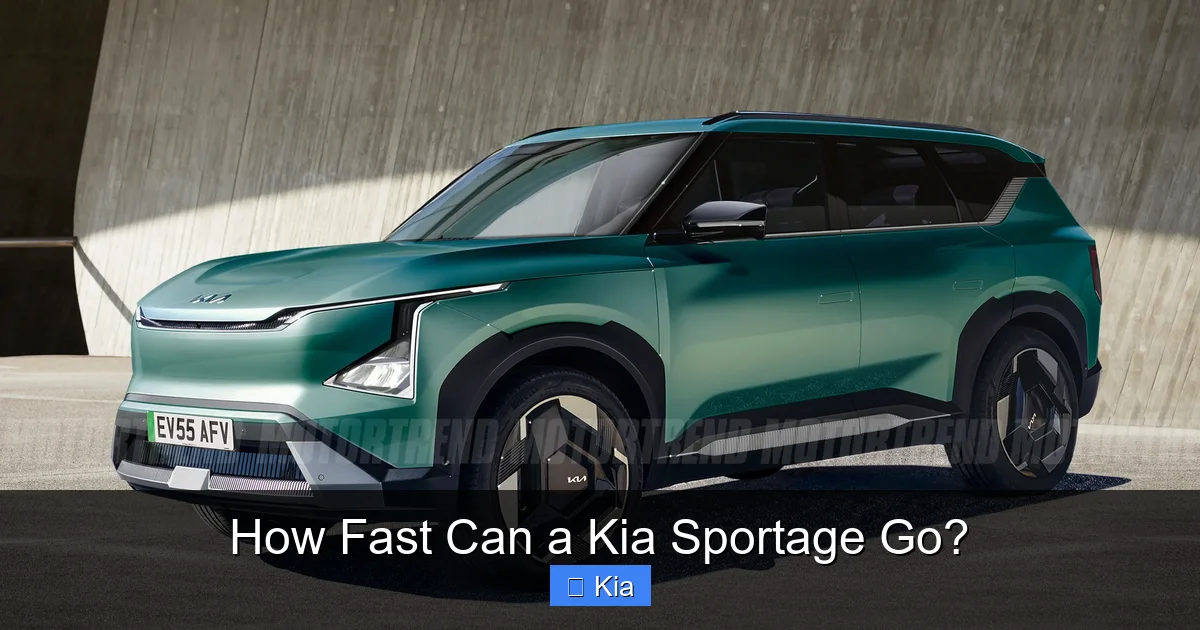
Visual guide about How Fast Can a Kia Sportage Go?
Image source: motortrend.com
Top speed is a measure of how fast a vehicle can go under ideal conditions—flat road, no wind, full throttle. For most drivers, hitting top speed is more of a theoretical milestone than a practical necessity. Still, it’s a useful benchmark for understanding a vehicle’s performance potential.
For the Kia Sportage, top speed is electronically limited to ensure safety, longevity, and fuel efficiency. This is common among modern SUVs, especially those designed for urban and suburban use. The electronic limiter kicks in to prevent the engine from over-revving and to reduce wear and tear on components.
So, why does top speed matter? It’s not just about bragging rights. A higher top speed often correlates with better high-speed stability, stronger passing power, and a more responsive driving experience. For example, if you’re driving on a German autobahn or a long stretch of rural highway, having that extra headroom can make merging and overtaking safer and less stressful.
In the case of the Sportage, the top speed varies based on the powertrain. Older models with smaller engines may cap out around 115 mph, while newer turbocharged or hybrid versions can push closer to 130 mph. These numbers reflect real-world testing and manufacturer data, not just lab simulations.
Why Top Speed Is Electronically Limited
Most modern vehicles, including the Kia Sportage, come with electronic speed limiters. These are programmed into the car’s engine control unit (ECU) to cap maximum velocity. The reasons are practical: reducing stress on the engine and transmission, improving fuel economy, and enhancing safety.
For a compact SUV like the Sportage, which is designed for comfort and efficiency, pushing beyond 130 mph isn’t necessary—and could be dangerous. At high speeds, factors like wind resistance, tire grip, and braking distance become critical. The Sportage’s suspension and aerodynamics are tuned for everyday driving, not high-speed track performance.
That said, the electronic limiter doesn’t hinder normal driving. You’ll never feel restricted during daily commutes or weekend road trips. In fact, the limiter helps protect your investment by preventing excessive wear.
Real-World vs. Theoretical Top Speed
It’s important to distinguish between theoretical top speed (as claimed by manufacturers) and real-world performance. In practice, factors like altitude, temperature, road surface, and vehicle load can affect how fast your Sportage can actually go.
For example, driving at high altitude (like in Denver or Mexico City) reduces engine power due to thinner air. This can lower your top speed by 5–10 mph. Similarly, carrying a full load of passengers and luggage adds weight, which can slow acceleration and reduce maximum velocity.
Weather also plays a role. Hot temperatures can cause engine overheating, prompting the ECU to reduce power output. On the other hand, cool, dry conditions are ideal for peak performance.
Despite these variables, the Sportage remains consistent. Most drivers report achieving speeds within 5 mph of the official top speed under good conditions. That’s a testament to Kia’s engineering and tuning.
Kia Sportage Engine Options and Their Impact on Speed

Visual guide about How Fast Can a Kia Sportage Go?
Image source: mobileabode.net
The heart of any vehicle’s performance is its engine—and the Kia Sportage offers several over the years. From naturally aspirated four-cylinders to turbocharged and hybrid powertrains, each engine brings different strengths to the table.
Let’s break down the key engine options and how they affect speed and acceleration.
2.0L Four-Cylinder (2011–2016)
The early-generation Sportage (2011–2016) often came with a 2.0L inline-four engine. This engine produced around 164 to 181 horsepower and 159 to 171 lb-ft of torque. Paired with a 6-speed automatic transmission, it delivered adequate power for city driving and light highway use.
Top speed for this engine was typically around 115–120 mph. Acceleration from 0 to 60 mph took about 9.5 to 10.5 seconds—respectable for its time, but not thrilling. This engine prioritized fuel efficiency and reliability over performance, making it a solid choice for budget-conscious buyers.
2.4L Four-Cylinder (2017–2022)
With the third-generation refresh in 2017, Kia introduced a more powerful 2.4L four-cylinder engine. This unit produced 181 horsepower and 176 lb-ft of torque. It offered smoother power delivery and better mid-range acceleration.
Top speed increased slightly to around 120–125 mph. The 0-60 mph time improved to about 8.5–9.5 seconds, depending on whether the vehicle had front-wheel drive (FWD) or all-wheel drive (AWD). The 2.4L engine also came with improved fuel economy and a more refined driving feel.
1.6L Turbocharged (2023–2024)
The latest Sportage models (2023–2024) feature a 1.6L turbocharged four-cylinder engine. This is a significant upgrade, delivering 177 to 190 horsepower and 195 lb-ft of torque. Thanks to turbocharging, this engine provides strong low-end torque, making it feel more responsive from a stop.
Top speed for the turbo model reaches approximately 125–130 mph. The 0-60 mph time drops to around 8.5 seconds—faster than previous generations. This engine is also more fuel-efficient, thanks to direct injection and advanced valve timing.
Hybrid and Plug-in Hybrid Options (2023–2024)
For 2023 and 2024, Kia introduced hybrid and plug-in hybrid (PHEV) versions of the Sportage. The hybrid combines a 2.0L engine with an electric motor for a total output of 227 horsepower. The PHEV bumps that up to 261 horsepower.
Despite the added weight of the battery and electric components, these models are surprisingly quick. The hybrid can reach 60 mph in about 8.0 seconds, while the PHEV does it in roughly 7.5 seconds. Top speeds are similar to the turbo model—around 125–130 mph.
The electric motor provides instant torque, giving the Sportage a peppy feel in city driving. On the highway, the gasoline engine takes over, maintaining high speeds with ease.
Turbocharged 2.0L (Discontinued)
Earlier Sportage models (2011–2016) offered a 2.0L turbocharged engine in the SX trim. This engine produced 260 horsepower and 260 lb-ft of torque—making it the fastest Sportage of its era.
With this engine, the Sportage could hit 60 mph in just 6.5 seconds and reach a top speed of around 130 mph. It was a rare gem, combining SUV practicality with sports car-like acceleration. Unfortunately, this engine was discontinued after 2016 due to reliability concerns and high maintenance costs.
Still, if you’re shopping for a used Sportage, the SX trim with the 2.0T engine is worth considering if you want maximum performance.
Acceleration: How Quickly Does the Kia Sportage Reach 60 mph?
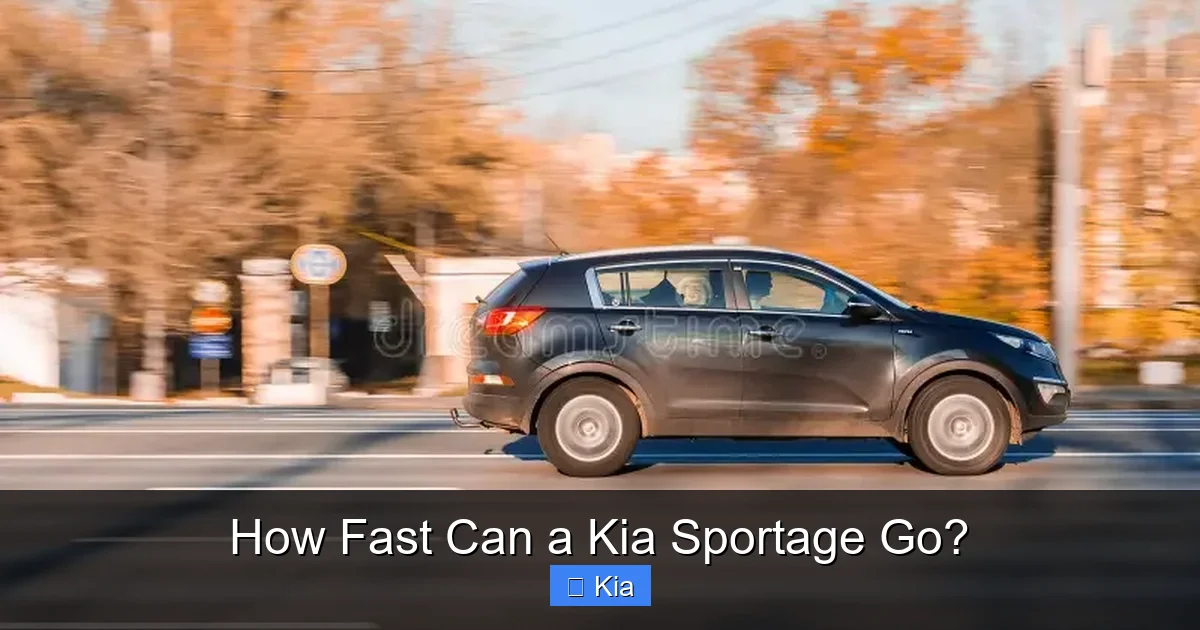
Visual guide about How Fast Can a Kia Sportage Go?
Image source: thumbs.dreamstime.com
Top speed tells part of the story, but acceleration is just as important—especially when merging onto highways or passing slower vehicles. The Kia Sportage’s 0-60 mph times vary widely depending on the engine and drivetrain.
Let’s look at how different models stack up.
0-60 mph Times by Engine Type
- 2.0L Four-Cylinder (2011–2016): 9.5–10.5 seconds
- 2.4L Four-Cylinder (2017–2022): 8.5–9.5 seconds
- 1.6L Turbo (2023–2024): 8.5 seconds
- Hybrid (2023–2024): 8.0 seconds
- Plug-in Hybrid (2023–2024): 7.5 seconds
- 2.0L Turbo (SX Trim, 2011–2016): 6.5 seconds
As you can see, the newer hybrid and turbo models are significantly quicker than older versions. The PHEV, in particular, offers sports car-like acceleration for an SUV in this class.
Factors That Affect Acceleration
Several factors influence how fast your Sportage can accelerate:
- Drivetrain: FWD models are generally lighter and quicker than AWD versions. However, AWD provides better traction in wet or snowy conditions.
- Transmission: The 6-speed automatic in older models is smooth but not as quick-shifting as the 8-speed automatic or dual-clutch transmission in newer Sportages.
- Weight: Heavier vehicles take longer to accelerate. The hybrid and PHEV models are heavier due to batteries, but their electric motors compensate with instant torque.
- Tire Grip: Performance tires can improve launch traction, especially in turbo or hybrid models.
Real-World Driving Experience
In everyday driving, the Sportage feels responsive and confident. The turbo and hybrid models, in particular, offer strong low-end torque, making them feel lively from a stoplight. Highway passing is easy, with plenty of power available between 50 and 70 mph.
Even the base engines are adequate for most drivers. You won’t feel underpowered on flat roads or mild inclines. However, if you frequently drive in hilly areas or carry heavy loads, a turbo or hybrid model is recommended.
Transmission and Drivetrain: How They Influence Speed
The transmission and drivetrain play a crucial role in how the Kia Sportage delivers power to the wheels—and ultimately, how fast it can go.
Automatic Transmissions
Most Sportage models come with a 6-speed or 8-speed automatic transmission. The 6-speed is found in older models and is reliable but not particularly quick. The 8-speed, introduced in newer models, offers smoother shifts and better fuel economy.
The 8-speed transmission also improves acceleration by keeping the engine in its optimal power band. This is especially helpful during highway merging or uphill driving.
Dual-Clutch Transmission (DCT)
Some 2023–2024 Sportage trims offer a dual-clutch transmission (DCT). This type of transmission uses two clutches to pre-select gears, resulting in lightning-fast shifts. It’s commonly used in performance vehicles and high-end SUVs.
The DCT enhances both acceleration and top speed by minimizing power loss during gear changes. Drivers often report a more engaging and responsive feel with the DCT, especially in Sport mode.
Front-Wheel Drive (FWD) vs. All-Wheel Drive (AWD)
The Sportage is available in both FWD and AWD configurations. FWD is standard on most trims, while AWD is optional or standard on higher-end models.
FWD models are lighter and more fuel-efficient, which can improve acceleration and top speed. AWD adds about 100–150 pounds and slightly reduces fuel economy, but it provides better traction in rain, snow, or off-road conditions.
In terms of speed, the difference is minimal—usually less than 0.5 seconds in 0-60 mph times. However, AWD can feel more stable at high speeds, especially in windy conditions.
Drive Modes: Eco, Normal, and Sport
Newer Sportage models come with selectable drive modes. These adjust throttle response, transmission shift points, and steering feel.
- Eco Mode: Prioritizes fuel efficiency by softening throttle response and reducing top speed slightly.
- Normal Mode: Balanced setting for everyday driving.
- Sport Mode: Sharpens throttle response, holds gears longer, and may increase top speed by reducing electronic limitations.
In Sport mode, the 1.6L turbo and hybrid models feel noticeably more aggressive. While the top speed increase is modest (usually 2–5 mph), the improved responsiveness makes the Sportage feel quicker and more engaging.
Model Year Comparison: How Speed Has Evolved
The Kia Sportage has undergone significant changes over the years. Let’s compare top speeds and performance across key model years.
2011–2016: The Second Generation
These models featured the 2.0L and 2.0L turbo engines. The base 2.0L had a top speed of 115–120 mph, while the turbocharged SX trim reached 130 mph. Acceleration was modest for the base model but impressive for the turbo.
2017–2022: The Third Generation
With the 2.4L engine, top speed increased to 120–125 mph. The design was more aerodynamic, and the suspension was tuned for better handling. Fuel economy also improved.
2023–2024: The Fourth Generation
The latest Sportage is the fastest and most efficient yet. With the 1.6L turbo, hybrid, and PHEV options, top speed reaches 125–130 mph. The new platform is lighter and stiffer, improving both speed and ride quality.
Performance Trends
Over time, the Sportage has become quicker, more efficient, and more refined. While top speed gains have been incremental, the real improvements are in acceleration, responsiveness, and driving dynamics.
Safety, Efficiency, and the Trade-Offs of Speed
While it’s fun to talk about top speed and acceleration, the Kia Sportage is first and foremost a practical SUV. Its design prioritizes safety, comfort, and fuel efficiency over raw performance.
Safety Features
The Sportage consistently earns high safety ratings from the IIHS and NHTSA. Features like forward collision warning, lane-keeping assist, and adaptive cruise control help prevent accidents—even at high speeds.
Stability control and anti-lock brakes ensure the vehicle remains controllable during sudden maneuvers. These systems are especially important when driving near top speed.
Fuel Efficiency
Speed and fuel economy are often at odds. The faster you drive, the more fuel you burn. The Sportage strikes a good balance, with EPA estimates ranging from 25 to 35 mpg combined, depending on the engine and drivetrain.
Hybrid and PHEV models are the most efficient, offering up to 38 mpg combined. Even at highway speeds, they maintain strong fuel economy thanks to regenerative braking and smart power management.
The Real-World Value of Speed
For most drivers, the Sportage’s speed is more than adequate. You’ll rarely need to drive at 130 mph—and doing so is illegal in most places. What matters more is how the vehicle feels during everyday driving: smooth, confident, and responsive.
The Sportage excels in these areas. It’s quiet, comfortable, and easy to drive. Whether you’re commuting to work or taking a family road trip, it delivers a satisfying experience.
Conclusion: Is the Kia Sportage Fast Enough?
So, how fast can a Kia Sportage go? The answer depends on the model, but most can reach 115–130 mph, with 0-60 mph times between 7.5 and 10.5 seconds. While it’s not a performance SUV, it’s more than capable for daily driving, highway travel, and occasional spirited runs.
The latest hybrid and turbo models offer the best blend of speed, efficiency, and technology. If you want maximum performance, look for the 2023–2024 PHEV or turbo trims. For budget buyers, older models still deliver reliable performance.
Ultimately, the Sportage is designed for real-world usability—not track days. Its strength lies in comfort, safety, and value. But don’t let that fool you: under the right conditions, this SUV can surprise you with its speed and agility.
Whether you’re cruising down the highway or navigating city streets, the Kia Sportage proves that practicality and performance can go hand in hand.
Frequently Asked Questions
What is the top speed of a Kia Sportage?
The top speed of a Kia Sportage ranges from 115 to 130 mph, depending on the engine and model year. Newer turbo and hybrid models reach the higher end of this range.
How fast can a Kia Sportage go from 0 to 60 mph?
Acceleration times vary by model, but most Kia Sportages reach 60 mph in 7.5 to 10.5 seconds. The plug-in hybrid is the fastest, at around 7.5 seconds.
Does the Kia Sportage have a speed limiter?
Yes, all modern Kia Sportage models have an electronic speed limiter to protect the engine and ensure safety. This is common in SUVs designed for everyday use.
Which Kia Sportage engine is the fastest?
The 2.0L turbocharged engine (found in the 2011–2016 SX trim) is the fastest, with 260 horsepower and a 0-60 mph time of 6.5 seconds. The 2023–2024 PHEV is also very quick.
Is the Kia Sportage AWD slower than FWD?
AWD models are slightly slower due to added weight, but the difference is minimal—usually less than half a second in 0-60 mph times. AWD offers better traction in poor weather.
Can the Kia Sportage handle high-speed driving?
Yes, the Sportage is stable and safe at highway speeds. Its suspension, brakes, and safety systems are designed to handle high-speed driving confidently and comfortably.
