How Does the Subaru Trade-up Program Work?

Contents
- 1 Key Takeaways
- 2 📑 Table of Contents
- 3 How Does the Subaru Trade-Up Program Work?
- 4 What Is the Subaru Trade-Up Program?
- 5 Step-by-Step: How the Trade-Up Process Works
- 6 Eligibility and Requirements
- 7 Benefits of the Subaru Trade-Up Program
- 8 Tips to Maximize Your Trade-Up Value
- 9 Real-Life Example: Sarah’s Trade-Up Experience
- 10 Conclusion
- 11 Frequently Asked Questions

Anti-Slip Dashboard Mat

Portable Air Pump

Car Floor Mats (Universal)
Waterless Car Wash Spray
The Subaru Trade-Up Program makes upgrading your current vehicle simple and affordable. It combines trade-in value, incentives, and flexible financing to help you move into a newer Subaru model with confidence.
Key Takeaways
- Trade-In Value Maximization: The program helps you get the best possible value for your current vehicle, whether it’s a Subaru or another brand.
- Exclusive Incentives: Eligible customers may receive special trade-up bonuses, cash allowances, or financing deals not available to the general public.
- Wide Vehicle Eligibility: You can trade in almost any make or model, as long as it’s in good condition and meets mileage guidelines.
- Streamlined Process: From appraisal to financing, the entire trade-up experience is designed to be fast, transparent, and hassle-free.
- Newer Subaru Models: Trade up to the latest Subaru vehicles, including Outback, Forester, Crosstrek, and Ascent, with updated safety and tech features.
- Dealer Support: Local Subaru dealerships guide you through every step, offering personalized advice and flexible options.
- Environmental Benefits: Upgrading to a newer, more fuel-efficient Subaru reduces emissions and supports sustainable driving.
📑 Table of Contents
How Does the Subaru Trade-Up Program Work?
If you’re driving a used car—whether it’s a Subaru or another brand—and you’ve been thinking about upgrading to something newer, safer, and more efficient, the Subaru Trade-Up Program might be exactly what you need. It’s not just a trade-in deal; it’s a thoughtfully designed program that makes moving into a newer Subaru model easier, more affordable, and surprisingly stress-free.
Unlike standard trade-in offers that often leave you wondering if you got a fair deal, the Subaru Trade-Up Program is built on transparency, incentives, and customer support. Whether you’re trading in a high-mileage sedan or a well-loved SUV, this program is designed to reward loyalty and make the transition to a newer vehicle seamless. From appraisal to financing, everything is handled with care and clarity.
In this guide, we’ll walk you through every aspect of the Subaru Trade-Up Program—how it works, who qualifies, what vehicles are eligible, and how you can maximize your benefits. By the end, you’ll have a clear picture of whether this program is right for you and how to take full advantage of it.
What Is the Subaru Trade-Up Program?
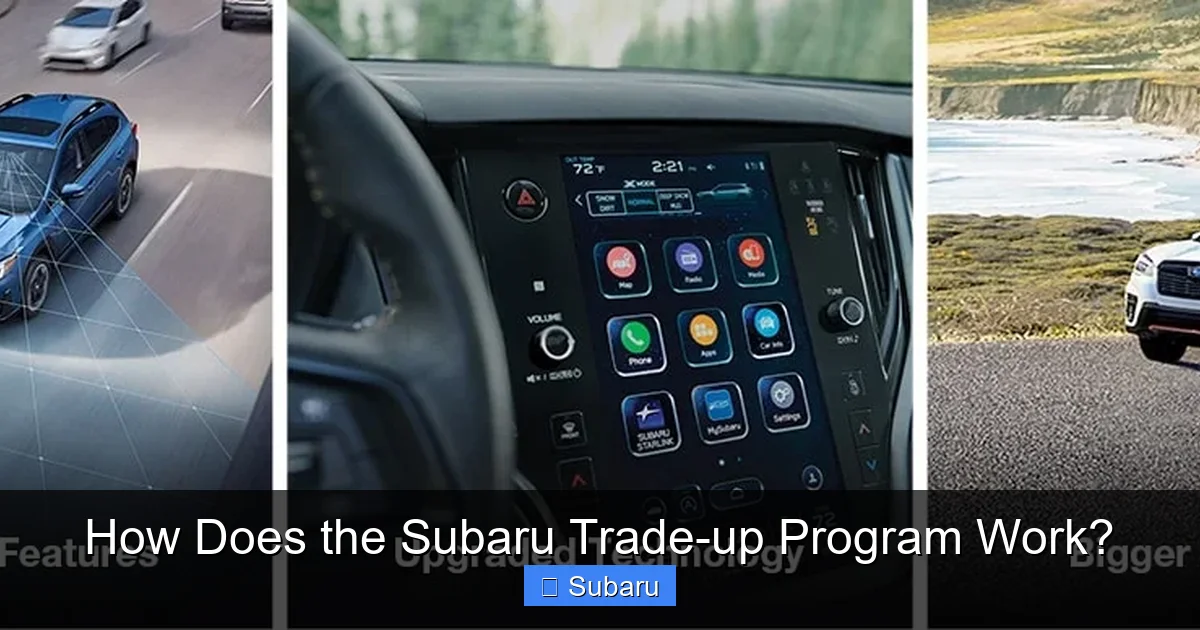
Visual guide about How Does the Subaru Trade-up Program Work?
Image source: goldsteinsubaru.com
The Subaru Trade-Up Program is a special initiative offered by Subaru of America and participating dealerships to help current vehicle owners upgrade to a newer Subaru model. It’s not a one-size-fits-all promotion, but rather a flexible framework that combines trade-in value, manufacturer incentives, and dealer support to make upgrading more accessible.
At its core, the program encourages drivers to trade in their current vehicle—regardless of make or model—and apply its value toward the purchase or lease of a new Subaru. What sets it apart from a standard trade-in is the added layer of incentives. These can include cash allowances, reduced interest rates, or bonus trade-in value, especially if you’re trading in an older Subaru.
For example, if you’ve been driving a 2015 Outback with 90,000 miles, the program might offer you a higher trade-in value than you’d get elsewhere, plus a $1,000 trade-up bonus toward a new 2024 Outback. That’s real savings that can significantly reduce your monthly payments or down payment.
The program is available at most authorized Subaru dealerships across the U.S., and it’s often promoted during seasonal sales events or new model launches. It’s particularly popular among loyal Subaru owners looking to stay within the brand, but it’s also open to drivers trading in vehicles from other manufacturers.
Who Can Participate?
One of the best things about the Subaru Trade-Up Program is its inclusivity. You don’t need to be a Subaru owner to qualify. Whether you drive a Honda, Toyota, Ford, or even a luxury brand like BMW or Audi, you can still take advantage of the program—as long as your vehicle meets certain criteria.
To be eligible, your current vehicle must be in good working condition, with no major mechanical issues or structural damage. It should also have a clean title (no salvage or rebuilt status) and reasonable mileage—typically under 150,000 miles, though this can vary by dealer.
Subaru owners often receive additional perks, such as loyalty bonuses or enhanced trade-in values, but non-Subaru vehicles are still welcome. The goal is to make upgrading accessible to a wide range of drivers, not just brand loyalists.
How It Differs from a Standard Trade-In
While every dealership offers trade-ins, the Subaru Trade-Up Program goes beyond the basics. A standard trade-in might give you a fair market value based on tools like Kelley Blue Book or Edmunds, but it rarely includes extra incentives.
In contrast, the Trade-Up Program often bundles in manufacturer-backed bonuses. These can include:
– A trade-up allowance (e.g., $500–$1,500 extra toward your new Subaru)
– Special financing rates (e.g., 0.9% APR for 36 months)
– Loyalty rewards for returning Subaru customers
– Waived fees or complimentary maintenance packages
These extras can make a significant difference in your overall cost. For instance, a $1,000 trade-up bonus on a $30,000 vehicle is like getting a 3.3% discount—money you can use to lower your monthly payment or put toward accessories.
Step-by-Step: How the Trade-Up Process Works
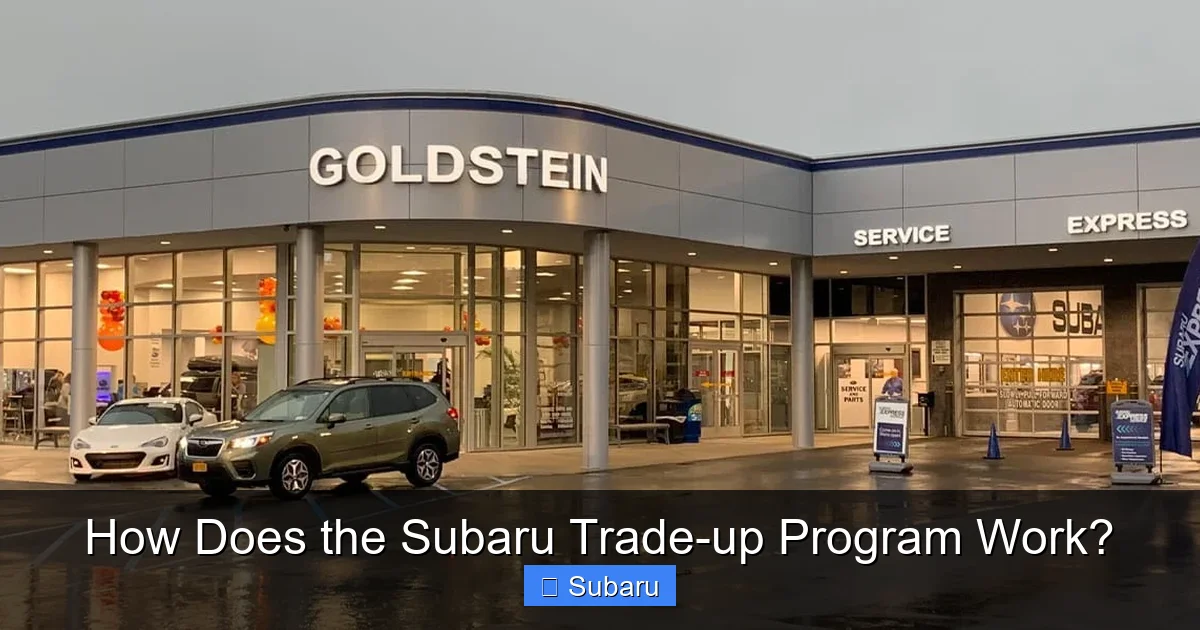
Visual guide about How Does the Subaru Trade-up Program Work?
Image source: goldsteinsubaru.com
Upgrading through the Subaru Trade-Up Program is designed to be straightforward. Here’s a step-by-step breakdown of what to expect, from start to finish.
Step 1: Assess Your Current Vehicle
Before you visit a dealership, take some time to evaluate your current car. Gather key details like:
– Make, model, year, and trim level
– Mileage
– Condition (interior, exterior, mechanical)
– Service history and maintenance records
– Any aftermarket modifications
Having this information ready will help speed up the appraisal process and give you a clearer idea of your vehicle’s value. You can also use online tools like Kelley Blue Book’s “Trade-In Value” estimator or Edmunds’ “Appraise My Car” feature to get a ballpark figure.
Keep in mind that these tools provide estimates based on averages. The actual trade-in value offered by a Subaru dealer may be higher or lower, depending on local demand, vehicle condition, and current incentives.
Step 2: Visit a Participating Subaru Dealership
Once you’re ready, schedule a visit to a local Subaru dealership that participates in the Trade-Up Program. Most do, but it’s always a good idea to call ahead and confirm.
When you arrive, a sales consultant will walk you through the process. They’ll inspect your vehicle, review its history, and provide a formal appraisal. This usually takes 15–30 minutes and includes a test drive if needed.
During the appraisal, be honest about any issues—like a dent, worn tires, or a check engine light. Transparency builds trust and ensures you get an accurate offer.
Step 3: Receive Your Trade-In Offer
After the inspection, the dealer will present you with a trade-in offer. This amount reflects your vehicle’s market value, adjusted for condition, mileage, and demand.
If you’re eligible for the Trade-Up Program, the dealer will also explain any additional incentives. For example, they might say:
> “Based on your 2017 Forester with 78,000 miles, we’re offering $12,500 for your trade-in. Plus, as part of the Trade-Up Program, you qualify for a $1,000 bonus toward a new 2024 Forester.”
That $1,000 bonus is real money that reduces your out-of-pocket cost. It’s not a rebate you have to wait for—it’s applied directly at the time of purchase.
Step 4: Choose Your New Subaru
Now comes the fun part: picking your new vehicle. The dealer will show you available models that fit your budget and needs. Popular options include:
– **Subaru Outback:** Ideal for families and outdoor enthusiasts, with standard AWD and ample cargo space.
– **Subaru Forester:** A compact SUV with excellent visibility, safety ratings, and fuel efficiency.
– **Subaru Crosstrek:** A sporty, urban-friendly crossover with rugged capability.
– **Subaru Ascent:** A three-row SUV perfect for larger families.
You can compare trims, colors, and features, and even take a test drive. Many dealers also offer virtual tours or online configurators to help you explore options from home.
Step 5: Finalize Financing and Complete the Trade
Once you’ve selected your new Subaru, the dealer will help you finalize the financing. This includes:
– Applying your trade-in value as a down payment
– Adding any trade-up incentives
– Calculating your monthly payment based on loan term and interest rate
– Reviewing warranty and maintenance options
If you’re leasing, the process is similar—your trade-in value reduces the capitalized cost of the lease, lowering your monthly payment.
Before signing, review all documents carefully. Make sure the trade-in value, incentives, and loan terms match what was discussed. Ask questions if anything is unclear.
Once everything is signed, you’ll hand over your old keys and drive away in your new Subaru—often on the same day.
Eligibility and Requirements

Visual guide about How Does the Subaru Trade-up Program Work?
Image source: di-sitebuilder-assets.s3.amazonaws.com
While the Subaru Trade-Up Program is open to a wide range of drivers, there are some guidelines to ensure fairness and sustainability.
Vehicle Condition Standards
Your trade-in must be in good overall condition. This means:
– No major body damage (dents, rust, or paint issues are acceptable if minor)
– Functional engine, transmission, and essential systems
– Working lights, signals, and safety features
– Clean interior with no excessive wear or odors
Vehicles with salvage titles, flood damage, or major mechanical problems (like a blown engine) are typically not eligible.
Mileage Limits
Most dealers prefer vehicles with under 150,000 miles, though exceptions can be made for well-maintained cars. High-mileage vehicles may still qualify, but their trade-in value will be lower.
Title and Ownership
You must have a clean title in your name. If the car is still financed, the dealer can help pay off the remaining loan balance as part of the trade-in process—this is called “rolling over” the loan.
Geographic Availability
The program is available at participating Subaru dealerships across the United States. Availability and specific incentives may vary by region and time of year.
Benefits of the Subaru Trade-Up Program
Why choose the Trade-Up Program over a private sale or standard trade-in? Here are the top benefits.
Higher Trade-In Value
Dealers often offer more than private buyers because they can resell your vehicle at auction or through their used car department. Plus, the Trade-Up Program may include bonus incentives that boost your total value.
Convenience and Speed
Selling a car privately takes time—listing, showing, negotiating, and handling paperwork. With the Trade-Up Program, you can complete the entire process in one visit, often within a few hours.
Tax Savings
In most states, you only pay sales tax on the difference between your new car’s price and your trade-in value. For example, if your new Subaru costs $35,000 and your trade-in is worth $15,000, you only pay tax on $20,000. This can save you hundreds of dollars.
Access to Latest Technology
Newer Subaru models come with advanced safety features like EyeSight Driver Assist Technology, adaptive cruise control, lane departure warning, and automatic emergency braking. Upgrading gives you peace of mind and a more enjoyable driving experience.
Improved Fuel Efficiency
Modern Subarus are more fuel-efficient than older models. For example, a 2024 Outback gets up to 29 MPG combined, compared to 24 MPG for a 2015 model. Over time, that adds up to real savings at the pump.
Warranty Protection
New Subarus come with a comprehensive warranty—typically 3 years/36,000 miles basic and 5 years/60,000 miles powertrain. This coverage protects you from unexpected repair costs and adds long-term value.
Tips to Maximize Your Trade-Up Value
Want to get the most out of the program? Follow these practical tips.
Clean and Detail Your Vehicle
First impressions matter. Wash and wax the exterior, vacuum the interior, and remove personal items. A clean car looks well-maintained and can increase its perceived value.
Fix Minor Issues
Small repairs—like replacing burnt-out bulbs, fixing a cracked windshield, or touching up paint—can make a big difference. They show the dealer you’ve cared for the vehicle.
Gather Documentation
Bring your owner’s manual, service records, and any receipts for repairs or upgrades. This proves the car has been well-maintained and can justify a higher offer.
Time Your Trade-In
Dealerships often run promotions during holidays, end-of-year sales, or new model launches. Trading in during these periods may qualify you for extra incentives.
Negotiate Confidently
Know your vehicle’s value before you go. Use online tools to research fair market prices, and don’t be afraid to negotiate. Remember, the trade-in offer and new car price are separate—negotiate both.
Consider Timing with Loan Payoff
If you still owe money on your current car, make sure the trade-in value covers the loan balance. If not, you may need to pay the difference (called “negative equity”). Some dealers allow you to roll this into your new loan, but it increases your monthly payment.
Real-Life Example: Sarah’s Trade-Up Experience
Let’s look at a real-world scenario to see how the program works in practice.
Sarah has been driving a 2016 Subaru Legacy with 85,000 miles. She loves the car but wants something newer with better fuel economy and the latest safety tech. She visits her local Subaru dealer and learns about the Trade-Up Program.
The dealer appraises her Legacy and offers $11,200. Because she’s a returning Subaru customer, she qualifies for a $1,000 trade-up bonus. She’s interested in the 2024 Outback Premium, which starts at $32,000.
Here’s how the math works:
– New Outback price: $32,000
– Trade-in value: $11,200
– Trade-up bonus: $1,000
– Net cost: $19,800
With a $2,000 down payment and a 60-month loan at 3.9% APR, her monthly payment is $340—less than her current car payment.
Sarah drives away in her new Outback the same day, feeling confident she got a fair deal and a great new vehicle.
Conclusion
The Subaru Trade-Up Program is more than just a trade-in—it’s a smart, customer-friendly way to upgrade to a newer, safer, and more efficient Subaru. By combining fair trade-in values with exclusive incentives, it makes the transition affordable and hassle-free.
Whether you’re a loyal Subaru owner or driving a different brand, the program offers real value and peace of mind. With transparent pricing, dealer support, and access to the latest models, it’s one of the best ways to move into your next vehicle.
If you’ve been thinking about upgrading, now is the time to explore the Subaru Trade-Up Program. Visit your local dealership, get your vehicle appraised, and see how much you can save. Your next adventure behind the wheel starts here.
Frequently Asked Questions
Can I trade in a non-Subaru vehicle?
Yes, the Subaru Trade-Up Program accepts trade-ins from most makes and models, as long as the vehicle is in good condition and has a clean title. You don’t need to be a Subaru owner to participate.
What if my car is still financed?
If you still owe money on your current vehicle, the dealer can pay off the remaining loan balance as part of the trade-in process. Any difference between the loan amount and trade-in value may be rolled into your new financing.
Are there mileage limits for trade-ins?
Most dealers prefer vehicles with under 150,000 miles, but exceptions can be made for well-maintained cars. Higher mileage may reduce your trade-in value.
How long does the trade-up process take?
The entire process—from appraisal to driving away in your new Subaru—can often be completed in one visit, typically within 2–4 hours, depending on financing and paperwork.
Can I combine the Trade-Up Program with other offers?
Yes, in many cases you can combine trade-up incentives with manufacturer rebates, loyalty bonuses, or special financing rates. Ask your dealer about current promotions.
Is the Trade-Up Program available nationwide?
The program is available at most authorized Subaru dealerships across the United States. Availability and specific incentives may vary by location and time of year.