
How Do You Sell a Car Privately

Selling a car privately can get you more money than trading it in, but it takes planning and caution. From pricing your vehicle right to meeting buyers safely, this guide walks you through every step to make the process smooth and successful.
So, you’ve decided to sell your car privately. Maybe you want more money than a trade-in offer, or you just prefer dealing directly with buyers. Whatever your reason, selling a car on your own can be a smart move—if you do it right. Unlike trading in at a dealership, private sales usually mean a higher payout. But they also come with more responsibility. You’ll need to market your car, talk to strangers, handle paperwork, and stay safe throughout the process.
The good news? Thousands of people sell their cars privately every month, and many do it smoothly and safely. With the right preparation and mindset, you can too. This guide will walk you through every step—from figuring out how much your car is worth to handing over the keys and walking away with cash in hand. We’ll cover pricing, cleaning, advertising, meeting buyers, negotiating, and closing the deal legally. No fluff, no jargon—just practical, real-world advice to help you sell your car fast, safely, and for the best price.
Key Takeaways
- Research your car’s value: Use tools like Kelley Blue Book or Edmunds to set a fair and competitive price based on condition, mileage, and market trends.
- Prepare your vehicle: Clean it inside and out, fix minor issues, and gather maintenance records to boost buyer confidence and value.
- Write a compelling ad: Include clear photos, detailed descriptions, and key features to attract serious buyers quickly.
- Stay safe during showings: Meet in public places, bring a friend, and verify buyer identity to avoid scams or unsafe situations.
- Handle paperwork correctly: Complete the title transfer, bill of sale, and release of liability to protect yourself legally after the sale.
- Negotiate wisely: Know your bottom line and stay calm during talks—most buyers will try to haggle, so be ready.
- Accept secure payment: Use cash, cashier’s checks, or bank transfers—avoid personal checks or wire transfers to prevent fraud.
📑 Table of Contents
Step 1: Know Your Car’s Value
Before you even think about listing your car, you need to know what it’s worth. Pricing it too high will scare off buyers. Pricing it too low means leaving money on the table. The key is finding that sweet spot—fair, competitive, and realistic.
Use Online Valuation Tools
Start with trusted resources like Kelley Blue Book (KBB), Edmunds, or NADA Guides. These sites let you enter your car’s make, model, year, mileage, condition, and location to get an estimated value. They often break it down into categories like “Private Party Value” and “Trade-In Value.” Since you’re selling privately, focus on the private party number.
For example, a 2018 Honda Civic with 60,000 miles in good condition might be valued at $14,500 privately, but only $12,000 as a trade-in. That’s a $2,500 difference—money you keep by selling on your own.
Check Local Listings
Online tools are helpful, but they’re not perfect. They don’t always reflect local demand or regional price differences. So, take a look at actual listings in your area. Search Facebook Marketplace, Craigslist, Autotrader, or Cars.com for similar cars. Note the prices, but also look at the details: Are they cleaner? Lower mileage? Better features?
If you see three 2018 Honda Civics priced at $14,000, $14,500, and $15,000, you’ll have a better sense of the market. Maybe you price yours at $14,200 to stand out, or $14,800 if it’s in excellent shape with service records.
Adjust for Condition and Extras
Your car’s condition matters—a lot. A clean, well-maintained vehicle with new tires and a recent oil change will sell for more than one with stains, dents, or warning lights on the dashboard. Be honest with yourself. If your car has minor scratches or a cracked windshield, adjust the price accordingly.
Also, consider extras. Did you add alloy wheels, a premium sound system, or a roof rack? These can add value, but don’t overestimate. Most buyers won’t pay full price for aftermarket parts. A $500 stereo might only add $200 to your car’s value.
Step 2: Get Your Car Ready to Sell
Visual guide about How Do You Sell a Car Privately
Image source: mindfulpoints.com
First impressions count—especially when selling a car. A clean, well-presented vehicle tells buyers you’ve taken care of it. It also makes them more likely to offer a higher price.
Deep Clean Inside and Out
Start with a thorough wash. Use car soap, not dish soap, and dry it with a microfiber cloth to avoid scratches. Waxing isn’t necessary, but it can make the paint shine and give a polished look.
Inside, vacuum every corner—under seats, in cup holders, and in the trunk. Wipe down dashboards, door panels, and windows. Remove any personal items like sunglasses, chargers, or old receipts. A clutter-free car feels bigger and more inviting.
For stubborn odors, use an odor eliminator, not just air freshener. Baking soda can help absorb smells in carpets. If your car has a smoky or pet smell, consider a professional detail. It might cost $100–$200, but it could increase your sale price by much more.
Fix Minor Issues
You don’t need to rebuild the engine, but small fixes go a long way. Replace burnt-out bulbs, fix cracked windshields, or patch small dents. Even something as simple as replacing worn wiper blades shows buyers you care.
If your check engine light is on, get it checked. A minor sensor issue might cost $100 to fix but could prevent a buyer from walking away. On the other hand, if repairs are too expensive—like a transmission problem—be upfront about it. Some buyers look for project cars and may still be interested.
Gather Documentation
Buyers love transparency. Gather your car’s maintenance records, owner’s manual, and any repair receipts. If you’ve done regular oil changes or major services, highlight that. It builds trust and proves the car has been well cared for.
Also, make sure you have the title ready. You’ll need it to transfer ownership. If you’ve lost it, contact your state’s DMV to get a replacement before listing the car.
Step 3: Create a Winning Listing

Visual guide about How Do You Sell a Car Privately
Image source: carpeatsbucket.s3.amazonaws.com
Your ad is your first chance to impress. A great listing can attract serious buyers quickly. A bad one? It might sit for weeks.
Write a Clear, Honest Description
Start with a strong headline. Include the year, make, model, and key selling points. For example: “2018 Honda Civic EX – Low Miles, Clean Title, Excellent Condition.”
In the description, be detailed but concise. Mention:
– Mileage
– Condition (exterior, interior, mechanical)
– Features (sunroof, backup camera, Apple CarPlay)
– Recent maintenance or repairs
– Reason for selling
Avoid vague phrases like “runs great” or “must see.” Instead, say, “Just had oil change and new tires installed last month” or “Never smoked in, always garaged.”
Also, be honest about flaws. If there’s a dent on the rear bumper, say so. Buyers appreciate honesty, and it prevents surprises during the test drive.
Take High-Quality Photos
Photos are just as important as the description. Take pictures in good lighting—early morning or late afternoon works best. Avoid direct sunlight, which can create harsh shadows.
Shoot from multiple angles:
– Front, back, and both sides
– Interior (driver’s seat, back seat, trunk)
– Engine bay
– Tires and wheels
– Any special features
Use a clean background—your driveway or a quiet street works. Avoid cluttered garages or busy parking lots. And don’t use filters or heavy editing. Buyers want to see the real car.
Choose the Right Platform
Where you list matters. Here are the top options:
– **Facebook Marketplace:** Free, easy to use, and reaches local buyers quickly. Great for quick sales.
– **Craigslist:** Still popular, especially for older cars. Be cautious of scams.
– **Autotrader or Cars.com:** Better for newer or higher-value cars. Some charge listing fees, but they attract serious buyers.
– **OfferUp or Letgo:** Mobile-friendly apps with local reach.
You can list on multiple platforms to increase visibility. Just remember to remove listings once the car sells to avoid confusion.
Step 4: Handle Inquiries and Showings Safely
Visual guide about How Do You Sell a Car Privately
Image source: pandadoc.com
Once your ad goes live, inquiries will start coming in. Some will be serious, others not. Your job is to filter them and meet safely.
Respond Promptly and Professionally
Reply to messages quickly—within a few hours if possible. Use a friendly but professional tone. Answer questions honestly and provide additional photos if asked.
Avoid giving out personal info like your home address or phone number right away. Use the platform’s messaging system until you’re ready to meet.
Screen Buyers
Not everyone who messages is serious. Watch for red flags:
– Asking to pay with a check or wire transfer
– Wanting to buy without seeing the car
– Offering to pay more than the asking price
– Pressuring you to act fast
These are common scam tactics. Legitimate buyers want to inspect the car, take a test drive, and negotiate fairly.
Meet in a Safe, Public Place
Always meet in a public location—like a police station parking lot, busy mall, or bank. Many police departments have “safe exchange zones” with cameras and lighting.
Bring a friend or family member with you. Let someone know where you’re going and when you’ll be back. Never meet at your home or a remote location.
Allow a Test Drive—But Stay in Control
Most buyers will want to test drive the car. That’s normal. But protect yourself:
– Ask for a valid driver’s license and verify it’s real.
– Go with them on the test drive, or have a friend ride along.
– Don’t let them drive alone unless you’re comfortable and have verified their identity.
– Keep your keys and phone with you at all times.
If the buyer insists on driving alone, consider saying no. Your safety comes first.
Step 5: Negotiate the Sale
Negotiation is part of the process. Most buyers will try to haggle. That’s okay—just be prepared.
Know Your Bottom Line
Before you list, decide the lowest price you’re willing to accept. Stick to it. It’s easy to get emotional, especially if you’ve owned the car for years.
For example, if your car is listed at $14,500, your bottom line might be $13,800. If a buyer offers $13,500, you can counter with $14,000. If they walk away, you still have other options.
Stay Calm and Confident
Buyers may use tactics like pointing out flaws or saying they found a cheaper car. Don’t get defensive. Stay calm and reiterate your car’s value.
Say something like, “I understand you want a better deal, but this car has low mileage and full service records. I’m confident in the price.”
Be Willing to Walk Away
If the buyer isn’t serious or the offer is too low, it’s okay to say no. There are plenty of other buyers. Don’t feel pressured to sell quickly.
Step 6: Close the Deal Legally and Safely
Once you agree on a price, it’s time to finalize the sale. This step is crucial—mistakes here can cause problems later.
Accept Secure Payment
Only accept safe payment methods:
– **Cash:** The safest option. Count it in front of the buyer.
– **Cashier’s Check:** Get it from a bank and verify it’s real before handing over the car.
– **Bank Transfer:** Meet at the bank and confirm the funds are in your account.
Avoid personal checks, money orders, or wire transfers. These can bounce or be fraudulent.
Complete the Paperwork
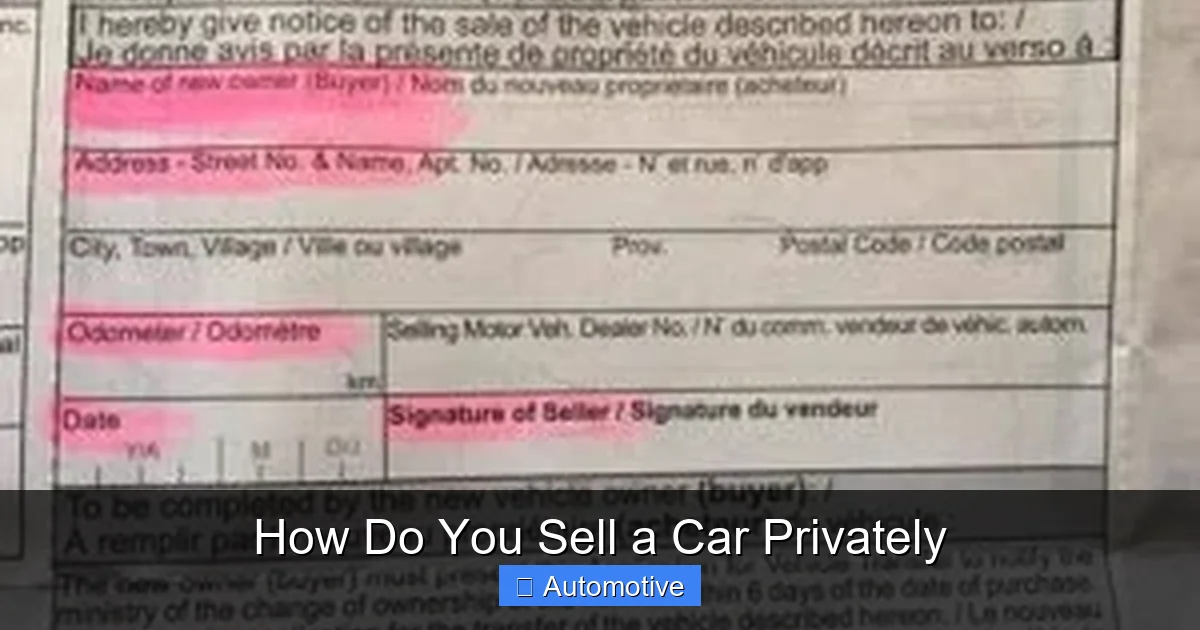
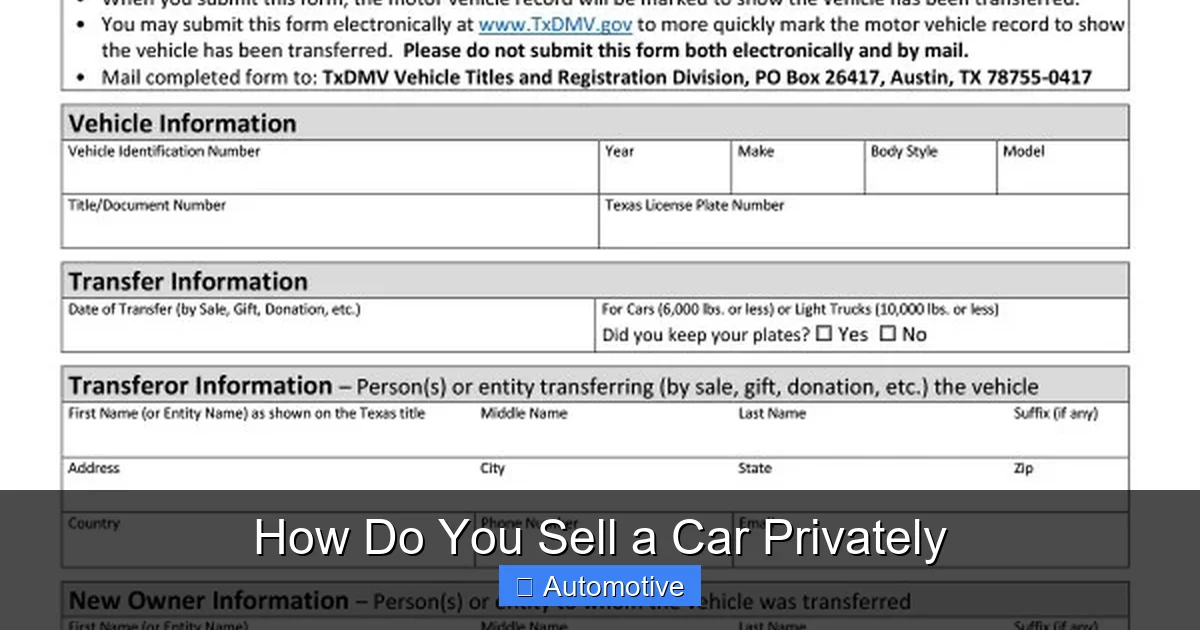
You’ll need to transfer ownership properly. Requirements vary by state, but generally include:
– **Signed Title:** Sign the title over to the buyer. Make sure all fields are filled out correctly.
– **Bill of Sale:** A simple document stating the sale price, date, and both parties’ info. Many states provide free templates online.
– **Release of Liability:** File this with your DMV to protect yourself from future tickets or accidents. Keep a copy for your records.
Remove License Plates and Cancel Insurance
In most states, you keep your license plates. Remove them before handing over the car. Also, cancel your insurance as soon as the sale is complete—don’t wait.
Hand Over the Keys and Documentation
Give the buyer the keys, owner’s manual, and any extra items like spare tires or tools. Make sure they understand how everything works.
Final Tips for a Smooth Sale
Selling a car privately takes time and effort, but the payoff is worth it. Here are a few final tips:
– Be patient. It may take a week or two to find the right buyer.
– Stay organized. Keep all documents in one place.
– Trust your instincts. If something feels off, walk away.
– Celebrate! You just sold your car and kept more money in your pocket.
With the right approach, selling your car privately can be a rewarding experience. You’ll get a better price, meet interesting people, and feel proud of a job well done.
Frequently Asked Questions
How long does it take to sell a car privately?
It usually takes 1–3 weeks, depending on demand, price, and how well your car is presented. Well-priced, clean cars in popular models often sell faster.
Should I trade in my car or sell it privately?
Selling privately typically gets you more money—often $1,000–$3,000 more than a trade-in. But it requires more time and effort. Trade-ins are faster but less profitable.
Can I sell my car if I still owe money on it?
Yes, but you’ll need to pay off the loan first. Contact your lender to get the payoff amount. Once the loan is cleared, you’ll receive the title and can sell the car.
Do I need a mechanic’s inspection before selling?
It’s not required, but a pre-sale inspection can boost buyer confidence. Some sellers offer a recent inspection report to prove the car is in good condition.
What if the buyer wants to pay with a personal check?
Avoid personal checks—they can bounce. Use cash, cashier’s checks, or bank transfers. If you must accept a check, wait for it to clear before handing over the car.
How do I avoid scams when selling my car?
Meet in public, verify the buyer’s ID, avoid wire transfers, and never ship your car. If something seems too good to be true, it probably is.
