How Do I Sell a Car That Is in a Trust
Selling a car that is in a trust requires understanding the legal structure of the trust and following proper procedures to transfer ownership. This guide walks you through the steps, required documents, and common mistakes to avoid—so you can sell with confidence and stay compliant.
In This Article
- 1 Key Takeaways
- 2 📑 Table of Contents
- 3 Introduction: What Does It Mean When a Car Is in a Trust?
- 4 Why Would a Car Be in a Trust?
- 5 Step-by-Step Guide: How to Sell a Car That Is in a Trust
- 5.1 Step 1: Confirm the Trustee’s Authority
- 5.2 Step 2: Gather Required Documents
- 5.3 Step 3: Determine the Car’s Value
- 5.4 Step 4: Prepare the Car for Sale
- 5.5 Step 5: List and Market the Vehicle
- 5.6 Step 6: Negotiate and Finalize the Sale
- 5.7 Step 7: Transfer the Title Correctly
- 5.8 Step 8: Notify Insurance and Update Records
- 6 Common Challenges and How to Avoid Them
- 7 Revocable vs. Irrevocable Trusts: Does It Matter?
- 8 When to Consult a Professional
- 9 Conclusion: Sell with Confidence
- 10 Frequently Asked Questions
Key Takeaways
- Understand the type of trust: Revocable vs. irrevocable trusts have different rules for selling assets like cars.
- Identify the trustee: Only the appointed trustee (or successor trustee) has legal authority to sell the vehicle.
- Gather essential documents: You’ll need the trust agreement, trustee ID, vehicle title, and possibly a court order.
- Get the car appraised: A professional valuation ensures fair pricing and smooth negotiations.
- Complete the title transfer correctly: Sign over the title as the trustee and file paperwork with your state’s DMV.
- Notify insurance and update registration: Cancel or transfer insurance and ensure the buyer registers the car in their name.
- Consult a legal or tax professional: Especially if the trust involves multiple beneficiaries or tax implications.
📑 Table of Contents
Introduction: What Does It Mean When a Car Is in a Trust?
If you’ve inherited a car or are managing an estate and discovered the vehicle is held in a trust, you might be wondering: “How do I sell a car that is in a trust?” You’re not alone. Many people are unfamiliar with trusts and how they affect asset ownership—especially when it comes to something as common as a car.
A trust is a legal arrangement where one party (the grantor) places assets—like real estate, investments, or vehicles—into a fiduciary relationship managed by another party (the trustee) for the benefit of a third party (the beneficiary). When a car is titled in a trust, it means the vehicle is legally owned by the trust, not an individual. This can simplify estate planning, avoid probate, and provide clear instructions for asset distribution.
But selling that car isn’t as simple as signing over the title like you would with a personally owned vehicle. Because the trust holds legal title, only the trustee (or successor trustee, if the original trustee has passed away or resigned) has the authority to sell it. The process involves legal documentation, proper authorization, and coordination with your state’s Department of Motor Vehicles (DMV).
Why Would a Car Be in a Trust?

Visual guide about How Do I Sell a Car That Is in a Trust
Image source: c8.alamy.com
Before diving into the selling process, it helps to understand why a car might be placed in a trust in the first place. There are several common reasons:
Estate Planning and Avoiding Probate
One of the main benefits of a trust is that it allows assets to pass directly to beneficiaries without going through probate—the court-supervised process of validating a will and distributing assets. Probate can be time-consuming, expensive, and public. By placing a car in a trust, the grantor ensures it can be transferred quickly and privately after their death.
Protecting Assets from Creditors or Lawsuits
In some cases, especially with irrevocable trusts, assets are shielded from creditors or legal claims. If the grantor wanted to protect a vehicle from potential lawsuits or financial risks, placing it in a trust could offer a layer of protection.
Managing Assets for Incapacitated Individuals
Trusts are often used to manage assets for someone who is no longer able to make financial decisions—due to illness, disability, or aging. A trustee can handle the sale of a car on behalf of the beneficiary, ensuring the proceeds are used appropriately.
Providing for Minor Children or Dependents
Parents or grandparents may place assets, including vehicles, in a trust for minor children. The trustee manages the asset until the child reaches a certain age or meets specific conditions outlined in the trust.
Tax Planning and Wealth Transfer
While cars typically don’t generate significant tax implications, placing high-value vehicles (like classic cars or luxury models) in a trust can be part of a broader tax strategy to minimize estate taxes or facilitate gifting.
Step-by-Step Guide: How to Sell a Car That Is in a Trust

Visual guide about How Do I Sell a Car That Is in a Trust
Image source: templatelab.com
Now that you understand the “why,” let’s get into the “how.” Selling a car held in a trust involves several key steps. While the exact process may vary slightly depending on your state and the type of trust, the following guide covers the essentials.
Step 1: Confirm the Trustee’s Authority
The first and most important step is to confirm who has the legal authority to sell the car. Only the trustee named in the trust document can act on behalf of the trust. If the original trustee has passed away or is unable to serve, you’ll need to identify the successor trustee.
Tip: Review the trust agreement carefully. It should clearly state who the trustee is and what powers they have, including the ability to sell assets.
If you’re unsure whether you’re the rightful trustee, or if there’s a dispute among family members, consult an estate attorney. Acting without proper authority could lead to legal complications.
Step 2: Gather Required Documents
To sell the car legally, you’ll need several key documents. Having them ready will streamline the process and prevent delays.
- Trust Agreement: A copy of the full trust document, especially the sections that name the trustee and grant authority to manage assets.
- Trustee Identification: Valid government-issued ID (driver’s license or passport) for the trustee.
- Vehicle Title: The physical title showing the trust as the owner. If the title is lost, you may need to apply for a duplicate through the DMV.
- Proof of Trust Existence: Some states require a “Certificate of Trust” or “Trust Certification” that summarizes key details (trust name, trustee, powers) without revealing private terms.
- Death Certificate (if applicable): If the grantor has passed away, you may need to provide a death certificate to prove the trust is now active.
- Court Order (if required): In rare cases—especially with contested trusts or incapacitated grantors—a court order may be needed to authorize the sale.
Example: Maria inherited her father’s car, which was in a revocable living trust. She found the trust document, confirmed she was the successor trustee, and obtained a certified copy of her father’s death certificate. With these, she was able to list the car for sale.
Step 3: Determine the Car’s Value
Just like any car sale, you’ll want to price the vehicle fairly. But because the car is part of a trust, accurate valuation is even more important—especially if there are multiple beneficiaries or tax considerations.
Use trusted resources like Kelley Blue Book (KBB), Edmunds, or NADA Guides to get a market value based on the car’s make, model, year, mileage, condition, and location. Consider getting a professional appraisal if the car is a classic, luxury, or high-mileage vehicle.
Tip: Take clear photos and note any mechanical issues, cosmetic damage, or recent repairs. This transparency builds trust with potential buyers and helps justify your asking price.
Step 4: Prepare the Car for Sale
Once you’ve priced the car, it’s time to get it ready to sell. A well-maintained vehicle sells faster and for a higher price.
- Clean the car thoroughly: Wash the exterior, vacuum the interior, and remove personal items.
- Address minor repairs: Fix small issues like burnt-out lights, worn wipers, or dents if cost-effective.
- Gather maintenance records: Buyers appreciate seeing a history of regular oil changes, tire rotations, and major services.
- Get a pre-sale inspection: A mechanic’s report can reassure buyers and reduce negotiation haggling.
Pro Tip: If the car has sentimental value to beneficiaries, consider discussing the sale with them first. Even if they can’t stop the sale, open communication prevents family conflicts.
Step 5: List and Market the Vehicle
Now it’s time to find a buyer. You can sell privately, trade it in at a dealership, or use an online car-buying service.
For private sales, popular platforms include:
– Craigslist
– Facebook Marketplace
– Autotrader
– Cars.com
When listing the car, be upfront about its condition and mention that it’s being sold by a trustee. This builds credibility and avoids misunderstandings.
Sample Listing Title: “2018 Honda Accord – Excellent Condition – Being Sold by Trustee of Estate”
Include high-quality photos, a detailed description, and your contact information. Be prepared to answer questions about the car’s history, why it’s being sold, and the title transfer process.
Step 6: Negotiate and Finalize the Sale
Once you have interested buyers, negotiate the price. Be firm but fair—remember, the goal is to complete the sale efficiently.
When you agree on a price, draft a bill of sale. This document should include:
– Names and addresses of buyer and seller (trustee)
– Vehicle details (VIN, make, model, year)
– Sale price
– Date of sale
– Signatures
Note: In most states, the bill of sale is not required for the DMV transfer, but it’s a good practice and protects both parties.
Step 7: Transfer the Title Correctly
This is the most critical step. Because the car is in a trust, the title must be signed over by the trustee—not the beneficiary or grantor.
Here’s how to do it right:
1. Locate the “Seller” section on the back of the title.
2. Sign as the trustee. For example: “Jane Doe, Trustee of the Smith Family Trust.”
3. Fill in the buyer’s name and address.
4. Include the sale price and odometer reading (if required by your state).
5. Have the buyer sign their section.
Important: Never sign the title as an individual if you’re acting as a trustee. Doing so could invalidate the transfer or raise legal questions.
After the sale, the buyer must take the signed title, bill of sale, and any required forms to their local DMV to register the car in their name and pay sales tax (if applicable).
Step 8: Notify Insurance and Update Records
Once the car is sold, cancel or transfer the insurance policy. Most insurers require notification within a few days of the sale to avoid liability.
Also, notify your state’s DMV that the vehicle has been sold. Some states require a “Notice of Sale” form to be filed to release the seller (trust) from future liability, such as parking tickets or accidents.
Common Challenges and How to Avoid Them
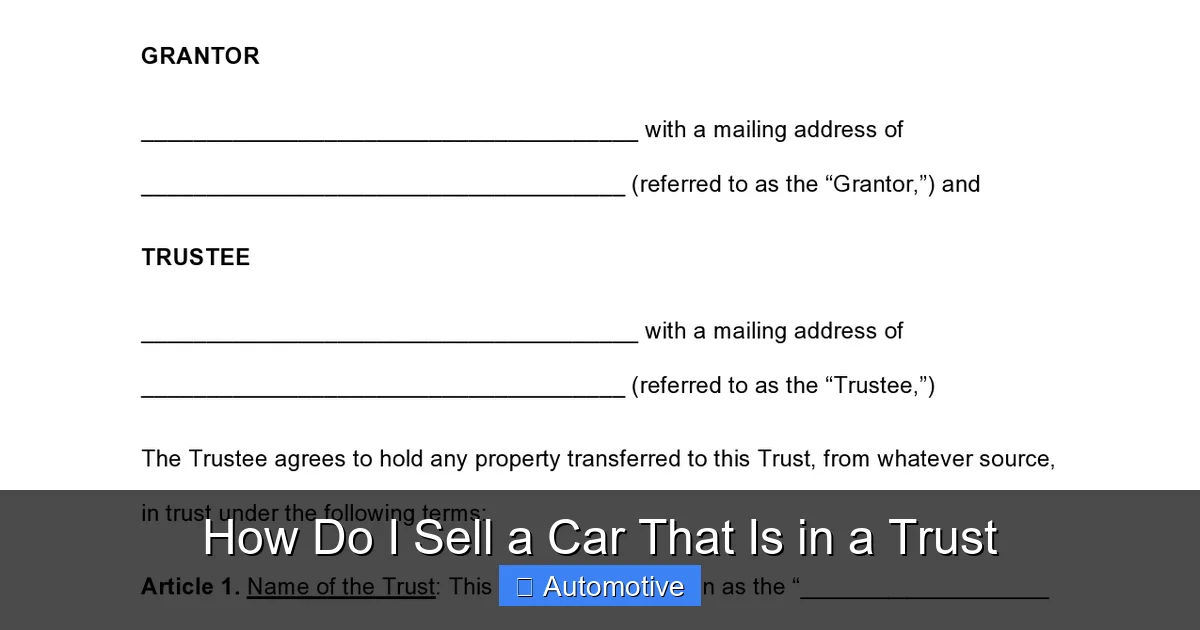
Visual guide about How Do I Sell a Car That Is in a Trust
Image source: templatelab.com
Selling a car from a trust isn’t always straightforward. Here are some common pitfalls and how to navigate them.
Disputes Among Beneficiaries
If multiple people benefit from the trust, they may disagree about selling the car. One beneficiary might want to keep it, while another prefers cash.
Solution: Refer to the trust document. It should outline how decisions are made. If it’s unclear, consult the trustee or an attorney. In some cases, mediation may be needed.
Missing or Incomplete Documents
Losing the trust agreement or title can delay the sale. If the title is missing, apply for a duplicate through your state’s DMV. This usually requires a form, fee, and ID.
If the trust document is lost, contact the attorney who drafted it or check with the county recorder’s office.
State-Specific DMV Requirements
Each state has different rules for transferring titles from trusts. Some require a notarized affidavit, while others accept a simple signature.
Tip: Visit your state DMV website or call ahead to confirm requirements. For example, California requires a “Statement of Facts” (Form REG 256) when transferring a vehicle from a trust.
Tax Implications
While most car sales aren’t taxable, selling a high-value vehicle (like a classic car) could trigger capital gains tax if it appreciated in value.
Advice: Consult a tax professional to understand your obligations. The trust may need to file a tax return, and proceeds could affect beneficiary distributions.
Revocable vs. Irrevocable Trusts: Does It Matter?
The type of trust affects how you sell the car.
Revocable Living Trust
This is the most common type. The grantor retains control during their lifetime and can change or dissolve the trust. Upon death, the successor trustee takes over.
Selling a car from a revocable trust is generally straightforward. The trustee has full authority to sell, and no court approval is needed.
Irrevocable Trust
Once created, this trust cannot be changed or revoked. The grantor gives up control, and the trustee manages assets for the beneficiaries.
Selling a car from an irrevocable trust may require more scrutiny. Some trusts require beneficiary consent or court approval for asset sales. Always check the trust terms.
When to Consult a Professional
While many trustees handle car sales independently, some situations call for expert help.
- Complex trusts: If the trust involves multiple assets, beneficiaries, or tax strategies.
- Disputes or legal challenges: If family members contest the sale.
- Unclear trustee authority: If the trust document is vague or outdated.
- High-value vehicles: Classic cars, luxury models, or fleet vehicles may require specialized handling.
An estate attorney can review the trust, confirm your authority, and guide you through the process. A tax advisor can help with reporting and minimizing tax liability.
Conclusion: Sell with Confidence
Selling a car that is in a trust may seem daunting at first, but with the right knowledge and preparation, it’s entirely manageable. The key is understanding your role as trustee, gathering the necessary documents, and following your state’s legal procedures.
Remember: only the trustee can sell the car. Always sign documents in your official capacity, and keep clear records of the transaction. Communicate openly with beneficiaries, and don’t hesitate to seek professional advice when needed.
By following this guide, you can sell the car efficiently, protect the trust’s assets, and ensure a smooth transition for everyone involved. Whether you’re settling an estate, managing a family trust, or simply helping a loved one, you now have the tools to do it right.
Frequently Asked Questions
Can I sell a car in a trust if I’m not the trustee?
No, only the appointed trustee (or successor trustee) has legal authority to sell a car held in a trust. If you’re a beneficiary or family member, you’ll need to work with the trustee or petition the court if there’s a dispute.
Do I need a lawyer to sell a car from a trust?
Not always, but it’s wise to consult one if the trust is complex, there are disputes, or you’re unsure of your authority. An attorney can help interpret the trust document and ensure compliance.
What if the trust document is missing?
Contact the attorney who drafted the trust or check with the county recorder. You may need to reconstruct the document or obtain a court order to proceed with the sale.
Can the buyer register the car if the title is in a trust?
Yes, as long as the trustee properly signs over the title and provides the necessary documents. The buyer will register the car in their name through the DMV.
Is the sale of a car from a trust taxable?
Generally, no—unless the car has significantly appreciated in value (e.g., a classic car). In such cases, capital gains tax may apply. Consult a tax professional for guidance.
What happens to the sale proceeds?
The money typically goes into the trust account and is distributed according to the trust terms—either to beneficiaries or used for trust expenses. The trustee must manage funds responsibly and document all transactions.