How Do I Cancel My Toyota Remote Connect Subscription

Contents
- 1 Key Takeaways
- 2 📑 Table of Contents
- 3 Understanding Your Toyota Remote Connect Subscription
- 4 Method 1: Canceling Your Toyota Remote Connect Subscription by Phone
- 5 Method 2: Canceling Through the Toyota Mobile App
- 6 Method 3: Canceling via the myToyota Website
- 7 What Happens After You Cancel? Important Aftermath Details
- 8 Special Situations and What-Ifs
- 9 Alternatives to Full Cancellation: Managing Your Subscription Smartly
- 10 Common Pitfalls and How to Avoid Them
- 11 Conclusion: Taking Control of Your Connected Car
- 12 Frequently Asked Questions

Portable Air Pump
Wiper Blade Refills

Car Storage Net

Tire Shine Spray
Canceling your Toyota Remote Connect subscription is a straightforward process you can handle yourself without visiting a dealer. You can cancel by calling Toyota’s customer service, through the Toyota app, or via your myToyota account online. Be aware of your billing cycle to avoid paying for an extra month, and understand that canceling stops future remote features but doesn’t delete your account data immediately. Always get a cancellation confirmation number for your records.
Key Takeaways
- Multiple Cancellation Methods: You can cancel your Toyota Remote Connect subscription by phone, through the Toyota mobile app, or via the myToyota customer website—no dealer visit is required.
- Billing Cycle Awareness is Crucial: Cancellation is effective at the end of your current paid billing period. You will not receive a prorated refund for the unused portion of the month.
- Get Written Confirmation: Always request and save a cancellation confirmation number or email. This is your proof if you are billed erroneously in the future.
- Features Stop, Data May Not: Once canceled, all remote functions (lock, start, locate) cease immediately or at period end. Your vehicle’s connected data history may be retained by Toyota for a period per their privacy policy.
- Safety Connect is Separate: If you also have a Safety Connect subscription (for emergency services), canceling Remote Connect does not cancel Safety Connect. They are billed and managed separately.
- Reactivation is Possible: You can typically reactivate your Remote Connect subscription at any time through the same channels, though there may be a reconnection fee or a new trial period may not apply.
- Leased Vehicles: If you lease your Toyota, review your lease agreement. Some contracts may require you to maintain certain connected services or may have specific terms about subscription transfers at lease end.
[FEATURED_IMAGE_PLACEHOLDER]
📑 Table of Contents
- Understanding Your Toyota Remote Connect Subscription
- Method 1: Canceling Your Toyota Remote Connect Subscription by Phone
- Method 2: Canceling Through the Toyota Mobile App
- Method 3: Canceling via the myToyota Website
- What Happens After You Cancel? Important Aftermath Details
- Special Situations and What-Ifs
- Alternatives to Full Cancellation: Managing Your Subscription Smartly
- Common Pitfalls and How to Avoid Them
- Conclusion: Taking Control of Your Connected Car
Understanding Your Toyota Remote Connect Subscription
So, you’re looking at your monthly bill and there it is: the charge for Toyota Remote Connect. Maybe you never use the app to start your car from the office, or perhaps you’ve moved to a place without a garage and the remote features feel less useful. Whatever the reason, wanting to cancel a service you don’t value is a completely normal and smart financial decision. But before you dial the phone or tap a button, it’s essential to understand exactly what Toyota Remote Connect is, what you’re paying for, and what happens when you cancel it.
Toyota Remote Connect is a subscription-based telematics service that uses a built-in cellular module in your compatible Toyota vehicle to provide a suite of remote features through the Toyota app on your smartphone. These features typically include remote engine start/stop (with climate control), lock/unlock, vehicle status checks (like fuel level or odometer), and vehicle location finder. For many owners, it’s a convenient perk, especially in extreme weather. The subscription is often offered as a trial (like 1 or 3 years) on new vehicles, after which it converts to a paid monthly or annual subscription. The key thing to remember is that it is a separate service from your vehicle’s basic warranty and from Toyota’s Safety Connect (which handles emergency services like automatic collision notification).
Canceling this subscription is your right as a consumer, but the process has specific steps and important implications. This guide will walk you through every method, highlight common pitfalls, and answer the questions you might not even know to ask. Think of this as your definitive playbook for severing that monthly connection to your Toyota’s digital brain.
The Difference Between Remote Connect and Safety Connect
This is the most common point of confusion. Toyota Safety Connect is the service that provides emergency assistance, stolen vehicle locator, and the SOS button. It is often bundled or offered alongside Remote Connect, but it is a distinct service with its own subscription and terms. If your goal is to cancel all connected services, you must cancel both subscriptions separately. Canceling Remote Connect will leave your Safety Connect active and billing. We’ll touch on how to manage both later.
Method 1: Canceling Your Toyota Remote Connect Subscription by Phone
Calling Toyota customer service is the most direct and often the most reassuring method for many people. You get to speak to a human, ask questions in real-time, and get an immediate verbal confirmation. However, it requires a bit of preparation to make the call smooth and effective.

Visual guide about How Do I Cancel My Toyota Remote Connect Subscription
Image source: tfltruck.com
How to Prepare for the Call
Before you pick up the phone, gather a few key pieces of information. Having this ready will save you time and prevent the frustrating “please hold while I transfer you” scenario.
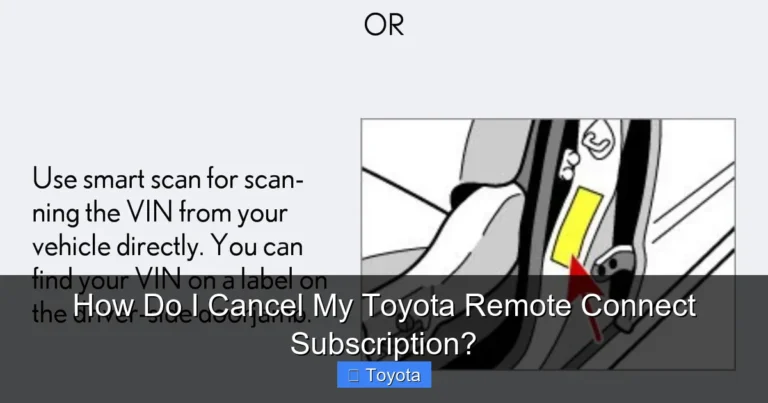
- Your Vehicle Identification Number (VIN): This is the 17-digit code unique to your car. You can find it on your registration, insurance card, driver’s side dashboard (visible through the windshield), or the door jamb sticker.
- Your current mailing address and phone number on file with Toyota. They will verify your identity.
- Your Toyota account email address.
- Your most recent billing statement showing the Remote Connect charge, just in case.
- A notepad or a digital note open to write down the representative’s name, the time and date of the call, and the crucial cancellation confirmation number.
Step-by-Step Call Process
1. Dial the Correct Number: The primary number for Toyota Customer Experience in the U.S. is 1-800-331-4331. For Canadian customers, it’s 1-888-869-6829. Have your VIN ready for the automated system.
2. Navigate the Menu: Listen carefully to the automated prompts. You’ll typically press numbers for “Customer Service,” then “Billing and Subscriptions,” and then “Cancel a Subscription” or “Manage Connected Services.” If you get stuck, saying “agent” or “representative” usually works.
3. Verify Your Identity: The agent will ask for your VIN, name, address, and possibly the last four digits of the card on file. Confirm all details accurately.
4. State Your Request Clearly: Say, “I would like to cancel my Toyota Remote Connect subscription effective immediately, or at the end of my current billing cycle. My VIN is [Your VIN].” Be specific. Do not just say “cancel my service.”
5. Ask Critical Questions: Before hanging up, ask:
- “What is my effective cancellation date?” (Confirm it’s the end of the billing period).
- “Will I receive a final prorated charge or a refund?” (The answer is almost always no for the current month).
- “Can you provide me with a cancellation confirmation number?”
- “Does this cancel both Remote Connect and Safety Connect, or just Remote Connect?”
6. Get It in Writing: Ask, “Will I receive an email confirmation?” If they say yes, great. If not, insist on the verbal confirmation number and write it down. You should also receive a final statement in the mail or email showing a $0.00 charge for the service going forward.
Method 2: Canceling Through the Toyota Mobile App
For the tech-savvy and those who prefer self-service, the Toyota app is the fastest method. The process is designed to be user-friendly, but the exact menu path can change with app updates. Here’s how to navigate it as of the latest versions.

Visual guide about How Do I Cancel My Toyota Remote Connect Subscription
Image source: mlc90rgrwcsy.i.optimole.com
Prerequisites for App Cancellation
You must have:
- The latest version of the Toyota app downloaded and installed on your smartphone.
- An active, logged-in Toyota account that is linked to your vehicle.
- An active internet connection (Wi-Fi or cellular data).
- Your subscription must be billed directly through Toyota (not through a third-party or your cellular carrier, which is rare but possible).
Finding the Cancellation Option in the App
The menu structure is not always intuitive. Follow these general steps:
- Open the Toyota app and log in.
- Tap on the profile icon or menu (usually three horizontal lines or “More”) in the bottom right or top corner.
- Look for sections labeled “Settings,” “Account,” “Subscriptions,” or “Connected Services.”
- Within that section, you should see your active subscriptions listed, likely showing “Toyota Remote Connect” with your billing cycle and next billing date.
- Tap on the Remote Connect subscription.
- You should see options like “Manage Subscription,” “Turn Off Auto-Renew,” or “Cancel Subscription.” The wording is key. “Turn Off Auto-Renew” will stop future payments but your service will continue until the *end* of the current paid period. “Cancel Subscription” should terminate service at the period’s end. Read the screens carefully.
- Follow the prompts. You will likely be asked to confirm your decision, possibly re-enter your password, and agree to the loss of features.
- Take screenshots of the final confirmation screen that shows your subscription is canceled and the effective date. This is your digital proof.
Important App Note: Sometimes the app only offers the option to “turn off auto-renew” and not a full immediate cancellation. If you only turn off auto-renew, you must still wait for the current billing cycle to expire. The service will remain active until then. If you need it stopped sooner, the phone method is better.
Method 3: Canceling via the myToyota Website
The myToyota customer portal (mytoyota.com) is another powerful self-service tool. It’s very similar to the app but often has a slightly different interface that some find easier to navigate on a larger screen.

Visual guide about How Do I Cancel My Toyota Remote Connect Subscription
Image source: evto.ca
Accessing Your Subscription Online
1. Go to mytoyota.com and log in with your username and password.
2. On the dashboard, look for a menu bar or tabs. You are heading for the “Account” or “Profile” area.
3. Within Account settings, seek out “Connected Services,” “Vehicle Subscriptions,” or “Payment & Billing.”
4. You should see a list of your active vehicle services. Find “Toyota Remote Connect” and click “Manage” or “View Details.”
5. The subsequent page will display your subscription status. Look for a button that says “Cancel Subscription,” “Terminate Service,” or a toggle switch for auto-renewal. As with the app, understand the difference between stopping future billing and ending the current service term.
6. Click through the cancellation warnings and confirmations. The website should generate a confirmation number on the final screen. Print this page or save it as a PDF.
Troubleshooting Website Issues
If you cannot find the subscription option online, it could be because:
- Your vehicle’s trial period hasn’t expired yet (you may not see a paid subscription to cancel).
- Your subscription is managed through a different portal (e.g., if you subscribed via a dealer package).
- There is a temporary technical issue with the myToyota portal.
In these cases, calling customer service is your best bet. Also, ensure your vehicle’s VIN is correctly linked to your online account. Sometimes a VIN needs to be “claimed” or verified first.
What Happens After You Cancel? Important Aftermath Details
Pressing “confirm” or hanging up the phone isn’t the absolute end. There are several post-cancellation realities you need to be aware of to manage your expectations and avoid surprise charges.
The Billing Cycle Rule: No Prorated Refunds
This is the #1 thing people get upset about. Toyota does not prorate your subscription upon cancellation. If you cancel on the 5th of a 30-day billing cycle, you will still have service (and will still be charged) until the 30th. The cancellation is effective at the *end* of the period you have already paid for. You are essentially pre-paying for the service month. Think of it like a gym membership—you pay for the month, and canceling mid-month doesn’t get you a refund for the days you won’t use. Plan your cancellation date strategically if you’re trying to save every penny. If your billing date is the 1st, canceling on the 28th means you’ll pay for just 3 more days of service.
Immediate vs. Delayed Feature Shutoff
In most cases, the remote features (lock, start, locate) will continue to work until the very last second of your billing cycle. The system is designed to honor the paid period. However, once the effective cancellation date passes, the commands from your app will start failing with error messages like “Command Failed” or “Service Disconnected.” The vehicle’s built-in modem will no longer respond to remote requests. The infotainment screen may also show a message about the subscription expiring. Do not rely on the app working after your cancellation date.
Your Data and Privacy
What happens to your vehicle’s location history, trip data, and other connected information? Toyota’s privacy policy governs this. Generally, upon cancellation, your personal identifiable data is disassociated from your account and retained in anonymized, aggregated form for research and service improvement for a period of time. You can request deletion of your personal data through Toyota’s privacy portal, but this is a separate process from subscription cancellation. Your historical trip logs from when the service was active will likely no longer be accessible to you via the app after cancellation. If data privacy is a major concern, review Toyota’s full privacy policy online and submit a data deletion request if desired.
The Final Bill and Checking for Refunds
After your cancellation date, monitor your next credit card or bank statement. You should see the regular subscription charge stop. You will receive a final invoice or statement from Toyota (or their billing partner, like SiriusXM if that’s your carrier) showing a $0.00 recurring charge. If you are billed again after your confirmed cancellation date, you have your saved confirmation number to dispute the charge with both Toyota and your financial institution. This is why that confirmation number is non-negotiable.
Special Situations and What-Ifs
Life isn’t always straightforward, and your subscription situation might have a twist. Here’s how to handle some common special cases.
I Have a Leased Vehicle. Does That Change Anything?
This is an excellent question. When you lease a car, you don’t own the VIN; the leasing company (like Toyota Financial Services) does. In most standard consumer leases, you are treated as the primary operator and can manage subscriptions just like an owner. However, you must check your lease contract. Some lease agreements, particularly for luxury models or fleet leases, may have clauses about maintaining certain connected services or may require you to notify the lessor of subscription changes. At lease turn-in, the vehicle will be inspected. Any outstanding bills for connected services could potentially be charged to you if they are tied to the VIN. The safest bet is to cancel any subscriptions you don’t want well before your lease-end date and keep the cancellation proof. If you’re unsure, call your lease company directly and ask about their policy on connected service subscriptions.
What If I Bought a Used Car and the Previous Owner’s Subscription Is Still Active?
This is a frequent headache. Subscriptions are tied to the VIN, not the person. If you bought a used Toyota and find a charge for Remote Connect on your statement, it’s likely the previous owner’s subscription was still active and somehow got transferred to your payment method (a billing error) or you inadvertently signed up for a trial. First, do not ignore it. Call Toyota customer service immediately. Explain you are the new owner of the vehicle (have your purchase paperwork ready) and that you did not authorize this subscription. They should be able to cancel the subscription linked to that VIN under the previous owner’s account and stop any future billing. You may need to provide the previous owner’s name and contact info if they have it on file. If you want the service, you can then start a new trial or subscription in your own name.
Can I Get a Refund for the Current Month?
As emphasized, the standard policy is no prorated refunds. You are paying for a full month of service, and you will receive that full month, even if you cancel on day one. However, there are rare exceptions. If you can prove a billing error—for example, you were charged for a service you never activated or used—Toyota may issue a goodwill refund. This is not guaranteed and is at their discretion. The key is to call, be polite, explain the situation clearly, and ask, “Is there any possibility of a one-time courtesy refund for this month’s charge since I will not be using the service?” Sometimes, especially if you are a long-time, loyal customer with a clean history, they might say yes. But do not count on it. Plan your budget assuming you will pay for the entire current cycle.
Alternatives to Full Cancellation: Managing Your Subscription Smartly
Before you definitively cancel, consider if there’s a middle ground that might save you money or hassle while keeping some utility.
Downgrading or Pausing: Is It Possible?
Toyota’s current subscription model for Remote Connect is fairly binary: it’s on or it’s off. They do not typically offer a “pause” feature or a lower-tier plan with fewer remote commands. The subscription is an all-or-nothing package. This means if you only use the remote start feature in winter, you’re still paying for the full suite (lock, locate, etc.) all year. If your usage is highly seasonal, canceling and then reactivating when you need it again might be the most cost-effective strategy, despite any potential reconnection fee. Always ask the customer service agent, “Is there any option to downgrade to a less expensive plan with only specific features?” The answer will almost certainly be no, but it’s worth confirming.
The “Trial Hack” (Use With Caution)
A common piece of advice on forums is to let your paid subscription expire, then see if you can trigger a new free trial. Sometimes, when a subscription lapses, the system may offer a “reactivation trial” (e.g., 1 month free) to win you back. This is not a guaranteed or advertised policy. It’s a promotional tactic that may or may not happen. Relying on this is risky. Your safest and most predictable path is to treat it as a paid service: pay when you want it, cancel when you don’t. If a trial magically appears after a long lapse, consider it a bonus.
What About Connected Navigation Services?
If your Toyota has built-in navigation (like the latest Toyota Audio Multimedia system), you might have a separate subscription for map updates and connected services like real-time traffic, weather, and restaurant search via embedded apps. This is not part of Remote Connect. Canceling Remote Connect does nothing to your navigation subscription. If you want to cancel that, you must manage it separately, often through the infotainment system’s settings menu or via your myToyota account under a different service name (like “Destination Assist” or “Connected Navigation”). For help with your navigation system, you might find our guide on how to update your navigation system useful, as the principles for managing connected car services often overlap.
Common Pitfalls and How to Avoid Them
Even with a clear guide, people stumble. Here are the top mistakes and how to sidestep them.
Pitfall 1: “I Canceled in the App, So It’s Done.”
The Problem: You toggle off auto-renew in the app and assume the service is dead. But your current paid period rolls on, and you get charged for another full month because you didn’t realize the service was active until the period end.
The Fix: Understand the terminology. “Turn Off Auto-Renew” = stop future billing. “Cancel Subscription” = end service at period end. If you only turned off auto-renew, mark your calendar for the last day of the current billing cycle and confirm features stop working the next day. If you need it stopped NOW, you must call.
Pitfall 2: Not Getting Confirmation
The Problem: You call, the agent says “Okay, it’s canceled,” you hang up, and three months later, a charge appears. You have no proof, and navigating customer service without a case number is a nightmare.
The Fix: This cannot be stressed enough. Always get a confirmation number. If the agent hesitates, say, “I need a case or confirmation number for my records. Can you provide one?” A real company will have one. Write it down. Save the email. Take the screenshot. This is your shield against erroneous billing.
Pitfall 3: Confusing Remote Connect with Safety Connect
The Problem: You think you’ve canceled everything, but your bill still shows a charge for Safety Connect. You’re still paying for emergency services you might not want.
The Fix: When you cancel, explicitly ask about both services. Check your billing statements carefully. If you see a separate line item for “Toyota Safety Connect” or “Toyota Safety Connect Powered by Lexus,” you must cancel that subscription independently using the same methods. They are completely separate products.
Pitfall 4: Forgetting About Third-Party Billing
The Problem: A small number of customers, especially those with older models or specific carrier partnerships, might have their Remote Connect billed through their mobile carrier (like Verizon) as an add-on to their phone plan, not directly by Toyota.
The Fix: Look at your bill. Who is the merchant? Is it “Toyota” or “Toyota Motor Sales” or is it your phone company? If it’s your carrier, you must cancel through your carrier’s account management portal or by calling them, not Toyota. Start by checking your phone bill’s add-on services section.
Conclusion: Taking Control of Your Connected Car
Canceling your Toyota Remote Connect subscription is a simple act of aligning your expenses with your lifestyle. The power is firmly in your hands through a phone call, a few taps in an app, or clicks on a website. The core message is this: be proactive, be informed, and be meticulous.
Do not assume. Call or log in, find your subscription, understand the exact terms of cancellation—especially the billing cycle rule—and secure your confirmation. Treat it with the same care you would canceling a gym membership or a streaming service. The difference is that this service is tied to a physical asset, your car, but the principle of managing recurring payments is identical.
By following the steps in this guide, you can confidently sever the cord on a service you no longer need, stop that monthly drain on your budget, and rest easy knowing you won’t be surprised by a future charge. Your Toyota will continue to serve you perfectly well without the remote start feature; you’ll just have to use the key like we all did for decades. And if you ever miss it, you know exactly how to turn the connection back on.
Frequently Asked Questions
Will I lose all my vehicle’s connected features if I cancel Remote Connect?
Yes, all features powered by the Remote Connect subscription will stop working. This includes remote engine start/stop, lock/unlock, vehicle status checks (fuel, mileage), and the vehicle locator function in the app. Your in-car infotainment system will still function, and Safety Connect (if active) remains separate.
How long does it take for the cancellation to become effective?
Cancellation is always effective at the end of your current paid billing cycle. If you cancel on the 10th of a 30-day cycle, your service and billing will continue until the 30th. You will not receive a prorated refund for the days between the 10th and 30th. The service will cease on the first day of the next cycle.
Can I cancel my Toyota Remote Connect subscription at any time?
Yes, you can initiate the cancellation process at any time. However, as explained, the effective date is always the end of the prepaid billing period. There is no penalty for canceling early, but you are not financially penalized for the remaining days either—you simply don’t get a refund for them.
Is there a fee to cancel my subscription?
No, Toyota does not charge a cancellation fee. You are simply stopping the automatic renewal of your monthly or annual service. The only “cost” is that you continue to have service until the end of the period you’ve already paid for.
What should I do if I am charged after I canceled?
First, locate your cancellation confirmation number or email. Contact Toyota Customer Service immediately, reference your VIN and the confirmation number, and request that the erroneous charge be credited. If they are unresponsive, you can dispute the charge with your bank or credit card company, providing them with your proof of cancellation.
If I sell my car, do I need to cancel the subscription?
Yes, absolutely. The subscription is tied to your Toyota account and payment method, not the vehicle itself. If you sell or trade your car, you must cancel the subscription to avoid being billed for a service you no longer own. The new owner will need to set up their own account and subscription if they want those features. You can also transfer the subscription to the new owner in some cases, but this requires coordination with Toyota and is not automatic.