Hooked Battery Up Backwards Now Car Won’t Start

Contents
- 1 Key Takeaways
- 2 📑 Table of Contents
- 3 What Happens When You Hook a Car Battery Up Backwards?
- 4 Signs You’ve Hooked the Battery Backwards
- 5 Can You Fix a Car After Hooking the Battery Backwards?
- 6 How to Prevent Hooking Your Battery Up Backwards
- 7 When to Call a Mechanic
- 8 Final Thoughts: Learn, Don’t Panic
- 9 Frequently Asked Questions

Car Paint Touch Up Pen

Battery Terminal Cleaner

LED Indicator Light

Car Glass Cleaner
Hooking your car battery up backwards—connecting positive to negative and vice versa—can cause serious electrical damage and leave your vehicle dead. This common mistake fries sensitive electronics, blows fuses, and may require professional repair. But don’t panic: with the right steps, you can often recover and get back on the road safely.
Key Takeaways
- Reversed polarity damages electronics: Modern cars rely on delicate ECUs, sensors, and modules that can be instantly fried when battery terminals are swapped.
- Fuses are your first line of defense: Many vehicles blow main fuses or fusible links when connected incorrectly, which may be replaceable and save costly repairs.
- Immediate disconnection is critical: The faster you realize the mistake and disconnect the battery, the less damage occurs—seconds matter.
- Not all damage is visible: Even if the car seems fine after reconnecting correctly, hidden issues like erratic gauges or warning lights may appear later.
- Prevention beats repair: Always double-check terminal labels (+ and –), use color-coded cables (red = positive, black = negative), and take your time during installation.
- Professional diagnosis is wise: If your car won’t start after a reverse connection, have a mechanic scan for error codes—some damage isn’t obvious without diagnostic tools.
- Safety first: Wear gloves and eye protection when handling car batteries—they contain corrosive acid and can spark unexpectedly.
📑 Table of Contents
What Happens When You Hook a Car Battery Up Backwards?
Imagine this: you’re in a rush to jump-start your car or replace a dead battery. You grab the cables, connect them quickly, and… nothing. The engine won’t turn over. Worse yet, dashboard lights flicker wildly, or worse—you smell burning plastic. Chances are, you’ve hooked the battery up backwards.
Connecting a car battery with reversed polarity—positive to negative and negative to positive—sends electrical current flowing in the wrong direction through your vehicle’s wiring system. Unlike older cars with simpler electrical systems, modern vehicles are packed with sensitive electronics: engine control units (ECUs), infotainment systems, ABS modules, airbag sensors, and more. These components are designed to operate with current flowing in one specific direction. Reverse the polarity, and you essentially shock the entire system.
The result? Immediate and sometimes irreversible damage. In best-case scenarios, protective fuses blow to save more expensive parts. In worst cases, entire control modules fry, requiring thousands in repairs. And even if your car starts after you fix the connection, lingering issues like malfunctioning gauges, dead accessories, or persistent warning lights may signal hidden damage.
Why Modern Cars Are Especially Vulnerable
Back in the day, a car’s electrical system was mostly mechanical—points, coils, simple relays. A reversed battery might have just caused a blown fuse or two. Today’s vehicles, however, are rolling computers. A typical sedan now contains over 100 electronic control units (ECUs), each managing everything from fuel injection to lane-assist cameras.
These ECUs operate at low voltages (usually 5V or 12V) and are calibrated for precise current flow. Reverse polarity can cause voltage spikes, overheating, and short circuits inside these tiny circuits. For example, a $200 sensor might cost $800 to replace if its internal diode burns out from reverse current. Worse, some damage isn’t immediate—it manifests days or weeks later as intermittent failures, making diagnosis tricky.
Real-World Example: The $3,000 Mistake
Take Sarah, a college student who replaced her Honda Civic’s battery alone for the first time. She misread the terminals, connected red to black and black to red, and tried to start the car. Nothing happened—except her radio display went dark, and the check engine light flashed. She reconnected correctly, but the car still wouldn’t start. A mechanic later found her ECU had been damaged beyond repair, along with the instrument cluster. Total bill: over $3,200.
Stories like Sarah’s aren’t rare. According to AAA, reverse battery connections are one of the top five causes of roadside assistance calls related to electrical failure. And while many drivers assume “it’ll be fine if I fix it fast,” even a few seconds of reversed polarity can cause cumulative damage that’s hard to detect until it’s too late.
Signs You’ve Hooked the Battery Backwards
Not every reversed connection leads to catastrophic failure—but you should always assume damage occurred until proven otherwise. Here are the most common signs that you’ve hooked your battery up backwards:

Visual guide about Hooked Battery Up Backwards Now Car Won’t Start
Image source: autoowa.com
- Car won’t start at all: No cranking, no clicking—just silence. This often means main fuses or the starter relay are blown.
- Dashboard lights behave erratically: Lights flicker, stay on when they shouldn’t, or display gibberish (like random symbols or blank screens).
- Burning smell: A strong odor of melting plastic or electronics usually indicates fried components or overheated wiring.
- Smoke or sparks: If you saw sparks when connecting or notice smoke under the hood, disconnect immediately—this is a fire hazard.
- Accessories don’t work: Power windows, radio, AC, or lights may be completely dead or intermittent.
- Battery drains quickly: Even after correct reconnection, a parasitic drain may persist due to damaged modules constantly drawing power.
It’s also possible to experience “silent” damage—where everything seems normal at first, but problems emerge later. For instance, your ABS light might come on weeks later because the module was weakened by the reverse surge. That’s why a thorough diagnostic scan is essential after any suspected reverse connection.
What to Do Immediately After Realizing the Mistake
If you catch the error within seconds—great! Disconnect the battery right away. But even if you didn’t notice immediately, here’s what to do next:
- Turn off the ignition and remove the key. This cuts power to most systems and reduces further risk.
- Disconnect the battery correctly: Remove the negative (black) cable first, then the positive (red). This minimizes sparking.
- Inspect for visible damage: Look for melted wires, burnt smells, or swollen components near the battery tray or fuse box.
- Check the main fuses: Locate your vehicle’s main fuse box (usually under the hood) and inspect high-amperage fuses (often 60A–120A). If they’re blown, replace them—but only after confirming no other damage exists.
- Reconnect properly: Attach positive first, then negative. Ensure terminals are clean and tight.
- Try starting the car: If it starts, don’t assume you’re in the clear. Drive cautiously and watch for warning lights.
Remember: even if the car starts, hidden damage may still exist. Always follow up with a professional scan tool to check for fault codes in the ECU, transmission control module, and other systems.
Can You Fix a Car After Hooking the Battery Backwards?
The short answer: sometimes yes, sometimes no—it depends on how long the reverse connection lasted and what components were affected. The good news is that many modern cars have built-in protections like fusible links and diode safeguards that sacrifice themselves to protect more expensive parts.
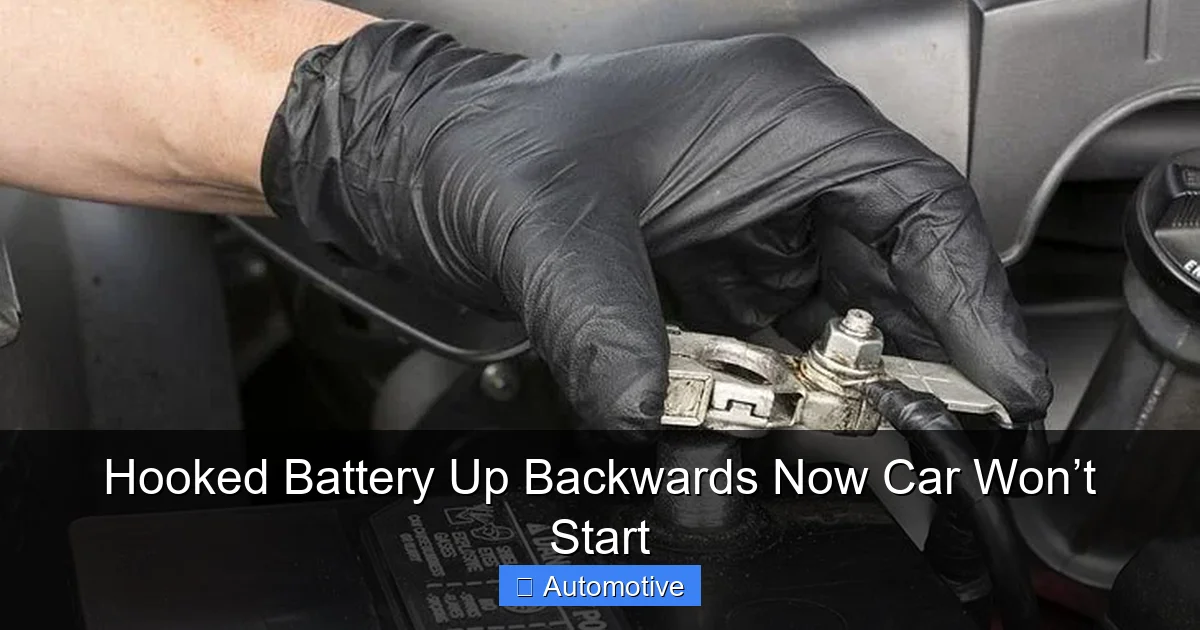
Visual guide about Hooked Battery Up Backwards Now Car Won’t Start
Image source: bryansgarage.com
Common Repair Scenarios
Scenario 1: Only Fuses Are Blown
This is the best-case outcome. If your car won’t start but there’s no burning smell or smoke, check the main fuses. Many vehicles have a large “main” or “battery” fuse (often labeled “ALT,” “MAIN,” or “BATT”) that blows instantly during reverse polarity. Replacing this fuse—usually costing $5–$20—may restore full function.
Scenario 2: ECU or Module Damage
If fuses are intact but the car still won’t start, suspect ECU damage. Symptoms include no communication with diagnostic tools, persistent no-start conditions, or erratic behavior. Unfortunately, ECUs are rarely repairable—they must be replaced, which can cost $500–$2,500 depending on the vehicle.
Scenario 3: Partial Electrical Failure
Some systems work while others don’t. For example, the engine cranks but won’t fire, or the radio works but power windows don’t. This suggests localized damage to specific modules. A mechanic can isolate the faulty unit using a scan tool and wiring diagrams.
DIY vs. Professional Help
If you’re handy with basic tools and your car is older (pre-2000), you might attempt fuse replacement and visual inspection yourself. But for modern vehicles (especially those with advanced driver-assistance systems or hybrid components), always consult a professional. Modern ECUs often require programming after replacement, and improper handling can void warranties or trigger new errors.
Additionally, some damage isn’t electrical—it’s chemical. Car batteries contain sulfuric acid, and reverse charging can cause internal plate damage, reducing battery life even if it appears to hold a charge. Consider replacing the battery as a precaution, especially if it’s more than 3–4 years old.
How to Prevent Hooking Your Battery Up Backwards
Prevention is always cheaper—and safer—than repair. Here’s how to avoid this costly mistake:
Visual guide about Hooked Battery Up Backwards Now Car Won’t Start
Image source: bryansgarage.com
1. Know Your Terminals
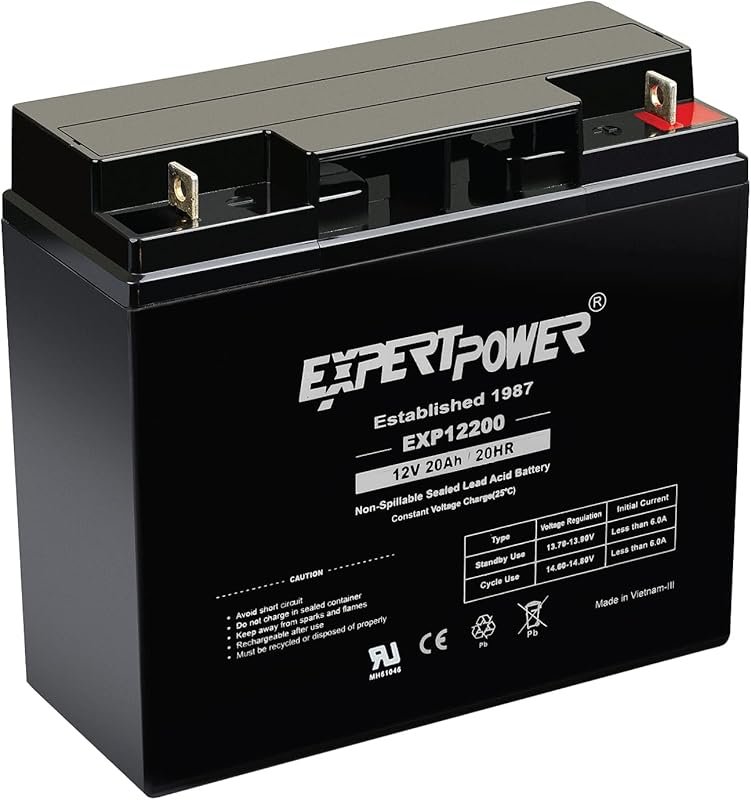
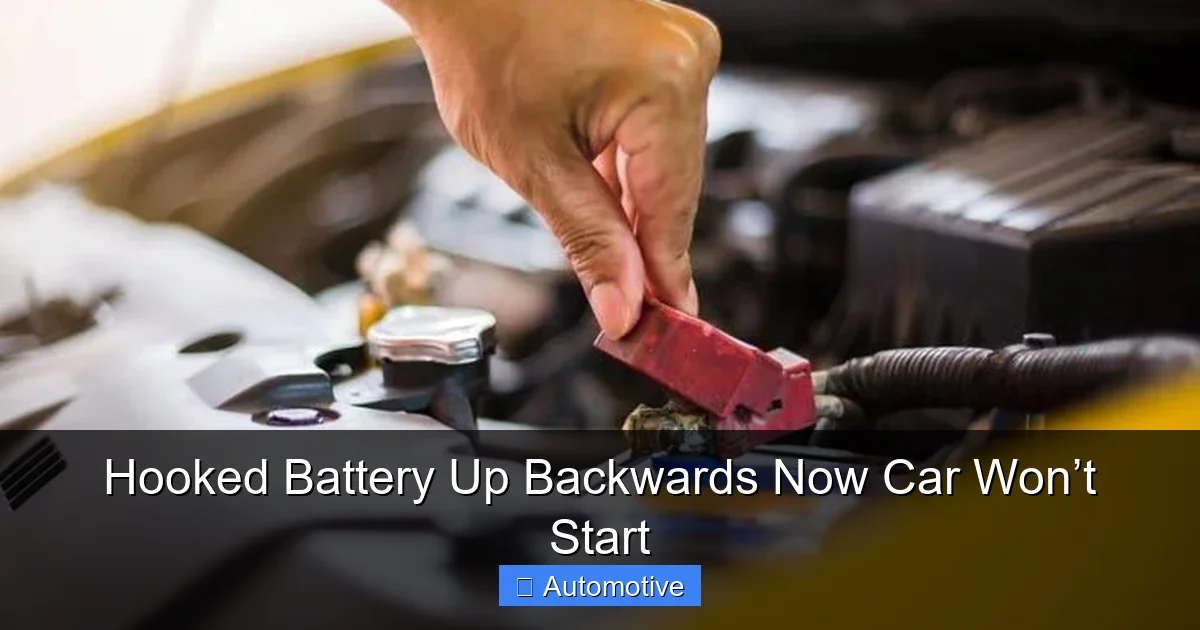
Every car battery has clearly marked terminals: positive (+) is usually red and larger in diameter; negative (–) is black and smaller. But don’t rely solely on color—some aftermarket batteries use different schemes. Always check the molded symbols on the battery case.
2. Use Color-Coded Cables
Jump-start cables are color-coded for a reason: red = positive, black = negative. When replacing a battery, use red and black terminal covers or tape to reinforce the correct connection. Never assume—double-check before tightening.
3. Take Your Time
Rushing is the #1 cause of reverse connections. Whether you’re jump-starting in the rain or replacing a battery at night, pause and verify. Count to three: “Red to red, black to black.” If you’re unsure, consult your owner’s manual or look up a diagram online.
4. Use Terminal Covers or Labels
After correctly installing a battery, place insulating covers over the terminals or add removable labels (“+” and “–”) to prevent future confusion. This is especially helpful if multiple people drive the car.
5. Consider a Battery Isolator or Reverse Polarity Protector
For frequent DIYers or fleet vehicles, installing a reverse polarity protection device can save thousands. These small electronic modules automatically disconnect power if terminals are reversed, acting as a permanent safety net. Prices range from $20–$100 and are easy to install in the main power line.
6. Educate Others
If you share your car with family or friends, make sure they understand battery basics. A quick 30-second demo can prevent a $2,000 mistake. Keep a printed terminal diagram in the glove box for emergencies.
When to Call a Mechanic
Even if your car starts after correcting the battery connection, don’t skip professional evaluation if any of these apply:
- The car didn’t start immediately after reconnection
- You noticed sparks, smoke, or a burning smell
- Dashboard warning lights remain on
- Electrical accessories behave oddly (e.g., windows move slowly, radio resets)
- The battery is more than 4 years old
A certified mechanic can perform a full electrical system scan using an OBD2 diagnostic tool. This checks for stored fault codes in over a dozen control modules—something no DIY test can replicate. Early detection of latent damage can prevent breakdowns or safety issues down the road.
Also, if your vehicle has advanced features like adaptive cruise control, lane keeping assist, or automatic emergency braking, these systems rely on cameras and radar sensors that are extremely sensitive to voltage spikes. Damage here could compromise safety—and isn’t always covered by insurance.
Final Thoughts: Learn, Don’t Panic
Hooking a battery up backwards is a scary moment—but it doesn’t have to be a disaster. With quick action, careful inspection, and the right knowledge, many drivers recover with minimal damage. The key is treating every reverse connection as a potential emergency, not a minor hiccup.
Remember: your car’s electrical system is like a nervous system—it needs the right signals to function. Flip the polarity, and you disrupt the entire network. But with prevention habits, awareness, and respect for your vehicle’s complexity, you can avoid this mistake altogether.
So next time you’re under the hood, take a breath, check the labels, and connect with confidence. Your wallet—and your peace of mind—will thank you.
Frequently Asked Questions
Can a car battery explode if hooked up backwards?
Yes, though rare, a reversed battery connection can cause excessive gassing or internal shorting, leading to swelling, leakage, or even explosion—especially in sealed AGM or lithium batteries. Always wear safety gear and work in a well-ventilated area.
Will a blown fuse always protect my car from reverse polarity damage?
Not always. While main fuses often blow to save the ECU, some sensitive modules (like infotainment or TPMS) may be directly connected and get damaged before the fuse reacts. Fuses are a first line of defense, not a guarantee.
How long can a battery be connected backwards before damage occurs?
Damage can happen in less than a second. Even brief reverse connections can fry diodes and microchips. The faster you disconnect, the better—but assume some harm occurred regardless.
Can I test my car’s electronics after a reverse connection without a mechanic?
You can check basic functions (lights, radio, starter), but many issues require an OBD2 scanner to read hidden fault codes. Without professional tools, you might miss critical damage.
Is reverse polarity damage covered by car insurance or warranty?
Generally no. Most warranties exclude “user error” or “improper installation.” Comprehensive insurance typically doesn’t cover mechanical/electrical failures from mistakes either. Prevention is your best policy.
Should I replace my battery after hooking it up backwards—even if it seems fine?
It’s wise to do so, especially if the battery is older. Reverse charging can warp internal plates and reduce capacity. A load test at an auto parts store can confirm health, but replacement is cheap insurance against future failure.