Harley-davidson Spark Plug Chart: Complete Guide

Contents
- 1 Key Takeaways
- 2 📑 Table of Contents
- 3 Why Spark Plugs Matter for Your Harley-Davidson
- 4 Understanding the Harley-Davidson Spark Plug Chart
- 5 Spark Plug Types and What They Mean
- 6 Harley-Davidson Engine Types and Their Spark Plugs
- 7 When and How to Replace Your Spark Plugs
- 8 Tips for Choosing the Right Spark Plug
- 9 Common Mistakes to Avoid
- 10 Conclusion
- 11 Frequently Asked Questions

Car Tool Kit Set

Car Seat Organizer

Car Back Support Cushion

Portable Work Light
Choosing the right spark plug is essential for your Harley-Davidson’s performance, fuel efficiency, and engine longevity. This complete guide breaks down the Harley-Davidson spark plug chart, helping you match the correct plug to your model and riding style—whether you’re cruising the highway or tearing up backroads.
Key Takeaways
- Correct spark plugs ensure optimal combustion: Using the right spark plug improves engine efficiency, throttle response, and fuel economy.
- Harley models vary by engine type: Twin Cam, Evolution, Milwaukee-Eight, and Sportster engines each require specific plug types and heat ranges.
- Heat range matters: A plug that’s too hot or too cold can cause pre-ignition, fouling, or engine damage.
- Gap settings are critical: Incorrect gaps lead to misfires, rough idling, and reduced power—always check and adjust before installation.
- Replace plugs on schedule: Most Harley models need new plugs every 10,000 to 20,000 miles, depending on riding conditions.
- Aftermarket options exist: Iridium and platinum plugs offer longer life and better performance than standard copper ones.
- DIY installation is doable: With basic tools and care, you can replace your spark plugs at home and save on labor costs.
📑 Table of Contents
- Why Spark Plugs Matter for Your Harley-Davidson
- Understanding the Harley-Davidson Spark Plug Chart
- Spark Plug Types and What They Mean
- Harley-Davidson Engine Types and Their Spark Plugs
- When and How to Replace Your Spark Plugs
- Tips for Choosing the Right Spark Plug
- Common Mistakes to Avoid
- Conclusion
Why Spark Plugs Matter for Your Harley-Davidson
When you twist the throttle on your Harley-Davidson, you expect a deep, throaty roar and instant response. That power starts with a small but mighty component: the spark plug. Often overlooked, spark plugs are the unsung heroes of your motorcycle’s engine. They ignite the air-fuel mixture in the combustion chamber, creating the explosion that drives your pistons and powers your ride.
Using the wrong spark plug—or a worn-out one—can lead to poor performance, hard starts, reduced fuel economy, and even engine damage over time. Whether you’re riding a classic Sportster, a smooth Twin Cam, or the modern Milwaukee-Eight, choosing the right spark plug is essential. That’s where the Harley-Davidson spark plug chart comes in. It’s your go-to reference for matching the correct plug to your specific model and engine configuration.
But it’s not just about picking any plug that fits. You need to consider heat range, electrode material, gap size, and replacement intervals. This guide will walk you through everything you need to know—from decoding the chart to installing your new plugs like a pro. By the end, you’ll be confident in maintaining your Harley’s heart and keeping it running strong for miles to come.
Understanding the Harley-Davidson Spark Plug Chart

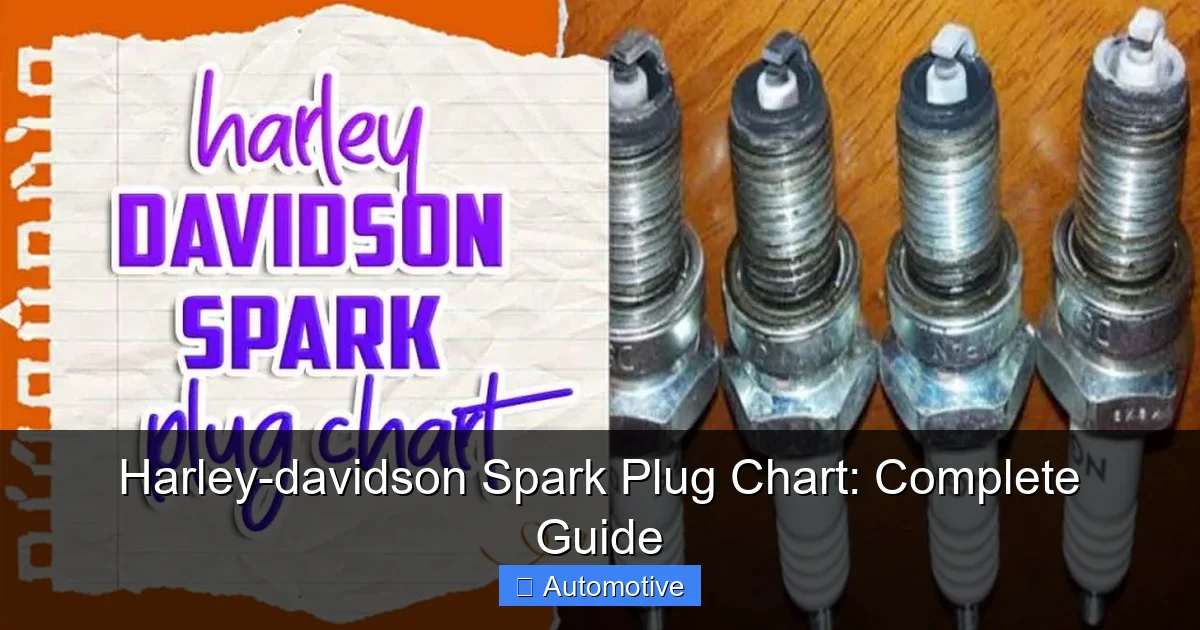
Visual guide about Harley-davidson Spark Plug Chart: Complete Guide
Image source: motorbikeinsider.com
The Harley-Davidson spark plug chart is a detailed reference tool that lists the recommended spark plugs for every major model and engine type. It’s typically organized by engine family, model year, and displacement. You can find official charts in your owner’s manual, on Harley’s website, or in service manuals. But what do all those numbers and letters mean?
Let’s break it down. Spark plugs are identified by a code that includes information about thread size, reach, hex size, heat range, and electrode design. For example, a common Harley plug might be labeled “4514” or “ECH-4514.” The number “4514” refers to a specific plug type used in many Twin Cam engines. The “ECH” prefix indicates it’s a Harley-Davidson OEM (original equipment manufacturer) part.
The chart also specifies the heat range—how quickly the plug dissipates heat from the combustion chamber. A “hot” plug retains more heat and is better for low-speed, stop-and-go riding. A “cold” plug sheds heat faster and is ideal for high-speed or high-load conditions. Using the wrong heat range can cause fouling (if too cold) or pre-ignition (if too hot), both of which harm engine performance.
Another key detail is the gap—the space between the center and ground electrode. Harley’s chart lists the correct gap for each plug, usually between 0.038 and 0.043 inches. A gap that’s too wide can cause misfires; too narrow, and you lose spark intensity. Always check and adjust the gap before installing new plugs.
How to Read the Chart Like a Pro
Reading the Harley-Davidson spark plug chart might seem intimidating at first, but it’s simpler than it looks. Start by identifying your engine type. Are you riding a Twin Cam 88 or 103? A Milwaukee-Eight 107 or 114? A Sportster 883 or 1200? Once you know your engine, locate it in the chart.
Next, note the model year. Harley often updates engine specs, and plug recommendations can change. For example, a 2006 Twin Cam might use a different plug than a 2010 model, even if they’re both 88 cubic inches. Always cross-reference your VIN or owner’s manual to be sure.
Then, look at the plug part number. Common OEM plugs include:
– 4514 (Twin Cam, Evolution)
– 6784 (Milwaukee-Eight)
– 6575 (Sportster)
These numbers correspond to specific plug designs. For instance, the 4514 is a copper-core plug with a projected tip, ideal for older engines. The 6784 is a colder plug designed for the higher combustion temperatures of the Milwaukee-Eight.
Don’t forget to check the gap specification. Some charts list it in inches, others in millimeters. A typical gap for a Twin Cam is 0.038 inches. For Milwaukee-Eight engines, it’s often 0.040 inches. Use a gap tool to measure and adjust as needed.
Where to Find the Official Chart
You can find the official Harley-Davidson spark plug chart in several places:
– Your motorcycle’s owner’s manual (usually in the maintenance section)
– Harley-Davidson’s official website (under “Owner Support” or “Service”)
– Factory service manuals (available for purchase or at dealerships)
– Harley forums and enthusiast sites (like HDForums or Iron Horse)
Always use the most up-to-date version. Harley occasionally updates recommendations based on field data and engine improvements. If you’re unsure, visit a Harley dealer or call their customer service line with your VIN for confirmation.
Spark Plug Types and What They Mean

Visual guide about Harley-davidson Spark Plug Chart: Complete Guide
Image source: motorbikeinsider.com
Not all spark plugs are created equal. Harley-Davidson engines can use different types of plugs, each with unique benefits. The three main types are copper, platinum, and iridium. Understanding the differences helps you choose the best option for your riding style and budget.
Copper Spark Plugs
Copper plugs are the most common and affordable option. They have a solid copper core with a nickel alloy electrode. These plugs offer excellent conductivity and are great for older Harley models like the Evolution and early Twin Cams. However, they wear out faster—typically every 10,000 to 15,000 miles.
Pros:
– Low cost
– Good performance in stock engines
– Easy to find
Cons:
– Shorter lifespan
– Prone to electrode erosion
Best for: Budget-conscious riders with older Harleys or those who don’t mind frequent replacements.
Platinum Spark Plugs
Platinum plugs have a platinum disc welded to the center electrode. This increases durability and maintains a sharp edge longer than copper. They last about twice as long—up to 30,000 miles—and provide more consistent spark.
Pros:
– Longer life
– Better performance over time
– Resists fouling
Cons:
– More expensive than copper
– Slightly lower conductivity
Best for: Riders who want a balance of performance and longevity without breaking the bank.
Iridium Spark Plugs
Iridium is the premium choice. These plugs feature a fine iridium tip on the center electrode, which is extremely hard and resistant to wear. They offer the best performance, longest life (up to 60,000 miles), and superior ignition efficiency.
Pros:
– Longest lifespan
– Excellent throttle response
– Ideal for high-performance or modified engines
Cons:
– Highest cost
– Overkill for stock engines
Best for: Enthusiasts, long-distance riders, or those with modified Harleys.
OEM vs. Aftermarket Plugs
Harley-Davidson recommends using OEM (original equipment manufacturer) plugs for optimal performance. These are designed specifically for your engine and tested for reliability. However, many aftermarket brands—like NGK, Denso, and Autolite—offer high-quality alternatives.
NGK, for example, makes iridium plugs that are direct replacements for Harley OEM parts. They’re often cheaper and just as reliable. Just make sure the part number matches your chart recommendation.
Tip: If you’re upgrading to iridium or platinum, stick to the same heat range as your OEM plug. Don’t assume a “better” plug means you can change the heat range—it can cause engine issues.
Harley-Davidson Engine Types and Their Spark Plugs
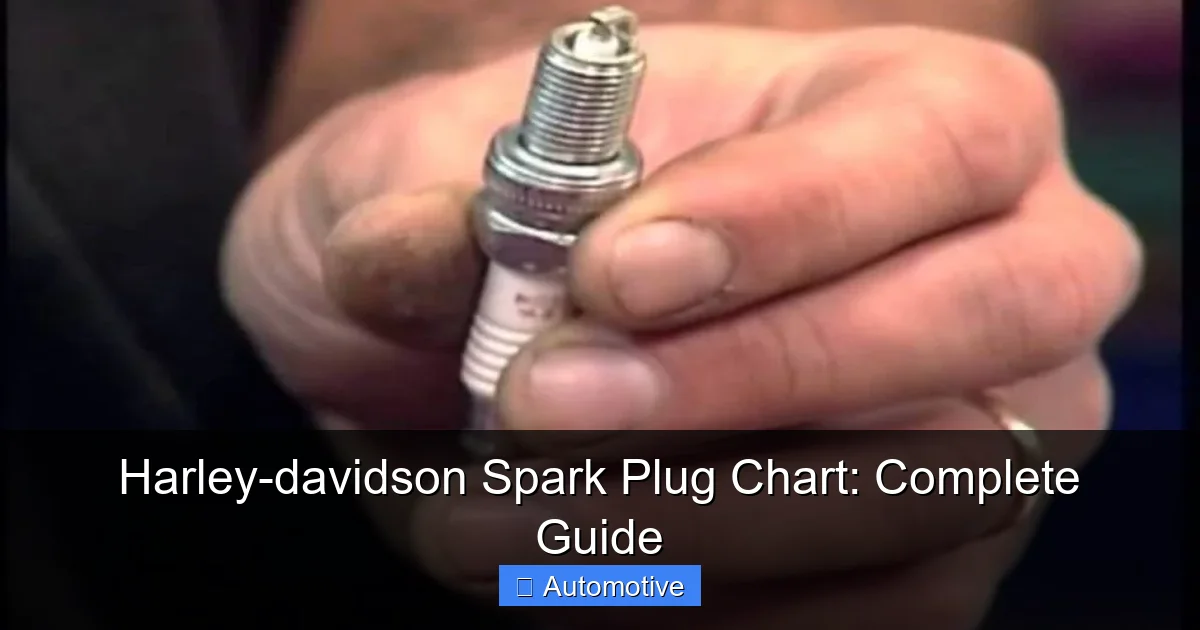
Visual guide about Harley-davidson Spark Plug Chart: Complete Guide
Image source: motorbikeinsider.com
Harley-Davidson has produced several engine families over the decades, each with unique spark plug requirements. Matching the right plug to your engine is crucial. Here’s a breakdown by engine type.
Evolution Engines (1984–1999)
The Evolution (or “Evo”) engine powered Sportsters and Big Twins from 1984 to 1999. It’s known for its simplicity and reliability. Most Evo engines use the 4514 spark plug with a 0.038-inch gap.
Models: FLT, FLHT, FXST, XL883, XL1200
Recommended plug: Harley 4514 (copper) or equivalent NGK DCPR7E
Tip: Evo engines run hotter than newer models, so avoid colder plugs unless you’re doing heavy highway riding.
Twin Cam Engines (1999–2017)
The Twin Cam (TC) engine replaced the Evo and was used in most Big Twins until 2017. It comes in 88, 96, 103, and 110 cubic inch versions. Most Twin Cams use the 4514 plug, but some later models (like the 2007+ Touring) may use the 6575.
Models: FLHR, FLHX, FLTR, FLS, FXCW
Recommended plug: 4514 (early models), 6575 (later models), gap 0.038–0.040 inches
Note: The Twin Cam runs hotter than the Evo, so heat range is critical. Stick to OEM recommendations.
Milwaukee-Eight Engines (2017–Present)
The Milwaukee-Eight (M-Eight) is Harley’s current engine platform, used in Touring and Softail models. It’s more powerful and efficient, with higher combustion temperatures. As a result, it requires colder plugs.
Models: FLTRX, FLFBS, FXDR, FLDE
Recommended plug: 6784 (colder heat range), gap 0.040 inches
Tip: Never use an Evo or Twin Cam plug in a Milwaukee-Eight—it can cause pre-ignition and engine damage.
Sportster Engines (1957–Present)
The Sportster family includes the 883, 1200, and newer Revolution Max engines. Older Sportsters (pre-2004) use the 4514 plug. Newer models, especially the 2004+ 1200, may use the 6575.
Models: XL883, XL1200, XB9, XB12
Recommended plug: 4514 (older), 6575 (newer), gap 0.038 inches
Note: The Revolution Max (used in Pan America and Bronx) uses a different plug—check your manual.
When and How to Replace Your Spark Plugs
Replacing spark plugs is one of the most important maintenance tasks for your Harley. Over time, electrodes wear down, gaps widen, and deposits build up. This leads to misfires, poor fuel economy, and hard starts.
Replacement Intervals
Harley recommends replacing spark plugs based on mileage and riding conditions:
– Copper plugs: Every 10,000–15,000 miles
– Platinum plugs: Every 25,000–30,000 miles
– Iridium plugs: Every 50,000–60,000 miles
However, if you ride in harsh conditions—frequent short trips, dusty roads, or heavy traffic—you may need to replace them sooner. Always inspect your plugs during oil changes.
Signs You Need New Spark Plugs
Watch for these warning signs:
– Hard starting (especially when cold)
– Rough idle or hesitation
– Reduced fuel economy
– Loss of power or acceleration
– Check engine light (may indicate misfire)
If you notice any of these, pull over and inspect your plugs. A fouled plug (black, sooty deposits) means it’s too cold or you’re riding too gently. A blistered or melted electrode means it’s too hot.
Step-by-Step Replacement Guide
Replacing spark plugs is a straightforward job you can do at home with basic tools. Here’s how:
1. **Let the engine cool.** Never work on a hot engine—burns are no joke.
2. **Remove the spark plug wires.** Gently pull on the boot, not the wire. Label them if needed.
3. **Clean the area.** Use compressed air to blow dirt away from the plug holes.
4. **Unscrew the old plugs.** Use a spark plug socket and extension. Turn counterclockwise.
5. **Check the gap.** Use a gap tool to measure the new plug. Adjust if needed.
6. **Install the new plugs.** Hand-tighten first, then torque to spec (usually 12–18 ft-lbs).
7. **Reattach the wires.** Push the boots on firmly until they click.
8. **Start the engine.** Listen for smooth operation. If it runs rough, double-check connections.
Tip: Apply a small amount of dielectric grease to the inside of the boot to prevent moisture and improve conductivity.
Tips for Choosing the Right Spark Plug
With so many options, how do you pick the best spark plug for your Harley? Here are some practical tips.
Match Your Riding Style
– **City riders:** Frequent stops and starts? A hotter plug (like the 4514) may help prevent fouling.
– **Highway cruisers:** Long stretches at high speed? A colder plug (like the 6784) is better for heat dissipation.
– **Performance riders:** Modified engines or high-compression builds? Consider iridium plugs for durability.
Consider Your Climate
– **Hot climates:** Engines run hotter. Use a colder plug to prevent pre-ignition.
– **Cold climates:** Engines take longer to warm up. A hotter plug helps prevent fouling.
Don’t Overlook the Gap
Even the best plug won’t work if the gap is wrong. Always check it before installation. Use a wire-type gap tool for accuracy—feeler gauges can bend the electrode.
Buy Quality, Not Just Cheap
Avoid no-name brands. Stick to reputable manufacturers like NGK, Denso, Autolite, or Harley OEM. A bad plug can damage your engine.
Keep Spares on Hand
If you’re touring or riding far from home, carry a spare set of plugs and a gap tool. You never know when you’ll need them.
Common Mistakes to Avoid
Even experienced riders make spark plug mistakes. Here’s what to watch out for.
Using the Wrong Heat Range
This is the #1 mistake. A plug that’s too hot can cause detonation, leading to piston damage. Too cold, and it fouls easily. Always follow the chart.
Over-Tightening the Plugs
Spark plugs are delicate. Over-tightening can crack the insulator or strip the threads. Use a torque wrench and follow Harley’s specs.
Ignoring the Gap
Assuming the gap is correct is risky. Always measure it. Pre-gapped plugs can change during shipping.
Reusing Old Wires
If your plug wires are cracked or brittle, replace them too. Old wires can cause misfires, even with new plugs.
Skipping the Dielectric Grease
This small step prevents corrosion and ensures a good connection. Don’t skip it.
Conclusion
Your Harley-Davidson’s performance, efficiency, and longevity depend on a simple yet vital component: the spark plug. By using the Harley-Davidson spark plug chart, you can ensure you’re installing the right plug for your engine, riding style, and conditions. Whether you choose copper, platinum, or iridium, proper selection, installation, and maintenance will keep your bike running strong.
Don’t wait for symptoms to appear. Make spark plug replacement part of your regular maintenance routine. With the knowledge from this guide, you’re equipped to make smart decisions and enjoy every mile on your Harley. So grab your tools, check that chart, and give your engine the spark it deserves.
Frequently Asked Questions
What spark plug does a Harley Twin Cam 88 use?
The Harley Twin Cam 88 typically uses the OEM 4514 spark plug with a gap of 0.038 inches. This copper-core plug is designed for the engine’s heat range and combustion characteristics.
Can I use NGK spark plugs in my Harley?
Yes, NGK makes high-quality aftermarket spark plugs that are compatible with Harley-Davidson engines. For example, the NGK DCPR7E is a direct replacement for the OEM 4514 plug.
How often should I replace spark plugs on a Harley?
It depends on the plug type. Copper plugs should be replaced every 10,000–15,000 miles, platinum every 25,000–30,000 miles, and iridium every 50,000–60,000 miles. Always check your owner’s manual.
What happens if I use the wrong heat range spark plug?
Using a plug that’s too hot can cause pre-ignition and engine damage. One that’s too cold may foul with carbon deposits, leading to misfires and poor performance.
Do I need to gap Harley spark plugs before installing?
Yes, always check the gap before installation. Even pre-gapped plugs can be damaged in shipping. Use a wire-type gap tool for accuracy.
Can I replace spark plugs myself?
Absolutely. With basic tools—socket wrench, spark plug socket, gap tool, and torque wrench—you can replace your spark plugs at home. Just follow safety precautions and torque specs.