
Graco Atlas 65 2-in-1 Harness Booster Car Seat: 2026 Guide

Quick Answer
The Graco Atlas 65 2-in-1 Harness Booster Car Seat is a forward-facing combination seat that converts from a 5-point harness seat to a high-back belt-positioning booster. It remains practical if you already own one that is within its useful life, has no crash history, and still fits your child, but anyone buying an older or used Atlas in 2026 should check the manufacture date, labels, manual, and NHTSA car-seat guidance before using it.
What matters most
- Two useful modes: It starts as a forward-facing harness seat and later becomes a high-back booster.
- Harness range: Published Atlas specifications list the 5-point harness for children from 22 to 65 pounds.
- No rethreading: The headrest and harness adjust together, which makes growth adjustments easier.
- Older-seat caution: Confirm the exact manufacture date and useful-life information printed on your own seat.
- Manual controls: If online specifications conflict with your seat’s labels or manual, follow the instructions supplied for your exact model.
If you’re researching the Graco Atlas 65 in 2026, you’re probably deciding whether an existing seat is still useful or whether an older secondhand Atlas is worth considering.
I look at this seat differently from a brand-new model. Its basic design is still practical, but condition, age, fit, and installation matter more than a bargain price.
In This Guide
What Is the Graco Atlas 65 2-in-1 Harness Booster?
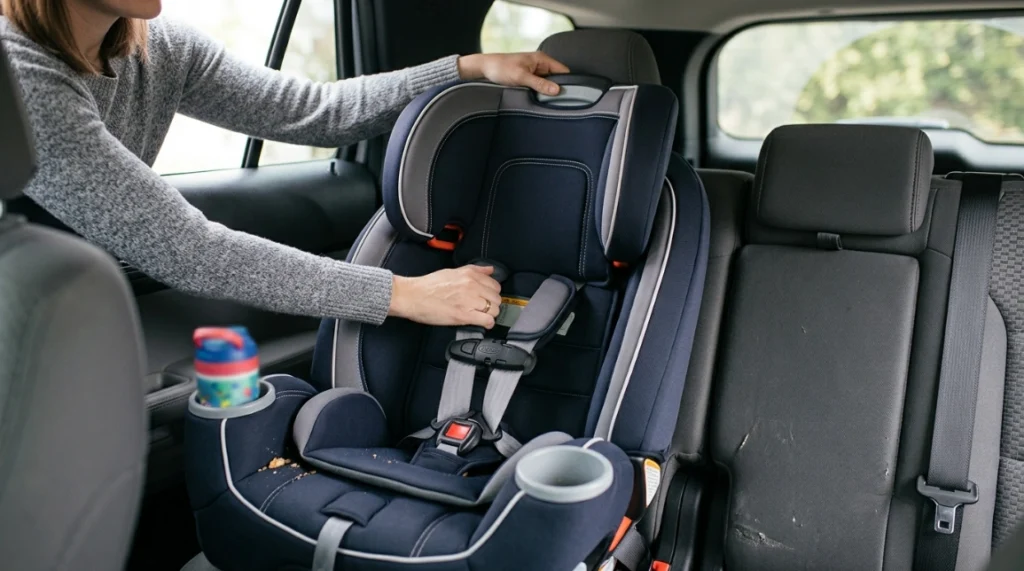
The Graco Atlas 65 is a combination car seat. That means it uses an internal 5-point harness first, then converts into a high-back booster that positions the vehicle’s lap-and-shoulder belt.
It does not have a rear-facing mode. A child should therefore already be developmentally and physically ready for forward-facing travel before using the Atlas.
Definition: A combination car seat is a forward-facing child restraint that begins with a built-in harness and later converts to a belt-positioning booster.
The Atlas was designed around a simple idea: keep the child harnessed through the preschool and early school years, then continue using the same shell as a booster.
Its best-known convenience feature is the Simply Safe Adjust harness system. Moving the headrest also changes the harness height, so you don’t have to remove and rethread the straps through different slots.
- Forward-facing harness: Published specifications list a 22–65 lb range.
- Harness height range: Published Atlas information lists children up to about 49 inches in harness mode.
- High-back booster: Designed for children up to 100 lb, subject to the minimums printed on your specific seat.
- Headrest: Multiple positions allow adjustment as your child’s torso grows.
- Cup holders: Two integrated holders provide space for drinks or small snacks.
- Recline: The seat provides limited recline adjustment rather than the deep recline found on many convertible seats.
One detail deserves attention. Older Atlas documentation and listings do not always show the same minimum booster weight.
For that reason, don’t use a random online listing as your final authority. Check the labels and instruction manual belonging to the exact seat in your vehicle.
Who Can Use the Graco Atlas 65?
The Atlas 65 is intended for a child who has already reached the forward-facing stage. It should not be used as a substitute for a rear-facing infant or convertible seat.
NHTSA recommends keeping children rear-facing until they reach the maximum rear-facing height or weight allowed by their seat. After that, children should use a forward-facing seat with a harness and tether for as long as their restraint allows.
You can review general forward-facing car-seat guidance from NHTSA when deciding whether your child is ready for this type of restraint.
Harness mode usually makes sense first
If your child still fits the Atlas harness limits, I would normally favor using the harness instead of rushing into booster mode.
A booster requires more responsibility from the child. The child must remain upright and keep the shoulder belt correctly positioned for the entire trip.
- Sit with the back against the vehicle seat or booster.
- Keep the lap belt low across the upper thighs.
- Keep the shoulder belt across the chest and shoulder.
- Avoid leaning sideways or reaching forward.
- Leave the belt correctly positioned while sleeping.
If a child cannot maintain that position, a harnessed restraint with suitable limits is generally the more practical option.
Fit matters more than age alone
Weight isn’t the only limit to check. Harness height, overall child height, shoulder position, and the manufacturer’s instructions all matter.
A tall, lightweight child may outgrow a harness by height before reaching its maximum weight. Another child may remain within the fit limits longer.
Is the Graco Atlas 65 Easy to Install?
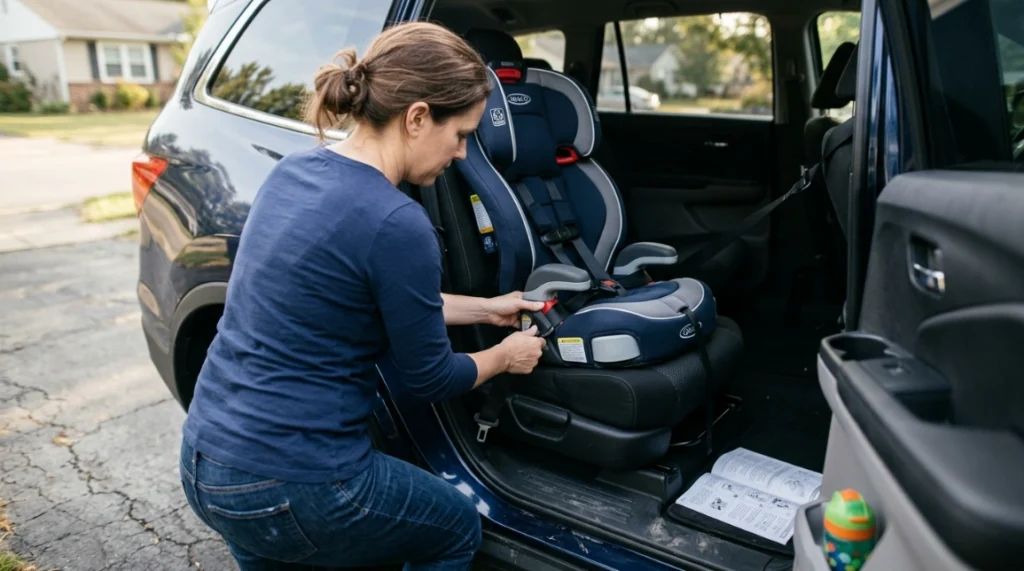
The Atlas uses familiar forward-facing installation methods, but correct installation still depends on your vehicle and the exact Atlas instructions.
In harness mode, the seat can be secured using an approved vehicle-seat-belt installation or the lower-anchor method when permitted by the manual. The top tether should be used as instructed for forward-facing installation.
Installing in harness mode
Start by putting the Atlas in an approved forward-facing seating position. Read both the Atlas manual and your vehicle owner’s manual before routing any belt.
- Place the restraint flat against the vehicle seat.
- Route the approved belt or lower-anchor strap through the correct forward-facing belt path.
- Tighten the installation while pressing the car seat into the vehicle cushion.
- Connect and tighten the top tether according to the vehicle and child-restraint manuals.
- Check movement at the belt path rather than pulling on the headrest.
- Position and tighten the child’s harness according to the manual.
NHTSA’s combination-seat installation guidance also notes that forward-facing harness straps should lie flat and sit through slots at or above the child’s shoulders.
Mechanic Alert: If you’re unsure whether your vehicle has the correct tether anchor, can’t obtain a secure installation, or find damaged restraint hardware, stop using that installation and have the setup checked by a qualified Child Passenger Safety Technician.
What changes in booster mode?
Booster mode works differently because the vehicle’s lap-and-shoulder belt restrains the child. The Atlas then helps route that belt into a safer position.
NHTSA advises parents to convert a combination seat only after the child outgrows the harness and meets the booster requirements specified by the manufacturer.
Follow the NHTSA combination-booster instructions along with the Atlas manual when making that transition.
What Is the Atlas 65 Like for Everyday Use?
The Atlas 65’s strongest everyday feature is simplicity. It gives families two forward-facing stages without the extra complexity of an all-in-one seat.
The no-rethread harness is especially useful during growth spurts. Raising the headrest and harness together is much easier than pulling a seat apart to reroute shoulder straps.
Features parents are likely to appreciate
- No-rethread adjustment: Harness and headrest height change together.
- Two cup holders: Handy for drinks, small toys, or snacks.
- Harness storage: The harness stays with the seat after conversion to booster mode.
- High-back design: Provides an integrated belt guide when used as a booster.
- Relatively straightforward controls: There are fewer modes to configure than on many modern all-in-one seats.
Where the design feels older
The Atlas is not a rotating seat, slim three-across specialist, or modern all-in-one restraint. It also doesn’t convert to a backless booster.
That isn’t automatically a problem. It simply means newer products may offer more stages or convenience features for families buying today.
Cleaning also needs care. Never soak, lubricate, or aggressively clean harness components unless the manual specifically permits that method.
For manufacturer support, replacement-part information, or the correct manual for a specific model number, use Graco’s product instruction resource.
How Does the Atlas 65 Compare With Newer Graco Boosters?
The Atlas still covers the two most important forward-facing stages, but Graco now sells harness boosters with broader mode coverage.
The table below shows why a newer seat can make more sense when you’re purchasing rather than continuing to use an Atlas you already own.
| Feature | Graco Atlas 65 | Graco Tranzitions 3-in-1 | Graco Nautilus 2.0 |
|---|---|---|---|
| Harness mode | 22–65 lb published range | 26.5–65 lb | 26.5–65 lb |
| High-back booster | Up to 100 lb; verify minimum on exact seat | 40–100 lb | 40–100 lb |
| Backless booster | No | Yes, up to 100 lb | Yes, up to 120 lb |
| No-rethread adjustment | Yes | Yes | Yes |
| Best reason to choose | Already own a safe, unexpired seat | Lightweight three-mode design | Higher-capacity backless booster stage |
The important difference isn’t that the Atlas suddenly became ineffective because newer models exist. The bigger issue is that Atlas seats in circulation are now older.
For a fresh purchase, a current model gives you a newer manufacture date and may provide an extra backless-booster stage.
Is the Graco Atlas 65 Worth Using or Buying in 2026?
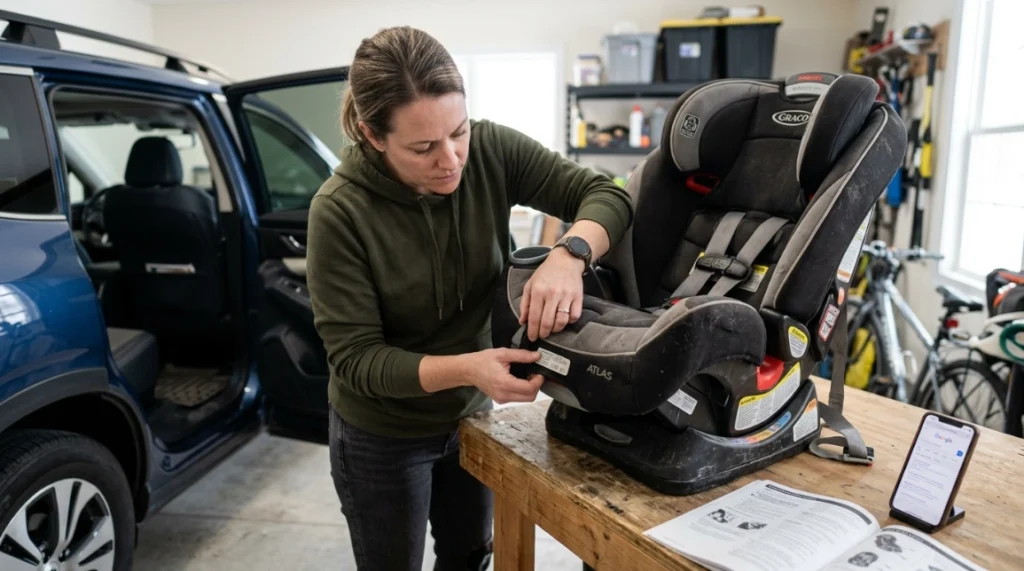
If you already own an Atlas 65, it can still be useful only if your individual seat remains within its manufacturer-defined useful life and passes every condition check.
I would be much more cautious about buying one secondhand. With an older restraint, missing history is a bigger concern than cosmetic wear.
Check these before using an older Atlas
- Manufacture date: Find the label on the restraint and calculate its age using the instructions for your exact model.
- Expiration: Do not use a seat beyond the useful life specified by Graco.
- Crash history: Avoid a used restraint when you cannot verify its history.
- Recalls: Search the exact model before use.
- Missing parts: Confirm that required harness pieces, covers, belt guides, tether hardware, and other components are present.
- Structural condition: Look for cracks, damaged webbing, stressed plastic, or broken adjustment parts.
- Manual: Obtain the correct instructions for the model number and manufacture date.
Graco explains that car seats have a limited useful life because materials and components age over years of vehicle use. Its car-seat expiration guidance recommends checking the product-specific information rather than assuming an older seat is still suitable.
What about recalls?
A product name alone isn’t enough for a recall decision. Check the exact model information and manufacture details against current manufacturer and federal records.
You can also search NHTSA’s car-seat database before putting an older restraint back into service.
For me, that leads to a simple buying rule. I would rather buy a current harness booster with a known history than save money on an Atlas whose age or previous use cannot be verified.
If you already own a properly stored Atlas with complete records, the decision is different. Check it carefully, confirm fit, and continue following the exact manual while it remains eligible for use.
Graco Atlas 65 FAQ
Is the Graco Atlas 65 rear-facing?
No. The Atlas 65 is a forward-facing combination restraint. It starts with a built-in 5-point harness and later converts into a high-back belt-positioning booster.
What is the Graco Atlas 65 weight limit?
Published Atlas specifications list the forward-facing harness from 22 to 65 pounds and the high-back booster up to 100 pounds. Check the labels and manual on your exact seat because minimum booster requirements may differ between documentation or model revisions.
Does the Graco Atlas 65 become a backless booster?
No. The Atlas 65 converts from a forward-facing harness seat into a high-back booster, but it does not provide a separate backless-booster mode.
Does the Graco Atlas 65 use LATCH?
The Atlas supports lower-anchor installation in harness mode within the limits specified by its manual. Never assume the anchors can be used at every child weight, and use the top tether as directed for forward-facing installation.
When should I switch the Atlas from harness to booster mode?
Keep using the harness while your child fits within its permitted limits. Move to booster mode only after the child meets the Atlas booster requirements and can remain properly positioned behind a lap-and-shoulder belt throughout every trip.
Can I buy a used Graco Atlas 65?
You can technically encounter used Atlas seats for sale, but I would only consider one with a fully known history, readable manufacture label, correct manual, complete parts, no disqualifying crash history, and enough useful life remaining to justify the purchase.
How do I know whether my Graco Atlas 65 is expired?
Find the date-of-manufacture and model information printed on the seat, then compare it with the useful-life instructions for that exact restraint. If you’re unsure, contact Graco rather than estimating from the model name alone.
Bottom line: The Graco Atlas 65 remains a straightforward harness-to-high-back-booster design, but its age is now the deciding factor. If your seat is eligible for continued use, fits your child, and installs correctly, follow its manual; if you’re shopping for a replacement in 2026, a current harness booster is usually the easier choice.
