
Fxr Vs Dyna Comparison

The Harley-Davidson FXR and Dyna are two iconic cruiser platforms with distinct histories, designs, and riding experiences. While the FXR blends sporty handling with classic style, the Dyna offers a more traditional, customizable ride ideal for long-distance touring and personalization.
Key Takeaways
- FXR: Sporty and Agile: The FXR was designed for better handling and cornering, featuring a rubber-mounted engine and improved suspension, making it a favorite among riders who wanted performance without sacrificing Harley style.
- Dyna: Customization King: The Dyna series, especially the Super Glide and Fat Bob, became legendary for their versatility and aftermarket support, allowing riders to build highly personalized machines.
- Engine and Frame Differences: The FXR used a unique frame with rubber engine mounting, while the Dyna introduced a sturdier, more rigid frame that improved durability and load capacity.
- Riding Position and Comfort: FXR models often had a more forward-leaning, sporty stance, whereas Dyna bikes offered a relaxed, upright position better suited for long rides.
- Legacy and Collectibility: FXR models are now rare and highly collectible, while Dyna bikes remain popular among custom builders and daily riders alike.
- Performance Comparison: The FXR excels in agility and responsiveness, while the Dyna shines in stability, comfort, and customization potential.
- Which One for You? Choose the FXR for a vintage performance cruiser experience; go with the Dyna if you value customization, comfort, and long-term usability.
📑 Table of Contents
- Introduction: Two Legends of the Harley-Davidson Lineup
- Historical Background: The Birth of Two Icons
- Design and Styling: Form Meets Function
- Performance and Handling: How They Ride
- Comfort and Ergonomics: Riding for the Long Haul
- Customization and Aftermarket Support
- Legacy and Collectibility: Which One Stands the Test of Time?
- Conclusion: FXR vs Dyna – Which One Is Right for You?
Introduction: Two Legends of the Harley-Davidson Lineup
When it comes to Harley-Davidson motorcycles, few model lines have sparked as much passion and debate as the FXR and Dyna. These two platforms represent different eras, philosophies, and riding styles within the Harley universe. Whether you’re a seasoned rider or just starting your journey into American motorcycle culture, understanding the FXR vs Dyna comparison is essential to choosing the right bike—or appreciating the legacy behind these iconic machines.
The FXR, produced from 1982 to 1994, was Harley’s answer to riders who wanted more than just a cruiser. It was a sportier, more agile machine that still wore the Harley badge with pride. With its rubber-mounted engine and innovative frame design, the FXR stood out in an era when most Harleys were known for their laid-back, heavy-riding style. It was the bike for riders who wanted to carve corners without giving up that unmistakable Harley rumble.
On the other side of the spectrum, the Dyna series—introduced in 1991 and produced until 2017—became the backbone of Harley’s custom and touring lineup. Models like the Dyna Super Glide, Wide Glide, and Fat Bob offered a blend of classic styling, solid performance, and unmatched customization potential. The Dyna wasn’t just a motorcycle; it was a platform for personal expression, a blank canvas for builders and riders alike.
Historical Background: The Birth of Two Icons
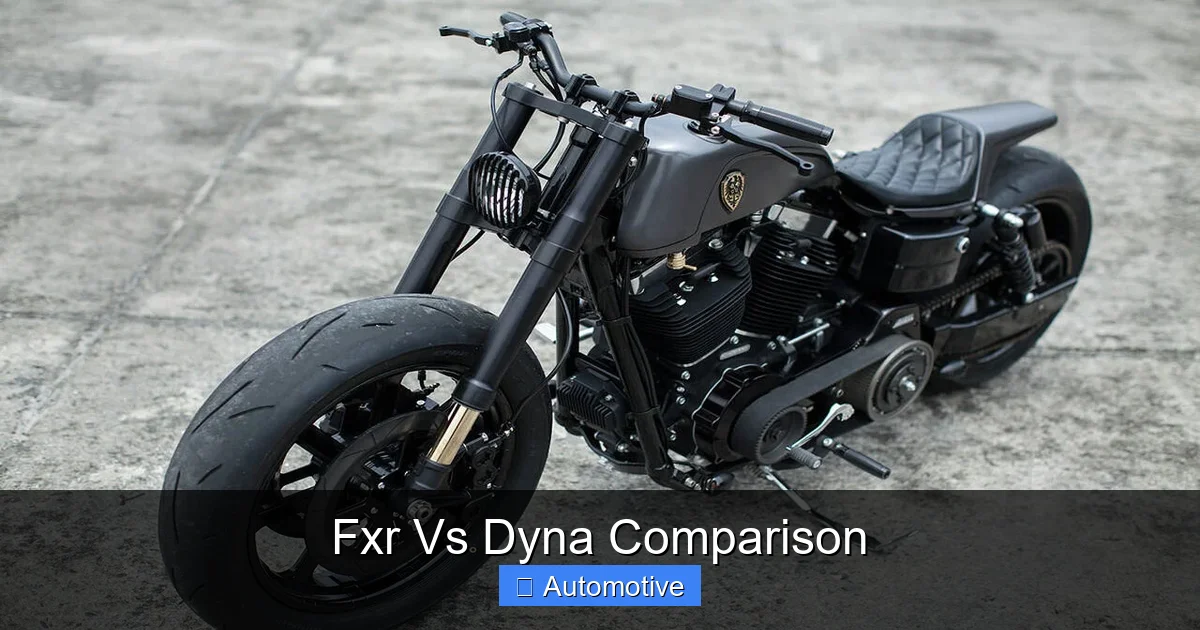
Visual guide about Fxr Vs Dyna Comparison
Image source: motorbikeinsider.com
The Rise of the FXR (1982–1994)
The FXR didn’t emerge by accident. In the early 1980s, Harley-Davidson was facing stiff competition from Japanese manufacturers who were producing lighter, faster, and more reliable motorcycles. Riders were beginning to demand better handling and performance, especially on winding roads and highways. Harley responded with the FXR, a model that combined the brand’s signature V-twin engine with a new frame and suspension system designed for improved ride quality.
The FXR’s frame was a game-changer. Unlike earlier models that used a rigid or springer front end, the FXR featured a rubber-mounted engine and a triangulated frame that reduced vibration and improved stability. This allowed the engine to float slightly, absorbing road shocks and giving the rider a smoother experience. The result? A Harley that could actually handle corners without feeling like it was about to tip over.
Popular models included the FXR, FXRS (with improved suspension), and the FXRP (police version). The FXR also became a favorite among stunt riders and racers, thanks to its balanced weight distribution and responsive steering. It wasn’t the fastest bike on the road, but it was one of the most fun to ride—especially for those who enjoyed a more dynamic experience.
The Dyna Era (1991–2017)
While the FXR was making waves in the performance cruiser world, Harley was quietly developing a new platform that would eventually overshadow it: the Dyna. Introduced in 1991, the Dyna series was built on a revised version of the Evolution engine and a new frame that offered greater rigidity and strength. The Dyna frame used a traditional twin-spar design with a rigid engine mount, which some purists preferred for its direct feedback and classic feel.
The Dyna platform quickly became a favorite among custom builders. Its clean lines, exposed engine, and modular design made it easy to modify. Riders could swap out exhausts, handlebars, seats, and even engines with relative ease. The Dyna Super Glide, for example, became a staple in the custom scene, often seen with stretched tanks, ape hanger bars, and custom paint jobs.
Over the years, Harley expanded the Dyna lineup to include models like the Dyna Wide Glide (with its distinctive wide front end), the Dyna Fat Bob (with dual headlights and a muscular stance), and the Dyna Street Bob (a stripped-down, minimalist version). Each model offered a slightly different flavor, but all shared the same core DNA: a balance of style, performance, and customization.
Design and Styling: Form Meets Function
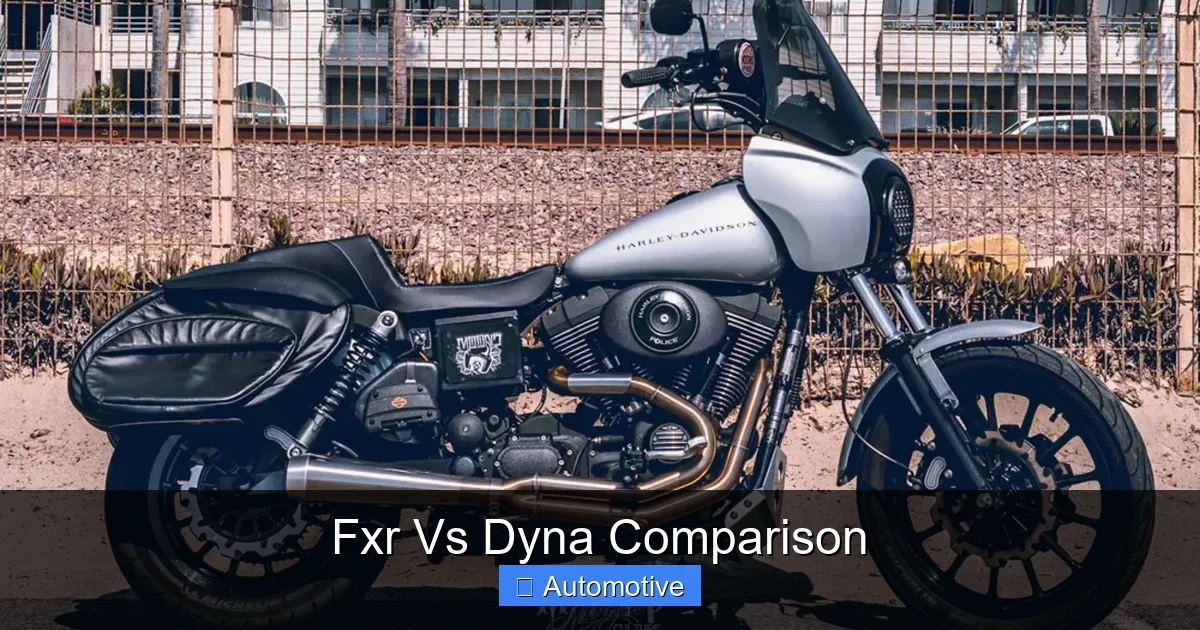
Visual guide about Fxr Vs Dyna Comparison
Image source: motorbikeinsider.com
FXR: The Sport Cruiser Aesthetic
The FXR’s design was a departure from traditional Harley cruisers. It featured a more streamlined look, with a lower profile and a sportier stance. The fuel tank was slightly smaller and more angular, and the rear fender was often chopped or bobbed for a cleaner appearance. The handlebars were typically lower and more forward, encouraging a slightly leaned-forward riding position.
One of the FXR’s most distinctive features was its dual rear shocks, which were mounted vertically and provided better damping than the older springer-style setups. This gave the FXR a more modern look and improved ride quality. The front end often featured a 16-inch wheel with a wide tire, adding to the bike’s aggressive appearance.
Color schemes varied, but popular choices included classic Harley colors like Vivid Black, Deep Red, and Chrome Yellow. Some models featured two-tone paint jobs or racing stripes, further emphasizing the FXR’s performance roots.
Dyna: The Custom Canvas
The Dyna, by contrast, embraced a more traditional Harley aesthetic—but with a twist. Its design was rooted in the brand’s heritage, with a teardrop-shaped fuel tank, exposed engine, and classic fender lines. However, the Dyna’s real strength was its adaptability. Unlike the FXR, which had a more fixed design, the Dyna was built to be modified.
The Dyna’s frame allowed for easy installation of aftermarket parts. Want ape hangers? No problem. Prefer a solo seat with a sissy bar? Done. The Dyna could be transformed from a stock cruiser into a full-blown custom chopper with relative ease. This made it a favorite among riders who wanted to put their personal stamp on their bike.
Popular Dyna models like the Fat Bob featured dual headlights, a wide front end, and a muscular stance that screamed power and attitude. The Wide Glide, with its raked front end and wide tire, looked like it was ready to dominate the highway. Meanwhile, the Street Bob offered a more minimalist approach, with blacked-out components and a no-frills design that appealed to riders who valued simplicity and function.
Performance and Handling: How They Ride
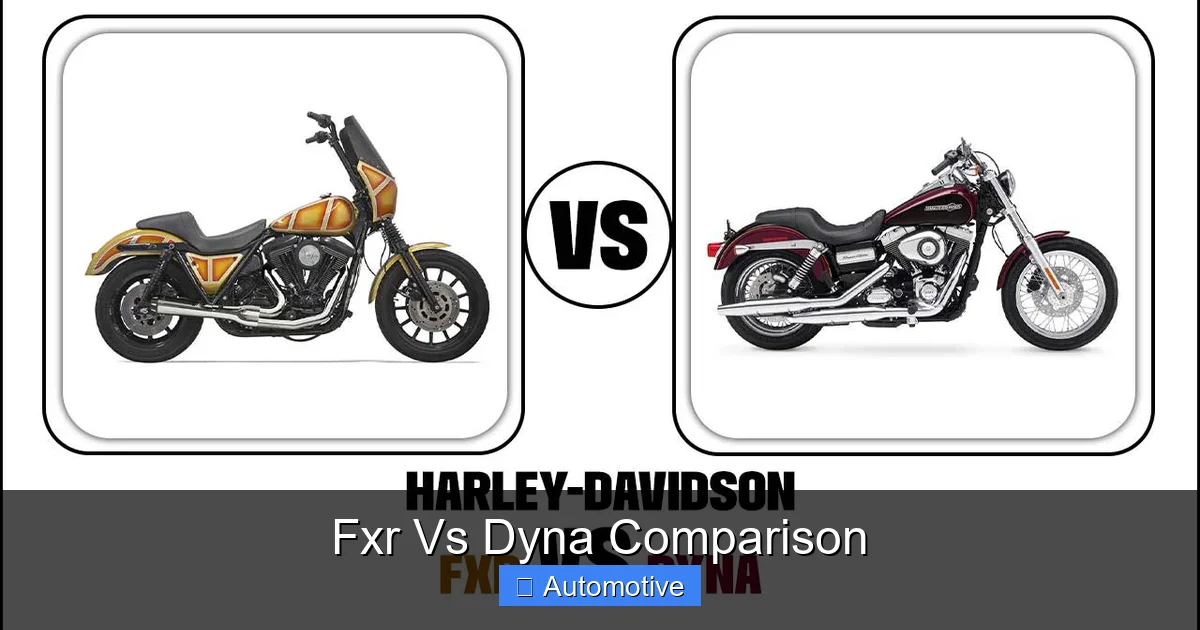
Visual guide about Fxr Vs Dyna Comparison
Image source: motorbikeinsider.com
FXR: Agile and Responsive
The FXR was built for riders who wanted a more engaging experience. Its rubber-mounted engine reduced vibration, making long rides more comfortable. The frame design allowed for better weight distribution, which improved cornering and stability. The FXR could actually handle twisty roads with confidence—something that wasn’t common for Harleys of that era.
The suspension setup, with dual rear shocks and a telescopic front fork, provided a balanced ride. It wasn’t as plush as a modern touring bike, but it was a huge step up from earlier models. The FXR also had a lower center of gravity, which made it easier to handle at low speeds and in tight spaces.
Acceleration was decent for the time, thanks to the 1340cc Evolution V-twin engine. It wasn’t a speed demon, but it had plenty of torque for highway cruising and quick passes. The FXR’s real strength was its agility—it felt alive in the rider’s hands, responding quickly to inputs and rewarding skillful riding.
Dyna: Stable and Customizable
The Dyna, while not as nimble as the FXR, offered a different kind of performance: stability and durability. Its rigid engine mount gave it a more direct feel, which some riders preferred for its raw, mechanical feedback. The frame was sturdier, making it better suited for heavy loads and long-distance touring.
The Dyna’s suspension was also more robust, with heavier-duty shocks and a stronger front end. This made it ideal for riders who carried passengers or gear regularly. The Dyna could handle rough roads and long miles without feeling fatigued.
Performance-wise, the Dyna benefited from Harley’s continuous engine improvements. Later models featured fuel injection, better airflow, and increased displacement (up to 1584cc in the Twin Cam 96 engine). This gave the Dyna more power and smoother operation, especially at highway speeds.
One of the Dyna’s biggest advantages was its customization potential. Riders could upgrade the engine, exhaust, and suspension to suit their riding style. Want more power? Drop in a Stage II kit. Prefer a smoother ride? Swap in progressive shocks. The Dyna was a platform, not just a motorcycle.
Comfort and Ergonomics: Riding for the Long Haul
FXR: Sporty but Tolerable
The FXR’s riding position was more aggressive than traditional Harleys. The handlebars were lower and more forward, and the foot pegs were positioned slightly rearward. This encouraged a sportier posture, with the rider leaning slightly into the wind. For short rides or spirited backroad trips, this was ideal. But for long-distance touring, it could become tiring.
The seat was typically firm and narrow, designed more for performance than comfort. Some riders added aftermarket seats or gel pads to improve long-ride comfort. Wind protection was minimal, as the FXR usually came with a small windscreen or none at all.
That said, the FXR’s reduced vibration and smoother ride made it more tolerable than older models. It wasn’t a touring bike, but it could handle a weekend trip with the right modifications.
Dyna: Built for the Road
The Dyna, especially models like the Super Glide and Street Bob, offered a more relaxed riding position. The handlebars were higher and wider, and the foot pegs were positioned forward. This gave the rider a more upright, comfortable posture—perfect for long hours in the saddle.
The seat was generally wider and more padded, with better support for the lower back. Many Dyna models also offered optional passenger seats and backrests, making them suitable for two-up riding. Wind protection varied by model, but some came with larger windshields or fairings.
The Dyna’s suspension also contributed to comfort. With its heavier-duty shocks and sturdier frame, it absorbed bumps and potholes better than the FXR. This made it a better choice for riders who spent a lot of time on the road.
Customization and Aftermarket Support
FXR: Limited but Loved
The FXR wasn’t designed to be a custom bike, but that didn’t stop enthusiasts from modifying it. Popular upgrades included performance exhausts, air cleaners, and suspension kits. Some riders even swapped in later-model engines or installed modern brakes and wheels.
However, the FXR’s unique frame and rubber-mounted engine made some modifications tricky. Finding replacement parts can also be challenging today, as the model has been out of production for decades. Still, the FXR has a dedicated following, and there are specialty shops that cater to FXR owners.
Dyna: The Custom King
If the FXR was a performance cruiser, the Dyna was a custom builder’s dream. Its modular design and widespread availability made it the go-to platform for aftermarket upgrades. From exhaust systems to handlebars, seats to wheels, almost every component could be swapped out.
Popular customizations included:
- Installing ape hanger or drag handlebars
- Upgrading to a high-performance air cleaner and exhaust
- Adding a custom paint job or powder-coated parts
- Swapping in a bigger engine or performance cam
- Installing LED lighting and modern electronics
The Dyna’s popularity also meant a huge selection of aftermarket parts. Companies like Vance & Hines, Progressive Suspension, and Arlen Ness all offered Dyna-specific products. This made it easy for riders to build a bike that was truly their own.
Legacy and Collectibility: Which One Stands the Test of Time?
FXR: A Rare Gem
Today, the FXR is a collector’s item. With only 12 years of production and relatively low numbers compared to other models, finding a clean, original FXR can be a challenge. Prices have risen steadily, especially for well-maintained examples or rare variants like the FXRP police model.
The FXR’s legacy lives on in Harley’s later sport-touring models, like the FLHTCUI Electra Glide Ultra Classic and the Road King. Its influence can also be seen in the brand’s emphasis on ride quality and handling in modern cruisers.
Dyna: Still Going Strong
Although the Dyna was discontinued in 2017 (replaced by the Softail platform), it remains incredibly popular. Used Dyna models are widely available, and many are still on the road today. Its reputation for durability and customization ensures it will remain a favorite among riders for years to come.
The Dyna’s impact on the custom motorcycle scene is undeniable. It helped fuel the rise of the “bobber” and “chopper” trends, and many modern custom bikes are still built on Dyna frames or inspired by Dyna designs.
Conclusion: FXR vs Dyna – Which One Is Right for You?
So, which is better: the FXR or the Dyna? The answer depends on what you’re looking for in a motorcycle.
If you want a rare, sporty cruiser with a unique history and agile handling, the FXR is a fantastic choice. It’s perfect for riders who enjoy spirited rides on backroads and appreciate vintage Harley engineering. Just be prepared for higher maintenance and limited parts availability.
On the other hand, if you value customization, comfort, and long-term usability, the Dyna is hard to beat. It’s a versatile platform that can be tailored to your exact preferences, whether you’re building a show bike or a daily rider. Its robust design and strong aftermarket support make it a practical choice for riders of all levels.
Ultimately, both the FXR and Dyna represent important chapters in Harley-Davidson’s history. They each offer a different experience, but both deliver that unmistakable Harley feel—the rumble of the engine, the wind in your face, and the freedom of the open road.
Whether you’re drawn to the FXR’s sporty soul or the Dyna’s custom spirit, one thing is certain: you’re riding a piece of motorcycle legend.
Frequently Asked Questions
What years were the FXR and Dyna produced?
The FXR was produced from 1982 to 1994, while the Dyna series was introduced in 1991 and discontinued in 2017. Both models overlapped for several years, giving riders a choice between sporty and customizable platforms.
Which is faster: the FXR or the Dyna?
The FXR generally has better handling and agility, making it feel quicker in corners. The Dyna, especially later models with larger engines, may have more top-end power, but the FXR offers a more responsive ride overall.
Can you customize an FXR like a Dyna?
Yes, but it’s more challenging. The FXR’s unique frame and rubber-mounted engine limit some modifications. The Dyna, with its rigid frame and modular design, is far more customizable and has better aftermarket support.
Are FXR parts hard to find?
Yes, FXR parts can be difficult to source due to the model’s age and limited production. Enthusiast forums and specialty shops are the best places to find original or reproduction components.
Is the Dyna still in production?
No, the Dyna was discontinued in 2017 and replaced by the updated Softail platform. However, used Dyna models remain popular and widely available.
Which bike is better for long-distance riding?
The Dyna is generally better for long-distance touring due to its more comfortable riding position, better suspension, and higher load capacity. The FXR is more suited to shorter, spirited rides.
