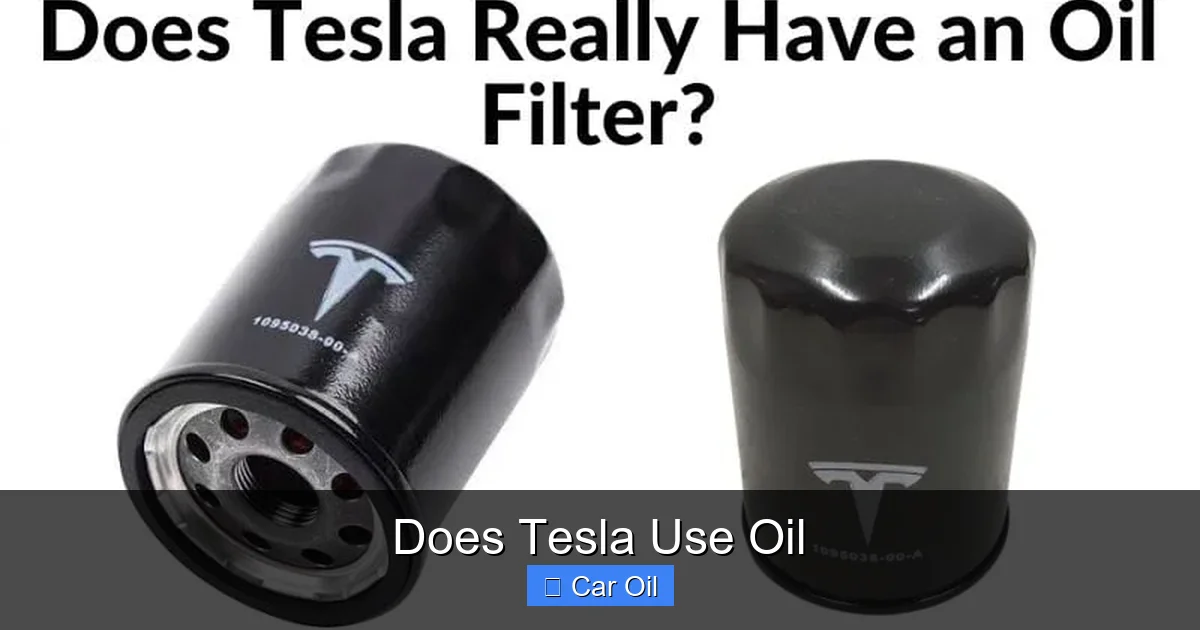
Does Tesla Use Oil

Contents
- 1 Key Takeaways
- 2 📑 Table of Contents
- 3 The Electric Heart: Why There’s No Engine Oil
- 4 But Wait, Teslas Aren’t Completely “Fluid-Free”
- 5 Maintenance Simplified: What Changes and What Doesn’t
- 6 Debunking Common Myths and Misconceptions
- 7 The Bigger Picture: Environmental and Ownership Implications
- 8 Conclusion: Embracing a New Definition of “Maintenance”
- 9 Frequently Asked Questions
Interior Cleaner Spray

Portable Work Light

Car MP3 Player

Parking Sensor Kit
No, Tesla vehicles do not use traditional engine oil. Their all-electric drivrain has no internal combustion engine, eliminating the need for oil changes. However, Teslas do require other essential fluids like battery coolant, gearbox fluid, and brake fluid for proper operation and maintenance.
It’s one of the most common questions we hear from curious car buyers and longtime gearheads alike: “Does Tesla use oil?” The answer, in the traditional sense you’re probably thinking of, is a firm and resounding no. There is no engine oil, no oil pan, no oil filter, and certainly no ritual of getting under the car for a messy oil change every few thousand miles. But to say a Tesla is completely “fluid-free” is a misunderstanding. While it has banished the most iconic automotive fluid, it still relies on several others to keep its complex systems cool, lubricated, and functional. Let’s pop the hood—metaphorically, since there isn’t a traditional one—and explore exactly what fluids flow through a Tesla and why.
Key Takeaways
- No Engine Oil: Tesla’s electric motors have no pistons, valves, or combustible engine, so they never need motor oil.
- Other Fluids Exist: Teslas use battery coolant, gearbox/transmission fluid, brake fluid, and windshield washer fluid.
- Maintenance Changes: You skip oil changes but must service coolant systems and brake fluid at intervals.
- No Oil Filter: Since there’s no engine oil circuit, Teslas have no oil filter to replace.
- Grease is Used: Bearings and certain components require specialized grease, not circulating oil.
- Simplified Upkeep: Eliminating oil changes reduces routine maintenance costs and complexity.
- Model Consistency: This applies to all Tesla models (S, 3, X, Y, Cybertruck) as they share the same core electric architecture.
📑 Table of Contents
- The Electric Heart: Why There’s No Engine Oil
- But Wait, Teslas Aren’t Completely “Fluid-Free”
- Maintenance Simplified: What Changes and What Doesn’t
- Debunking Common Myths and Misconceptions
- The Bigger Picture: Environmental and Ownership Implications
- Conclusion: Embracing a New Definition of “Maintenance”
The Electric Heart: Why There’s No Engine Oil
To understand why a Tesla doesn’t use oil, you first have to understand what makes it move. A gasoline or diesel engine is a marvel of controlled explosions. Air and fuel mix, a spark plug ignites it, and tiny explosions push pistons down. This process involves thousands of precisely timed movements per minute, with metal parts sliding, grinding, and slamming against each other at high temperatures and pressures. Engine oil is the lifeblood here—it lubricates to prevent metal-on-metal contact, cools components, cleans sludge, and protects against corrosion. It’s absolutely essential, and it gets dirty and breaks down, requiring regular replacement.
A Drivetrain of a Different Nature
A Tesla’s powertrain is fundamentally different. It’s built around one or more electric motors. These motors have far fewer moving parts. The core principle involves electromagnetic fields spinning a rotor. There are no explosive combustions, no valves to open and close, no crankshafts, and no camshafts. The primary friction points are in the bearings that allow the rotor to spin and the reduction gear that translates the motor’s high-speed, low-torque rotation into the wheel’s lower-speed, high-torque rotation. These components are bathed in a sealed-for-life (or near-life) lubricant, but it’s not the same as engine oil that circulates under pressure and needs frequent changing.
This is the single biggest reason Tesla owners never visit a quick-lube shop. The entire ritual of draining old oil, replacing a filter, and filling up with new oil—a cornerstone of traditional car ownership—simply does not exist. This is a direct, tangible benefit of electric vehicle ownership. When people ask, “Does Tesla use oil?” they are almost always thinking of this specific maintenance task, and the answer cleanly severs that link. For context, if you were to look under the hood of a conventional SUV like a 2016 Nissan Rogue, you’d find an engine that strictly requires specific oil grades and regular changes. A Tesla’s front trunk (“frunk”) is mostly empty space, housing coolant reservoirs and electronics—no oil fill cap in sight.
But Wait, Teslas Aren’t Completely “Fluid-Free”
So, if not oil, what *does* flow through a Tesla? Several critical fluids are hard at work. While they escape the Oil Change spotlight, they still require owner awareness and periodic service. Think of them as the supporting cast to the electric motor’s starring role.
Visual guide about Does Tesla Use Oil
Image source: motorhowto.com
1. Battery Coolant (The Most Important Fluid)
The lithium-ion battery pack is the Tesla’s soul. It stores the energy and powers everything. But batteries are picky about temperature. Too cold, and performance and charging speed plummet; too hot, and degradation accelerates, potentially leading to catastrophic failure. Therefore, Tesla employs a sophisticated liquid cooling system. A special, non-conductive, dielectric coolant (often a glycol-based fluid specific to Tesla’s design) circulates through channels in the battery pack’s cooling plate, absorbing heat and carrying it to a radiator.
Practical Tip: This coolant does not last the life of the car. Tesla service guidelines recommend inspecting and potentially replacing this coolant at specific intervals, typically around every 4-5 years or 50,000-100,000 miles, depending on the model year. A leak or degradation in this system can trigger battery thermal management warnings and significantly impact range and performance. It’s the most critical fluid service a Tesla requires.
2. Gearbox/Reduction Gear Fluid
While the electric motor itself may have sealed bearings, the reduction gear—the gear set that connects the motor to the driveshaft(s)—needs lubrication. This is a single-speed or in some performance models, a two-speed gearbox. It uses a specific, high-performance synthetic gear oil. This fluid faces different challenges than engine oil: it deals with extreme pressure, shear forces, and torque multiplication rather than combustion byproducts.
Key Point: Tesla’s recommendation for this fluid is often “lifetime” for the standard drive units, meaning it’s filled and sealed at the factory with the intention of it lasting the vehicle’s life under normal conditions. However, “lifetime” in automotive terms is often defined by the warranty period (e.g., 8 years/100,000 miles). Some high-performance or heavily used vehicles may eventually require a change, but it’s not a regular, predictable maintenance item like engine oil. If you’re curious about gearbox fluids in general, our guide “Does My Car Use Synthetic Oil?” explains why modern transmissions, even in conventional cars, often need specialized fluids.
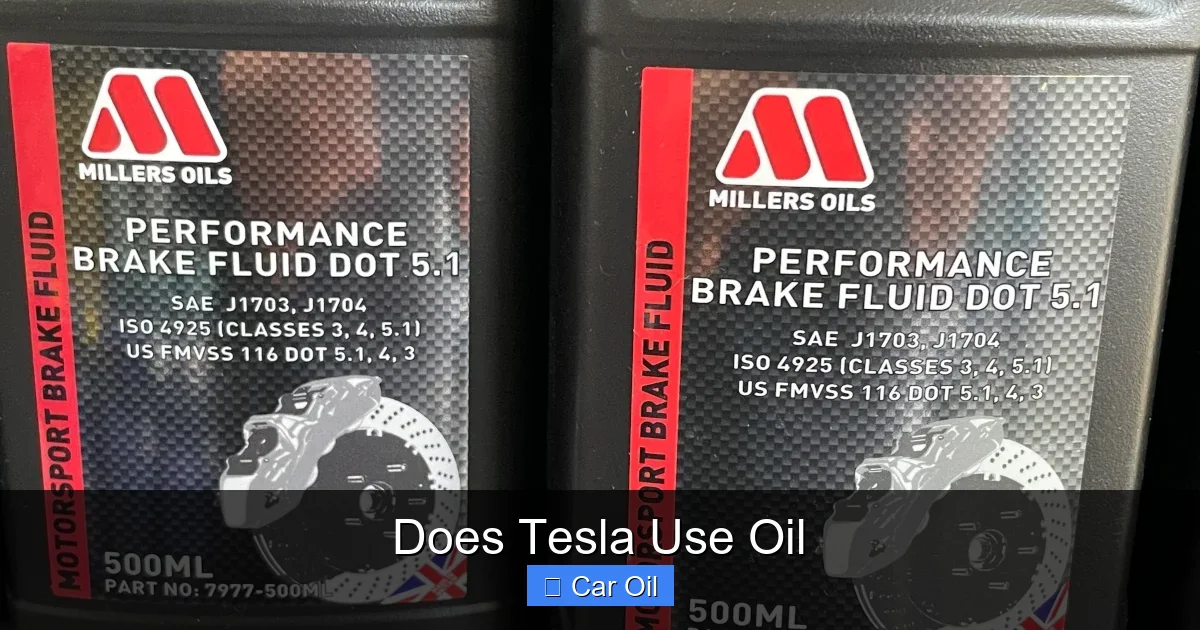
3. Brake Fluid
This is one area where Teslas are just like any other car with hydraulic brakes. The brake fluid (typically DOT 3 or DOT 4, specified by Tesla) is what transfers the force from your foot on the pedal to the brake calipers at the wheels. It is hygroscopic, meaning it absorbs water from the atmosphere over time. This water lowers the fluid’s boiling point, which can lead to brake fade or failure under heavy use. Therefore, brake fluid must be tested and flushed periodically, usually every 2-4 years, depending on Tesla’s recommendations and your driving environment.
Important Note: While Tesla’s regenerative braking system recaptures energy and dramatically reduces wear on the physical brake pads, it does not eliminate the need for the hydraulic brake system. You still need functional brake fluid for safety.
4. Windshield Washer Fluid
Same as any car. You fill it up. It’s the one fluid you’ll top off yourself most frequently, especially in winter or dusty conditions. Tesla recommends a fluid that won’t freeze at expected temperatures and is safe for the vehicle’s sensors and paint.
5. Grease (Not a “Fluid” per se, but Essential)
Various bearings, constant velocity (CV) joints in the drive axles, door hinges, and other mechanical linkages require grease. This is a semi-solid lubricant packed into components during manufacturing. It’s not part of a circulating system like oil or coolant and generally doesn’t require service unless a seal fails and the grease is lost.
Maintenance Simplified: What Changes and What Doesn’t
The shift to an electric powertrain radically simplifies the maintenance calendar. The “check engine” light might still come on, but it’s far less likely to be for a routine oil-related issue. Let’s break down the new routine.
Visual guide about Does Tesla Use Oil
Image source: hillstone-software.com
The Great Omission: No Oil Changes Ever
This is the headline act. You will never schedule, pay for, or undergo an oil change on a Tesla. There is no dipstick to check. There is no “change oil” light (though the car will alert you to other fluid service needs). The elimination of this single, recurring service is a massive financial and convenience win. Over 10 years, a conventional car might require 10-15 oil changes, costing anywhere from $300 to $1,000+ depending on the vehicle and service provider. That’s direct savings in your pocket and time saved not sitting in a waiting room.
The New Essentials: Coolant and Brake Fluid
Your Tesla’s maintenance schedule will now prominently feature battery coolant system inspections and brake fluid tests/flushes. These are not as frequent as old-school oil changes but are non-negotiable for long-term health and safety. The cost for a coolant service can be higher than an oil change due to the specialized fluid and labor, but it happens much less frequently. Brake fluid service is comparable in cost and interval to traditional vehicles. For any car owner, understanding your vehicle’s fluid needs is crucial. Our article “What Oil Filter Does My Car Use?” details the importance of filtration in conventional engines—a component Teslas entirely avoid.
Practical Example: A 2020 Tesla Model 3 Long Range’s owner’s manual typically calls for a battery coolant check every 4 years and brake fluid replacement every 2 years. Compare this to a 2020 Honda Civic, which needs oil/filter changes every 7,500-10,000 miles, tire rotations, and other periodic services. The Tesla’s schedule is sparser but includes these specific, higher-cost fluid services.
Tires, Brakes, and Other Consumables
Remember, tires wear out based on driving style and mileage. Tesla’s instant torque can lead to faster rear tire wear on some models. The brake pads, thanks to regen, often last 100,000 miles or more, but they still exist and will eventually need replacement. Wiper blades, cabin air filters, and the HEPA filter (on some models) follow standard replacement intervals. The core drivetrain, however, is sealed and requires no user-serviceable maintenance.
Debunking Common Myths and Misconceptions
The idea of an “oil-free” car invites some confusion. Let’s clear the air.
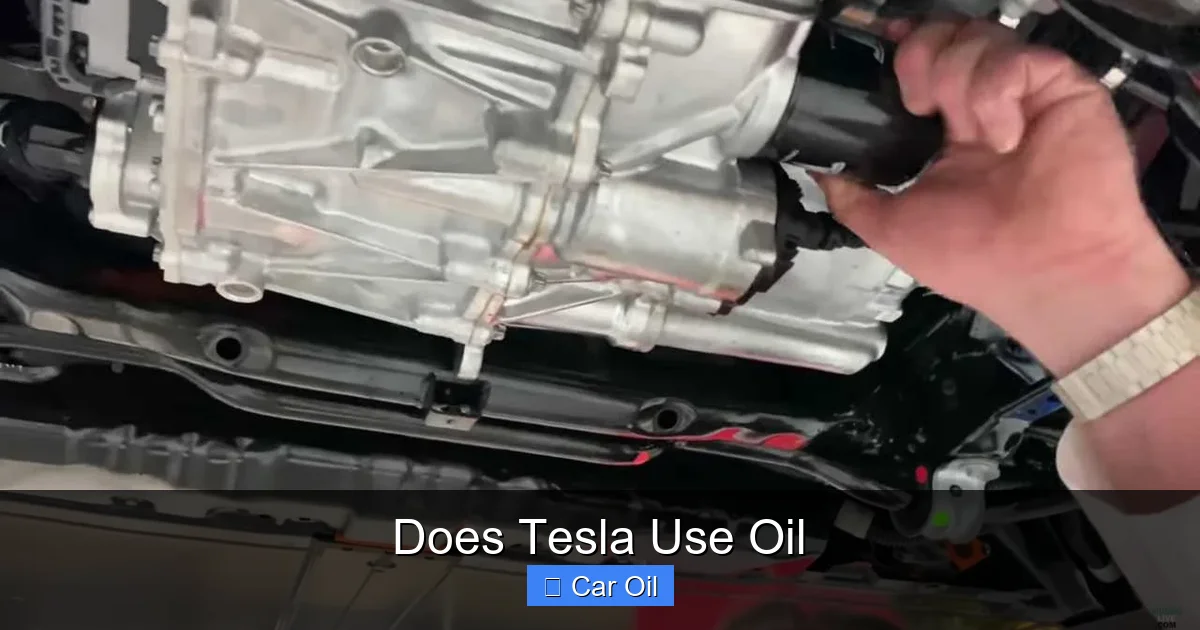
Visual guide about Does Tesla Use Oil
Image source: cdn.motor1.com
“Teslas Have No Lubricants At All”
False. As detailed, the reduction gear needs fluid, and bearings need grease. The key is that these are not “engine oil” and are not part of a consumable maintenance cycle for the average owner under warranty. They are part of a sealed system designed for longevity.
“You Can Put Regular Motor Oil in a Tesla”
This is dangerous and incorrect. The fill points are different, the fluid specifications are entirely different, and the systems are incompatible. Forcing motor oil into a Tesla’s gearbox or cooling system would cause severe damage. Always use only Tesla-specified fluids and have services performed by trained technicians who understand the unique architecture.
“Electric Cars Will Kill the Oil Industry”
This is a macroeconomic question beyond a single car, but it’s often tied to this query. While EV adoption reduces demand for transportation fuel, the oil industry is vast, producing petrochemicals for plastics, fertilizers, asphalt, and more. A single Tesla not using engine oil is a powerful personal and symbolic shift, but it won’t single-handedly dismantle global oil markets. However, mass adoption would significantly reshape the downstream refining and distribution sector focused on gasoline and diesel.
“All EVs Are the Same”
Not exactly. Some EVs, particularly older or lower-cost models from other brands, might use a more traditional automatic transmission with a torque converter and a separate oil sump that requires servicing. Tesla’s design, using a single-speed reduction gear with a sealed unit, is particularly simple and robust in this regard. Always consult your specific vehicle’s manual.
The Bigger Picture: Environmental and Ownership Implications
The “no oil” feature is more than a convenience; it’s a paradigm shift with ripple effects.
Environmental Impact
Eliminating engine oil means zero risk of oil leaks contaminating groundwater or roads. It also means no used oil to collect, transport, recycle, or dispose of improperly. While the production of lithium-ion batteries has its own environmental footprint, the operational phase of a Tesla produces zero tailpipe emissions and eliminates this specific petroleum-based waste stream. The lifecycle analysis is complex, but the operational benefits are clear.
Ownership Experience and Cost of Ownership
The psychological and financial relief of not having to remember an oil change is significant. It removes a common source of anxiety and a recurring bill. The total cost of ownership calculations for EVs often highlight this reduced “routine maintenance” bucket. However, owners must still budget for tire rotations, cabin filter changes, brake fluid, and the eventual (though likely very distant) battery coolant system service. Specialized Tesla service can be pricier than a local mechanic for a gasoline car, but the frequency of visits is dramatically lower.
What This Means for DIY Enthusiasts
The golden age of tinkering under the hood of your car is arguably fading, and EVs accelerate that trend. There is very little a typical owner can or should do regarding the drivetrain fluids in a Tesla. The systems are high-voltage and complex. While topping off washer fluid is fair game, anything involving the battery coolant circuit or gearbox should be left to professionals. This is a trade-off: less frequent, simpler maintenance tasks (oil changes) for less owner-accessible, more specialized maintenance tasks. If you love working on your own car, a classic or even a conventional modern car offers more opportunities.
Conclusion: Embracing a New Definition of “Maintenance”
So, does Tesla use oil? The definitive answer for the powertrain is no. That single fact represents one of the most significant and tangible advantages of electric vehicle technology: the death of the oil change. It simplifies ownership, reduces waste, and cuts a recurring cost and hassle from the calendar. However, a Tesla is not a maintenance-free appliance. It still relies on a suite of other fluids—most critically, the battery coolant and brake fluid—that require informed attention and periodic professional service. The nature of maintenance shifts from a frequent, low-skill task (changing oil) to a less frequent, higher-skill task (servicing high-voltage cooling systems).
For those coming from the world of gasoline cars, the transition requires a mental update. You won’t be looking for an oil dipstick, but you should still know where the washer fluid reservoir is and understand the service alerts for coolant and brakes. The sound of an electric motor is silent, but the work of its supporting fluids is just as vital. By understanding what your Tesla *does* and *does not* need, you become a smarter, more confident owner, ready to enjoy the unique benefits of electric driving without the ghosts of oil changes past.
Frequently Asked Questions
Do Tesla batteries need oil?
No. The lithium-ion battery cells themselves do not require oil. However, the battery pack is immersed in a circulating coolant fluid to regulate its temperature, which is a separate system from any engine oil.
What fluids require maintenance in a Tesla?
The primary service fluids are the battery coolant (checked/replaced every 4-5 years), brake fluid (tested/replaced every 2-4 years), and windshield washer fluid (topped off as needed). Gearbox fluid is typically sealed for life under warranty.
Do Teslas have oil filters?
No. Since there is no engine oil circuit, there is no oil filter to replace. This is a key maintenance item eliminated by the electric drivetrain design.
How often do Teslas need fluid changes?
Unlike oil changes every 5,000-10,000 miles, Tesla fluid services are time/mileage based but less frequent: brake fluid every 2-4 years, battery coolant every 4-5 years or 50,000-100,000 miles. Always check your specific model’s manual.
Can I use regular oil in a Tesla?
Absolutely not. Tesla’s gearbox uses a specific synthetic gear oil. Using regular motor oil would cause immediate and severe damage. Only Tesla-approved fluids should ever be used in the vehicle.
Are Teslas completely maintenance-free?
No. While they eliminate oil changes and have fewer moving parts, they still require maintenance on tires, brakes, wipers, cabin filters, and critical fluids like coolant and brake fluid. The maintenance schedule is different, not absent.