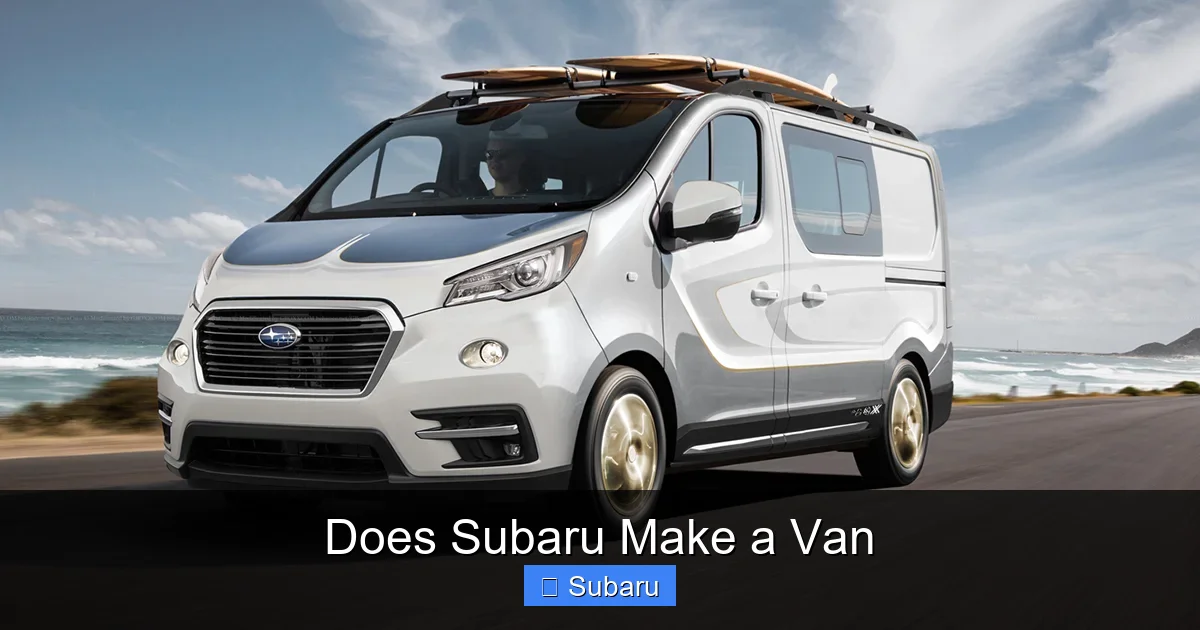
Does Subaru Make a Van

Contents
- 1 Key Takeaways
- 2 📑 Table of Contents
- 3 Does Subaru Make a Van? The Straight Answer
- 4 A Look Back: Subaru’s Van History
- 5 The Subaru Traviq: Subaru’s Only “Van” in Europe
- 6 Why Subaru Doesn’t Make a Van Today
- 7 Subaru’s Van-Like Alternatives: Spacious, Safe, and Adventure-Ready
- 8 Aftermarket Conversions: Turning Subarus into Vans
- 9 The Future: Could Subaru Make a Van Again?
- 10 Conclusion: No Van, But Plenty of Options
- 11 Frequently Asked Questions


Subaru does not currently manufacture a traditional van, but it has a rich history with compact vans in Japan and offers versatile, van-like vehicles in its lineup. From the discontinued Subaru Traviq to today’s spacious SUVs like the Ascent and Outback, Subaru provides family-friendly alternatives that blend cargo space, safety, and all-weather capability.
Key Takeaways
- Subaru does not sell a van in North America today: The brand focuses on SUVs, crossovers, and wagons, not minivans or full-size vans.
- Subaru once offered vans in Japan: Models like the Subaru Stella and Sambar were compact kei vans popular in the Japanese market.
- The Subaru Traviq was a rebadged Opel Zafira: Sold in Europe from 2001–2008, it was Subaru’s closest offering to a van but is no longer available.
- Modern Subaru SUVs mimic van functionality: Vehicles like the Ascent, Outback, and Forester offer three rows, ample cargo space, and sliding doors (in some trims).
- Subaru prioritizes safety and all-wheel drive: Even without a van, Subaru’s lineup excels in safety ratings and off-road capability, ideal for families and outdoor enthusiasts.
- Aftermarket conversions expand possibilities: Enthusiasts can convert Subaru wagons or SUVs into camper vans or mobile offices.
- Future electric vans may be possible: With Subaru’s partnership with Toyota and focus on EVs, a future electric van isn’t out of the question.
📑 Table of Contents
- Does Subaru Make a Van? The Straight Answer
- A Look Back: Subaru’s Van History
- The Subaru Traviq: Subaru’s Only “Van” in Europe
- Why Subaru Doesn’t Make a Van Today
- Subaru’s Van-Like Alternatives: Spacious, Safe, and Adventure-Ready
- Aftermarket Conversions: Turning Subarus into Vans
- The Future: Could Subaru Make a Van Again?
- Conclusion: No Van, But Plenty of Options
Does Subaru Make a Van? The Straight Answer
If you’re searching for a Subaru van, you’re not alone. Many families, road-trippers, and small business owners wonder if Subaru offers a minivan or passenger van like Honda, Toyota, or Chrysler. The short answer? No, Subaru does not currently manufacture or sell a van in North America or most global markets.
But that doesn’t mean Subaru has never dabbled in the van world. In fact, the brand has a surprising history with compact vans—especially in Japan, where small, efficient vehicles dominate the roads. From kei-class microvans to rebadged European models, Subaru has dipped its toes into the van market before. However, today’s lineup is dominated by rugged SUVs, versatile wagons, and crossovers that borrow van-like features without the boxy design.
So why doesn’t Subaru make a van now? It comes down to brand identity, market demand, and strategic focus. Subaru has built its reputation on all-wheel drive, safety, and outdoor adventure. Instead of competing in the minivan space—already crowded by Honda Odyssey, Toyota Sienna, and Chrysler Pacifica—Subaru has doubled down on vehicles that appeal to active lifestyles: think camping, skiing, and family road trips. Their vehicles may not have sliding doors or flat floors like a traditional van, but they offer plenty of space, comfort, and utility.
A Look Back: Subaru’s Van History
Visual guide about Does Subaru Make a Van
Image source: shunauto.com
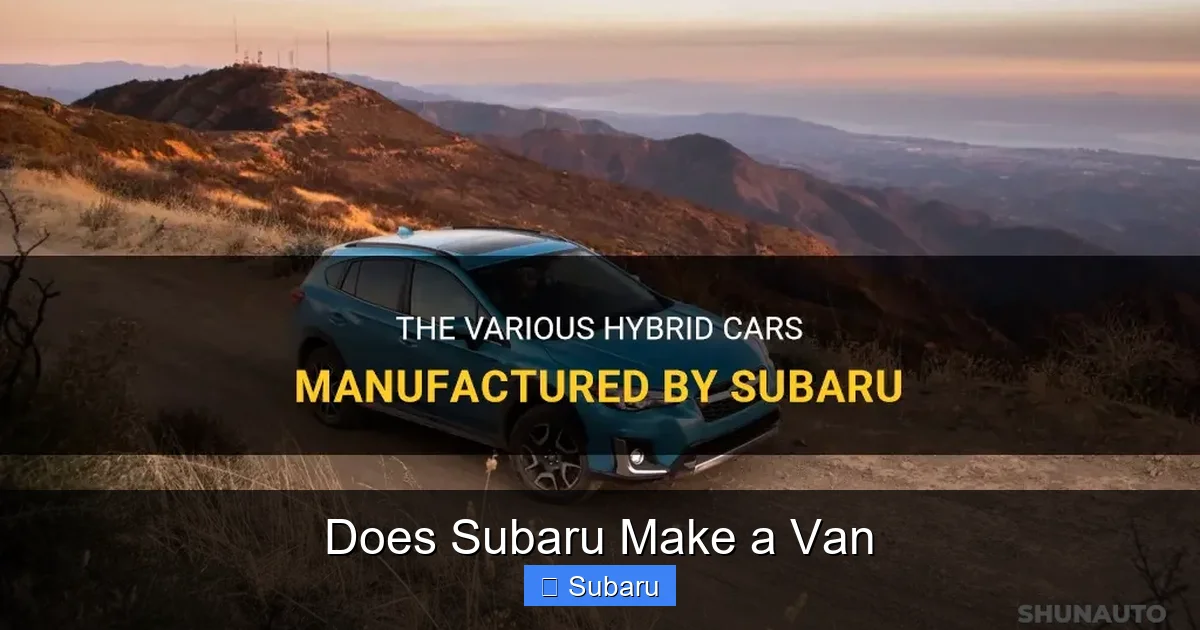
To understand Subaru’s relationship with vans, we need to go back—way back—to the 1960s. Subaru, originally part of Fuji Heavy Industries, began producing small commercial vehicles early on. One of its first notable vans was the Subaru 360 Van, introduced in 1961. This tiny, lightweight vehicle was part of Japan’s “kei car” category—ultra-compact cars with strict size and engine limitations designed to be affordable and fuel-efficient.
The Subaru 360 Van was essentially a boxy version of the iconic Subaru 360 sedan, with rear doors and a flat cargo area. It was popular among small business owners and delivery services in Japan. While it never made it to the U.S., it laid the foundation for Subaru’s future in utility vehicles.
The Sambar: Subaru’s Kei Van Legacy
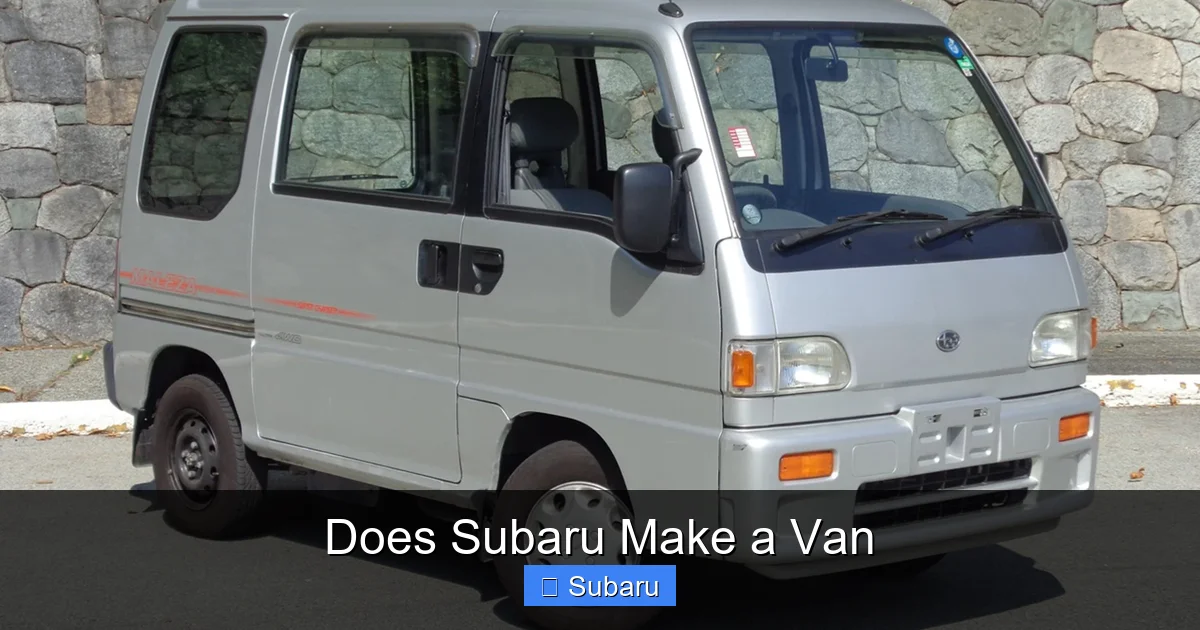
One of Subaru’s longest-running van models was the Subaru Sambar. First launched in 1961, the Sambar was a kei-class van and pickup truck designed for urban use. Over the decades, it evolved through multiple generations, often sharing platforms with other Japanese automakers like Daihatsu and Suzuki.
The Sambar was known for its compact size, rear-engine layout, and surprising cargo capacity. It came in various body styles, including a panel van, passenger van, and even a micro-truck. In Japan, it was a common sight in cities, used by florists, bakers, and delivery services. Some versions even featured sliding side doors and fold-flat seats—features we now associate with modern minivans.
Despite its popularity in Japan, the Sambar was never officially sold in the U.S. due to emissions and safety regulations. However, it remains a cult classic among JDM (Japanese Domestic Market) enthusiasts and vintage vehicle collectors.
The Stella: A Modern Kei Van
In the 2000s, Subaru introduced the Subaru Stella, a modern take on the kei van. Based on the Daihatsu Move, the Stella was a compact, fuel-efficient vehicle with a tall roof and flexible interior. It offered seating for up to five passengers and could be configured for cargo or passenger use.
The Stella was available with a range of engines, including a 660cc gasoline engine and even an electric version in later years. Its boxy design maximized interior space, and it featured sliding rear doors—something rare in kei cars. While it was never exported to North America, the Stella represented Subaru’s continued interest in small, practical vehicles.
The Subaru Traviq: Subaru’s Only “Van” in Europe
Visual guide about Does Subaru Make a Van
Image source: topcarspecs.com
For a brief period in the 2000s, Subaru did offer a vehicle that could be considered a van—at least in spirit. The Subaru Traviq was sold in Europe from 2001 to 2008. But here’s the twist: it wasn’t actually designed by Subaru.
The Traviq was a rebadged version of the Opel Zafira, a compact MPV (multi-purpose vehicle) made by the German automaker Opel (now part of Stellantis). Subaru partnered with Opel to sell the Zafira under the Subaru name in certain European markets. The idea was to give Subaru a family-friendly vehicle with seven seats and flexible seating arrangements.
Features and Design of the Traviq
The Traviq shared the Zafira’s “Flex7” seating system, which allowed the second and third rows to fold, slide, or remove entirely. This made it highly versatile for families, road trips, or hauling gear. It came with front-wheel drive (not Subaru’s signature AWD), and engine options ranged from 1.6L to 2.0L gasoline and diesel variants.
While it didn’t have Subaru’s typical all-wheel-drive system, the Traviq did offer a comfortable ride, good visibility, and a practical interior. It was available with sliding side doors—something Subaru hasn’t offered since. However, the partnership ended in 2008, and the Traviq was discontinued. Subaru shifted focus back to its core lineup of AWD vehicles.
Why the Traviq Didn’t Last
There are several reasons the Traviq didn’t become a long-term fixture in Subaru’s lineup. First, it lacked Subaru’s hallmark all-wheel drive, which is a major selling point for the brand. Second, the European market for compact MPVs began to decline in the late 2000s as SUVs grew in popularity. Finally, Subaru’s brand identity is tied to ruggedness and outdoor capability—something the front-wheel-drive Traviq didn’t fully embody.
Still, the Traviq remains a fascinating footnote in Subaru’s history. It’s the closest the brand has come to offering a true van in a major market outside Japan.
Why Subaru Doesn’t Make a Van Today

Visual guide about Does Subaru Make a Van
Image source: zevfacts.com
So, if Subaru has made vans in the past, why doesn’t it offer one now? The answer lies in market trends, brand strategy, and consumer preferences.
Market Shift Toward SUVs and Crossovers
Over the past two decades, global automotive trends have shifted dramatically. Minivans, once the go-to choice for families, have lost ground to SUVs and crossovers. These vehicles offer similar space and seating but with a more rugged, stylish design and better off-road capability.
Subaru has been a major beneficiary of this trend. Models like the Outback, Forester, and Ascent have become best-sellers, appealing to families who want space, safety, and adventure-ready performance. A traditional van wouldn’t fit Subaru’s image or meet the demand for versatile, all-weather vehicles.
Brand Identity and Engineering Focus
Subaru’s brand is built on three pillars: all-wheel drive, safety, and reliability. Nearly every vehicle in its current lineup comes standard with AWD—a rarity among automakers. This focus on capability and safety makes Subaru a favorite among outdoor enthusiasts, parents, and drivers in snowy or mountainous regions.
A traditional van, especially a front-wheel-drive minivan, doesn’t align with this identity. Subaru engineers prioritize symmetrical AWD systems, boxer engines, and high safety ratings. Building a van from the ground up with these features would be costly and complex, especially when SUVs already offer similar utility.
Competition in the Minivan Space
The minivan market is dominated by a few key players: Honda, Toyota, Chrysler, and Kia. These brands have decades of experience designing and refining minivans with features like power sliding doors, Stow ‘n Go seating, and advanced infotainment systems.
Entering this competitive space would require significant investment, and Subaru would face an uphill battle to differentiate itself. Instead, the company has chosen to compete in the SUV and crossover segments, where it already has a strong foothold.
Subaru’s Van-Like Alternatives: Spacious, Safe, and Adventure-Ready
Just because Subaru doesn’t make a van doesn’t mean it lacks family-friendly options. In fact, several Subaru models offer van-like space, seating, and versatility—without the minivan stigma.
The Subaru Ascent: Subaru’s Largest SUV
The Subaru Ascent is the closest thing to a van in Subaru’s current lineup. Introduced in 2019, this three-row SUV seats up to eight passengers and offers best-in-class cargo space. With 17.8 cubic feet behind the third row and up to 86.5 cubic feet with all seats folded, it rivals many minivans in storage.
The Ascent comes standard with Subaru’s Symmetrical AWD, EyeSight Driver Assist Technology, and a 2.4L turbocharged engine delivering 260 horsepower. It also features available second-row captain’s chairs, a power liftgate, and rear-seat climate controls—features often found in premium minivans.
While it doesn’t have sliding doors, the Ascent’s wide-opening rear doors and low step-in height make it easy for kids and seniors to get in and out. It’s a top choice for families who want space, safety, and all-weather capability.
The Subaru Outback: The Wagon That Acts Like a Van
The Subaru Outback is a rugged wagon that blurs the line between car and SUV. With up to 75.7 cubic feet of cargo space and standard AWD, it’s a favorite among road-trippers and outdoor enthusiasts.
While it only seats five, the Outback’s flat load floor, wide hatch, and available roof rails make it ideal for hauling gear. Some owners even convert their Outbacks into camper vans using aftermarket tents and storage systems. It’s not a minivan, but for smaller families or couples, it offers van-like utility in a more stylish package.
The Subaru Forester: Compact but Capable
The Subaru Forester is a compact SUV with a surprisingly spacious interior. It seats five and offers 76.1 cubic feet of cargo space with the rear seats down. Its tall roof and wide doors make it easy to load gear or buckle in child seats.
While it doesn’t have three rows, the Forester’s standard AWD, excellent visibility, and top safety ratings make it a practical choice for active families. It’s also more fuel-efficient than larger SUVs, making it a smart alternative to a van for city driving.
Aftermarket Conversions: Turning Subarus into Vans
For those who want a true van experience, some Subaru owners take matters into their own hands. Aftermarket conversions allow you to transform a Subaru wagon or SUV into a camper van, mobile office, or adventure rig.
Camper Van Conversions
Popular models like the Outback, Forester, and even the older Baja pickup have been converted into camper vans. These builds often include fold-out beds, kitchenettes, solar panels, and storage compartments. Companies like Vandoit and Roam Vehicle Outfitters offer conversion kits specifically designed for Subarus.
These conversions retain Subaru’s AWD and safety features while adding van-like livability. They’re perfect for weekend warriors, digital nomads, and full-time travelers.
Mobile Workshops and Delivery Vans
Small business owners have also converted Subarus into mobile workshops. Plumbers, electricians, and photographers use Outbacks and Foresters as mobile offices, outfitting them with tool storage, power inverters, and secure compartments.
While not as spacious as a full-size van, these converted Subarus offer better fuel economy, easier parking, and all-weather capability—making them ideal for urban professionals.
The Future: Could Subaru Make a Van Again?
With the rise of electric vehicles and changing consumer needs, could Subaru revisit the van concept? It’s not impossible.
Subaru’s Electric Future
Subaru has committed to electrification, with plans to offer hybrid and fully electric versions of its lineup. The Subaru Solterra, developed in partnership with Toyota, is the brand’s first all-electric SUV. It shares its platform with the Toyota bZ4X and offers AWD, modern tech, and a spacious interior.
As battery technology improves and charging infrastructure expands, Subaru could develop an electric van or MPV. An electric Subaru van could combine the brand’s strengths—AWD, safety, and reliability—with zero emissions and quiet operation. It would be ideal for urban delivery services, eco-conscious families, or adventure seekers.
Partnerships and Platform Sharing
Subaru’s partnership with Toyota opens doors for future collaborations. Toyota already offers the Sienna (a hybrid minivan) and the Proace City (a compact van). If Subaru wanted to enter the van market without starting from scratch, it could rebadge or co-develop a vehicle with Toyota.
This approach worked with the Traviq and could work again—especially in markets where demand for electric vans is growing.
Conclusion: No Van, But Plenty of Options
So, does Subaru make a van? The answer is no—not today. But that doesn’t mean Subaru lacks practical, family-friendly vehicles. From the Ascent’s three rows of seating to the Outback’s cargo-hauling prowess, Subaru offers van-like functionality with a focus on safety, capability, and adventure.
While the brand may never produce a traditional minivan, its history with compact vans in Japan and its brief foray with the Traviq show that Subaru understands the need for versatile, people-moving vehicles. And with the shift toward electrification and changing lifestyles, a future Subaru van—especially an electric one—isn’t out of the question.
For now, if you’re looking for a Subaru that feels like a van, consider the Ascent, Outback, or Forester. Or, if you’re feeling creative, convert one yourself. Either way, Subaru proves that you don’t need a van to live a big, adventurous life.
Frequently Asked Questions
Does Subaru currently sell a van in the U.S.?
No, Subaru does not currently sell a van in the United States. The brand focuses on SUVs, crossovers, and wagons, none of which are classified as minivans or passenger vans.
Did Subaru ever make a van?
Yes, Subaru produced compact vans like the Sambar and Stella in Japan, and briefly sold the Traviq—a rebadged Opel Zafira—in Europe. However, none of these are available today.
What is the closest Subaru to a van?
The Subaru Ascent is the closest thing to a van in Subaru’s lineup, offering three rows of seating, up to eight passengers, and over 86 cubic feet of cargo space.
Why doesn’t Subaru make a minivan?
Subaru focuses on all-wheel drive, safety, and outdoor capability. Minivans don’t align with this brand identity, and the market is already dominated by Honda, Toyota, and Chrysler.
Can you convert a Subaru into a camper van?
Yes, many Subaru owners convert Outbacks, Foresters, and even older models into camper vans using aftermarket kits. These builds often include beds, kitchens, and storage.
Will Subaru make an electric van in the future?
While there’s no official plan, Subaru’s partnership with Toyota and focus on electrification make an electric van a possibility in the coming years.