Does Subaru Eyesight Record Video?

Contents
- 1 Key Takeaways
- 2 📑 Table of Contents
- 3 Does Subaru EyeSight Record Video? The Truth Behind the Technology
- 4 How Subaru EyeSight Works: A Closer Look at the Technology
- 5 What EyeSight Does Record: Event Data and Sensor Logs
- 6 EyeSight vs. Dashcams: Understanding the Difference
- 7 Privacy, Data, and Subaru’s Stance on Surveillance
- 8 Common Misconceptions About EyeSight and Video Recording
- 9 Tips for Subaru Owners: Maximizing Safety Without Video
- 10 Conclusion: EyeSight Is a Safety Aid, Not a Recorder
- 11 Frequently Asked Questions


Subaru EyeSight does not record video like a dashcam. Instead, it uses stereo cameras to monitor road conditions and assist with safety features like adaptive cruise control and lane departure warning. While it doesn’t save video files, it logs event data that can be useful in certain situations.
Key Takeaways
- Subaru EyeSight does not record video: Unlike dashcams, EyeSight uses real-time camera input for safety functions but does not save or store video footage.
- It relies on stereo camera technology: Two forward-facing cameras mounted near the rearview mirror detect lane markings, vehicles, and pedestrians to assist drivers.
- Data logging occurs during events: While no video is saved, the system may record sensor and event data (like braking or steering input) during a collision or near-miss.
- EyeSight enhances active safety: Features like pre-collision braking and lane keep assist help prevent accidents but don’t provide video evidence afterward.
- Dashcam integration is separate: Owners who want video recording should install a compatible dashcam, which can complement EyeSight’s capabilities.
- Privacy and data use are limited: Subaru states that EyeSight data is not transmitted or stored remotely unless voluntarily shared during service or investigations.
- Understanding limitations helps set expectations: Knowing what EyeSight can and cannot do ensures drivers use it as a safety aid, not a surveillance tool.
📑 Table of Contents
- Does Subaru EyeSight Record Video? The Truth Behind the Technology
- How Subaru EyeSight Works: A Closer Look at the Technology
- What EyeSight Does Record: Event Data and Sensor Logs
- EyeSight vs. Dashcams: Understanding the Difference
- Privacy, Data, and Subaru’s Stance on Surveillance
- Common Misconceptions About EyeSight and Video Recording
- Tips for Subaru Owners: Maximizing Safety Without Video
- Conclusion: EyeSight Is a Safety Aid, Not a Recorder
Does Subaru EyeSight Record Video? The Truth Behind the Technology
If you’ve ever driven a newer Subaru—whether it’s an Outback, Forester, or Crosstrek—you’ve likely noticed the small black module mounted just behind the rearview mirror. That’s the Subaru EyeSight system, one of the brand’s most celebrated safety innovations. It’s designed to help prevent accidents, keep you in your lane, and even bring your car to a stop if a collision seems imminent. But with all this advanced tech working behind the scenes, a common question arises: Does Subaru EyeSight record video?
The short answer? No, it does not. EyeSight does not function like a dashcam. It doesn’t save video clips, record your drives, or store footage of your trips. Instead, it uses real-time visual input from stereo cameras to make split-second decisions that enhance driver safety. Think of it more as a co-pilot with superhuman reflexes than a surveillance device.
But why does this matter? In today’s world, where dashcams are increasingly popular for insurance claims, accident documentation, and peace of mind, many Subaru owners wonder if their built-in safety system offers similar benefits. The truth is, while EyeSight is incredibly effective at preventing accidents, it wasn’t designed to capture video evidence. Understanding this distinction is key to using your Subaru safely and knowing what to expect—and what not to expect—from its advanced driver assistance systems (ADAS).
How Subaru EyeSight Works: A Closer Look at the Technology
Visual guide about Does Subaru Eyesight Record Video?
Image source: motorbiscuit.com
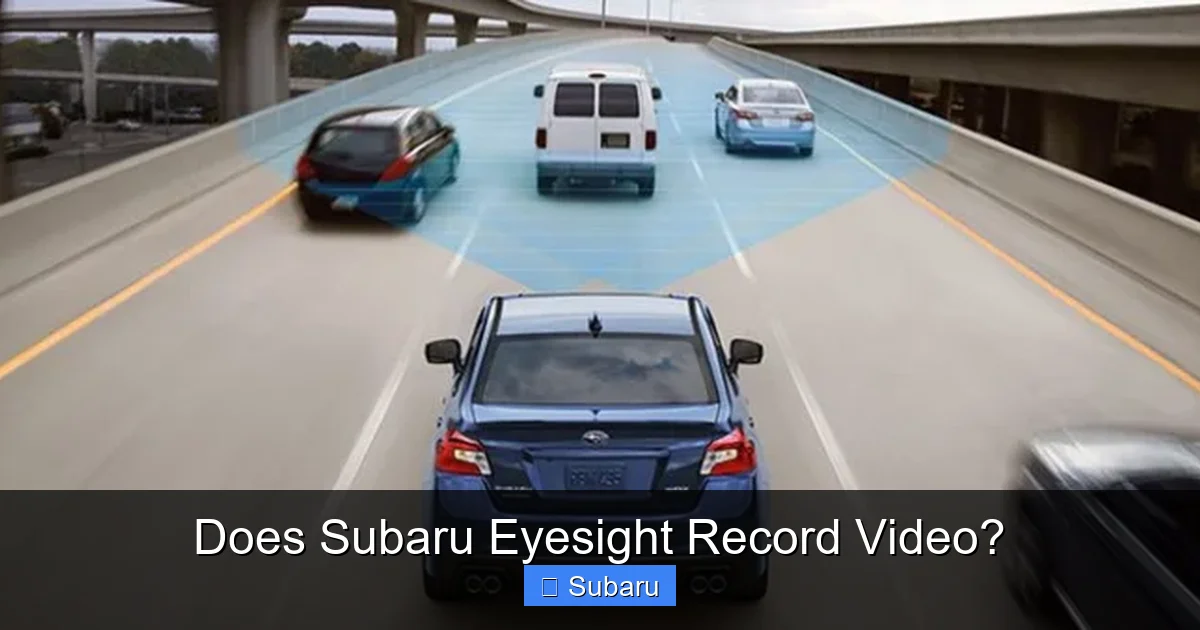
To fully grasp why EyeSight doesn’t record video, it helps to understand how it actually works. At its core, EyeSight is a stereo camera-based system developed in partnership with Subaru’s parent company, Fuji Heavy Industries. It uses two charge-coupled device (CCD) cameras mounted side by side near the top of the windshield, just behind the rearview mirror. These cameras act like human eyes, capturing depth and distance information in real time.
Stereo Vision for Depth Perception
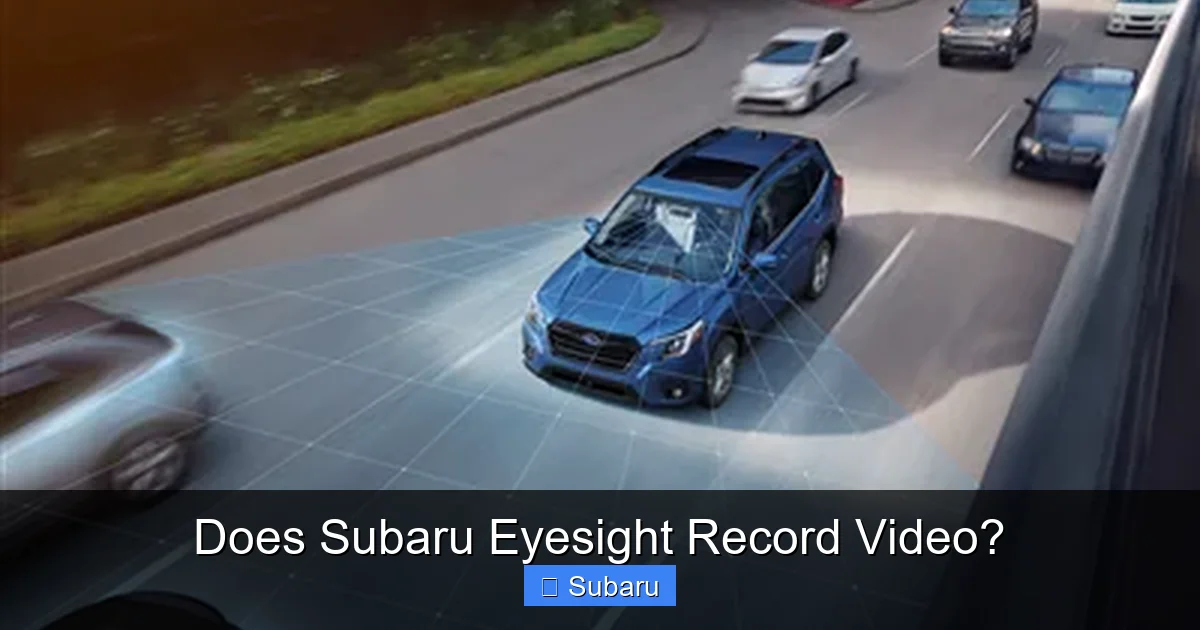
Unlike a single-lens camera, the dual-camera setup allows EyeSight to calculate the distance between your vehicle and objects ahead—such as other cars, pedestrians, or obstacles. This is known as stereo vision, and it’s what enables features like adaptive cruise control and pre-collision braking to function accurately. The system constantly analyzes the road ahead, identifying lane markings, traffic signs, and potential hazards.
For example, if you’re following a car too closely at highway speeds, EyeSight can detect the reduced following distance and gently apply the brakes to maintain a safe gap. Similarly, if a pedestrian steps into the road unexpectedly, the system can alert you and even initiate automatic braking if you don’t respond in time.
Real-Time Processing, Not Storage
Here’s the crucial part: all this analysis happens in real time. The cameras feed live data to the EyeSight control unit, which processes the information and triggers appropriate responses. But once the moment passes, the visual data is discarded. There’s no buffer, no memory card, and no cloud storage involved. The system doesn’t “remember” what it saw—it only reacts to what’s happening right now.
This design choice makes sense from both a technical and privacy standpoint. Storing video would require significant onboard memory, increase system cost, and raise concerns about data security. Subaru has consistently emphasized that EyeSight is a safety tool, not a monitoring device. Its purpose is to help you avoid accidents, not to document them.
What EyeSight Does Record: Event Data and Sensor Logs
Visual guide about Does Subaru Eyesight Record Video?
Image source: blog.qualitysubaru.com
While EyeSight doesn’t record video, it’s not entirely silent when it comes to data. In certain situations—particularly during a collision or near-miss—the system may log important sensor information. This isn’t video footage, but rather a digital record of what the car’s systems were doing at the time of the event.
Event Data Recorders (EDRs)
Many modern vehicles, including Subarus equipped with EyeSight, contain an Event Data Recorder (EDR)—sometimes called a “black box.” These devices capture data in the seconds before, during, and after a crash. Information typically includes:
– Vehicle speed
– Brake application
– Throttle position
– Steering input
– Seatbelt usage
– Airbag deployment
In vehicles with EyeSight, the EDR may also record whether the system detected a potential collision, whether warnings were issued, and whether automatic braking was activated. This data can be invaluable for accident reconstruction, insurance claims, or manufacturer analysis.
For instance, if your Subaru automatically brakes to avoid hitting a car that suddenly stopped, the EDR might show that EyeSight detected the obstacle, issued a warning, and applied the brakes 0.8 seconds before impact. While this doesn’t provide visual proof, it offers strong evidence that the safety system was functioning as intended.
Limited Retention and Access
It’s important to note that EDR data is usually only stored for a short period—often just seconds or minutes after an event. It’s not continuously recorded, and it can only be accessed using specialized diagnostic tools. In most cases, only authorized technicians (like those at a Subaru dealership) or law enforcement with proper authorization can retrieve this information.
Additionally, Subaru states that this data is not transmitted remotely or stored in the cloud unless voluntarily shared by the owner—for example, during a service visit or an investigation. This helps protect driver privacy while still allowing for useful post-event analysis.
EyeSight vs. Dashcams: Understanding the Difference
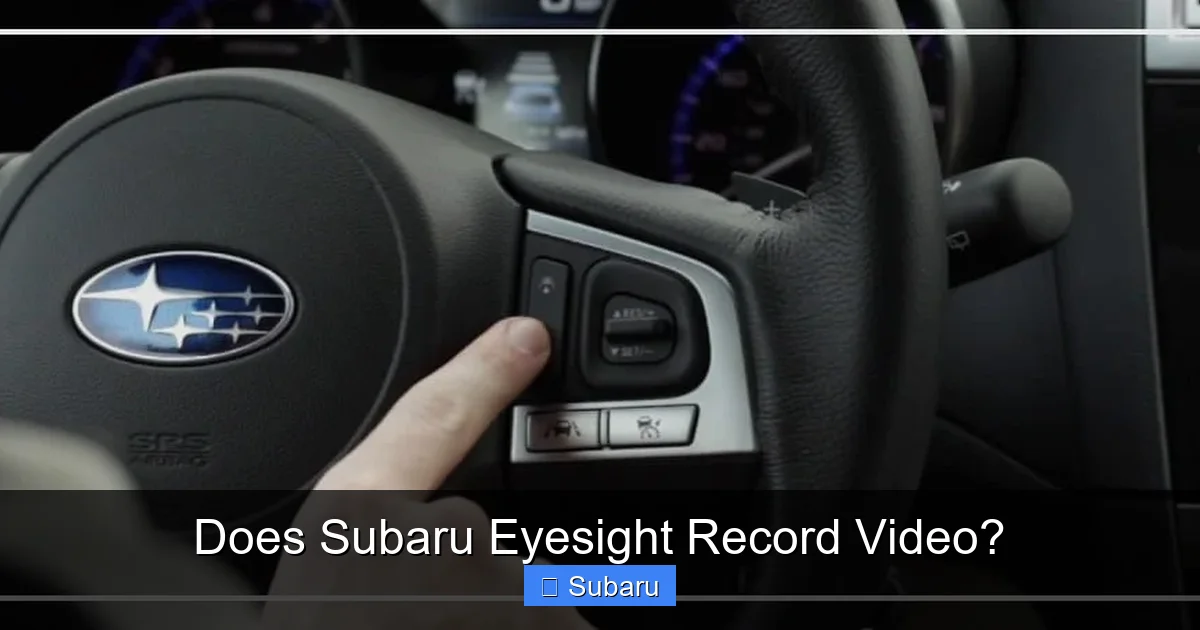
Visual guide about Does Subaru Eyesight Record Video?
Image source: ddztmb1ahc6o7.cloudfront.net
Given that EyeSight doesn’t record video, many Subaru owners consider adding a dashcam to their vehicle. But before you do, it’s worth understanding how these two technologies differ—and how they can complement each other.
Dashcams: Continuous Video Recording
A dashcam is a small camera that mounts to your windshield and records video of the road ahead (and sometimes the interior or rear). Most modern dashcams loop-record, meaning they continuously overwrite old footage unless an event—like a sudden impact or hard braking—triggers a save. This ensures that important moments are preserved.
Dashcams are popular for several reasons:
– Providing evidence in accidents
– Deterring insurance fraud (like staged collisions)
– Capturing unexpected events (e.g., meteor sightings, wildlife encounters)
– Monitoring teen drivers or fleet vehicles
Some high-end models even offer parking mode, which records if your car is hit while parked.
EyeSight: Real-Time Safety Assistance
In contrast, EyeSight is all about prevention. It doesn’t record, but it actively helps you avoid dangerous situations. Its features include:
– Adaptive Cruise Control (ACC): Maintains a set speed and following distance.
– Pre-Collision Braking: Applies brakes if a collision is imminent.
– Lane Departure Warning (LDW): Alerts you if you drift out of your lane.
– Lane Keep Assist (LKA): Gently steers you back into your lane.
– Lead Vehicle Start Alert: Notifies you when the car ahead starts moving.
These systems work together to reduce driver fatigue and improve reaction times, especially on long drives or in heavy traffic.
Using Both for Maximum Protection
So, should you use both EyeSight and a dashcam? Absolutely. They serve different purposes and can work together to keep you safer. EyeSight helps prevent accidents, while a dashcam provides documentation if one occurs. Think of EyeSight as your proactive safety net and the dashcam as your evidence recorder.
For example, imagine you’re driving on a rainy night and another car cuts you off. EyeSight might detect the sudden lane change and apply the brakes to avoid a collision. Meanwhile, your dashcam captures the entire incident on video. If the other driver denies fault, you have clear proof of what happened.
When choosing a dashcam for your Subaru, look for models that are compatible with EyeSight. Some dashcams can interfere with the stereo cameras if mounted too close or with reflective surfaces. Subaru recommends installing dashcams below the EyeSight module or using non-reflective mounts to avoid blocking the cameras.
Privacy, Data, and Subaru’s Stance on Surveillance
In an era where data privacy is a growing concern, it’s natural to wonder how much Subaru knows about your driving habits. With EyeSight constantly scanning the road, could your driving data be collected, stored, or even sold?
Subaru’s Privacy Policy
According to Subaru’s official statements, EyeSight does not collect, store, or transmit personal driving data unless explicitly authorized by the vehicle owner. The system is designed to operate locally—meaning all processing happens within the car. No video, images, or location data are sent to Subaru or third parties during normal operation.
The only exception is when diagnostic data is shared voluntarily—such as during a service appointment or if you enroll in Subaru’s Starlink connected services (which are optional and require consent). Even then, Subaru emphasizes that data is used to improve vehicle safety and customer support, not for marketing or surveillance.
No Remote Monitoring
Unlike some connected car systems that offer remote tracking, geofencing, or live camera feeds, EyeSight does not support remote access. You can’t log into an app to view what your car’s cameras are seeing. This reinforces Subaru’s commitment to privacy and positions EyeSight as a driver aid, not a monitoring tool.
That said, it’s always a good idea to review your vehicle’s privacy settings and understand what data-sharing options are available—especially if you opt into connected services. Transparency is key, and Subaru provides clear documentation about how your data is handled.
Common Misconceptions About EyeSight and Video Recording
Despite clear explanations from Subaru, misconceptions about EyeSight’s capabilities persist. Let’s clear up some of the most common myths.
Myth 1: “EyeSight Records Everything I Drive”
This is false. EyeSight does not record video or save footage of your trips. It only processes live camera input to assist with driving tasks. Once the moment passes, the data is gone.
Myth 2: “I Can Access Video Footage After an Accident”
Unfortunately, no. Unless you have a separate dashcam, there’s no video evidence from EyeSight. However, the EDR may contain useful sensor data that can support your case.
Myth 3: “EyeSight Can Be Used to Spy on Me”
No. The system lacks the hardware and software to transmit data remotely. It’s not connected to the internet, and Subaru does not have access to your driving data without your permission.
Myth 4: “Disabling EyeSight Stops All Data Collection”
While you can temporarily disable some EyeSight features (like lane keep assist), the core safety functions—like pre-collision braking—cannot be fully turned off. However, disabling features doesn’t change the fact that no video is recorded.
Understanding these facts helps set realistic expectations and ensures you’re using your Subaru’s technology effectively.
Tips for Subaru Owners: Maximizing Safety Without Video
Even without video recording, EyeSight is a powerful tool for safer driving. Here are some practical tips to get the most out of it:
– Keep the cameras clean: Dirt, snow, or stickers on the windshield can block the cameras. Regularly clean the area around the rearview mirror.
– Ensure proper calibration: After windshield replacement or major repairs, have EyeSight recalibrated by a Subaru technician.
– Use it in good conditions: EyeSight works best in daylight and clear weather. Heavy rain, fog, or snow can reduce effectiveness.
– Don’t rely on it completely: EyeSight is an aid, not a replacement for attentive driving. Always keep your hands on the wheel and eyes on the road.
– Pair it with a dashcam: For full protection, consider installing a high-quality dashcam that doesn’t interfere with EyeSight.
Conclusion: EyeSight Is a Safety Aid, Not a Recorder
So, does Subaru EyeSight record video? The answer is a clear and consistent no. EyeSight is an advanced driver assistance system designed to prevent accidents, not document them. It uses real-time stereo camera input to monitor the road and assist with braking, steering, and speed control. While it doesn’t save video, it may log sensor data during critical events, which can be useful for analysis.
For Subaru owners who want video evidence, adding a dashcam is the best solution. When used together, EyeSight and a dashcam provide a comprehensive safety package—one that helps you avoid trouble and another that records it if trouble strikes.
Ultimately, understanding what EyeSight can and cannot do empowers you to drive smarter and safer. It’s not a surveillance system, but a trusted co-pilot that’s always watching the road—just not recording it.
Frequently Asked Questions
Does Subaru EyeSight record video like a dashcam?
No, Subaru EyeSight does not record video. It uses real-time camera input to assist with safety features but does not save or store any footage.
Can I access video footage from EyeSight after an accident?
No, EyeSight does not save video. However, the vehicle’s Event Data Recorder (EDR) may contain sensor data like speed and braking that can be reviewed by professionals.
Does EyeSight collect or transmit my driving data?
EyeSight processes data locally and does not transmit information unless you voluntarily share it through services like Subaru Starlink. No video or location data is sent remotely.
Can I disable EyeSight to stop it from recording?
You can disable some features like lane keep assist, but core safety functions remain active. Regardless, EyeSight does not record video, so disabling it won’t affect data storage.
Should I install a dashcam in my Subaru?
Yes, if you want video evidence. A dashcam complements EyeSight by recording your drives, providing documentation in case of accidents or disputes.
Will a dashcam interfere with EyeSight?
It can if mounted improperly. To avoid interference, install the dashcam below the EyeSight module and use non-reflective mounts to prevent blocking the cameras.