Does Subaru Eyesight Record?

Contents
- 1 Key Takeaways
- 2 📑 Table of Contents
- 3 Does Subaru EyeSight Record? A Clear Answer for Drivers
- 4 What Is Subaru EyeSight?
- 5 How Does Subaru EyeSight Work?
- 6 Why Doesn’t Subaru EyeSight Record Video?
- 7 Can You Add Recording to Your Subaru?
- 8 Privacy and Data Handling in Subaru EyeSight
- 9 The Future of Subaru EyeSight
- 10 Conclusion: EyeSight Is a Safety Tool, Not a Camera
- 11 Frequently Asked Questions

Car Paint Touch Up Pen

Engine Flush Cleaner

Car Wax Polish

Car Back Support Cushion
Subaru EyeSight does not record video like a traditional dash cam. Instead, it uses dual cameras to monitor road conditions and assist with driver safety features such as adaptive cruise control and lane departure warnings. While it doesn’t save footage, understanding its capabilities helps drivers make the most of Subaru’s innovative technology.
Key Takeaways
- Subaru EyeSight does not record video: Unlike dash cams, EyeSight is a driver-assist system that processes real-time data but does not store or save video footage.
- It uses stereo cameras for safety functions: The system relies on two forward-facing cameras mounted near the rearview mirror to detect lane markings, vehicles, and pedestrians.
- Key features include adaptive cruise control and pre-collision braking: These help prevent accidents by automatically adjusting speed or applying brakes when a collision is imminent.
- No built-in storage or playback: Since EyeSight doesn’t record, there’s no way to review past driving events or incidents using the system alone.
- Third-party dash cams can complement EyeSight: Many Subaru owners add aftermarket dash cams for video recording, especially for insurance or security purposes.
- Privacy and data handling are transparent: Subaru states that EyeSight data is processed locally and not transmitted or stored unless required by law or during a crash event.
- Future updates may expand functionality: As automotive tech evolves, Subaru could integrate recording features, but current models do not support it.
📑 Table of Contents
- Does Subaru EyeSight Record? A Clear Answer for Drivers
- What Is Subaru EyeSight?
- How Does Subaru EyeSight Work?
- Why Doesn’t Subaru EyeSight Record Video?
- Can You Add Recording to Your Subaru?
- Privacy and Data Handling in Subaru EyeSight
- The Future of Subaru EyeSight
- Conclusion: EyeSight Is a Safety Tool, Not a Camera
Does Subaru EyeSight Record? A Clear Answer for Drivers
If you’re a Subaru owner—or considering buying one—you’ve probably heard about EyeSight. It’s one of the brand’s most celebrated safety technologies, featured in nearly every modern Subaru model from the Outback to the Crosstrek. But with all the buzz around advanced driver assistance systems (ADAS), a common question keeps popping up: Does Subaru EyeSight record?
The short answer? No, Subaru EyeSight does not record video. It’s not a dash cam. It won’t save footage of your drive, capture license plates, or let you replay what happened during a near-miss on the highway. Instead, EyeSight is a real-time monitoring system designed to help you drive more safely by using cameras and sensors to detect potential hazards.
But that doesn’t mean it’s useless when it comes to safety. In fact, EyeSight is one of the most effective ADAS suites on the market, earning top marks from organizations like the Insurance Institute for Highway Safety (IIHS). It’s just important to understand what it does—and doesn’t—do.
In this article, we’ll dive deep into how Subaru EyeSight works, why it doesn’t record video, and what you can do if you want recording capabilities in your Subaru. Whether you’re curious about privacy, safety, or just want to know if your car is “watching” you, we’ve got you covered.
What Is Subaru EyeSight?
Visual guide about Does Subaru Eyesight Record?
Image source: caradas.com
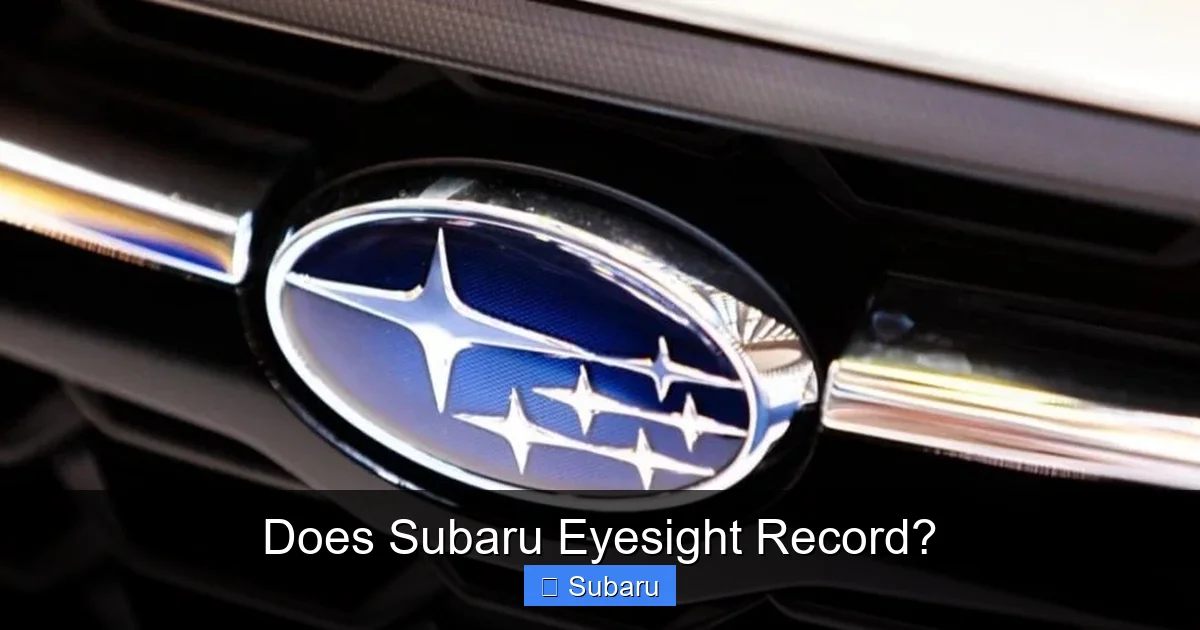
Subaru EyeSight is a suite of advanced driver assistance technologies introduced in 2012. It uses a combination of stereo cameras, sensors, and onboard computing to monitor the road ahead and assist the driver in avoiding accidents. Think of it as a co-pilot that’s always paying attention—even when you’re not.
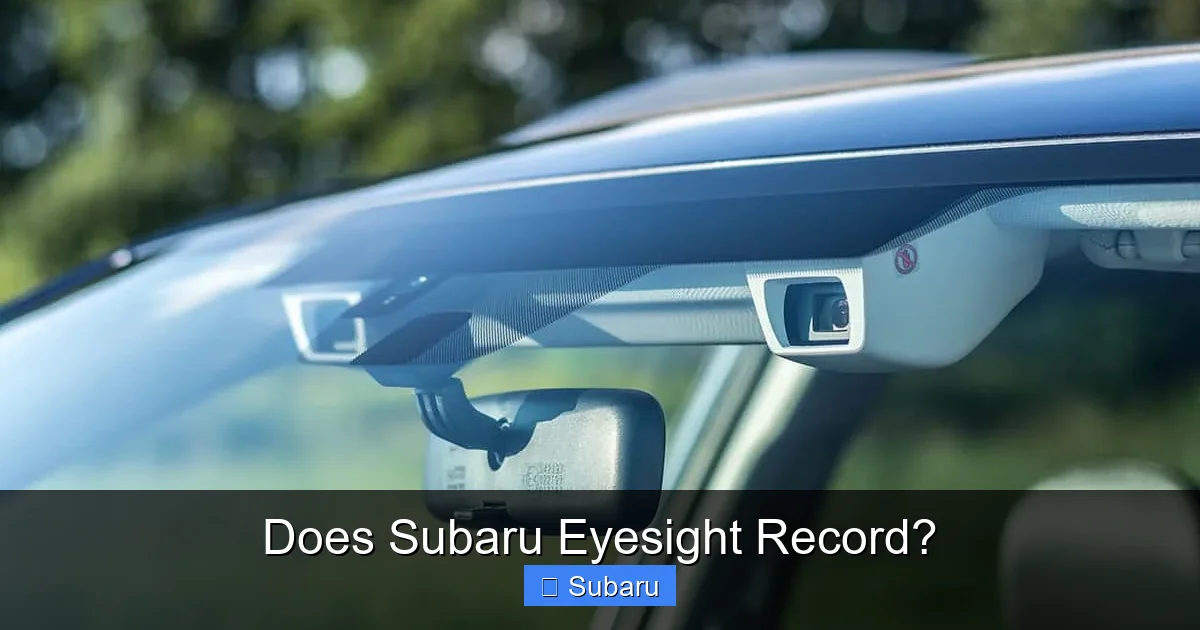
The system is built around two small cameras mounted behind the windshield, just above the rearview mirror. These cameras work together like human eyes, using stereoscopic vision to judge distance, speed, and depth. This allows EyeSight to detect vehicles, pedestrians, cyclists, lane markings, and other obstacles in real time.
Unlike radar-based systems (like those used in some Tesla or GM vehicles), EyeSight relies primarily on optical input. This gives it excellent performance in clear weather and daylight conditions, though it can struggle in heavy rain, snow, or fog—just like human vision.
Core Features of Subaru EyeSight
EyeSight isn’t just one feature—it’s a collection of interconnected safety tools. Here are the main ones you’ll find in most Subaru models:
- Pre-Collision Braking: If the system detects an imminent collision with a vehicle or pedestrian, it will first warn the driver with visual and audio alerts. If the driver doesn’t respond, EyeSight can automatically apply the brakes to reduce speed or stop the car completely.
- Adaptive Cruise Control (ACC): This feature maintains a set following distance behind the car ahead. It slows down or speeds up automatically based on traffic flow, making long drives less tiring.
- Lane Departure and Sway Warning: If you drift out of your lane without using a turn signal, EyeSight will alert you with a chime and dashboard warning. Some models also include Lane Keep Assist, which gently steers the car back into the lane.
- Lead Vehicle Start Alert: Ever zone out at a red light? EyeSight can detect when the car in front starts moving and alert you if you don’t respond within a few seconds.
- Emergency Stop Signal: In the event of sudden hard braking, the system can automatically flash the hazard lights to warn drivers behind you.
These features work together to reduce driver fatigue, prevent accidents, and improve overall road safety. But again—none of them involve recording video.
How Does Subaru EyeSight Work?
Visual guide about Does Subaru Eyesight Record?
Image source: upgradedvehicle.com
To understand why EyeSight doesn’t record, it helps to know how it processes information. The system is designed for real-time analysis, not storage.
Camera-Based Detection
At the heart of EyeSight are two high-resolution cameras positioned side by side near the top of the windshield. These cameras capture a wide-angle view of the road ahead—typically up to about 300 feet. The system compares the images from both cameras to calculate depth and distance, much like how your brain uses input from both eyes to judge how far away something is.
This stereo vision allows EyeSight to detect not just the presence of objects, but their size, speed, and trajectory. For example, it can tell the difference between a slow-moving bicycle and a fast-approaching car, and adjust its response accordingly.
Real-Time Processing
All the data from the cameras is processed instantly by an onboard computer. There’s no lag—decisions are made in milliseconds. If a pedestrian steps into the road, EyeSight can initiate braking before the driver even reacts.
Because the system is focused on immediate action, it doesn’t need to store video. It analyzes frames as they come in, makes a decision, and then discards the data. This keeps the system fast, efficient, and responsive.
No Storage, No Playback
Unlike a dash cam, which continuously records and saves video to a memory card, EyeSight has no built-in storage. It doesn’t save footage, timestamps, GPS data, or audio. Once the image is processed, it’s gone.
This design choice has several advantages:
- Privacy: Drivers don’t have to worry about their driving habits being recorded or stored.
- Performance: Without the need to write data to storage, the system can operate faster and with less lag.
- Simplicity: Fewer components mean fewer things that can break or require maintenance.
However, it also means that if you’re in an accident, you can’t pull up footage from EyeSight to show what happened. That’s a key limitation for drivers who want evidence for insurance claims or legal disputes.
Why Doesn’t Subaru EyeSight Record Video?
Visual guide about Does Subaru Eyesight Record?
Image source: carfromjapan.com
Now that we know how EyeSight works, let’s address the big question: Why doesn’t it record?
Privacy Concerns
One of the main reasons Subaru chose not to include recording functionality is privacy. Video recording raises significant ethical and legal questions. Who owns the footage? Can it be accessed by law enforcement? Could it be used against the driver in court?
By avoiding video storage, Subaru sidesteps these issues. The system only processes data in real time and doesn’t retain it. This aligns with Subaru’s focus on driver assistance—not surveillance.
System Design and Purpose
EyeSight was never intended to be a recording device. Its purpose is to prevent accidents, not document them. Adding video recording would require additional hardware (like memory cards, processors, and power), which would increase cost, complexity, and potential points of failure.
Subaru’s engineers prioritized reliability and simplicity. A system that only analyzes and acts—without storing data—is easier to maintain and less prone to errors.
Regulatory and Liability Issues
Automakers are cautious about introducing features that could expose them to liability. If EyeSight recorded video and that footage was later used in a lawsuit, Subaru could face legal challenges. By keeping the system non-recording, they reduce legal risk.
Additionally, different countries have different laws about video recording in vehicles. Some require consent from all parties, while others restrict where cameras can be placed. Avoiding recording altogether simplifies global compliance.
Focus on Prevention, Not Documentation
Subaru’s philosophy is clear: it’s better to prevent accidents than to record them. EyeSight is designed to intervene before a crash happens. If it can stop a collision, there’s no need to review footage afterward.
This proactive approach has proven effective. Studies show that vehicles equipped with EyeSight have significantly lower rates of frontal collisions and pedestrian accidents.
Can You Add Recording to Your Subaru?
Just because EyeSight doesn’t record doesn’t mean your Subaru can’t. Many drivers choose to install aftermarket dash cams to get the benefits of video recording.
Aftermarket Dash Cams
Dash cams are small cameras that mount to your windshield and record the road ahead (and sometimes behind). They’re affordable, easy to install, and widely available. Popular brands include Garmin, Nextbase, and Viofo.
When choosing a dash cam for your Subaru, consider:
- Video quality: Look for at least 1080p resolution, preferably with night vision.
- Storage: Most use microSD cards. Choose one with loop recording so it overwrites old footage automatically.
- Parking mode: Some dash cams can record while the car is off, using motion detection or impact sensors.
- Power source: Hardwiring to the fuse box ensures continuous power without draining the battery.
Many Subaru owners install dash cams near the rearview mirror, close to where EyeSight’s cameras are mounted. This gives a clear view of the road without interfering with the ADAS system.
Integration with EyeSight
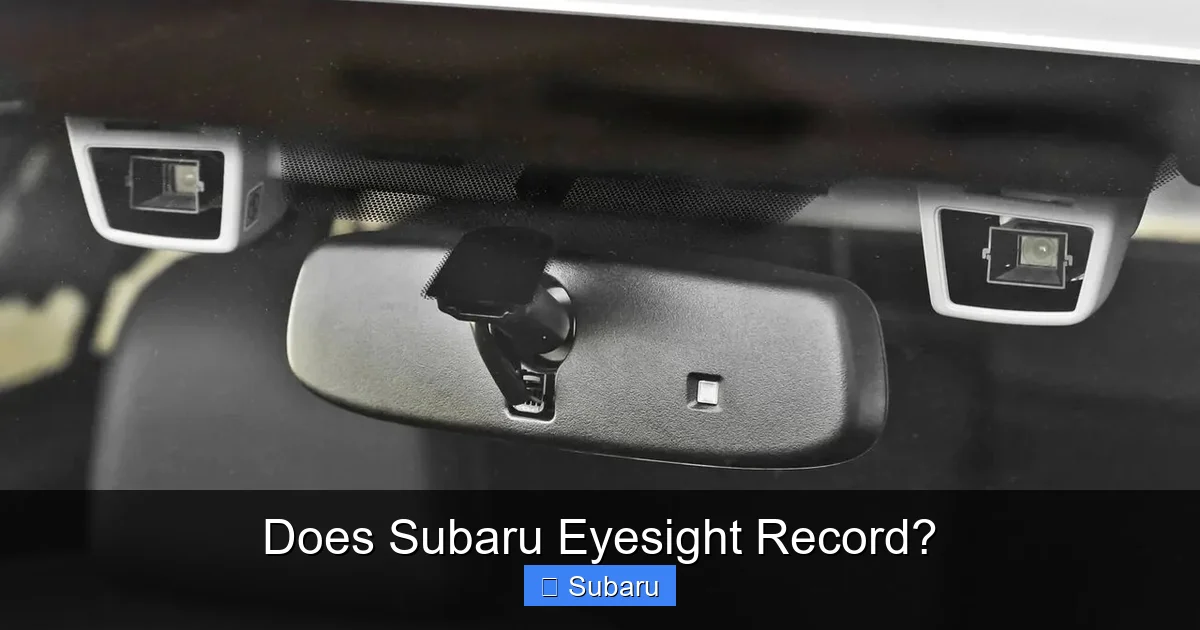
One concern is whether a dash cam could interfere with EyeSight. The good news? Most modern dash cams are designed to coexist with ADAS. As long as the camera doesn’t block the EyeSight sensors (the two small lenses near the mirror), there should be no issues.
Some high-end dash cams even offer ADAS-like features, such as forward collision warnings or lane departure alerts. However, these are separate from Subaru’s system and may not be as reliable.
Insurance and Legal Benefits
Having a dash cam can be a lifesaver in the event of an accident. Video evidence can:
- Prove you weren’t at fault
- Expose fraudulent claims (like staged accidents)
- Speed up insurance settlements
- Provide peace of mind
In some countries, dash cam footage is admissible in court. In others, it’s used informally by insurance companies to assess claims.
Privacy and Data Handling in Subaru EyeSight
Even though EyeSight doesn’t record video, it still collects and processes data. So how does Subaru handle your information?
Local Processing Only
According to Subaru, all EyeSight data is processed locally on the vehicle’s onboard computer. It is not transmitted to the cloud, stored on remote servers, or shared with third parties—unless required by law.
This means your driving behavior isn’t being monitored or tracked by Subaru. The system only reacts to immediate road conditions.
Crash Data Recording
There is one exception: in the event of a severe crash, some Subaru models may record limited data through the Event Data Recorder (EDR), similar to an airplane’s black box. This is separate from EyeSight but can include information like:
- Vehicle speed
- Brake application
- Seatbelt use
- Airbag deployment
This data is typically only accessible by law enforcement or during a formal investigation. It’s not used for marketing or surveillance.
Transparency and Control
Subaru provides clear information about what EyeSight does and doesn’t do. Owners can review the owner’s manual or visit Subaru’s website for details. There are no hidden cameras or secret recordings.
If you’re concerned about privacy, you can also disable EyeSight features using the dashboard controls—though this is not recommended for safety reasons.
The Future of Subaru EyeSight
As automotive technology evolves, could Subaru add recording capabilities to EyeSight?
Potential for Video Recording
It’s possible. Some automakers, like Tesla, already include cabin and exterior cameras that record continuously. Tesla’s “Sentry Mode” even saves footage when the car detects a break-in.
Subaru could follow suit, especially as consumer demand for dash cam features grows. Future versions of EyeSight might include optional recording modes, perhaps with user consent and privacy safeguards.
Advancements in AI and Connectivity
With improvements in artificial intelligence and vehicle-to-everything (V2X) communication, EyeSight could become even smarter. Imagine a system that not only prevents accidents but also records near-misses for driver coaching or insurance discounts.
However, any such feature would need to balance innovation with privacy. Subaru has traditionally been cautious about data collection, so any recording function would likely be opt-in and transparent.
Integration with Other Safety Systems
EyeSight is already being integrated with other Subaru technologies, such as Reverse Automatic Braking and Blind Spot Detection. In the future, it could work alongside advanced driver monitoring systems (DMS) that track driver attention using interior cameras.
But again—recording would be a major shift in philosophy. For now, Subaru remains focused on real-time assistance, not documentation.
Conclusion: EyeSight Is a Safety Tool, Not a Camera
So, does Subaru EyeSight record? The answer is a clear no. EyeSight is a sophisticated driver assistance system that uses stereo cameras to monitor the road and help prevent accidents. It does not save video, audio, or driving data. Its strength lies in real-time response—not in recording the past.
This design reflects Subaru’s commitment to privacy, simplicity, and proactive safety. While it may lack the recording capabilities of a dash cam, EyeSight has proven its value in reducing collisions and saving lives.
If you want video recording in your Subaru, adding an aftermarket dash cam is a smart and affordable solution. Just make sure it doesn’t block the EyeSight sensors.
Ultimately, EyeSight is about helping you drive safer—not watching you do it. And for many drivers, that’s exactly what they want.
Frequently Asked Questions
Does Subaru EyeSight record video like a dash cam?
No, Subaru EyeSight does not record video. It uses cameras to monitor the road in real time but does not save or store any footage. It’s a safety system, not a recording device.
Can I review past driving events using EyeSight?
No, because EyeSight doesn’t store data, there’s no way to review past events. All processing happens in real time and is immediately discarded.
Will a dash cam interfere with Subaru EyeSight?
Generally, no—as long as the dash cam doesn’t block the two small cameras near the rearview mirror. Most modern dash cams are designed to coexist with ADAS systems.
Does Subaru collect data from EyeSight?
EyeSight processes data locally and does not transmit it. Limited crash data may be recorded by the EDR in severe accidents, but this is not part of the EyeSight system.
Can I turn off Subaru EyeSight?
Yes, most models allow you to disable EyeSight features using the dashboard controls. However, it’s not recommended for safety reasons.
Will future Subaru models include recording in EyeSight?
It’s possible, but not confirmed. Subaru has not announced plans to add video recording, and current models do not support it. Any future changes would likely include privacy safeguards.