
Does My Auto Insurance Cover a Rental Car

Your auto insurance may cover a rental car, but it depends on your policy type and coverage limits. Understanding what’s included—like liability, collision, and comprehensive—can save you money and stress during your trip. Always verify with your insurer before declining rental company insurance.
Key Takeaways
- Your existing auto insurance often extends to rental cars: If you have full coverage (liability, collision, and comprehensive), it typically applies to rentals driven in the U.S.
- Liability coverage is usually included: This covers damage or injuries you cause to others while driving the rental car.
- Collision and comprehensive may transfer: These cover damage to the rental car from accidents, theft, or weather—but check your deductible.
- Credit card benefits can help: Some premium cards offer rental car insurance if you pay for the rental with that card.
- International rentals often require extra coverage: Most U.S. policies don’t cover rentals abroad, so consider supplemental insurance.
- Declining rental company insurance isn’t always safe: If your personal policy has gaps, you could be left paying out of pocket.
- Always read the fine print: Coverage varies by insurer, state, and rental agreement—confirm details before you drive.
📑 Table of Contents
- Does My Auto Insurance Cover a Rental Car?
- How Auto Insurance Works with Rental Cars
- Types of Coverage That Transfer to Rental Cars
- When Your Auto Insurance Might Not Cover a Rental Car
- How Credit Cards Can Help with Rental Car Coverage
- Tips to Protect Yourself When Renting a Car
- Final Thoughts: Drive Smart, Stay Covered
Does My Auto Insurance Cover a Rental Car?
So, you’ve booked a trip, and now you need a rental car. You’re standing at the counter, and the agent asks: “Would you like to add our collision damage waiver or theft protection?” Your first thought might be, “Wait—doesn’t my regular auto insurance cover this?”
The short answer? Maybe. But it’s not always that simple. Whether your auto insurance covers a rental car depends on several factors: the type of coverage you have, where you’re renting, how you’re paying, and even the specific terms of your policy.
Many drivers assume that because they have “full coverage” on their own vehicle, they’re automatically protected when driving a rental. While that’s often true, there are important nuances. For example, your liability coverage usually transfers to a rental car, but your collision and comprehensive coverage might come with higher deductibles or exclusions. And if you’re traveling internationally, your U.S.-based policy might not apply at all.
The good news? You don’t have to navigate this alone. By understanding how your policy works and asking the right questions, you can avoid surprise bills and drive with confidence. In this guide, we’ll break down exactly what your auto insurance covers when you rent a car, what gaps might exist, and how to fill them—without overpaying.
How Auto Insurance Works with Rental Cars

Visual guide about Does My Auto Insurance Cover a Rental Car
Image source: autoinsurance.org
When you rent a car, you’re essentially borrowing someone else’s vehicle for a short period. Legally, you’re still responsible for any damage you cause or any injuries that occur while you’re behind the wheel. That’s where your personal auto insurance comes in.
Most standard auto insurance policies extend coverage to rental cars driven in the United States, Canada, and sometimes Mexico. This is known as “permissive use”—meaning your policy covers you when you’re driving a vehicle you don’t own, as long as you have the owner’s permission (which you do when you rent).
But here’s the catch: your coverage only extends to what’s already included in your policy. If you only have liability insurance on your own car, that’s all that will transfer to the rental. You won’t have protection for damage to the rental vehicle itself.
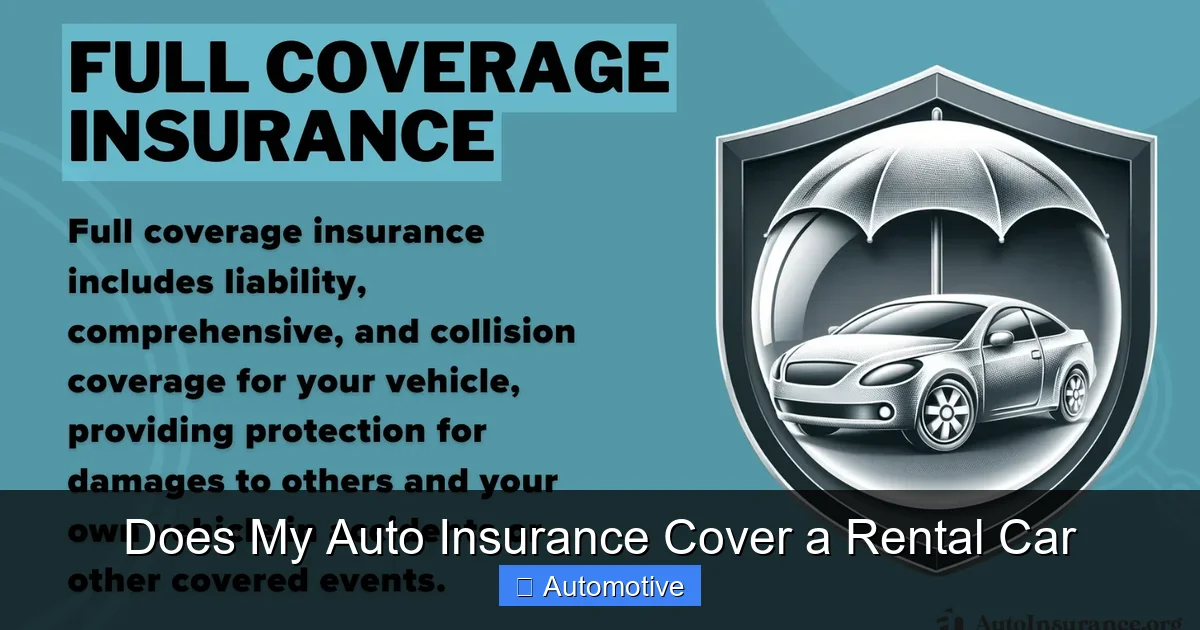
Let’s say you have a full coverage policy: liability, collision, and comprehensive. In that case, your insurance should cover:
– Damage to other people’s property (liability)
– Medical expenses for others involved in an accident (liability)
– Damage to the rental car from a crash (collision)
– Theft, vandalism, or weather-related damage (comprehensive)
However, your deductible still applies. If your collision deductible is $1,000 and the rental car sustains $3,000 in damage, you’ll pay the first $1,000, and your insurer covers the rest.
It’s also important to note that your policy follows you, not the car. So even if the rental company offers their own insurance, your personal policy is usually the primary coverage.
What About Rental Company Insurance?
Rental companies offer several types of coverage, and they can be tempting—especially when the agent emphasizes peace of mind. But before you say yes, know what you’re getting:
– **Collision Damage Waiver (CDW):** This isn’t technically insurance. It’s a waiver that relieves you of financial responsibility if the car is damaged or stolen. It often costs $10–$30 per day.
– **Loss Damage Waiver (LDW):** Similar to CDW, this reduces or eliminates your liability for damage.
– **Liability Insurance Supplement:** Adds extra liability coverage beyond what your personal policy offers.
– **Personal Accident Insurance (PAI):** Covers medical expenses for you and your passengers.
– **Personal Effects Coverage (PEC):** Protects your belongings if they’re stolen from the rental car.
Many of these are already covered by your existing policies. For example, your health insurance or MedPay coverage may handle medical costs, and your homeowners or renters insurance might cover stolen items.
The key is to avoid double-paying for the same protection. If your auto insurance already covers collision and comprehensive, you probably don’t need the CDW—unless you want to avoid paying your deductible.
Types of Coverage That Transfer to Rental Cars
Visual guide about Does My Auto Insurance Cover a Rental Car
Image source: autoinsurance.org
Not all parts of your auto insurance policy are created equal when it comes to rentals. Let’s look at each type and how it applies.
Liability Coverage
Liability insurance is the foundation of any auto policy. It covers:
– Bodily injury to others if you’re at fault in an accident
– Property damage you cause to other vehicles or structures
This coverage almost always transfers to rental cars. If you’re in an accident and the other driver’s car is damaged, your liability insurance will pay for repairs—up to your policy limits.
For example, if you rear-end another car while driving a rental and cause $15,000 in damage, your liability coverage kicks in (assuming your limit is $25,000 or higher).
However, liability does not cover damage to the rental car itself. That’s where collision and comprehensive come in.
Collision Coverage
Collision coverage pays for damage to your vehicle (or the rental car) when you hit another car, object, or roll over. If you have collision coverage on your personal car, it typically extends to the rental.
But remember: you’ll still pay your deductible. If your deductible is $500 and the rental car needs $2,000 in repairs, you pay $500, and your insurer pays $1,500.
Some drivers choose to buy the rental company’s CDW to avoid this out-of-pocket cost—especially on expensive vehicles or long trips.
Comprehensive Coverage
Comprehensive covers non-collision events like:
– Theft
– Vandalism
– Fire
– Hail or flood damage
– Animal collisions
Like collision, this coverage usually transfers to rental cars. So if someone breaks into the rental and steals the stereo, your comprehensive coverage should help.
But again, your deductible applies. And if the rental company charges a high fee for “loss of use” (the time the car is in the shop), your insurance may not cover that.
Uninsured/Underinsured Motorist Coverage
If you’re hit by a driver with no insurance or insufficient coverage, this part of your policy can help pay for your medical bills and car repairs. It typically extends to rental cars as well.
This is especially valuable in states with high rates of uninsured drivers.
Medical Payments (MedPay) or PIP
Medical Payments coverage or Personal Injury Protection (PIP) helps pay for your medical expenses after an accident, regardless of fault. This usually applies to rental cars too.
So if you or your passenger gets injured in a crash while driving a rental, MedPay or PIP can cover hospital bills, up to your policy limit.
When Your Auto Insurance Might Not Cover a Rental Car
Visual guide about Does My Auto Insurance Cover a Rental Car
Image source: autoinsurance.org
While your policy often extends to rentals, there are important exceptions. Knowing these can save you from a costly surprise.
International Rentals
Most U.S. auto insurance policies do not cover rental cars outside the country. If you’re traveling to Europe, Asia, or even Canada (in some cases), your coverage may not apply.
For example, if you rent a car in Italy and get into an accident, your American insurer might deny the claim. That’s why many travelers buy international rental car insurance through the rental company or a third-party provider.
Some credit cards also offer international rental coverage, but you must pay for the entire rental with that card.
Commercial or Luxury Vehicles
Your personal auto policy may exclude coverage for:
– Vans used for business
– RVs or motorhomes
– High-end luxury cars (e.g., Lamborghinis, Ferraris)
– Vehicles with more than eight seats
If you rent a limousine or a commercial van for a wedding, your insurance likely won’t cover it. Always check with your insurer before driving.
Long-Term Rentals
Most policies cover rentals for up to 30 days. But if you’re renting a car for several months (say, while your own car is being repaired), your insurer might consider it a “non-owned vehicle” and limit coverage.
In some cases, you may need to add the rental to your policy temporarily or purchase a non-owner car insurance policy.
Excluded Drivers
If someone not listed on your policy drives the rental car, your insurance may not cover them. For example, if your teenage son borrows the rental without your permission, and he gets into an accident, your insurer could deny the claim.
Always make sure anyone driving the rental is authorized—and ideally, listed on your policy.
Rental Company Restrictions
Some rental agreements include clauses that void coverage if you violate their terms. For example:
– Driving off-road
– Crossing international borders without permission
– Letting an unauthorized driver operate the vehicle
Even if your insurance would normally cover the damage, the rental company might hold you responsible if you break their rules.
How Credit Cards Can Help with Rental Car Coverage
Many people don’t realize that their credit card can be a powerful tool for rental car protection—especially if they don’t have full coverage auto insurance.
Primary vs. Secondary Coverage
Some premium credit cards (like Chase Sapphire Reserve, Amex Platinum, or Capital One Venture) offer **primary rental car insurance**. This means the card’s coverage kicks in first, before your personal auto insurance.
Other cards offer **secondary coverage**, which only pays after your auto insurance has been used.
Primary coverage is better because it avoids involving your insurer, which could lead to premium increases.
How It Works
To activate credit card rental coverage:
1. Pay for the entire rental with the eligible card.
2. Decline the rental company’s CDW/LDW.
3. Keep your receipt and the rental agreement.
If you get into an accident, file a claim with the credit card company. They’ll investigate and pay for eligible damages (usually up to the card’s limit, often $50,000–$100,000).
But be aware: credit card coverage typically only includes collision and comprehensive—not liability. So you’re still responsible for damage to other people’s property.
Also, coverage varies by card and country. Always check your card’s terms before relying on it.
Limitations to Watch For
– **Excluded vehicles:** Luxury cars, RVs, and trucks are often not covered.
– **Rental duration:** Most cards only cover rentals up to 15–30 days.
– **International use:** Some cards don’t cover rentals outside the U.S.
– **Driver eligibility:** Only the cardholder (and sometimes authorized users) are covered.
Tips to Protect Yourself When Renting a Car
Now that you know the basics, here’s how to make smart decisions at the rental counter.
1. Review Your Auto Insurance Policy
Before your trip, call your insurer and ask:
– Does my policy cover rental cars?
– What types of coverage transfer?
– Are there any exclusions (e.g., international, luxury vehicles)?
– What’s my deductible?
Get this in writing if possible.
2. Check Your Credit Card Benefits
Log into your credit card account or call customer service to confirm:
– Do you offer rental car insurance?
– Is it primary or secondary?
– What are the coverage limits and exclusions?
Keep a copy of the benefits guide in your wallet.
3. Take Photos Before and After
Before driving off, take clear photos of the rental car from all angles. Note any existing scratches, dents, or damage. Do the same when returning the car.
This protects you from being charged for pre-existing damage.
4. Read the Rental Agreement Carefully
Don’t just sign and go. Look for:
– Mileage limits
– Fuel policies
– Authorized drivers
– Geographic restrictions
If something seems off, ask questions.
5. Consider Supplemental Coverage If Needed
If you’re traveling abroad, renting a luxury vehicle, or don’t have full coverage, it may be worth buying the rental company’s insurance or a third-party policy.
For example, if you only have liability insurance, adding CDW could save you thousands if the rental is damaged.
6. Keep Records
Save your rental agreement, insurance documents, and any communication with the rental company or insurer. These can be crucial if a dispute arises.
Final Thoughts: Drive Smart, Stay Covered
So, does your auto insurance cover a rental car? In most cases, yes—but only if you have the right coverage and understand the limits.
Your liability, collision, and comprehensive insurance typically extend to rentals driven in the U.S., but gaps can exist, especially for international trips, luxury vehicles, or long-term rentals. Credit cards can fill some of these gaps, but they’re not a complete substitute.
The best approach? Do your homework before you rent. Call your insurer, check your credit card benefits, and assess your needs. When in doubt, a little extra protection is cheaper than a big repair bill.
By being informed, you can skip the upsell at the counter, save money, and enjoy your trip with peace of mind. After all, the goal isn’t just to get from point A to point B—it’s to do it safely, legally, and without financial stress.
Frequently Asked Questions
Does my auto insurance cover a rental car if I only have liability coverage?
No. Liability coverage only pays for damage or injuries you cause to others. It does not cover damage to the rental car itself. If you want protection for the rental vehicle, you’ll need collision and comprehensive coverage.
Can I use my credit card’s rental insurance instead of my auto insurance?
Yes, if your card offers primary coverage and you pay for the rental with that card. However, credit card coverage usually doesn’t include liability, so you’ll still need your auto insurance for third-party damages.
What happens if I damage a rental car and my insurance doesn’t cover it?
You’ll be personally responsible for repair costs, which can range from hundreds to thousands of dollars. The rental company may also charge fees for loss of use, administrative costs, or diminished value.
Does my insurance cover a rental car if I’m driving for work?
It depends. If you’re using the rental for business purposes, your personal policy may not cover it. You might need a commercial auto policy or non-owner business insurance.
Can I add a rental car to my existing auto insurance policy?
Generally, no. Rental cars are covered under permissive use, not as added vehicles. However, for long-term rentals (over 30 days), you may need to explore temporary coverage options.
Is rental car insurance worth it if I already have full coverage?
It depends on your deductible and risk tolerance. If your deductible is high, paying for a CDW might save you money. But if you have low deductibles and good credit card coverage, you may not need it. Always compare costs and coverage first.