
Does Mileage Matter on a Tesla?

Yes, mileage matters on a Tesla—but not in the way you might think. Unlike gas-powered cars, high mileage on a Tesla doesn’t necessarily mean poor condition. Instead, battery health, charging habits, and software updates play a bigger role in long-term performance and value.
[FEATURED_IMAGE_PLACEHolder]
Key Takeaways
- Mileage affects resale value, but less than on gas cars: High-mileage Teslas still hold value well due to strong demand and over-the-air updates.
- Battery degradation is the real concern: Most Teslas lose only 10-15% of range after 200,000 miles, thanks to advanced battery management.
- Charging habits impact longevity: Frequent use of Superchargers or charging to 100% can accelerate battery wear over time.
- Software updates improve efficiency: Tesla regularly releases updates that can enhance range and performance, even on high-mileage vehicles.
- Maintenance is minimal but important: Tire rotation, brake fluid checks, and cabin air filters are key for high-mileage Teslas.
- Warranty coverage matters: Tesla’s battery and drivetrain warranty (8 years or 100,000–150,000 miles) protects against major degradation.
- Real-world range varies: Weather, driving style, and terrain can significantly affect how far your Tesla goes on a charge, regardless of mileage.
📑 Table of Contents
- Does Mileage Matter on a Tesla?
- Understanding Tesla Mileage: What’s Different from Gas Cars?
- Battery Health: The Real Indicator of Tesla Longevity
- Resale Value and Market Perception of High-Mileage Teslas
- Maintenance and Care for High-Mileage Teslas
- Real-World Range vs. EPA Estimates
- Warranty and Protection for High-Mileage Teslas
- Conclusion: Should You Buy a High-Mileage Tesla?
Does Mileage Matter on a Tesla?
When you’re shopping for a used car, mileage is usually one of the first things you check. A high odometer reading often raises red flags—more miles usually mean more wear and tear, right? But when it comes to Tesla vehicles, the story is a bit different. While mileage still plays a role, it’s not the only—or even the most important—factor when evaluating a Tesla’s condition, performance, or value.
Unlike traditional internal combustion engine (ICE) vehicles, Teslas don’t have complex transmissions, oil changes, or exhaust systems that degrade with use. Instead, their longevity hinges largely on battery health, software, and charging habits. So, does mileage matter on a Tesla? The short answer is yes—but not in the way you might expect. High mileage on a Tesla doesn’t automatically mean it’s on its last legs. In fact, many high-mileage Teslas still perform like new, thanks to Tesla’s over-the-air updates and robust battery technology.
In this guide, we’ll dive deep into what mileage really means for a Tesla, how battery degradation compares to engine wear, and what other factors you should consider when buying or owning a high-mileage electric vehicle. Whether you’re eyeing a used Model 3 with 80,000 miles or wondering how long your current Tesla will last, this article will help you make informed decisions.
Understanding Tesla Mileage: What’s Different from Gas Cars?
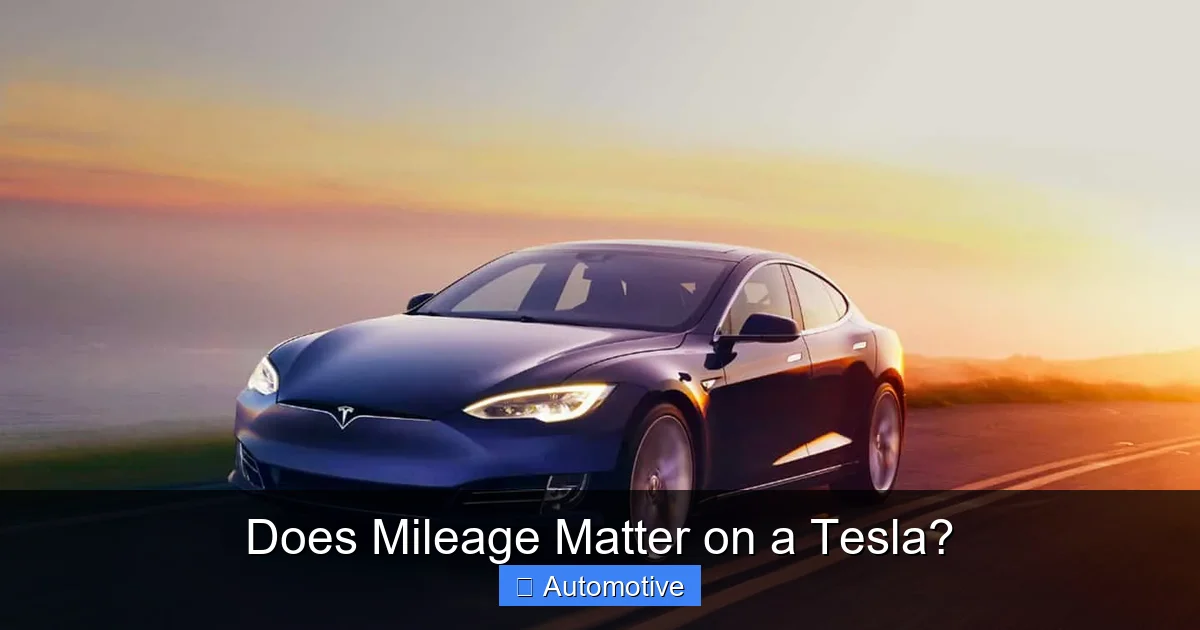
Visual guide about Does Mileage Matter on a Tesla?
Image source: ecowut.com
Let’s start with the basics: what does “mileage” mean for a Tesla? In simple terms, it’s the total number of miles the car has been driven, just like any other vehicle. But because Teslas are electric, the implications of high mileage are different.
With gas cars, high mileage often means worn-out engines, failing transmissions, and expensive repairs. But Teslas have far fewer moving parts. There’s no engine oil to change, no spark plugs to replace, and no exhaust system to rust. The electric motor is incredibly durable—Tesla motors are designed to last over a million miles with minimal maintenance.
So while 100,000 miles might sound like a lot, it’s not uncommon to see Teslas with 150,000 or even 200,000 miles still running strong. In fact, Tesla owners often report that their cars feel just as responsive and efficient after years of use. This is partly due to the simplicity of electric drivetrains and partly because of Tesla’s continuous software improvements.
Why High Mileage Doesn’t Equal High Wear
One of the biggest misconceptions about high-mileage Teslas is that they’re “worn out.” But electric vehicles (EVs) don’t experience mechanical wear in the same way. There’s no friction from pistons, no heat stress on valves, and no transmission fluid breaking down. The motor spins on bearings and doesn’t require lubrication like a gas engine.
Instead, the main wear point on a Tesla is the battery. But even here, Tesla has engineered its batteries to last a very long time. Most Tesla batteries are designed to retain at least 70% of their original capacity after 150,000 to 200,000 miles. That means a Model 3 with 150,000 miles might still have 85% of its original range—more than enough for daily commuting and road trips.
The Role of Software in Longevity
Another reason high-mileage Teslas can still perform well is software. Unlike traditional cars, which are “finished” the day they leave the factory, Teslas receive regular over-the-air (OTA) updates. These updates can improve efficiency, add new features, and even extend range.
For example, Tesla has released updates that optimize battery management, reduce energy consumption in cold weather, and improve regenerative braking. These improvements can make a high-mileage Tesla feel more efficient than it did when it was new. In some cases, owners have reported gaining a few extra miles of range after a software update—something unheard of in the gas car world.
Battery Health: The Real Indicator of Tesla Longevity

Visual guide about Does Mileage Matter on a Tesla?
Image source: ecowut.com
If mileage isn’t the best predictor of a Tesla’s condition, what is? The answer is battery health. The battery is the heart of any electric vehicle, and its condition directly affects range, performance, and overall lifespan.
How Much Do Tesla Batteries Degrade?
Battery degradation refers to the gradual loss of capacity over time. All lithium-ion batteries degrade, but Tesla’s are among the most durable on the market. According to data from Tesla owners and third-party studies, the average Tesla loses about 5-10% of its range in the first 50,000 miles, and then degradation slows significantly.
After 100,000 miles, most Teslas retain around 90-92% of their original range. By 200,000 miles, that number typically drops to 85-88%. That’s still excellent compared to other EVs and far better than engine wear on gas cars.
For example, a 2018 Model 3 Long Range with 120,000 miles might still have a real-world range of 280 miles—down from its original 310 miles. That’s a loss of about 10%, which is well within normal expectations.
Factors That Accelerate Battery Degradation
Not all high-mileage Teslas degrade at the same rate. Several factors can speed up battery wear:
– Frequent Supercharging: Using Tesla’s fast-charging network too often can generate heat and stress the battery. While occasional Supercharging is fine, daily use can accelerate degradation.
– Charging to 100% regularly: Keeping the battery at full charge for long periods can reduce its lifespan. Tesla recommends charging to 90% for daily use.
– Extreme temperatures: Hot climates can cause faster degradation, especially if the car is parked in direct sunlight with a full charge. Cold weather temporarily reduces range but doesn’t permanently damage the battery.
– Deep discharges: Letting the battery drop below 10% regularly can stress the cells. It’s better to keep the charge between 20% and 80% for daily driving.
How to Check Battery Health
If you’re buying a used Tesla, battery health is critical. Unfortunately, Tesla doesn’t display battery capacity directly in the car. But you can estimate it using the car’s range display.
For example, if a Model Y shows 250 miles of range at 100% charge, but its original EPA range was 326 miles, you can calculate degradation:
(250 ÷ 326) × 100 = 76.7%
That would suggest significant degradation—possibly due to poor charging habits or battery issues.
Alternatively, you can use third-party apps like TeslaFi or ScanMyTesla to get detailed battery data. These tools can show charge cycles, temperature history, and estimated capacity loss.
Resale Value and Market Perception of High-Mileage Teslas
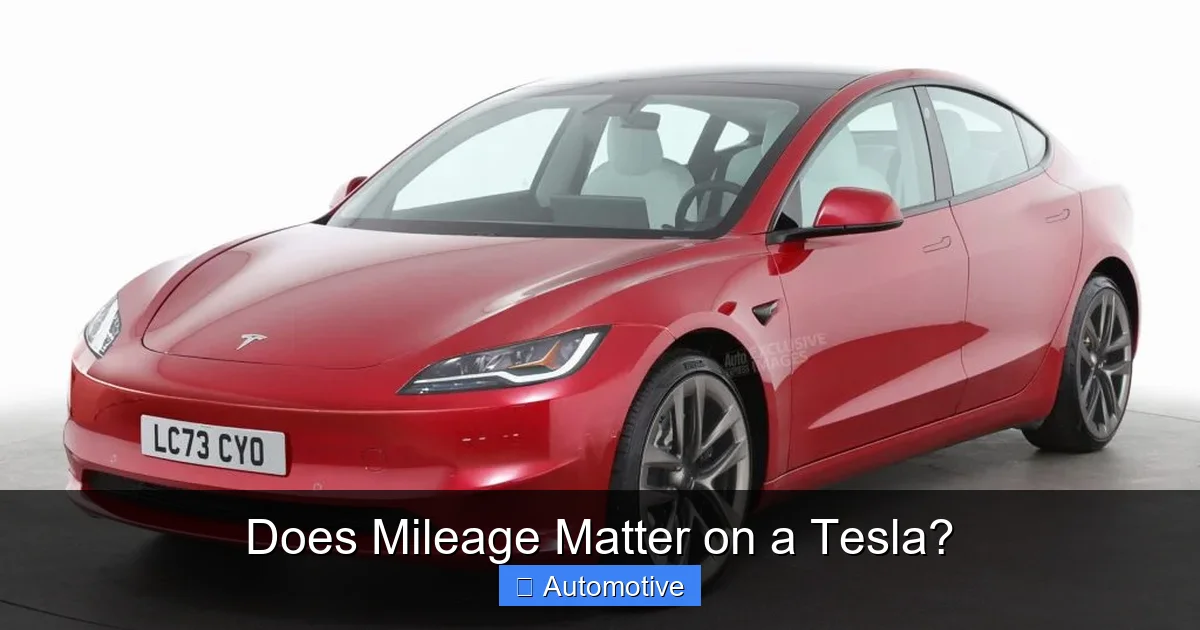
Visual guide about Does Mileage Matter on a Tesla?
Image source: dolubatarya.com
One of the biggest concerns for buyers is resale value. Do high-mileage Teslas hold their value well? The answer is generally yes—especially compared to gas cars.
Tesla’s Strong Resale Market
Teslas have some of the best resale values in the automotive industry. Even high-mileage models retain a significant portion of their original price. According to data from Edmunds and Kelley Blue Book, a 5-year-old Tesla with 100,000 miles might still sell for 50-60% of its original MSRP—much higher than comparable gas cars.
This is due to several factors:
– High demand for used Teslas
– Limited supply of new models
– Over-the-air updates that keep older cars feeling modern
– Lower maintenance costs
For example, a 2019 Model 3 with 90,000 miles might sell for $28,000, while a similar-aged BMW 3 Series with the same mileage might go for $18,000. The Tesla’s value is bolstered by its tech features, performance, and lower running costs.
How Mileage Affects Price
While high mileage does reduce a Tesla’s value, the drop isn’t as steep as with gas cars. A Tesla with 120,000 miles might sell for 10-15% less than one with 60,000 miles—assuming similar condition and battery health.
But if the high-mileage Tesla has a degraded battery or a history of poor charging, the price drop could be steeper. Buyers are increasingly aware of battery health, so a well-maintained high-mileage Tesla can still command a strong price.
Tips for Selling a High-Mileage Tesla
If you’re selling a Tesla with high mileage, here are a few tips to maximize value:
– Provide detailed charging history (avoid frequent 100% charges or deep discharges)
– Show proof of regular maintenance (tire rotations, brake fluid checks)
– Highlight recent software updates and new features
– Get a pre-purchase inspection to reassure buyers about battery health
Maintenance and Care for High-Mileage Teslas
Even though Teslas require less maintenance than gas cars, high-mileage vehicles still need attention. Proper care can extend the life of your Tesla and keep it running smoothly for years.
Essential Maintenance Tasks
Here are the key maintenance items for high-mileage Teslas:
– Tire rotation: Every 6,250 miles to ensure even wear
– Brake fluid check: Every 2 years to prevent corrosion
– Cabin air filter replacement: Every 2-3 years to maintain air quality
– Wiper blade replacement: As needed, especially in rainy climates
– Suspension inspection: High-mileage cars may need shocks or struts checked
Unlike gas cars, Teslas don’t need oil changes, spark plug replacements, or exhaust system repairs. But they do have wear items like tires, brakes, and suspension components.
Brake Wear: Less Is More
One advantage of Teslas is regenerative braking, which reduces wear on brake pads. The car uses the electric motor to slow down, converting kinetic energy back into battery power. This means brake pads can last 100,000 miles or more—far longer than on gas cars.
However, if you drive aggressively or in hilly areas, brake wear may increase. It’s still a good idea to have the brakes inspected during routine maintenance.
Cold Weather and High Mileage
Cold weather can reduce range, especially on high-mileage Teslas with slightly degraded batteries. In freezing temperatures, battery efficiency drops, and the car uses more energy to heat the cabin.
To minimize range loss:
– Precondition the car while it’s plugged in
– Use seat heaters instead of the cabin heater when possible
– Park in a garage or covered area
These tips are especially important for high-mileage Teslas, as they may already have reduced range.
Real-World Range vs. EPA Estimates
Range anxiety is a common concern for EV owners, and it’s even more relevant for high-mileage Teslas. But understanding how real-world range differs from EPA estimates can help you plan better.
Why Range Varies
Tesla’s EPA range estimates are based on ideal conditions—moderate temperatures, steady speeds, and no heavy loads. In the real world, range can vary significantly due to:
– Weather (cold reduces range by 20-40%)
– Driving style (aggressive acceleration uses more energy)
– Terrain (hills and mountains reduce range)
– Use of climate control (heating and cooling drain the battery)
For example, a Model 3 with 100,000 miles might have an EPA range of 263 miles, but in winter, it could realistically achieve only 200 miles.
How High Mileage Affects Real-World Range
High mileage doesn’t drastically reduce real-world range—unless the battery is significantly degraded. A Tesla with 150,000 miles and 88% battery health will still perform well in most conditions.
But if the battery has degraded to 75%, range will be noticeably lower. In that case, the car might only achieve 180 miles in ideal conditions and 130 miles in winter.
Tips to Maximize Range
To get the most out of your high-mileage Tesla:
– Drive smoothly and avoid rapid acceleration
– Use Eco mode to limit power and improve efficiency
– Keep tires properly inflated
– Reduce weight by removing unnecessary items
– Plan routes with charging stations in mind
Warranty and Protection for High-Mileage Teslas
Tesla offers strong warranty coverage that can protect high-mileage owners from major issues.
Battery and Drivetrain Warranty
Tesla’s battery and drivetrain warranty covers:
– 8 years or 100,000 miles (Model 3 Standard Range)
– 8 years or 120,000 miles (Model 3 Long Range, Model Y)
– 8 years or 150,000 miles (Model S, Model X)
The warranty guarantees that the battery will retain at least 70% of its capacity during the coverage period. If it falls below that, Tesla will repair or replace it.
This is a huge advantage for high-mileage owners. Even if your Tesla has 130,000 miles, it may still be under warranty—and protected against major battery failure.
What’s Not Covered
The warranty doesn’t cover normal wear and tear, such as:
– Tire wear
– Brake pad replacement
– Cosmetic damage
– Damage from accidents or misuse
But it does cover defects in materials and workmanship, so if your battery degrades abnormally fast, you may be eligible for service.
Extended Warranty Options
Tesla no longer sells extended warranties directly, but third-party providers like Endurance and Olive offer coverage for high-mileage Teslas. These plans can cover battery, motor, and electronics for an additional fee.
While not always necessary, an extended warranty can provide peace of mind for owners planning to keep their Tesla beyond the factory warranty.
Conclusion: Should You Buy a High-Mileage Tesla?
So, does mileage matter on a Tesla? Yes—but it’s not the dealbreaker it is for gas cars. A high-mileage Tesla can still be an excellent buy, especially if it has good battery health, a clean maintenance history, and recent software updates.
When shopping for a used Tesla, focus less on the odometer and more on:
– Battery capacity and degradation
– Charging habits (avoid frequent Supercharging or 100% charges)
– Maintenance records
– Warranty status
– Real-world range in your climate
With proper care, a Tesla can easily last 200,000 miles or more—and still deliver a smooth, efficient, and enjoyable driving experience. Whether you’re buying used or planning to keep your current Tesla for the long haul, understanding how mileage affects performance will help you make smarter decisions.
Electric vehicles are the future, and Teslas are built to last. So don’t let high mileage scare you away—just do your homework, and you might find a great deal on a car that’s just getting started.
Frequently Asked Questions
Can a Tesla last 300,000 miles?
Yes, many Teslas are expected to last 300,000 miles or more. With proper care and minimal maintenance, the electric motor and battery can endure high mileage. Some owners have reported driving over 400,000 miles with only minor battery degradation.
How much does a Tesla battery degrade per year?
On average, Tesla batteries degrade about 1-2% per year. After 10 years, most retain 80-85% of their original capacity. Degradation slows over time, so the first few years see the most loss.
Is it bad to charge a Tesla to 100% every day?
Yes, charging to 100% daily can accelerate battery wear. Tesla recommends charging to 90% for daily use and only using 100% for long trips. Keeping the battery between 20% and 80% helps extend its lifespan.
Do high-mileage Teslas have more software issues?
No, software issues are not related to mileage. Teslas receive regular over-the-air updates that improve performance and fix bugs, regardless of how many miles they’ve been driven.
Can you replace a Tesla battery?
Yes, Tesla batteries can be replaced, but it’s expensive—typically $10,000 to $20,000. However, most batteries last well beyond the warranty period, so replacement is rarely needed.
Should I avoid a Tesla with over 100,000 miles?
Not necessarily. A well-maintained Tesla with 100,000+ miles can still be a great buy. Focus on battery health, charging history, and overall condition rather than mileage alone.