Does Hyundai Use Real Leather?

Contents
- 1 Key Takeaways
- 2 📑 Table of Contents
- 3 Understanding Automotive “Leather”: It’s Not All Created Equal
- 4 Hyundai’s Leather Offerings: A Model-by-Model Breakdown
- 5 Synthetic and “Vegan Leather”: Hyundai’s Sophisticated Alternatives
- 6 How to Identify Real Leather in Your Hyundai (The DIY Guide)
- 7 The Future of Materials: Sustainability and Innovation at Hyundai
- 8 Practical Advice for the Hyundai Buyer
- 9 Frequently Asked Questions




The short answer is: it depends. Hyundai uses both genuine cowhide leather and high-quality synthetic materials (often called “leatherette” or “vegan leather”) across its lineup. The type of material is primarily determined by the specific model, its trim level, and the model year. While premium models like the Genesis brand and higher trims of the Sonata or Santa Fe feature real leather, many mainstream models utilize durable and sophisticated synthetic upholstery. Always check the specific window sticker or build sheet for your exact vehicle to know for sure.
Ah, the new car smell! That pristine interior is a huge part of the buying experience. And when you slide into the driver’s seat, one of the first things you notice is the feel of the materials around you. Is it soft, luxurious cowhide? Or is it a sleek, modern synthetic? For Hyundai shoppers, this question comes up a lot: Does Hyundai use real leather? It’s a fair question, especially as brands navigate between luxury expectations, cost, and a growing demand for ethical, sustainable materials. The answer isn’t a simple yes or no—it’s a nuanced “sometimes.” Let’s break down everything you need to know about Hyundai’s upholstery choices, from the Genesis flagship to the budget-friendly Accent.
Key Takeaways
- Hyundai uses both real and synthetic leather: There is no single answer. The material varies significantly by model, trim, and year.
- Real leather is typically on premium trims: You’ll find genuine cowhide leather most often on the top trim levels of sedans (Sonata, Elantra) and SUVs (Santa Fe, Palisade), and standard on the Genesis luxury brand.
- Synthetic options are common and advanced: Hyundai often uses high-grade synthetic leather (like “Leatherette”) on mid-level trims, which is durable, easy to clean, and more affordable.
- “Vegan leather” and eco-conscious materials: Hyundai is increasingly offering fully synthetic, animal-free upholstery options, aligning with sustainability trends. This is a key point to verify if you’re shopping for a non-animal product.
- Model-specific examples are crucial: A 2023 Hyundai Sonata Limited has real Nappa leather, while a 2023 Sonata SEL might have cloth or synthetic. A Palisade Calligraphy has real leather, but the base model does not.
- How to identify the material: Check the window sticker (Monroney label) under “Upholstery.” The build sheet from Hyundai’s website or your dealer will specify “Genuine Leather” or “Leather-Trimmed.” You can also feel and smell the material; real leather has a distinct, organic scent and texture.
- Care differs by material: Real leather requires specific conditioners to prevent cracking. Synthetic materials are generally easier to maintain with simple soap and water solutions.
📑 Table of Contents
- Understanding Automotive “Leather”: It’s Not All Created Equal
- Hyundai’s Leather Offerings: A Model-by-Model Breakdown
- Synthetic and “Vegan Leather”: Hyundai’s Sophisticated Alternatives
- How to Identify Real Leather in Your Hyundai (The DIY Guide)
- The Future of Materials: Sustainability and Innovation at Hyundai
- Practical Advice for the Hyundai Buyer
Understanding Automotive “Leather”: It’s Not All Created Equal
Before we dive into Hyundai specifically, we need to clear up the terminology. The car industry can be… creative… with its words. What you see labeled as “leather” might not be what you’re picturing in your mind.
The Spectrum of Upholstery Materials
Think of car seat materials as a spectrum. On one end, you have 100% genuine, top-grain cowhide leather. This is the real deal—animal hide that’s been treated and finished. It’s breathable, develops a unique patina, and has that classic leather smell. On the opposite end, you have 100% synthetic materials, often polyurethane-based, marketed as “leatherette,” ” faux leather,” “vinyl,” or the trendy “vegan leather.”
In the middle, there are blends and compromises. Some manufacturers use “partial leather,” where you sit on real leather but the sides and backs are vinyl. Others use a high-quality synthetic that looks and feels remarkably like the real thing but lacks the organic pores. Then there’s “bonded leather,” which is a lower-grade material made from leather fibers bonded together with polyurethane—it’s less durable and not considered true leather by purists.
Why does this matter? Because when you ask if a Hyundai has “real leather,” you need to know which part of the spectrum you’re on. Hyundai is generally transparent, but the marketing names can vary.
Hyundai’s Leather Offerings: A Model-by-Model Breakdown
Hyundai’s strategy is clear: offer a premium feel at an accessible price. This means they use materials strategically. The flagship Genesis brand (G70, G80, GV70, G90) exclusively uses high-quality genuine leather. For the mainstream Hyundai line, the story changes based on the vehicle’s position in the lineup.
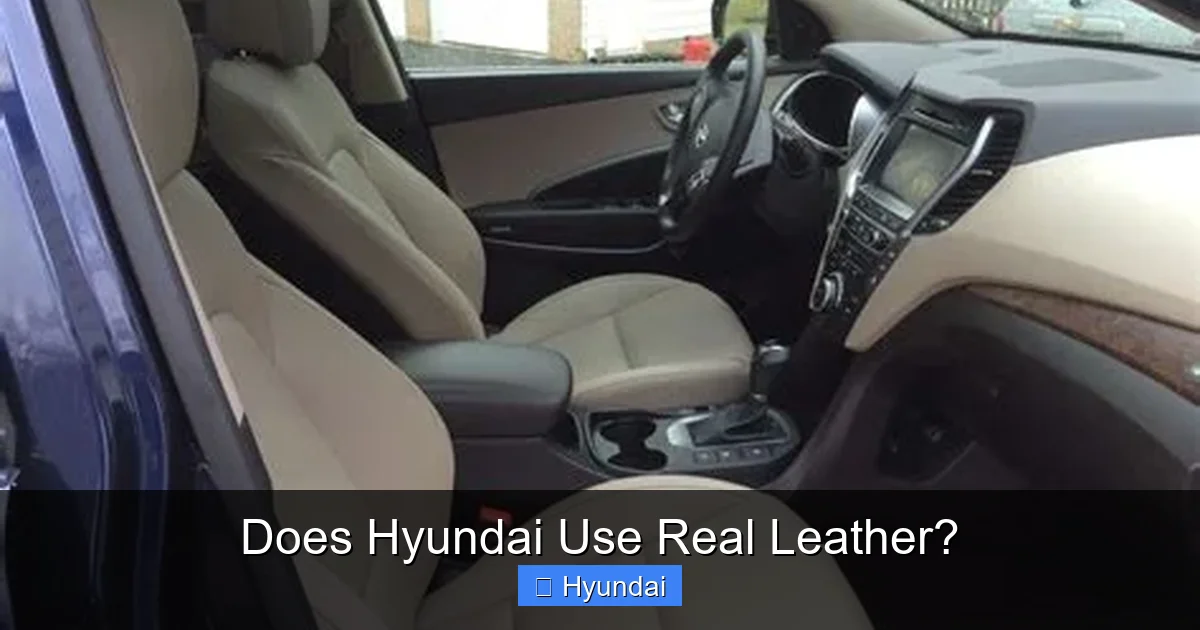
Visual guide about Does Hyundai Use Real Leather?
Image source: autozonic.com
Sedans: Sonata, Elantra, and Kona
Let’s start with the popular family sedans.
- Hyundai Sonata: This is Hyundai’s flagship sedan. On the base SE and SEL trims, you’ll typically find premium cloth seats. Move up to the SEL Plus and Limited trims, and you get genuine leather seating surfaces. The top-tier Sonata N Line also features sporty leather-trimmed seats. So, for a Sonata with “real leather,” you’re looking at the SEL Plus, Limited, or N Line.
- Hyundai Elantra: The story is similar but with fewer leather options. The base models are cloth. The sporty N model has cloth. The Elantra Limited trim is where you’ll find genuine leather-appointed seats. The hybrid models also offer leather on their Limited trim.
- Hyundai Kona (Subcompact SUV): The Kona is a case study in synthetic excellence. Even on higher trims like the Limited or the electric Kona Electric, Hyundai often uses its high-grade synthetic “Leatherette” upholstery. Genuine leather is not typically offered on the Kona in the US market, making it a great example of Hyundai’s commitment to advanced synthetics.
SUVs & Crossovers: Santa Fe, Palisade, Tucson, and Kona
SUVs are where Hyundai pushes its luxury credentials.
- Hyundai Santa Fe: This midsize SUV offers a clear progression. Base SE has cloth. The SEL gets cloth or optional simulated leather. The Santa Fe Limited and Calligraphy trims feature genuine leather seating surfaces. The Calligraphy, being the top trim, uses higher-grade Nappa leather with unique stitching.
- Hyundai Palisade: As Hyundai’s flagship 3-row SUV, the Palisade is designed to compete with luxury brands. The base model has cloth. The Palisade Limited and Calligraphy come standard with genuine leather. The Calligraphy again features premium Nappa leather with a quilted pattern. If you want a Palisade with real leather, you must get at least the Limited trim.
- Hyundai Tucson: The compact Tucson follows a similar pattern. Base models are cloth. The Tucson Limited and Hybrid Blue/Blue Hybrid trims offer genuine leather. The top N Line model has unique cloth/partial leather or leather-trimmed seats depending on the year.
The Electric & Performance Line: Ioniq 5/6 and N Models
This is a fascinating segment for materials.
- Hyundai Ioniq 5 & Ioniq 6: These cutting-edge EVs emphasize sustainability. Many trims use sophisticated synthetic materials that are often marketed as “eco-friendly” or “vegan leather.” The use of recycled plastics in textiles is common. Genuine leather is rarely, if ever, offered on these models in North America, aligning with the eco-conscious brand identity of the Ioniq sub-brand.
- Hyundai N (High-Performance): The Veloster N and Elantra N are track-focused. They prioritize lightweight, sporty cloth seats with excellent bolstering. They do not offer leather as a standard or optional feature, as leather adds weight and can be less breathable during spirited driving.
Practical Tip: When shopping, your best friend is the official Hyundai USA website. Build your exact desired model and trim, and the “Interior” section will specify the seat material with absolute clarity. It will say “Genuine Leather,” “Leather-Trimmed,” “Cloth,” or “Synthetic.” Don’t rely on a salesperson’s memory—get it in writing on the build sheet.
Synthetic and “Vegan Leather”: Hyundai’s Sophisticated Alternatives
Let’s talk about that synthetic material. It’s not your grandpa’s itchy vinyl. Hyundai, like many modern automakers, invests heavily in developing high-quality polyurethane-based upholstery that looks, feels, and performs like leather but with key advantages.
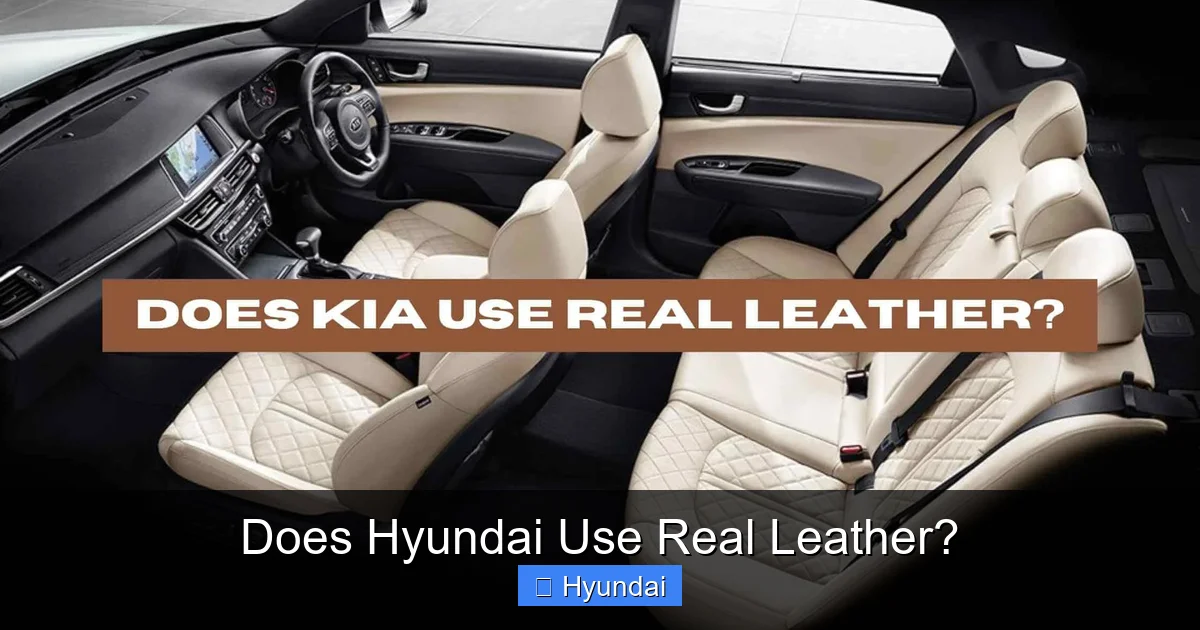
Visual guide about Does Hyundai Use Real Leather?
Image source: leatherninja.com
Why Hyundai Chooses Synthetic (Often)
There are three big reasons: Cost, Consistency, and Ethics.
- Cost & Value: Genuine leather is expensive. By using a premium synthetic on mid-level trims (like a Santa Fe SEL or a Kona Limited), Hyundai can offer a luxurious look and feel at a more accessible price point. This is a core part of their “value-packed” philosophy.
- Consistency & Durability: Synthetic materials are manufactured. This means every square inch has the exact same color, texture, and grain pattern. There are no natural imperfections or variations. They are also highly resistant to stains, UV fading, and cracking. For a family hauler like a Santa Fe, this is a pragmatic win.
- Ethical & Sustainable Appeal: This is a growing factor. A significant and vocal segment of car buyers avoids animal products. By offering a wide array of models with no leather option (like the Ioniq 5, Kona, and most base trims), Hyundai caters directly to this market. Their marketing for these models highlights the cruelty-free and often-recycled-content nature of the synthetics.
What Does Hyundai Call Its Synthetic?
It varies by model year and region, but common terms you’ll see include:
- Leatherette (a common VW/Audi term that Hyundai sometimes uses)
- Synthetic Leather (plain and clear)
- Eco-Leather / Vegan Leather (marketing terms for the Ioniq line)
- Cloth / Premium Cloth (which is, of course, not leather at all)
If the material is genuine, Hyundai will almost always proudly specify “Genuine Leather” or “Nappa Leather” in its official descriptions and on the window sticker.
How to Identify Real Leather in Your Hyundai (The DIY Guide)
You’re at the dealership, or you’ve just bought a used Hyundai, and you want to know for sure. Here’s your detective toolkit.

Visual guide about Does Hyundai Use Real Leather?
Image source: leatherinsights.com
1. The Gold Standard: The Window Sticker (Monroney Label)
This is non-negotiable. The federal Monroney label on the car’s window has a section titled “Upholstery” or “Interior Trim.” It will list the material explicitly. Look for “Leather,” “Genuine Leather,” or “Leather-Trimmed.” If it says “Cloth,” “Fabric,” “Synthetic,” “Vinyl,” or “Leatherette,” it is not real leather. For a used car without a sticker, ask the dealer for the original build sheet from Hyundai.
2. The Feel and Smell Test
This takes a little practice but is very effective.
- Texture: Real leather has a natural grain and is slightly porous. Run your fingers across it; you should feel tiny imperfections and a soft, organic texture. Synthetic leather often has a very uniform, almost plastic-like grain pattern and a smoother, colder feel.
- Smell: This is the dead giveaway. Real leather has a distinct, rich, earthy, “new car” smell that is hard to replicate. Synthetic materials have a chemical, plastic, or “new vinyl” odor. Once you smell real automotive leather, you’ll recognize it.
- Flexibility & Warmth: Leather is more flexible and warms to the touch faster. Synthetics can feel stiffer and remain slightly cooler.
3. Check the Seams and Panels
Look closely at the seams. High-quality leather stitching will be neat and precise. More telling is the back of the seat or the lower portion of the seat back. Many cars use real leather on the primary seating surfaces (seat bottom and backrest) but use a cheaper vinyl or cloth on the sides and rear panel to save cost. If you see a different texture or material on the side bolsters or back of the seat, you likely have “partial leather” or a leather/vinyl combo.
4. Consult Your Owner’s Manual or Hyundai’s Website
The specifications section will list the interior materials. You can also use the VIN (Vehicle Identification Number) to contact Hyundai customer service or a dealer parts department, who can look up the exact build code for your vehicle’s interior.
Remember: When in doubt, the window sticker is your legal document and final authority. It’s the only way to be 100% certain.
The Future of Materials: Sustainability and Innovation at Hyundai
The automotive industry is at a crossroads. With ESG (Environmental, Social, and Governance) goals and shifting consumer preferences, the definition of “luxury” is changing. For Hyundai, this means a strong pivot toward sustainable, non-animal, and recycled materials.
The Ioniq Blueprint
The Ioniq 5 and Ioniq 6 are leading this charge. Their interiors prominently feature:
- Recycled PET fabric: Made from plastic bottles, used for headliners and cloth seats.
- Bio-based and recycled materials: Hyundai sources materials from sugarcane, corn, and recycled fishing nets for various soft-touch surfaces and trims.
- 100% Vegan Upholstery: For the foreseeable future, the Ioniq line will not offer animal leather. This is a deliberate brand decision.
This isn’t just a niche play. As these technologies scale and costs come down, we can expect to see these sustainable synthetics trickle down into more mainstream Hyundai models like the Tucson and Santa Fe, potentially further reducing the use of genuine cowhide across the lineup.
What About Genesis?
Hyundai’s luxury division, Genesis, is a different story. Genesis competes with BMW, Mercedes, and Audi, where genuine leather is still a strong symbol of luxury. Therefore, Genesis uses high-quality, full-grain, and semi-aniline leathers as a core part of its premium proposition. You will not find vegan leather options in a Genesis G80 or GV80. This creates a clear dichotomy: Hyundai (mainstream) = advanced synthetics and selective leather; Genesis (luxury) = genuine leather.
Practical Advice for the Hyundai Buyer
So, you’re in the market. How do you navigate this?
1. Define Your “Why”
Are you looking for real leather because you love the feel and smell? Or because you perceive it as more “luxurious”? If it’s the latter, a high-end synthetic like what’s in a Palisade Limited might actually feel more plush and uniform than a base-model leather. If you have ethical reasons, you must seek out models explicitly marketed as having “vegan” or “synthetic” interiors (Ioniq, most base trims).
2. Shop by Trim, Not Just Model
This is the most important rule. The model name (e.g., “Hyundai Santa Fe”) tells you almost nothing about the seats. The trim level (“SE,” “SEL,” “Limited,” “Calligraphy”) tells you everything. Always, always specify the trim when researching or asking questions.
3. Long-Term Care Considerations
If you choose a Hyundai with genuine leather (like a Sonata Limited), be prepared to maintain it. Use a dedicated leather cleaner and conditioner every 6-12 months to prevent drying and cracking. Park in shade when possible. For synthetics, a simple wipe-down with mild soap and water is usually sufficient. This durability and ease of care is a major reason many families and fleet buyers opt for synthetic-trimmed models.
Understanding Hyundai’s material strategy empowers you as a buyer. You can cut through the marketing and find the exact interior experience you want, whether that’s the organic feel of Nappa leather in a Palisade Calligraphy or the eco-friendly, stain-resistant synthetic in an Ioniq 5. The key is to look past the badge and investigate the specific trim level’s specifications. Your perfect match is out there in Hyundai’s diverse and thoughtfully crafted lineup.
Frequently Asked Questions
How can I tell if my Hyundai has real leather or fake?
The only surefire way is to check the original window sticker (Monroney label) under the “Upholstery” section. It will explicitly state “Genuine Leather,” “Synthetic,” “Cloth,” etc. You can also use your VIN to get a build sheet from a Hyundai dealer. The smell (earthy vs. chemical) and texture (porous vs. uniform) are good secondary indicators.
Which Hyundai models currently come with real leather as standard?
Currently, the only Hyundai models where genuine leather is standard on all trims are none in the mainstream line. Real leather is standard only on the top trims of certain models: the Santa Fe Limited/Calligraphy, Palisade Limited/Calligraphy, and Sonata Limited/N Line. The Genesis luxury brand (G70, G80, etc.) comes standard with genuine leather on all models.
Does Hyundai offer a fully vegan (no animal products) car?
Yes, absolutely. The entire Ioniq electric vehicle sub-brand (Ioniq 5, Ioniq 6, upcoming Ioniq 7) is designed with a vegan-friendly interior. They use recycled fabrics, bio-based materials, and synthetic leathers with no animal hide. Many base and mid-level trims of other models like the Kona, Tucson, and Elantra also use fully synthetic upholstery, making them suitable for vegan buyers.
Is Hyundai’s synthetic leather good quality? How does it compare to real leather?
Yes, Hyundai’s higher-grade synthetic leather (often called Leatherette) is excellent. It’s very consistent in color and grain, highly durable, stain-resistant, and easy to clean. It lacks the breathability and unique patina development of real leather, but for many daily drivers, its practicality is a major advantage. In top trims, the synthetic can feel just as luxurious as a base-model real leather from a competitor.
Does Hyundai use real leather in all their vehicles worldwide?
No, material offerings vary by region and market demands. For example, some markets may have different trim structures or material preferences. The guidelines above are specific to the United States market. Always check the local Hyundai website for your country’s specific configurations.
Will Hyundai’s use of real leather decrease in the future?
Very likely. Hyundai’s heavy investment in the Ioniq EV line and its sustainable material messaging signals a long-term shift. As consumer demand for ethical and sustainable products grows and synthetic technology improves, we expect genuine leather to become increasingly reserved for only the highest luxury trims and the Genesis brand, while advanced, eco-friendly synthetics become the norm across the mainstream lineup.