
Does Health Insurance Cover Car Accidents?

Yes, health insurance often covers medical expenses from car accidents—but it’s not always the first payer. Depending on your coverage and state laws, auto insurance (like MedPay or PIP) may pay first, with health insurance stepping in afterward. Understanding the order of payment and your policy details can save you money and stress after a crash.
Key Takeaways
- Health insurance typically covers car accident injuries: Most major medical plans, including employer-sponsored and marketplace plans, will pay for treatment related to car accident injuries—after other applicable insurance sources are used.
- Auto insurance often pays first: In many states, your auto insurance’s Medical Payments (MedPay) or Personal Injury Protection (PIP) coverage kicks in before health insurance, especially in no-fault states.
- Coordination of benefits matters: Your health insurer may require you to file with auto insurance first and may seek reimbursement later if another party was at fault.
- Out-of-pocket costs still apply: Even with coverage, you may face deductibles, copays, or coinsurance—so review both your health and auto policies carefully.
- Timing is critical: Seek medical care immediately after an accident, even if you feel fine—delays can affect both your health and insurance claims.
- Document everything: Keep records of medical visits, bills, police reports, and communications with insurers to support your claims.
- Legal advice may help: If liability is disputed or injuries are severe, consulting a personal injury attorney can protect your rights and maximize compensation.
📑 Table of Contents
Does Health Insurance Cover Car Accidents?
If you’ve ever been in a car accident—or even just worried about one—you’ve probably asked: *Will my health insurance cover my injuries?* The short answer is yes, but it’s not always that simple. Health insurance can and often does pay for medical treatment after a car crash, but how it works depends on several factors: your specific health plan, your auto insurance coverage, where you live, and who was at fault.
Understanding how these insurance systems interact can mean the difference between a smooth recovery and a financial headache. Many people assume their health insurance will automatically cover everything, but in reality, there’s often a hierarchy of payment. Auto insurance—especially coverage like Medical Payments (MedPay) or Personal Injury Protection (PIP)—may be designed to pay first. Your health insurance might step in later, or only after those other sources are exhausted.
This guide will walk you through the ins and outs of health insurance coverage after a car accident. We’ll explain what’s typically covered, how auto and health insurance work together, what out-of-pocket costs you might face, and how to navigate the claims process with confidence. Whether you’re dealing with minor whiplash or a serious injury, knowing your rights and options can help you focus on healing—not fighting with insurers.
How Health Insurance Works After a Car Accident
Visual guide about Does Health Insurance Cover Car Accidents?
Image source: apollo-insurance.com
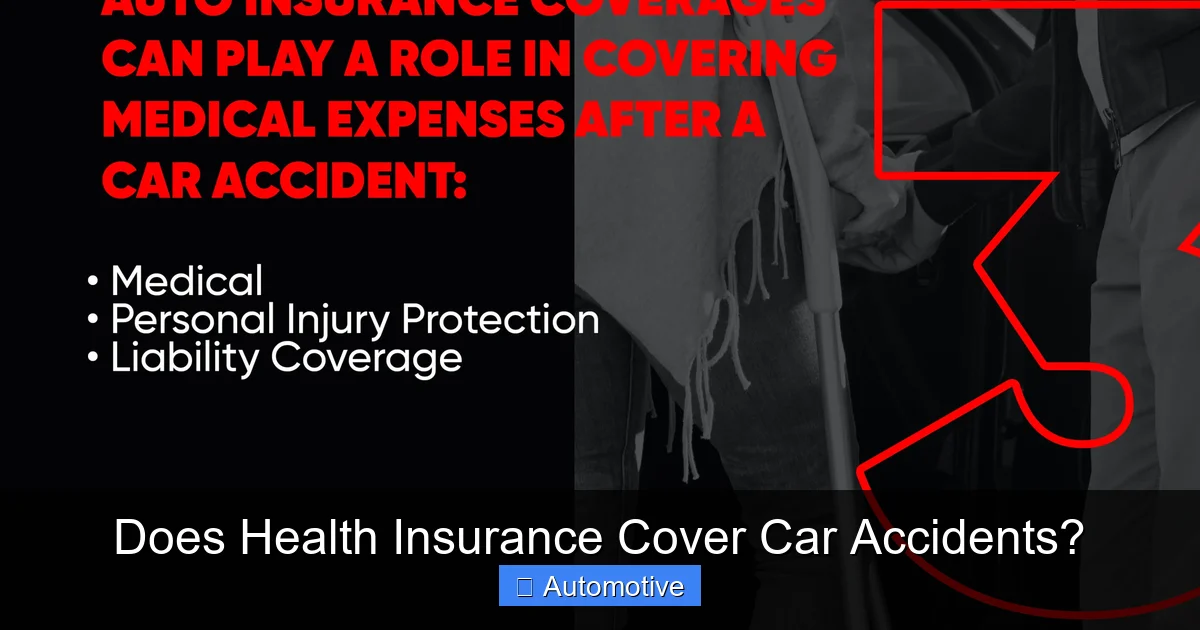
When you’re injured in a car accident, your first priority should be getting medical care. But behind the scenes, a complex coordination of insurance policies kicks into gear. Most health insurance plans—including those offered through employers, the Health Insurance Marketplace, or government programs like Medicare and Medicaid—will cover medically necessary treatment for injuries sustained in a car crash.
However, health insurers often include clauses that require you to use other available coverage first. This is known as “coordination of benefits.” For example, if you have auto insurance with MedPay or PIP, your health insurer may expect you to file a claim with your car insurance provider before submitting bills to them. This helps prevent double-dipping and ensures that each insurer pays its fair share.
Let’s say you’re rear-ended at a stoplight and suffer a concussion and neck strain. You go to the emergency room, get imaging, and follow up with a neurologist and physical therapist. Your health insurance will likely cover these services—but only after any applicable auto insurance benefits are used. If your auto policy has a $5,000 MedPay limit and your ER visit costs $3,000, that $3,000 may be paid by your auto insurer. Your health insurance would then cover the remaining treatment, minus your deductible and copays.
It’s also important to note that health insurance typically doesn’t cover non-medical expenses related to an accident, such as lost wages, pain and suffering, or vehicle damage. Those are usually handled through auto insurance liability claims or personal injury lawsuits.
Types of Health Insurance That May Cover Accident Injuries
Not all health plans are created equal when it comes to car accident coverage. Here’s how different types of health insurance typically handle post-accident medical bills:
– **Employer-Sponsored Plans:** These are the most common and usually offer comprehensive coverage. They’ll pay for accident-related care after coordination with auto insurance.
– **Marketplace (ACA) Plans:** Plans purchased through Healthcare.gov or state exchanges must cover essential health benefits, including emergency and rehabilitative services—so they’ll cover accident injuries.
– **Medicare:** Medicare Part A and Part B cover hospital and medical services after an accident. However, Medicare is generally a “payer of last resort” for auto accidents and may require reimbursement if another insurer pays.
– **Medicaid:** As a government assistance program, Medicaid often pays only after all other sources (like auto insurance) have been exhausted.
– **Short-Term or Limited Plans:** These plans may exclude or limit coverage for injuries from accidents, so read the fine print carefully.
Always check your Summary of Benefits and Coverage (SBC) or call your insurer to confirm how your plan handles car accident claims.
The Role of Auto Insurance in Covering Medical Costs

Visual guide about Does Health Insurance Cover Car Accidents?
Image source: apollo-insurance.com
While health insurance plays a key role, auto insurance is often the first line of defense when it comes to paying for medical expenses after a car accident. Two primary types of auto coverage are designed specifically for this purpose: Medical Payments (MedPay) and Personal Injury Protection (PIP).
MedPay is optional in most states but highly recommended. It covers medical expenses for you and your passengers, regardless of who caused the accident. It typically pays for hospital bills, doctor visits, X-rays, surgery, and even ambulance fees. Limits vary by policy—common amounts are $1,000, $5,000, or $10,000—and it’s usually relatively inexpensive to add.
PIP, on the other hand, is required in “no-fault” states like Florida, Michigan, and New York. It covers not only medical expenses but also lost wages, rehabilitation, and sometimes even funeral costs. PIP is broader than MedPay and can be a lifesaver if you’re unable to work after an accident.
Here’s a real-world example: Imagine you’re driving in Michigan (a no-fault state) and get T-boned by another driver. You suffer a broken arm and miss two weeks of work. Your PIP coverage would pay for your medical treatment and a portion of your lost income—up to your policy limits—without needing to prove fault. Your health insurance might still be involved if your medical bills exceed the PIP limit, but PIP handles the initial costs.
In contrast, in a “fault-based” state like California or Texas, the at-fault driver’s liability insurance is supposed to pay for your medical expenses. But if their coverage is insufficient or they’re uninsured, your own MedPay or PIP (if you have it) can fill the gap.
No-Fault vs. Fault-Based States: What’s the Difference?
The rules around car accident insurance vary significantly depending on where you live. In no-fault states, each driver’s own insurance pays for their medical expenses, regardless of who caused the crash. This system is designed to reduce lawsuits and speed up payments. However, you may still be able to sue the at-fault driver if your injuries meet a certain threshold (like significant disfigurement or permanent disability).
In fault-based (or “tort”) states, the driver who caused the accident is financially responsible for the other party’s injuries and damages. Their liability insurance should cover your medical bills—but only after a claim is filed and liability is established. This process can take time, and if the at-fault driver is underinsured or uninsured, you could be left with unpaid bills.
This is why having your own MedPay or PIP coverage is so valuable, even in fault-based states. It ensures you have immediate access to funds for medical care while liability is being determined.
Coordination of Benefits: Who Pays First?
Visual guide about Does Health Insurance Cover Car Accidents?
Image source: apollo-insurance.com
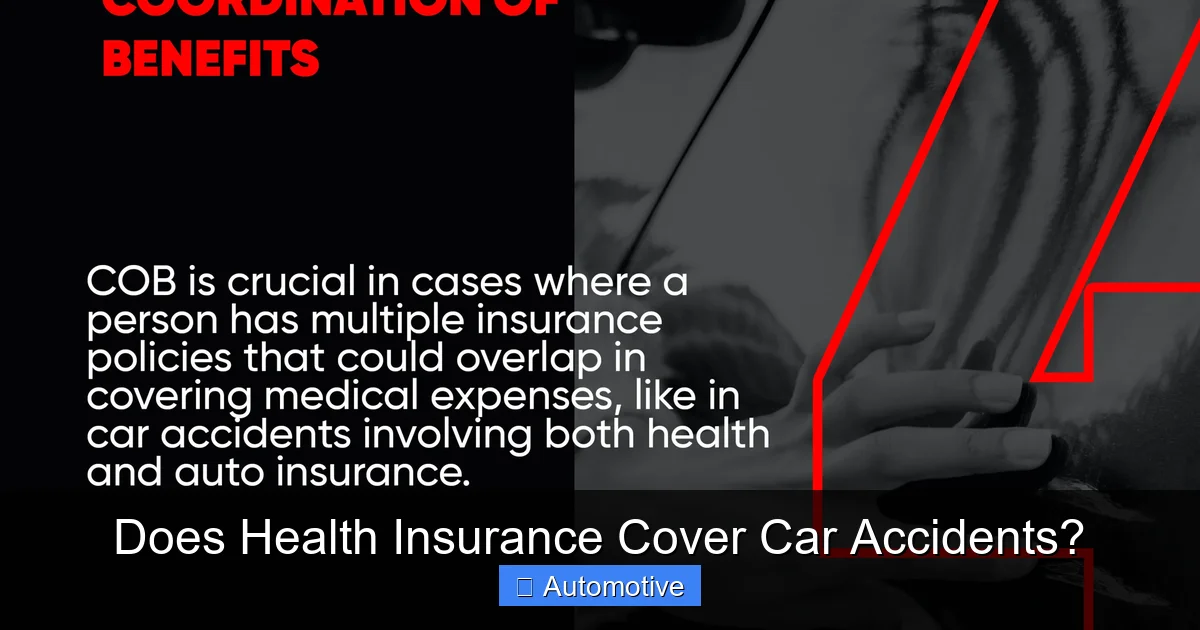
One of the most confusing aspects of car accident insurance is figuring out which policy pays first. This is where “coordination of benefits” comes into play. Most health insurance plans include language stating they are not the primary payer for injuries covered by auto insurance.
For example, if you have both health insurance and MedPay, your auto insurer will typically pay first up to the MedPay limit. Then, your health insurance may cover the remaining eligible expenses—after you meet your deductible.
But what if the at-fault driver’s insurance ends up paying? In that case, your health insurer may have a right to “subrogate”—meaning they can seek reimbursement from the at-fault party’s settlement for the money they paid out. This protects the insurer from losing money and ensures the responsible party bears the cost.
Let’s say your health insurance paid $8,000 for your treatment, but later you receive a $15,000 settlement from the at-fault driver’s insurance. Your health insurer may claim a portion of that $15,000 to recoup their $8,000 payment. The exact amount depends on your policy and state laws, but it’s a common practice.
What Happens If You Don’t Have Auto Medical Coverage?
If you don’t have MedPay or PIP, your health insurance will likely become the primary payer for your medical bills after an accident. This isn’t necessarily a bad thing—your health plan will still cover you—but it can lead to higher out-of-pocket costs.
Without auto medical coverage, you’ll need to meet your health insurance deductible before the plan starts paying. If your deductible is $2,000 and your ER visit costs $3,500, you’ll pay the first $2,000, and your insurer covers the remaining $1,500 (minus any copays or coinsurance).
Additionally, if the at-fault driver’s insurance eventually pays, your health insurer may still seek reimbursement—even if they were the first to pay. This means you could end up paying your deductible and then having part of your settlement clawed back by your health insurer.
To avoid this, consider adding MedPay or PIP to your auto policy. It’s usually affordable—often $10–$20 per year for $5,000 in coverage—and can save you thousands in the long run.
Out-of-Pocket Costs and What’s Not Covered
Even with both health and auto insurance, you may still face out-of-pocket expenses after a car accident. These can include:
– **Deductibles:** The amount you pay before your health insurance starts covering costs.
– **Copays and Coinsurance:** Fixed fees or percentage-based costs for services like doctor visits or MRIs.
– **Non-Covered Services:** Some treatments, like experimental therapies or out-of-network care, may not be fully covered.
– **Lost Wages:** Health insurance doesn’t pay for time off work—only PIP or disability insurance might.
– **Pain and Suffering:** These intangible damages are not covered by health insurance and must be pursued through a liability claim or lawsuit.
For example, if you need ongoing physical therapy for six months, your health insurance may cover 80% of the cost after your deductible. But you’ll still pay 20% out of pocket—which can add up quickly. And if your therapist is out-of-network, your costs could be even higher.
It’s also worth noting that health insurance typically won’t cover vehicle repairs, rental cars, or other property damage. Those are handled entirely through auto insurance claims.
Tips to Minimize Your Financial Risk
– **Review both policies annually:** Make sure your health and auto insurance coverage levels are adequate.
– **Add MedPay or PIP:** Even if it’s not required, it’s a smart investment.
– **Choose in-network providers:** This reduces out-of-pocket costs and avoids surprise bills.
– **Keep detailed records:** Save all medical bills, receipts, and correspondence with insurers.
– **Don’t delay treatment:** Early care improves outcomes and strengthens insurance claims.
When to Seek Legal Help
Most minor car accidents can be resolved through insurance claims without legal action. But if you’ve suffered serious injuries, face significant medical bills, or believe the other driver was clearly at fault, consulting a personal injury attorney may be wise.
An attorney can help you navigate complex insurance rules, negotiate with insurers, and pursue a fair settlement—especially if your health insurer is trying to recover money from your claim. They can also advise you on whether to accept a settlement offer or take the case to court.
Keep in mind that many personal injury lawyers work on a contingency basis, meaning they only get paid if you win your case. This makes legal help accessible even if you’re facing financial strain after an accident.
Conclusion
So, does health insurance cover car accidents? The answer is a resounding yes—but it’s rarely the whole story. Your health plan will likely pay for medical treatment after a crash, but only after other insurance sources, like auto MedPay or PIP, have been used. Understanding how these policies work together can help you avoid unexpected bills and ensure you get the care you need.
The key is preparation. Review your health and auto insurance policies regularly, consider adding medical coverage to your car insurance, and always seek prompt medical attention after an accident. Keep detailed records, communicate clearly with your insurers, and don’t hesitate to seek legal advice if needed.
By taking these steps, you can protect your health, your finances, and your peace of mind—no matter what the road throws your way.
Frequently Asked Questions
Does health insurance cover car accident injuries if I’m not at fault?
Yes, your health insurance will typically cover your medical expenses regardless of fault. However, the at-fault driver’s liability insurance may eventually reimburse your health insurer if you receive a settlement.
Will my health insurance pay if the other driver has no insurance?
Yes, your health insurance will likely cover your treatment. You may also be able to file a claim under your own uninsured motorist coverage if you have it.
Can I use both health and auto insurance for the same injury?
Yes, but coordination of benefits rules usually require auto insurance (like MedPay or PIP) to pay first. Your health insurance covers remaining costs after those limits are reached.
Do I have to pay my health insurance deductible after a car accident?
Possibly. If your auto medical coverage doesn’t fully cover your bills, you may need to meet your health insurance deductible before it starts paying.
What if my health insurance denies my car accident claim?
Contact your insurer to understand the reason. Denials may occur if auto insurance was expected to pay first or if treatment was deemed not medically necessary. You can appeal the decision.
Should I tell my health insurer about the car accident?
Yes. Most health plans require you to disclose accident-related injuries so they can coordinate benefits properly and protect their right to reimbursement if another party pays.