
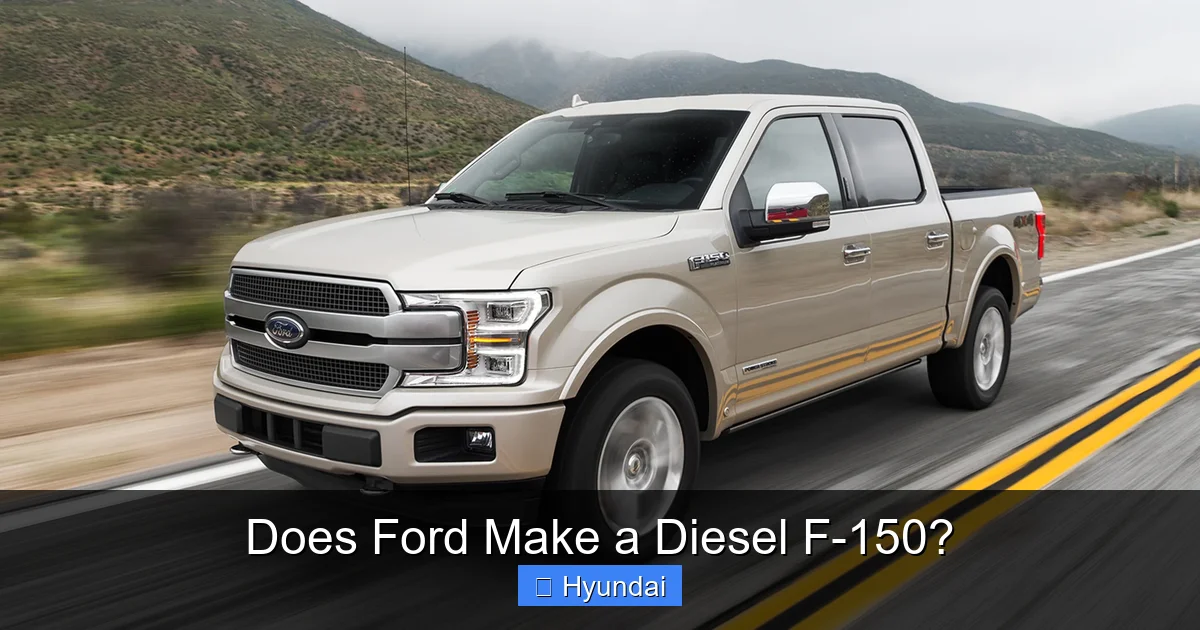
Does Ford Make a Diesel F-150?

Contents
- 1 Key Takeaways
- 2 📑 Table of Contents
- 3 The Glorious, Yet Brief, Era of the Diesel F-150
- 4 The Current Reality: No Diesel in the 2024 F-150
- 5 The “Why”: Understanding Ford’s Decision
- 6 Your Ford Diesel Truck Alternatives
- 7 The Future: Will a Diesel F-150 Return?
- 8 Practical Advice: What Should You Do?
- 9 Conclusion
- 10 Frequently Asked Questions

Car Tissue Holder

Side Mirror Rain Guard

Engine Flush Cleaner

Dashboard Polish
Ford does not currently produce a diesel-powered F-150. The last diesel F-150 was available from 2016 to 2021 with a 3.0L Power Stroke V6 engine. Today, if you want a new Ford diesel truck, you must step up to the Super Duty line, starting with the F-250. Used diesel F-150s are available, but they come with specific ownership considerations.
It’s a question we hear all the time from truck shoppers: “Does Ford make a diesel F-150?” The answer is a bit of a rollercoaster. For a brief, shining moment, the answer was “yes.” Today, the answer is a definitive “no” for new models. But the story is much richer than a simple yes or no. It’s a tale of engineering brilliance, shifting market forces, and the tough choices automakers make. So, let’s pop the hood and dive into the complete history and future of the diesel-powered Ford F-150.
Key Takeaways
- No Current Diesel F-150: Ford’s 2024 F-150 lineup exclusively features gasoline and hybrid powertrains; the diesel option was discontinued after the 2021 model year.
- A Recent History: A diesel F-150 did exist. It was equipped with a turbocharged 3.0L Power Stroke V6 diesel engine from 2016 through 2021.
- Discontinuation Reasons: Ford dropped the diesel F-150 due to high development/calibration costs, stringent emissions regulations, and relatively low consumer demand compared to its gasoline counterparts.
- Alternative is the Super Duty: For a new Ford diesel truck, you must purchase an F-250, F-350, or F-450, which offer the more powerful 6.7L Power Stroke V8 diesel.
- Used Market is Active: Pre-owned diesel F-150s from the 2016-2021 model years are available and can be excellent value, but require thorough pre-purchase inspections for specific diesel-related components.
- Future Uncertain: While Ford is heavily investing in electric trucks (F-150 Lightning), a return of a diesel F-150 is unlikely in the near term unless market demand for half-ton diesel trucks surges dramatically.
- Consider Your Needs: For most half-ton truck duties, modern gasoline engines and hybrids offer superior value and lower operating costs. A diesel is typically only justified for extreme, constant towing or hauling.
📑 Table of Contents
The Glorious, Yet Brief, Era of the Diesel F-150
Let’s start with the good news for diesel enthusiasts: Ford absolutely did make a diesel F-150. It wasn’t a rumor or a special fleet-only model. It was a full-production, widely available option for retail customers. This wasn’t Ford’s first dip into diesel half-ton waters; they experimented with a diesel V8 in the early 2000s. But the modern diesel F-150 story begins in earnest for the 2016 model year and runs through 2021.
The Star of the Show: The 3.0L Power Stroke V6
Under the hood of these special trucks lived a marvel of compact power: the 3.0-liter turbo-diesel V6, part of Ford’s legendary Power Stroke family. This wasn’t a detuned Super Duty engine. It was a unique, all-aluminum V6 designed specifically for the F-150’s lighter-duty frame. Its specs were impressive:
- Horsepower: 250 hp
- Torque: A massive 440 lb-ft (later increased to 470 lb-ft for 2018+)
- Transmission: Paired exclusively with the 10-speed automatic transmission.
What did that mean in the real world? A diesel F-150 could tow up to 11,440 pounds (when properly configured) and achieve remarkable fuel economy for a heavy hauler. Owners frequently reported 25+ mpg on the highway during unloaded driving. The engine was smooth, quiet (for a diesel), and delivered that iconic, low-end grunt that made merging and climbing hills effortless. It was the perfect powertrain for someone who regularly towed a large boat or camper but didn’t want the size, cost, or fuel consumption penalty of a Super Duty.
Who Was This Truck For?
The diesel F-150 targeted a specific buyer. This was the contractor with a heavy trailer, the family with a fifth-wheel, the boat enthusiast, and the rural homeowner who needed serious pulling power but preferred the maneuverability and parking ease of a half-ton. It was about maximizing capability within the F-150’s size class. For these users, the diesel’s superior torque and potential for better fuel economy under load were a godsend. However, the upfront cost was significant—a $4,000-$5,000 premium over the top gasoline V8 engine. This price gap was a key factor in its eventual fate.
The Current Reality: No Diesel in the 2024 F-150
If you walk onto a Ford dealer’s lot today and ask for a new diesel F-150, you’ll be politely directed toward the Super Duty section. The current-generation F-14 (2021+) and the refreshed 2024 models simply do not offer a diesel option. The powertrain lineup is robust but exclusively gasoline and hybrid:

Visual guide about Does Ford Make a Diesel F-150?
Image source: storage.googleapis.com
- Standard 3.3L V6: The workhorse base engine.
- 2.7L EcoBoost V6: A turbocharged favorite, powerful and efficient.
- 5.0L Coyote V8: The iconic naturally aspirated V8, beloved for its sound and reliability.
- 3.5L EcoBoost V6: The high-output, max-towing champion.
- PowerBoost Hybrid: A 3.5L V6 paired with an electric motor, offering the best EPA-rated fuel economy in the lineup.
This decision wasn’t made on a whim. Ford’s product planners crunched years of sales data, cost analyses, and future regulatory forecasts. The conclusion was clear: the diesel F-150, while beloved by its niche owners, did not sell in sufficient volume to justify the immense investment required to redesign and re-engineer it for the new generation of trucks. The resources were better allocated elsewhere, primarily toward the electrified F-150 Lightning and the ongoing development of the Super Duty line.
The “Why”: Understanding Ford’s Decision
Why would Ford walk away from a seemingly successful product? It’s a classic business case of “good” not being “good enough.” Several converging factors sealed the diesel F-150’s fate.
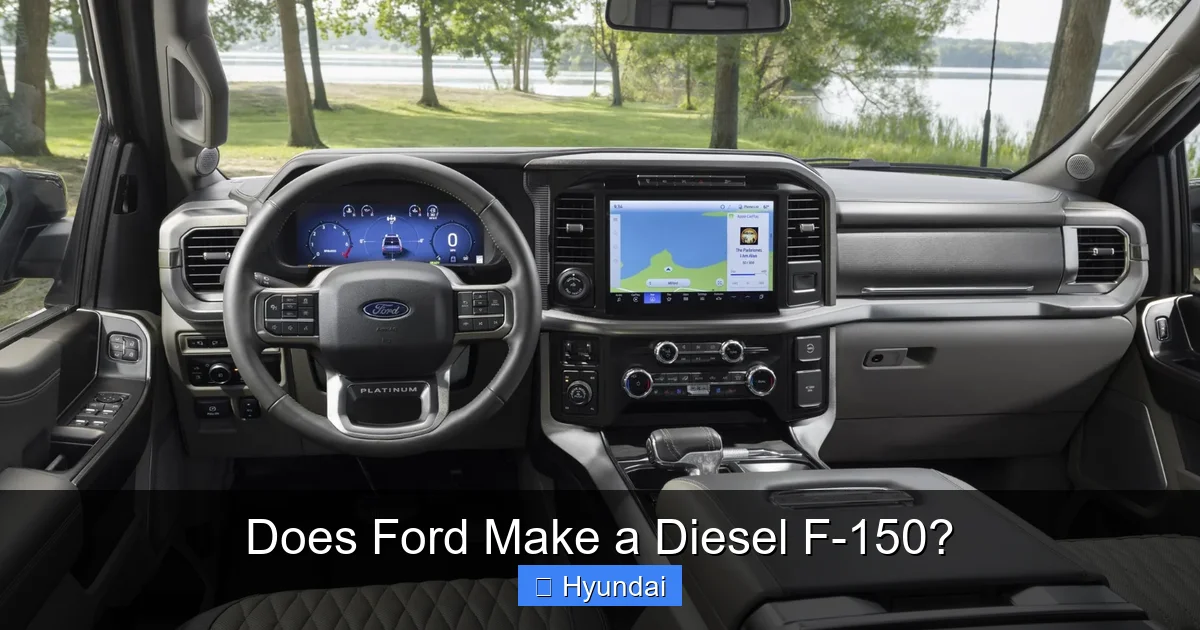
Visual guide about Does Ford Make a Diesel F-150?
Image source: fordusamodel.com
1. The Cost of Doing Business (Diesel Business)
Developing a modern diesel engine is astronomically expensive. The costs aren’t just in the engine block and turbocharger. They include:
- Advanced Exhaust After-Treatment: To meet stringent U.S. EPA emissions standards (Tier 3), diesels need complex systems like Selective Catalytic Reduction (SCR) with diesel exhaust fluid (DEF), diesel particulate filters (DPF), and exhaust gas recirculation (EGR). These systems are costly to engineer, package in the engine bay, and maintain.
- Transmission Calibration: The 10-speed transmission needed unique software to manage the diesel’s torque curve, adding to development time and cost.
- Warranty & Support: Diesel systems require specific dealer training, special tools, and parts inventory. The warranty claims on complex emissions systems can be high.
For a vehicle that represented a small fraction of F-150 sales, the return on this investment was simply not there. Ford decided those R&D dollars were better spent on technologies with broader appeal, like hybridization and full electrification.
2. The Emissions Elephant in the Room
Emissions regulations are the single biggest challenge for diesel passenger vehicles. The systems that keep a diesel clean (the SCR, DPF, etc.) are not only expensive but also add complexity for owners. There’s the hassle of DEF refilling, the risk of a DPF clogging from short-trip driving, and the potential for costly repairs if any of these systems fail. For the average F-150 buyer who might tow a few times a month, this complexity was a turn-off. Gasoline and hybrid engines face far fewer daily ownership hurdles.
3. The Sales Math Didn’t Add Up
Let’s be honest: the vast majority of F-150 buyers do not need a diesel. The 5.0L V8 and 3.5L EcoBoost are incredibly capable. The new PowerBoost hybrid offers fantastic fuel economy without the diesel premium. Ford sold around 900,000 F-150s annually in its best years. The diesel version typically accounted for less than 10% of that total. When you’re selling 900,000 trucks, moving 80,000 diesels is great, but the cost to develop and support that engine for a single generation of a single model was prohibitive. Ford realized they could sell more total trucks and make more profit by focusing on the powertrains that appealed to the 90%.
Your Ford Diesel Truck Alternatives
So, you’ve set your heart on a new Ford diesel. Where does that leave you? You have one clear path: the Super Duty lineup.

Visual guide about Does Ford Make a Diesel F-150?
Image source: vehicle-images.dealerinspire.com
The Super Duty: The True Home of Ford Diesel
The F-250, F-350, and F-450 are Ford’s heavy-duty workhorses, and they are exclusively available with the magnificent 6.7L Power Stroke V8 diesel (or a gasoline V8). This is a completely different beast from the old F-150 diesel—larger, more powerful, and built for serious, sustained work.
- Power: Up to 500 hp and 1,200 lb-ft of torque in the highest tuning.
- Capability: Max towing and payload numbers that dwarf the F-150.
- Robustness: Heavier-duty frame, axles, brakes, and cooling systems designed for constant heavy loads.
If your towing needs regularly exceed 12,000 pounds or you’re hauling massive payloads, the Super Duty is not just an alternative; it’s the correct tool for the job. The trade-off is size, cost, and (generally) lower fuel economy around town. However, the 6.7L Power Stroke is a proven, durable engine with a massive enthusiast and commercial following.
Pro Tip: If you’re looking at a Super Duty for frequent heavy towing, consider upgrading the suspension. Our guide to the best shocks for Ford F-250 diesel can help you manage the extra stress and improve ride quality whether loaded or empty.
The Used Diesel F-150 Market
For those who love the size and daily drivability of the F-150 but crave diesel torque, the used market is your playground. The 2016-2021 models with the 3.0L Power Stroke are plentiful and have depreciated to attractive price points.
What to look for:
- Service History: A full, consistent service record is non-negotiable. Look for timely oil changes (using the correct CJ-4 or FA-4 oil) and DEF system maintenance.
- Emissions System Health: Have a mechanic perform a thorough diagnostic scan. Look for any stored codes related to the DPF, SCR, or EGR systems. A deleted or tampered-with emissions system is illegal in all 50 states and will cause you major headaches.
- Turbocharger & Fuel System: These are the most expensive components. Listen for excessive turbo whistle or whining, and check for any signs of fuel leaks.
- Transmission: The 10-speed is generally robust, but ensure it shifts smoothly, especially when cold. Any harsh engagement or slipping needs immediate attention.
A well-maintained used diesel F-150 can be a fantastic truck. However, you must budget for potentially higher maintenance and repair costs compared to a gasoline counterpart. That $4,000 premium you saved on purchase might reappear in a $3,000 turbo repair at 120,000 miles.
The Future: Will a Diesel F-150 Return?
This is the million-dollar question. The short answer is: probably not anytime soon. Ford’s current product and technology roadmap is laser-focused on two paths for the F-150: continued refinement of its excellent gasoline/hybrid powertrains and the aggressive expansion of its all-electric F-150 Lightning.
The Electric Imperative
The F-150 Lightning is not a niche product for Ford; it’s a flagship for their entire EV strategy. It offers staggering performance (0-60 mph in under 4 seconds), massive torque (775 lb-ft), and the ability to power your home during an outage. For many truck buyers, especially those in urban and suburban areas, the Lightning’s instant torque, low “fueling” cost (electricity), and reduced maintenance are a far more compelling proposition than a diesel’s complexity. Ford is investing billions in EV and battery tech. That capital isn’t going toward reviving a low-volume diesel program for a half-ton truck.
A Diesel Niche?
The only scenario where a diesel F-150 could return is if a competitor (like Ram, which also discontinued its 1500 diesel) successfully re-enters the segment and creates a surge in demand that Ford cannot ignore. Or, if there’s a dramatic and unexpected shift in consumer preferences back toward diesel for half-tons. Currently, all industry trends point toward electrification. So, while we never say never in the auto industry, don’t hold your breath. The diesel F-150’s chapter is likely closed for good.
Practical Advice: What Should You Do?
If you’re reading this, you’re likely in the research phase. Here’s our straightforward advice based on your needs.
If You Need a New Truck Now and Want Diesel
Your only new Ford option is the Super Duty (F-250+). Test drive one. Sit in it. Drive it around your neighborhood and, if possible, tow something with it. You’ll quickly feel the size and weight difference. Is that what you need? If your max trailer weight is under 10,000 lbs, you’ll likely find the modern F-150 with a 3.5L EcoBoost or PowerBoost hybrid is more than sufficient and significantly more pleasant to drive daily.
If You Love the F-150 Size and Want Diesel Torque
Target a used 2018-2021 model with the 3.0L Power Stroke. These are the most refined versions. Get a pre-purchase inspection from a mechanic who specializes in diesels—not just any garage. Budget for the potential for DEF system issues or turbo repairs down the line. Also, remember that diesel fuel is often more expensive per gallon than regular unleaded, and you’re locked into buying DEF as well. Crunch the total cost of ownership numbers versus a comparable gasoline or hybrid F-150.
If Towing is Your Primary Concern
Don’t automatically default to diesel. The 3.5L EcoBoost in the modern F-150 is a tow monster. Its twin turbos give it a very broad, flat torque curve. Pair it with the Max Trailer Tow Package, and you can tow over 14,000 pounds. For many, this achieves 90% of the diesel’s utility without the complexity. For the ultimate in fuel-efficient towing, the PowerBoost hybrid is also a standout, often beating the old diesel F-150’s real-world mpg when towing.
And speaking of towing, your choice of tires is critical for safety and performance. For those who tow in winter conditions, investing in a set of dedicated winter tires is one of the best safety upgrades you can make. Check out our recommendations for the best winter tires for Ford F-150 4×4 to ensure you have maximum traction in snow and ice, whether your truck is gas, hybrid, or diesel-powered.
If You’re Drawn to Diesel for Fuel Economy
Re-evaluate this. The old diesel F-150’s highway mpg was its strong suit. However, when you factor in the higher cost of diesel fuel (often $0.50-$1.00 more per gallon than regular gas) and the diesel premium paid at purchase, the “payback period” for better fuel economy became very long—often longer than most owners kept the truck. The PowerBoost hybrid F-150 now offers EPA ratings that rival or beat the old diesel, without the DEF hassle and with regular gasoline as fuel.
Conclusion
So, does Ford make a diesel F-150? The definitive answer for new trucks is no. The brief, brilliant run of the 3.0L Power Stroke V6 from 2016-2021 remains a fascinating “what if” in automotive history—a perfectly capable, efficient half-ton diesel that arrived just as the industry’s tides were turning toward hybridization and electrification. Its discontinuation was a logical, if disappointing for some, business decision by Ford.
Your path forward is clear. If you want a new Ford diesel truck, you must move up to the Super Duty. If you love the F-150’s size and want a diesel, the used market for 2016-2021 models is your best bet, but proceed with a knowledgeable mechanic by your side. For the vast majority of truck buyers, the incredible lineup of gasoline and hybrid engines in the current F-150 offers a more sensible, cost-effective, and hassle-free ownership experience. The future of the F-150 is electric, and it’s arriving faster than many expected. The diesel F-150’s legacy is secure, but its chapter is closed.
Frequently Asked Questions
Was there ever a diesel engine option for the Ford F-150?
Yes, Ford offered a diesel F-150 from the 2016 model year through 2021. It was powered by a 3.0-liter turbo-diesel V6 engine called the Power Stroke, producing up to 470 lb-ft of torque.
Why did Ford discontinue the diesel F-150?
Ford discontinued the diesel F-150 primarily due to the high cost of developing and certifying the engine for the new truck generation, low sales volume relative to gasoline models, and the complexity of modern diesel emissions systems that deterred many buyers.
What diesel engine was in the old F-150?
The diesel Ford F-150 used a unique 3.0L Power Stroke V6 turbo-diesel engine. It was not a de-tuned version of the larger 6.7L V8 found in Super Duty trucks; it was a distinct engine designed for the F-150’s lighter-duty application.
Can I buy a brand new diesel F-150 from a Ford dealer today?
No. Ford does not offer a diesel engine in the 2024 F-150. The current model year is only available with gasoline V6 and V8 engines, as well as the PowerBoost hybrid system. To get a new Ford diesel, you must purchase an F-250, F-350, or F-450 Super Duty.
Is buying a used diesel F-150 a good idea?
It can be, if you find a well-maintained example with a complete service history. However, you must be prepared for potentially higher maintenance and repair costs associated with the diesel engine and its complex emissions systems (DEF, DPF). A thorough pre-purchase inspection by a diesel specialist is essential.
What is the best Ford truck for towing if I want a diesel?
For maximum towing capacity and heavy-duty durability, the Ford F-250 Super Duty with the 6.7L Power Stroke V8 diesel is the direct and superior choice over the old F-150 diesel. It offers significantly higher payload and tow ratings, built on a more robust platform designed for constant heavy loads. For lighter towing within the F-150’s range, the 3.5L EcoBoost or PowerBoost hybrid engines are excellent and more efficient gas-powered alternatives.


