
Does Fiat Own Ferrari?

Fiat once held a controlling stake in Ferrari, but the two brands are no longer under the same corporate umbrella. Today, Ferrari operates as an independent, publicly traded company with a rich legacy rooted in racing and luxury performance.
Key Takeaways
- Fiat once owned a majority stake in Ferrari: From 1969 to 2014, Fiat held up to 90% ownership of Ferrari, guiding its growth into a global luxury brand.
- Ferrari became fully independent in 2016: After a spin-off from Fiat Chrysler Automobiles (FCA), Ferrari launched as a standalone company on the New York Stock Exchange.
- Shared heritage, not current ownership: While both brands originated in Italy and have deep motorsport roots, they now operate separately with distinct business models.
- Enzo Ferrari founded the brand independently: The company began in 1947, long before Fiat’s involvement, with a focus on racing and high-performance road cars.
- FCA retained a small stake post-spin-off: Even after the separation, FCA (now Stellantis) maintained a minor ownership share for a transitional period.
- Ferrari’s brand identity remains intact: Despite past ties, Ferrari has always preserved its prestige, exclusivity, and performance-driven reputation.
- Today’s Ferrari is a luxury icon: The brand focuses on limited production, cutting-edge engineering, and a strong emotional connection with enthusiasts worldwide.
📑 Table of Contents
- Does Fiat Own Ferrari? The Full Story
- The Origins of Ferrari: Born from Racing Passion
- Fiat’s Entry: A Strategic Partnership
- The Road to Independence: Ferrari’s Spin-Off
- Ferrari Today: A Global Luxury Powerhouse
- The Relationship Between Fiat and Ferrari Today
- Why the Confusion Exists
- Conclusion: Two Icons, One Legacy
Does Fiat Own Ferrari? The Full Story
If you’ve ever admired a sleek red Ferrari cruising down the highway or watched one dominate a Formula 1 race, you might have wondered about its origins. Italy is famous for its automotive excellence, and two names stand out: Fiat and Ferrari. Both are Italian, both have racing in their DNA, and both have shaped the global car industry. But does Fiat own Ferrari? The short answer is no—not anymore. However, the relationship between these two automotive giants is complex, layered with decades of collaboration, ownership changes, and strategic decisions.
To truly understand whether Fiat owns Ferrari, we need to go back in time. The story begins not with Fiat, but with a man named Enzo Ferrari. In 1947, Enzo founded Scuderia Ferrari, initially as a racing team, before launching the first Ferrari road car. The brand quickly became synonymous with speed, passion, and exclusivity. Meanwhile, Fiat, founded in 1899, grew into Italy’s largest automaker, producing everything from compact city cars to commercial vehicles. For years, the two companies operated independently, each carving out its own niche in the automotive world.
But in the late 1960s, financial pressures forced Enzo Ferrari to seek outside investment. That’s when Fiat stepped in. In 1969, Fiat acquired a 50% stake in Ferrari, and by 1988, that stake had grown to 90%. This partnership helped stabilize Ferrari financially and allowed it to expand production and invest in new technologies. However, Enzo Ferrari retained control over the racing division, ensuring that Scuderia Ferrari remained independent and focused on motorsport. This delicate balance between corporate support and brand autonomy defined the relationship for decades.
Fast forward to the 21st century, and the landscape began to shift. As Fiat evolved into Fiat Chrysler Automobiles (FCA), and later merged with PSA Group to form Stellantis, the parent company decided to spin off Ferrari as an independent entity. In 2016, Ferrari became a standalone company, trading on the New York Stock Exchange under the ticker symbol RACE. Today, Ferrari operates independently, with its own leadership, strategy, and brand identity. So while Fiat once owned Ferrari, the two are now separate companies with shared history but distinct futures.
The Origins of Ferrari: Born from Racing Passion
Visual guide about Does Fiat Own Ferrari?
Image source: experienceferrari.com
To understand the relationship between Fiat and Ferrari, it’s essential to start at the beginning. Ferrari wasn’t born as a luxury car brand—it was born from racing. Enzo Ferrari, a former Alfa Romeo racing driver, founded Scuderia Ferrari in 1929 as a team to support Alfa Romeo’s racing efforts. The name “Scuderia” means “stable” in Italian, reflecting the team’s focus on horses—both literal and metaphorical, as in racehorses.
For nearly two decades, Scuderia Ferrari operated as a racing team, not a car manufacturer. It wasn’t until after World War II that Enzo decided to build his own cars. In 1947, the first Ferrari road car, the 125 S, rolled out of the Maranello factory. Powered by a 1.5-liter V12 engine, it marked the birth of a legend. The car was designed for performance, with a focus on lightweight construction, aerodynamic efficiency, and raw power.
From the start, Ferrari was different. While most automakers focused on mass production and affordability, Ferrari embraced exclusivity. Each car was hand-built, often customized to the buyer’s specifications. The brand’s racing heritage was front and center—Ferrari didn’t just make fast cars; it made cars that won races. This philosophy attracted a loyal following of enthusiasts, collectors, and professional drivers.
Enzo Ferrari’s Vision and Independence
Enzo Ferrari was a man of strong will and deep passion. He believed that racing was the soul of the automobile, and he built his company around that principle. Even as Ferrari began producing road cars, the racing team remained the heart of the operation. Enzo famously said, “Aerodynamics are for people who can’t build engines,” emphasizing his belief in raw power over sleek design.
This independence was crucial. Enzo resisted outside influence, especially from larger automakers. He wanted Ferrari to remain true to its racing roots, not become just another luxury brand. That’s why, when financial difficulties arose in the 1960s, Enzo was cautious about seeking investors. He needed capital to expand production and develop new models, but he didn’t want to lose control.
The 125 S and the Birth of a Legend
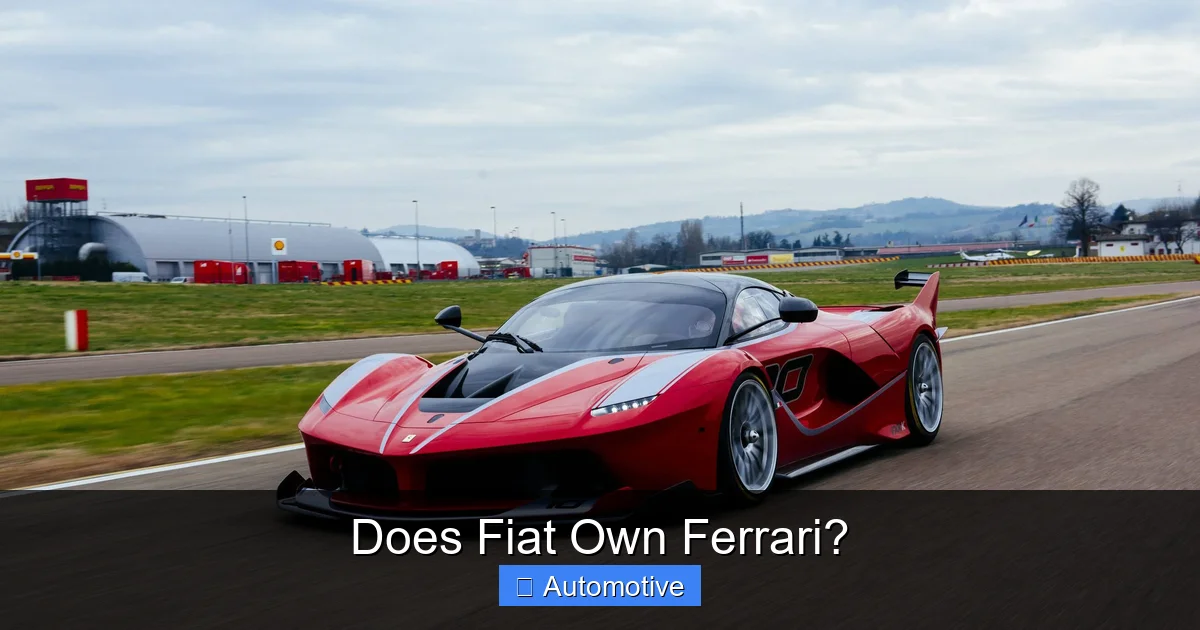
The 125 S was more than just a car—it was a statement. With its V12 engine, lightweight body, and aggressive stance, it embodied everything Ferrari stood for. The car debuted at the Piacenza Circuit in May 1947 and immediately turned heads. It wasn’t the fastest car on the track, but it was reliable, well-balanced, and built with precision.
Only two 125 S models were ever made, but they laid the foundation for everything that followed. The success of the 125 S led to the development of the 166 Inter, Ferrari’s first true grand tourer. These early models were hand-built in small numbers, often for private clients or racing teams. The exclusivity and craftsmanship set Ferrari apart from mass-market brands like Fiat.
Fiat’s Entry: A Strategic Partnership
Visual guide about Does Fiat Own Ferrari?
Image source: experienceferrari.com
By the late 1960s, Ferrari was facing financial challenges. The cost of developing new engines, expanding production, and competing in Formula 1 was immense. Enzo Ferrari knew he needed support, but he was reluctant to give up control. That’s when Fiat entered the picture.
In 1969, Fiat acquired a 50% stake in Ferrari. The deal was structured to preserve Enzo’s authority over the racing division while giving Fiat influence over the road car business. This arrangement allowed Ferrari to access Fiat’s resources, manufacturing expertise, and distribution network. It also provided stability during a turbulent period in the automotive industry.
Why Fiat Invested in Ferrari
Fiat’s decision to invest in Ferrari wasn’t just about money—it was about prestige. At the time, Ferrari was already a global icon, synonymous with speed, luxury, and Italian craftsmanship. By partnering with Ferrari, Fiat could enhance its own brand image and tap into the high-end market. It was a smart strategic move, blending Fiat’s mass-market strength with Ferrari’s elite appeal.
Additionally, Fiat saw potential in Ferrari’s engineering expertise. The V12 engine, advanced aerodynamics, and racing technology could benefit Fiat’s own performance models. While the two brands operated separately, there was some technology sharing, especially in areas like engine development and materials science.
The 1988 Expansion: Fiat Takes Majority Control
Over the next two decades, the relationship between Fiat and Ferrari deepened. In 1988, shortly before Enzo Ferrari’s death, Fiat increased its stake to 90%. This gave Fiat near-total control over the company’s operations, though Enzo retained symbolic influence until his passing.
With Fiat’s backing, Ferrari was able to invest in new models, expand its factory in Maranello, and continue its dominance in Formula 1. The 1980s and 1990s saw the launch of iconic models like the Testarossa, F40, and 348, each pushing the boundaries of performance and design. Fiat’s support helped Ferrari transition from a niche manufacturer to a global luxury brand.
The Road to Independence: Ferrari’s Spin-Off
Visual guide about Does Fiat Own Ferrari?
Image source: experienceferrari.com
Despite the benefits of Fiat’s ownership, there was always tension between the two companies. Ferrari’s brand identity was built on exclusivity, performance, and independence. Being part of a larger corporation risked diluting that image. As the automotive industry evolved, so did the relationship between Fiat and Ferrari.
In the 2000s, Fiat began restructuring its portfolio. The company merged with Chrysler in 2014 to form Fiat Chrysler Automobiles (FCA). This new entity had a diverse range of brands, from Jeep and Ram to Maserati and Alfa Romeo. But Ferrari remained a unique asset—too valuable, too iconic to be just another brand in the portfolio.
The 2016 Spin-Off: Ferrari Goes Public
In 2015, FCA announced plans to spin off Ferrari as an independent company. The move was completed in 2016, with Ferrari launching an initial public offering (IPO) on the New York Stock Exchange. The IPO valued Ferrari at over $10 billion, making it one of the most valuable automotive brands in the world.
The spin-off was more than a financial decision—it was a statement. Ferrari was no longer just a car company; it was a luxury lifestyle brand. The new structure allowed Ferrari to focus on its core values: limited production, cutting-edge technology, and emotional connection with customers.
What the Spin-Off Meant for Ferrari
Going public gave Ferrari greater autonomy. The company could now make strategic decisions without needing approval from FCA’s board. It also allowed Ferrari to invest in new technologies, such as hybrid powertrains and electric vehicles, while maintaining its performance heritage.
The spin-off also clarified the brand’s identity. Ferrari was no longer “Fiat’s luxury division”—it was Ferrari, a standalone icon. This shift resonated with customers, investors, and enthusiasts alike. Today, Ferrari operates as a separate entity, with its own CEO, board of directors, and corporate strategy.
Ferrari Today: A Global Luxury Powerhouse
Since becoming independent, Ferrari has continued to thrive. The company remains headquartered in Maranello, Italy, and continues to produce some of the world’s most desirable cars. Models like the SF90 Stradale, Roma, and Purosangue showcase Ferrari’s ability to blend tradition with innovation.
Production and Exclusivity
One of Ferrari’s key strategies is limited production. Unlike mass-market brands, Ferrari deliberately restricts output to maintain exclusivity. In 2023, Ferrari produced around 13,000 vehicles—far fewer than brands like Porsche or Lamborghini. This scarcity drives demand and keeps resale values high.
Each Ferrari is hand-assembled by skilled craftsmen, with attention to detail that rivals luxury watchmakers. Customers can customize nearly every aspect of their car, from paint color to interior trim. This level of personalization reinforces Ferrari’s image as a bespoke luxury brand.
Innovation and Sustainability
Ferrari is also embracing the future. The SF90 Stradale, for example, is a plug-in hybrid supercar that delivers over 1,000 horsepower while reducing emissions. The company has committed to launching its first fully electric vehicle by 2025, signaling a shift toward sustainability without sacrificing performance.
Ferrari’s innovation extends beyond engines. The company invests heavily in aerodynamics, materials science, and digital technology. Features like adaptive suspension, advanced driver aids, and connected infotainment systems ensure that Ferrari remains at the cutting edge.
Racing and Brand Legacy
Despite its independence, Ferrari remains deeply connected to motorsport. Scuderia Ferrari is the most successful team in Formula 1 history, with 16 Constructors’ Championships and 15 Drivers’ Championships. Racing is not just a side project—it’s central to Ferrari’s identity.
The brand’s racing success fuels its road car development. Technologies tested on the track often make their way into production models. This feedback loop ensures that every Ferrari is not just fast, but also refined and reliable.
The Relationship Between Fiat and Ferrari Today
So, does Fiat own Ferrari? The answer is no. While Fiat once held a controlling stake, the two companies are now completely separate. Ferrari is an independent, publicly traded company, while Fiat is part of Stellantis, the multinational automaker formed from the merger of FCA and PSA Group.
Shared Heritage, Separate Paths
Despite the split, the connection between Fiat and Ferrari remains strong. Both brands are Italian, both have racing in their DNA, and both contribute to Italy’s reputation as a leader in automotive design. However, their business models are vastly different.
Fiat focuses on affordability, practicality, and mass production. Its cars are designed for everyday use, with an emphasis on fuel efficiency and low cost of ownership. Ferrari, on the other hand, targets a niche market of high-net-worth individuals who value performance, exclusivity, and emotional appeal.
Collaboration Without Ownership
While there’s no formal ownership, there may still be informal collaboration. For example, Stellantis (Fiat’s parent company) and Ferrari could share technology or components in areas like electric powertrains or autonomous driving. However, any such cooperation would be based on mutual benefit, not corporate control.
Ferrari’s independence allows it to make decisions that align with its brand values. It can choose partners, set prices, and develop products without external influence. This autonomy is crucial for maintaining its luxury status.
Why the Confusion Exists
Despite the clear separation, many people still believe that Fiat owns Ferrari. This confusion stems from several factors:
– **Historical ties:** Fiat owned Ferrari for nearly 50 years, creating a lasting impression.
– **Shared nationality:** Both brands are Italian, leading some to assume they’re part of the same family.
– **Media coverage:** News articles and documentaries often reference the past relationship without clarifying the current status.
– **Brand recognition:** Fiat and Ferrari are both household names, making their connection seem more significant than it is.
To avoid confusion, it’s important to understand the timeline: Fiat owned Ferrari from 1969 to 2014, but the brand has been independent since 2016.
Conclusion: Two Icons, One Legacy
So, does Fiat own Ferrari? The answer is a definitive no. While Fiat once played a crucial role in Ferrari’s growth, the two companies now operate independently. Ferrari has reclaimed its autonomy, focusing on luxury, performance, and innovation. Fiat, now part of Stellantis, continues to serve the mass market with practical, affordable vehicles.
The story of Fiat and Ferrari is a testament to the power of brand identity. Even under corporate ownership, Ferrari preserved its soul. And once free, it soared to new heights. Today, both brands thrive in their own ways, contributing to Italy’s rich automotive heritage.
Whether you’re a fan of Fiat’s compact cars or Ferrari’s supercars, there’s no denying the impact these brands have had on the world. They remind us that passion, craftsmanship, and innovation are at the heart of great automobiles.
Frequently Asked Questions
Does Fiat still own any part of Ferrari?
No, Fiat does not own any part of Ferrari. After the 2016 spin-off, Ferrari became a fully independent company. While Fiat Chrysler Automobiles (now Stellantis) retained a small transitional stake, it has since been fully divested.
When did Fiat stop owning Ferrari?
Fiat effectively stopped owning Ferrari in 2016, when Ferrari was spun off from Fiat Chrysler Automobiles and began trading as an independent company on the New York Stock Exchange.
Why did Fiat sell Ferrari?
Fiat spun off Ferrari to unlock its value as a standalone luxury brand. The move allowed Ferrari to focus on exclusivity and innovation, while giving FCA more flexibility to manage its broader portfolio.
Is Ferrari still made in Italy?
Yes, Ferrari is still manufactured in Maranello, Italy. The factory remains the heart of the brand, where every car is hand-built by skilled artisans.
Can Fiat and Ferrari collaborate in the future?
While there’s no ownership, collaboration is possible. Both brands are now under different corporate structures, but they could share technology or components if it benefits both parties.
What is Ferrari’s relationship with Stellantis?
Ferrari has no ownership ties to Stellantis (Fiat’s parent company). However, as fellow Italian automakers, they may engage in industry partnerships or technology sharing on a voluntary basis.