
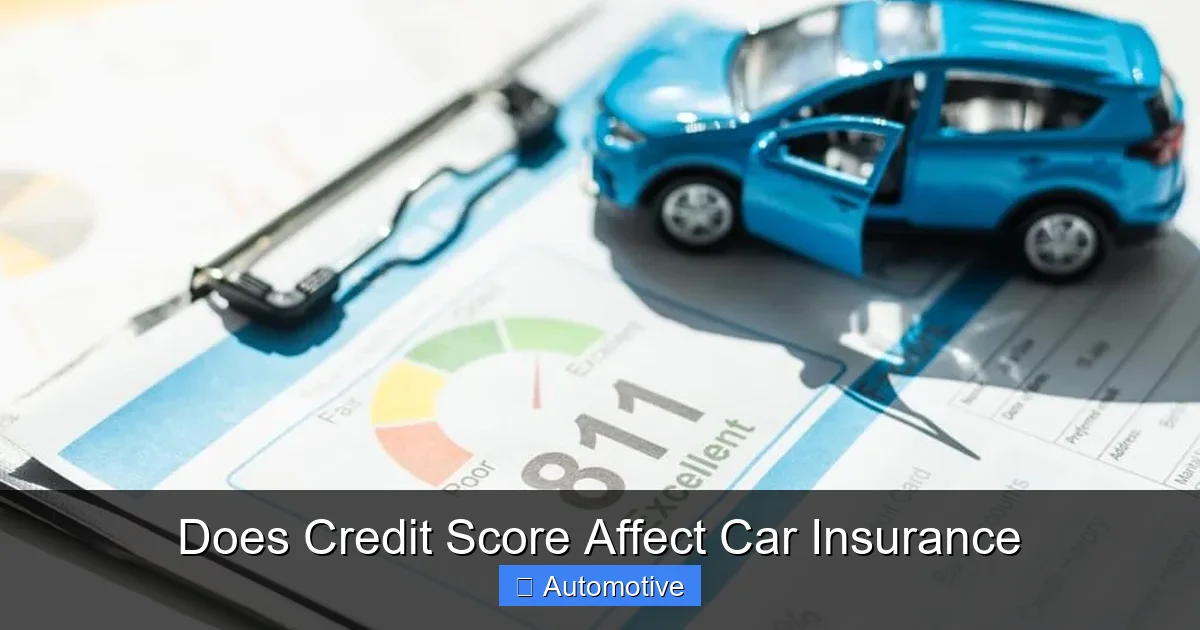
Does Credit Score Affect Car Insurance

Yes, your credit score can significantly affect your car insurance rates—especially in states where insurers are allowed to use credit-based insurance scores. While not all states permit this practice, many insurers rely on credit history as a predictor of risk, meaning better credit often leads to lower premiums.
Key Takeaways
- Credit scores influence insurance premiums in most states: Insurers use credit-based insurance scores to assess risk, and lower scores often result in higher rates.
- Not all states allow credit-based pricing: California, Hawaii, Massachusetts, and Michigan prohibit the use of credit scores in setting car insurance rates.
- Good credit can save you hundreds annually: Drivers with excellent credit may pay significantly less than those with poor credit, even with identical driving records.
- Credit history reflects financial responsibility: Insurers believe that people who manage money well are also more likely to drive safely and file fewer claims.
- Improving your credit takes time but pays off: Paying bills on time, reducing debt, and checking for errors can gradually boost your score and lower insurance costs.
- Shop around for the best rates: Different insurers weigh credit differently, so comparing quotes can help you find the most favorable terms.
- Transparency is increasing: Some insurers now explain how credit affects your rate, helping consumers make informed decisions.
📑 Table of Contents
- Does Credit Score Affect Car Insurance? The Surprising Truth
- How Insurers Use Credit Scores to Set Rates
- States That Allow or Ban Credit-Based Insurance Scoring
- Why Do Insurers Care About Your Credit?
- How Much Can Credit Affect Your Insurance Rate?
- Can You Get Car Insurance With Bad Credit?
- How to Improve Your Credit and Lower Your Insurance Costs
- The Future of Credit and Car Insurance
- Conclusion: Yes, Credit Matters—But You’re Not Powerless
Does Credit Score Affect Car Insurance? The Surprising Truth
You might think your car insurance rate depends only on how you drive—your accident history, traffic violations, and the type of car you own. But in many parts of the United States, there’s another factor that plays a major role: your credit score.
Yes, that three-digit number you check before applying for a loan or credit card can also impact how much you pay for auto insurance. It might sound unfair, but insurers have been using credit-based insurance scores for decades to predict risk. And while it’s not allowed everywhere, in most states, your credit history is fair game when determining your premium.
So, does credit score affect car insurance? The short answer is yes—especially if you live in a state that permits it. But the full story is more nuanced. Understanding how credit influences your insurance costs can help you make smarter financial decisions and potentially save hundreds of dollars each year.
In this guide, we’ll break down exactly how credit scores affect car insurance, which states allow or ban the practice, why insurers care about your credit, and what you can do to improve your situation—even if your score isn’t perfect right now.
How Insurers Use Credit Scores to Set Rates

Visual guide about Does Credit Score Affect Car Insurance
Image source: financestrategists.com
Insurance companies don’t use your standard FICO or VantageScore directly. Instead, they rely on something called a credit-based insurance score, which is a specialized version of your credit report tailored for risk assessment.
This score is calculated using similar factors as your regular credit score—like payment history, credit utilization, length of credit history, types of credit, and recent inquiries—but it’s weighted differently. The goal isn’t to judge your ability to repay debt, but to predict how likely you are to file an insurance claim.
For example, studies have shown that people with lower credit scores tend to file more claims, and those claims are often more expensive. That’s why insurers believe there’s a correlation between financial behavior and driving behavior. Someone who manages their finances responsibly may also be more cautious on the road, follow traffic laws, and maintain their vehicle properly.
Let’s say two drivers have identical profiles: same age, same car, same driving record, and live in the same ZIP code. The only difference? One has a credit score of 750, and the other has a score of 580. In many states, the driver with the lower score could pay 30% to 50% more for the same coverage.
That’s not a small difference. On a $1,500 annual policy, that’s an extra $450 to $750 per year—just because of credit.
What Factors Go Into a Credit-Based Insurance Score?
While each insurer may tweak their formula, most credit-based insurance scores consider these key elements:
- Payment history (35–40%): Do you pay your bills on time? Late payments, defaults, and collections hurt your score.
- Credit utilization (20–30%): How much of your available credit are you using? High balances relative to your limits suggest financial stress.
- Length of credit history (10–15%): A longer history of managing credit responsibly is viewed favorably.
- Credit mix (10%): Having a variety of credit types (credit cards, auto loans, mortgages) can help.
- New credit inquiries (10%): Applying for multiple lines of credit in a short time can raise red flags.
It’s important to note that your actual credit score isn’t the only thing that matters. Insurers look at the patterns in your credit behavior. For instance, a single late payment from two years ago may have less impact than a recent pattern of missed payments.
Real-World Example: How Credit Changes Your Rate
Let’s look at a real-world scenario. Sarah and Jake are both 35-year-old drivers in Ohio. They drive the same 2020 Honda Accord, have clean driving records, and live in the same neighborhood. The only difference? Sarah has a credit score of 780, while Jake’s is 620.
When they both shop for full-coverage insurance:
- Sarah receives a quote for $1,200 per year.
- Jake is quoted $1,800 per year—50% more.
That’s a $600 difference, purely based on credit. Over five years, Jake could pay $3,000 more than Sarah for the same protection.
This example shows how powerful credit can be in shaping your insurance costs. And it’s not just Ohio—similar patterns exist in states like Texas, Florida, Georgia, and Illinois.
States That Allow or Ban Credit-Based Insurance Scoring
Visual guide about Does Credit Score Affect Car Insurance
Image source: southernharvestinsurance.com
Not every state allows insurers to use credit scores when setting car insurance rates. The rules vary widely, and understanding your state’s laws is crucial.
States That Prohibit Credit-Based Pricing
Currently, four states have banned the use of credit scores in auto insurance:
- California: Since 1989, California has prohibited insurers from using credit history to determine rates. Instead, they rely on driving record, miles driven, and vehicle type.
- Hawaii: Hawaii bans the use of credit scores for both auto and home insurance.
- Massachusetts: Insurers cannot use credit information when setting premiums.
- Michigan: As of 2023, Michigan passed a law banning the use of credit scores in auto insurance pricing, joining the small group of states with full prohibitions.
In these states, your credit score won’t affect your car insurance rate—no matter how high or low it is.
States That Allow Credit-Based Pricing
In the remaining 46 states, insurers are generally allowed to use credit-based insurance scores as part of their underwriting process. However, the extent to which they rely on it varies.
Some states, like Washington and Oregon, allow credit scoring but require insurers to disclose when it affects your rate. Others, like Louisiana and Alabama, have fewer restrictions, giving insurers more freedom to weigh credit heavily.
Even in states where it’s allowed, not all insurers use credit scores. Some companies—especially those that market themselves as “no-credit-check” insurers—may ignore credit entirely. But most major national carriers, including State Farm, GEICO, Progressive, and Allstate, do consider credit in most states.
Why the Discrepancy Between States?
The variation comes down to state regulations and consumer protection laws. States like California and Massachusetts have long prioritized consumer privacy and fairness, arguing that credit history is unrelated to driving ability.
On the other hand, insurers in other states argue that credit is a statistically valid predictor of risk. They point to internal data showing that lower credit scores correlate with higher claim frequency and severity.
The debate continues, with consumer advocacy groups pushing for broader bans and insurers defending the practice as actuarially sound.
Why Do Insurers Care About Your Credit?
At first glance, it might seem illogical: how does your ability to pay a credit card bill relate to your chances of getting into a car accident?
But insurers don’t see it that way. They view credit history as a window into your overall behavior and reliability. Here’s why they believe there’s a connection:
Financial Responsibility Predicts Risk Behavior
People who manage their money well—paying bills on time, keeping debt low, avoiding maxed-out credit cards—tend to be more organized and responsible in other areas of life. Insurers believe this extends to driving habits.
For example:
- A person who budgets carefully may be more likely to maintain their car, reducing the risk of mechanical failures.
- Someone who avoids financial stress may be less likely to drive distracted or under pressure.
- Individuals with good credit may be more likely to follow traffic laws and avoid risky behaviors.
While not everyone with poor credit is a bad driver, the data shows a trend. A 2020 study by the Federal Trade Commission found that credit-based insurance scores were predictive of claim frequency, even after controlling for other factors like age and location.
Lower Credit = Higher Claims
Multiple studies have shown that drivers with lower credit scores file more claims—and those claims tend to be more expensive. For example:
- Drivers with poor credit are 60% more likely to file a claim than those with excellent credit.
- The average claim cost for low-credit drivers is 20–30% higher.
This doesn’t mean poor credit causes accidents. But it suggests that financial instability may correlate with other risk factors, such as living in high-traffic areas, driving older vehicles, or having less access to safe parking.
It’s About Predictability, Not Punishment
Insurers aren’t trying to punish people for bad credit. They’re trying to predict risk accurately so they can set fair premiums for everyone.
Think of it like this: if two people have the same driving record, but one has a history of financial mismanagement, the insurer assumes the latter is more likely to file a claim. To cover that risk, they charge a higher premium.
It’s the same logic they use when charging more for drivers with speeding tickets or DUIs. The difference is that credit is a less visible factor—but no less impactful.
How Much Can Credit Affect Your Insurance Rate?
The impact of credit on your car insurance premium can be substantial. Let’s break it down with real numbers.
Average Rate Differences by Credit Tier
According to data from Quadrant Information Services (used by many insurers), here’s how much your credit score could affect your annual premium for full-coverage insurance:
- Excellent credit (750+): $1,200 per year
- Good credit (700–749): $1,350 per year
- Fair credit (650–699): $1,600 per year
- Poor credit (600–649): $1,900 per year
- Very poor credit (below 600): $2,300 per year
That’s a difference of over $1,100 per year between the best and worst credit tiers. Over a decade, that adds up to more than $11,000.
State-by-State Variations
The impact also varies by state. In states where credit is heavily weighted, the difference is more pronounced.
For example:
- In Louisiana, drivers with poor credit pay nearly double what those with excellent credit pay.
- In Texas, the gap is about 70%.
- In New York, where regulations are stricter, the difference is closer to 30%.
Even within the same state, different insurers may weigh credit differently. Some companies might increase your rate by 10% for poor credit, while others could raise it by 50%.
Other Factors That Interact With Credit
It’s important to remember that credit isn’t the only factor. Your rate is also influenced by:
- Driving record (accidents, tickets, DUIs)
- Age and gender (in most states)
- Location (urban vs. rural, crime rates)
- Vehicle type (sports cars cost more to insure)
- Annual mileage
- Coverage level (liability only vs. full coverage)
But even when all these factors are equal, credit can still be the deciding factor in how much you pay.
Can You Get Car Insurance With Bad Credit?
Yes—you can still get car insurance with bad credit. No state requires a minimum credit score to purchase coverage. But you may face higher premiums and fewer options.
Options for Drivers With Poor Credit
If your credit score is low, here are some strategies to help you get affordable coverage:
- Shop around: Not all insurers weigh credit the same. Some companies specialize in high-risk drivers and may offer better rates despite poor credit.
- Consider usage-based insurance: Programs like Progressive’s Snapshot or Allstate’s Drivewise monitor your driving habits and can lower your rate based on safe behavior—sometimes overriding credit concerns.
- Improve your credit over time: Even small improvements can lead to lower rates at renewal.
- Look for discounts: Many insurers offer discounts for things like bundling home and auto, paying in full, or having a good student.
- Choose a higher deductible: A higher out-of-pocket cost in case of a claim can lower your premium, though it increases financial risk.
Non-Standard Insurance Companies
If you’re struggling to find affordable coverage, you might need to turn to non-standard insurers. These companies specialize in high-risk drivers, including those with poor credit, DUIs, or lapses in coverage.
While their rates are generally higher, they may be more flexible about credit. Examples include The General, Dairyland, and SafeAuto.
Just be cautious—some non-standard insurers have poor customer service or limited coverage options. Always read reviews and compare multiple quotes.
How to Improve Your Credit and Lower Your Insurance Costs
The good news? Your credit score isn’t permanent. With consistent effort, you can improve it—and potentially save hundreds on car insurance.
Steps to Boost Your Credit Score
Here’s a practical plan to improve your credit over time:
- Check your credit report: Get free reports from AnnualCreditReport.com and look for errors. Dispute any inaccuracies with the credit bureaus.
- Pay bills on time: Set up autopay or reminders to avoid late payments. Even one missed payment can hurt your score.
- Reduce credit card balances: Aim to use less than 30% of your available credit—ideally under 10%.
- Avoid opening too many new accounts: Each application triggers a hard inquiry, which can lower your score temporarily.
- Keep old accounts open: The length of your credit history matters. Don’t close your oldest credit card, even if you don’t use it.
- Consider a secured credit card: If you’re rebuilding credit, a secured card can help you establish positive payment history.
How Long Does It Take to See Results?
Improvements don’t happen overnight, but you can see progress in a few months:
- 1–3 months: Paying down balances and correcting errors can boost your score quickly.
- 6–12 months: Consistent on-time payments and reduced utilization can lead to significant gains.
- 1–2 years: Major derogatory marks (like collections or bankruptcies) begin to have less impact.
Once your score improves, notify your insurer or shop around for better rates. Many companies will re-evaluate your premium if your credit has significantly improved.
The Future of Credit and Car Insurance
The use of credit in insurance is evolving. As consumer awareness grows and regulations change, the industry may shift toward more transparent and equitable practices.
Growing Push for Reform
Consumer advocacy groups argue that credit-based pricing disproportionately affects low-income and minority communities, who may have lower credit scores due to systemic inequalities—not personal irresponsibility.
In response, some states are considering broader bans. For example, New Jersey and Washington, D.C., have introduced legislation to limit or eliminate credit scoring in insurance.
Alternative Risk Assessment Models
Some insurers are exploring new ways to assess risk, such as:
- Telematics: Using driving behavior data (speed, braking, mileage) to set personalized rates.
- Education and occupation: A few companies consider job stability or education level, though this is controversial.
- Income-based pricing: Still rare, but some advocates suggest income should replace credit as a fairness metric.
While these alternatives aren’t widespread yet, they represent a potential shift toward more direct and fair risk assessment.
Increased Transparency
Many insurers now provide explanations when credit affects your rate. For example, GEICO and Progressive may send a notice saying, “Your rate is higher due to your credit-based insurance score.”
This transparency helps consumers understand the impact and take action to improve their situation.
Conclusion: Yes, Credit Matters—But You’re Not Powerless
So, does credit score affect car insurance? Absolutely—in most states, it’s one of the biggest factors in determining your premium.
But that doesn’t mean you’re stuck with high rates forever. By understanding how credit influences insurance, knowing your state’s rules, and taking steps to improve your financial health, you can take control of your costs.
Start by checking your credit report, paying down debt, and shopping around for quotes. Even small improvements can lead to meaningful savings over time.
Remember: your credit score doesn’t define you—but managing it wisely can protect your wallet, your car, and your peace of mind on the road.
Frequently Asked Questions
Does credit score affect car insurance in all states?
No, credit score does not affect car insurance in all states. California, Hawaii, Massachusetts, and Michigan prohibit insurers from using credit scores to set rates. In the other 46 states, credit-based insurance scores are commonly used.
How much can my credit score increase my car insurance rate?
Depending on your state and insurer, a poor credit score can increase your premium by 30% to 100%. For example, someone with excellent credit might pay $1,200 per year, while someone with poor credit could pay over $2,300 for the same coverage.
Can I get car insurance if I have bad credit?
Yes, you can still get car insurance with bad credit. All drivers are legally required to have coverage, and no state sets a minimum credit score. However, you may pay higher premiums and have fewer insurer options.
Will improving my credit score lower my insurance rate?
Yes, improving your credit score can lead to lower car insurance rates over time. As your credit-based insurance score improves, you may qualify for better rates at renewal or when shopping for new coverage.
Do all insurance companies use credit scores?
No, not all insurance companies use credit scores. While most major insurers do in states where it’s allowed, some companies—especially those focused on high-risk drivers—may ignore credit entirely or weigh it less heavily.
Is it legal for insurers to check my credit?
Yes, it is legal in most states for insurers to check your credit as part of the underwriting process. They use a soft inquiry, which doesn’t affect your credit score, to generate a credit-based insurance score.