
Does Car Insurance Cover Damage from Potholes

Car insurance may cover pothole damage—but only under specific coverage types like collision or comprehensive. Most standard liability policies won’t help, so understanding your policy details is key. Filing a claim depends on fault, documentation, and your deductible.
We’ve all been there—cruising down the road, music playing, mind wandering… and then *thud*. Your car lurches, the steering wheel jerks, and you’re left wondering: “Did I just hit a pothole?” Potholes are more than just annoying road imperfections. They’re a serious hazard that can cause real damage to your vehicle—from bent rims and blown tires to suspension issues and alignment problems. And when that happens, the first question most drivers ask is: “Will my car insurance cover this?”
The short answer? It depends. Car insurance doesn’t automatically cover pothole damage. Whether or not you’re protected hinges on the type of coverage you carry, the circumstances of the incident, and even where you live. Many drivers assume their policy will handle any kind of vehicle damage, but that’s not always true. Understanding the nuances of your insurance plan can save you thousands in unexpected repair bills—and a whole lot of frustration.
Key Takeaways
- Collision coverage typically pays for pothole damage: If you have collision insurance, your insurer may cover repairs after hitting a pothole, minus your deductible.
- Liability-only policies do not cover pothole damage: Basic liability insurance only covers damage you cause to others—not your own vehicle.
- Comprehensive coverage usually excludes potholes: While comprehensive handles things like theft or weather damage, it generally doesn’t apply to pothole impacts.
- Filing a claim may raise your premiums: Even if covered, making a claim could increase your rates, especially for smaller repairs.
- Document everything immediately: Take photos, note the location, and get witness info to strengthen your claim or city report.
- You can report potholes to local authorities: Some cities offer compensation programs or are liable for known unrepaired hazards.
- Prevention is better than repair: Stay alert, maintain proper tire pressure, and avoid swerving suddenly to reduce pothole risks.
📑 Table of Contents
What Is Pothole Damage and How Common Is It?
Pothole damage refers to any harm caused to a vehicle after driving over a pothole—those deep, jagged holes in the road that form when water seeps into cracks, freezes, expands, and breaks apart asphalt. Over time, traffic wears down these weakened areas, creating dangerous craters. According to the American Society of Civil Engineers, over one-third of U.S. roads are in poor or mediocre condition, and potholes are a leading complaint among drivers.
The damage can range from minor to severe. Common issues include:
- Flat or damaged tires
- Bent or cracked wheels
- Broken suspension components (like struts or control arms)
- Steering misalignment
- Undercarriage damage
- Exhaust system damage
For example, imagine you’re driving home from work on a rainy evening. The road is slick, visibility is low, and suddenly you hit a deep pothole hidden under a puddle. Your front tire blows out, and your car pulls sharply to the left. You manage to pull over safely, but now you’re facing a tow, a new tire, and possibly suspension repairs. That’s when you start wondering: “Is this covered?”
How Potholes Form and Why They’re Dangerous
Potholes don’t just appear overnight. They develop gradually due to a combination of weather, traffic, and poor road maintenance. Water enters small cracks in the pavement. When temperatures drop, the water freezes and expands, widening the crack. As temperatures rise, the ice melts, leaving a gap. Repeated freeze-thaw cycles, combined with the weight of vehicles driving over the weakened spot, eventually cause the pavement to collapse, forming a pothole.
These hazards are especially common in regions with harsh winters, like the Midwest and Northeast, but they can pop up anywhere. Even in warmer climates, heavy rain and aging infrastructure contribute to pothole formation. And because they often appear suddenly—especially after storms—drivers don’t always have time to react.
The danger isn’t just to your car. Potholes can cause drivers to swerve unexpectedly, leading to collisions. They can also throw debris into the road, creating additional hazards. In extreme cases, hitting a large pothole at high speed can even cause a driver to lose control of their vehicle entirely.
Does Car Insurance Cover Pothole Damage?
Now for the big question: Will your car insurance pay for pothole damage? The answer isn’t a simple yes or no. It depends entirely on the type of coverage you have on your policy.
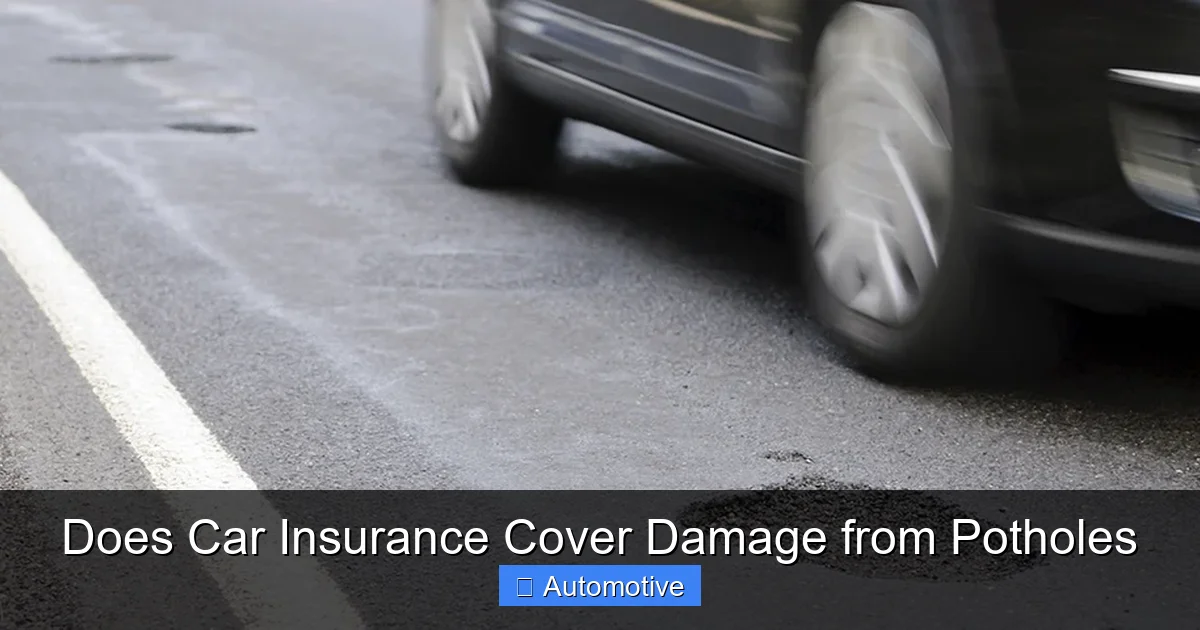
Visual guide about Does Car Insurance Cover Damage from Potholes
Image source: iii.org
Most standard auto insurance policies include three main types of coverage: liability, collision, and comprehensive. Liability insurance is required in almost every state and covers damage you cause to other people’s property or injuries you inflict. But it does not cover damage to your own vehicle—so if you hit a pothole, liability won’t help you.
That leaves collision and comprehensive coverage. Here’s how they apply:
Collision Coverage: Your Best Bet for Pothole Damage
Collision coverage is designed to pay for damage to your vehicle when it collides with another object—including potholes. Since a pothole is a stationary object on the road, hitting one typically qualifies as a collision under most insurance policies.
For example, if you hit a pothole and your front axle is bent, your tires are damaged, and your suspension needs repair, collision coverage would likely pay for those repairs—minus your deductible. If your deductible is $500 and the repair costs $1,200, your insurer would cover $700.
However, there are a few caveats. First, you must have collision coverage on your policy. Many drivers, especially those with older cars, drop collision to save money—leaving them unprotected in situations like this. Second, your insurer may investigate whether the damage was truly caused by a pothole or if there were other contributing factors, like pre-existing wear or reckless driving.
Comprehensive Coverage: Usually Not for Potholes
Comprehensive coverage protects your vehicle from non-collision events like theft, vandalism, fire, hail, or hitting an animal. While it’s broad in scope, it generally does not cover damage from potholes. Why? Because potholes are considered a road hazard that results from a collision with the road surface—not an “act of nature” or external event like a falling tree branch.
Some insurers may argue that pothole damage falls under “road hazard” exclusions in comprehensive policies. So even if you have full coverage, you might still be on the hook for repairs if you only have comprehensive and not collision.
What If You Don’t Have Collision Coverage?
If you don’t have collision coverage, your insurance likely won’t pay for pothole damage—even if it’s extensive. This is a common scenario for drivers of older vehicles who’ve dropped collision to reduce premiums. While that saves money upfront, it can lead to big out-of-pocket expenses when unexpected damage occurs.
For instance, a 2010 sedan with 150,000 miles might not be worth much on the market. The owner decides to drop collision coverage to save $300 a year. Six months later, they hit a pothole and need $1,800 in suspension repairs. Without collision, they’re stuck paying the full amount.
In such cases, the only options are to pay for repairs yourself, seek compensation from the city (more on that later), or live with the damage if it’s not safety-critical.
When Should You File an Insurance Claim for Pothole Damage?
Even if you have collision coverage, filing a claim isn’t always the best move. Insurance claims can lead to higher premiums, loss of safe driver discounts, and even policy non-renewal in some cases. So when is it worth it?
Visual guide about Does Car Insurance Cover Damage from Potholes
Image source: insuranceonline.com
Consider filing a claim if:
- The repair costs significantly exceed your deductible (e.g., $1,500 in damage with a $500 deductible)
- The damage affects your vehicle’s safety or drivability
- You have a history of safe driving and believe the claim won’t drastically impact your rates
On the other hand, you might skip the claim if:
- The damage is minor (e.g., a single flat tire or small wheel bend)
- Repair costs are close to or less than your deductible
- You’re close to renewing your policy and want to avoid a rate hike
For example, if you have a $1,000 deductible and the repair costs $1,100, you’d only receive $100 from your insurer—not worth the potential premium increase. But if the damage is $3,000, filing the claim makes financial sense.
How to File a Claim for Pothole Damage
If you decide to file a claim, act quickly. Most insurers require prompt reporting—usually within 24 to 72 hours. Here’s how to do it right:
- Document the scene: Take clear photos of the pothole, your vehicle’s damage, the location, and any skid marks or debris. Include a landmark or street sign to prove where it happened.
- Get a repair estimate: Visit a trusted mechanic or body shop for a written estimate. This helps support your claim.
- Contact your insurer: Call your agent or use the insurer’s app to report the incident. Provide all documentation and be honest about what happened.
- Cooperate with the adjuster: An insurance adjuster may inspect your vehicle or review photos. Answer questions truthfully.
- Pay your deductible: Once approved, you’ll pay your deductible, and the insurer will cover the rest.
Keep in mind that some insurers may deny the claim if they believe you were driving recklessly or could have avoided the pothole. For instance, if you were speeding or swerving erratically, they might argue negligence.
Can You Get Compensation from the City or State?
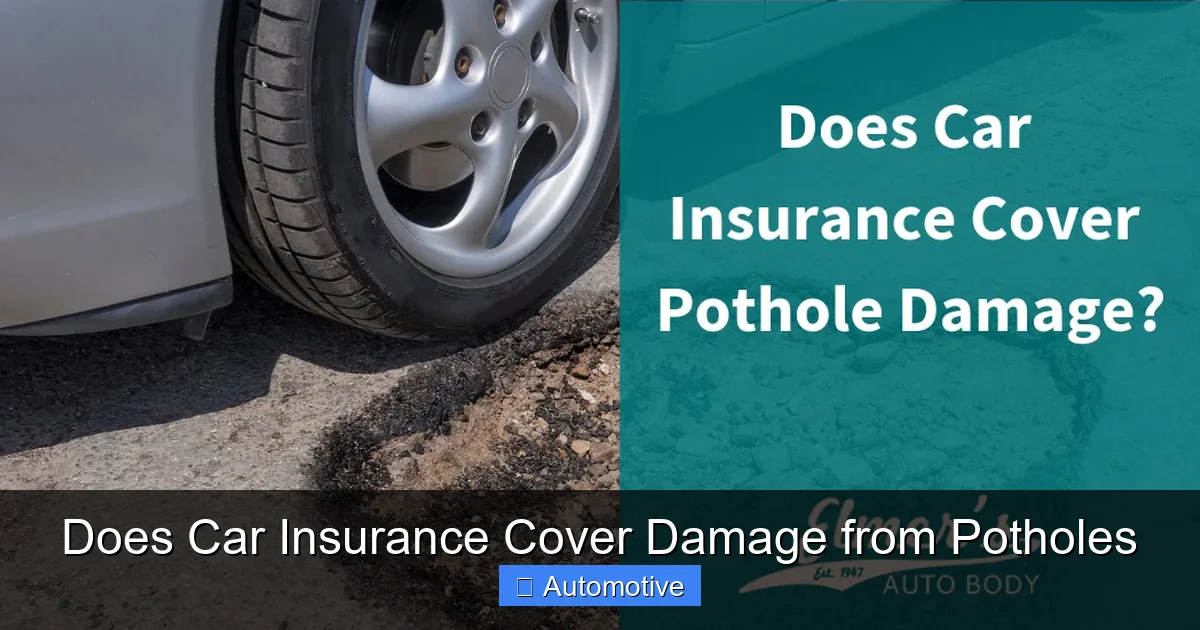
Here’s a little-known fact: In some cases, you may be able to file a claim against the city, county, or state for pothole damage—especially if the pothole was large, long-standing, and the government failed to repair it despite prior reports.
Visual guide about Does Car Insurance Cover Damage from Potholes
Image source: elmersautobody.com
Government entities have a responsibility to maintain safe roads. If they knew about a dangerous pothole and didn’t fix it in a reasonable time, they could be held liable. However, filing a claim against a municipality is often more complicated than dealing with an insurance company.
How to File a Claim Against a City
Each city has its own process, but here’s a general guide:
- Report the pothole: Most cities have online forms or hotlines for reporting road hazards. Do this immediately—even if you’re also filing an insurance claim.
- Gather evidence: Take photos, note the date and time, and get witness statements if possible.
- Check local laws: Some cities require you to file a formal claim within 30 days. Others have strict notice requirements.
- Submit your claim: Fill out the city’s damage claim form, attach repair receipts, and include all documentation.
- Follow up: Government claims can take weeks or months. Stay in touch with the department handling your case.
For example, the city of Chicago has a “Pothole Damage Reimbursement Program” that allows residents to seek compensation for vehicle damage caused by potholes. However, they must prove the pothole existed for at least 30 days and that the city failed to act.
Success isn’t guaranteed. Cities often argue that potholes are “acts of God” or that they weren’t aware of the hazard. But if you have strong evidence, it’s worth a try—especially if your insurance won’t cover the damage.
Tips to Avoid Pothole Damage
The best way to deal with pothole damage is to avoid it altogether. While you can’t control the roads, you can take steps to reduce your risk:
Stay Alert and Scan the Road
Keep your eyes on the road ahead—not just the car in front of you. Scan for puddles, cracks, or uneven surfaces. Dark or wet potholes are especially hard to see, so slow down in poor weather.
Maintain Proper Tire Pressure
Underinflated tires are more vulnerable to damage. Check your tire pressure monthly and keep it at the manufacturer’s recommended level. Properly inflated tires absorb impact better and are less likely to blow out.
Avoid Swerving Suddenly
It’s tempting to swerve when you see a pothole, but sudden maneuvers can cause you to lose control or hit another vehicle. If possible, slow down and drive straight over it. If you must swerve, check your mirrors and blind spots first.
Drive in the Tire Tracks of the Car Ahead
Other drivers may have already avoided the worst potholes. Staying in their tire tracks can help you dodge hazards.
Report Potholes
Help make roads safer for everyone by reporting potholes to your local public works department. The sooner they’re fixed, the fewer drivers will be affected.
Real-Life Example: Sarah’s Pothole Nightmare
Sarah, a teacher from Cleveland, was driving home after a late meeting when she hit a massive pothole on a poorly lit street. Her car immediately pulled to the right, and she heard a loud bang. She pulled over and discovered her front right tire was shredded, her wheel was bent, and her suspension was damaged.
She called her insurance company and learned she had collision coverage with a $750 deductible. The repair estimate came to $2,300. After paying her deductible, her insurer covered the remaining $1,550. While she was relieved, she also learned her premium might increase at renewal.
Sarah also reported the pothole to the city. Two weeks later, she received a letter stating the pothole had been reported three times in the past month but hadn’t been repaired due to budget constraints. She decided not to pursue a city claim, but she did use the experience to advocate for better road maintenance in her neighborhood.
Her story highlights a key point: even with insurance, pothole damage can be a hassle. But being prepared—and knowing your options—can make all the difference.
Conclusion
So, does car insurance cover damage from potholes? The answer is: it can, but only if you have the right type of coverage. Collision insurance is your best protection, while liability and comprehensive policies typically won’t help. Filing a claim makes sense for major damage, but weigh the cost against your deductible and potential rate increases.
Beyond insurance, you also have options like reporting potholes to local authorities and seeking compensation if the government failed to act. And of course, the best defense is prevention—stay alert, maintain your vehicle, and drive defensively.
Potholes are a fact of life on many roads, but they don’t have to leave you stranded—or broke. By understanding your insurance policy and knowing your rights, you can protect yourself and your vehicle from one of the most common (and costly) road hazards out there.
Frequently Asked Questions
Does liability insurance cover pothole damage?
No, liability insurance only covers damage you cause to other people’s property or injuries you inflict. It does not cover damage to your own vehicle, including pothole damage.
Will my insurance rates go up if I file a claim for pothole damage?
Possibly. Filing a claim, especially for collision damage, can lead to higher premiums at renewal. The impact depends on your insurer, driving history, and the claim amount.
Can I sue the city for pothole damage?
In some cases, yes—if you can prove the city knew about the pothole and failed to repair it in a reasonable time. However, government claims are often complex and time-consuming.
What should I do immediately after hitting a pothole?
Pull over safely, check for damage, take photos of the pothole and your vehicle, note the location, and contact your insurance company if needed. Also report the pothole to local authorities.
Is pothole damage covered under warranty?
Generally, no. Most vehicle warranties exclude damage from road hazards like potholes. However, some extended warranties or tire protection plans may offer limited coverage.
How can I prevent pothole damage?
Stay alert, maintain proper tire pressure, avoid sudden swerves, drive in the tracks of the car ahead, and report potholes to your local public works department.