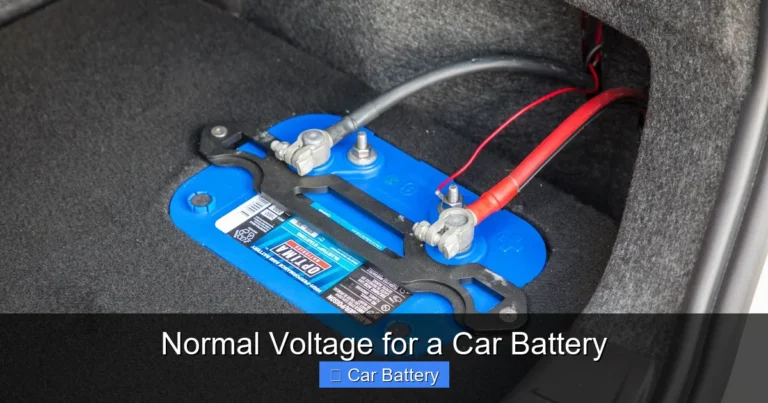
Does Car Battery Recharge While Driving

Yes, your car battery does recharge while driving—thanks to the alternator, which converts engine power into electrical energy. However, short trips or electrical overloads can limit this recharge, leading to a drained battery over time.
Have you ever hopped into your car, turned the key, and heard that dreaded clicking sound—only to realize your battery is dead? It’s frustrating, especially when you thought you drove just yesterday. So, why does this happen? Doesn’t the battery recharge while driving?
The short answer is yes—your car battery does recharge while you’re on the road. But it’s not as simple as just driving around the block. How well and how quickly your battery recharges depends on several factors, including how long you drive, the health of your alternator, and how much power your car’s electronics are using.
Understanding how your car’s electrical system works can save you from unexpected breakdowns and costly repairs. Most drivers assume that once the engine starts, everything is fine. But the truth is, your battery and alternator work together in a delicate balance. If one fails, the other suffers. And if you’re not careful, you could end up stranded with a battery that seems “dead” but might just need a proper recharge.
In this guide, we’ll break down exactly how your car battery recharges while driving, what can go wrong, and how to keep your vehicle’s electrical system in top shape. Whether you’re a daily commuter or a weekend driver, knowing how your car powers itself is essential for reliability and peace of mind.
In This Article
- 1 Key Takeaways
- 2 📑 Table of Contents
- 3 How Your Car Battery Gets Recharged While Driving
- 4 What Happens When the Alternator Fails?
- 5 Factors That Affect Battery Recharging While Driving
- 6 How to Maximize Battery Recharge While Driving
- 7 When Driving Isn’t Enough: Other Ways to Recharge Your Battery
- 8 Conclusion
- 9 Frequently Asked Questions
- 9.1 Does the car battery recharge while idling?
- 9.2 How long do I need to drive to recharge a dead battery?
- 9.3 Can a bad battery prevent the alternator from working?
- 9.4 Why does my battery keep dying even though I drive every day?
- 9.5 Is it safe to drive with a battery warning light on?
- 9.6 Can extreme cold prevent my battery from recharging?
Key Takeaways
- Your car battery recharges while driving via the alternator: The alternator generates electricity as the engine runs, replenishing the battery.
- Short drives may not fully recharge a weak battery: Frequent short trips don’t give the alternator enough time to restore lost charge.
- The alternator powers electronics and charges the battery simultaneously: It handles both vehicle systems and battery charging once the engine is running.
- A failing alternator can mimic a dead battery: If your battery keeps dying, the alternator—not the battery—might be the real issue.
- Extreme temperatures affect charging efficiency: Cold weather increases battery demand, while heat accelerates internal wear.
- Parasitic drain can outpace recharging: Leaving lights or accessories on can drain the battery faster than driving can recharge it.
- Regular maintenance ensures optimal charging: Checking belts, connections, and voltage helps keep the system running smoothly.
📑 Table of Contents
How Your Car Battery Gets Recharged While Driving
Your car’s battery doesn’t recharge by magic—it’s powered by a clever piece of engineering called the alternator. Think of the alternator as your car’s personal power plant. Once the engine is running, the alternator kicks into action, converting mechanical energy from the engine into electrical energy. This electricity is then used to power your car’s systems and recharge the battery.
Here’s how it works: A belt connected to the engine’s crankshaft spins the alternator’s rotor. Inside the alternator, this spinning motion creates a magnetic field, which generates alternating current (AC). But your car’s electronics and battery run on direct current (DC), so the alternator includes a component called a rectifier that converts AC to DC. This clean, steady flow of electricity is what keeps your battery charged and your lights, radio, and dashboard working.
The alternator doesn’t just top off the battery—it actually powers most of your car’s electrical systems while the engine is running. The battery mainly serves as a backup, providing the initial surge of power needed to start the engine. Once the engine is on, the alternator takes over. So, in a healthy system, your battery should only lose a small amount of charge during startup and then regain it while driving.
But here’s the catch: the alternator can only produce so much power at a time. If your car has a lot of electrical demands—like heated seats, air conditioning, high-powered audio systems, or multiple phone chargers—the alternator may struggle to keep up. In those cases, the battery might not get a full recharge, especially on short trips.
The Role of Engine Speed and Driving Time
How long and how fast you drive plays a big role in how well your battery recharges. The alternator produces more electricity at higher engine speeds (RPMs). That means highway driving is generally better for recharging than stop-and-go city traffic.
For example, if you drive 30 minutes on the highway, your alternator has plenty of time and RPMs to fully recharge a slightly depleted battery. But if you only drive five minutes to the grocery store and back, the alternator may not generate enough power to make up for the energy used during startup. Over time, these short trips can lead to a chronically undercharged battery.
This is why people who mostly take short trips often experience battery problems. Their batteries are constantly being drained without enough time to recharge. It’s like trying to fill a bucket with a tiny hose while someone is constantly pulling water out. Eventually, the bucket runs dry.
Signs Your Battery Isn’t Recharging Properly
Even if you drive regularly, your battery might not be recharging as it should. Watch for these warning signs:
– **Dim headlights or interior lights:** If your lights seem weaker than usual, especially at idle, it could mean the alternator isn’t producing enough power.
– **Slow engine crank:** When you start your car, does it take longer than usual to turn over? That’s a classic sign of a weak battery.
– **Battery warning light on the dashboard:** This light looks like a battery or says “ALT” or “GEN.” If it’s on, your alternator may not be charging the battery.
– **Electrical glitches:** Flickering dash lights, radio cutting out, or power windows moving slowly can all point to charging issues.
– **Frequent jump-starts:** If you need a jump more than once every few months, something is wrong with your charging system.
If you notice any of these symptoms, it’s time to get your alternator and battery tested. Many auto parts stores offer free diagnostic checks.
What Happens When the Alternator Fails?
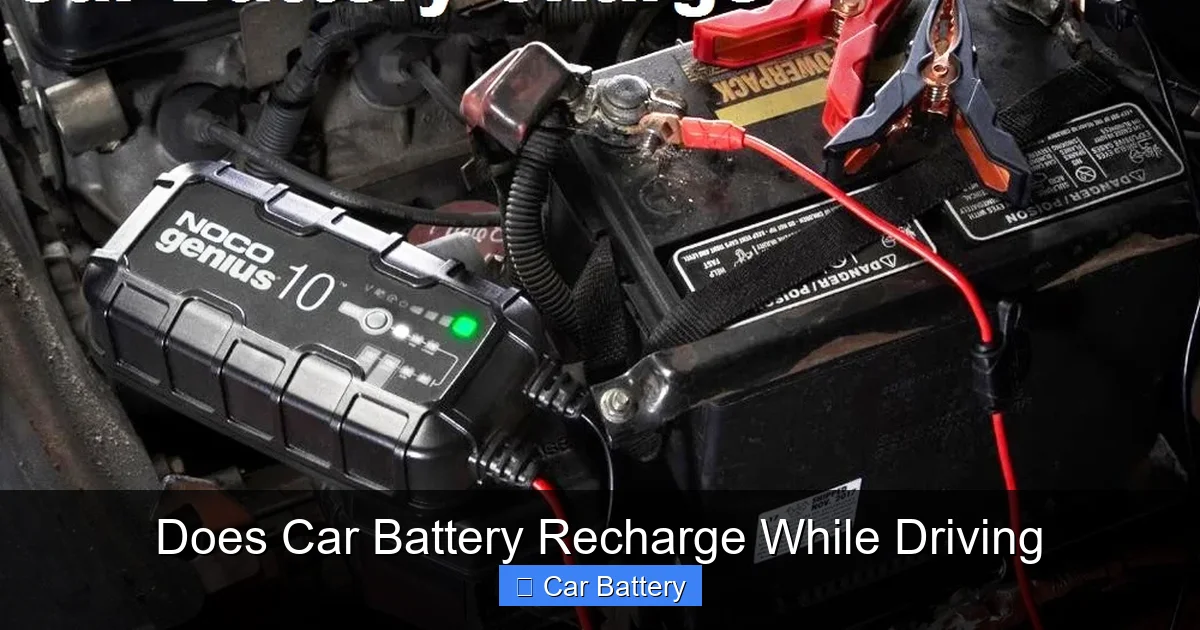
Visual guide about Does Car Battery Recharge While Driving
Image source: towrecoverassist.com
The alternator is the heart of your car’s charging system. When it fails, your battery is left to power everything on its own—and that doesn’t last long.
A healthy car battery can typically provide enough power to run basic systems for 30 minutes to an hour. But once the battery drains, your car will stall and won’t restart. This is why a failing alternator often feels like a dead battery—because the battery *is* dead, but the root cause is the alternator.
Common causes of alternator failure include worn-out brushes, a faulty voltage regulator, or a broken belt. The serpentine belt, which drives the alternator, can wear out, crack, or slip, reducing the alternator’s output. In some cases, the belt might even break completely, cutting off power generation.
If your alternator fails while driving, you might notice the battery warning light come on, followed by dimming lights and loss of power to accessories. Eventually, the engine will shut down. If this happens, pull over safely and call for roadside assistance.
Can You Drive with a Bad Alternator?
Technically, yes—but only for a short time. As long as the battery has charge, the car will run. But every mile you drive drains the battery further. Most cars will only go 20 to 30 miles before the battery dies completely.
Driving with a bad alternator is risky. You could get stranded in an unsafe location, and the sudden loss of power can disable critical systems like power steering and brakes (in some vehicles). It’s always best to address alternator issues as soon as you suspect a problem.
Alternator vs. Battery: How to Tell Which One Is Failing
It’s easy to confuse alternator and battery problems because they often cause similar symptoms. Here’s how to tell the difference:
– **If your car starts fine but dies shortly after driving:** Likely an alternator issue. The battery had enough charge to start the engine, but the alternator isn’t recharging it.
– **If your car won’t start at all, even with a jump:** Could be a dead battery. But if it starts with a jump and then dies again, the alternator is probably not working.
– **If the battery warning light is on:** Almost always points to the alternator.
A professional test can confirm which component is failing. Most mechanics and auto parts stores can check both the battery and alternator in minutes.
Factors That Affect Battery Recharging While Driving
Visual guide about Does Car Battery Recharge While Driving
Image source: thepowerfacts.com
Even with a healthy alternator, several factors can limit how well your battery recharges during a drive.
Electrical Load and Accessory Use
The more electronics you use, the harder your alternator has to work. Running the air conditioner, heated seats, rear defroster, and multiple USB chargers all draw power. If your alternator is already working near its limit, adding more load can prevent the battery from recharging fully.
For example, if you start your car on a cold morning and immediately turn on the heater, defroster, and seat warmers, you’re asking a lot from your electrical system. The alternator may not be able to keep up, especially at low RPMs in traffic.
Tip: Minimize electrical use when starting your car. Turn off non-essential accessories for the first few minutes of driving to give the alternator a chance to recharge the battery.
Short Trips and City Driving
As mentioned earlier, short trips are the enemy of battery health. The average car needs about 20 to 30 minutes of driving at highway speeds to fully recharge a moderately depleted battery. If you’re only driving 5 or 10 minutes at a time, the battery never gets a full charge.
This is especially problematic in winter, when cold temperatures reduce battery efficiency. A battery that’s already weak may not hold a charge well, and short trips make it worse.
Solution: If you mostly drive short distances, consider using a battery maintainer or trickle charger when the car is parked. These devices slowly recharge the battery overnight and can prevent deep discharges.
Extreme Temperatures
Both extreme cold and heat can affect how well your battery recharges.
In cold weather, the chemical reactions inside the battery slow down, reducing its ability to hold a charge. At the same time, engines are harder to start, drawing more power from the battery. This double whammy means your alternator has to work harder to recharge the battery.
In hot weather, the battery’s internal components degrade faster. High temperatures can cause the electrolyte to evaporate and plates to corrode, reducing overall capacity. While heat doesn’t directly affect the alternator’s output, a weaker battery may not accept a charge as efficiently.
Tip: Park in a garage when possible, and use a battery insulator or blanket in winter to keep the battery warm.
Parasitic Drain
Parasitic drain happens when something in your car continues to draw power even when the engine is off. Common culprits include:
– Faulty door switches that keep interior lights on
– Aftermarket alarms or stereos
– Malfunctioning modules or computers
Even a small drain—like 50 milliamps—can slowly kill a battery over days or weeks. If your battery keeps dying even after long drives, parasitic drain could be the cause.
To check for parasitic drain, a mechanic can perform a draw test using a multimeter. If the drain is too high, they can trace it to the source and fix it.
How to Maximize Battery Recharge While Driving
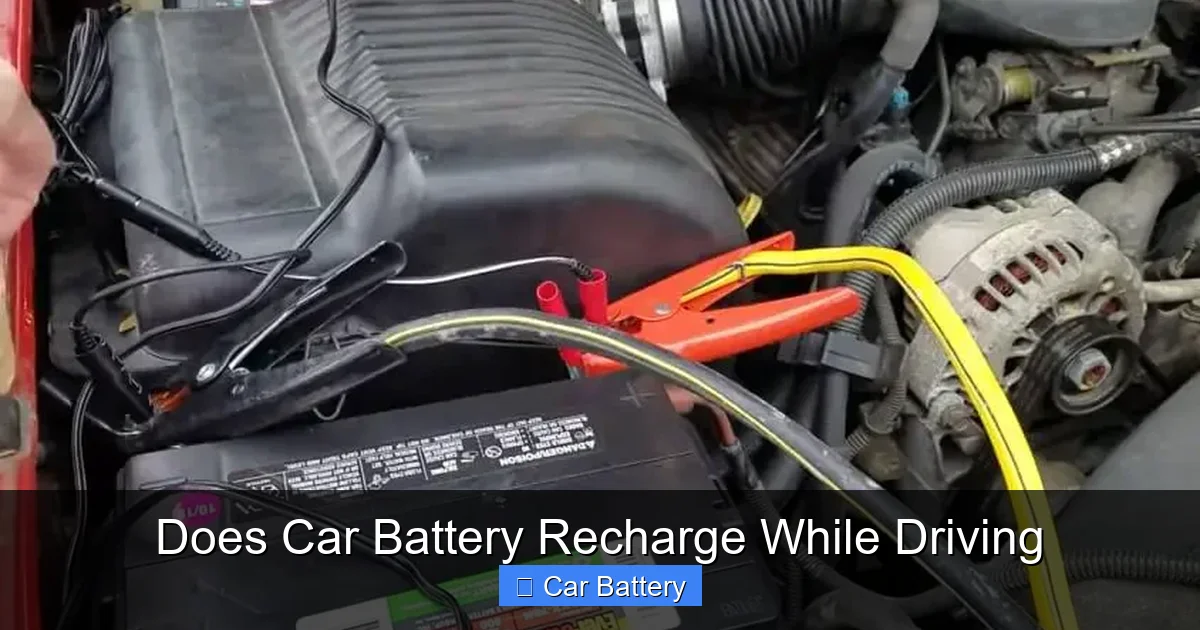
Visual guide about Does Car Battery Recharge While Driving
Image source: thepowerfacts.com
You can’t control the weather or your commute, but you can take steps to help your battery recharge more effectively.
Drive Longer Distances When Possible
If your battery is weak or you’ve had electrical issues, take longer drives when you can. Aim for at least 30 minutes of continuous driving at highway speeds. This gives the alternator enough time and RPMs to fully recharge the battery.
Avoid turning off the engine frequently during long trips. Each restart drains the battery, and the alternator has to make up for it.
Reduce Electrical Load
Turn off unnecessary accessories, especially when starting the car or driving at low speeds. This includes:
– Air conditioning or heater (use vents instead)
– Heated seats and steering wheel
– Rear defroster
– High-powered audio systems
By reducing demand, you free up more of the alternator’s output for battery charging.
Check and Maintain Your Charging System
Regular maintenance can prevent charging problems before they start.
– **Inspect the serpentine belt:** Look for cracks, fraying, or looseness. A slipping or broken belt will stop the alternator from working.
– **Clean battery terminals:** Corrosion on the terminals can block the flow of electricity. Use a wire brush and baking soda solution to clean them.
– **Test voltage:** With the engine running, a healthy charging system should show 13.8 to 14.4 volts at the battery terminals. If it’s below 13 volts, the alternator may not be charging properly.
Most auto parts stores can test your battery and alternator for free.
Use a Battery Maintainer for Infrequent Drivers
If you don’t drive often—like for classic cars or seasonal vehicles—a battery maintainer (also called a trickle charger) is a smart investment. These devices plug into a wall outlet and slowly charge the battery when the car is parked. They prevent deep discharges and extend battery life.
Smart chargers are even better—they monitor the battery’s state and adjust the charge rate automatically.
When Driving Isn’t Enough: Other Ways to Recharge Your Battery
Sometimes, driving alone isn’t enough to recharge a deeply discharged battery. Here are other options:
Jump-Starting
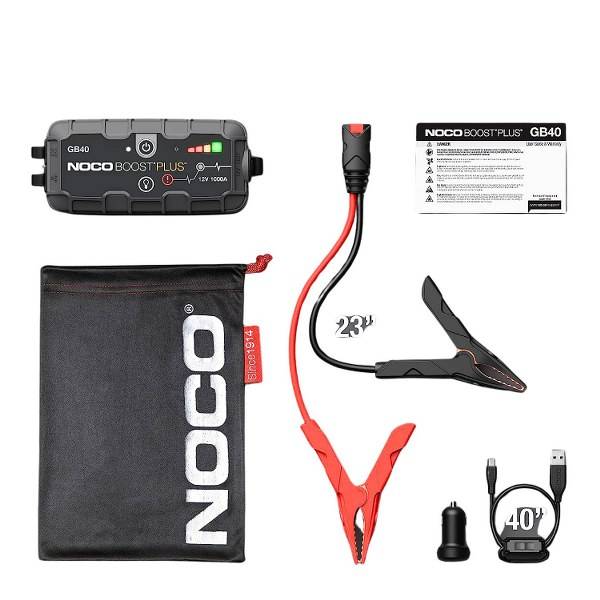
Jump-starting gives your battery a quick boost using another vehicle’s battery or a portable jump starter. Once the engine is running, the alternator should take over and begin recharging.
Tip: After a jump-start, drive for at least 30 minutes to allow the alternator to fully recharge the battery. If the battery dies again soon after, have it tested.
Using a Battery Charger
A dedicated battery charger can fully recharge a dead or weak battery in a few hours. Unlike a jump-start, which only provides enough power to start the engine, a charger restores the battery to full capacity.
Choose a charger with the right voltage (12V for most cars) and amperage. A 10-amp charger is a good balance between speed and safety.
Replacing the Battery or Alternator
If your battery is more than 3 to 5 years old, it may not hold a charge well, even with a healthy alternator. Similarly, if the alternator is failing, no amount of driving will fix it.
Replacing a battery is relatively inexpensive and can be done at home with basic tools. Alternator replacement is more complex and usually requires a mechanic.
Conclusion
So, does your car battery recharge while driving? Absolutely—thanks to the alternator, which turns engine power into electricity to keep your battery charged and your car running. But it’s not a set-it-and-forget-it system. Short trips, high electrical loads, extreme weather, and aging components can all interfere with proper recharging.
The key to a healthy battery is understanding how your car’s electrical system works and taking proactive steps to maintain it. Drive longer distances when possible, minimize unnecessary electrical use, and keep an eye on warning signs like dim lights or slow cranking.
Regular maintenance—like checking belts, cleaning terminals, and testing voltage—can prevent most charging issues. And if your battery keeps dying, don’t assume it’s the battery’s fault. The alternator might be the real culprit.
By staying informed and attentive, you can keep your car starting reliably and avoid the frustration of a dead battery. After all, your car’s electrical system is only as strong as its weakest link—and now you know how to keep every link in top condition.
Frequently Asked Questions
Does the car battery recharge while idling?
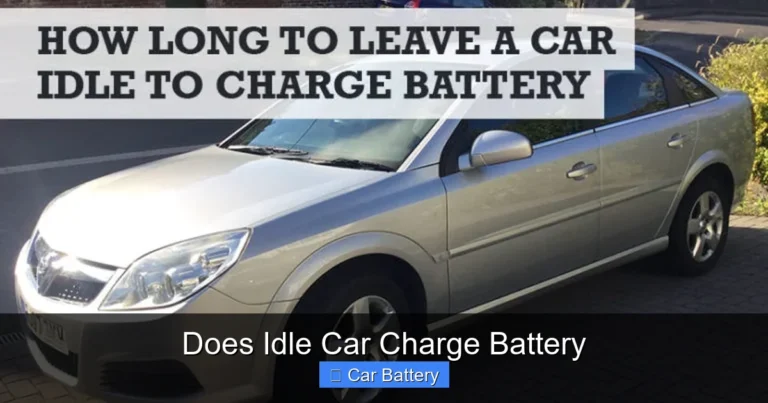
Yes, but slowly. The alternator generates power at idle, but at a lower rate than when driving. It may take an hour or more of idling to fully recharge a depleted battery.
How long do I need to drive to recharge a dead battery?
After a jump-start, drive for at least 30 minutes at highway speeds to allow the alternator to fully recharge the battery. Short trips may not be enough.
Can a bad battery prevent the alternator from working?
Not directly, but a severely damaged battery can overload the alternator, causing it to fail prematurely. Always test both components if you have charging issues.
Why does my battery keep dying even though I drive every day?
This could be due to short trips, parasitic drain, a failing alternator, or an old battery. Have your charging system tested to find the root cause.
Is it safe to drive with a battery warning light on?
No. The light indicates a charging system problem. Continuing to drive can drain the battery and leave you stranded. Get it checked immediately.
Can extreme cold prevent my battery from recharging?
Yes. Cold weather reduces battery efficiency and increases startup power demand. The alternator may struggle to fully recharge the battery in winter.