Does Audi Show Tire Pressure?

Contents
- 1 Key Takeaways
- 2 📑 Table of Contents
- 3 Does Audi Show Tire Pressure?
- 4 How Audi Monitors Tire Pressure
- 5 How to Check Tire Pressure on Your Audi
- 6 Why Tire Pressure Matters for Audi Drivers
- 7 Common Issues and Troubleshooting
- 8 Tire Pressure Recommendations by Audi Model
- 9 Final Thoughts: Yes, Audi Shows Tire Pressure—But It Depends
- 10 Frequently Asked Questions



Yes, most modern Audi vehicles display real-time tire pressure information directly on the dashboard. Using the Tire Pressure Monitoring System (TPMS), Audi alerts drivers to low pressure via visual warnings and, in many models, provides precise pressure readings for each tire through the driver information system. This feature enhances safety, improves fuel efficiency, and helps maintain optimal tire performance—all accessible with a glance at your instrument cluster or infotainment screen.
Key Takeaways
- Most Audi models display real-time tire pressure via the dashboard or infotainment system.
- Check the MMI menu under “Vehicle Status” to view individual tire pressure readings.
- Low pressure triggers a warning light and audible alert on the instrument cluster.
- TPMS requires proper initialization after tire inflation or seasonal changes.
- Use the reset button or MMI to recalibrate the system after adjustments.
- Regular monitoring improves safety and fuel efficiency by maintaining optimal tire pressure.
📑 Table of Contents
Does Audi Show Tire Pressure?
You’re cruising down the highway in your sleek Audi, the engine purring like a contented cat, the cabin so quiet you can hear your own thoughts. Everything feels perfect—until that little yellow light pops up on your dashboard. Is it the oil? The engine? Wait… could it be the tires? If you’ve ever found yourself squinting at the instrument cluster wondering, “Does Audi show tire pressure?”—you’re not alone.
Modern cars, especially luxury brands like Audi, come packed with advanced safety and convenience features. But sometimes, even the most intuitive systems can leave drivers scratching their heads. Tire pressure monitoring isn’t just a nice-to-have—it’s a critical part of vehicle safety, fuel efficiency, and tire longevity. Underinflated tires can reduce gas mileage, increase stopping distance, and even lead to blowouts at high speeds. So, knowing whether your Audi displays real-time tire pressure—and how to access that info—can make a big difference in how safely and smoothly you drive.
In this guide, we’ll dive deep into how Audi handles tire pressure monitoring. We’ll explore which models show actual PSI readings, which only give you a warning light, and how to interpret what you’re seeing. Whether you drive an Audi A4, Q5, or the sporty RS6, this post will help you understand exactly what your car is telling you—and what it’s not. By the end, you’ll know how to keep your tires in top shape, avoid unnecessary service visits, and drive with confidence.
How Audi Monitors Tire Pressure
Audi uses a sophisticated system to keep tabs on your tire pressure, but it’s not the same across all models or model years. Understanding the difference between indirect and direct tire pressure monitoring systems (TPMS) is key to knowing what kind of information your Audi can—and can’t—show you.
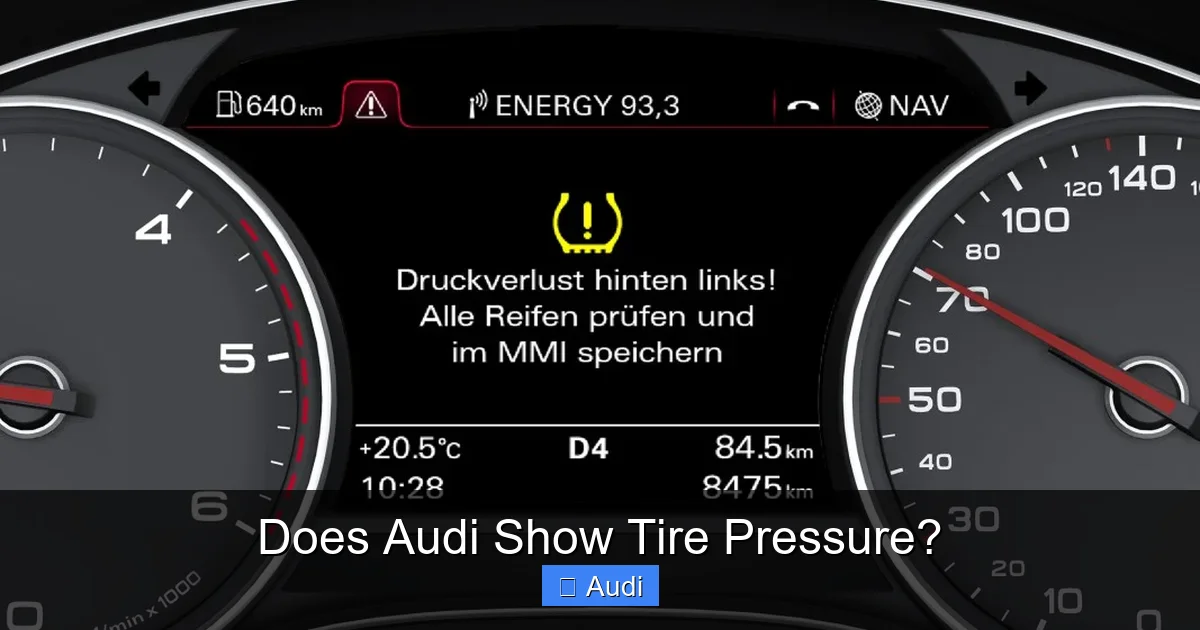
Visual guide about Does Audi Show Tire Pressure?
Image source: audi-technology-portal.de
Direct vs. Indirect TPMS: What’s the Difference?
There are two main types of tire pressure monitoring systems: direct and indirect. Audi has used both over the years, and knowing which one your car has will determine whether you see actual PSI numbers or just a warning light.
Direct TPMS uses sensors mounted inside each tire (usually attached to the valve stem) to measure the actual air pressure. These sensors transmit real-time data wirelessly to the car’s onboard computer. If the pressure drops below a certain threshold—typically around 25% below the recommended level—the system triggers a warning. The big advantage? You can often see the exact pressure in each tire, usually displayed on the instrument cluster or infotainment screen.
Indirect TPMS, on the other hand, doesn’t measure pressure directly. Instead, it uses the car’s anti-lock braking system (ABS) wheel speed sensors to detect differences in how fast each wheel is spinning. Underinflated tires have a slightly smaller diameter and spin faster than properly inflated ones. The system notices this discrepancy and triggers a warning. The downside? You don’t get actual PSI readings—just a generic “check tire pressure” light.
Which Audi Models Use Which System?
Most modern Audis (2015 and newer) use direct TPMS, especially in North America and Europe, where regulations require more precise monitoring. However, some older models or base trims—particularly those sold in regions with less strict safety standards—may still rely on indirect systems.
For example, a 2023 Audi A4 or Q7 will almost certainly have direct TPMS with real-time pressure readings. But a 2012 Audi A3 might only show a warning light without specific PSI values. If you’re unsure, check your owner’s manual or look for a TPMS reset button (usually under the steering wheel or in the glove box)—its presence often indicates a direct system.
Why the Confusion Exists
One reason drivers get confused is that even with direct TPMS, not all Audis display the same level of detail. Some models show individual tire pressures in the driver information center (the screen between the speedometer and tachometer), while others only show a general warning. Additionally, the display might only appear after you’ve driven a short distance or when the system detects an issue.
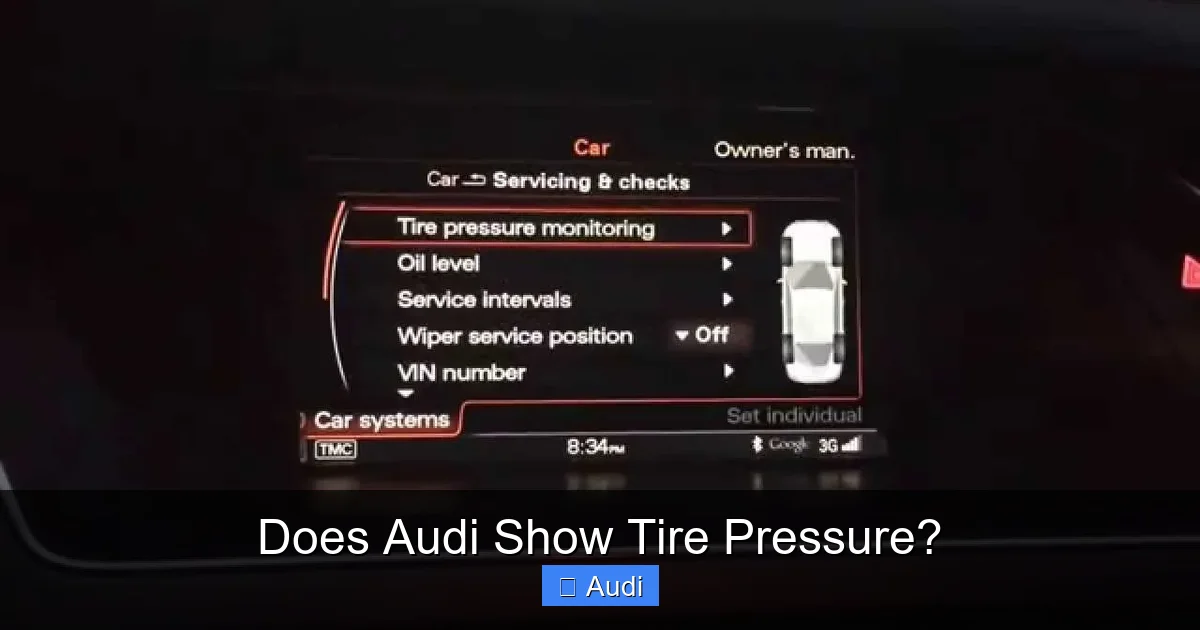
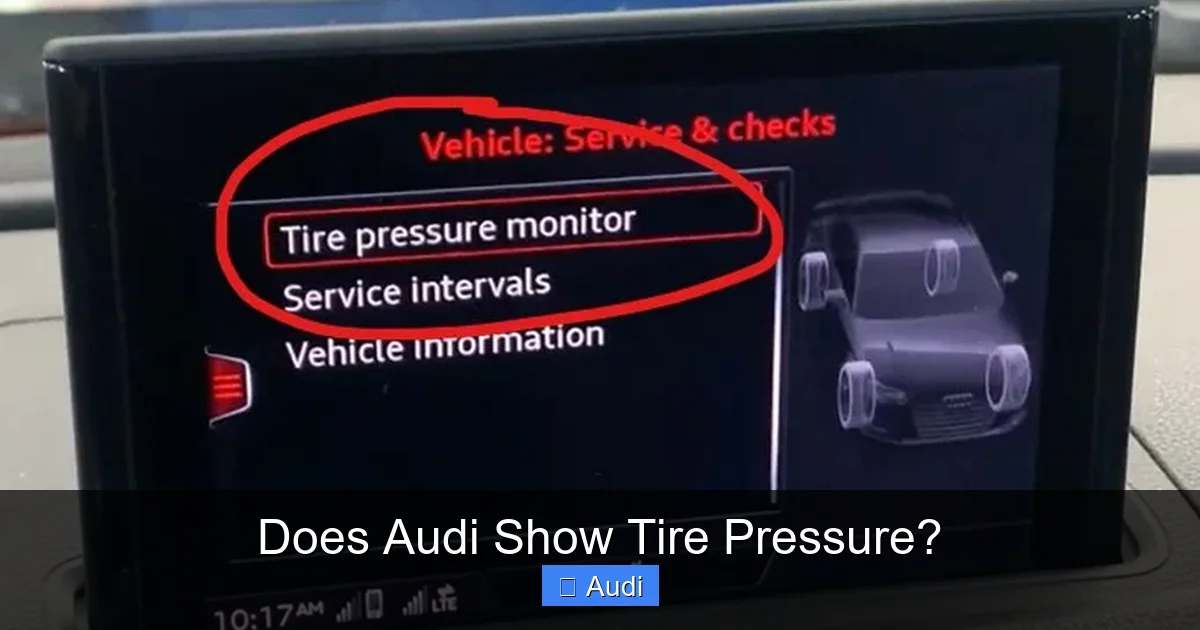
Another quirk: some Audis require you to manually activate the tire pressure display. For instance, in many models, you’ll need to go into the “Vehicle” or “Car” menu on the MMI (Audi’s infotainment system), then select “Tire Pressure” or “Status” to see the current readings. It’s not always front and center—so it’s easy to miss if you don’t know where to look.
How to Check Tire Pressure on Your Audi
Now that you know Audi does monitor tire pressure—and in most cases, shows it—let’s talk about how to actually see those numbers. The process varies slightly depending on your model and year, but the general steps are similar across the lineup.
Visual guide about Does Audi Show Tire Pressure?
Image source: i.ytimg.com
Using the Instrument Cluster
In many newer Audis, you can view tire pressure directly from the driver information display. Here’s how:
- Start your car and let it idle for a minute or two.
- Use the steering wheel controls (usually buttons on the left spoke) to navigate to the “Vehicle” or “Car” menu.
- Scroll to “Tire Pressure” or “Status” and press the OK or center button.
- You should see a screen showing the pressure in each tire—front left, front right, rear left, rear right—in PSI or bar.
For example, in a 2022 Audi Q5, the display might show:
Front Left: 32 PSI | Front Right: 31 PSI | Rear Left: 30 PSI | Rear Right: 32 PSI
If one tire is significantly lower, the system may highlight it in yellow or red and trigger a warning chime.
Using the MMI Infotainment System
If your Audi has the MMI system (the central touchscreen or rotary controller), you can also check tire pressure there:
- Tap the “Car” icon on the home screen.
- Select “Vehicle Status” or “Service & Care.”
- Look for “Tire Pressure” and tap to view details.
This method is especially useful if you’re parked and want to check pressures before a long trip. Some models even show a visual representation of the car with each tire labeled.
What If You Only See a Warning Light?
If you don’t see individual PSI readings and only get a yellow or red tire pressure warning light (usually shaped like a flat tire with an exclamation point), your Audi likely uses an indirect TPMS or the direct system isn’t displaying the data in your current view.
In this case, you’ll need to use a manual tire pressure gauge to check each tire. It’s a good habit to do this monthly, especially during seasonal temperature changes. Cold weather can cause tire pressure to drop by about 1 PSI for every 10°F drop in temperature.
Pro Tip: Reset the TPMS After Inflating
After adding air to your tires, you may need to reset the TPMS so the system recognizes the new pressure. Here’s how:
- Inflate all tires to the recommended PSI (found on the driver’s door jamb sticker).
- Turn the ignition to “ON” (don’t start the engine).
- Press and hold the TPMS reset button (usually under the steering column) for 3–5 seconds until the light blinks or turns off.
- Start the car and drive for a few minutes to allow the system to recalibrate.
Note: Some newer Audis reset automatically after driving a short distance with proper pressure.
Why Tire Pressure Matters for Audi Drivers
You might be thinking, “It’s just air in the tires—how big of a deal can it really be?” But for Audi drivers, maintaining proper tire pressure is about more than just safety. It affects performance, comfort, and even the lifespan of your expensive performance tires.
Visual guide about Does Audi Show Tire Pressure?
Image source: tpmsreset.com
Fuel Efficiency and Emissions
Underinflated tires create more rolling resistance, which means your engine has to work harder to move the car. According to the U.S. Department of Energy, driving with tires underinflated by just 10% can reduce fuel economy by up to 1–2%. For a car like the Audi A4, which averages around 28 MPG on the highway, that’s the equivalent of losing nearly 3 MPG—costing you extra at the pump over time.
Plus, lower fuel efficiency means higher CO₂ emissions. If you’re driving an Audi because you value engineering and environmental responsibility, keeping your tires properly inflated is a small but meaningful step.
Handling and Safety
Audis are known for their precise handling and Quattro all-wheel-drive system. But that performance depends on optimal tire contact with the road. Underinflated tires can cause:
- Reduced steering responsiveness
- Longer braking distances
- Increased risk of hydroplaning
- Uneven tire wear, especially on the outer edges
Overinflated tires aren’t much better—they reduce the tire’s contact patch, leading to a harsher ride and increased risk of blowouts, especially on hot pavement.
Tire Longevity and Cost Savings
Audi tires aren’t cheap. A set of high-performance summer tires for an RS model can cost over $1,500. Proper inflation helps them last longer by ensuring even wear across the tread. For example, a tire consistently run at 28 PSI instead of the recommended 35 PSI may wear out 20–30% faster.
Let’s say your tires cost $1,200 and last 40,000 miles when properly inflated. If underinflation cuts their life to 30,000 miles, you’re effectively paying $0.04 per mile instead of $0.03—adding $400 in extra costs over 100,000 miles.
Comfort and Noise
Audi cabins are designed for quiet luxury. But underinflated tires can increase road noise and make the ride feel bouncy or unstable. Overinflated tires transmit more vibration from the road, leading to a harsher, less comfortable experience—especially on rough pavement.
Keeping your tires at the correct pressure ensures the suspension and damping systems work as intended, preserving that signature Audi ride quality.
Common Issues and Troubleshooting
Even with advanced TPMS, things can go wrong. Here are some common issues Audi drivers face—and how to fix them.
False Warnings or Intermittent Lights
Sometimes the tire pressure light comes on even when all tires are properly inflated. This can happen due to:
- Temperature changes: Cold mornings can cause a temporary drop in pressure. Drive for 10–15 minutes and the light may go off.
- Sensor battery failure: TPMS sensors have batteries that last 5–10 years. If one dies, the system may give false readings.
- Interference: Wireless signals from phones, chargers, or other electronics can sometimes disrupt sensor communication.
If the light stays on after driving and checking pressures, visit an Audi service center. They can diagnose whether a sensor needs replacement.
Can’t See PSI Readings?
If your Audi has direct TPMS but you can’t find the tire pressure display, try this:
- Ensure the car is on and the system has had time to initialize (wait 2–3 minutes after starting).
- Check the owner’s manual for the exact menu path—some models hide it under “Service” or “Maintenance.”
- Update your MMI software. Older firmware may not support full TPMS display.
If all else fails, a dealership can verify whether your car is equipped with the full TPMS display feature.
Aftermarket Tires and Sensors
If you’ve replaced your tires with aftermarket ones, make sure the new wheels include compatible TPMS sensors. Some Audi models require specific sensor IDs to be programmed into the car’s computer. A reputable tire shop should handle this, but it’s worth confirming.
Using wheels without sensors (or with incompatible ones) will trigger a persistent warning light and disable the pressure display.
Tire Pressure Recommendations by Audi Model
Audi recommends different tire pressures depending on the model, tire size, and driving conditions. Always check the sticker on the driver’s door jamb for the most accurate info—don’t rely solely on the tire sidewall, which shows the maximum pressure, not the recommended one.
Below is a general guide for common Audi models. Pressures are listed in PSI for normal driving conditions (not towing or high-speed performance driving).
| Audi Model | Recommended Front PSI | Recommended Rear PSI | Notes |
|---|---|---|---|
| Audi A3 (2015–2023) | 32–35 | 32–35 | Check for sport suspension variants |
| Audi A4 (2017–2023) | 32–35 | 32–35 | Higher for 18″+ wheels |
| Audi A6 (2019–2023) | 35–38 | 35–38 | Adjust for load (e.g., passengers, luggage) |
| Audi Q5 (2018–2023) | 33–36 | 33–36 | Higher for off-road or towing |
| Audi Q7 (2017–2023) | 35–38 | 35–38 | Check rear for 7-seat configuration |
| Audi RS6 Avant (2020–2023) | 38–41 | 38–41 | Performance tires require higher pressure |
Note: These are general guidelines. Always refer to your vehicle’s door jamb sticker or owner’s manual for exact specifications.
Final Thoughts: Yes, Audi Shows Tire Pressure—But It Depends
So, does Audi show tire pressure? The short answer is: yes, most modern Audis do—but not all in the same way. If you drive a 2015 or newer model, especially in North America or Europe, chances are you have direct TPMS with real-time PSI readings accessible through the instrument cluster or MMI system. Older models or base trims might only show a warning light, requiring manual checks.
The key takeaway? Don’t assume your Audi is telling you everything it knows. Take a few minutes to explore the menus, check your owner’s manual, and learn how to access your tire pressure data. It’s a small effort that pays off in safety, savings, and peace of mind.
And remember: even the most advanced system can’t replace regular maintenance. Check your tire pressure at least once a month, especially during seasonal changes. Keep a portable air compressor or gauge in your trunk, and don’t ignore that little yellow light—it’s your Audi’s way of saying, “Hey, let’s keep this ride smooth and safe.”
Whether you’re driving an A3 through city streets or an RS7 on the autobahn, proper tire pressure is one of the simplest ways to protect your investment and enjoy every mile behind the wheel.
Frequently Asked Questions
Does Audi show tire pressure on the dashboard?
Yes, most modern Audi vehicles display tire pressure information on the dashboard through the MMI (Multi Media Interface) system. You can view real-time tire pressure readings by navigating to the vehicle status or tire pressure menu.
How do I check tire pressure on my Audi?
To check tire pressure on your Audi, go to the MMI menu, select “Vehicle,” then “Tire Pressure” or “Vehicle Status.” The system will show the current pressure for each tire, helping you monitor if they’re properly inflated.
Why doesn’t my Audi show tire pressure readings?
If your Audi doesn’t show tire pressure, it may be due to a malfunctioning TPMS (Tire Pressure Monitoring System) or a need for sensor calibration. Check for warning lights and consult your owner’s manual or an Audi technician for assistance.
Can I monitor tire pressure in older Audi models?
Older Audi models may not display exact tire pressure numbers but often have a TPMS warning light that alerts you to low pressure. Some models require manual checks or aftermarket sensors for detailed monitoring.
How accurate is the tire pressure display in Audi vehicles?
The tire pressure display in Audi vehicles is generally accurate, using direct TPMS sensors in each wheel. However, readings may vary slightly due to temperature changes or sensor calibration, so periodic manual checks are recommended.
Does every Audi model come with tire pressure monitoring?
Most Audi models manufactured after 2007 are equipped with a Tire Pressure Monitoring System (TPMS) as standard, either displaying pressure readings or triggering a warning light. Always confirm features based on your specific model and year.