
Can You Register a Car Without a License in Oklahoma?

Yes, you can register a car without a license in Oklahoma, but there are important rules and documentation requirements to follow. While a driver’s license isn’t mandatory for registration, you must prove legal ownership, provide valid ID, and meet insurance and residency criteria.
Key Takeaways
- No driver’s license required: Oklahoma allows vehicle registration without a valid driver’s license, but you must present an acceptable form of identification.
- Proof of ownership is essential: You’ll need a properly signed title or Manufacturer’s Certificate of Origin (MCO) to register the vehicle.
- Insurance is mandatory: All registered vehicles must have minimum liability insurance coverage as required by Oklahoma law.
- Residency matters: Oklahoma residents must register their vehicles within 30 days of establishing residency, regardless of license status.
- Alternative ID accepted: If you don’t have a driver’s license, you can use a state-issued ID card, passport, or other government-issued photo ID.
- Out-of-state buyers have options: Non-residents purchasing a vehicle in Oklahoma may register it temporarily or transfer registration to their home state.
- Penalties for non-compliance: Driving without registration or insurance can result in fines, vehicle impoundment, or legal consequences.
📑 Table of Contents
- Can You Register a Car Without a License in Oklahoma?
- Understanding Oklahoma’s Vehicle Registration Rules
- Required Documents for Car Registration in Oklahoma
- Step-by-Step Guide to Registering a Car Without a License
- Special Situations and Exceptions
- Common Mistakes to Avoid
- Renewing Your Registration Without a License
- Conclusion
Can You Register a Car Without a License in Oklahoma?
So, you’ve got a set of wheels—maybe it’s a used sedan, a shiny new truck, or even a classic car you’ve been restoring in your garage. You’re excited to get it on the road, but there’s just one thing: you don’t have a driver’s license. Maybe you’re waiting to get your license, you’ve lost it, or you simply don’t drive. The big question is: Can you still register that car in Oklahoma?
The short answer? Yes, you can register a car without a license in Oklahoma. It might surprise you, but the state doesn’t require you to hold a valid driver’s license to register a vehicle. However, that doesn’t mean the process is completely license-free. There are still rules, documents, and responsibilities you need to meet.
Think of vehicle registration like signing up for a membership. You don’t need to use the gym every day to have a membership, but you still need to provide your name, address, and payment. Similarly, registering a car in Oklahoma is about proving ownership, meeting legal requirements, and ensuring the vehicle is insured—not about your ability to drive it.
In this guide, we’ll walk you through everything you need to know about registering a car in Oklahoma without a driver’s license. From what documents to bring, to how insurance works, and even what happens if you’re not a resident, we’ve got you covered. Whether you’re a student, a senior, a non-driver, or someone in a unique situation, this article will help you navigate the process with confidence.
Understanding Oklahoma’s Vehicle Registration Rules
Visual guide about Can You Register a Car Without a License in Oklahoma?
Image source: static-14.sinclairstoryline.com
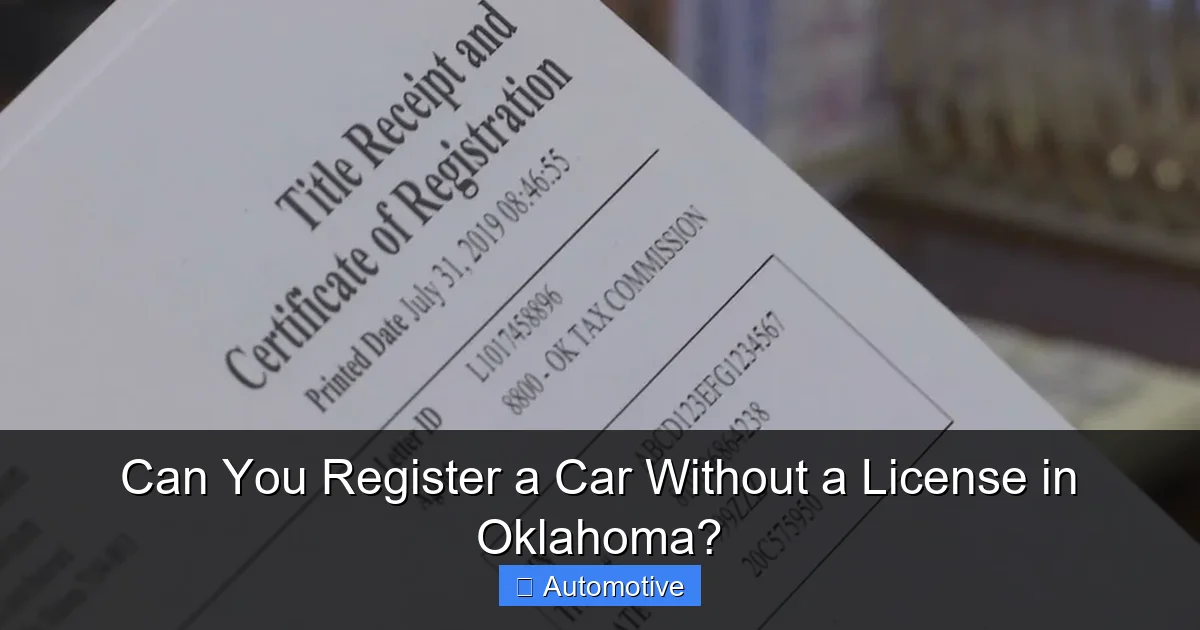
Before diving into the specifics of registering without a license, it’s important to understand how vehicle registration works in Oklahoma. The Oklahoma Tax Commission (OTC) oversees vehicle registration, and their rules are designed to ensure that all vehicles on the road are accounted for, insured, and legally owned.
Registration is more than just slapping a sticker on your windshield. It’s a legal requirement that ties a vehicle to an owner, provides proof of insurance, and helps law enforcement track vehicles for safety and accountability. In Oklahoma, all motor vehicles—cars, trucks, motorcycles, RVs, and even trailers over a certain weight—must be registered.
Now, here’s the key point: the state does not require you to have a driver’s license to register a vehicle. This is a common misconception. Many people assume that because you need a license to drive, you also need one to register. But registration and licensing are two separate processes.
For example, let’s say your elderly parent owns a car but no longer drives due to health reasons. They can still register the vehicle in their name, keep it insured, and even allow a licensed family member to drive it. Or imagine a college student who hasn’t gotten their license yet but buys a used car to learn on. They can register it under their name as long as they meet the other requirements.
The main goal of registration is to establish legal ownership and ensure the vehicle meets state safety and insurance standards. Your ability to drive is a separate matter. That said, if you plan to drive the vehicle, you will eventually need a license—but that’s a different requirement altogether.
Who Can Register a Vehicle in Oklahoma?
So, who exactly is eligible to register a car in Oklahoma? The answer is broader than you might think. You don’t need to be a licensed driver. You don’t even need to be the one who will drive the car. As long as you meet the following criteria, you can register a vehicle:
– You are the legal owner of the vehicle (or acting on behalf of the owner).
– You can provide valid identification.
– You can prove ownership through a title or MCO.
– You can show proof of insurance.
– You are an Oklahoma resident (or registering within the state for a non-resident purchase).
Let’s break that down. First, ownership. You must be the person listed on the title or have legal authorization (like a power of attorney) to register the vehicle. If you bought the car from a dealer, they’ll typically handle the initial paperwork, but you’ll still need to complete registration in your name.
Second, identification. Even without a driver’s license, you can use other forms of ID, such as a state-issued ID card, passport, military ID, or even a tribal ID. The key is that it must be government-issued and include your photo and legal name.
Third, insurance. Every registered vehicle in Oklahoma must have at least the minimum liability coverage: $25,000 for bodily injury per person, $50,000 per accident, and $25,000 for property damage. This protects others in case of an accident, regardless of who is driving.
Finally, residency. If you live in Oklahoma, you must register your vehicle within 30 days of establishing residency. If you’re just passing through or buying a car while visiting, different rules may apply.
Why Oklahoma Allows Registration Without a License
You might wonder why Oklahoma allows people to register vehicles without a driver’s license. After all, doesn’t that create a loophole? The truth is, the system is designed with practicality and fairness in mind.
Not everyone who owns a car drives it. Some people own vehicles for investment, collection, or family use. Others may be in the process of getting their license or have medical conditions that prevent them from driving. Requiring a license for registration would unfairly penalize these individuals.
Additionally, vehicle registration serves purposes beyond driving. It helps track ownership for tax purposes, supports law enforcement in identifying stolen vehicles, and ensures that all cars on the road are insured. These goals don’t depend on whether the owner can drive.
Moreover, allowing registration without a license encourages responsible ownership. If someone buys a car, they’re more likely to insure it and keep it registered if the process isn’t blocked by licensing requirements. This benefits everyone by reducing the number of uninsured or unregistered vehicles.
Required Documents for Car Registration in Oklahoma

Visual guide about Can You Register a Car Without a License in Oklahoma?
Image source: insurantly.com
Now that we’ve established that a driver’s license isn’t required, let’s talk about what you do need to register a car in Oklahoma. The process is straightforward, but you’ll need to gather several key documents before heading to the tag agency.
1. Proof of Ownership
This is the most important document. You must prove that you legally own the vehicle. The primary way to do this is with a properly signed title. If the car is new, you’ll receive a Manufacturer’s Certificate of Origin (MCO) from the dealer, which serves the same purpose.
The title must be signed by the seller (if applicable) and include your name as the buyer. If the title is in someone else’s name, you’ll need a bill of sale or a notarized transfer document. For inherited vehicles, you may need a court order or affidavit of inheritance.
2. Valid Identification
Since you don’t have a driver’s license, you’ll need an alternative form of ID. Oklahoma accepts several options:
– State-issued ID card (from the Oklahoma Department of Public Safety)
– U.S. passport
– Military ID
– Tribal ID
– Out-of-state driver’s license or ID (if you’re not an Oklahoma resident)
The ID must be current and include your photo, full name, and date of birth. If your name on the ID doesn’t match the name on the title, you’ll need legal documentation (like a marriage certificate or court order) to explain the difference.
3. Proof of Insurance
Oklahoma law requires all registered vehicles to have liability insurance. You’ll need to provide an insurance card or policy declaration page that shows:
– Your name (or the vehicle owner’s name)
– The vehicle’s VIN and license plate number (if already assigned)
– Coverage amounts that meet or exceed state minimums
– Effective dates of the policy
Insurance must be active at the time of registration. If you’re transferring a policy from another state, make sure it meets Oklahoma’s requirements. Some insurers offer temporary coverage for new purchases, which can be helpful if you’re still shopping for a long-term policy.
4. Vehicle Information
You’ll need basic details about the vehicle, including:
– Vehicle Identification Number (VIN)
– Make, model, and year
– Odometer reading (for vehicles under 25 years old)
– Purchase price (for tax calculation)
If the vehicle is used, you may also need a completed Odometer Disclosure Statement, which verifies the mileage at the time of sale.
5. Application for Title and Registration
You’ll need to fill out Form 701, the Application for Title and Registration. This form collects your personal information, vehicle details, and insurance data. You can get it online from the Oklahoma Tax Commission website or pick it up at a tag agency.
If you’re registering a vehicle that was previously registered in another state, you may also need to complete a VIN inspection. This can usually be done at a law enforcement office or a certified inspection station.
6. Payment for Fees
Registration isn’t free. You’ll need to pay several fees, including:
– Title fee: $11
– Registration fee: Varies by vehicle type and weight (typically $20–$100)
– Tag agency fee: Around $4–$8
– Sales tax: 3.25% of the purchase price (or market value if gifted)
Fees can be paid by cash, check, or credit/debit card, depending on the tag agency. Some agencies charge a small convenience fee for card payments.
Step-by-Step Guide to Registering a Car Without a License
Visual guide about Can You Register a Car Without a License in Oklahoma?
Image source: oklahomalicenseplate.com
Ready to register your car? Here’s a simple, step-by-step guide to make the process smooth and stress-free—even without a driver’s license.
Step 1: Gather Your Documents
Before you leave the house, make sure you have everything you need:
– Signed title or MCO
– Valid photo ID (non-driver)
– Proof of insurance
– Completed Form 701
– Odometer disclosure (if required)
– Payment for fees
Double-check that all names match across documents. If there are discrepancies, bring supporting paperwork.
Step 2: Visit a Tag Agency
Oklahoma doesn’t have DMV offices like some states. Instead, vehicle registration is handled by licensed tag agencies. You can find one near you using the OTC’s online locator tool.
Call ahead to confirm hours and whether an appointment is needed. Some agencies are busy, especially at the end of the month.
Step 3: Submit Your Application
Hand over your documents to the tag agent. They’ll review everything, enter the information into the system, and calculate your fees. If something is missing or incorrect, they’ll let you know.
Be prepared to answer questions about the vehicle, such as how you acquired it or whether it’s been modified.
Step 4: Pay the Fees
Once everything checks out, pay your fees. You’ll receive a receipt and temporary registration (usually a paper tag) to display on your vehicle until your permanent plates arrive.
Step 5: Receive Your Title and Plates
Your official title will be mailed to you within a few weeks. Permanent license plates will also be sent by mail. Make sure your address is correct on the application to avoid delays.
Step 6: Keep Records
Store your title, registration, and insurance documents in a safe place. You’ll need them for renewals, sales, or if you’re pulled over by law enforcement.
Special Situations and Exceptions
While the general process is straightforward, there are some special cases where registering without a license might require extra steps.
Non-Residents Registering in Oklahoma
If you’re not an Oklahoma resident but buy a vehicle in the state, you may still register it temporarily. However, you’ll likely need to transfer registration to your home state within a certain timeframe.
Some states have reciprocity agreements that allow you to register an out-of-state purchase without immediate transfer. Check with your home state’s DMV for details.
Registering a Vehicle for Someone Else
You can register a car on behalf of someone else if you have legal authorization, such as a power of attorney. You’ll need to provide the same documents, plus proof of your authority to act.
Vehicles with Lienholders
If you financed the vehicle, the lienholder (like a bank) will be listed on the title. You’ll still register the car in your name, but the lienholder must approve the registration. They may also require proof of insurance before releasing the title.
Salvage or Rebuilt Titles
If the vehicle has a salvage or rebuilt title, additional inspections may be required. These vehicles must pass a safety and VIN inspection before registration.
Common Mistakes to Avoid
Even with the right documents, it’s easy to make mistakes during registration. Here are a few to watch out for:
– Using an expired ID: Make sure your ID is current. Expired IDs won’t be accepted.
– Missing signatures: The title must be signed by the seller. Unsigned titles delay the process.
– Incomplete insurance: Your policy must meet Oklahoma’s minimum coverage. Don’t assume your out-of-state policy qualifies.
– Incorrect odometer reading: This can trigger an audit or delay. Double-check the mileage.
– Wrong address: If your mailing address is wrong, you won’t receive your title or plates.
Renewing Your Registration Without a License
Once your vehicle is registered, you’ll need to renew it annually. The good news? You can renew without a driver’s license.
Renewal notices are mailed to your address about 60 days before expiration. You can renew online, by mail, or in person at a tag agency. You’ll need your license plate number, VIN, and proof of current insurance.
Fees are the same as initial registration, minus the title fee. Late renewals may incur penalties.
Conclusion
So, can you register a car without a license in Oklahoma? Absolutely. The state’s system is designed to be inclusive, allowing vehicle ownership and registration regardless of driving status. As long as you have proof of ownership, valid ID, insurance, and meet residency requirements, you’re good to go.
This flexibility benefits a wide range of people—from non-drivers to collectors, students to seniors. It encourages responsible vehicle ownership and ensures that all cars on the road are insured and accounted for.
Just remember: while you don’t need a license to register, you do need one to drive. If you plan to operate the vehicle, make sure to get your license and follow all traffic laws.
With the right preparation, registering your car in Oklahoma can be a quick and easy process—no license required.
Frequently Asked Questions
Can I register a car in Oklahoma if I don’t have a driver’s license?
Yes, you can register a car in Oklahoma without a driver’s license. The state does not require a valid driver’s license for vehicle registration, but you must provide an acceptable form of identification, such as a state-issued ID card or passport.
What forms of ID are accepted for car registration without a license?
Oklahoma accepts several forms of ID for registration, including a state-issued ID card, U.S. passport, military ID, tribal ID, or out-of-state driver’s license. The ID must be current and include your photo and legal name.
Do I need insurance to register a car in Oklahoma?
Yes, all vehicles registered in Oklahoma must have minimum liability insurance coverage: $25,000 for bodily injury per person, $50,000 per accident, and $25,000 for property damage. Proof of insurance is required at registration.
Can someone else register a car for me if I don’t have a license?
Yes, someone else can register a car on your behalf if they have legal authorization, such as a power of attorney. They will need to provide the same documents you would, plus proof of their authority to act.
How long do I have to register a car after moving to Oklahoma?
Oklahoma residents must register their vehicles within 30 days of establishing residency. This applies regardless of whether you have a driver’s license.
What happens if I don’t register my car in Oklahoma?
Driving an unregistered vehicle can result in fines, vehicle impoundment, and legal penalties. Additionally, unregistered vehicles are not covered by insurance, which could lead to significant financial liability in an accident.