Does a Mid Muffler Delete Void Dodge Warranty

Contents
- 1 Key Takeaways
- 2 📑 Table of Contents
- 3 What Is a Mid Muffler Delete?
- 4 How Warranties Work on Modified Vehicles
- 5 Magnuson-Moss Warranty Act: Your Legal Protection
- 6 When Can Dodge Deny a Warranty Claim After a Muffler Delete?
- 7 Real-World Examples and Case Studies
- 8 Tips to Protect Your Warranty When Doing a Muffler Delete
- 9 Performance and Sound: Is It Worth It?
- 10 Conclusion
- 11 Frequently Asked Questions


A mid muffler delete does not automatically void your Dodge warranty, but it can affect coverage for related components if damage is linked to the modification. Thanks to the Magnuson-Moss Warranty Act, manufacturers can’t void your entire warranty just because you modified the exhaust—unless they prove the change caused the issue. Understanding your rights and documenting everything is key to protecting your investment.
So, you’ve got a Dodge Charger, Challenger, or Ram, and you’re thinking about doing a mid muffler delete. Maybe you love the deeper, more aggressive exhaust note it gives your ride. Or perhaps you’re chasing a little extra horsepower and improved exhaust flow. Whatever your reason, one big question looms: Does a mid muffler delete void Dodge warranty?
It’s a fair concern. After all, your vehicle is still under factory warranty, and you don’t want to accidentally lose coverage over a modification that seems harmless. The good news? A mid muffler delete—removing the middle muffler section from your exhaust system—doesn’t automatically void your entire Dodge warranty. But there’s more to the story. The real answer depends on how the modification is done, what goes wrong, and whether Dodge can prove the delete caused the problem.
Let’s break it down in simple terms. Your Dodge comes with a manufacturer’s warranty that covers defects in materials and workmanship for a certain period—usually 3 years or 36,000 miles for basic coverage, and longer for powertrain components. This warranty is a promise from Dodge that your vehicle will perform as expected under normal use. But when you start modifying parts of the car, especially the exhaust system, things get a little grayer.
Many car enthusiasts assume that any aftermarket change—like a muffler delete—automatically cancels their warranty. That’s a common myth. In reality, federal law protects you. The Magnuson-Moss Warranty Act, passed in 1975, prevents manufacturers from voiding your warranty just because you installed an aftermarket part. They can only deny coverage if they can prove that the modification directly caused the failure.
So, if you do a mid muffler delete and later have an issue with your transmission, Dodge can’t deny your claim just because you removed a muffler. But if your exhaust manifold cracks and the dealer believes the increased backpressure or heat from the delete contributed to the damage, they might refuse to cover that repair. It’s all about causation.
In this article, we’ll dive deep into what a mid muffler delete is, how it affects your vehicle, and—most importantly—how it interacts with your Dodge warranty. We’ll cover your legal rights, real-world examples, and practical tips to help you make an informed decision. Whether you’re a weekend wrench-turner or just curious about mods, this guide will give you the clarity you need.
Key Takeaways
- Mid muffler delete doesn’t void the entire warranty: Your Dodge’s powertrain, electronics, and other systems remain covered unless directly affected by the modification.
- Magnuson-Moss Warranty Act protects consumers: This federal law prevents automakers from voiding warranties simply because aftermarket parts were installed.
- Dealerships may deny claims if causation is proven: If a repair issue is directly linked to the muffler delete, Dodge can legally deny coverage for that specific repair.
- Documentation is crucial: Keep receipts, installation records, and photos to defend your warranty claims if challenged.
- Sound and emissions compliance matter: A muffler delete may violate local noise or emissions laws, which could impact registration or inspections—even if warranty isn’t voided.
- Consider professional installation: DIY deletes increase risk of improper fitment or damage, which could weaken your warranty defense.
- Weigh performance gains against risks: While a mid muffler delete can improve sound and slight performance, it may reduce resale value and invite scrutiny during service.
📑 Table of Contents
- What Is a Mid Muffler Delete?
- How Warranties Work on Modified Vehicles
- Magnuson-Moss Warranty Act: Your Legal Protection
- When Can Dodge Deny a Warranty Claim After a Muffler Delete?
- Real-World Examples and Case Studies
- Tips to Protect Your Warranty When Doing a Muffler Delete
- Performance and Sound: Is It Worth It?
- Conclusion
What Is a Mid Muffler Delete?
Before we get into warranty implications, let’s make sure we’re on the same page about what a mid muffler delete actually is. In simple terms, it’s the removal of the middle muffler (sometimes called the “resonator” or “center muffler”) from your vehicle’s exhaust system. This is different from a full cat-back or axle-back exhaust upgrade, which replaces multiple components with aftermarket parts.
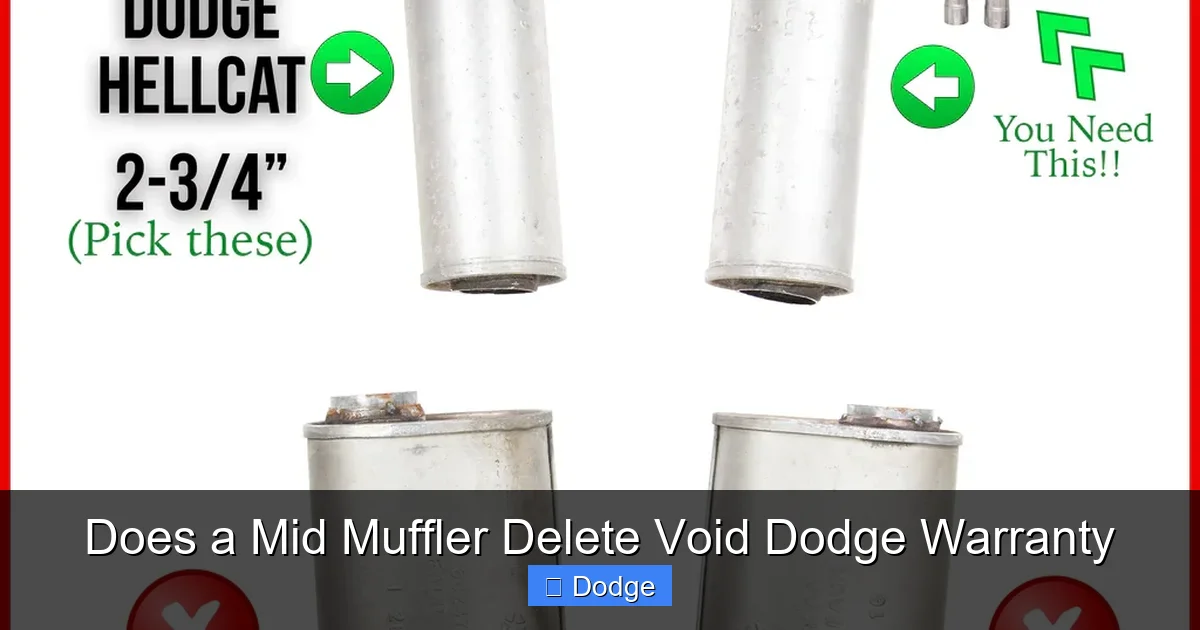
The mid muffler is typically located between the catalytic converter and the rear mufflers. Its job is to reduce exhaust noise and fine-tune the sound profile. By deleting it, you’re essentially creating a straighter, less restrictive path for exhaust gases to exit the vehicle. This often results in a louder, deeper, and more aggressive exhaust note—something many Dodge owners find appealing, especially on V8 models like the Scat Pack or Hellcat.
There are a few ways to perform a mid muffler delete:
- Cut and weld: A mechanic or DIYer cuts out the mid muffler and welds in a straight pipe or X-pipe/H-pipe for better flow.
- Bolt-on delete pipes: Some companies sell pre-made delete pipes that bolt into place, making the process reversible.
- Full exhaust replacement: Some owners use the delete as part of a larger exhaust upgrade, replacing the entire system with aftermarket parts.
The appeal is clear: better sound, a slight increase in horsepower (usually 5–15 HP, depending on the setup), and a more aggressive look under the car. But while the benefits sound great, it’s important to understand the potential downsides—especially when it comes to your warranty.
How Warranties Work on Modified Vehicles
Visual guide about Does a Mid Muffler Delete Void Dodge Warranty
Image source: carscoops.com
To understand whether a mid muffler delete voids your Dodge warranty, you need to know how vehicle warranties actually work—especially when modifications are involved.
When you buy a new Dodge, you get a comprehensive warranty that covers repairs for defects in materials or workmanship. This includes things like engine failure, transmission issues, electrical problems, and more. The warranty is not a blanket “fix anything” policy. It only covers issues that arise under normal use and aren’t caused by misuse, neglect, or unauthorized modifications.
Here’s where things get tricky. Many people believe that any modification—no matter how small—automatically voids the warranty. That’s not true. The Magnuson-Moss Warranty Act protects consumers by stating that a manufacturer cannot void a warranty simply because an aftermarket part was installed. However, the manufacturer can deny coverage if they can prove that the aftermarket part caused the failure.
Let’s use an example. Suppose you do a mid muffler delete on your Dodge Charger. A few months later, your catalytic converter fails. If Dodge can show that the increased exhaust flow or heat from the delete contributed to the converter’s failure, they can legally deny the warranty claim. But if your infotainment system stops working, they can’t blame the muffler delete—even if you have one.
This principle is known as “causation.” The burden of proof is on the manufacturer. They must demonstrate a direct link between the modification and the failure. If they can’t, your warranty claim should be honored.
It’s also worth noting that dealerships don’t always follow the law correctly. Some service advisors may tell you your warranty is void just because they see a modified exhaust. That’s not accurate—and you have the right to push back. If you’re denied a claim unfairly, you can escalate the issue to Dodge Customer Service or even file a complaint with the Federal Trade Commission (FTC).
Magnuson-Moss Warranty Act: Your Legal Protection
Visual guide about Does a Mid Muffler Delete Void Dodge Warranty
Image source: carscoops.com
The Magnuson-Moss Warranty Act is the cornerstone of consumer protection when it comes to vehicle warranties and modifications. Enacted in 1975, this federal law was designed to prevent manufacturers from using unfair warranty practices to discourage aftermarket parts and repairs.
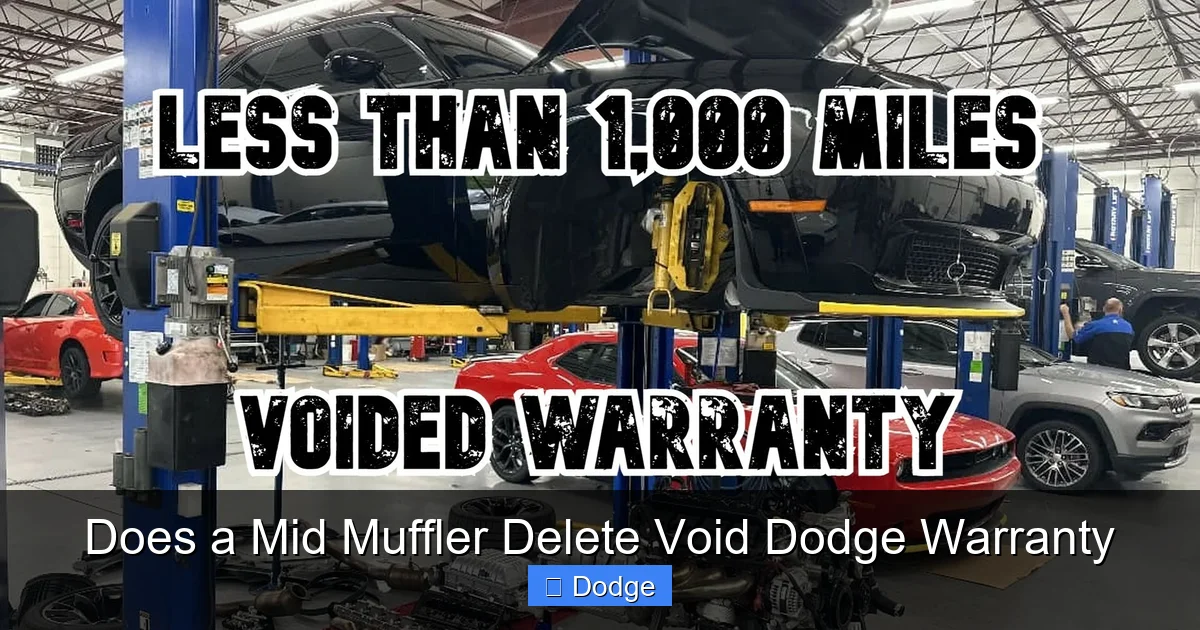
One of the key provisions of the act is that a manufacturer cannot void a warranty solely because an aftermarket part was used. They must prove that the part caused the damage. This is a huge win for car enthusiasts who want to personalize their vehicles without losing coverage.
Let’s break down how this applies to a mid muffler delete:
- No automatic voiding: Dodge cannot void your entire warranty just because you removed the mid muffler.
- Proof required for denial: If a repair claim is related to the exhaust system, Dodge must provide evidence that the delete caused the issue.
- Consumer recourse: If you believe your claim was unfairly denied, you can dispute it through Dodge or file a complaint with the FTC.
For example, if your rear differential fails and the dealer claims it’s due to “increased stress from exhaust modifications,” they need to back that up with technical data. Without proof, the claim should be covered.
It’s also important to know that the Magnuson-Moss Act applies to written warranties—like the one that comes with your new Dodge. It doesn’t cover verbal promises or informal agreements. So always get warranty terms in writing.
Many dealerships aren’t fully aware of this law, or they choose to ignore it to discourage modifications. That’s why it’s crucial to educate yourself. Keep a copy of the Magnuson-Moss Warranty Act handy, and don’t be afraid to reference it if a service advisor tries to deny your claim unfairly.
When Can Dodge Deny a Warranty Claim After a Muffler Delete?
Visual guide about Does a Mid Muffler Delete Void Dodge Warranty
Image source: cdn.shopify.com
While the Magnuson-Moss Warranty Act protects you, there are situations where Dodge can legally deny a warranty claim after a mid muffler delete. The key factor is causation—did the modification directly cause the problem?
Here are some scenarios where a claim might be denied:
Exhaust System Failures
If you experience issues with components directly related to the exhaust—like the catalytic converter, oxygen sensors, or exhaust manifolds—Dodge may investigate whether the muffler delete played a role. For example, removing the mid muffler can increase exhaust gas temperatures and alter backpressure. In rare cases, this could lead to premature wear on the catalytic converter or sensor failure.
If Dodge’s technicians find evidence that the delete contributed to the failure, they can deny the claim. This is why it’s important to have the work done professionally and to keep records.
Engine or Drivetrain Issues Linked to Exhaust Flow
In extreme cases, altering the exhaust system can affect engine performance. For instance, if the delete causes a lean air-fuel mixture or triggers a check engine light due to O2 sensor readings, and this leads to engine damage, Dodge might argue the modification was a factor.
However, modern Dodge vehicles with advanced engine management systems are designed to compensate for minor exhaust changes. A simple mid muffler delete is unlikely to cause serious engine problems—but it’s not impossible.
Noise or Emissions Violations
While not directly a warranty issue, a muffler delete can put you at risk of failing state emissions tests or violating local noise ordinances. Some states require functional mufflers, and excessive noise can result in fines. If your vehicle is flagged during an inspection, it could indirectly affect your warranty if Dodge claims the modification led to non-compliance.
Improper Installation
If the muffler delete was done poorly—say, with incorrect welding, leaks, or damage to surrounding components—Dodge can deny claims related to those issues. For example, if a poorly welded delete pipe causes an exhaust leak that damages the underbody, the repair may not be covered.
This is why professional installation is strongly recommended. A reputable shop will ensure the delete is done safely and won’t compromise other systems.
Real-World Examples and Case Studies
To better understand how this plays out in practice, let’s look at a few real-world scenarios.
Case 1: The Loud Charger
John owns a 2021 Dodge Charger R/T. He loves the sound of his V8 but wants it to be louder. He hires a local exhaust shop to do a mid muffler delete with a straight pipe. A few months later, his check engine light comes on. The dealer diagnoses a faulty oxygen sensor.
The service advisor notices the modified exhaust and tells John the warranty won’t cover the sensor because “aftermarket parts were installed.” John pushes back, citing the Magnuson-Moss Act. The dealer investigates and finds no evidence that the muffler delete caused the sensor failure. The repair is covered under warranty.
Case 2: The Cracked Manifold
Sarah deletes her mid muffler on her 2020 Dodge Challenger Scat Pack. She does the work herself with a cut-and-weld method. Six months later, she notices a loud ticking noise and reduced performance. The dealer finds a cracked exhaust manifold.
During inspection, they note that the delete altered exhaust flow and increased heat stress on the manifold. They deny the warranty claim, arguing the modification caused the failure. Sarah disputes it, but without professional documentation or proof of proper installation, she struggles to win the case.
Case 3: The Resonator Rumble
Mike installs a bolt-on mid muffler delete pipe on his Ram 1500. He keeps the receipt and photos of the installation. Later, his transmission fails. The dealer tries to deny the claim, saying “modifications void warranty.” Mike provides his documentation and references federal law. The transmission repair is covered.
These examples show that outcomes vary based on the situation, documentation, and how the modification was performed.
Tips to Protect Your Warranty When Doing a Muffler Delete
If you’re set on doing a mid muffler delete but want to protect your warranty, follow these practical tips:
- Use a reputable shop: Have the work done by a certified mechanic or exhaust specialist. This ensures proper installation and gives you documentation.
- Keep all receipts and records: Save invoices, photos, and any communication with the installer. This proves the work was done professionally.
- Choose reversible modifications: Bolt-on delete pipes can be removed if needed, making it easier to return the vehicle to stock for service.
- Don’t overdo it: Avoid combining the delete with other aggressive mods (like tune or header changes) that could increase scrutiny.
- Know your state laws: Make sure the delete complies with local noise and emissions regulations to avoid legal issues.
- Be honest but informed: If asked about modifications, be truthful—but also know your rights under the Magnuson-Moss Act.
Performance and Sound: Is It Worth It?
Let’s be real—most people do a mid muffler delete for the sound. And it delivers. The deeper, throatier exhaust note is music to the ears of many Dodge owners. You might also see a small horsepower gain, usually in the 5–15 HP range, depending on the engine and setup.
But is it worth the potential warranty risks? That depends on your priorities.
If you’re planning to keep the car long-term and rely on the warranty, you might want to think twice. On the other hand, if you’re comfortable with the risks and love the improved sound, it can be a worthwhile mod—especially if done responsibly.
Consider a cat-back exhaust system instead. These are designed to improve sound and performance while maintaining factory-like fit and often come with their own warranties. They’re more expensive, but they’re less likely to raise red flags at the dealership.
Conclusion
So, does a mid muffler delete void Dodge warranty? The short answer is no—not automatically. Thanks to the Magnuson-Moss Warranty Act, Dodge can’t void your entire warranty just because you modified the exhaust. However, they can deny coverage for specific repairs if they prove the delete caused the issue.
The key is documentation, professional installation, and understanding your rights. Keep records, choose reversible mods when possible, and don’t be afraid to stand up for your warranty if it’s unfairly denied.
A mid muffler delete can enhance your driving experience with better sound and a slight performance boost. But it’s not without risks. Weigh the benefits against the potential impact on your warranty, resale value, and legal compliance.
Ultimately, the decision is yours. But now, you have the facts to make an informed choice.
Frequently Asked Questions
Does removing the mid muffler void my Dodge warranty?
No, removing the mid muffler does not automatically void your Dodge warranty. The Magnuson-Moss Warranty Act protects you from blanket warranty denial due to aftermarket parts. Dodge can only deny claims if they prove the modification caused the issue.
Can Dodge refuse to fix my engine if I have a muffler delete?
Only if they can prove the muffler delete directly caused the engine problem. For unrelated issues like ignition or fuel system failures, your warranty should still cover repairs.
Will a muffler delete cause my check engine light to come on?
It’s possible, especially if oxygen sensors detect changes in exhaust flow. However, modern Dodge vehicles often compensate for minor exhaust modifications. A professional tune or O2 sensor spacer can help prevent this.
Is a mid muffler delete legal?
It depends on your state and local laws. Some areas require functional mufflers and have noise limits. Check your local regulations before modifying your exhaust.
Can I reverse a mid muffler delete to restore warranty coverage?
Yes, if you used bolt-on delete pipes or kept the original muffler, you can reinstall it. This may help avoid suspicion during service, though it doesn’t guarantee warranty approval if damage is already linked to the mod.
Should I tell my dealer about the muffler delete?
You’re not required to disclose modifications unless asked. If questioned, be honest—but also know your rights. Denial of warranty claims must be based on proof, not assumption.