

Does a 2013 Ford F-150 Have a Cabin Air Filter?

Contents
- 1 Key Takeaways
- 2 📑 Table of Contents
- 3 Confirming the 2013 F-150’s Cabin Air Filter
- 4 Exactly Where Is the 2013 F-150 Cabin Air Filter Located?
- 5 What Type of Cabin Air Filter Does the 2013 F-150 Use?
- 6 When and Why to Replace Your 2013 F-150 Cabin Air Filter
- 7 How to Replace the Cabin Air Filter Yourself: A Complete Guide
- 8 The Tangible Benefits of a Clean Cabin Air Filter
- 9 Common Mistakes and Troubleshooting
- 10 Frequently Asked Questions

Car LED Headlight Bulb

Tire Repair Kit

Car Bumper Protector

Car Armrest Cushion
Yes, your 2013 Ford F-150 absolutely has a cabin air filter. It’s located behind the glovebox and filters the air entering your truck’s HVAC system. Replacing it every 15,000-30,000 miles is key for clean air, healthy allergies, and optimal AC performance. The replacement is a straightforward DIY task that takes about 30 minutes and saves you money on dealer service.
If you own a 2013 Ford F-150, you might be wondering about the little-known component that plays a giant role in your daily driving comfort: the cabin air filter. You’re not alone. Many truck owners discover this filter only when they notice a musty smell from their vents or reduced airflow. So, let’s settle the big question right away: Yes, a 2013 Ford F-150 does have a cabin air filter. It’s a standard feature on every trim level, from the work-ready XL to the luxurious Platinum. This small, pleated component is your first line of defense against airborne contaminants, ensuring the air you breathe inside your truck’s cab is as clean as possible. Neglecting it can lead to poor HVAC performance, foul odors, and even exacerbate allergies or respiratory issues. In this complete guide, we’ll walk you through everything you need to know—from exactly where it’s hiding to how to change it yourself in under an hour. Think of this as your personal mechanic friend sharing the secrets to a fresher, healthier ride.
Key Takeaways
- Yes, it has one: All 2013 Ford F-150 models, from XL to Platinum, come equipped with a cabin air filter.
- Location is consistent: The filter is housed behind the glovebox, requiring simple panel removal for access.
- Replace regularly: Ford recommends changing it every 15,000-30,000 miles, or yearly in dusty/polluted areas.
- Health and performance: A clean filter removes pollen, dust, and pollutants, improving AC airflow and reducing allergens.
- DIY-friendly job: No special tools are needed; it’s a perfect first-time maintenance task for any truck owner.
- Filter type matters: Use a standard particulate filter or an upgraded carbon/activated charcoal filter for odor control.
- Reset the reminder: After replacement, use your dash controls to reset the “Cabin Air Filter” service message.
📑 Table of Contents
- Confirming the 2013 F-150’s Cabin Air Filter
- Exactly Where Is the 2013 F-150 Cabin Air Filter Located?
- What Type of Cabin Air Filter Does the 2013 F-150 Use?
- When and Why to Replace Your 2013 F-150 Cabin Air Filter
- How to Replace the Cabin Air Filter Yourself: A Complete Guide
- The Tangible Benefits of a Clean Cabin Air Filter
- Common Mistakes and Troubleshooting
Confirming the 2013 F-150’s Cabin Air Filter
It’s a common myth that trucks, especially rugged ones like the F-150, might skip this “car-like” luxury. But for the 2013 model year, Ford made cabin air filtration a universal feature. This wasn’t always the case; earlier generations of F-series trucks occasionally omitted it. However, by the 2009 redesign, Ford committed to including it across all models, and the 2013 is no exception. The filter is part of the HVAC (Heating, Ventilation, and Air Conditioning) system, typically situated in the fresh air intake path before the air reaches the blower motor and evaporator.
Why Ford Included It
Ford’s decision was driven by consumer demand for better interior air quality and the practical need to protect the expensive HVAC components from clogging with debris. Dust, pollen, road grime, and even soot from the diesel option (the 6.7L Power Stroke V8) can be massive problems. Without a filter, these particles would coat the evaporator coils and blower fan, reducing efficiency and causing that notorious “dirty socks” smell when moisture mixes with the grime. So, that filter is doing double duty: protecting you and your truck’s wallet.
What It Filters
Your 2013 F-150’s cabin air filter is designed to capture:
- Particulate Matter: Dust, pollen, mold spores, and soot.
- Pollutants: Exhaust fumes and other airborne chemicals (especially if you use an activated charcoal filter).
- Insects and leaves that get sucked into the fresh air vents.
It does not filter carbon monoxide or other gases from inside the cab—that’s a different system. But for outside air coming in, it’s a critical barrier.
Exactly Where Is the 2013 F-150 Cabin Air Filter Located?
Finding the filter is the first step to maintaining it. In your 2013 F-150, Ford placed it in a very accessible spot: behind the glovebox. This is a common location for many Ford vehicles of this era. The entire glovebox assembly must be lowered or removed to access the filter housing. Don’t worry—it’s a simple, tool-free process for the most part.

Visual guide about Does a 2013 Ford F-150 Have a Cabin Air Filter?
Image source: i.ytimg.com
Step-by-Step Access Guide
Here’s how to get to it:
- Open the glovebox fully and remove any contents.
- Locate the damper rod. On the right side (passenger side) of the glovebox interior, you’ll see a small plastic rod connected to a clip. This is the glovebox damper, which slows its descent. Gently slide the clip off the rod. You may need to press a tab.
- Lower the glovebox. With the damper disconnected, carefully let the glovebox door swing down. It will hang by two hinges at the top. You can let it rest on the floor mats or prop it up.
- Find the filter housing. Once the glovebox is down, you’ll see a rectangular black plastic cover on the back of the dashboard, roughly at chest level. This is the cabin air filter access door. It’s usually held by two plastic clips or a couple of screws.
- Open the housing. Press the release tabs on the clips and pull the cover off. If it has screws, use a Phillips screwdriver. The filter will slide out directly.
Pro Tip: Before you start, put the truck in park, set the parking brake, and disconnect the negative battery cable for safety. This prevents any accidental airbag deployment if you’re working near the dash (though the glovebox area is generally safe). Also, note the filter’s orientation—there’s an arrow showing airflow direction. You must install the new filter the same way.
Visual Confirmation
If you’re a visual learner, searching online for “2013 F-150 cabin air filter location” will yield dozens of photos and videos. You’ll see the black rectangular cover right behind where the glovebox sits. This consistency across all 2013 F-150s (including SuperCrew, SuperCab, and Regular Cab) makes it easy to remember for future changes.
What Type of Cabin Air Filter Does the 2013 F-150 Use?
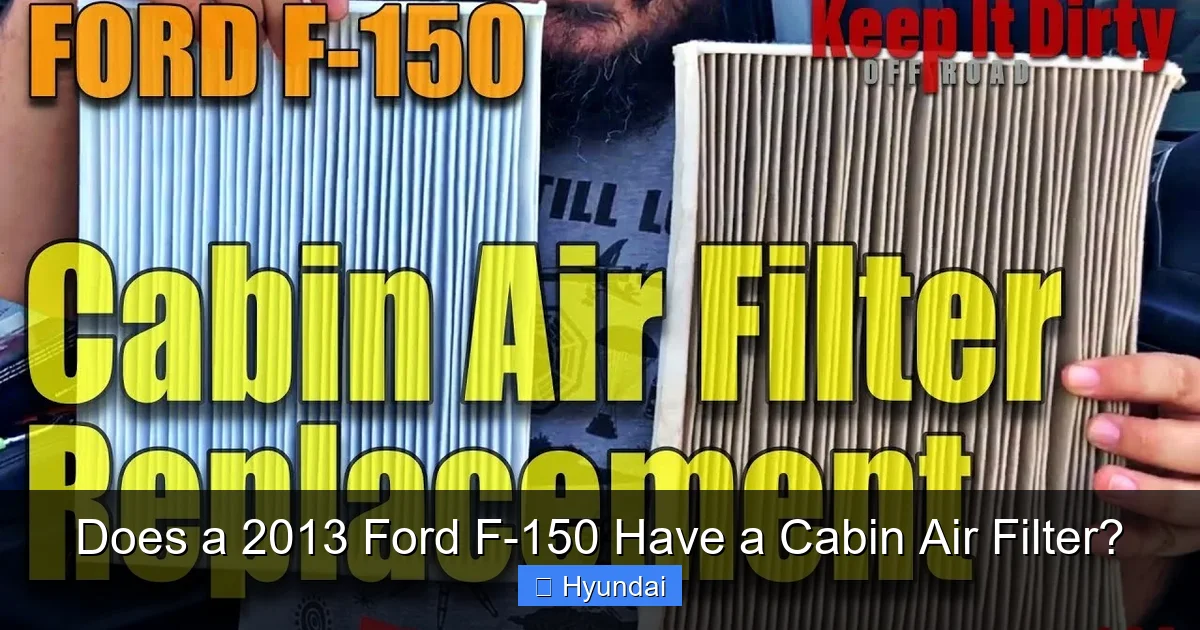
Your truck uses a standard rectangular panel filter, but you have choices. The exact part number varies slightly by engine and HVAC system, but the most common is the Motorcraft FL-820 or its aftermarket equivalents (like Fram CF10295). Always check your owner’s manual or an auto parts store’s catalog to be sure.
Visual guide about Does a 2013 Ford F-150 Have a Cabin Air Filter?
Image source: i.ytimg.com
Standard vs. Activated Carbon Filters
There are two main types you can choose from:
- Standard Particulate Filter: Made of layered paper or fibrous media. It’s great for dust, pollen, and allergens. It’s the most affordable and is what Ford likely installed originally.
- Activated Carbon / Charcoal Filter: This has an extra layer of activated carbon. It does everything the standard filter does, plus it adsorbs gaseous contaminants, odors, and exhaust fumes. If you drive in heavy traffic, toll booths, or areas with industrial smells, this is a worthwhile upgrade. It can also help eliminate that persistent “musty” odor from the vents, which is often caused by microbial growth on the filter itself.
Important: Never use an oiled filter (like those for performance engines) in your cabin air intake. The oil can damage the HVAC system’s sensors and components.
Aftermarket vs. OEM
You can buy a Motorcraft (Ford’s OEM part) filter from a dealership or a high-quality aftermarket brand like K&N, Fram, or WIX. For this application, aftermarket filters are perfectly reliable and often cheaper. Just ensure it meets or exceeds OEM specifications. Some brands offer “high-performance” versions with more pleats for longer life, but the standard replacement interval is still based on mileage and environment.
When and Why to Replace Your 2013 F-150 Cabin Air Filter
Ford’s official maintenance schedule for the 2013 F-150 recommends inspecting the cabin air filter every 15,000 miles and replacing it as needed, with a maximum service interval of 30,000 miles under normal conditions. But “normal” is a tricky word. If you frequently drive on dusty roads, in heavy city traffic, or in areas with high pollen counts (like Texas in spring), you should plan on replacing it annually, regardless of mileage.

Visual guide about Does a 2013 Ford F-150 Have a Cabin Air Filter?
Image source: i.ytimg.com
Signs It’s Time for a Change
You don’t have to wait for the mileage reminder. Your truck will give you clues:
- Reduced airflow from the vents, even on high fan speed.
- Unpleasant odors when the HVAC is on—musty, moldy, or stale smells.
- Increased dust settling on your dashboard and interior surfaces.
- Foggy windows that take longer to clear, as a clogged filter affects the HVAC’s dehumidifying ability.
- Allergy symptoms acting up more while driving.
- The dashboard service reminder illuminates (if equipped with the maintenance minder system).
The Cost of Neglect
Skipping this $20-$40 filter change can cost you hundreds. A clogged filter forces the blower motor to work harder, potentially burning it out. It also restricts airflow over the evaporator coil, causing ice to form and reducing cooling efficiency. This puts extra strain on the entire AC compressor. In extreme cases, you might face a $500+ repair bill for a blower motor or AC component that could have been protected by a simple filter.
How to Replace the Cabin Air Filter Yourself: A Complete Guide
This is one of the easiest DIY jobs on your F-150. No mechanical expertise, no special tools beyond maybe a Phillips screwdriver. Here’s a detailed walkthrough.
Tools and Parts Needed
- New cabin air filter. Confirm fitment for your 2013 F-150. Part numbers: Motorcraft FL-820, Fram CF10295, WIX 24836, etc.
- Phillips screwdriver (only if your filter cover has screws; most have clips).
- Gloves (optional, to keep your hands clean).
- Flashlight (the area can be dark).
Step-by-Step Replacement
- Prepare the vehicle. Park on a level surface, engage parking brake, and open the glovebox. Remove all items.
- Disconnect the damper rod. On the right side of the glovebox interior, locate the small plastic clip holding the damper rod. Press the tab and slide the clip off. Gently lower the glovebox door until it rests on the floor mats or is supported by your knee.
- Locate and remove the filter cover. You’ll see the rectangular black cover. If it has two plastic tabs, press them inward and pull the cover off. If it has screws, remove them with the Phillips screwdriver. Set the cover aside.
- Remove the old filter. Slide the filter out. Note the airflow direction arrow printed on its frame (usually points toward the blower motor/away from the fresh air intake).
- Inspect the housing. Before installing the new filter, check for leaves, debris, or moisture in the housing. Vacuum it out if needed. This is also a good time to check for any water leaks around the cowl (the area under the windshield wipers) that might have entered.
- Install the new filter. Place the new filter in the housing, ensuring the airflow arrow matches the old one’s orientation. It should fit snugly but without force.
- Reinstall the cover. Snap the plastic cover back into its clips or replace the screws. Don’t overtighten screws.
- Reconnect the glovebox. Lift the glovebox door back up until it clicks into the hinge stops. Reattach the damper rod by sliding the clip back onto the rod. Ensure it’s secure so the glovebox doesn’t drop suddenly.
- Reset the service reminder (if applicable). With the ignition on, go to the “Settings” menu on your dash display, find “Cabin Air Filter” or “Maintenance,” and reset the counter.
- Test the HVAC. Start the truck and turn the fan on high. Feel for strong airflow from all vents. Sniff for any new filter smell (normal for a few hours).
Total time: 15-30 minutes.
Helpful Tips and Warnings
- Direction is critical. Installing the filter backward severely restricts airflow. The arrow always points toward the interior of the truck, typically toward the blower motor.
- Don’t force it. If the filter doesn’t slide out easily, double-check for hidden clips or screws. Some models have a retaining clip on the side.
- Consider an upgrade. For about $5 more, an activated carbon filter can significantly improve odor control, especially if you have a pet or drive in smoggy areas.
- Related maintenance: While you’re down there, inspect the cowl area for leaves and debris. Clearing this can prevent future clogs and even water leaks. You might also want to check your battery health or seat cover condition during this easy access period.
The Tangible Benefits of a Clean Cabin Air Filter
Why go through this trouble? The payoff is immediate and long-lasting.
Health and Comfort
A clean filter is your in-cab air purifier. It removes up to 99% of pollen, dust, and particulate matter. For anyone with allergies, asthma, or other respiratory sensitivities, this is non-negotiable. You’ll notice fewer sneezes and irritated eyes on the road. The carbon filter variant also traps smog, exhaust fumes, and household odors that can seep in, creating a genuinely fresh interior environment.
HVAC System Protection and Efficiency
Your truck’s heating and cooling system is a complex network of fans, coils, and ducts. A clogged filter acts like a blocked artery, forcing the blower motor to labor under increased resistance. This can lead to premature motor failure. Furthermore, restricted airflow over the evaporator (AC) coil prevents it from getting cold enough, leading to poor cooling and potential ice buildup. In winter, it hampers heater performance. A clean filter ensures optimal airflow, faster cabin temperature adjustment, and maximum efficiency from your AC and heater.
Eliminating Odors
That stale, “old socks” smell is often caused by bacteria and mold growing on a saturated filter, especially in humid climates. Replacing the filter is usually the first and most effective step to banishing this odor. If the smell persists, you may need a professional HVAC system cleaning, but a new filter solves the problem 80% of the time.
Long-Term Savings
For the cost of a $25 filter and 30 minutes of your time, you protect a $1,000+ HVAC system. It’s one of the highest-ROI maintenance items on your maintenance checklist. It also keeps your interior cleaner, reducing dust buildup on the dash and seats, which means less frequent detailing.
Common Mistakes and Troubleshooting
Even with a simple job, things can go wrong. Here’s how to avoid pitfalls.
Mistake 1: Forgetting to Reset the Service Indicator
After you replace the filter, your truck’s computer still thinks the old, dirty filter is in there. If your 2013 F-150 has the maintenance minder system, you’ll see a “Cabin Air Filter” message on the dash. You must reset it. Go to your instrument cluster’s “Settings” or “Vehicle” menu, find the maintenance reset option, and follow the prompts. If you don’t reset it, the reminder will come back prematurely.
Mistake 2: Installing the Filter Backwards
The airflow arrow is there for a reason. If you install it backward, you’re essentially blocking the air intake. You’ll experience drastically reduced airflow from the vents, and the filter will clog even faster. Always double-check the arrow direction before securing the cover.
Mistake 3: Using the Wrong Filter
An ill-fitting filter allows unfiltered air to bypass it. Ensure the part number matches your specific truck. While most 2013 F-150s use the same filter, the SuperCrew and SuperCab might have slightly different HVAC systems. When in doubt, consult a parts store or your owner’s manual.
Mistake 4: Ignoring the Source of a Persistent Odor
If you replace the filter and the musty smell returns within a week or two, the problem is deeper. Mold or bacteria may be growing on the evaporator coil inside the HVAC housing. This requires a professional antimicrobial treatment (often called a “blow-in” treatment). A general cabin filter change guide won’t cover this, as it’s specific to the HVAC system internals.
When to Seek Professional Help
While the filter change is DIY, you should see a mechanic if:
- You suspect the blower motor is failing (whirring noises, intermittent operation).
- There’s a sweet, antifreeze-like smell (could indicate a heater core leak).
- Water is leaking into the passenger footwell (could be a clogged cowl drain or HVAC housing leak).
These are beyond a simple filter swap and indicate a larger issue.
Frequently Asked Questions
Does a 2013 Ford F-150 have a cabin air filter?
Yes, every 2013 Ford F-150, regardless of trim or cab style, comes equipped with a cabin air filter. It is located behind the glovebox and is part of the standard HVAC system.
Where exactly is the cabin air filter located in a 2013 F-150?
It is located behind the glovebox. To access it, open the glovebox fully, disconnect the damper rod on the passenger side, and lower the glovebox door. The rectangular filter housing will be visible on the back of the dashboard.
How often should I replace the cabin air filter in my 2013 F-150?
Ford recommends replacing it every 15,000 to 30,000 miles under normal conditions. However, if you drive in dusty, polluted, or high-pollen areas, you should replace it annually for optimal air quality and system performance.
What happens if I don’t replace the cabin air filter?
A clogged filter reduces HVAC airflow, strains the blower motor, decreases AC/heater efficiency, causes foul odors, and allows more allergens and dust into your cab. Long-term neglect can lead to costly HVAC repairs.
How much does a cabin air filter cost for a 2013 F-150?
A standard replacement filter costs between $15 and $30 at auto parts stores. An activated carbon filter (for odor control) typically runs $25 to $45. Dealership prices for the Motorcraft OEM part are slightly higher.
Can I drive without a cabin air filter?
You can physically drive without it, but it’s strongly discouraged. Unfiltered air will dump dust, pollen, and debris directly into your HVAC system, quickly clogging the evaporator and blower, leading to expensive repairs and poor air quality inside the cab.


