
Do Nissan Pathfinders Have Third-row Seating?

Yes, most Nissan Pathfinders come with third-row seating, making them a top choice for families needing extra passenger space. While earlier models varied in configuration, recent years have standardized the third row across nearly all trims, offering seating for up to eight passengers.
If you’re in the market for a family SUV that can comfortably seat more than five people, you’ve probably asked yourself: Do Nissan Pathfinders have third-row seating? The short answer is yes — and it’s one of the reasons this midsize SUV has remained a popular choice among families for over a decade. But like any vehicle feature, the details matter. Not all Pathfinders are created equal when it comes to seating, and understanding the nuances can help you make the best decision for your household.
The Nissan Pathfinder has evolved significantly since its debut in the late 1980s. Originally a rugged, truck-based SUV, it transitioned into a more car-like, unibody crossover in 2013 — a move that brought improved ride comfort, better fuel economy, and a stronger focus on family-friendly features. One of the most important of those features? The third-row seat. Today’s Pathfinder is designed with growing families in mind, offering spacious interiors, modern tech, and yes, seating for up to eight passengers. Whether you’re shuttling kids to soccer practice, carpooling with friends, or planning a road trip with extended family, the third row adds valuable flexibility.
But before you start picturing your entire neighborhood in the back seat, it’s important to know exactly what you’re getting. While third-row seating is now standard on most trims, there are still some variations depending on the model year, trim level, and even region. In this guide, we’ll walk you through everything you need to know about third-row seating in the Nissan Pathfinder — from how it works and how much space it offers, to tips for maximizing comfort and cargo space. By the end, you’ll have a clear picture of whether this SUV fits your family’s needs.
Key Takeaways
- Third-row seating is standard on most modern Nissan Pathfinders: Since the 2013 redesign, the Pathfinder has consistently offered a third row, seating up to seven or eight passengers depending on trim and configuration.
- Seating capacity varies by model year and trim: Some early 2000s models had optional third rows, but today’s models (2020–2024) include it as standard on all trims except possibly the base S in certain markets.
- Third-row access is user-friendly: The second-row seats feature a tilt-and-slide mechanism, making it easy for passengers to climb into the back without hassle.
- Cargo space is reduced with the third row up: When the third row is in use, trunk space drops significantly, so families should plan accordingly for luggage or gear.
- Comfort and legroom are adequate for kids and smaller adults: The third row is best suited for children or short trips, as legroom and headroom are limited compared to larger SUVs like the Chevrolet Tahoe.
- Safety features extend to all rows: Modern Pathfinders include advanced safety tech like blind-spot monitoring, rear cross-traffic alert, and multiple airbags, ensuring protection for all passengers.
- Fuel efficiency remains strong despite size: Even with eight passengers, the Pathfinder delivers competitive MPG thanks to its efficient V6 engine and lightweight design.
📑 Table of Contents
- Do Nissan Pathfinders Have Third-Row Seating? The Full Breakdown
- Seating Capacity and Configuration Options
- Cargo Space with the Third Row In Use
- Safety and Comfort Features for All Rows
- Fuel Efficiency and Performance with a Full Load
- How the Pathfinder Compares to Other Three-Row SUVs
- Final Verdict: Is the Third-Row Pathfinder Right for You?
Do Nissan Pathfinders Have Third-Row Seating? The Full Breakdown
Let’s cut to the chase: yes, Nissan Pathfinders do have third-row seating — and it’s been a core feature for well over a decade. However, the availability and configuration of that third row have changed over time, so it’s worth understanding the history and current standards.
Starting with the 2013 model year, Nissan redesigned the Pathfinder to be more family-oriented. This new generation moved away from the body-on-frame construction of earlier models and adopted a unibody platform shared with the Nissan Murano and Infiniti JX. This shift allowed for a more car-like ride, better fuel efficiency, and a more spacious interior — including a standard third-row seat. Since then, the third row has remained a staple across nearly all trims and model years.
That said, there are a few exceptions. In the early 2000s — particularly with the third-generation Pathfinder (2005–2012) — third-row seating was optional, not standard. Some base models came with just two rows, seating five passengers. But even then, most buyers opted for the third row, especially if they had larger families. Fast forward to today, and the story is much simpler: if you’re buying a new or recent used Pathfinder (2013 or newer), you can expect third-row seating as a standard feature on almost every trim level.
Which Trims Include Third-Row Seating?
As of the 2020–2024 model years, all Nissan Pathfinder trims — S, SV, SL, and Platinum — come with third-row seating standard. There’s no need to upgrade to a higher trim just to get that extra row. Even the base S model includes seating for seven or eight, depending on whether you choose the bench or captain’s chairs in the second row.
For example:
– The S and SV trims typically come with a second-row bench seat, allowing for three passengers in the second row and three in the third — totaling eight.
– The SL and Platinum trims often offer optional second-row captain’s chairs, which reduce second-row seating to two but improve comfort and accessibility. In this setup, the Pathfinder seats seven: two up front, two in the middle, and three in the back.
It’s worth noting that in some international markets or special editions, configurations may vary slightly. But for U.S. buyers, the third row is a given on all current models.
How Easy Is It to Access the Third Row?
One of the biggest concerns with third-row seating is accessibility — after all, no one wants to struggle to get in and out of the back. Fortunately, Nissan has made this process relatively smooth in the Pathfinder.
The second-row seats feature a “tilt-and-slide” mechanism. With the push of a lever or pull of a strap (depending on the model year), the entire seat tilts forward and slides forward, creating a wide pathway to the third row. This is especially helpful when you have child seats installed — you don’t have to remove them to let passengers in the back.
That said, the entry point isn’t as wide as in some larger SUVs like the Ford Expedition or Toyota Sequoia. Taller adults might find it a bit tight, but for kids, teens, and average-sized adults, it’s manageable. The doors also open wide, which helps.
Pro tip: If you frequently use the third row, consider the captain’s chairs option. They create a center aisle, making it even easier to walk back — no climbing over seats required.
Seating Capacity and Configuration Options
Visual guide about Do Nissan Pathfinders Have Third-row Seating?
Image source: nissanusa.com
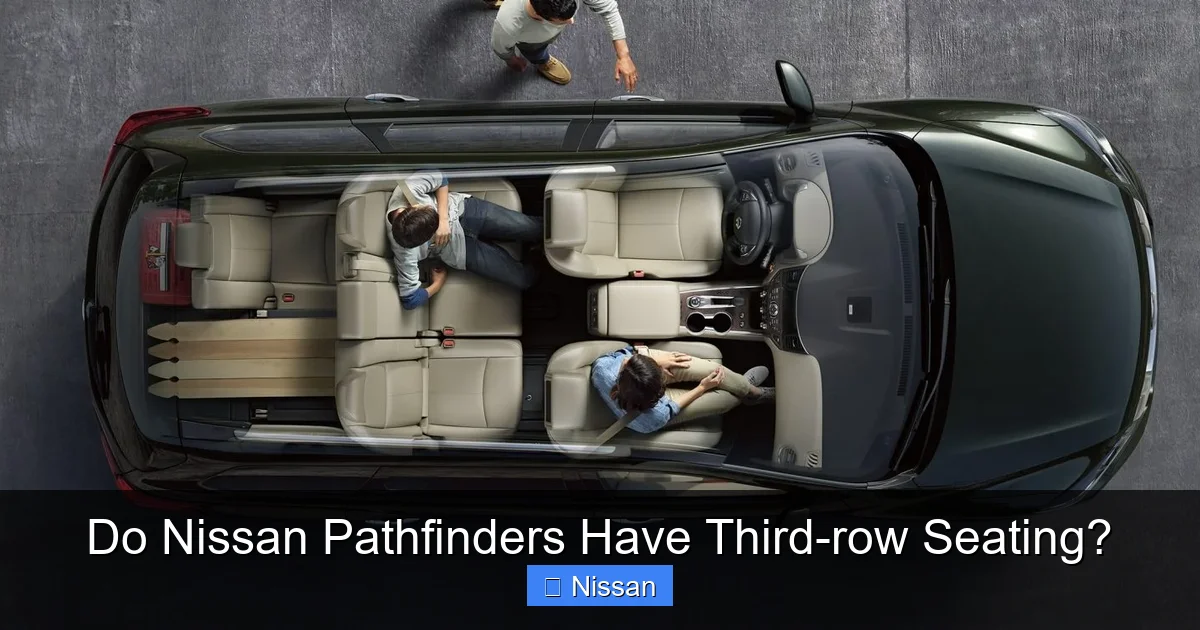
When it comes to seating, the Nissan Pathfinder offers flexibility to match your family’s needs. The standard configuration is an 8-passenger setup: two in the front, three in the second row, and three in the third. But you can also opt for a 7-passenger layout with second-row captain’s chairs.
8-Passenger Layout: Best for Large Families
The 8-passenger setup is ideal if you regularly transport six or more people. With a bench seat in the second row, you can fit three kids or two adults and a child. This layout is standard on the S and SV trims and is perfect for families with multiple children or those who frequently carpool.
One thing to keep in mind: the middle seat in the second-row bench is slightly narrower and may be less comfortable for adults on long drives. But for short trips or younger passengers, it works just fine.
7-Passenger Layout: More Comfort, Less Capacity
If comfort is a priority, the 7-passenger configuration with captain’s chairs is the way to go. This setup is available on the SL and Platinum trims and replaces the second-row bench with two individual seats. Each captain’s chair offers more space, better armrests, and often includes features like heating and ventilation on higher trims.
The trade-off? You lose one passenger spot. But many families find the added comfort and easier third-row access worth it. Plus, the center aisle makes it simple for passengers to move between rows — a big plus if you have restless kids or elderly relatives.
Third-Row Dimensions: How Much Space Is Really There?
Let’s talk numbers. The third row in the Nissan Pathfinder isn’t the most spacious in its class, but it’s serviceable for the right passengers.
– Legroom: Approximately 32–34 inches, depending on how far forward the second-row seats are adjusted.
– Headroom: Around 36–37 inches — enough for most kids and smaller adults, but taller passengers may feel cramped.
– Shoulder room: About 53–54 inches — tight for three adults, but fine for two or three children.
In practical terms, the third row is best suited for:
– Children under 12
– Teenagers on short trips
– Adults under 5’6″ for brief rides
If you’re planning a long road trip with adults in the third row, consider rotating seating or upgrading to a larger SUV. But for everyday use — school drop-offs, weekend errands, or family outings — the Pathfinder’s third row holds up well.
Cargo Space with the Third Row In Use
Visual guide about Do Nissan Pathfinders Have Third-row Seating?
Image source: nissanusa.com
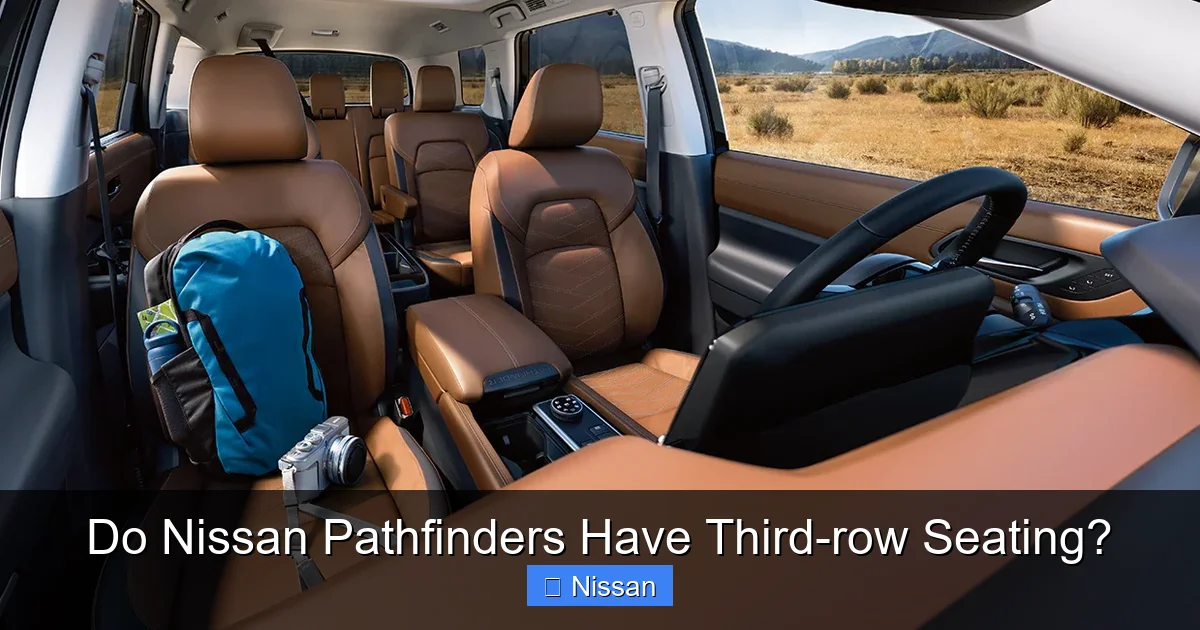
One of the biggest trade-offs with third-row seating is cargo space. When all three rows are occupied, trunk space shrinks dramatically. But how much room do you actually lose?
Cargo Capacity: With Third Row Up vs. Folded
Here’s a quick breakdown of cargo volume in the 2023 Nissan Pathfinder:
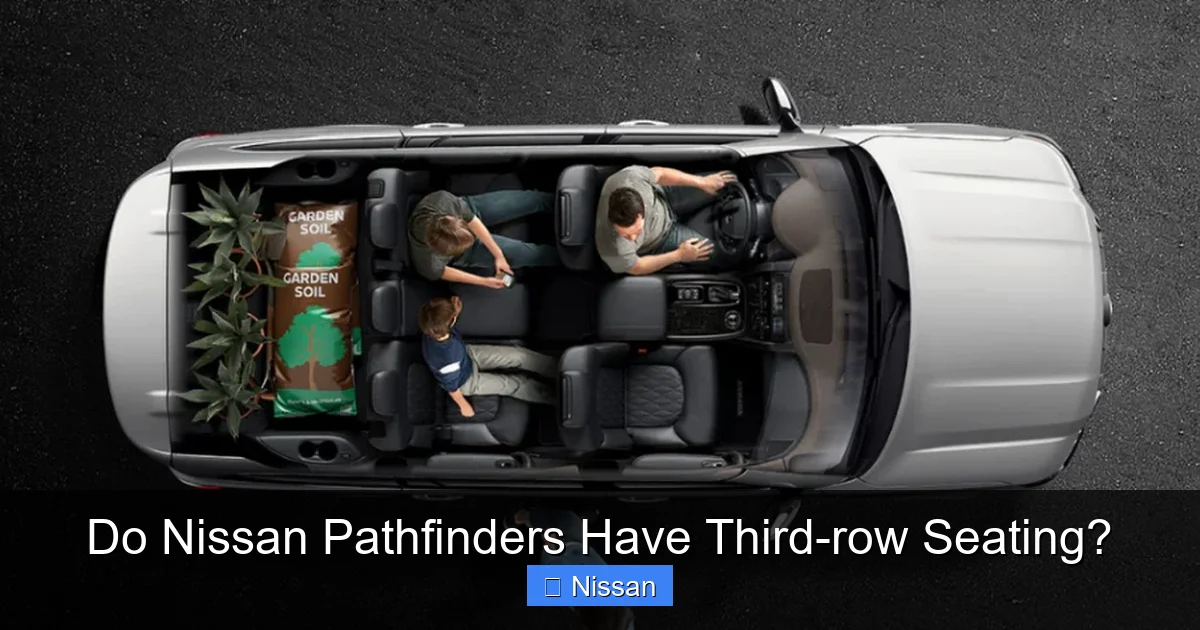
– Behind the third row: 16.4 cubic feet
– Behind the second row (third row folded): 47.4 cubic feet
– Behind the first row (all rear seats folded): 80.5 cubic feet
To put that in perspective, 16.4 cubic feet is enough for a few grocery bags, a small stroller, or a weekend duffel bag — but not much more. If you’re packing for a family vacation with eight people, you’ll likely need a roof box or trailer.
But don’t let that scare you. Most families don’t use the third row every day. When it’s not needed, the third-row seats fold flat into the floor, creating a seamless cargo area. The second-row seats also fold, giving you a massive 80+ cubic feet of space — enough for furniture, luggage, or even a small mattress.
Tips for Maximizing Cargo and Passenger Space
If you need both people and cargo space, here are a few smart strategies:
– Use the third row only when necessary. Fold it down for daily errands and pop it up for special occasions.
– Pack smart. Use soft-sided luggage and collapsible bags to fit more into the limited trunk space.
– Consider a roof rack or cargo box. Many Pathfinder owners install a roof basket or enclosed carrier for extra storage.
– Use under-seat storage. Some models have hidden compartments under the cargo floor — perfect for tools, emergency kits, or valuables.
With a little planning, the Pathfinder can handle both people and gear — even if it’s not the largest SUV on the block.
Safety and Comfort Features for All Rows
Visual guide about Do Nissan Pathfinders Have Third-row Seating?
Image source: mattblattnissan.com
Just because the third row is smaller doesn’t mean it’s an afterthought. Nissan has equipped the Pathfinder with safety and comfort features that extend to all passengers — front, middle, and back.
Safety Technology Across All Seating Positions
Modern Pathfinders come loaded with advanced driver-assistance systems (ADAS), many of which benefit rear passengers:
– Blind Spot Warning (BSW): Alerts you when a vehicle is in your blind spot — crucial when changing lanes with kids in the back.
– Rear Cross-Traffic Alert (RCTA): Warns you of approaching traffic when backing out of a parking spot — helpful when loading or unloading passengers.
– Automatic Emergency Braking (AEB): Can prevent or reduce the severity of collisions, protecting everyone on board.
– Lane Departure Warning (LDW) and Lane Keep Assist (LKA): Help keep the vehicle centered, reducing driver fatigue on long trips.
In addition, all seating positions are equipped with three-point seat belts and adjustable headrests. The third row includes LATCH anchors for child seats, making it easy to secure car seats safely.
Comfort and Convenience in the Third Row
While the third row isn’t as plush as the front seats, it’s not uncomfortable either. Features include:
– Cup holders in the rear side panels
– Air vents for climate control (on most trims)
– Reading lights
– USB ports for charging devices (on newer models)
On higher trims like the SL and Platinum, you’ll also find premium materials, ambient lighting, and even rear-seat entertainment options. It’s not luxury-limo level, but it’s more than adequate for most families.
Fuel Efficiency and Performance with a Full Load
You might be wondering: does carrying eight people hurt the Pathfinder’s fuel economy? The short answer is yes — but not as much as you’d think.
The current Pathfinder is powered by a 3.5-liter V6 engine producing 284 horsepower and 259 lb-ft of torque. It’s paired with a 9-speed automatic transmission and comes standard with front-wheel drive (FWD), with all-wheel drive (AWD) available.
According to EPA estimates:
– FWD: 20 mpg city / 27 mpg highway
– AWD: 19 mpg city / 26 mpg highway
Those numbers are impressive for a three-row SUV. Even with a full house of passengers and gear, you’ll still get better fuel economy than many competitors like the Ford Explorer or Jeep Grand Cherokee L.
Of course, real-world mileage will vary based on driving habits, terrain, and load. But thanks to its lightweight design and efficient engine, the Pathfinder remains one of the more fuel-friendly options in its class — even when packed to the brim.
How the Pathfinder Compares to Other Three-Row SUVs
So how does the Nissan Pathfinder stack up against rivals like the Toyota Highlander, Honda Pilot, and Kia Telluride? Let’s break it down.
Seating and Space
– Toyota Highlander: Seats up to eight, but third-row legroom is slightly better than the Pathfinder’s. However, cargo space behind the third row is smaller (16.0 vs. 16.4 cu ft).
– Honda Pilot: Also seats eight, with similar third-row space. The Pilot offers more cargo room behind the third row (16.5 cu ft) and a more refined interior.
– Kia Telluride: A strong competitor with upscale materials, excellent third-row comfort, and more cargo space (21 cu ft behind third row). But it’s also more expensive.
Performance and Efficiency
The Pathfinder’s V6 engine is more powerful than the base engines in the Highlander and Pilot (which use 4-cylinders or smaller V6s). It also matches or beats them in fuel economy, especially in highway driving.
Value and Reliability
Nissan offers a competitive warranty and strong reliability ratings. The Pathfinder tends to be slightly more affordable than the Telluride and Pilot, making it a great value for families who want three-row capability without breaking the bank.
Final Verdict: Is the Third-Row Pathfinder Right for You?
So, do Nissan Pathfinders have third-row seating? Absolutely — and they do it well. Whether you need seating for seven or eight, the Pathfinder delivers a practical, comfortable, and efficient solution for modern families.
It’s not the largest or most luxurious three-row SUV on the market, but it strikes a smart balance between space, performance, and affordability. The third row is usable for kids and shorter trips, cargo space is manageable with smart packing, and safety features protect everyone on board.
If you’re looking for a reliable family hauler that won’t guzzle gas or drain your wallet, the Nissan Pathfinder is a solid choice. Just remember: the third row is a bonus, not a luxury suite. Use it wisely, and it’ll serve your family well for years to come.
Frequently Asked Questions
Do all Nissan Pathfinders have third-row seating?
Most modern Nissan Pathfinders (2013 and newer) come with third-row seating standard on all trims. Earlier models (pre-2013) had it as an option, so check the specific vehicle history if buying used.
How many people can a Nissan Pathfinder seat?
The Pathfinder can seat up to eight passengers with a second-row bench seat, or seven with optional captain’s chairs. The third row accommodates three passengers, though it’s best for children or short trips.
Is the third row in the Nissan Pathfinder comfortable for adults?
The third row is tight for adults, especially on long drives. It’s best suited for children or smaller adults under 5’6″. Legroom and headroom are limited compared to larger SUVs.
Can you fold the third-row seats in a Nissan Pathfinder?
Yes, the third-row seats fold flat into the floor, creating a level cargo area. The second-row seats also fold, giving you up to 80.5 cubic feet of storage space.
Does the third row have air vents and USB ports?
Most newer Pathfinders include rear air vents and USB charging ports in the third row, especially on SL and Platinum trims. Check the specific model for exact features.
Is the Nissan Pathfinder a good family SUV?
Yes, the Pathfinder is a strong family SUV with three-row seating, good fuel economy, modern safety tech, and a comfortable ride. It’s a great value for families needing space without luxury prices.
