Do Hyundai Cars Lock Automatically?

Contents
- 1 Key Takeaways
- 2 📑 Table of Contents
- 3 How Hyundai’s Automatic Door Locking System Works
- 4 Which Hyundai Models Have Auto-Lock and When Did It Become Standard?
- 5 How to Customize Your Hyundai’s Auto-Lock Settings
- 6 The Safety and Security Benefits: Why This Feature Matters
- 7 Troubleshooting: What to Do If Your Hyundai Won’t Lock Automatically
- 8 The Future of Auto-Locking: Hyundai’s Innovations
- 9 Conclusion: Peace of Mind, Engineered In
- 10 Frequently Asked Questions



Yes, the vast majority of modern Hyundai vehicles feature an automatic door lock system. This safety feature typically engages when the vehicle reaches a predetermined speed (often 12-15 mph) or, in some models, when you walk away with the key fob. The exact behavior and programmability can vary by model year and trim level, so it’s important to understand your specific vehicle’s settings for optimal convenience and security.
Have you ever wondered, as you pull away from the curb, if your car doors have quietly clicked shut behind you? For Hyundai owners, the answer is almost certainly yes. The question “Do Hyundai cars lock automatically?” is a common one, and for good reason. In our modern era of convenience and security, automatic locking has become a fundamental expectation. It’s a quiet guardian, working in the background to protect you and your vehicle. This feature isn’t just about convenience; it’s a critical safety layer designed to keep doors securely latched while you’re driving and to make it harder for thieves to access your car when you’re not around. Let’s dive deep into the world of Hyundai’s auto-lock systems, exploring how they work, which models have them, how you can control them, and what to do if things aren’t working as they should.
Key Takeaways
- Widespread Feature: Automatic door locking is a standard safety feature on nearly all Hyundai models produced in the last decade.
- Two Main Triggers: Systems primarily activate either by vehicle speed (most common) or via proximity key fob (walk-away locking).
- Customizable Settings: Many Hyundai models allow you to enable, disable, or adjust the auto-lock behavior through the vehicle’s settings menu or with the key fob.
- Safety First: The primary purpose is to prevent accidental door opening while driving and deter opportunistic theft when parked.
- Model Year Matters: The specific implementation and available customizations can differ significantly between older and newer models, and across the model lineup.
- Manual Override Always Exists: You can always manually lock/unlock doors with the key fob, interior button, or physical key, overriding the automatic system.
- Not a Substitute for a Steering Wheel Lock: For maximum theft deterrence, especially in high-risk areas, a physical steering wheel lock remains a powerful secondary measure.
📑 Table of Contents
- How Hyundai’s Automatic Door Locking System Works
- Which Hyundai Models Have Auto-Lock and When Did It Become Standard?
- How to Customize Your Hyundai’s Auto-Lock Settings
- The Safety and Security Benefits: Why This Feature Matters
- Troubleshooting: What to Do If Your Hyundai Won’t Lock Automatically
- The Future of Auto-Locking: Hyundai’s Innovations
- Conclusion: Peace of Mind, Engineered In
How Hyundai’s Automatic Door Locking System Works
At its heart, Hyundai’s automatic door locking system is a simple yet brilliant integration of electronics and mechanics. It’s not one single system for all models, but it generally follows two primary activation methods. Understanding which one your vehicle uses is the first step to mastering its behavior.
The Speed-Activated Lock (The Most Common Method)
This is the classic and most prevalent setup. The car’s central computer, or Body Control Module (BCM), constantly monitors the vehicle’s speed via the speed sensor. Once you accelerate past a predetermined threshold—typically 12 to 15 miles per hour—the BCM sends a signal to the door lock actuators. You hear (and sometimes feel) that familiar *clunk* as all doors (and sometimes the trunk or tailgate) lock simultaneously. This happens seamlessly, usually within a second or two of hitting the speed trigger. The logic is pure safety: a door that unlocks while the car is in motion is a major hazard. This system engages every time you drive, regardless of whether you used the key fob or a physical key to initially unlock the car.
The Proximity/Key Fob-Activated “Walk-Away” Lock
This is a more advanced, convenience-focused feature available on many newer Hyundai models equipped with Smart Key systems. Here, the system uses the low-frequency radio signal from your key fob. When you exit the vehicle and move a certain distance away (usually 5-10 feet), the car’s sensors detect that the key fob is no longer inside. After a short delay (often 5-30 seconds), the system automatically locks all doors and may also close the power windows and sunroof. This is the feature that gives you that “set it and forget it” peace of mind as you walk to the store or your office. It’s important to note that for this to work, the key fob must not be left inside the vehicle or in your pocket/bag if you’re still within the detection zone.
The Role of the Driver’s Door Switch and Safety Overrides
No matter which primary system your Hyundai uses, there is always a manual override. The driver’s door typically has a master lock/unlock switch. If you manually unlock the driver’s door using this switch *after* the auto-lock has engaged, it will often unlock all doors (depending on settings). Conversely, you can manually lock all doors by pressing the lock button on the key fob or the interior door lock button at any time. Furthermore, a critical safety override exists: if any door is opened while the vehicle is moving, the auto-lock system will typically disengage for that door to prevent it from automatically locking you inside or trapping a passenger. This is a vital fail-safe.
Which Hyundai Models Have Auto-Lock and When Did It Become Standard?
If you’re driving a Hyundai from the last 10-15 years, you almost certainly have an automatic locking feature. However, the exact nature of the system has evolved. Early implementations in the late 2000s and early 2010s were often simple speed-based locks with no user customization. As technology advanced, Hyundai began adding programmability and proximity-based features.
Visual guide about Do Hyundai Cars Lock Automatically?
Image source: i.ytimg.com
Model Lineup Breakdown (General Trends)
While you should always consult your owner’s manual for your specific VIN, here is a general guide:
- Compact Cars (Elantra, Accent, Kona): Speed-activated auto-lock has been standard for many model years. Newer Kona and Elantra models with available Smart Keys also feature the walk-away auto-lock function.
- Midsize Cars (Sonata): Similar to compacts. The Sonata has featured speed-based locking for well over a decade. Higher trims with proximity keys gained the walk-away feature around the 2015-2016 model year onward.
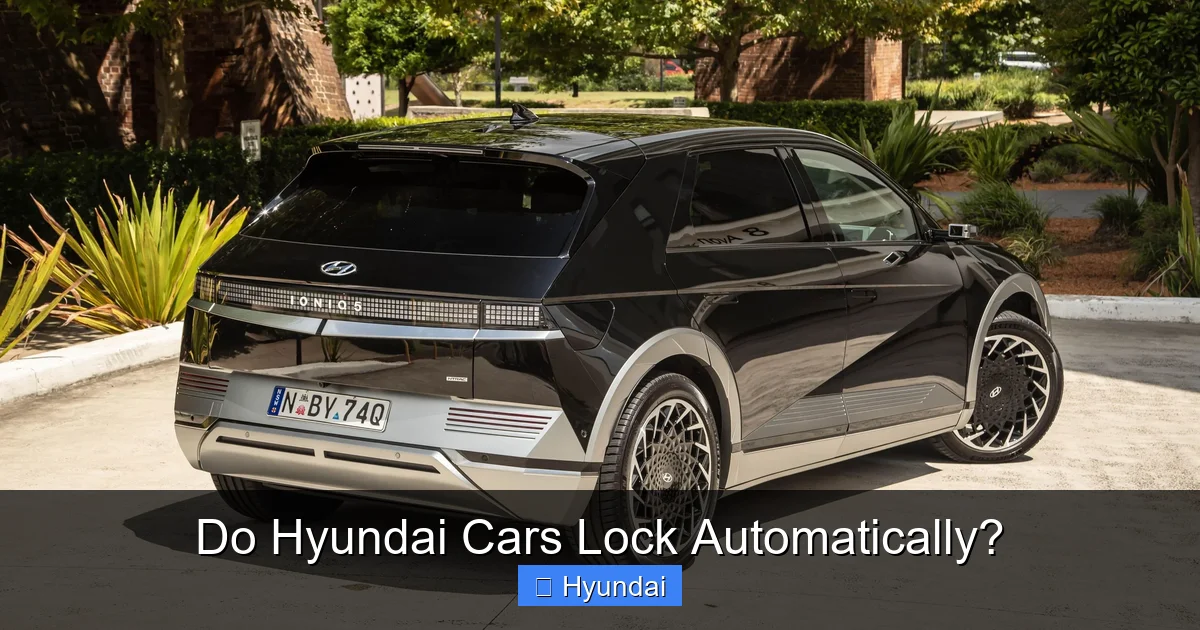
- SUVs & Crossovers (Tucson, Santa Fe, Palisade, Ioniq): These family-focused models prioritize the feature. Speed-based locking is universal. The walk-away lock is very common on models equipped with Hyundai’s Digital Key or Smart Key systems, especially from the early 2020s onward. The Palisade and Santa Fe are particularly known for comprehensive lock/unlock automation.
- Electric Vehicles (Ioniq 5, Ioniq 6, Kona Electric): These tech-forward models almost universally include both speed-based and proximity-based auto-lock as part of their advanced keyless entry and convenience suites.
To give a concrete example, a 2018 Hyundai Tucson SEL with the standard key fob will lock its doors at 12 mph. A 2023 Hyundai Ioniq 5 Limited with the Digital Key will not only lock when you walk away but can also be configured to unlock as you approach. The progression is clear: from a simple safety mandate to a fully integrated comfort feature.
How to Customize Your Hyundai’s Auto-Lock Settings
One of the best parts of Hyundai’s modern systems is that you are often in control. You aren’t stuck with a one-size-fits-all behavior. The method to change settings depends on your vehicle’s infotainment system and model year.
Visual guide about Do Hyundai Cars Lock Automatically?
Image source: goodwood.com
Using the Vehicle Settings Menu (Most Common Method)
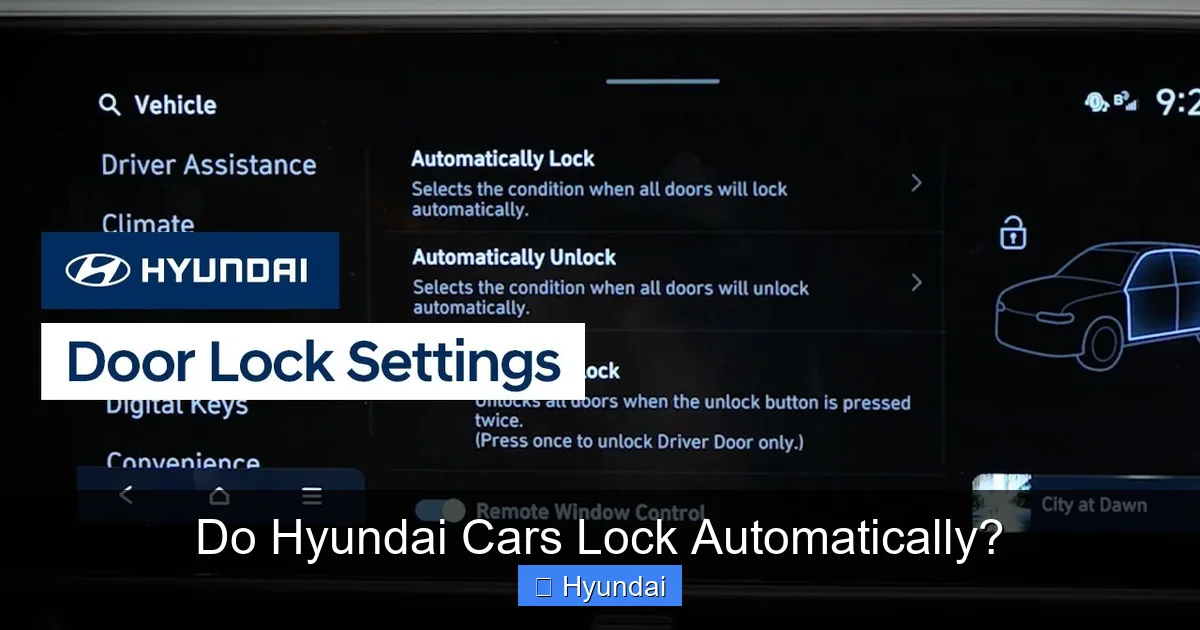
On models with a color display screen (often 5-inch or larger), the settings are buried in the “Vehicle” or “Door/Lock” menu. Here’s the typical path:
- Turn the ignition to the “ON” position (engine off) or start the car.
- Use the dashboard or steering wheel controls to navigate to “Settings” on the screen.
- Select “Vehicle.”
- Look for options like “Door Lock,” “Auto Door Lock,” or “Convenience.”
- You will likely see toggles for:
- “Auto Door Lock”: Enable/Disable the speed-based locking.
- “Auto Door Unlock”: Often linked to shifting into “Park” or turning off the ignition. You can usually set it to unlock all doors or just the driver’s door.
- “Walk-Away Auto Lock”: Enable/Disable the proximity-based lock. This might also have a timer setting for the delay.
Make sure to save your settings before exiting the menu. These settings are often stored in the car’s memory tied to your key fob, so if you share the car, your preferences might switch when a different key is used.
Using the Key Fob (A Hidden Trick)
Some Hyundai models allow for a quick key fob combination to toggle certain features. The most common sequence is: press and hold the lock button on the key fob for several seconds (often 3-5 seconds) while the ignition is on. You might hear a chime confirming the change. This often toggles the “Auto Door Lock” feature on or off. This is not universal, so consult your owner’s manual before trying this. It’s a handy trick for a quick change without navigating menus.
Why Would You Change These Settings?
You might want to disable speed-based auto-lock if you frequently have a child or pet in the back seat and worry about them accidentally locking themselves in (though the safety override should prevent this). You might prefer to disable walk-away lock if you often hand your key fob to a valet or parking attendant and want to ensure the car remains unlocked for them. Conversely, you might enable all features for maximum security and “set-and-forget” convenience. It’s your car; tailor it to your lifestyle.
The Safety and Security Benefits: Why This Feature Matters
It’s easy to think of auto-lock as a minor convenience, but its benefits are substantial, touching on both safety and security.
Preventing Accidental Ejection While Driving
This is the non-negotiable, life-saving reason the feature exists. A door that comes unlocked while a vehicle is in motion can be opened by a child, a distracted passenger, or even by aerodynamic force at high speeds. An open door while driving leads to a loss of control, potential ejection, and catastrophic accidents. The automatic lock at speed is a critical, passive safety system mandated by automotive safety standards worldwide. It works silently to ensure that the only way a door opens is if the driver or a passenger intentionally uses the interior handle or switch.
Deterring Opportunistic Theft
When you’re walking away from your car in a parking lot, the last thing you want to do is fumble with the key fob, especially if your hands are full. The walk-away auto-lock eliminates that moment of vulnerability. A car that is visibly and audibly locked is a less appealing target for a thief looking for a quick, easy score. It ensures the vehicle is secured the moment you depart, regardless of whether you remembered to press the lock button. This is a powerful psychological and practical deterrent.
Enhancing General Convenience
Let’s be honest: it’s just nice. You get in, start the car, and drive away knowing everything is secured. You get out, walk to your destination, and don’t have to second-guess whether you locked the door. This reduces mental load and integrates seamlessly into our busy lives. For families, it means one less thing to remember when loading kids and groceries into the car.
Troubleshooting: What to Do If Your Hyundai Won’t Lock Automatically
So you’ve confirmed your model should have the feature, but you’re not hearing that satisfying *clunk* at 15 mph. Don’t panic. There are several common culprits, and many have simple fixes.
Step 1: Check Your Settings
This is the most overlooked cause. Someone (maybe you, maybe a previous driver) may have disabled the “Auto Door Lock” setting in the vehicle menu. Follow the steps in the customization section above to verify it’s turned ON. Also, check if the “Walk-Away Auto Lock” is enabled if that’s the feature you’re expecting.
Step 2: The Classic “Fob in the Cup Holder” Problem
This is the #1 reason walk-away locking fails. If you place your key fob in the cup holder, center console, or even a jacket pocket on the seat, the car’s sensors may still detect the fob’s signal inside the vehicle. The car thinks the key is still present and will not lock. The solution: Keep the key fob on your person—in your pocket or bag—as you exit and walk away.
Step 3: Key Fob Battery is Low
A weak key fob battery can weaken the proximity signal, causing the car to think the key is still inside when it’s actually in your pocket. Replace the coin cell battery in your fob. It’s a cheap and easy fix.
Step 4: Faulty Door Lock Actuator or Switch
If the setting is on, the key is on you, and the battery is new, the issue may be mechanical or electrical. A door lock actuator (the small motor that moves the lock) can fail. A door ajar switch might be stuck, telling the computer a door is open and preventing the auto-lock cycle. Sometimes, simply opening and firmly closing all doors can reset a stuck switch. If problems persist, a Hyundai dealer or qualified mechanic can run a diagnostic on the Body Control Module (BCM) to pinpoint the faulty component.
Step 5: Aftermarket Alarm or Stereo Interference
Improperly installed aftermarket electronics can sometimes interfere with the vehicle’s CAN bus network, disrupting signals between the BCM and door modules. If you recently had work done, this could be the cause.
The Future of Auto-Locking: Hyundai’s Innovations
Hyundai isn’t standing still. The simple speed-based lock is just the foundation. The future is about seamless, intelligent access.
The Digital Key: Your Phone is the Key
Newer Hyundai models (like the Ioniq 5, Ioniq 6, and some Santa Fe/Tucson trims) offer a Digital Key. Using NFC (Near Field Communication) or Bluetooth, your compatible smartphone can lock, unlock, and even start the car. The auto-lock features are integrated here too. When you walk away with your phone, the car locks. You can even share a digital key with others via a secure app, and their auto-lock settings will work with their phone. This eliminates the physical key fob entirely.
Biometric and Personalized Settings
Imagine your car knowing it’s you. Future systems could use fingerprint scanners or facial recognition (already available on some Genesis models) not just to start the car, but to load your personalized profile. That profile would include your preferred auto-lock settings—maybe you like the car to lock at 10 mph, while another driver prefers 15 mph. The car would automatically adjust as you get in.
Integration with Home/Device Ecosystems
Think about your smart home. Your Hyundai could communicate with your home security system. When you drive away and the car auto-locks, it could signal your home system to arm itself. Or, if you forget to lock your car in the garage, your smart speaker could remind you or even lock it remotely via an app. The car becomes a node in your connected life.
Conclusion: Peace of Mind, Engineered In
So, do Hyundai cars lock automatically? The resounding answer is yes, and they have done so for many years. What started as a simple, speed-activated safety mandate has blossomed into a sophisticated, customizable convenience feature that enhances both security and daily ease of use. From the reliable *clunk* at 12 mph in a 2012 Elantra to the silent, phone-triggered lock of a 2024 Ioniq 5, the core promise is the same: your Hyundai is looking out for you. Take a few minutes to explore your vehicle’s settings menu. Understand what your specific model does and how you can tailor it. By knowing how your car’s auto-lock system functions, you gain a small but significant measure of control and confidence every time you get behind the wheel or walk away from it. It’s not just a feature; it’s a modern automotive guardian, working tirelessly in the background.
Frequently Asked Questions
Does my Hyundai’s auto-lock work if I use the physical key to unlock the door?
Yes, typically. Once you start driving and reach the set speed (usually 12-15 mph), the auto-lock system will engage and lock all doors, regardless of whether you used the physical key, key fob, or interior button to initially unlock them. The system resets its behavior each time you start a new drive.
Can I completely turn off the automatic door lock on my Hyundai?
In most Hyundai models with a digital settings menu, yes. You can usually navigate to the “Door Lock” or “Vehicle” settings and disable the “Auto Door Lock” feature. However, some older models without a settings menu may have this feature hard-coded and non-disableable for safety compliance.
Will my Hyundai lock automatically if the engine is running but I’m parked?
No. The speed-based auto-lock system is inactive when the vehicle is stationary (speed = 0 mph). The walk-away auto-lock (if equipped) will only activate if you exit the vehicle, close all doors, and walk away with the key fob. An idling car with you inside will not lock itself.
My Hyundai’s auto-lock stopped working. Is it a simple DIY fix?
It can be. First, check the settings menu to ensure the feature is enabled. Second, ensure your key fob battery is good and that you’re not leaving the fob inside the car when testing the walk-away feature. If those are fine, the issue may be a faulty door lock actuator or a door ajar switch, which often requires professional diagnosis and repair.
Do Hyundai’s auto-lock systems also lock the trunk or tailgate?
It depends on the model and configuration. For sedans like the Sonata or Elantra, there is no separate trunk lock to engage in this context. For SUVs and crossovers like the Tucson, Santa Fe, and Palisade, the power tailgate/trunk lock is typically included in the auto-lock cycle. When the doors lock automatically, the tailgate lock actuator is also activated.
Is the auto-lock feature different on Hyundai’s electric vehicles like the Ioniq 5?
The core safety function (locking at a set speed) is identical. The difference lies in the advanced convenience features. Models like the Ioniq 5 with Hyundai’s Digital Key offer highly customizable walk-away auto-lock and auto-unlock settings, often with adjustable proximity distances and integration with the vehicle’s extensive suite of connected car services via the Hyundai app.