Difference Between F250 and F350
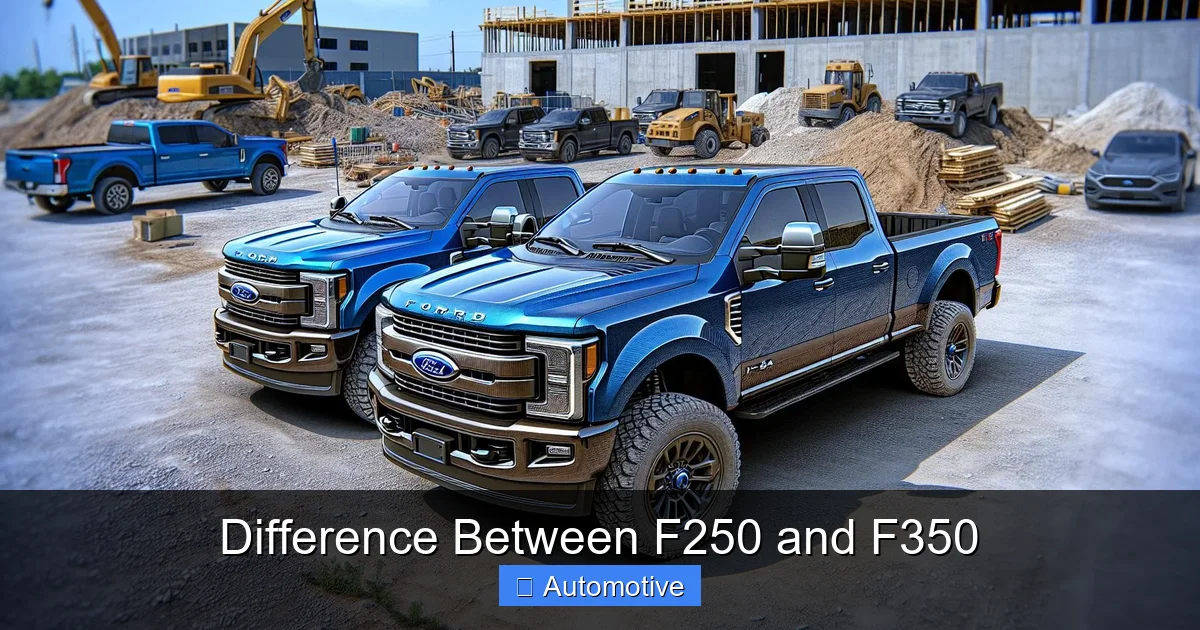
The Ford F250 and F350 are both heavy-duty pickup trucks, but they’re built for different jobs. The F250 suits most towing and hauling needs, while the F350 offers higher capacity for extreme workloads. Choosing the right one depends on your specific towing, payload, and daily driving requirements.
[FEATURED_IMAGE_PLACEHODEL]
In This Article
- 1 Key Takeaways
- 2 📑 Table of Contents
- 3 Introduction: F250 vs F350 – Which Heavy-Duty Ford Is Right for You?
- 4 Understanding the Basics: What Sets the F250 and F350 Apart?
- 5 Towing Capacity: How Much Can Each Truck Pull?
- 6 Payload Capacity: Hauling More in the Bed
- 7 Suspension and Chassis: Built for the Long Haul
- 8 Fuel Efficiency and Operating Costs
- 9 Interior Comfort and Technology
- 10 Which One Should You Choose?
- 11 Conclusion: Matching the Right Truck to Your Needs
- 12 Frequently Asked Questions
Key Takeaways
- GVWR and Payload: The F350 has a higher gross vehicle weight rating (GVWR) and greater payload capacity than the F250, making it better for heavy loads.
- Towing Capacity: The F350 generally offers higher towing ratings, especially when equipped with dual rear wheels (DRW), ideal for large trailers and fifth wheels.
- Suspension and Chassis: The F350 features a heavier-duty suspension system and reinforced frame, providing better stability under extreme loads.
- Dual Rear Wheels (DRW): The F350 is available with dual rear wheels, which improve traction and load distribution, while the F250 typically uses single rear wheels (SRW).
- Ride Comfort: The F250 offers a smoother, more comfortable ride for daily driving, while the F350’s stiffer suspension can feel rougher when unloaded.
- Fuel Efficiency: The F250 tends to be slightly more fuel-efficient due to its lighter build and less aggressive tuning.
- Cost and Maintenance: The F350 is usually more expensive upfront and may have higher maintenance costs due to its heavy-duty components.
📑 Table of Contents
- Introduction: F250 vs F350 – Which Heavy-Duty Ford Is Right for You?
- Understanding the Basics: What Sets the F250 and F350 Apart?
- Towing Capacity: How Much Can Each Truck Pull?
- Payload Capacity: Hauling More in the Bed
- Suspension and Chassis: Built for the Long Haul
- Fuel Efficiency and Operating Costs
- Interior Comfort and Technology
- Which One Should You Choose?
- Conclusion: Matching the Right Truck to Your Needs
Introduction: F250 vs F350 – Which Heavy-Duty Ford Is Right for You?
If you’re in the market for a heavy-duty pickup truck, chances are you’ve come across the Ford F250 and F350. These two models are among the most popular in Ford’s Super Duty lineup, and for good reason. They’re built tough, designed to handle serious work, and offer impressive towing and hauling capabilities. But while they may look similar at first glance, there are important differences between the F250 and F350 that can make one a better fit for your needs than the other.
Choosing between these trucks isn’t just about preference—it’s about matching the right tool to the job. Whether you’re towing a massive travel trailer across the country, hauling construction materials to a job site, or simply need a reliable daily driver that can handle tough tasks, understanding the distinctions between the F250 and F350 is crucial. In this guide, we’ll break down everything you need to know, from towing capacity and payload to ride comfort and cost, so you can make an informed decision.
Understanding the Basics: What Sets the F250 and F350 Apart?
Visual guide about Difference Between F250 and F350
Image source: allinthedifference.com
At their core, both the Ford F250 and F350 are part of Ford’s Super Duty family, designed for work rather than just weekend adventures. They share many components, including powerful engine options like the 6.7L Power Stroke V8 turbo diesel and the 7.3L V8 gas engine. But the differences lie in their structural design, weight ratings, and intended use.
The F250 is classified as a three-quarter-ton truck, while the F350 is a one-ton truck. This classification isn’t just a marketing term—it reflects real differences in capability. The F350 is built to handle heavier loads, both in terms of what it can tow and what it can carry in the bed. It features a stronger frame, heavier-duty axles, and a more robust suspension system. These upgrades allow the F350 to meet higher gross vehicle weight ratings (GVWR), which directly impacts its payload and towing limits.
Another key difference is the availability of dual rear wheels (DRW) on the F350. While the F250 typically comes with single rear wheels (SRW), the F350 can be equipped with DRW, which significantly improves stability when towing large trailers or carrying heavy payloads. This feature is especially important for commercial users or those who frequently tow fifth-wheel RVs.
But it’s not just about raw power. The F250 often appeals to buyers who want heavy-duty capability without sacrificing too much ride comfort. Its suspension is tuned to balance work and daily driving, making it a better choice for those who use their truck for both work and family transportation. The F350, on the other hand, leans more toward maximum utility, which can come at the cost of a stiffer, less comfortable ride when not under load.
Real-World Example: Towing a Fifth Wheel
Let’s say you’re planning to buy a large fifth-wheel RV that weighs around 18,000 pounds. You’ll need a truck that can safely handle that kind of load, both in terms of towing capacity and stability. An F250 with the right configuration might be able to tow it, but you’ll be pushing the limits. An F350, especially one with dual rear wheels and the high-output diesel engine, will handle it with ease and provide better control on steep grades and windy roads.
Daily Driving Considerations
If you’re using your truck to commute to work, drop kids off at school, or run errands around town, the F250 might be the more practical choice. It’s easier to maneuver in tight spaces, parks more comfortably, and doesn’t feel as “trucky” when unloaded. The F350, especially in DRW form, can feel bulky and less agile in everyday situations.
Towing Capacity: How Much Can Each Truck Pull?
Visual guide about Difference Between F250 and F350
Image source: i.ytimg.com
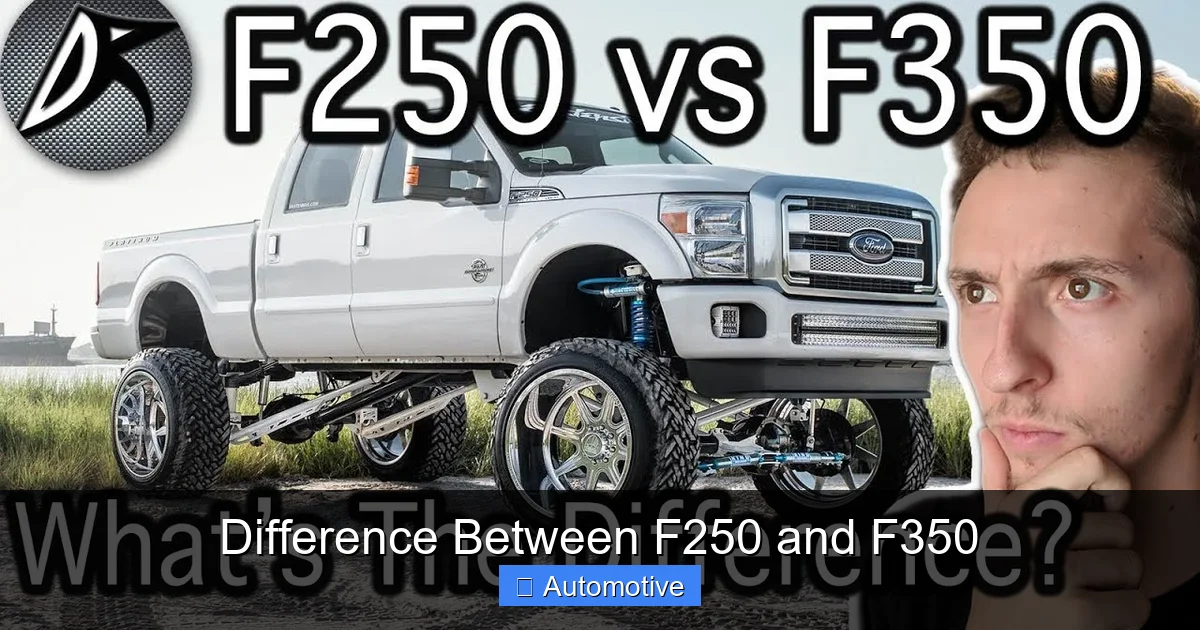
Towing capacity is one of the most important factors when comparing the F250 and F350. Both trucks are capable of impressive towing, but the F350 generally comes out on top, especially in specific configurations.
The towing capacity of either truck depends on several factors, including engine choice, drivetrain (4×2 or 4×4), cab configuration (regular, super, or crew cab), bed length, and whether it has single or dual rear wheels. On average, a properly equipped F250 can tow between 12,000 and 16,000 pounds. The F350, however, can reach up to 21,000 pounds or more when configured with the high-output 6.7L Power Stroke diesel engine and dual rear wheels.
For example, a 2024 Ford F250 SuperCab with the 6.7L diesel, 4×4 drivetrain, and gooseneck hitch might have a maximum towing capacity of around 15,000 pounds. In contrast, a similarly equipped F350 with DRW could exceed 20,000 pounds. That extra 5,000 pounds might not seem like much, but it can be the difference between being able to tow a large horse trailer or a heavy equipment hauler and having to leave it behind.
Fifth-Wheel and Gooseneck Towing
Both trucks are excellent for fifth-wheel and gooseneck towing, but the F350’s higher capacity and dual rear wheel option make it the preferred choice for serious RV owners and commercial users. The wider stance of DRW improves stability, especially when backing up or driving in crosswinds. It also reduces the risk of trailer sway, which can be dangerous with heavy loads.
Conventional Towing
For conventional towing—like pulling a boat, camper, or utility trailer—the F250 is often more than sufficient. Most recreational trailers fall well within the F250’s towing range, and you’ll enjoy better fuel economy and a more comfortable ride. Unless you’re regularly towing near the upper limits of the F250’s capacity, the extra cost and complexity of the F350 may not be necessary.
Payload Capacity: Hauling More in the Bed

Visual guide about Difference Between F250 and F350
Image source: allinthedifference.com
While towing gets a lot of attention, payload capacity is equally important—especially if you frequently carry heavy items in the truck bed. Payload refers to the total weight the truck can carry, including passengers, cargo, and any accessories like toolboxes or camper shells.
The F250 typically has a payload capacity ranging from 3,000 to 4,000 pounds, depending on configuration. The F350, thanks to its heavier-duty suspension and frame, can handle payloads of 4,000 to 7,000 pounds or more. This makes the F350 ideal for contractors, landscapers, or anyone who regularly hauls heavy materials like gravel, lumber, or machinery.
Example: Hauling Construction Materials
Imagine you’re a contractor who needs to transport 5,000 pounds of roofing materials to a job site. An F250 might struggle with that load, especially if you have passengers and tools in the cab. An F350, particularly one with the high-capacity payload package, can handle it with room to spare. The stronger rear suspension and reinforced frame ensure the truck remains stable and safe under heavy loads.
Impact on Ride Quality
It’s worth noting that higher payload capacity often comes with a stiffer ride. The F350’s suspension is tuned for heavy loads, which means it can feel bouncy or harsh when the bed is empty. The F250, with its more balanced setup, offers a smoother ride for everyday use. If you’re not regularly carrying heavy payloads, you might not notice—or appreciate—the F350’s extra strength.
Suspension and Chassis: Built for the Long Haul
The suspension and chassis are where the F250 and F350 truly diverge in terms of engineering. Both trucks use a solid front and rear axle setup, but the F350’s components are significantly heavier and more durable.
The F350 features a thicker frame, larger leaf springs, and heavier-duty shock absorbers. It also often includes a rear stabilizer bar and upgraded rear axle (such as the Dana 80 or Ford 10.5-inch axle), which can handle greater torque and weight. These upgrades are essential for maintaining control and safety when towing or hauling at maximum capacity.
In contrast, the F250 uses a slightly lighter frame and suspension components. This reduces overall weight, which can improve fuel efficiency and ride comfort. However, it also limits the truck’s ability to handle extreme loads.
Dual Rear Wheels: A Game-Changer for Stability
One of the most noticeable differences is the availability of dual rear wheels (DRW) on the F350. DRW setups use two wheels on each side of the rear axle, effectively doubling the contact patch with the road. This improves traction, reduces tire wear, and enhances stability—especially when towing large trailers.
DRW is rarely available on the F250, and when it is, it’s usually limited to specific commercial configurations. For most buyers, the F250 comes with single rear wheels (SRW), which are easier to maneuver and park but offer less load-bearing capability.
Off-Road and Rough Terrain Performance
Both trucks can handle off-road conditions, but the F350’s heavier build can be a double-edged sword. On rough terrain, the F350’s stiff suspension can make the ride feel harsh, while the F250’s more forgiving setup may provide better comfort. However, the F350’s extra ground clearance and robust axles can be an advantage in extreme conditions, such as rock crawling or deep mud.
Fuel Efficiency and Operating Costs
When it comes to fuel economy, the F250 generally has a slight edge over the F350. This is due to its lighter weight, smaller tires (in SRW configurations), and less aggressive tuning. While the difference may not be dramatic, it can add up over time, especially if you drive long distances or use your truck for daily commuting.
According to EPA estimates, a 2024 Ford F250 with the 6.7L diesel engine averages around 15–18 miles per gallon (mpg) combined, depending on driving conditions. The F350, particularly in DRW form, may drop to 13–16 mpg. Gas-powered models will be lower still, typically ranging from 10–14 mpg.
Maintenance and Repair Costs
The F350’s heavy-duty components come with a price. Tires for DRW setups are more expensive, and replacing them means buying four rear tires instead of two. Brake components, suspension parts, and drivetrain elements are also more costly due to their increased size and strength. Additionally, the F350 may require more frequent servicing when used under heavy loads.
The F250, while still a work truck, tends to have lower maintenance costs and is easier to service at local repair shops. Its simpler design and wider availability of parts make it a more budget-friendly option in the long run.
Insurance and Registration
Insurance premiums and registration fees can also differ. The F350, especially in commercial or DRW configurations, may be classified differently by insurers and state agencies, potentially leading to higher costs. Always check with your provider and local DMV when comparing total ownership expenses.
Interior Comfort and Technology
Despite their work-focused design, both the F250 and F350 offer modern interiors with plenty of comfort and technology features. Ford has made significant improvements in recent years, adding premium materials, advanced infotainment systems, and driver-assist technologies.
Both trucks are available with Ford’s SYNC 4 infotainment system, which includes a large touchscreen, Apple CarPlay, Android Auto, and navigation. Higher trims like the Lariat, King Ranch, and Platinum offer leather seats, heated and ventilated front seats, panoramic sunroofs, and premium audio systems.
Cab and Bed Configurations
You can choose from regular cab, SuperCab, or Crew Cab layouts on both models, with the Crew Cab being the most popular for families and long-distance travelers. Bed lengths typically range from 6.75 to 8 feet, giving you flexibility based on your hauling needs.
The F350’s larger footprint can make the Crew Cab feel more spacious, especially in the rear seats. However, the F250’s slightly smaller size can be an advantage in tight parking situations or urban driving.
Driver-Assist Features
Both trucks come with Ford’s Co-Pilot360 suite of safety features, including blind-spot monitoring, lane-keeping assist, adaptive cruise control, and trailer reverse guidance. These features are especially helpful when towing, as they improve visibility and control.
Which One Should You Choose?
So, how do you decide between the F250 and F350? The answer depends on your specific needs and usage patterns.
Choose the F250 if:
– You tow regularly but don’t exceed 16,000 pounds.
– You carry moderate payloads (under 4,000 pounds).
– You use your truck for daily driving and family transportation.
– You prefer a smoother, more comfortable ride.
– You want better fuel economy and lower operating costs.
Choose the F350 if:
– You frequently tow over 16,000 pounds, especially fifth wheels or gooseneck trailers.
– You regularly haul heavy payloads (over 4,000 pounds).
– You need dual rear wheels for stability and traction.
– You work in construction, agriculture, or other heavy industries.
– You want maximum capability and don’t mind a stiffer ride.
Final Tip: Test Drive Both
The best way to decide is to test drive both trucks. Pay attention to how they feel on the road, especially when unloaded. Try parking, turning, and driving on highways and back roads. If possible, simulate a towing scenario or load the bed with weight to see how each truck handles.
Conclusion: Matching the Right Truck to Your Needs
The Ford F250 and F350 are both exceptional heavy-duty trucks, but they serve different purposes. The F250 strikes a balance between capability and comfort, making it ideal for most towing and hauling tasks while remaining practical for daily use. The F350, with its higher capacity, dual rear wheel option, and reinforced build, is built for those who demand maximum performance and reliability under extreme conditions.
Understanding the difference between the F250 and F350 isn’t just about numbers—it’s about finding the right tool for your lifestyle. Whether you’re towing a camper across the country or hauling equipment to a job site, choosing the right truck ensures safety, efficiency, and long-term satisfaction. Take the time to evaluate your needs, compare configurations, and test drive both models. With the right choice, your Ford Super Duty will be a trusted partner for years to come.
Frequently Asked Questions
What is the main difference between the F250 and F350?
The main difference is in their weight capacity and build strength. The F350 has a higher gross vehicle weight rating (GVWR), greater payload and towing capacity, and often comes with dual rear wheels, making it better suited for extreme towing and hauling tasks.
Can the F250 tow as much as the F350?
Generally, no. While the F250 is capable of impressive towing, the F350—especially with dual rear wheels and the high-output diesel engine—can tow significantly more, often exceeding 20,000 pounds compared to the F250’s typical 12,000–16,000-pound range.
Is the F350 harder to drive than the F250?
The F350 can feel larger and less agile, especially in dual rear wheel configurations. It may be harder to park and maneuver in tight spaces, but it offers superior stability when towing heavy loads.
Do I need dual rear wheels?
Dual rear wheels (DRW) are recommended if you frequently tow very heavy trailers, especially fifth wheels or gooseneck setups. They improve stability and weight distribution but reduce maneuverability and increase tire costs.
Which truck is more fuel-efficient?
The F250 is typically more fuel-efficient due to its lighter weight and single rear wheel setup. The difference may be small, but it can add up over time, especially with frequent driving.
Can I use the F350 as a daily driver?
Yes, many people use the F350 as a daily driver, especially in crew cab configurations. However, its stiffer ride and larger size may make it less comfortable for city driving compared to the F250.