Chevrolet Sell My Car

Contents

Rear View Camera

Side Mirror Rain Guard

Digital Tire Pressure Gauge

Car Bumper Protector
Selling your Chevrolet doesn’t have to be stressful or time-consuming. Whether you’re upgrading, downsizing, or just ready for a change, understanding your options—from private sales to trade-ins and online platforms—can help you get the best value. With the right strategy, you can sell your car quickly, safely, and profitably.
So, you’ve got a Chevrolet—maybe it’s a trusty Silverado that’s hauled everything from furniture to fishing gear, a sleek Malibu that’s cruised countless commutes, or a rugged Tahoe that’s seen family road trips and mountain adventures. It’s served you well, but now it’s time to move on. Whether you’re eyeing a newer model, switching to an EV, or simply don’t need a car anymore, the big question is: How do I sell my Chevrolet the right way?
Selling a car can feel overwhelming. There are so many options—private sale, trade-in, online buyers, dealerships—and each comes with its own pros and cons. You want to get a fair price, but you also don’t want to spend weeks haggling with strangers or dealing with paperwork headaches. The good news? With a little planning and the right approach, selling your Chevrolet can be smooth, safe, and even profitable.
In this guide, we’ll walk you through everything you need to know to sell your Chevrolet confidently. From understanding your car’s worth to choosing the best selling method, preparing your vehicle, and closing the deal legally and safely, we’ve got you covered. Whether you drive a compact Spark or a powerful Corvette, these tips apply to all Chevrolet models. Let’s dive in and make selling your car as easy as turning the key.
Key Takeaways
- Know your Chevrolet’s market value: Use tools like Kelley Blue Book, Edmunds, or NADA Guides to research fair pricing based on year, mileage, condition, and location.
- Choose the right selling method: Decide between private sale, trade-in, dealership offer, or online car-buying services based on speed, convenience, and profit goals.
- Prepare your car for sale: Clean thoroughly, fix minor issues, gather maintenance records, and take high-quality photos to attract buyers.
- Maximize safety and legality: Always meet buyers in public, verify payment methods, complete title transfer correctly, and cancel insurance promptly after sale.
- Leverage Chevrolet-specific advantages: Highlight reliability, fuel efficiency, or popular features like OnStar or advanced safety tech to boost appeal.
- Time your sale wisely: Spring and early summer often see higher demand for used cars, potentially increasing your sale price.
- Negotiate confidently: Be prepared to discuss price, but don’t undervalue your vehicle—know your bottom line before listing.
📑 Table of Contents
Understand Your Chevrolet’s True Market Value
Before you even think about listing your Chevrolet, you need to know what it’s actually worth. Pricing too high can scare off buyers; pricing too low means leaving money on the table. So how do you find that sweet spot?
Start by researching your car’s value using trusted online tools. Websites like Kelley Blue Book (KBB), Edmunds, and NADA Guides allow you to input your Chevrolet’s year, make, model, trim, mileage, condition, and location to get a realistic estimate. These platforms consider local market trends, so a 2018 Chevrolet Equinox might be worth more in a suburban area with high SUV demand than in a city where compact sedans dominate.
But don’t stop at one source. Check at least two or three valuation tools to get a range. For example, KBB might suggest $18,500 for your 2020 Chevrolet Traverse in “Good” condition, while Edmunds says $17,800. That $700 difference might seem small, but it adds up—and knowing the range helps you negotiate smarter.
Next, look at real-world listings. Search sites like Autotrader, Cars.com, or even Facebook Marketplace for similar Chevrolet models in your area. Are they priced higher or lower than the guides suggest? If you see a 2019 Chevrolet Cruze with 60,000 miles listed for $14,000, but KBB says $13,200, that tells you the market might be strong—or that sellers are optimistic. Use this data to adjust your expectations.
Don’t forget to factor in your car’s condition. Is it in excellent shape with low mileage and a clean service history? That could justify pricing at the higher end. On the other hand, if it has minor dents, worn tires, or needs a transmission fluid change, you’ll need to price accordingly. Be honest with yourself—buyers will notice.
One common mistake? Overvaluing sentimental attachment. Just because your Chevrolet has been part of your family for years doesn’t mean it’s worth more. Buyers care about condition, reliability, and price—not memories. Stay objective.
Pro tip: If your Chevrolet has unique features—like a towing package, upgraded infotainment system, or low mileage—highlight those in your listing. They can justify a higher price and attract serious buyers.
Choose the Best Way to Sell Your Chevrolet
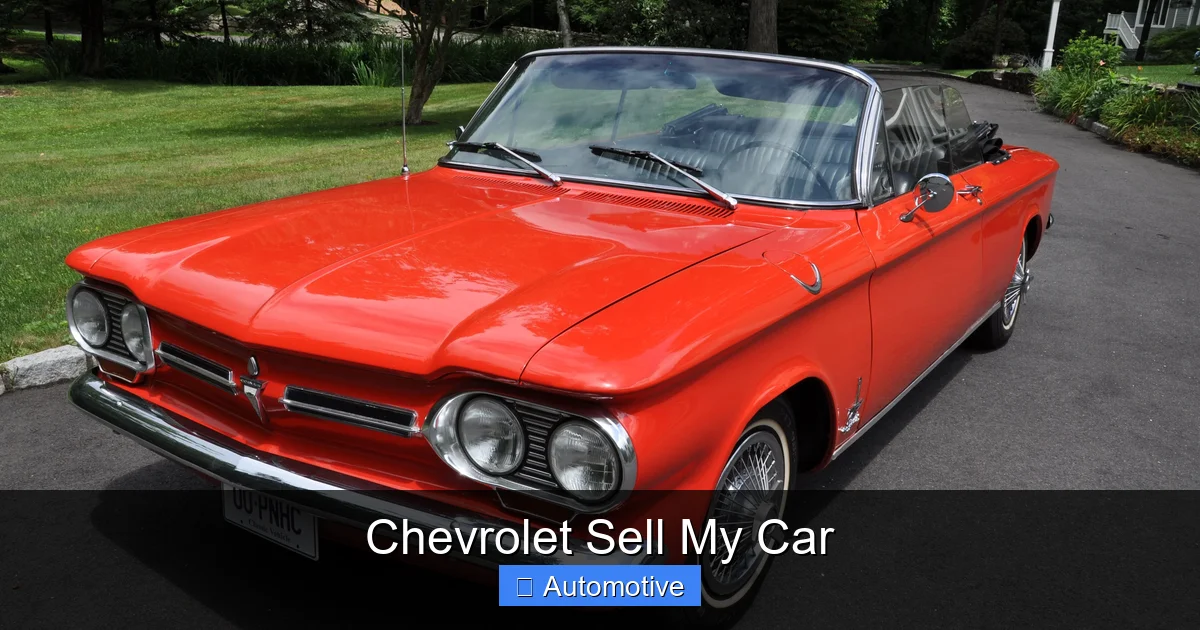
Visual guide about Chevrolet Sell My Car
Image source: thumbor-production-auction.hemmings.com
Now that you know your car’s value, it’s time to decide how you want to sell it. Each method has its own trade-offs between speed, convenience, and profit. Let’s break down the most popular options.
Sell Privately
Selling your Chevrolet directly to another person typically yields the highest return. You cut out the middleman, so you keep more of the sale price. For example, if your 2017 Chevrolet Impala is worth $12,000, a private sale might get you $11,500–$12,000 after negotiation. That’s significantly more than a trade-in or instant offer.
But private sales take time and effort. You’ll need to create a listing, respond to inquiries, schedule test drives, and handle negotiations. You’re also responsible for safety—meeting strangers, verifying payment, and transferring ownership correctly.
To succeed, write a clear, honest ad with high-quality photos from multiple angles (including interior, engine bay, and trunk). Mention key details: mileage, service history, any recent repairs, and why you’re selling. Platforms like Craigslist, Facebook Marketplace, and OfferUp are popular, but be cautious of scams. Never accept personal checks or wire transfers from unknown sources.
Trade-In at a Dealership
If convenience is your top priority, trading in your Chevrolet at a dealership is the easiest route. You drive in, get an appraisal, and apply the value toward a new or used car purchase. It’s fast, paperwork-light, and eliminates the need to find a buyer.
However, trade-in values are usually lower than private sale prices. Dealerships need to resell your car for a profit, so they’ll offer less. For instance, that same 2017 Impala might get $9,500 as a trade-in—$2,000 less than a private sale.
That said, trade-ins come with perks. Many states allow you to apply the trade-in value toward the sales tax on your new vehicle, which can save you hundreds. Plus, you avoid the hassle of advertising and meeting buyers.
If you’re buying another Chevrolet, ask about loyalty incentives. Some dealerships offer bonus trade-in value or discounts for returning customers.
Use an Online Car-Buying Service
Companies like CarMax, Carvana, Vroom, and Shift have revolutionized car selling. You enter your Chevrolet’s details online, get an instant offer, and—if you accept—schedule a pickup or drop-off. These services are fast, secure, and require minimal effort.
Offers are typically fair but not top-dollar. CarMax, for example, is known for consistent, no-haggle pricing. If your 2019 Chevrolet Blazer gets a $16,000 offer, that’s what you’ll get—no negotiation. It’s a great middle ground between private sale profit and trade-in convenience.
One advantage? These companies handle all the paperwork, including title transfer and payoff of any existing loan. If you still owe money on your Chevrolet, they’ll pay off the lender directly and give you the difference.
Sell to a Local Dealer or Independent Buyer
Some independent dealerships or used car lots will buy your Chevrolet outright, even if you’re not purchasing another vehicle. This can be a quick option, especially if your car is older or needs repairs.
But be prepared for lowball offers. These buyers often resell at auctions or refurbish and resell, so they need a big margin. Still, if you need cash fast and don’t want to deal with private buyers, it might be worth considering.
Prepare Your Chevrolet for Sale
First impressions matter—especially when selling a car. A clean, well-maintained Chevrolet is more likely to sell quickly and for a higher price. Think of it like staging a house: you want buyers to see potential, not problems.
Clean Inside and Out
Start with a thorough wash and wax. Dirt, bird droppings, and grime can make even a low-mileage car look neglected. Use a clay bar to remove embedded contaminants, then apply a coat of wax for shine and protection.
Don’t skip the interior. Vacuum every crevice, clean the dashboard and console with a microfiber cloth, and wipe down windows. Remove trash, personal items, and air fresheners (some buyers are sensitive to scents). If your seats are fabric, consider a professional steam clean to remove odors and stains.
For leather seats, use a conditioner to prevent cracking. A clean interior signals that the car has been cared for—and buyers will assume the mechanicals are in good shape too.
Address Minor Repairs
You don’t need to rebuild the engine, but fixing small issues can boost your sale price. Replace burnt-out bulbs, fix cracked windshields, and patch minor dents or scratches. A $50 repair could add $200 to your sale price.
Check tire tread depth—worn tires are a red flag. If they’re near the wear bars, consider replacing them. It’s a visible sign of maintenance and safety.
Gather Documentation
Buyers love transparency. Collect your owner’s manual, service records, and any receipts for repairs or upgrades. If you’ve kept up with oil changes, brake jobs, or transmission service, highlight that in your listing.
A clean title is essential. Make sure there are no liens or errors. If you’ve lost the title, contact your state’s DMV to get a replacement before listing.
Take High-Quality Photos
Photos are your first chance to impress. Take pictures in natural daylight, preferably in a clean, uncluttered area. Shoot from multiple angles: front, back, sides, interior, trunk, and engine bay.
Use a smartphone with good lighting—no flash. Clean the lens, and avoid shadows or reflections. Show any flaws honestly; it builds trust and reduces the chance of disputes later.
Pro tip: Take a short video walkaround. It gives buyers a better sense of the car’s condition and can set you apart from text-only listings.
Create a Compelling Listing
Your listing is your sales pitch. A great ad doesn’t just describe the car—it tells a story and builds confidence.
Write a Clear, Honest Title
Use keywords buyers search for. For example: “2018 Chevrolet Silverado 1500 LT – Clean Title, Low Miles, One Owner.” Include year, model, trim, and key selling points.
Avoid vague terms like “nice car” or “runs great.” Be specific: “Only 42,000 miles,” “Recent brake service,” or “Never smoked in.”
Highlight Chevrolet-Specific Features
Chevrolet vehicles come with unique strengths. Emphasize what makes your car special:
– Safety: Mention available features like Forward Collision Alert, Lane Keep Assist, or Teen Driver technology.
– Technology: Highlight Apple CarPlay, Android Auto, or the MyChevrolet app.
– Performance: If it’s a Camaro or Corvette, talk about horsepower and driving dynamics.
– Fuel Efficiency: For models like the Cruze or Malibu, note MPG ratings.
These details help buyers see value beyond just the price.
Be Transparent About Condition
Honesty builds trust. If your Chevrolet has a small dent, a check engine light that comes and goes, or high mileage, say so upfront. You’ll attract serious buyers and avoid wasted time.
But don’t overshare. Focus on facts, not drama. “Minor paint scratch on rear bumper” is better than “Car was in a fender bender last year.”
Set a Competitive Price
Price your Chevrolet fairly based on your research. If similar models are listed at $15,000, don’t start at $17,000 unless you have a compelling reason.
Consider pricing slightly below market to attract quick offers. For example, list at $14,750 instead of $15,000. It creates urgency and can lead to multiple inquiries.
Close the Sale Safely and Legally
Once you have a buyer, it’s time to finalize the deal. But don’t rush—safety and legality are crucial.
Meet in a Safe, Public Place
Always meet in a well-lit, public area like a police station parking lot or busy shopping center. Avoid your home or isolated locations.
Bring a friend if possible, and let someone know where you’re going and who you’re meeting.
Verify Payment
Cash is safest for private sales. Count it in front of the buyer. For larger amounts, meet at a bank to verify funds.
Avoid personal checks, money orders, or wire transfers—they can bounce or be fraudulent.
If using an online service or dealership, payment is typically handled securely through their system.
Complete the Paperwork
You’ll need to sign over the title, complete a bill of sale, and notify your state’s DMV of the transfer. Requirements vary by state, so check your local DMV website.
In most cases, you’ll need:
– Signed title (signed by both buyer and seller)
– Bill of sale (available online or from DMV)
– Odometer disclosure statement (for vehicles under 10 years old)
– Release of liability form (to protect you from future tickets or accidents)
Keep copies of all documents.
Cancel Insurance Promptly
Once the sale is complete, contact your insurance company to cancel or transfer coverage. Don’t wait—driving an uninsured vehicle, even for a day, is risky and illegal in most states.
If you’re buying a new car, you can often transfer coverage immediately.
Final Tips for a Smooth Sale
Selling your Chevrolet doesn’t have to be a headache. With the right preparation and mindset, you can turn your old car into cash—or trade equity—with confidence.
– Be patient: The right buyer may take a week or two to find. Don’t rush into a low offer just to sell fast.
– Stay organized: Keep all documents, photos, and communications in one place.
– Know your bottom line: Decide the minimum you’re willing to accept before negotiating.
– Use social media: Share your listing on Facebook, Instagram, or local community groups to reach more buyers.
– Consider timing: Spring and early summer are peak seasons for used car sales. If you can wait, you might get a better price.
Remember, every Chevrolet has value—even if it’s older or has higher mileage. With the right approach, you can sell your car quickly, safely, and for a fair price.
Frequently Asked Questions
How much can I expect to get when I sell my Chevrolet?
The amount you’ll get depends on your Chevrolet’s year, model, mileage, condition, and local market demand. Use tools like Kelley Blue Book or Edmunds to get a realistic estimate. Private sales typically yield more than trade-ins or instant offers.
Is it better to sell my Chevrolet privately or trade it in?
Selling privately usually gets you more money, but it takes more time and effort. Trading in is faster and more convenient, especially if you’re buying another car, but you’ll likely receive a lower offer.
Can I sell my Chevrolet if I still owe money on it?
Yes, but the sale price must cover your loan balance. If the buyer pays less than you owe, you’ll need to cover the difference. Online services like CarMax or Carvana can handle loan payoffs directly.
Do I need to fix my Chevrolet before selling it?
Minor repairs like replacing bulbs, fixing dents, or cleaning the interior can increase your sale price and attract more buyers. Major repairs are usually not worth the investment unless they significantly affect value.
How do I avoid scams when selling my Chevrolet?
Meet in public places, accept only secure payment methods like cash or cashier’s checks, and never share personal information. Be wary of buyers who want to pay with a money order or wire transfer.
What paperwork do I need to sell my Chevrolet?
You’ll need the signed title, a bill of sale, odometer disclosure (if applicable), and a release of liability form. Check your state’s DMV website for specific requirements.