Car Won’t Start After New Battery Installed

Installing a new car battery should solve starting issues—but sometimes the opposite happens. If your car won’t start after a new battery is installed, it’s often due to loose connections, incorrect installation, or an underlying electrical problem. This guide walks you through the most common causes and how to fix them safely and effectively.
You’ve just installed a brand-new car battery. You’re feeling confident—this should finally fix that annoying no-start problem you’ve been dealing with for weeks. You turn the key, but instead of the familiar engine roar, you’re met with silence. Or maybe a weak click. Or worse, nothing at all. Your car won’t start after new battery installed. Frustrating? Absolutely. But don’t panic—this is more common than you might think.
A new battery is often the first step in solving starting issues, but it’s not a magic fix. Sometimes, the problem isn’t the battery itself, but how it was installed, what else is going on under the hood, or even something unrelated that’s been lurking unnoticed. Electrical systems in modern cars are complex, and even a small mistake during installation can throw everything off. Whether you did the swap yourself or had a mechanic do it, there are several reasons your car might still refuse to start.
In this guide, we’ll walk you through the most common causes of a no-start condition after installing a new battery. We’ll cover everything from simple fixes like checking terminal connections to more complex issues like alternator failure or parasitic drain. By the end, you’ll know exactly what to look for and how to get your car back on the road—safely and efficiently.
In This Article
Key Takeaways
- Improper installation is a top cause: Loose or reversed battery terminals can prevent your car from starting, even with a fully charged new battery.
- Corroded or damaged cables matter: Old, frayed, or corroded cables may not deliver enough power, despite a good battery.
- The alternator could be faulty: A bad alternator won’t recharge the battery while driving, leading to repeated no-start issues.
- Parasitic drain may be present: An electrical component drawing power when the car is off can drain a new battery quickly.
- Check the battery compatibility: Not all batteries are created equal—using the wrong size or type can cause starting problems.
- Safety first during troubleshooting: Always disconnect the negative terminal first and wear protective gear when handling batteries.
- When to call a professional: If basic checks don’t solve the issue, a mechanic can diagnose deeper electrical or ignition system faults.
📑 Table of Contents
Common Reasons Your Car Won’t Start After a New Battery
Even with a fresh, fully charged battery, your car might still refuse to start. Let’s break down the most frequent culprits behind this frustrating scenario.
Loose or Improperly Connected Terminals
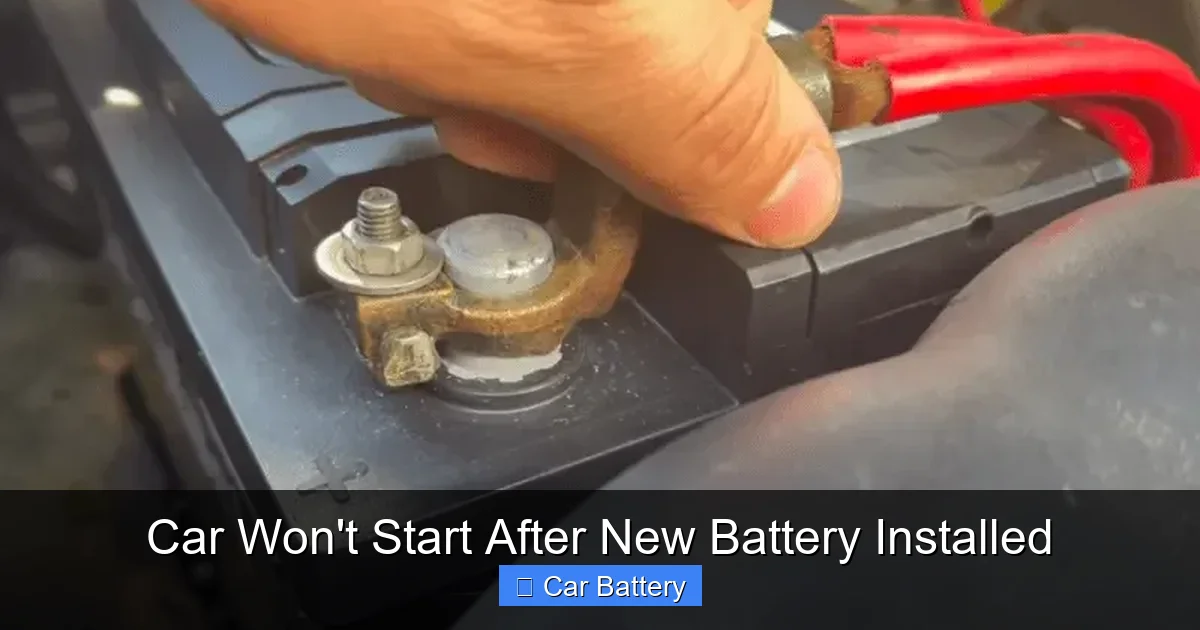
One of the most common—and easiest to fix—reasons your car won’t start after a new battery is installed is loose or improperly connected terminals. When installing a new battery, it’s crucial to ensure both the positive (+) and negative (–) terminals are securely fastened. If either connection is loose, the electrical circuit isn’t complete, and power can’t flow to the starter motor.
For example, imagine you tightened the positive terminal snugly but only gave the negative a half-hearted twist. Over time, vibrations from driving can cause that connection to loosen further. When you try to start the car, the starter doesn’t get enough current, resulting in a weak crank or no crank at all.
Another mistake people make is reversing the terminals—connecting the positive cable to the negative post and vice versa. This can cause serious damage to your car’s electrical system and even lead to a blown fuse or fried ECU (engine control unit). Always double-check the labels on the battery and the color of the cables: red is positive, black is negative.
Corroded or Damaged Battery Cables
Even if the terminals are tight, damaged or corroded cables can still prevent your car from starting. Over time, battery cables can become brittle, frayed, or covered in white or greenish corrosion. This buildup acts as an insulator, blocking the flow of electricity from the battery to the rest of the vehicle.
Corrosion often forms at the connection points where the cable meets the terminal. It looks like a powdery substance and can be cleaned with a mixture of baking soda and water. But if the cable itself is cracked or the internal wires are exposed, cleaning won’t help—you’ll need to replace the cable.
A real-world example: Sarah installed a new battery in her 2012 Honda Accord. The car started fine the first day, but by the third day, it wouldn’t turn over. She checked the battery voltage—it was 12.6 volts, fully charged. But when she inspected the cables, she noticed heavy corrosion on the negative terminal. After cleaning it thoroughly and reattaching it, the car started right up.
Incorrect Battery Installation
Installing the battery incorrectly goes beyond just loose terminals. Some batteries have specific orientations—meaning the positive and negative posts must be on the correct sides to match the vehicle’s cable routing. If you force the cables or install the battery upside down, you risk damaging the cables or creating a short circuit.
Additionally, not all batteries are the same size or have the same terminal configuration. Using a battery that doesn’t match your vehicle’s specifications can lead to poor connections or even physical damage to the battery tray or cables.
For instance, a customer once installed a battery with the terminals reversed from the original. The cables had to be stretched to reach, causing tension and eventual failure. The car wouldn’t start, and the battery died within hours. Only after consulting the owner’s manual and comparing battery models did they realize the mistake.
Faulty Alternator
Here’s a twist: your new battery might be perfect, but if the alternator isn’t working, your car still won’t start—especially after sitting for a while. The alternator charges the battery while the engine runs. If it’s failing, the battery won’t recharge, and eventually, it will die, even if it was new.
Symptoms of a bad alternator include dim headlights, a battery warning light on the dashboard, or the car starting fine one day but not the next. You might also notice electrical components acting up—like power windows moving slowly or the radio cutting out.
To test the alternator, start the car and use a multimeter to check the voltage at the battery terminals. A healthy charging system should read between 13.8 and 14.4 volts. If it’s below 13 volts, the alternator may not be charging the battery properly.
Parasitic Drain
A parasitic drain occurs when something in your car continues to draw power from the battery even when the engine is off. This can drain a new battery in just a few days. Common culprits include interior lights that won’t turn off, a faulty glove box switch, aftermarket electronics (like dash cams or alarms), or a malfunctioning module in the car’s computer system.
For example, Tom installed a new battery in his truck and drove it for a week with no issues. But after leaving it parked for three days, it wouldn’t start. A mechanic discovered that his aftermarket GPS tracker was drawing 0.5 amps continuously—enough to kill the battery over time.
To check for parasitic drain, you’ll need a multimeter and some patience. Disconnect the negative battery cable and place the multimeter in series between the cable and the terminal. A normal draw is usually under 50 milliamps. Anything higher suggests a problem.
Blown Fuses or Faulty Relays
Sometimes, the issue isn’t the battery or cables—it’s a blown fuse or a bad relay. The starter relay, for instance, controls power to the starter motor. If it fails, the engine won’t crank, even with a good battery.
Fuses protect various electrical circuits in your car. If a fuse related to the ignition or starter system blows during installation (perhaps due to a short circuit), your car won’t start. Check your vehicle’s fuse box—usually located under the dashboard or in the engine compartment—and look for any blown fuses. Replace them with the correct amperage rating.
How to Diagnose the Problem Step by Step

Visual guide about Car Won’t Start After New Battery Installed
Image source: autoyolo.com
When your car won’t start after a new battery is installed, a systematic approach is key. Rushing into conclusions can waste time and money. Follow these steps to pinpoint the issue.
Step 1: Check the Battery Voltage
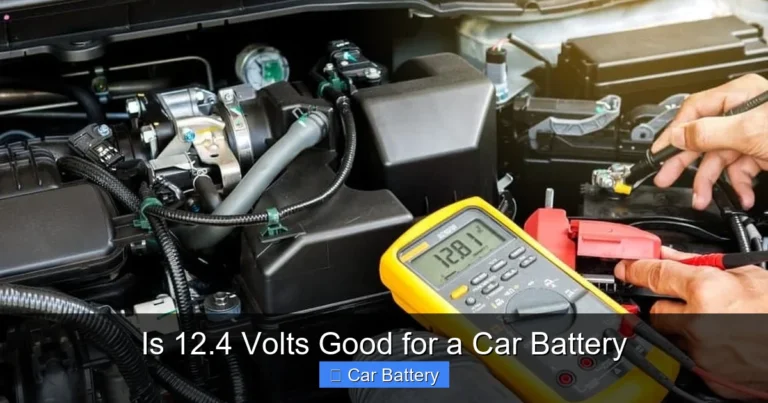
Start by measuring the voltage of your new battery. Use a multimeter set to DC volts. Connect the red probe to the positive terminal and the black probe to the negative terminal. A fully charged battery should read around 12.6 volts. If it’s below 12 volts, the battery may not be fully charged or could be defective.
Even new batteries can arrive undercharged, especially if they’ve been sitting on a shelf for months. If the voltage is low, try charging the battery with a smart charger before assuming it’s faulty.
Step 2: Inspect the Terminals and Cables
Turn off the ignition and pop the hood. Look at the battery terminals. Are they clean and tight? Is there any sign of corrosion—white, green, or blue powder around the posts? If so, disconnect the cables (negative first, then positive), clean the terminals with a wire brush and baking soda solution, and reconnect them securely.
Make sure the cables aren’t frayed or damaged. If they look worn, consider replacing them. Also, ensure the battery is properly seated in the tray and held down with the hold-down clamp. A loose battery can shift and disconnect during driving.
Step 3: Test the Starter and Ignition System
If the battery and connections are good, the next step is to check the starter. Turn the key to the “start” position and listen. Do you hear a loud click? That usually means the starter solenoid is engaging, but the motor isn’t turning. A weak click or no sound at all could indicate a bad starter or insufficient power.
You can also try tapping the starter motor gently with a hammer while someone turns the key. If the car starts, the starter is likely failing. However, this is a temporary fix—replace the starter as soon as possible.
Step 4: Check for Spark and Fuel
If the engine cranks but doesn’t start, the issue might not be electrical at all. It could be a fuel or ignition problem. Remove a spark plug wire (or use a spark tester) and check for spark while cranking. No spark? The issue could be the ignition coil, distributor, or crankshaft position sensor.
Also, listen for the fuel pump priming when you turn the key to “on.” You should hear a faint hum from the fuel tank for a few seconds. If you don’t, the fuel pump or its relay might be faulty.
Step 5: Scan for Error Codes
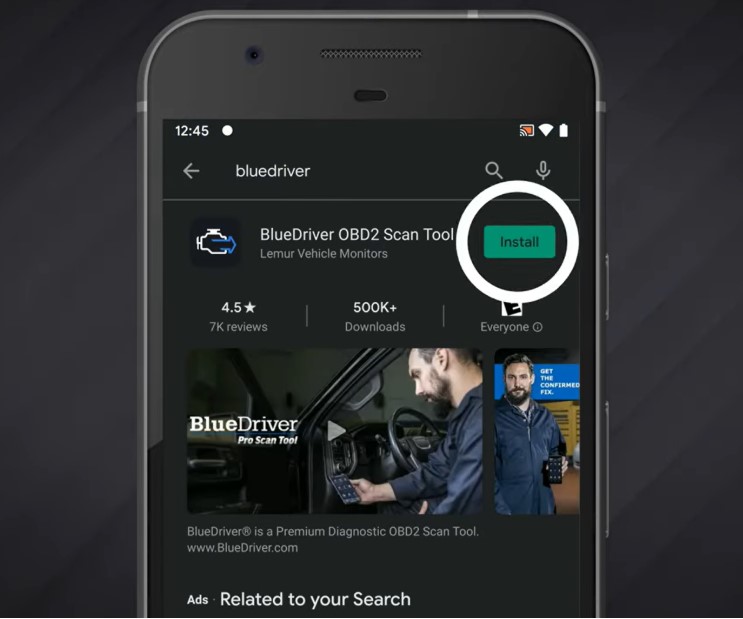
Modern cars have onboard diagnostics (OBD-II) that can reveal hidden issues. Use an OBD2 scanner to check for trouble codes. Even if the check engine light isn’t on, there might be stored codes related to the battery, alternator, or charging system.
For example, code P0562 indicates low system voltage, which could point to an alternator problem. Code P0617 suggests a starter relay circuit malfunction. These codes can save you hours of guesswork.
Safety Tips When Working with Car Batteries
Visual guide about Car Won’t Start After New Battery Installed
Image source: autoyolo.com
Car batteries contain sulfuric acid and produce explosive hydrogen gas. Safety should always come first when handling them.
Wear Protective Gear
Always wear safety glasses and gloves when working near a battery. Acid can cause severe burns, and sparks can ignite hydrogen gas.
Disconnect the Negative Terminal First
When removing or installing a battery, always disconnect the negative (black) cable first and reconnect it last. This reduces the risk of short circuits. If you disconnect the positive first and your wrench touches both the terminal and the car’s metal frame, you can create a dangerous spark.
Work in a Well-Ventilated Area
Never work on a battery in a closed garage. Hydrogen gas is flammable and can accumulate in enclosed spaces. Open the garage door or work outside if possible.
Avoid Metal Objects Near the Terminals
Keep jewelry, tools, and other metal objects away from the battery terminals. A short circuit can cause sparks, burns, or even an explosion.
Dispose of Old Batteries Properly
Car batteries are highly recyclable. Most auto parts stores will take your old battery for free and ensure it’s disposed of safely. Never throw it in the trash.
When to Call a Professional Mechanic
Visual guide about Car Won’t Start After New Battery Installed
Image source: autoyolo.com
While many battery-related issues can be fixed at home, some problems require professional diagnosis and repair.
If you’ve checked the battery, terminals, fuses, and starter, and the car still won’t start, it’s time to call a mechanic. They have specialized tools to test the alternator, check for parasitic drain, and diagnose complex electrical faults.
Also, if you’re not comfortable working with electrical systems or handling batteries, don’t risk it. A professional can ensure the job is done safely and correctly.
Preventing Future Starting Problems
Once your car is running again, take steps to avoid a repeat.
Regular Maintenance
Check your battery terminals every few months for corrosion. Clean them as needed and ensure they’re tight.
Use a Battery Maintainer
If you don’t drive often, consider using a battery maintainer or trickle charger. These devices keep the battery charged without overcharging it.
Inspect Electrical Components
Have your alternator and starter tested during routine service. Catching problems early can prevent no-start situations.
Avoid Aftermarket Electronics
If you install dash cams, alarms, or other electronics, make sure they’re wired correctly and don’t draw power when the car is off.
Conclusion
It’s incredibly frustrating when your car won’t start after a new battery is installed—especially when you thought the problem was solved. But as we’ve seen, the issue is rarely the battery itself. More often, it’s a loose connection, a damaged cable, a faulty alternator, or an unseen electrical drain.
By following a step-by-step diagnostic process—checking voltage, inspecting terminals, testing the starter, and scanning for error codes—you can identify and fix most problems yourself. And when in doubt, don’t hesitate to call a professional. Your safety and your car’s reliability are worth it.
Remember, a new battery is just one piece of the puzzle. Keeping your entire electrical system in good shape is the real key to reliable starts, day after day.
Frequently Asked Questions
Why won’t my car start even with a new battery?
Your car may not start due to loose terminals, corroded cables, a faulty alternator, or a parasitic drain. Even a new battery needs proper connections and a healthy charging system to work.
Can a new battery be defective?
Yes, new batteries can be defective or undercharged. Always test the voltage with a multimeter—12.6 volts is ideal. If it’s low, charge it before assuming it’s faulty.
How do I know if my alternator is bad?
Signs include dim lights, a battery warning light, or the car dying after a short drive. Test the voltage at the battery while the engine runs—it should be 13.8–14.4 volts.
What causes parasitic drain?
Parasitic drain happens when something like a glove box light, alarm, or aftermarket device draws power when the car is off. Use a multimeter to check for excessive current draw.
Should I replace battery cables when installing a new battery?
Not always, but if they’re corroded, frayed, or damaged, yes. Worn cables can prevent proper power delivery, even with a good battery.
Can I jump-start a car with a new battery?
Yes, but only if the battery is discharged, not if there’s another issue like a bad starter. Jump-starting won’t help if the problem is mechanical or electrical beyond the battery.