
Car Says “no Key Detected”

If your car says “no key detected,” it means the vehicle’s immobilizer system can’t recognize your key fob or smart key. This issue can stem from a dead battery, signal interference, or system glitches—but don’t panic. Most causes are easy to fix with a few quick checks and solutions.
You’re running late for work, coffee in hand, keys in pocket—only to press the start button and hear… nothing. Instead, your dashboard flashes a frustrating message: “No Key Detected.” Your heart sinks. You jiggle the key fob, press buttons, even try holding it against the start button like you’ve seen in YouTube videos. Still nothing. Sound familiar?
This isn’t just annoying—it can leave you stranded, especially if you’re parked in a remote lot or far from home. But here’s the good news: in most cases, a “no key detected” error isn’t a sign of serious mechanical failure. It’s usually a communication breakdown between your key fob and your car’s immobilizer system. Modern vehicles rely on advanced electronics to verify the key’s identity before allowing the engine to start. When that handshake fails, your car simply refuses to cooperate.
The good news? Most causes are easy to diagnose and fix—often without a trip to the dealership. Whether you drive a Toyota, Honda, Ford, BMW, or Tesla, the principles behind key detection are similar across brands. In this guide, we’ll walk you through the most common reasons your car says “no key detected,” how to troubleshoot them step by step, and when it’s time to call in a pro. By the end, you’ll know exactly what to do the next time your car gives you the silent treatment.
Key Takeaways
- Dead key fob battery: The most common cause—replace the battery to restore communication between the key and car.
- Signal interference: Nearby electronics or metal objects can block the key’s signal; move away from干扰 sources.
- Faulty key fob: Physical damage or internal failure may require reprogramming or replacement by a dealer.
- Weak car battery: A low 12V battery can disrupt the immobilizer system; test and recharge or replace if needed.
- Immobilizer system glitch: Sometimes a simple restart or fuse reset resolves the issue without professional help.
- Key not in correct position: Ensure the key is inside the cabin—some cars require it near the start button or center console.
- Software or module failure: In rare cases, the body control module or antenna ring needs professional diagnosis and repair.
📑 Table of Contents
What Does “No Key Detected” Actually Mean?
When your car displays “no key detected,” it’s telling you that its immobilizer system—a security feature designed to prevent theft—can’t verify the presence of an authorized key. Think of it like a digital handshake: your key fob sends a unique encrypted code to the car’s receiver, and if the car doesn’t “recognize” that code, it won’t allow the engine to start.
This system is standard on nearly all vehicles made after the mid-1990s, especially those with push-button start or keyless entry. Even older cars with traditional keys often have transponder chips embedded in the key blade that must be read by the ignition system. Without that chip being detected, the car simply won’t turn over.
The immobilizer system typically includes several components:
– The key fob or smart key (with a built-in transponder chip)
– Antenna rings around the ignition or start button
– A receiver module (often part of the body control module)
– The engine control unit (ECU)
All these parts must work together. If one fails—or if the signal is blocked—the system defaults to “no key detected.” It’s a safety feature, not a flaw. But that doesn’t make it any less frustrating when you’re trying to get to dinner.
How the Immobilizer System Works
Let’s break it down simply. When you insert a key or press the start button, the car sends out a low-frequency radio signal through antenna coils near the ignition or start button. This signal powers up the tiny transponder chip in your key—even if the key’s battery is dead. The chip then sends back a unique digital code. If the code matches what the car expects, the immobilizer disengages, and the engine can start.
In keyless systems, the process is similar but wireless. The car constantly scans for the key fob within a certain range (usually a few feet). When you press the start button, the car checks for the fob’s signal. If it’s not found—or if the signal is too weak—the “no key detected” message appears.
This system is incredibly secure. It’s why hot-wiring modern cars is nearly impossible. But it also means that even small issues—like a weak battery or interference—can disrupt the entire process.
Why This Message Is So Common
You’re not alone. Thousands of drivers face this issue every day. Why? Because modern cars are more reliant on electronics than ever before. A single weak signal, a drained battery, or a minor glitch can trigger the error. And unlike older cars where you could just turn a physical key, today’s systems are all-or-nothing: if the key isn’t detected, the car won’t start—no exceptions.
Plus, many drivers don’t realize that key fobs have batteries that eventually die. Or they don’t know that placing the key near your phone or in a metal box can block the signal. These small oversights add up, making “no key detected” one of the most common—and avoidable—car problems.
Top Causes of “No Key Detected” and How to Fix Them
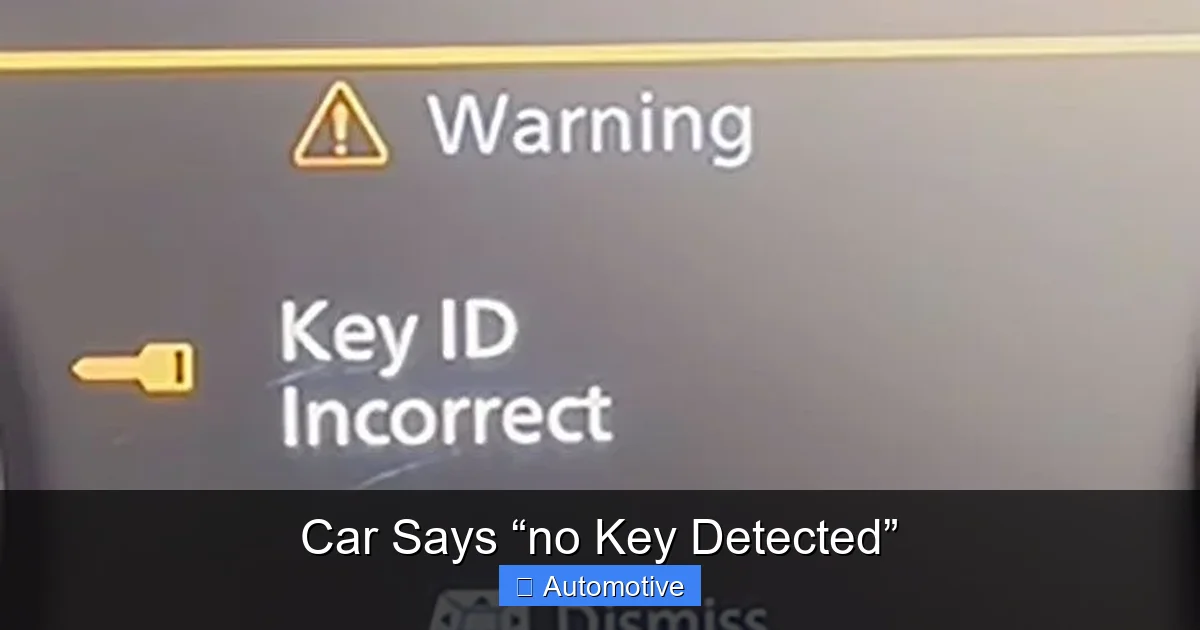
Visual guide about Car Says “no Key Detected”
Image source: car-us.com
Now that you understand how the system works, let’s dive into the most common reasons your car says “no key detected”—and what you can do about it. Most fixes are simple and can be done in under 10 minutes.
1. Dead or Weak Key Fob Battery
This is the #1 culprit. Even if your key fob seems to work for locking and unlocking doors, the battery might not have enough power to send the stronger signal needed to start the car.
Most key fobs use a small coin-cell battery (like a CR2032). Over time, these batteries lose charge—especially if you use the fob frequently or leave it in a hot car. When the battery is weak, the fob may still unlock doors at close range but fail to communicate with the immobilizer system during startup.
How to fix it:
– Replace the battery. Most fobs have a small seam you can pry open with a flathead screwdriver or coin.
– Use the correct battery type (check your owner’s manual or the old battery).
– After replacing, test the fob by pressing buttons and trying to start the car.
Pro tip: Keep a spare battery in your glove box. They cost less than $5 and can save you from being stranded.
2. Signal Interference
Your key fob uses radio waves to communicate with your car. But those signals can be blocked or disrupted by other electronic devices or metal objects.
Common sources of interference include:
– Smartphones (especially when placed near the key)
– Power lines or transformers
– Other key fobs (like from a neighbor’s car)
– Metal boxes, foil, or even certain types of clothing (like RFID-blocking wallets)
If you’ve ever noticed your key fob works better when held up to your head (yes, really!), it’s because your body acts as a conductor, boosting the signal. But in general, interference can prevent the car from detecting the key.
How to fix it:
– Move away from potential干扰 sources (like a busy street with power lines).
– Take the key fob out of your pocket or bag and hold it near the start button.
– Avoid storing the key in metal containers or next to your phone.
Example: One driver couldn’t start her car in a parking garage. She later realized her phone was in the same pocket as her key fob. Separating them solved the issue.
3. Faulty or Damaged Key Fob
Sometimes, the key fob itself is the problem. Physical damage—like cracks, water exposure, or button wear—can disrupt internal circuits. Even dropping the fob can misalign tiny components.
If the fob has been submerged in water (say, in a washing machine), corrosion can ruin the electronics. Or, if the buttons are sticky or unresponsive, the fob may not be sending signals properly.
How to fix it:
– Test the fob’s range. Stand 10–15 feet from the car and try locking/unlocking. If it doesn’t work, the fob may be damaged.
– Try the spare key (if you have one). If the spare works, the original fob is likely faulty.
– Reprogram the fob (some cars allow DIY reprogramming—check your manual).
– If all else fails, visit a dealership or locksmith for a replacement.
Note: Replacement fobs can cost $100–$400, depending on the make and model. Some require professional programming.
4. Weak or Dead Car Battery
You might think the car battery only affects the engine, but it also powers the immobilizer system. If the 12V battery is weak or dying, the car may not have enough power to detect the key.
Symptoms of a weak car battery include:
– Dim headlights
– Slow engine crank
– Electrical glitches (like flickering dash lights)
Even if the car starts sometimes, a low battery can cause intermittent “no key detected” errors.
How to fix it:
– Test the car battery with a multimeter (should read 12.6V when off, 13.7–14.7V when running).
– Jump-start the car and see if the key is detected.
– If the battery is old (3–5 years), consider replacing it.
Pro tip: A weak battery can also drain the key fob faster. Replace both if they’re old.
5. Key Not in the Right Location
Some cars require the key to be in a specific spot to be detected—especially keyless models. For example:
– Toyota and Lexus: Place the fob on the start button or in the center console tray.
– BMW: Hold the fob against the start button.
– Ford: Place the fob in the backup slot (often under a cover in the center console).
If you’re holding the key in your hand or pocket, the car might not detect it.
How to fix it:
– Check your owner’s manual for the correct key placement.
– Try placing the fob directly on the start button or in the designated slot.
– If you have a traditional key with a chip, ensure it’s fully inserted into the ignition.
6. Immobilizer System Glitch
Like any electronic system, the immobilizer can experience temporary glitches. A power surge, software bug, or loose connection might cause the system to “forget” the key.
This is especially common after jump-starting the car, disconnecting the battery, or during extreme weather.
How to fix it:
– Turn the car off, remove the key, wait 30 seconds, then try again.
– Disconnect the car battery for 5–10 minutes to reset the system (note: this may reset radio presets and other settings).
– Check for blown fuses related to the immobilizer or ignition system.
Example: A Honda Civic owner couldn’t start his car after a jump-start. He disconnected the battery for 10 minutes, reconnected it, and the key was detected again.
When to Call a Professional
Visual guide about Car Says “no Key Detected”
Image source: images.platforum.cloud
Most “no key detected” issues can be solved at home. But sometimes, the problem is deeper and requires expert help.
Signs You Need a Mechanic or Dealer
– The key fob battery is new, but the car still won’t detect it.
– Both keys (if you have a spare) fail to work.
– The immobilizer light stays on or flashes after startup.
– You’ve tried all troubleshooting steps with no success.
– The car shows other electrical issues (like warning lights or unresponsive controls).
In these cases, the issue might be:
– A faulty antenna ring around the ignition
– A damaged body control module (BCM)
– A problem with the engine control unit (ECU)
– Wiring issues or corrosion in the immobilizer circuit
These components require specialized tools and knowledge to diagnose and repair. A dealership or certified locksmith with automotive expertise is your best bet.
Cost of Professional Repairs
Repair costs vary widely:
– Key fob replacement: $100–$400 (including programming)
– Antenna ring replacement: $150–$300
– Body control module repair: $300–$800
– Diagnostic fee: $50–$150
Always get a quote before proceeding. Some issues can be fixed with software updates, which are cheaper than hardware replacements.
Prevention Tips to Avoid Future Issues

Visual guide about Car Says “no Key Detected”
Image source: vehiclesphere.com
An ounce of prevention is worth a pound of cure. Here’s how to keep your key and immobilizer system working smoothly.
Maintain Your Key Fob
– Replace the battery every 2–3 years, even if it still works.
– Keep the fob clean and dry.
– Avoid dropping or exposing it to extreme temperatures.
– Store it away from phones and metal objects.
Check Your Car Battery Regularly
– Test the battery annually, especially before winter.
– Replace it every 3–5 years.
– Keep terminals clean and tight.
Use a Spare Key
– Always have a backup key programmed and stored safely.
– Consider a magnetic key holder under the car (for emergencies only).
Update Software When Needed
– Some manufacturers release software updates for the immobilizer system.
– Visit your dealer or check online for recalls or updates.
Avoid DIY Repairs Unless You’re Sure
– Don’t try to reprogram a key without proper tools—you could lock yourself out permanently.
– If in doubt, consult a professional.
Real-Life Examples and Success Stories
Let’s look at a few real cases where drivers fixed “no key detected” issues with simple steps.
Case 1: The Dead Battery Fix
Sarah, a nurse in Chicago, couldn’t start her 2018 Honda CR-V after a night shift. She tried holding the fob to the start button—nothing. She replaced the CR2032 battery, and the car started immediately. Total time: 5 minutes. Cost: $3.
Case 2: The Interference Issue
Mike, a teacher in Austin, noticed his Ford F-150 wouldn’t start when he parked near a power substation. He moved his truck 50 feet away, and the key was detected. He now avoids parking near high-voltage areas.
Case 3: The Glitch Reset
Lisa, a mom in Denver, had her car battery disconnected during a repair. After reconnecting, the “no key detected” message appeared. She disconnected the battery for 10 minutes, reconnected it, and the issue was resolved.
These stories show that most problems have simple solutions—if you know where to look.
Conclusion
Seeing “no key detected” on your dashboard is frustrating, but it’s rarely a sign of serious trouble. In most cases, the issue stems from a dead key fob battery, signal interference, or a simple system glitch—all of which can be fixed quickly and affordably.
Start with the basics: check the key fob battery, ensure the key is in the right spot, and rule out interference. If those don’t work, try resetting the system or testing the car battery. And if all else fails, don’t hesitate to call a professional.
By understanding how your car’s immobilizer system works and knowing the common fixes, you’ll be prepared the next time your car says “no key detected.” Stay calm, follow the steps, and you’ll be back on the road in no time.
Remember: your car isn’t trying to punish you—it’s just being secure. And with a little know-how, you can outsmart it every time.
Frequently Asked Questions
Why does my car say “no key detected” when the key is right here?
Your car’s immobilizer system may not be receiving a strong enough signal from the key fob. This can happen if the fob’s battery is weak, there’s signal interference, or the key isn’t in the correct position. Try replacing the battery or placing the fob directly on the start button.
Can a dead key fob battery prevent the car from starting?
Yes, absolutely. Even if the fob can lock and unlock doors, a weak battery may not send the stronger signal needed to start the engine. Replace the battery with a fresh CR2032 or similar type.
How do I reset the immobilizer system?
Try turning the car off, removing the key, and waiting 30 seconds before trying again. For a deeper reset, disconnect the car battery for 5–10 minutes, then reconnect it. This can clear temporary glitches.
Will my car start if the key fob battery is dead?
It depends. Some cars allow you to start the engine by placing the fob directly on the start button or in a backup slot. Others require a working battery. Check your owner’s manual for emergency start procedures.
Can I drive my car if it says “no key detected”?
No. If the immobilizer system doesn’t detect the key, the engine won’t start, and you won’t be able to drive. You’ll need to fix the issue first—usually by replacing the battery or repositioning the key.
How much does it cost to replace a key fob?
Replacement costs vary by make and model, typically ranging from $100 to $400, including programming. Some dealerships charge more, while locksmiths may offer lower prices. Always confirm pricing before proceeding.