Car Does Nothing When I Turn the Key
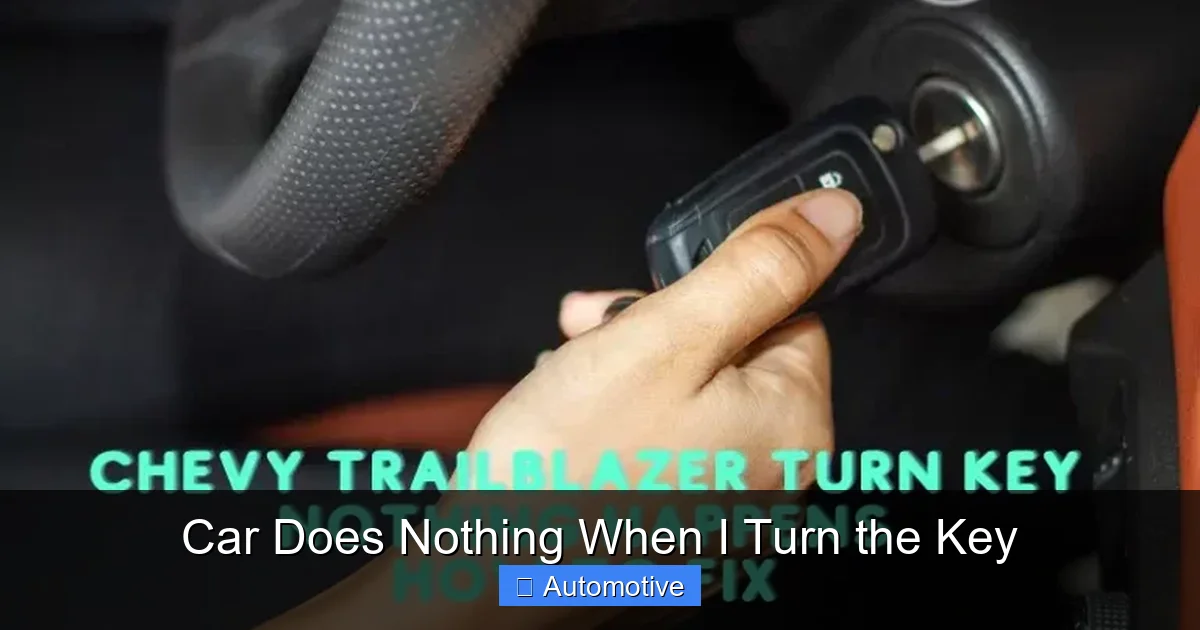
If your car does nothing when you turn the key—no cranking, no clicking, just silence—it’s usually a sign of an electrical or mechanical failure. This frustrating issue often stems from a dead battery, bad starter motor, or ignition switch problems, but diagnosing it correctly can save time and money.
You’re running late for work, you hop into your car, turn the key—and nothing happens. No engine cranking, no dashboard lights, not even a click. Just silence. It’s one of the most frustrating experiences any driver can face: your car does nothing when you turn the key. You’re left wondering, “Did I leave the lights on? Is the battery dead? Did something break overnight?” The truth is, this problem can stem from a handful of common issues, most of which are fixable—if you know where to look.
Don’t panic. While it’s easy to assume the worst (like a seized engine or a major electrical failure), in most cases, the root cause is something relatively simple. Modern cars rely heavily on electrical systems, and even a small disruption—like a loose wire or a drained battery—can bring everything to a halt. The good news? Many of these problems can be diagnosed at home with basic tools and a little patience. Whether you’re a seasoned DIYer or a complete beginner, understanding why your car does nothing when you turn the key is the first step toward getting back on the road.
In this guide, we’ll walk you through the most likely culprits behind a no-start condition, explain how to identify each one, and offer practical solutions—from jump-starting a dead battery to testing the starter motor. We’ll also cover less obvious causes, like security system glitches or faulty safety switches, so you won’t be left scratching your head. By the end, you’ll have a clear action plan and the confidence to tackle the issue head-on.
In This Article
- 1 Key Takeaways
- 2 📑 Table of Contents
- 3 Understanding the Starting System
- 4 Common Causes When Your Car Does Nothing When You Turn the Key
- 5 Step-by-Step Troubleshooting Guide
- 6 When to Call a Mechanic
- 7 Preventing Future No-Start Issues
- 8 Conclusion
- 9 Frequently Asked Questions
- 9.1 Why does my car do nothing when I turn the key but the lights come on?
- 9.2 Can a bad alternator cause my car to not start?
- 9.3 How do I know if my starter is bad?
- 9.4 What does it mean if there’s no sound at all when I turn the key?
- 9.5 Can cold weather cause my car to not start?
- 9.6 Is it safe to jump-start my car if it does nothing when I turn the key?
Key Takeaways
- Dead or weak battery: The most common cause—check voltage with a multimeter or jump-start to test.
- Faulty starter motor: If you hear a click but no engine turnover, the starter may be worn or damaged.
- Bad ignition switch: A malfunctioning switch can prevent power from reaching the starter circuit.
- Loose or corroded connections: Battery terminals and ground wires must be clean and tight for proper current flow.
- Blown fuses or relays: Check the fuse box—especially the starter relay and main ignition fuse.
- Security system lockout: Some vehicles disable the starter if the anti-theft system detects a problem.
- Neutral safety switch failure: Automatic transmissions won’t start unless the switch confirms the car is in Park or Neutral.
📑 Table of Contents
Understanding the Starting System
Before diving into troubleshooting, it helps to understand how your car’s starting system works. When you turn the key (or press the start button), a series of electrical and mechanical events must happen in quick succession. First, the ignition switch sends a signal to the starter relay. That relay then sends power to the starter motor, which engages with the engine’s flywheel and turns the crankshaft. Once the engine is spinning, the fuel and ignition systems take over to keep it running.
If any part of this chain breaks, your car won’t start—even if everything else seems fine. For example, if the battery doesn’t have enough power, the starter motor can’t spin. If the ignition switch is faulty, the signal never reaches the relay. And if the starter motor itself is damaged, it won’t turn the engine over, no matter how much power it gets.
Think of it like a domino effect. One piece falls, and the whole sequence stops. That’s why diagnosing a no-start condition requires checking each component step by step. You can’t assume the battery is dead just because the car doesn’t start—it could be the starter, the relay, or even a simple loose connection. Understanding this process helps you avoid unnecessary repairs and focus on the real issue.
How the Ignition Switch Works
The ignition switch is the gateway to your car’s electrical system. When you turn the key, it completes a circuit that sends power to the starter relay, fuel pump, and other critical components. In modern cars, this switch is often electronic and tied to the vehicle’s security system. If the switch is worn or damaged, it may not send the right signal—even if the key turns smoothly.
A common sign of a failing ignition switch is intermittent starting. One day the car starts fine; the next, it does nothing when you turn the key. You might also notice that dashboard lights flicker or don’t come on at all. In some cases, wiggling the key slightly can get the car to start, which is a red flag for a loose internal connection.
Testing the ignition switch usually requires a multimeter to check for continuity. But before you go that route, try a simple test: turn the key to the “on” position (without starting the engine) and see if the dashboard lights up. If they don’t, the problem could be the switch, a blown fuse, or a dead battery. If they do light up but the car still won’t start, the issue is likely further down the line—like the starter or relay.
The Role of the Starter Motor
The starter motor is a small but powerful electric motor that physically turns the engine over when you start the car. It’s connected to the flywheel, a large gear on the engine’s crankshaft. When activated, the starter’s pinion gear engages with the flywheel and spins it, allowing the engine to begin the combustion process.
Over time, the starter motor can wear out. Brushes inside the motor degrade, the solenoid can fail, or the gear can become misaligned. When this happens, you might hear a loud click when you turn the key—but no engine turnover. That click is the solenoid engaging, but the motor itself isn’t spinning. In other cases, you might hear a grinding noise, which suggests the gear isn’t meshing properly with the flywheel.
Testing the starter usually involves checking for power at the motor when the key is turned. If power is present but the motor doesn’t spin, it’s likely faulty and needs replacement. However, before replacing it, always rule out the battery and connections—many starters are unnecessarily replaced due to simple electrical issues.
Common Causes When Your Car Does Nothing When You Turn the Key
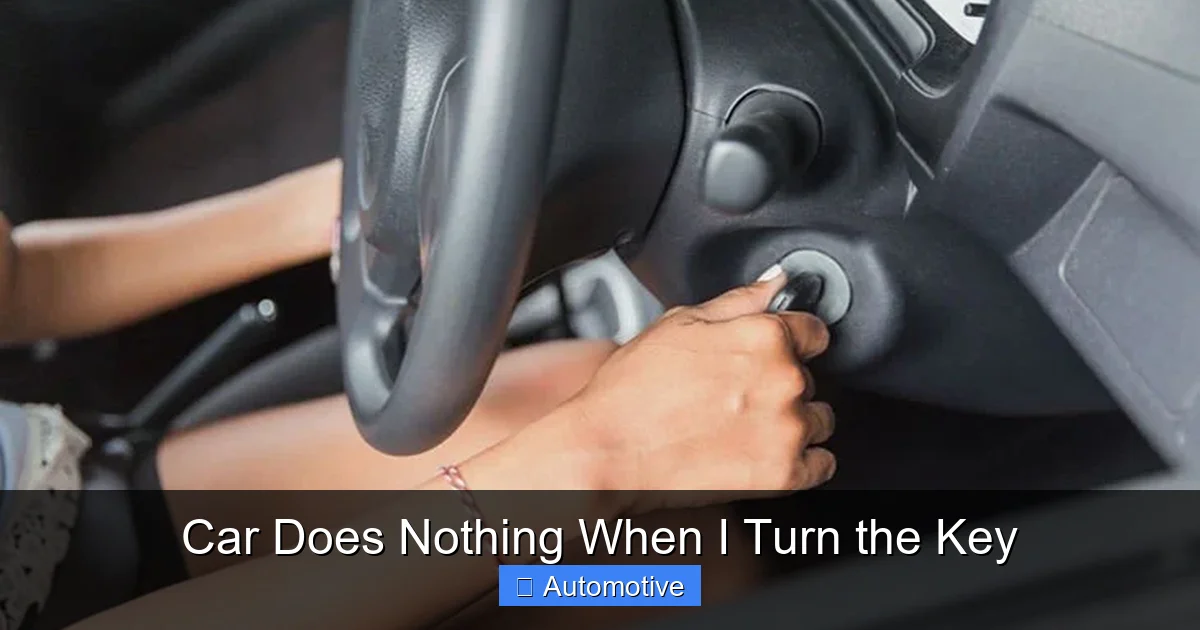
Visual guide about Car Does Nothing When I Turn the Key
Image source: bryansgarage.com
Now that you understand the basics, let’s look at the most common reasons your car does nothing when you turn the key. We’ll go from the simplest and most likely causes to the more complex ones, so you can work through them in order.
Dead or Weak Battery
The battery is the heart of your car’s electrical system. It provides the initial surge of power needed to start the engine and run accessories like lights and the radio. If the battery is dead or too weak, nothing will happen when you turn the key—no lights, no cranking, no sound.
A dead battery can result from leaving lights on, a parasitic drain (like a faulty module drawing power when the car is off), or simply age. Most car batteries last 3–5 years, and performance declines over time—especially in extreme temperatures. Cold weather reduces battery efficiency, which is why no-start issues are more common in winter.
To test the battery, use a multimeter to check the voltage. A healthy battery should read around 12.6 volts when the car is off. If it’s below 12.2 volts, it may not have enough power to start the engine. You can also try jump-starting the car. If it starts with a jump but dies again later, the battery may need recharging or replacement.
Pro tip: Clean the battery terminals regularly. Corrosion (a white or green powdery substance) can prevent proper electrical contact. Use a mixture of baking soda and water to scrub the terminals, then rinse and dry them before reconnecting.
Loose or Corroded Battery Connections
Even if your battery is fully charged, loose or corroded connections can prevent power from reaching the starter. The battery terminals (the metal clamps that connect the cables to the battery) must be tight and clean. Over time, vibration and moisture can loosen them or cause corrosion to build up.
Symptoms include intermittent starting, flickering lights, or a complete lack of response when turning the key. You might also notice a burning smell near the battery if the connection is arcing.
To fix this, turn off the car and disconnect the negative terminal first (usually black), then the positive (red). Clean the terminals and cable ends with a wire brush or terminal cleaner. Reconnect them tightly, starting with the positive terminal. Apply a thin layer of dielectric grease to prevent future corrosion.
Faulty Starter Motor or Solenoid
If the battery and connections are good but the car still does nothing when you turn the key, the starter motor or its solenoid may be to blame. The solenoid is an electromagnetic switch that pushes the starter gear into the flywheel and sends power to the motor.
A common sign of a bad starter is a single loud click when you turn the key—but no engine turnover. This means the solenoid is engaging, but the motor isn’t spinning. In some cases, you might hear a grinding or whining noise, which suggests internal damage.
Testing the starter requires checking for power at the motor’s main terminal when the key is turned. If power is present but the motor doesn’t run, it’s likely faulty. However, don’t replace it immediately—sometimes the issue is a bad ground connection or a failed relay.
If you’re comfortable with basic tools, you can try tapping the starter lightly with a hammer while someone turns the key. This sometimes frees up stuck internal components—though it’s only a temporary fix.
Bad Ignition Switch
The ignition switch controls the flow of power to the starter and other systems. If it’s worn or damaged, it may not send the signal needed to start the car—even if the key turns smoothly.
Symptoms include no dashboard lights, intermittent starting, or the car starting only when the key is wiggled. In some cases, the switch may fail completely, leaving you with no response at all.
Testing the ignition switch usually requires a multimeter to check for continuity in different key positions. However, if you suspect the switch, try turning the key to the “on” position and checking if the dashboard lights up. If they don’t, and the battery is good, the switch may be the culprit.
Replacing an ignition switch can be tricky, especially in modern cars with electronic security systems. In some cases, the entire steering column assembly must be removed. If you’re not experienced, it’s best to consult a mechanic.
Blown Fuses or Faulty Relays
Fuses and relays protect your car’s electrical circuits from overloads. If a fuse blows or a relay fails, it can cut power to the starter or ignition system—causing your car to do nothing when you turn the key.
The starter relay is especially important. It acts as a switch that sends high current to the starter motor when the ignition switch is turned. If the relay fails, the starter won’t receive power, even if everything else is working.
To check fuses, locate the fuse box (usually under the dashboard or in the engine bay) and inspect the relevant fuses. Look for a broken filament or discoloration. Use a fuse puller or needle-nose pliers to remove and test them.
Relays can be tested by swapping them with a known-good one of the same type (like the horn relay). If the car starts after the swap, the original relay was faulty.
Neutral Safety Switch Failure
Automatic transmission vehicles have a neutral safety switch that prevents the engine from starting unless the gear selector is in Park or Neutral. If this switch fails, the car won’t start—even if the battery and starter are fine.
Symptoms include no response when turning the key, especially if the gear shifter feels loose or doesn’t click into position. In some cases, the car may start in Neutral but not in Park, or vice versa.
To test the switch, try starting the car in Neutral (with the brake pressed). If it starts, the switch may be misaligned or faulty. You can also check for continuity with a multimeter.
Adjusting or replacing the neutral safety switch usually requires removing the shifter cover and aligning the switch properly. Some vehicles allow for minor adjustments; others need a full replacement.
Anti-Theft or Immobilizer System Lockout
Modern cars often have anti-theft systems that disable the starter if they detect an unauthorized key or a fault in the system. This is known as an immobilizer lockout.
Symptoms include the car doing nothing when you turn the key, even though the battery is good and the starter is functional. You might also see a flashing security light on the dashboard.
Common causes include a damaged key fob, a weak key battery, or a faulty immobilizer module. Some systems require the key to be reprogrammed if it’s replaced.
To troubleshoot, try using a spare key. If that works, the original key may be the issue. You can also check the owner’s manual for reset procedures or visit a dealership for diagnostic help.
Step-by-Step Troubleshooting Guide
Visual guide about Car Does Nothing When I Turn the Key
Image source: lawnask.com
When your car does nothing when you turn the key, follow this step-by-step process to identify and fix the problem:
1. **Check the battery voltage.** Use a multimeter to measure the voltage. If it’s below 12.2 volts, charge or replace the battery.
2. **Inspect battery connections.** Look for corrosion or looseness. Clean and tighten the terminals.
3. **Test the dashboard lights.** Turn the key to “on.” If lights don’t come on, the issue is likely electrical (battery, fuse, or ignition switch).
4. **Listen for sounds.** A click suggests the solenoid is working but the starter isn’t. No sound points to a power issue.
5. **Check fuses and relays.** Inspect the starter relay and ignition fuses. Replace if necessary.
6. **Try jump-starting.** If the car starts with a jump, the battery is likely dead or weak.
7. **Test the neutral safety switch.** Try starting in Neutral. If it works, adjust or replace the switch.
8. **Check the anti-theft system.** Look for a flashing security light. Try a spare key or reset the system.
When to Call a Mechanic
Visual guide about Car Does Nothing When I Turn the Key
Image source: i.ytimg.com
While many no-start issues can be fixed at home, some problems require professional help. If you’ve checked the battery, connections, fuses, and relays—and the car still does nothing when you turn the key—it’s time to call a mechanic.
Complex issues like internal starter damage, faulty ignition modules, or wiring faults often require specialized tools and expertise. Additionally, if your car has a push-button start or advanced security system, DIY repairs can be risky and may void your warranty.
A professional diagnostic can save you time and money by pinpointing the exact cause. Mechanics use scan tools to read error codes and test electrical circuits accurately.
Preventing Future No-Start Issues
To avoid the frustration of a car that does nothing when you turn the key, follow these preventive tips:
– **Maintain your battery.** Test it annually and replace it every 3–5 years.
– **Clean terminals regularly.** Prevent corrosion with periodic cleaning.
– **Avoid parasitic drains.** Turn off lights and accessories when the engine is off.
– **Use a battery maintainer.** If you don’t drive often, a trickle charger can keep the battery charged.
– **Inspect fuses and relays.** Replace any that look damaged or discolored.
– **Keep spare keys functional.** Replace key fob batteries and avoid exposing keys to extreme temperatures.
Conclusion
When your car does nothing when you turn the key, it’s easy to feel helpless—but most causes are fixable with the right knowledge. Start with the basics: check the battery, connections, and fuses. Listen for sounds and test the dashboard lights. From there, work your way through the starter, ignition switch, and safety systems.
Remember, diagnosing a no-start condition is like solving a puzzle. Each clue—whether it’s a click, a flicker, or silence—helps narrow down the cause. With patience and the right tools, you can often get your car running again without a costly trip to the shop.
And if all else fails? Don’t hesitate to call a professional. Sometimes, the best fix is knowing when to ask for help.
Frequently Asked Questions
Why does my car do nothing when I turn the key but the lights come on?
If the dashboard lights come on but the engine doesn’t crank, the battery likely has enough power for accessories but not enough to turn the starter. This could indicate a weak battery, bad starter motor, or faulty relay.
Can a bad alternator cause my car to not start?
A bad alternator won’t prevent the car from starting if the battery is charged. However, if the alternator failed while driving and drained the battery, the car may not restart. Always check the battery first.
How do I know if my starter is bad?
A bad starter often makes a single loud click when you turn the key but doesn’t crank the engine. You may also hear grinding or whining noises. Test for power at the starter to confirm.
What does it mean if there’s no sound at all when I turn the key?
No sound usually points to a power issue—like a dead battery, loose connections, or a blown fuse. Check the battery voltage and inspect the terminals first.
Can cold weather cause my car to not start?
Yes, cold weather reduces battery efficiency and thickens engine oil, making it harder to start. A weak battery may fail completely in freezing temperatures.
Is it safe to jump-start my car if it does nothing when I turn the key?
Yes, as long as you follow proper jump-starting procedures. Connect the cables correctly (red to positive, black to negative or ground), and avoid sparks near the battery. If the car starts, drive it to charge the battery fully.