
Car Cover Blows Off: Why It Happens and How to Keep It Secure

Quick Answer
If your car cover blows off, wind is usually getting under a loose hem or excess fabric and lifting the cover like a sail. The best fix is a snug cover, correctly fitted elastic hems, and dedicated underbody straps or wind straps. If the vehicle sits unused for long periods, also follow sensible parked-car maintenance practices.
What usually stops the problem
- Check the fit: Extra fabric gives the wind more material to grab.
- Seat both hems: Make sure the elastic front and rear edges sit fully below the bumpers.
- Use wind straps: Fasten every supplied underbody strap instead of relying on the elastic alone.
- Reduce loose fabric: Smooth the cover over mirrors, roof, hood, and trunk before tightening it.
- Inspect worn parts: Replace stretched elastic, torn loops, damaged buckles, or weak seams.
- Know when to remove it: Extreme wind can make removing the cover safer than trying to hold it down.
I’ve dealt with car covers that looked secure in the driveway, then shifted halfway off after one windy night. In almost every case, I found the same basic problem: wind had found a loose edge and worked its way underneath.
The good news is that you usually don’t need a complicated setup. A better fit and a few properly placed restraints solve most car cover blow-off problems.
In This Guide
Why Does My Car Cover Keep Blowing Off?
A car cover usually blows off because air gets underneath it. Once the cover starts lifting, loose fabric gives each new gust more leverage.
Car-cover blow-off happens when moving air enters below the cover and creates enough lift to loosen the hem, straps, or other retaining points.
I first check fit whenever I see this problem. A universal cover that hangs several inches below the bumper or bunches around the mirrors has far more loose material to catch wind.
Installation matters too. Even a correctly sized cover can work loose when the front or rear elastic hem sits on the bumper instead of underneath it.
- Oversized cover: Loose fabric balloons and catches moving air.
- Weak elastic: An old hem may no longer grip the lower body tightly.
- Unused straps: Built-in buckles cannot help when they are left hanging.
- Wrong orientation: Installing the front at the rear can create poor tension around mirrors and bumpers.
- Torn loops: Damaged anchor points let one section lift before the rest follows.
- Open lower edge: Wind entering underneath can quickly spread across the entire cover.
One mistake I’ve made is assuming weight alone would solve the problem. A heavier cover can still lift when its shape and attachment points allow air underneath.
The first goal is therefore not adding weight. It is closing the gaps and reducing loose material.
As of 2026, that basic approach remains the most practical one: get the fit right first, then reinforce it with the cover’s intended restraint system.
How Do I Stop a Car Cover From Blowing Away?
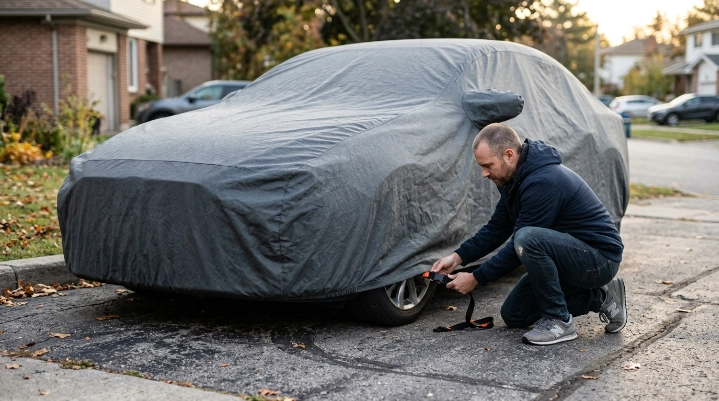
Start by reinstalling the cover carefully, even if it already looks close enough. I’ve fixed several annoying wind problems simply by removing the cover and fitting it again from scratch.
- Find the front: Check the cover label and identify the correct orientation before unfolding everything.
- Hook the front hem: Pull the elastic edge completely below the front bumper.
- Work toward the rear: Smooth the material over the hood, windshield, roof, and trunk.
- Fit mirror pockets: Seat them fully if your cover uses dedicated pockets.
- Secure the rear: Pull the rear elastic below the bumper without leaving large folds.
- Fasten every strap: Connect supplied underbody straps and remove obvious slack.
- Walk around the car: Look for balloon-shaped areas, hanging fabric, twisted straps, or open gaps.
How tight should car cover straps be?
The straps should remove slack without pulling the cover hard against sharp body edges. Excess tension can stress seams, buckles, and grommets.
I aim for firm rather than stretched. You want the cover to stay close to the vehicle while still fitting naturally.
Where should underbody straps go?
Use the routing specified by the cover manufacturer. Many systems simply pass a strap from one side of the cover to the other below the vehicle.
Keep straps away from the exhaust, sharp metal edges, brake components, and moving suspension parts. Never crawl underneath a vehicle just to route a strap if there isn’t safe working clearance.
If you’re doing other vehicle care while the car is parked, Edmunds also maintains a broad car maintenance resource for everyday owners.
Should I use random rope or bungee cords?
I prefer purpose-made car-cover straps because their clips and tension are designed around the cover. Improvised cords can concentrate force on one small area.
If you use an accessory restraint, make sure it cannot touch painted panels or snap back toward you. Never hook a cord to brake lines, wiring, exhaust parts, or delicate trim.
Section Takeaway: A secure cover starts with correct installation. Straps work best when they reinforce a snug fit instead of trying to fix a badly oversized cover.
Which Car Cover Securing Method Works Best?
There isn’t one perfect restraint for every car. The best setup depends on your cover design, fit, parking location, and expected wind.
| Method | Wind Control | Best Use | Main Caution |
|---|---|---|---|
| Elastic hem only | Basic | Sheltered parking and mild conditions | Can loosen as elastic ages |
| Built-in underbody straps | Strong | Regular outdoor parking | Must be routed safely |
| Wind or gust straps | Strong | Loose corners and windy locations | Avoid over-tightening |
| Cable lock | Secondary | Added security and retention | Not a replacement for proper wind straps |
| Custom-fit cover | Best starting point | Frequent outdoor use | Still needs securing in strong wind |
For me, the most reliable everyday combination is a close-fitting cover plus its built-in underbody straps. Wind straps make sense when the cover still moves around the front or rear.
A cable lock can provide another retention point, but I would not treat it as the primary wind restraint. Its main job is usually security rather than controlling every loose section.
Custom-fit vs universal car cover
A custom-fit cover follows the vehicle’s body more closely. That means fewer large folds where wind can grab the material.
A universal cover can still work, especially in a sheltered area. It usually needs more careful adjustment and restraint because the dimensions serve many different vehicles.
Can a Flapping Car Cover Damage Paint?
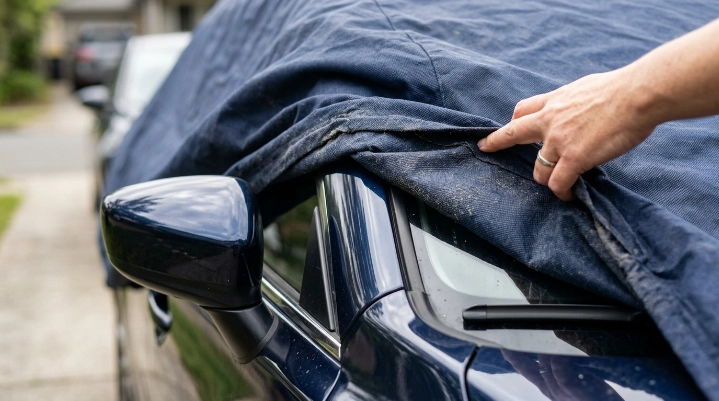
Yes, repeated movement can become a paint problem, especially when dirt or grit sits between the cover and clear coat. The risk comes from abrasion as the contaminated fabric moves back and forth.
This is why I pay attention to flapping even when the cover hasn’t blown completely off. A cover that survives the storm can still be moving more than I want.
- Wash off heavy grit: Sand and road dirt increase abrasion risk.
- Keep the cover clean: Dirt on the inner surface can also contact the paint.
- Dry the vehicle first: Avoid sealing obvious moisture against the body.
- Stop persistent flapping: Refit or remove the cover instead of ignoring it.
- Inspect contact points: Pay attention around mirrors, spoilers, roof edges, and bumper corners.
Kelley Blue Book’s general vehicle maintenance guide also emphasizes routine preventative care as part of protecting a vehicle over time. A car cover should support that care, not become another source of wear.
I also avoid placing bricks, boards, or other hard objects directly on top of a cover. They may hold one spot down while creating pressure points or sliding against the paint.
Soft, purpose-designed retention hardware is a safer approach. The goal is to control the cover without introducing another object that can damage the body.
Should I Remove a Car Cover in High Winds?
Sometimes removing the cover is the smarter choice. No lightweight fabric cover should be treated like a permanent storm shelter.
If severe weather is expected and you can safely remove the cover beforehand, indoor or sheltered parking is preferable. That eliminates both wind lift and violent fabric movement.
Signs I would remove the cover
- The cover keeps ballooning even with every supplied strap secured.
- Straps or buckles are already worn, cracked, or partly torn.
- The elastic hem no longer grips the vehicle.
- The cover repeatedly slips over one bumper or mirror.
- Nearby debris could strike or become trapped beneath the cover.
- Weather conditions are beyond what the cover manufacturer recommends.
Don’t try to wrestle with a large cover during dangerous wind. Remove it before conditions deteriorate when possible.
Once the weather clears, inspect the car and cover before reinstalling it. Look for torn stitching, stretched straps, trapped grit, and damp areas.
For broader safety information, the National Highway Traffic Safety Administration vehicle safety resources are useful for keeping up with general vehicle safety topics.
Section Takeaway: A cover is useful protection, but it is not a garage. If the cover cannot remain stable without extreme tension or improvised anchors, removing it is often the better option.
Frequently Asked Questions
Why does my car cover blow off even when it has elastic?
Elastic hems provide basic grip, but wind can still enter through loose sides or oversized sections. Old elastic also stretches over time. Adding the cover’s underbody straps and checking the overall fit usually gives much better wind resistance.
How do I keep a car cover from blowing off without straps?
Make sure both elastic hems sit completely below the bumpers and remove as much loose fabric as possible. However, if your parking area gets regular wind, a properly designed strap system is much more reliable than relying on elastic alone.
Can I put weights on my car cover?
I would avoid hard household weights such as bricks, boards, or tools. They can shift, create pressure points, and potentially damage the paint. Use accessories designed for automotive covers and follow the cover maker’s instructions instead.
Do wind straps scratch a car?
Properly installed straps should run below the vehicle and should not drag across painted panels. Check that clips, buckles, or cords cannot swing against the body. Dirt trapped beneath any contact point can also increase the chance of marks.
Is a custom-fit cover better in wind?
A custom-fit cover usually has less excess material than a universal cover, which gives wind fewer loose sections to grab. It still needs its intended retention system during windy outdoor use, especially in exposed parking areas.
Can a car cover be too tight?
Yes. Excessive strap tension can strain stitching, grommets, buckles, and fabric around corners. Tighten the system enough to remove major slack, but do not stretch the cover unnaturally across mirrors, spoilers, or sharp body features.
Should I cover a car that sits outside for weeks?
A suitable outdoor cover can help protect a parked vehicle, but the car still needs normal maintenance and periodic checks. Consumer Reports, Edmunds, and other automotive resources recommend continuing basic care even when a vehicle is driven infrequently.
Final Takeaway
If your car cover blows off, don’t start by piling more weight on it. Start with the fit.
Make sure the front and rear hems are seated properly, smooth away loose fabric, and use every restraint the manufacturer supplied. Add wind straps when the parking location regularly sees stronger gusts.
I also check the cover after windy weather instead of assuming that staying on means everything worked perfectly. Torn stitching, stretched elastic, dirty fabric, and loose buckles are much easier to deal with before the next storm.
The best car cover setup is simple: snug fit, clean surfaces, secure straps, and no uncontrolled flapping. If conditions are too severe for that setup to stay stable, remove the cover and use sheltered parking when available.
“`