
Can You Use Dish Soap to Wash Your Car?

No, you should not use dish soap to wash your car. Dish detergents are designed to cut through grease and food particles on dishes, which makes them far too harsh for your car’s delicate paint and protective wax coatings. They strip away essential wax, can cause water spots and dullness, and accelerate oxidation. Always use a dedicated, pH-balanced car wash soap formulated to clean without harming your vehicle’s finish. For proper care, invest in the right products and techniques to keep your car looking its best for years.
Key Takeaways
- Dish soap is too harsh: Its powerful degreasing agents strip protective wax and sealants from your car’s paint, leaving it vulnerable.
- It causes water spots: Dish soap can interfere with water beading, causing mineral-rich water to dry on the surface and leave stubborn spots.
- Car wash soap is pH-balanced: Specifically formulated to be gentle on paint and wax while effectively lifting dirt without stripping protection.
- Proper technique matters: Using two buckets, a grit guard, and a soft mitt is just as important as using the correct soap to prevent swirls and scratches.
- Long-term damage is costly: Regularly using dish soap leads to faded, oxidized paint that requires expensive correction or repainting to fix.
- Alternatives exist in a pinch: If you must use a household product, a mild baby shampoo is a *far* better temporary choice than dish soap, but it still isn’t ideal.
- Preservation is the goal: Washing your car is about maintaining its value and appearance, not just removing dirt; the right soap is a key part of that preservation.
📑 Table of Contents
- The Temptation and the Truth: Why That Dish Soap Seems Like a Good Idea
- The Science of Soap: pH and Paint Protection
- What Makes a Dedicated Car Wash Soap Different?
- The Right Way to Wash Your Car: Technique is Half the Battle
- Alternatives When You’re Truly in a Pinch
- Long-Term Effects: The True Cost of Convenience
- Conclusion: A Simple Habit for a Lifetime of Shine
The Temptation and the Truth: Why That Dish Soap Seems Like a Good Idea
Let’s be honest. You’re standing in your driveway with a bucket of suds, a sponge, and a car that’s covered in a winter’s worth of grime, bird droppings, and road salt. The dedicated car wash soap is empty, or maybe you never even owned a proper one. Your eyes drift to the kitchen sink. That blue bottle of dish soap is right there. It’s a degreaser. It cuts through tough, baked-on food on plates. Surely it can handle a little bug splatter on your bumper, right? This thought crosses the mind of countless car owners every weekend. It’s convenient, it’s cheap, and it’s *right there*. But this common shortcut is one of the most damaging things you can regularly do to your car’s exterior. The truth is, using dish soap on your car is a guaranteed way to systematically remove the very protections that keep your paint looking new and vibrant. It’s not an exaggeration to say it’s like using a sledgehammer to crack a walnut.
The fundamental difference lies in the purpose of the products. Dish soap is engineered for a completely different environment and material. Your car’s paint is not a ceramic plate. It’s a complex, multi-layered system with a clear coat finish that is only microns thick. This clear coat contains UV inhibitors and is topped with sacrificial layers of wax or sealant that you (or a detailer) have applied. These layers are what give the paint its deep gloss and, crucially, its hydrophobic properties—the ability to make water bead up and roll off, taking dirt with it. Dish soap doesn’t care about any of that. Its single-minded mission is to destroy oils and fats. It will attack the oily wax on your paint with the same fervor it attacks the butter on your dishes. The result is a clean, but naked, paint surface that is now exposed to the elements and far more susceptible to scratching and fading.
The Slippery Slope of “Just This Once”
Many people justify a single use. “I’ll just do it this one time and be extra careful.” But car care is about habits. One time becomes two. Two becomes a routine. The damage is cumulative and invisible at first. You won’t see the wax being stripped in a linear fashion; it happens gradually. The first sign is often that the water no longer beads up beautifully on the hood after a wash. It starts to sheet or flatly spread. That’s your first clue that the protective layer is gone. Then, you might notice swirls in the sunlight more easily, or that the paint feels rough to the touch. By the time you see significant dullness or fading, the damage is done, and restoring it is a labor-intensive, expensive process. It’s a classic case of short-term convenience leading to long-term cost and regret.
The Science of Soap: pH and Paint Protection
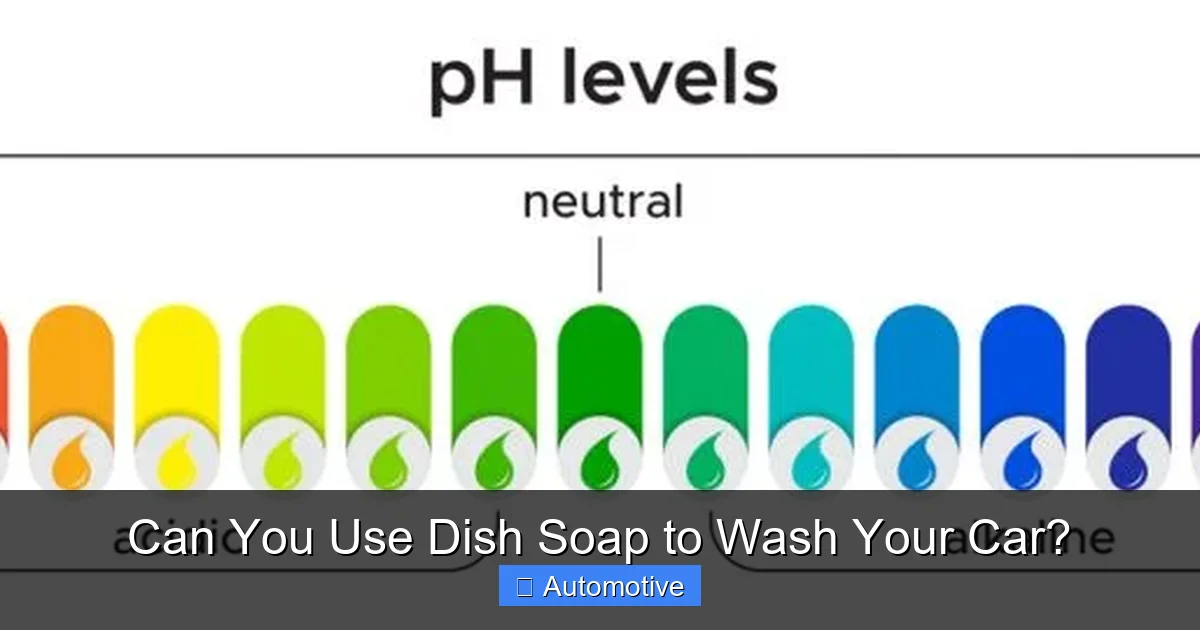
To understand why dish soap is so destructive, we need to talk about pH. The pH scale measures how acidic or alkaline a substance is, from 0 (very acidic) to 14 (very alkaline), with 7 being neutral. Your car’s clear coat and the waxes/sealants on it thrive in a neutral to slightly acidic environment. Most quality car wash shampoos are formulated to be pH-neutral (around 7.0 to 7.5). This means they are gentle and will not react with or strip the protective layers on your paint.
Visual guide about Can You Use Dish Soap to Wash Your Car?
Image source: thevehiclelab.com
Dish soap, on the other hand, is typically alkaline, often with a pH between 9 and 12. That alkalinity is what gives it the power to cut through grease and food oils. But that same power is a chemical aggressor against your car’s finish. When you apply an alkaline solution to a surface protected by acidic or neutral waxes, it essentially dissolves them. It’s a chemical reaction. The soap breaks down the long hydrocarbon chains that make up wax polymers. This process doesn’t just remove the wax; it can also slightly etch the underlying clear coat over time, especially if you allow the soap to dry on the surface. This etching creates a microscopically rough surface that scatters light instead of reflecting it clearly, which is the primary cause of that dull, oxidized look.
What About “Mild” or “Soft” Dish Soaps?
You might point to brands that market “mild” or “soft” formulas for hands. The unfortunate reality is that even these are not formulated with automotive paint in mind. Their “mildness” is relative to your skin’s pH, not to a polymer wax sealant. They still contain detergents and surfactants powerful enough to remove oils. While they might be *less* harsh than a heavy-duty grease-cutting formula, they are still orders of magnitude more aggressive than a dedicated car shampoo. There is no such thing as a dish soap that is safe for regular car washing. The formulation goals are simply incompatible.
What Makes a Dedicated Car Wash Soap Different?
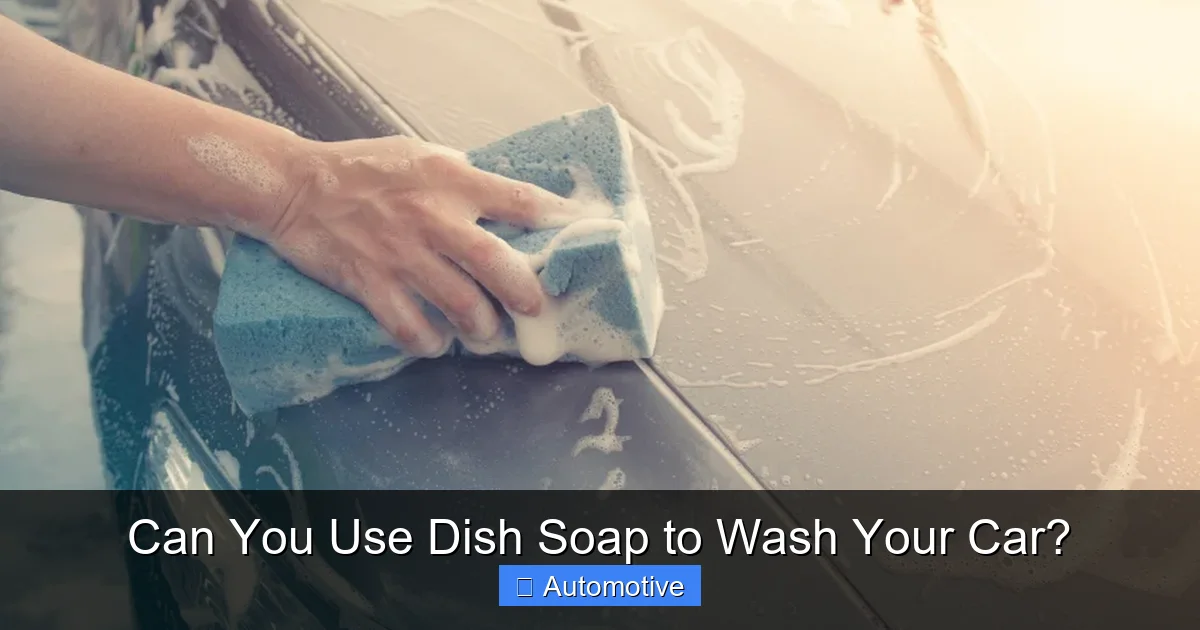
Car wash soaps are a different category of product altogether. Their formulation is a careful balance of cleaning power and preservation. They use specific, gentle surfactants (surface-active agents) that are designed to encapsulate and lift dirt particles away from the paint surface without bonding to or dissolving the wax underneath. They are lubricious, meaning they provide a high degree of slickness. This slickness allows your wash mitt to glide over the paint, reducing friction and the chance of dragging abrasive dirt particles across the surface, which is what causes swirls and scratches.
Visual guide about Can You Use Dish Soap to Wash Your Car?
Image source: s3.amazonaws.com
The most critical feature, however, is the pH-balanced formula. By staying neutral, they coexist peacefully with your car’s protective coatings. They clean the *dirt* without cleaning off the *wax*. Furthermore, many premium car shampoos contain added lubricants, gloss enhancers, and even small amounts of wax or sealant to replenish what is naturally lost during the washing process. They are designed to be part of your maintenance routine, not a stripping agent. The difference in feel is noticeable: a good car soap will produce thick, rich, cushiony suds that linger on the paint, while dish soap creates a thin, watery lather that disappears quickly.
Concentrate vs. Ready-to-Use: Does It Matter?
Both formats can be excellent if they are quality car wash products. The key is following dilution ratios. Using a concentrate too strong (like a gallon of soap in a few gallons of water) can reduce its lubricity and increase the risk of spotting. Similarly, some ready-to-use formulas in spray bottles are great for quick touch-ups but may not have the same sudsing power for a full bucket wash. Always read the manufacturer’s instructions. The goal is a solution that creates plenty of slick, cushiony foam that suspends dirt and allows it to be rinsed away before it can re-deposit.
The Right Way to Wash Your Car: Technique is Half the Battle
Even with the perfect soap, poor technique can ruin your paint. The two-bucket method is non-negotiable for a safe wash. You need one bucket with your clean, soapy water solution and a second bucket with plain rinse water. You also need a grit guard for each bucket. The process works like this: you dunk your wash mitt into the soap bucket, wash a panel (say, the roof), then rinse the mitt thoroughly in the rinse bucket, swishing it against the grit guard to dislodge any trapped dirt particles. Only then do you re-dip it in the soap bucket. This keeps the vast majority of abrasive dirt out of your soap bucket, so you’re not reintroducing it to your paint with every swipe.
Visual guide about Can You Use Dish Soap to Wash Your Car?
Image source: i.pinimg.com
Start at the top and work your way down. The lower parts of the car (rockers, bumpers) are the dirtiest. Wash them last. Use a separate, dedicated mitt for wheels and wheel wells. These areas are coated with a film of brake dust and road grime that is highly abrasive and should never touch your paint. A dedicated wheel cleaner and brush are essential here. Rinse thoroughly with a gentle stream of water (a pressure washer on a wide fan setting is ideal, but a hose with a spray nozzle works) before the soap dries. Finally, dry with a clean, soft, plush microfiber towel. Use a “blotting” or “squeegee” motion rather than rubbing to minimize friction.
Choosing the Right Tools: Mitts, Towels, and Buckets
A cheap, yellow sponge is a paint’s worst enemy. It holds onto dirt and has a flat, abrasive surface. Invest in a high-quality, plush microfiber or Chenille wash mitt. These are incredibly soft and hold a huge amount of water and soap, providing superior lubrication. For drying, a large, clean, dedicated drying towel (often called a “drying chamois” or “microfiber drying towel”) is key. It should be laundered separately from other towels to avoid any contamination from fabric softeners or other chemicals. As for buckets, a simple 5-gallon bucket is fine, but the grit guard is the critical $10 accessory that makes the two-bucket method effective.
Alternatives When You’re Truly in a Pinch
Life happens. You might be on a road trip, your car is covered in mud, and you only have access to a gas station car wash or your family’s household supplies. If you absolutely cannot get a proper car wash soap, there is one marginally better alternative: a mild, tear-free baby shampoo. Products like Johnson’s Baby Shampoo are formulated to be extremely gentle, pH-balanced for a baby’s skin and eyes, and free of harsh detergents. In a true emergency, a small amount diluted heavily in water can be used once to avoid immediate wax stripping.
However, this is a compromise, not a solution. Baby shampoo lacks the specific lubricants and protective additives of a real car soap. It will still clean, but it may leave a slight film and won’t help maintain your wax. It should be a rare exception, not a habit. Never use any of the following: glass cleaners (like Windex—they contain ammonia that can damage tint and finishes), all-purpose cleaners, laundry detergent (even more alkaline than dish soap), or any product with bleach or disinfectants. These are chemical weapons on your car’s paint. If you find yourself frequently in need of a wash but without proper supplies, it’s a sign to keep a small bottle of concentrated car wash soap and a mitt in your trunk.
The Myth of the “Quick Rinse”
Some might think, “I’ll just rinse the dish soap off really well.” Unfortunately, this doesn’t solve the core problem. The damage is done chemically during the contact time. The alkaline soap has already reacted with and broken down the wax molecules. Rinsing removes the soap, but it doesn’t put the wax back. You’ve already stripped the protection. Furthermore, if you live in an area with hard water (high mineral content), dish soap can exacerbate water spotting because it doesn’t contain any agents to help prevent mineral deposits from bonding to the surface during drying.
Long-Term Effects: The True Cost of Convenience
The immediate result of washing with dish soap is a car that *looks* clean. The long-term result is a car that *ages* prematurely. Your paint’s wax coating is its primary defense against the sun’s UV rays, acid rain, bird droppings, and tree sap. By stripping this layer every time you wash, you are essentially leaving your car’s clear coat naked. UV radiation then has direct access, breaking down the polymers and causing oxidation—that chalky, faded, dull appearance. This oxidation is not surface dirt; it’s permanent chemical damage to the paint itself. Once a car is oxidized, the only fix is machine polishing (compounding) to remove the oxidized layer, followed by reapplication of a durable sealant or ceramic coating. This is a professional, multi-hour, and expensive process.
Beyond oxidation, a wax-deficient surface is also more prone to micro-scratches. The wax fills in tiny imperfections and provides a slick surface. Without it, dirt and sand have a much easier time scoring the clear coat with every wash and drive. Over years, this leads to a network of fine scratches that give the paint a “swirled” or “spider-webbed” look, especially visible in direct sunlight. This is the single most common reason cars look old and neglected, even if they are mechanically sound. Protecting your paint with proper washing products is one of the highest-ROI (return on investment) maintenance tasks you can perform for your vehicle’s long-term value and aesthetics. It’s about preservation, not just cleanliness.
Conclusion: A Simple Habit for a Lifetime of Shine
The question “Can you use dish soap to wash your car?” has a clear and resounding answer: you absolutely should not. The minor convenience of grabbing a kitchen staple is vastly outweighed by the severe, cumulative damage it inflicts on your car’s most visible and valuable asset: its paint. Dish soap is a degreaser for ceramics and metals, not a paint preservative. It strips away wax, promotes water spots, accelerates UV damage, and sets the stage for a dull, scratched finish that costs thousands to correct.
The solution is simple and affordable. Purchase a quality, pH-neutral car wash shampoo. It doesn’t have to be the most expensive brand; many excellent drugstore and online options exist. Pair it with proper tools—a soft microfiber mitt, two buckets with grit guards, and a dedicated drying towel. Learn and consistently use the two-bucket method. This small investment in time and product upfront will save you from massive repair bills and a permanently marred finish down the road. Treat your car’s exterior with the same respect you give its engine. After all, a well-maintained car is a joy to drive, a point of pride, and holds its value far better. Don’t sacrifice its long-term health for a moment’s convenience. Your future self, looking at a glossy, deep, and protected paint job, will thank you.
Frequently Asked Questions
Can any dish soap be safe for my car if I rinse really well?
No. Even with thorough rinsing, the chemical damage from the alkaline dish soap is done during contact. It strips wax and can etch the clear coat. Rinsing removes the soap but does not restore the removed protection.
What about using a “soft” or “moisturizing” dish soap for sensitive skin?
These are still formulated to cut grease and are alkaline. Their “softness” is relative to human skin, not to automotive clear coat and wax. They are not pH-balanced for paint and will still strip protective coatings.
Is baby shampoo a good substitute for car wash soap?
In a true emergency, a tiny amount of mild, tear-free baby shampoo heavily diluted can be used once. It is pH-balanced and very gentle. However, it lacks the lubricants and protective additives of real car soap and is not a regular substitute. It’s a last-resort option, not a recommendation.
My car doesn’t have any wax on it. Is it safe to use dish soap then?
It’s still not recommended. Even without a wax layer, your car’s clear coat is vulnerable. Dish soap’s alkalinity can still dry out and slightly etch the clear coat over time. Furthermore, it provides zero lubrication, increasing the risk of swirls and scratches from dirt particles during the wash.
Can I use dish soap on my car’s wheels and tires?
This is a common practice and arguably the one appropriate use for dish soap on a car. Wheels and tires are made of metal and rubber, not painted clear coat. The powerful degreasers in dish soap are effective at removing baked-on brake dust and road grime from these surfaces. Always use a separate brush and bucket for wheels to avoid transferring this abrasive contamination to your paint.
How often should I wash my car to maintain its paint?
There’s no universal rule, as it depends on climate, storage, and driving conditions. A good guideline is to wash your car every two weeks. If you live in an area with harsh winters (road salt), bird-heavy areas, or near the ocean (salt air), you may need to wash more frequently. The key is to not let contaminants like bird droppings, bug splatter, or tree sap sit for more than a few days, as they can etch the paint. For more on washing frequency, you can read our article on Can You Wash Your Car Too Much.