Can You Smoke in a Rental Car?

Contents
- 1 Key Takeaways
- 2 📑 Table of Contents
- 3 The Unbreakable Rule: Why Rental Cars Are Always Smoke-Free
- 4 How Rental Companies Detect Smoke: It’s Not Just Your Nose
- 5 The Financial Tsunami: Understanding Rental Car Smoking Fees
- 6 The Cleaning Process: Why It’s So Expensive and Intensive
- 7 Legal and Insurance Implications: Beyond the Rental Fee
- 8 Essential Tips for Smokers and Non-Smokers Alike
- 9 Frequently Asked Questions

Brake Cleaner Spray

Car Roof Rack Cross Bars

Car Dent Repair Kit

Car Seat Cover (Universal Fit)
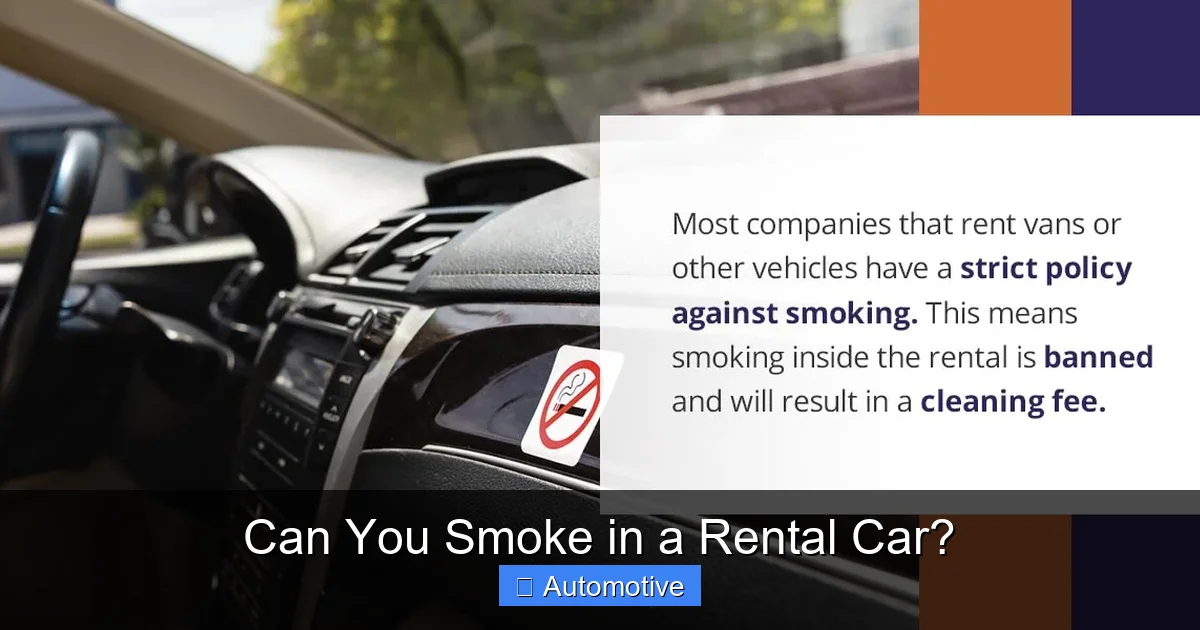
No, you almost universally cannot smoke in a rental car. All major rental companies enforce a strict no-smoking policy, typically outlined in your rental agreement. Violating this rule results in substantial cleaning fees, often ranging from $250 to $500 or more, as companies use specialized methods to detect nicotine residue and odor. This fee is non-negotiable and charged directly to your credit card, regardless of whether you believe the smell is gone. Always assume a rental car is a smoke-free zone to protect your wallet and avoid disputes.
Key Takeaways
- Strict Prohibition: Smoking, including cigarettes, cigars, pipes, and vaping, is explicitly forbidden in virtually all rental cars by all major companies.
- High Detection Rates: Rental agencies use advanced methods like black light inspection and olfactory assessment by trained staff to find even minimal smoke residue.
- Costly Penalties: Violation triggers a mandatory “detailing” or “decontamination” fee, typically $250-$500+, automatically billed to your card on file.
- Fee is Non-Negotiable: These fees are contractual penalties, not optional. Disputing them is difficult as you agreed to the policy by signing the rental agreement.
- Vaping is Not a Loophole: Vapor from e-cigarettes and vapes also leaves residue and smell. It is treated identically to traditional smoking under rental policies.
- Secondhand Smoke Triggers Fees: Even if you don’t smoke, having passengers who do, or transferring smoke from your clothes/hair into the car, can lead to a charge.
- Prevention is Key: The only way to avoid the fee is to not smoke or vape anywhere inside or near the vehicle during your rental period.
📑 Table of Contents
- The Unbreakable Rule: Why Rental Cars Are Always Smoke-Free
- How Rental Companies Detect Smoke: It’s Not Just Your Nose
- The Financial Tsunami: Understanding Rental Car Smoking Fees
- The Cleaning Process: Why It’s So Expensive and Intensive
- Legal and Insurance Implications: Beyond the Rental Fee
- Essential Tips for Smokers and Non-Smokers Alike
The Unbreakable Rule: Why Rental Cars Are Always Smoke-Free
Let’s be real for a second. You’re on a road trip, stuck in traffic, or just finished a long day. The urge to light up a cigarette or take a puff from your vape inside the comfort of your rented sedan can be strong. After all, it’s your car for the week, right? Wrong. This is one of the most common—and costliest—misconceptions in car rental. The short, blunt answer to can you smoke in a rental car is a resounding, unwavering no. It’s not a suggestion, a guideline, or a policy that’s loosely enforced. It is a fundamental, ironclad rule of the rental contract you signed, whether you read every line or not.
Why are rental companies so absolute about this? It comes down to cold, hard economics and next customer experience. A single rental car is cycled through dozens of renters each year. The second a previous renter introduces tobacco or vape residue into the cabin, it becomes a problem for the next person. That lingering smell isn’t just unpleasant; it’s a bio-contaminant that seeps into fabrics, headliners, air vents, and the HVAC system. Removing it is not a simple vacuum and air freshener job. It requires a multi-hour, specialized deep-cleaning process that ties up a valuable asset and costs the company significant money. They pass that cost directly to the offender, and the fees are designed to be a powerful deterrent.
This article is your definitive guide to the “no smoking” rule in rental cars. We’ll dissect the policies, reveal the sophisticated detection methods companies use, break down the financial consequences, and give you practical, actionable advice to ensure you never face one of these shocking fees. Think of it as essential reading for anyone who ever plans to put the key in the ignition of a rental vehicle.
The Contract You Signed (But Might Not Have Read)
Your rental agreement is a legally binding document. Buried within its paragraphs of legalese is a clause that unequivocally states the vehicle must be returned in the same condition as provided, free from tobacco smoke, vapor, or any related odor. By signing and taking possession of the keys, you have explicitly agreed to this term. It’s not a “gotcha” clause; it’s a standard industry practice clearly disclosed. Ignorance is not an acceptable defense. Companies argue that if they didn’t have such a strict policy, the prevalence of smoke contamination would skyrocket, making their fleet unpleasant and increasing operational costs for everyone, which would ultimately lead to higher rental rates for all customers.
How Rental Companies Detect Smoke: It’s Not Just Your Nose
You might think you’re clever. You crack the windows, smoke only when parked, and Febreze the interior before returning the car. You might even believe the smell is gone. But rental companies have developed a science for detecting smoke violations, and their methods are far more reliable than a human sniff test. They are not looking for the obvious stale-cigarette smell; they are hunting for invisible, chemical evidence left behind by nicotine and other combustion byproducts.
Visual guide about Can You Smoke in a Rental Car?
Image source: statevan.com
The Black Light (UV Light) Inspection
This is the most common and effective method. After a vehicle is returned, an agent will take it to a detailing area and use a powerful ultraviolet (UV) or black light. Nicotine and tar residue fluoresce under this light, creating a telltale glow on surfaces where smoke has settled. This includes the ceiling fabric (headliner), seatbelts, the back of front seats, the steering wheel, dashboard, and especially the air vents and filters. The residue leaves a sticky film that is virtually impossible to remove completely without professional chemicals and equipment. A quick wipe-down with a cloth will not eliminate this fluorescence. The inspector can see exactly where the smoke was concentrated, providing undeniable proof of violation.
Olfactory Assessment by Trained Staff
Some companies employ or train staff with a particularly sensitive sense of smell. These “sniffers” will methodically go through the vehicle, checking common areas. They are looking for the specific, chemical odor of nicotine that has penetrated materials, not just the smell of a burned-out ashtray. This is why even if you think you’ve masked the smell with air fresheners, a trained professional can often still detect the underlying tobacco odor. Combining the visual black light evidence with a confirmed smell is a nearly unbeatable case for the rental company.
Air Vent and Cabin Filter Analysis
The HVAC system is a favorite hideout for smoke particles. When you smoke with the fan on or even just in the car with windows slightly open, microscopic particles get sucked into the system and coat the evaporator coils, ducts, and, most importantly, the cabin air filter. A dirty, smoke-clogged cabin filter is a smoking gun (pun intended). Inspectors can easily remove and inspect this filter. A filter coated in a yellowish-brown film is a clear indicator of smoke exposure. Replacing this filter is part of the costly detailing process, and its condition is used as evidence.
The Financial Tsunami: Understanding Rental Car Smoking Fees
So, you’ve been caught. The black light glowed. The filter was coated. The fee is coming. But what exactly are you paying for, and how much can you expect to shell out? The fee is not a “fine” in the legal sense; it’s a contractual charge for a specific, expensive service: the “detailing” or “decontamination” of the vehicle.

Visual guide about Can You Smoke in a Rental Car?
Image source: fajarcarrental.com
What the Fee Actually Covers
The $250-$500+ fee isn’t just a random penalty. It’s an estimate of the real costs involved in making the car habitable for the next customer. This process is far beyond a standard car wash and vacuum. It typically includes:
- Ozone Treatment: The car is sealed and an ozone generator is run for several hours. Ozone (O3) molecules oxidize and break down smoke particles and odor molecules embedded in materials.
- Thermal Fogging: A chemical fog is circulated through the HVAC system and cabin to penetrate deep into fabrics and crevices, neutralizing odors.
- Professional Steam Cleaning: All upholstery, carpets, and headliners are shampooed and extracted with industrial-grade equipment.
- Complete Interior Disassembly: In severe cases, technicians may remove seats, dash panels, and door trims to access and clean hidden areas where smoke residue accumulates.
- Cabin Filter Replacement: A new filter is installed.
- Multiple-Day Downtime: The car is out of service for at least a full day, sometimes two, representing lost rental revenue for the company.
Because this is labor-intensive, requires specialized products and equipment, and takes the vehicle off the market, the fee is high. You are essentially paying for the privilege of having made the car temporarily unusable for its intended business purpose.
Fee Ranges and Company Policies
While all major companies (Enterprise, Hertz, Avis, Budget, National, Alamo) have similar policies, the exact fee can vary by location, franchise, and severity of contamination. You might see fees quoted as low as $150 for a very light, detectable smell on a subcompact, but $300-$500 is the standard range for a typical sedan or SUV. Luxury and premium brands often charge more, sometimes $750 or higher, due to the higher cost of cleaning premium materials. The fee will be charged to the credit card you used for the rental, often within a few days of returning the car. You will receive an itemized receipt if you ask, but the charge itself is usually non-negotiable once the violation is confirmed.
The Cleaning Process: Why It’s So Expensive and Intensive
To understand why the fee is so steep, you need to understand the war being waged against smoke residue. It’s not dirt; it’s a chemical film. Standard detailing won’t cut it. Companies use certified “smoke remediation” specialists or have dedicated, heavily equipped detail bays for this purpose.

Visual guide about Can You Smoke in a Rental Car?
Image source: thedailyautomotive.com
The Multi-Step Assault on Nicotine
The process begins with a thorough, dispassionate inspection under black light. Every surface is mapped. Then, the chemical battle begins. Technicians use proprietary, pH-balanced cleaners designed to break down nicotine polymers without damaging automotive interiors. They apply these solutions with microfiber towels, often in a two-step process: a cleaner followed by a neutralizing agent. The HVAC system is flushed with specialized vent cleaners. Fabrics are pre-treated before hot water extraction. In extreme cases, the headliner—which is notoriously difficult to clean—may need to be removed and sent out for professional ultrasonic cleaning or, as a last resort, replacement. This isn’t a quick detail; it’s a restoration project.
The Role of Ozone and Thermal Fogging
After the physical cleaning, the chemical neutralization begins. Ozone treatment is the gold standard for odor removal. The car is sealed, and an ozone generator runs for 4-8 hours. Ozone molecules are highly reactive and oxidize the odor-causing compounds, changing their chemical structure and eliminating the smell. This is followed by thermal fogging, which uses a heated, fog-like dispersion of a neutralizing agent that mimics the way smoke originally traveled through the car’s interior, ensuring it reaches every nook, cranny, and air duct. Only after these steps is the car considered “decontaminated” and ready to be rented to a non-smoker.
Legal and Insurance Implications: Beyond the Rental Fee
The financial hit from the cleaning fee is usually the end of it, but there are broader implications to consider that can affect your travel and finances in other ways.
Impact on Your Rental History and Future Rentals
Major rental companies share data through systems like the Rental Check database. A violation for smoking, especially if it results in a significant fee that is charged to your card, can be flagged in your customer profile. This might not prevent you from renting in the future, but it could result in a higher required security deposit, a hold on your account, or even a denial of service at certain locations, particularly if you have multiple violations. It marks you as a high-risk renter from a vehicle condition perspective.
Credit Card and Travel Insurance Considerations
Some travelers mistakenly believe their premium travel credit card’s rental car insurance will cover such a fee. This is almost never true. The collision damage waiver (CDW) and liability insurance provided by cards cover physical damage to the vehicle or injuries to others. They do not cover contractual penalties for violating the rental agreement’s terms, like smoking, off-road driving, or unauthorized drivers. Similarly, your personal auto insurance policy will not cover this fee. It is considered a direct charge for a service rendered due to your breach of contract. You cannot insure your way out of this particular mistake.
Potential for Additional Claims
In rare, severe cases where the smoke damage is so extensive that it affects the car’s long-term value or requires component replacement (like a new headliner), the rental company could pursue you for additional damages beyond the standard cleaning fee through collections or small claims court. While uncommon for a typical violation, it underscores that the fee is a best-case, pre-negotiated settlement for you to avoid further legal action.
Essential Tips for Smokers and Non-Smokers Alike
So, what’s a person to do? The rule is clear, but the reality of nicotine addiction or social situations is messy. Here is your actionable playbook for navigating this minefield.
For Smokers/Vapers: The Only Safe Strategy
Your strategy must be absolute: do not smoke or vape in, on, or immediately next to the rental car during your entire rental period. Period. This means:
- Plan Your Stops: Identify official smoking areas at rest stops, gas stations, or designated outdoor spots far from the rental car. Treat it like a refueling stop.
- Never “Just Outside the Door”: Even smoking with the car door open and your head outside can pull smoke into the cabin through the gap and into the HVAC intake. You must be at least 10-15 feet away, with the wind at your back, and the car’s windows completely closed.
- Vaping is Not an Escape Hatch: The aerosol from vapes contains propylene glycol, vegetable glycerin, nicotine, and flavorings that leave a sticky, persistent residue. It is 100% treated as smoking by rental companies. No exceptions.
- Check Your Clothes: Smoke and vape particles cling to hair, skin, and clothing. If you’ve just smoked, do not get back in the car until you’ve changed clothes or at least thoroughly aired out. The smell on you will transfer to the seats.
For Non-Smokers: Protecting Yourself
If you are a non-smoker, you have the right to a fresh, clean car. Always:
- Inspect Upon Pickup: Before you drive off, do a quick sniff test. Turn the HVAC on to max and smell the vents. If you detect any smoke odor, immediately request a different vehicle. Document it with a photo if necessary. Do not accept a car that already smells smoky—the previous renter’s fee should have been charged already, but sometimes cars slip through.
- Report Suspected Violations: If you suspect the previous renter smoked and the car wasn’t properly cleaned, report it to the rental agent at drop-off. It’s not “snitching”; it’s ensuring the company addresses its own cleaning failure so the next customer isn’t charged for someone else’s sin.
- Know the Policy: Familiarize yourself with the specific company’s smoking policy, which is usually on their website. Knowledge is your best defense if a dispute arises.
What to Do If You’re (Wrongly?) Charged
If you receive a smoking fee and believe it’s a mistake (e.g., you didn’t smoke, or the smell was from a previous renter), you have a path, but it’s an uphill battle.
- Gather Evidence Immediately: Do you have photos of the car when you returned it showing it was clean? Do you have a witness? Did you note any pre-existing smells on the rental form?
- Dispute in Writing: Call the rental company’s customer service and escalate to a manager. Calmly state your case. If they have black light photos or an inspection report, your chances are very low.
- Credit Card Dispute: As a last resort, you can dispute the charge with your credit card issuer, arguing you did not authorize the service. Be prepared to provide your evidence. The rental company will submit their contract and inspection report. These disputes are often decided in favor of the merchant when a signed contract and evidence of damage exist.
- Accept the Lesson: Often, the cost of fighting the fee (time, stress) exceeds the fee itself, especially if you know you or your passengers smoked. The strongest argument is the one you don’t have to make by following the rule.
Frequently Asked Questions
Is vaping allowed in rental cars?
No. Vaping is explicitly included in all major rental companies’ no-smoking policies. The aerosol from vapes leaves a residue and odor that is just as difficult to remove as tobacco smoke, and you will be charged the same substantial cleaning fee.
How do rental companies prove I smoked in the car?
They primarily use a black light (UV light) to detect nicotine residue that glows on fabrics, headliners, and surfaces. They also inspect the cabin air filter for a film and may use trained staff for olfactory assessment. This provides objective evidence, not just a subjective smell.
Can I negotiate or get the smoking fee waived?
It is exceptionally difficult. The fee is a contractual penalty outlined in your rental agreement. Companies have documented evidence (inspection reports, photos). Your only leverage is if you can prove the car was already contaminated when you received it, which requires immediate documentation at pickup.
What exactly counts as “smoking” for the fee?
>It includes smoking cigarettes, cigars, pipes, and using any electronic cigarette, vape pen, or similar device. It also includes situations where smoke/vapor from your clothes, hair, or person is transferred into the vehicle’s interior, creating a detectable odor or residue.
What if my passenger smoked outside the car and then got in?
This is a gray area that often leads to fees. Smoke particles on a person’s clothing and hair can transfer to seats and the cabin. If the resulting smell or residue is detectable during inspection, the renter (you) is responsible. It’s safest to insist passengers change clothes or air out before re-entering if they’ve been smoking.
Will my personal car insurance or credit card cover a smoking fee?
No. Standard rental car insurance from credit cards or personal auto policies covers physical damage or liability. A smoking fee is a contractual penalty for violating the rental agreement’s terms, not an insured loss. You are personally liable for this charge.