Can You Shoot Someone Stealing Your Car?

Contents
- 1 Key Takeaways
- 2 📑 Table of Contents
- 3 The Core Legal Principle: Life Over Property
- 4 The Confusing World of State Laws: Castle Doctrine & Stand Your Ground
- 5 The Rare and Dangerous Exceptions: When Lethal Force *Might* Be Legal
- 6 The Consequences: Why You Almost Certainly Shouldn’t Shoot
- 7 What You SHOULD Do: The Smart, Legal, and Safe Response
- 8 Real-World Cases and Outcomes
- 9 Conclusion: A Car is a Thing, Your Life and Freedom Are Everything
- 10 Frequently Asked Questions

Car MP3 Player

Car Roof Rack Cross Bars

Car Trash Can

Car Bumper Protector
In most U.S. jurisdictions, you cannot shoot someone solely for stealing your car. The law generally does not consider property, even a valuable asset like a vehicle, sufficient justification for lethal force. The use of deadly force is typically reserved for situations where there is an immediate, credible threat of death or serious bodily injury to yourself or others. Understanding your specific state’s “Castle Doctrine” and “Stand Your Ground” laws is critical, as they vary significantly. The legal, financial, and emotional consequences of shooting a thief are almost always far more severe than the loss of the vehicle itself.
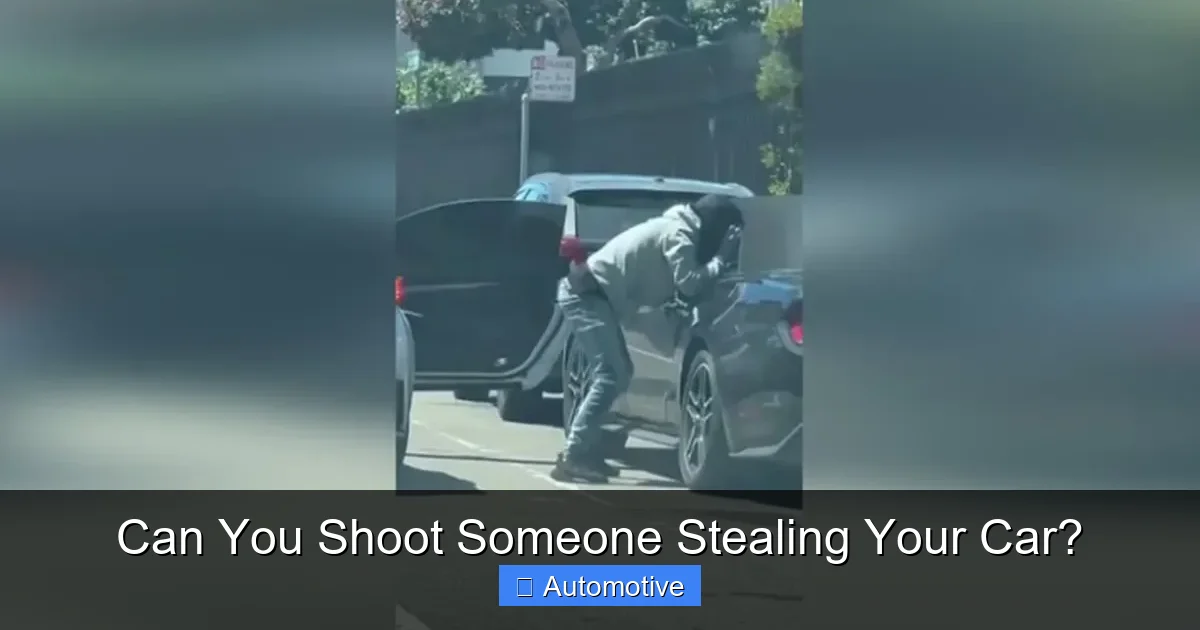
The screech of tires, the thud of a slammed door, and the sickening realization that your car is being stolen right before your eyes. In that flash of panic, anger, and violation, a terrifying question can race through your mind: Can you shoot someone stealing your car? It’s a dramatic scenario fueled by movies and a primal sense of injustice. But the real-world answer is a complex web of legal principles, state-specific statutes, and grave consequences that almost always point to one clear conclusion: No, you cannot legally use lethal force simply to stop a car theft. This article will dissect the legal reality, explore the rare exceptions, and provide the practical steps you should take instead.
Key Takeaways
- Lethal force is for life, not property: The fundamental legal principle is that you may use deadly force only to prevent imminent death, serious bodily harm, or a violent felony (like armed robbery), not to protect mere property like an unoccupied car.
- “Castle Doctrine” has limits: While many states have laws removing the “duty to retreat” in your home (your “castle”), these protections rarely extend to your vehicle when it is not being used as a temporary residence.
- “Stand Your Ground” is not a free pass: These laws remove the duty to retreat in any place you have a legal right to be, but they still require a reasonable belief of imminent mortal danger. A fleeing thief does not meet this standard.
- The “fleeing felon” rule is largely obsolete: The old common law allowing deadly force to stop a fleeing felon has been abolished or severely restricted in modern statutes, especially for non-violent crimes like auto theft.
- Civil lawsuits are a major risk: Even if criminal charges are not filed, the thief (or their family) can sue you for wrongful death or injury, potentially resulting in massive financial damages.
- Insurance and practical alternatives: Comprehensive auto insurance is designed for this exact scenario. Your primary actions should be: 1) Ensure your safety, 2) Call 911, 3) Provide a detailed description, 4) Report to your insurer.
- Emotional and psychological toll: Taking a life, even in a chaotic moment, often leads to profound, lifelong psychological trauma, guilt, and public scrutiny that far outweighs the loss of a car.
📑 Table of Contents
- The Core Legal Principle: Life Over Property
- The Confusing World of State Laws: Castle Doctrine & Stand Your Ground
- The Rare and Dangerous Exceptions: When Lethal Force *Might* Be Legal
- The Consequences: Why You Almost Certainly Shouldn’t Shoot
- What You SHOULD Do: The Smart, Legal, and Safe Response
- Real-World Cases and Outcomes
- Conclusion: A Car is a Thing, Your Life and Freedom Are Everything
The Core Legal Principle: Life Over Property
At the heart of American criminal law regarding self-defense is a foundational, non-negotiable hierarchy: human life is valued infinitely higher than property. The legal justification for using deadly force—force that a reasonable person would know creates a substantial risk of death or serious bodily injury—is extremely narrow. It is not a tool for protecting possessions. The Model Penal Code, which has influenced many state laws, states that deadly force is justifiable only when the actor believes it is necessary to protect themselves against death, serious bodily injury, kidnapping, or sexual assault.
Car theft, while a serious felony, is not inherently a crime of violence against a person. The thief’s intent is to deprive you of property, not necessarily to cause you physical harm. Therefore, the law does not grant you a license to become an executioner in defense of your sedan or SUV. The moment you perceive a threat solely to your property, the legal scales tip against you. Using a firearm in that situation transforms you from a victim into a potential perpetrator of a far more serious crime—homicide or aggravated assault.
Understanding “Reasonable Belief”
The legal standard isn’t based on your subjective fear, but on what a reasonable person in your situation would believe. If a reasonable person would conclude that the thief poses an imminent threat of death or serious bodily injury, then self-defense might apply. But is a person breaking into your parked car, or even driving it away from your driveway, a reasonable threat to your physical safety? Courts almost universally say no. The threat must be immediate, present, and dire. A property crime, even a felony, does not automatically create this condition.
The Confusing World of State Laws: Castle Doctrine & Stand Your Ground
This is where the answer gets messy. Many states have passed laws that expand when and where you can use force in self-defense, but these laws are often misunderstood and misapplied to the car theft scenario. It’s crucial to know the distinction.
Visual guide about Can You Shoot Someone Stealing Your Car?
Image source: onxmaps.com
Castle Doctrine: Your Home is Your Castle
The “Castle Doctrine” is based on the old adage that “a man’s home is his castle.” These laws (present in some form in most states) generally remove your duty to retreat before using force, including deadly force, if you are in your home and are confronted by an intruder who uses or threatens unlawful force. The presumption is that an intruder in your home poses a threat to your safety.
Why this usually DOES NOT apply to your car: The “castle” is legally defined as your occupied dwelling—your house, apartment, or sometimes a temporary residence like an RV or hotel room. Your car, parked in the driveway or on the street, is not your castle. It is considered personal property, not a habitation. Some states have extended the doctrine to a person’s “occupied vehicle,” but this is rare and typically means the vehicle is being used as a temporary living quarters (like someone sleeping in it). If you are simply sitting in your parked car and someone tries to steal it, the Castle Doctrine’s strong protections likely do not apply.
Stand Your Ground: No Duty to Retreat (With Limits)
“Stand Your Ground” laws (in about 30 states) go further. They state that if you are in a place you have a legal right to be and are not engaged in illegal activity, you have no duty to retreat before using force if you reasonably believe it is necessary to prevent death or great bodily harm. This applies in public spaces.
The fatal flaw for car thieves: Even under Stand Your Ground, the core requirement remains: a reasonable belief of imminent death or great bodily harm. A person stealing your car from your driveway or a parking lot is not, by that act alone, placing you in imminent fear for your life or limb. They are committing a property crime. The law does not consider the theft of an item, no matter how expensive, to be equivalent to a threat of physical violence. Therefore, Stand Your Ground does not authorize shooting a non-violent car thief.
The Rare and Dangerous Exceptions: When Lethal Force *Might* Be Legal
While the baseline rule is clear, there are narrow, fact-specific scenarios where using deadly force against someone stealing or attempting to steal your car could potentially be legally justified. These are high-risk, gray-area situations where your testimony and evidence become everything.

Visual guide about Can You Shoot Someone Stealing Your Car?
Image source: carglassadvisor.com
Theft That Turns Violent: Armed Robbery
If the thief is armed with a weapon (gun, knife, bat) and uses it or threatens to use it to take the car from your person or immediate presence, the crime escalates from simple theft to armed robbery or carjacking. In that moment, the threat is no longer just to your property, but to your life. A reasonable person would fear being shot, stabbed, or beaten. Here, the use of deadly force in self-defense is much more likely to be deemed justified. The key is the credible, immediate threat of physical violence.
Preventing a Dangerous Felony
Some states’ self-defense statutes include language allowing deadly force to prevent the commission of a “forcible felony” or a felony that involves a threat of force or violence. Carjacking, by definition, is such a felony. Simple theft from a parked car is not. The line is whether the thief’s actions inherently involve force or threat of force against a person.
The “Fleeing Felon” Rule: A Historical Relic
Common law once allowed the use of deadly force to stop any “dangerous fleeing felon.” This rule has been almost entirely abolished or severely limited by modern statutes. The U.S. Supreme Court has ruled that police may not use deadly force against an unarmed, non-dangerous fleeing felon. For a private citizen, the justification is even narrower. You cannot shoot someone simply because they are fleeing the scene of a felony, like driving off in your car. The original threat (to person) must still be imminent.
Defense of Others
If the thief is using your car to intentionally run down a pedestrian, a child, or anyone else, you could potentially justify using deadly force to defend that third person from imminent death or serious injury. The threat is then directed at another human being, not your property. This is a high bar to prove; you must be stopping an immediate, specific attack.
The Consequences: Why You Almost Certainly Shouldn’t Shoot
Let’s assume for a moment you shoot a car thief in a scenario where you believe it’s justified. The legal, financial, and personal fallout is catastrophic and almost inevitable.
Visual guide about Can You Shoot Someone Stealing Your Car?
Image source: carxplorer.com
Criminal Charges and Prison Time
Do not assume the police or prosecutor will agree with your version of events. You will be arrested. The most likely initial charge is murder or manslaughter. The prosecution will argue you used disproportionate force against a non-violent offender. Even in a “Stand Your Ground” state, you will face a vigorous investigation. The cost of your defense will be astronomical, and the risk of conviction—and a decades-long prison sentence—is extremely high. Your claim of self-defense will be attacked on the grounds of “reasonableness.” Was it reasonable to believe your life was in danger? Probably not.
Civil Liability: The Lawsuit That Follows
Separate from criminal court, the thief’s family can (and almost certainly will) file a wrongful death lawsuit against you. In civil court, the standard is “preponderance of the evidence” (more likely than not), which is much lower than “beyond a reasonable doubt.” Juries are often sympathetic to victims of violent crime, but they also do not like seeing someone killed over a car. You could be facing judgments in the millions of dollars, far exceeding the value of the stolen vehicle and your liability insurance limits. Your assets—home, savings, future earnings—could be at risk.
The Psychological and Social Toll
Taking a human life, even in a moment of terror, is a life-altering event. Many people who have done so in justifiable homicides suffer from severe PTSD, depression, guilt, and anxiety for the rest of their lives. You will be scrutinized by your community, the media, and social media. Your name and face could be public. The emotional burden is a lifelong sentence that no insurance policy can cover. The trauma of shooting someone is a wound that never fully heals, and it is a price far too high for a replaceable car.
What You SHOULD Do: The Smart, Legal, and Safe Response
So, what is the correct protocol? Your goal is to preserve your life, gather evidence, and allow law enforcement to do their job.
1. Prioritize Your Immediate Safety
Your first and only instinct should be to get to a safe location. Do not confront the thief. Do not approach the vehicle. If you are inside the car when access is attempted (a carjacking), your calculus changes—you are now a victim of a violent crime in progress. Your focus should be on escaping the immediate danger if possible (drive away, honk horn, activate alarm) and only using force as a last resort to prevent imminent death or serious injury.
2. Be a Good Witness: Observe and Report
From a safe distance, become the best witness possible. Do not put yourself in harm’s way. Note and remember as many details as you can:
- Thief’s Description: Gender, race, approximate age, height, build, clothing, shoes, unique features (tattoos, scars).
- Vehicle Details: Make, model, color, year, license plate number (even partial), damage, decals, bumper stickers.
- Direction of Flight: Which street, last seen turning where.
- Other Details: Number of occupants, any weapons seen or implied, what they said.
This information is gold for police and is the single most effective thing you can do to aid in recovery.
3. Call 911 Immediately
As soon as you are safe, call 911. Report: “My car has just been stolen.” Provide your location, the details you observed, and your own description. Follow the dispatcher’s instructions. Do not pursue the vehicle in your own car. This is incredibly dangerous and could lead to a high-speed chase, accidents, and you being mistaken for the perpetrator by police.
4. Notify Your Insurance Company
After filing a police report, contact your auto insurance provider. Comprehensive coverage (which you should have) covers theft. They will guide you through the claims process, require a copy of the police report, and may investigate. Your financial loss is minimized through this process. If you’re unsure about your coverage, reviewing your policy details is crucial—resources like guides on understanding your auto policy can help demystify terms.
5. Secure Your Belongings and Identity
If your car contained personal items (laptop, bags, documents with personal information), report those as stolen separately. If your keys, garage door opener, or house keys were in the car, take immediate steps to change locks and secure your home. The thief now has access to more than just your car.
Real-World Cases and Outcomes
Looking at actual cases highlights the legal peril. In numerous instances across the country, individuals who shot at fleeing car thieves have been charged with crimes ranging from aggravated assault to murder. Juries have convicted them, often rejecting self-defense claims because the threat was not imminent. One infamous case involved a man in Texas who shot a teen stealing his truck from his driveway. He was initially cleared under the state’s Castle Doctrine, but the case was re-examined by a grand jury after public outcry, and he ultimately faced murder charges (the outcome varied with appeals). These stories underscore that the legal system is hesitant to endorse private citizens using lethal force as a first resort in property crimes.
Conversely, cases where a carjacker points a gun at the driver and the driver shoots back are treated as classic self-defense scenarios. The presence of a weapon and the immediate threat to life make all the difference. The takeaway is stark: the legality hinges entirely on the threat to person, not the theft of property.
Conclusion: A Car is a Thing, Your Life and Freedom Are Everything
The visceral anger and sense of violation when someone steals your car are completely understandable. Your vehicle is a major investment and a key part of your daily life. However, the law draws a bright, unwavering line: you may not use deadly force to protect property. The potential consequences—a murder conviction, a ruinous civil lawsuit, a lifetime of trauma—are infinitely worse than the loss of the vehicle itself, which can be replaced through insurance.
The smart, legal, and safe response is to be a vigilant witness, call the police, and let the justice system work. Invest in good comprehensive insurance, use anti-theft devices (like steering wheel locks or tracking systems like LoJack), and park in well-lit, secure areas. These are your true defenses. When that moment of theft occurs, your only job is to get yourself to safety and provide information. Your car is not worth your freedom, your future, or your soul. Choose the path that protects all three.
Frequently Asked Questions
What if the thief is breaking into my car while I’m inside it?
If you are inside your vehicle and someone attempts to break in or threatens you with a weapon while trying to steal it (a carjacking), the dynamic changes. You are now facing a potential threat to your person in a confined space. In this specific scenario, the use of force, up to and including deadly force, may be justified if you reasonably fear imminent death or serious bodily injury. Your safety is the paramount concern.
Does the “Make My Day” law in some states let me shoot a car thief?
“Make My Day” laws (like Colorado’s) are a specific type of Castle Doctrine that grants immunity from prosecution for using deadly force against an intruder in your occupied dwelling. The key word is “dwelling.” This almost never applies to a vehicle, which is not considered a residence or dwelling under these statutes. It does not give permission to shoot someone stealing your car from your driveway.
Can I shoot someone if they are driving away with my car and I can’t catch them?
Absolutely not. Once the thief is in the vehicle and driving away, the immediate threat to your physical safety is almost always over. Shooting at a moving vehicle is also extremely dangerous to others (other drivers, pedestrians) and will be seen by prosecutors as reckless and unjustified. The crime is now theft, not assault. The appropriate action is to call 911, give a description, and report the theft.
What about using non-lethal force, like pepper spray or a baseball bat?
Using non-deadly force to protect property is also legally risky and varies by state. You could be charged with assault, battery, or vandalism. Furthermore, escalating a property crime into a physical confrontation with an armed or desperate thief could provoke them to use lethal force against you, putting you in far greater danger. The safest course is always to avoid physical confrontation and be a good witness.
If I shoot a thief and claim self-defense, what happens next?
You will be arrested and investigated. Your claim of self-defense will be scrutinized by police and prosecutors. They will examine all evidence: the crime scene, the thief’s weapon (if any), your statements, witness accounts, and whether your fear of death or serious injury was objectively reasonable. The burden is on you to justify why lethal force was necessary. Expect a lengthy legal process, significant legal fees, and the real possibility of criminal charges.
My car has my child’s car seat and my dog inside. Can I shoot then?
The presence of a child or pet may heighten your fear and emotional state, but it does not automatically change the legal analysis. The core question remains: was there an imminent threat of death or serious bodily injury to a person (you, your child, or a third party)? A thief driving off with a car containing a child could potentially be charged with kidnapping, which is a violent felony. If you reasonably believe the child is in imminent danger of serious harm, using force to stop that threat might be justified. However, if the thief is already driving away and the child is secured and not in immediate physical danger (e.g., not being thrown from the car), shooting is still unlikely to be seen as legally necessary. Every situation would be examined on its specific, terrifying facts.