
Can You Jump-start a Car with a Bad Alternator?

You can jump-start a car with a bad alternator, but the engine likely won’t stay running once the jumper cables are removed. The alternator is responsible for charging the battery while the engine runs, so without a working one, the battery drains quickly. This guide explains why it happens, how to safely attempt a jump-start, and what steps to take next.
Key Takeaways
- Jump-starting is possible: A car with a bad alternator can be jump-started using jumper cables and another vehicle or portable jump starter.
- Battery won’t stay charged: Without a functioning alternator, the battery will drain rapidly once the engine is running, often dying within minutes.
- Risk of stalling: Removing jumper cables too soon or driving without a working alternator can cause the engine to stall, especially at low speeds or idle.
- Safety first: Always follow proper jump-starting procedures to avoid electrical damage or injury, especially with modern vehicles.
- Alternator replacement is essential: A jump-start is only a temporary fix—replacing or repairing the alternator is necessary for long-term reliability.
- Warning signs matter: Dim lights, battery warning light, or difficulty starting are early clues of alternator failure.
- Portable jump starters help: These devices can provide a quick boost and are safer than relying on another vehicle.
📑 Table of Contents
- Can You Jump-Start a Car with a Bad Alternator?
- How the Alternator Powers Your Car
- Can You Actually Jump-Start a Car with a Bad Alternator?
- What Happens When You Try to Jump-Start with a Faulty Alternator?
- How to Safely Jump-Start a Car with a Suspected Bad Alternator
- How Long Can You Drive with a Bad Alternator?
- Signs Your Alternator Is Failing
- What to Do After a Jump-Start with a Bad Alternator
- Preventing Alternator Failure
- Conclusion
Can You Jump-Start a Car with a Bad Alternator?
So your car won’t start. The dashboard lights flicker, the engine cranks slowly—or not at all. You pop the hood, check the battery terminals, and everything looks fine. But then you remember: the headlights were dim last night, and the radio kept cutting out. Could it be the alternator?
Many drivers wonder: *Can you jump-start a car with a bad alternator?* The short answer is yes—but with major caveats. While a jump-start can get your engine running temporarily, it’s not a long-term solution. In fact, driving with a failing alternator can leave you stranded again in minutes.
Let’s break it down. Your car’s electrical system relies on two key components: the battery and the alternator. The battery provides the initial power to start the engine. Once running, the alternator takes over, generating electricity to power the car’s systems and recharge the battery. If the alternator fails, the battery has to do all the work—and it can’t keep up for long.
This article will walk you through what happens when you try to jump-start a car with a bad alternator, how to do it safely, and what steps you should take next. Whether you’re stuck in a parking lot or just trying to understand your car’s behavior, this guide will help you make smart, informed decisions.
How the Alternator Powers Your Car
Visual guide about Can You Jump-start a Car with a Bad Alternator?
Image source: dial-a-battery.com
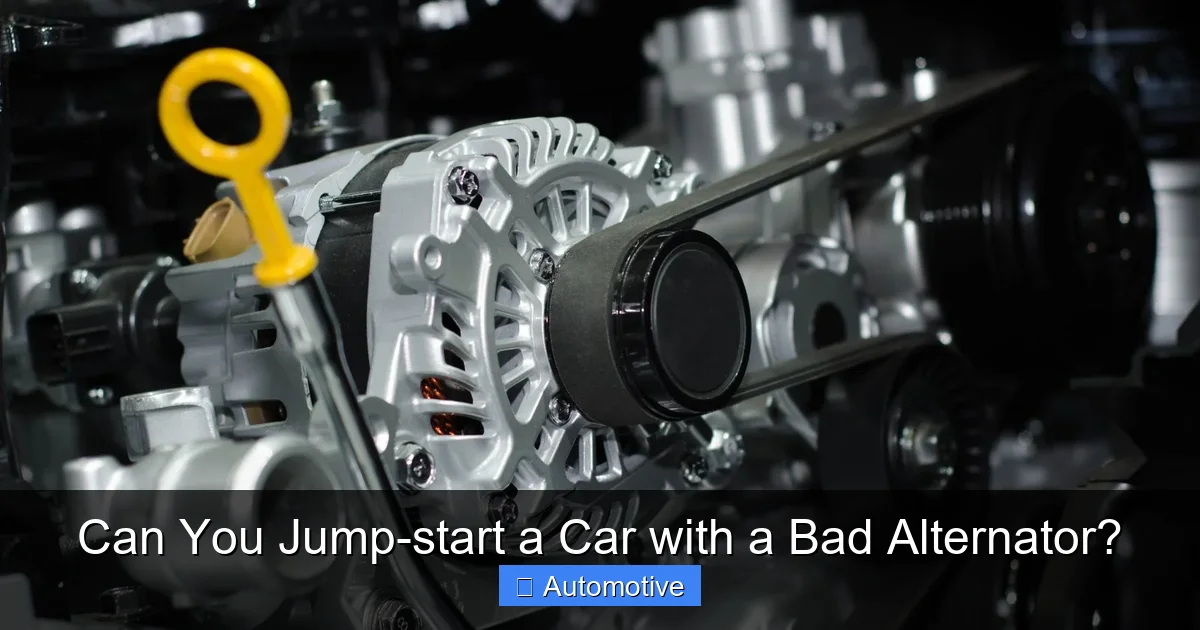
To understand why a bad alternator affects jump-starting, it helps to know how the alternator works. Think of it as your car’s onboard power plant. Once the engine is running, the alternator uses a belt connected to the crankshaft to spin an electromagnetic rotor inside a stator. This motion generates alternating current (AC), which is then converted to direct current (DC) by a component called a rectifier. The DC power is sent to the battery and used to run everything from your headlights to your infotainment system.
In a healthy system, the alternator produces about 13.5 to 14.5 volts while the engine runs. This keeps the battery charged and powers all electrical components. But when the alternator fails—due to worn brushes, a faulty diode, or a broken belt—it stops generating power. The battery then becomes the sole source of electricity.
Here’s the problem: car batteries aren’t designed to power a vehicle indefinitely. They’re built to deliver a short, powerful burst of energy to start the engine. Once that’s done, they expect the alternator to take over. Without that support, the battery drains quickly—sometimes in just 10 to 20 minutes of driving.
For example, imagine you’re driving home from work with a failing alternator. At first, everything seems normal. But as you stop at red lights or idle in traffic, the electrical load increases. The battery can’t keep up. Your headlights dim, the radio fades, and eventually, the engine sputters and dies. That’s the classic sign of an alternator on its last legs.
Can You Actually Jump-Start a Car with a Bad Alternator?
Visual guide about Can You Jump-start a Car with a Bad Alternator?
Image source: batteryskills.com
Yes, you can jump-start a car with a bad alternator—but it’s not the same as jump-starting a car with a dead battery. When the battery is simply drained (say, from leaving the lights on), a jump-start gives it enough power to start the engine. Once running, the alternator recharges the battery, and everything returns to normal.
But with a bad alternator, the situation is different. The battery may be low, but even if you jump-start the car, it won’t stay charged. The alternator can’t replenish the battery’s power, so once the jumper cables are removed, the battery begins to drain again—fast.
In some cases, the engine might run for a few minutes after a jump-start, especially if the battery still has some charge. But as soon as you turn off the engine or remove the cables, the car will likely not restart. This is because the battery hasn’t been recharged and may now be even more depleted.
Let’s say you’re at the grocery store and your car won’t start. A kind stranger offers to jump your battery. You connect the cables, start the engine, and drive home. Sounds like a success, right? Not quite. If the alternator is bad, your car might make it a few blocks before the electrical system starts to fail. The dashboard lights flicker, the power steering feels heavy, and the engine eventually stalls.
So while a jump-start can get you moving temporarily, it’s not a fix. It’s more like a Band-Aid on a broken bone. You’re buying time—maybe just enough to get to a mechanic—but you’re not solving the root problem.
What Happens When You Try to Jump-Start with a Faulty Alternator?
Visual guide about Can You Jump-start a Car with a Bad Alternator?
Image source: goldeagle.com
When you attempt to jump-start a car with a bad alternator, several things can happen—some predictable, others potentially dangerous.
First, the engine may start normally, especially if the battery still has some charge. This can be misleading. You might think, “Great, the problem was just a dead battery.” But within minutes, you’ll notice warning signs: dimming lights, slow power windows, or a battery warning light on the dashboard.
As the battery drains, the car’s electrical systems begin to shut down. Modern vehicles rely heavily on electronics—fuel injectors, ignition systems, sensors—all of which need consistent voltage. When the battery voltage drops below a certain point (usually around 11.5 volts), these systems can malfunction. The engine may run rough, misfire, or stall completely.
Another risk is damaging the electrical system. If the alternator is completely dead or has internal shorts, it can create voltage spikes or backfeed power into the system. This can fry sensitive electronics like the ECU (engine control unit), sensors, or even the infotainment system. In rare cases, a faulty alternator can overcharge the battery, leading to overheating or even explosion.
Additionally, removing jumper cables too soon can cause the engine to die instantly. This is especially dangerous if you’re in traffic or on a highway. Without the alternator supplying power, the battery can’t sustain the electrical load, and the engine shuts down.
For example, imagine you jump-start your car in a busy parking lot. You drive to the exit, but as you slow down to pay the toll, the engine stalls. You’re stuck in the middle of traffic, unable to restart. That’s the kind of scenario that can turn a simple inconvenience into a major safety hazard.
How to Safely Jump-Start a Car with a Suspected Bad Alternator
If you suspect your alternator is failing but need to get the car running, a jump-start can be a temporary solution—if done correctly. Here’s how to do it safely:
Gather the Right Tools
You’ll need:
– Jumper cables (heavy-duty, preferably 4-gauge or thicker)
– A working vehicle with a charged battery, or a portable jump starter
– Safety gloves and glasses (optional but recommended)
Avoid using thin or damaged cables, as they can overheat or fail under load.
Follow Proper Jump-Start Procedure
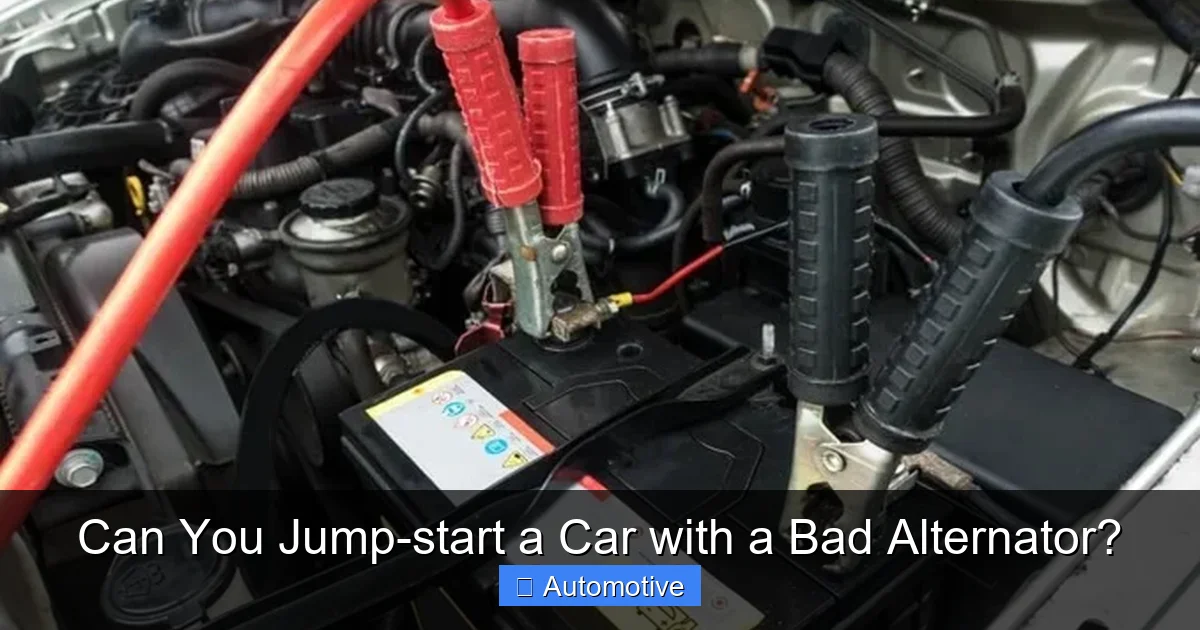
1. **Park the vehicles close but not touching.** Turn off both engines and engage the parking brakes.
2. **Connect the red (positive) cable to the dead battery’s positive terminal.** Make sure it’s secure and not touching any metal.
3. **Connect the other red clamp to the good battery’s positive terminal.**
4. **Connect the black (negative) cable to the good battery’s negative terminal.**
5. **Attach the other black clamp to an unpainted metal surface on the dead car’s engine block—not the battery.** This reduces the risk of sparks near the battery, which can emit flammable gas.
Start the Vehicles
– Start the working vehicle and let it run for 2–3 minutes to charge the dead battery slightly.
– Try starting the dead car. If it doesn’t start immediately, wait a minute and try again.
– Once the engine is running, **do not turn it off.** Keep it running to allow the battery to build up some charge.
Remove Cables Carefully
– Turn off any unnecessary electrical loads (AC, radio, lights).
– Disconnect the cables in reverse order: black from the engine block, black from the good battery, red from the good battery, red from the dead battery.
– Keep the jumped car running and drive it immediately to a mechanic or auto parts store for testing.
Use a Portable Jump Starter (Recommended)
A portable jump starter is often safer and more convenient than relying on another vehicle. These devices have built-in safety features like reverse polarity protection and overload shutdown. Simply connect the clamps to the battery terminals (red to positive, black to negative), turn on the device, and start the car.
Many modern jump starters also include USB ports, flashlights, and air compressors, making them useful in emergencies.
How Long Can You Drive with a Bad Alternator?
This is a common question: *How long can I drive after a jump-start if the alternator is bad?* The answer depends on several factors, including the battery’s current charge, the electrical load, and driving conditions.
In ideal conditions—fully charged battery, minimal electrical use, highway driving—you might get 20 to 30 minutes of driving time. But in real-world scenarios, it’s often much less.
For example, if you’re driving in stop-and-go traffic with the AC on, headlights, and radio playing, the electrical demand is high. The battery will drain faster. You might only get 10 minutes before the engine stalls.
At night, with headlights, wipers, and defrosters running, the drain is even greater. Some drivers report their cars dying within 5 minutes of a jump-start.
Additionally, cold weather reduces battery efficiency. In winter, a weak battery combined with a bad alternator can leave you stranded almost immediately.
The bottom line: don’t rely on a jump-start to get you far. Use it only to reach a safe location or a repair shop. And never attempt to drive long distances with a known alternator issue.
Signs Your Alternator Is Failing
Recognizing the symptoms of a bad alternator can help you avoid being stranded. Here are the most common warning signs:
Dim or Flickering Lights
Headlights that dim at idle or flicker while driving are a classic sign. Interior lights may also dim when you press the accelerator or turn on accessories.
Battery Warning Light
Most cars have a battery or alternator warning light on the dashboard (often shaped like a battery or labeled “ALT” or “GEN”). If it’s on, your alternator may not be charging the battery.
Slow or Failed Engine Crank
If the engine cranks slowly or doesn’t start at all, it could be a dead battery—but if the battery is new or recently charged, the alternator is likely the culprit.
Electrical Issues
Power windows moving slowly, radio cutting out, or dashboard lights behaving erratically can indicate low voltage from a failing alternator.
Strange Noises
A worn alternator bearing can produce a whining or grinding noise, especially when the engine is under load.
Burning Smell
Overheating alternator components or a slipping belt can produce a burning rubber or electrical smell.
Dead Battery (Repeatedly)
If your battery keeps dying despite being new, the alternator isn’t recharging it properly.
If you notice any of these signs, have your alternator tested as soon as possible. Most auto parts stores offer free alternator and battery testing.
What to Do After a Jump-Start with a Bad Alternator
A jump-start is just the first step. Here’s what you should do next:
Drive to a Mechanic Immediately
Don’t delay. Take the car to a trusted mechanic or auto repair shop. They can test the alternator, battery, and charging system to confirm the issue.
Avoid Turning Off the Engine
If possible, keep the engine running until you reach your destination. Turning it off may mean you can’t restart it.
Minimize Electrical Load
Turn off the AC, radio, heated seats, and other non-essential systems to reduce strain on the battery.
Consider a Tow
If you’re far from help or unsure about driving, call a tow truck. It’s safer than risking a stall on the road.
Replace the Alternator
In most cases, the alternator will need to be replaced. The cost varies by vehicle, but expect to pay $300 to $800 for parts and labor. Some cars allow for DIY replacement, but it’s often complex and requires special tools.
Check the Battery
A failing alternator can damage the battery over time. Have it tested and replaced if necessary.
Preventing Alternator Failure
While alternators typically last 80,000 to 150,000 miles, you can extend their life with proper maintenance:
– **Inspect the serpentine belt** for cracks, wear, or looseness. A slipping belt reduces alternator output.
– **Keep terminals clean** to ensure good electrical connections.
– **Avoid excessive electrical loads** when the engine is off.
– **Address warning signs early**—don’t ignore dashboard lights or odd noises.
– **Schedule regular maintenance**—many shops include alternator checks during routine service.
Conclusion
So, can you jump-start a car with a bad alternator? Yes—but it’s a temporary fix at best. The alternator is essential for keeping your battery charged and your electrical systems running. Without it, even a jump-start won’t keep your car alive for long.
While a jump-start can get you moving in a pinch, it’s not a solution. Driving with a faulty alternator risks stalling, damaging electronics, and leaving you stranded. The smart move is to use the jump-start to reach a mechanic, then replace the alternator as soon as possible.
Remember: your car’s electrical system is a team effort. The battery starts the engine, but the alternator keeps it going. When one fails, the whole system suffers. Stay alert to the warning signs, act quickly, and keep your rides safe and reliable.
Frequently Asked Questions
Can a car run with a completely dead alternator?
Yes, but only for a short time. The battery can power the engine briefly, but once it drains, the car will stall and won’t restart.
Will a bad alternator drain a new battery?
Yes. Even a new battery will drain quickly if the alternator isn’t charging it. Repeated draining can also shorten the battery’s lifespan.
How do I know if it’s the battery or alternator?
If the car starts with a jump but dies soon after, it’s likely the alternator. If it doesn’t start at all, the battery may be dead—but have both tested.
Can I drive 10 miles with a bad alternator?
It’s risky. You might make it, but the engine could stall at any time. It’s safer to tow the car or drive directly to a repair shop without stopping.
Is it safe to jump-start a modern car with a bad alternator?
Yes, if done correctly. Follow proper procedures and avoid removing cables too soon. Modern cars have sensitive electronics, so use caution.
How much does it cost to replace an alternator?
Typically $300 to $800, including parts and labor. Costs vary by vehicle make, model, and whether you use OEM or aftermarket parts.