
Can You Drive a Car Without a Catalytic Converter?

Yes, you can technically drive a car without a catalytic converter, but it’s illegal in most places and harms the environment. Removing it may boost performance slightly but triggers warning lights, fails inspections, and risks fines.
Key Takeaways
- Legality: Driving without a catalytic converter is illegal in most U.S. states and many countries due to emissions laws.
- Environmental Impact: Removing the catalytic converter increases harmful emissions like carbon monoxide, nitrogen oxides, and hydrocarbons.
- Check Engine Light: Most modern cars will trigger a check engine light and enter limp mode without a functioning catalytic converter.
- Performance Myths: While some claim better performance, gains are minimal and often offset by tuning issues and backpressure changes.
- Inspection Failures: Vehicles without catalytic converters will fail state emissions and safety inspections.
- Theft Risk: Cars with catalytic converters are prime targets for theft; removing one doesn’t eliminate risk and may draw suspicion.
- Resale Value: A missing or removed catalytic converter significantly lowers a vehicle’s resale value and marketability.
📑 Table of Contents
- Can You Drive a Car Without a Catalytic Converter?
- What Is a Catalytic Converter and Why Does It Matter?
- Is It Legal to Drive Without a Catalytic Converter?
- What Happens When You Remove the Catalytic Converter?
- Common Myths About Driving Without a Catalytic Converter
- What to Do If Your Catalytic Converter Is Stolen or Damaged
- Alternatives to Removing the Catalytic Converter
- Conclusion: Should You Drive Without a Catalytic Converter?
Can You Drive a Car Without a Catalytic Converter?
You’re cruising down the highway, engine humming, when suddenly you notice a loud rattling noise from underneath your car. After a quick inspection, you discover your catalytic converter is damaged—or worse, stolen. Now you’re faced with a tough question: can you still drive your car without it?
The short answer? Yes, you can physically drive a car without a catalytic converter. The engine will still run, and the car will move. But just because you *can* doesn’t mean you *should*. There are serious legal, environmental, mechanical, and financial consequences to removing or driving without this critical emissions component.
In this comprehensive guide, we’ll explore everything you need to know about driving without a catalytic converter—from how it works and why it matters, to the risks, myths, and real-world implications. Whether you’re dealing with theft, damage, or considering removal for performance reasons, this article will help you make an informed decision.
What Is a Catalytic Converter and Why Does It Matter?
Visual guide about Can You Drive a Car Without a Catalytic Converter?
Image source: mycarmakesnoise.com
Before we dive into whether you can drive without one, let’s first understand what a catalytic converter actually does—and why it’s so important.
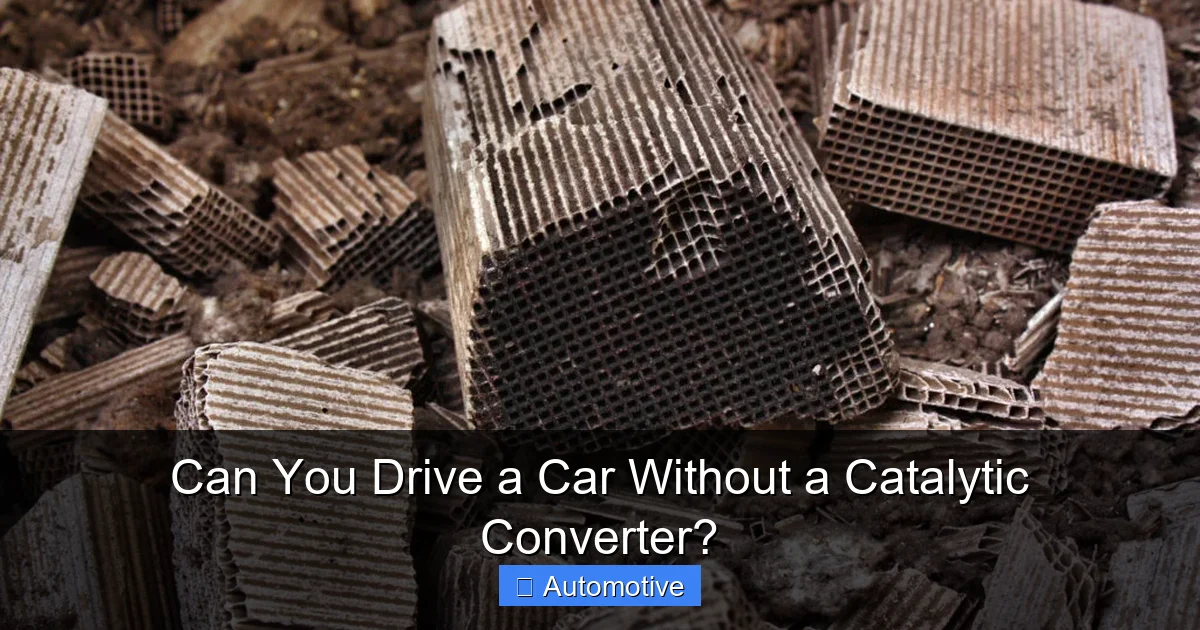
A catalytic converter is a key part of your vehicle’s exhaust system. Installed between the engine and the muffler, it’s designed to reduce harmful emissions before they exit the tailpipe. Think of it as your car’s internal pollution filter.
Inside the converter are precious metals—like platinum, palladium, and rhodium—that act as catalysts. These metals trigger chemical reactions that convert toxic gases into less harmful substances. For example:
– Carbon monoxide (CO) becomes carbon dioxide (CO₂)
– Nitrogen oxides (NOx) break down into nitrogen and oxygen
– Unburned hydrocarbons (HC) turn into water and CO₂
This process happens automatically as hot exhaust gases pass through the converter. Without it, those dangerous pollutants would be released directly into the atmosphere.
When Was the Catalytic Converter Introduced?
Catalytic converters became standard in the United States in 1975, following the Clean Air Act of 1970. The law required automakers to reduce vehicle emissions by 90% over the next decade. Since then, catalytic converters have become mandatory on all gasoline-powered vehicles sold in the U.S. and most other developed countries.
Over time, technology has improved. Modern converters are more efficient and durable, often lasting 100,000 miles or more. Some newer models even use advanced systems like three-way catalytic converters that handle multiple pollutants simultaneously.
Why Are They So Valuable?
One reason catalytic converters are frequently targeted by thieves is their high scrap value. The precious metals inside—especially rhodium—can be worth hundreds of dollars per unit when recycled. A single converter might fetch $50 to $300 at a scrap yard, depending on the vehicle and metal content.
This has led to a surge in catalytic converter thefts in recent years, particularly in hybrid vehicles like the Toyota Prius, which contain higher concentrations of precious metals.
Is It Legal to Drive Without a Catalytic Converter?
Visual guide about Can You Drive a Car Without a Catalytic Converter?
Image source: autocareaids.com
Now for the big question: is it legal?
The answer depends on where you live—but in most places, the answer is a firm **no**.
Federal and State Laws
In the United States, the Environmental Protection Agency (EPA) prohibits the removal or tampering with emission control devices on vehicles manufactured after 1974. This includes catalytic converters. According to the Clean Air Act, it’s illegal to:
– Remove a catalytic converter
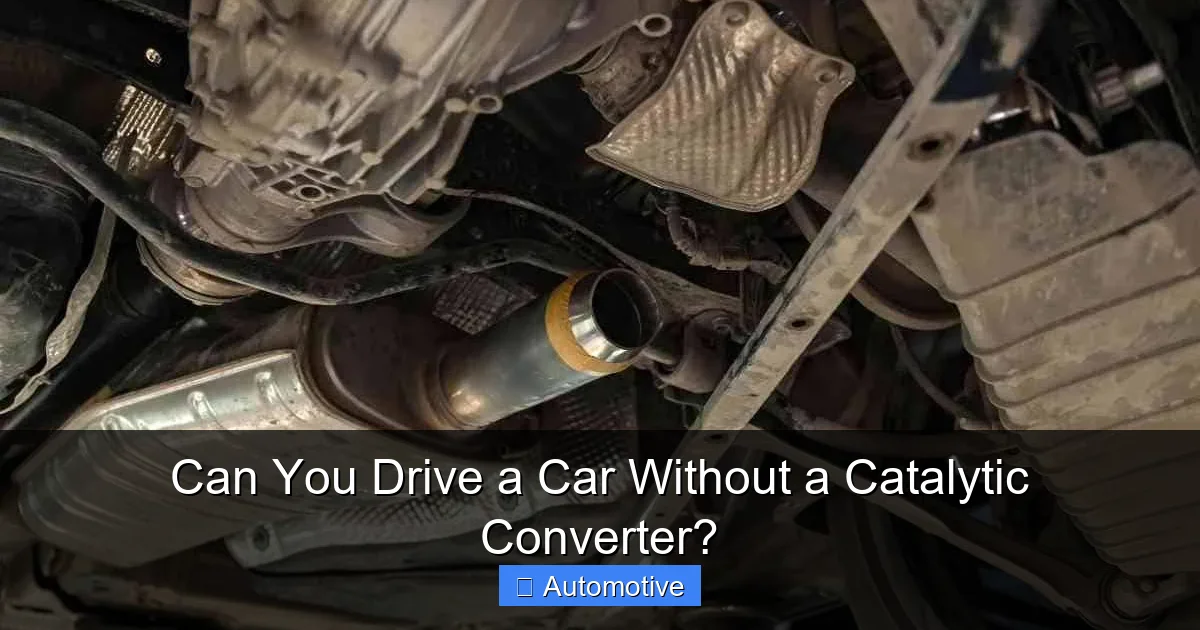
– Install a bypass pipe or straight pipe
– Drive a vehicle with a missing or non-functional converter
Each violation can result in fines of up to $25,000 per vehicle, per day. That’s not a typo—$25,000.
Many states have even stricter laws. For example:
– California requires all vehicles to pass a biennial smog check. A missing catalytic converter automatically fails.
– New York, Texas, and Florida also enforce strict emissions testing and penalize tampering.
Even if you live in a state without regular inspections, federal law still applies. If you’re caught driving across state lines or pulled over by law enforcement, you could face penalties.
International Regulations
Outside the U.S., most countries have similar regulations. In the European Union, vehicles must comply with Euro emissions standards, which require functional catalytic converters. Australia, Canada, Japan, and others also enforce strict anti-tampering laws.
Driving without a catalytic converter in these regions can result in fines, vehicle impoundment, or even criminal charges in extreme cases.
Exceptions and Loopholes
There are a few narrow exceptions:
– **Off-road vehicles:** Cars used exclusively off public roads (like race cars or farm equipment) may be exempt.
– **Classic cars:** Some states allow vintage vehicles (typically 25+ years old) to operate without modern emissions equipment, but rules vary.
– **Temporary removal:** If you’re repairing or replacing the converter, you may drive short distances to a repair shop—but this should be done quickly and legally.
Even then, tampering with emissions systems is risky. Always check local laws before making any modifications.
What Happens When You Remove the Catalytic Converter?
Visual guide about Can You Drive a Car Without a Catalytic Converter?
Image source: carstriple.com
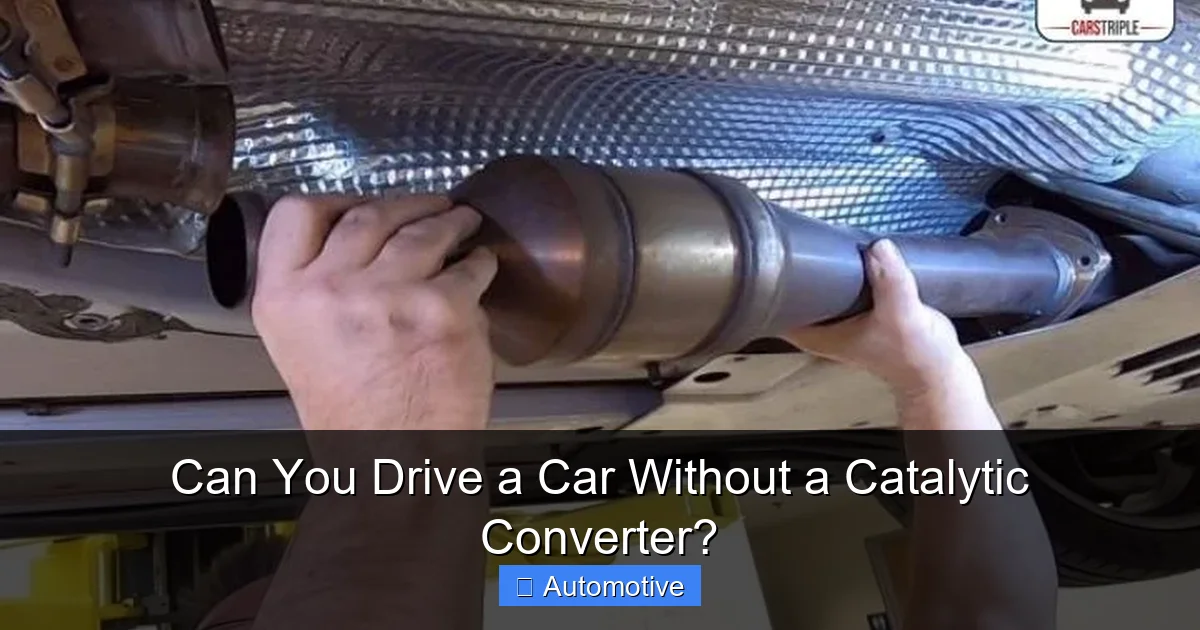
So, you’ve removed the catalytic converter. Your car still runs. But what’s really going on under the hood?
Let’s break down the mechanical and electronic consequences.
Engine Performance and Sound
One common myth is that removing the catalytic converter improves performance. Some people believe it reduces backpressure and allows the engine to “breathe” better.
In reality, the gains are minimal—especially on modern engines. Most vehicles are designed with precise exhaust flow in mind. Removing the converter can actually disrupt this balance, leading to:
– Reduced low-end torque
– Poor fuel economy
– Engine hesitation or misfires
You might notice a louder exhaust note—often described as a “raspy” or “boomy” sound. While some drivers enjoy the noise, it can be excessive and draw unwanted attention.
Check Engine Light and OBD-II Codes
Modern cars are equipped with an On-Board Diagnostics (OBD-II) system that monitors emissions components. Sensors before and after the catalytic converter measure oxygen levels to ensure it’s working properly.
When the converter is removed, the downstream oxygen sensor detects abnormal readings. This triggers the check engine light and stores diagnostic trouble codes (DTCs), such as:
– P0420: Catalyst System Efficiency Below Threshold
– P0430: Same, but for Bank 2
These codes will prevent your car from passing emissions tests. In some cases, the vehicle may enter “limp mode,” limiting speed and performance to protect the engine.
Fuel Efficiency and Emissions
Without a catalytic converter, your car emits significantly more pollutants. Studies show that a missing converter can increase:
– Carbon monoxide by up to 30%
– Hydrocarbons by 50% or more
– Nitrogen oxides by 20–40%
This not only harms the environment but can also affect your fuel economy. The engine control unit (ECU) may compensate for the lack of feedback from oxygen sensors, leading to richer fuel mixtures and wasted gas.
Potential Engine Damage
In rare cases, removing the catalytic converter can cause long-term damage. For example:
– Increased exhaust temperatures may harm downstream components like the muffler or oxygen sensors.
– Unburned fuel can ignite in the exhaust system, causing backfires or even fire.
– Poor airflow may lead to overheating or reduced engine efficiency.
While most engines won’t fail immediately, the risk of damage increases over time—especially if the vehicle isn’t properly tuned.
Common Myths About Driving Without a Catalytic Converter
There’s a lot of misinformation floating around about catalytic converters. Let’s clear up some of the most common myths.
Myth 1: “It Gives You More Horsepower”
Some tuners and gearheads claim that removing the catalytic converter adds 10–20 horsepower. While there’s a tiny reduction in backpressure, the real-world gains are negligible—often less than 5 HP.
Modern engines are computer-controlled and optimized for stock exhaust systems. Removing the converter without tuning the ECU can actually hurt performance. You’re better off investing in a high-flow catalytic converter or performance exhaust system if you want real gains.
Myth 2: “It Saves Money on Repairs”
A damaged catalytic converter can cost $1,000 or more to replace—especially on luxury or hybrid vehicles. So it’s tempting to just remove it and avoid the expense.
But remember: you’ll still need to pass emissions tests, and the check engine light will stay on. You might also face fines or fail inspections. In the long run, replacing or repairing the converter is almost always cheaper and safer.
Myth 3: “No One Will Notice”
Think you can sneak a straight-pipe exhaust past the authorities? Think again.
Police officers, emissions inspectors, and even regular drivers can spot a missing catalytic converter. The loud exhaust, unusual smell, and check engine light are dead giveaways. Plus, many states use remote sensing devices to detect high-emitting vehicles on the road.
Myth 4: “It’s Just a Filter—It Doesn’t Do Much”
This is perhaps the most dangerous myth. The catalytic converter isn’t just a filter—it’s a chemical reactor that actively transforms pollutants. Without it, your car becomes a major source of air pollution.
In cities with high traffic, this contributes to smog, respiratory illnesses, and environmental damage. One car might not seem like much, but multiply that by thousands of vehicles, and the impact is significant.
What to Do If Your Catalytic Converter Is Stolen or Damaged
If your catalytic converter has been stolen or damaged, don’t panic. Here’s what you should do:
Step 1: Report the Theft
If your converter was stolen, file a police report immediately. This helps with insurance claims and may aid in recovery. Some cities have seen spikes in converter thefts, and law enforcement is increasingly aware of the issue.
Step 2: Contact Your Insurance Company
Comprehensive auto insurance often covers catalytic converter theft. Check your policy—you may be able to get a replacement with minimal out-of-pocket cost. Be prepared to provide the police report and vehicle details.
Step 3: Get It Replaced Legally
Take your car to a certified repair shop. They can install a new OEM (original equipment manufacturer) or EPA-compliant aftermarket catalytic converter. Avoid cheap, uncertified parts—they may not meet emissions standards and could fail inspections.
Step 4: Prevent Future Theft
To reduce the risk of future theft:
– Park in well-lit, secure areas
– Install a catalytic converter shield or lock
– Engrave your VIN on the converter
– Consider a security system with motion sensors
Some automakers, like Toyota and Ford, now offer anti-theft brackets or etching services for high-risk models.
Step 5: Don’t Drive Long-Term Without One
While you may be able to drive short distances to a repair shop, avoid prolonged use without a catalytic converter. The legal, environmental, and mechanical risks far outweigh any temporary convenience.
Alternatives to Removing the Catalytic Converter
If you’re considering removal for performance or cost reasons, there are better alternatives.
High-Flow Catalytic Converters
These are designed for performance enthusiasts. They reduce backpressure while still meeting emissions standards. Brands like MagnaFlow, Flowmaster, and Bosal offer EPA-compliant high-flow converters that can improve exhaust flow without triggering check engine lights.
Performance Tuning
Instead of removing the converter, consider a professional ECU tune. A tuner can optimize fuel delivery, ignition timing, and airflow for better performance—while keeping emissions systems intact.
Regular Maintenance
Many catalytic converter failures are caused by underlying issues like misfires, rich fuel mixtures, or oil leaks. Fixing these problems early can prevent converter damage and extend its life.
Used or Recycled Converters
If cost is a concern, look for used or recycled catalytic converters from reputable salvage yards. These are often significantly cheaper than new ones and still meet legal requirements.
Conclusion: Should You Drive Without a Catalytic Converter?
So, can you drive a car without a catalytic converter? Technically, yes. But legally, environmentally, and practically—**no, you shouldn’t**.
Removing or driving without a catalytic converter may seem like a quick fix, but it comes with serious consequences:
– You could face hefty fines and legal trouble
– Your car will fail emissions tests
– You’ll increase harmful pollution
– Your vehicle may run poorly or trigger warning lights
– Resale value will drop significantly
Instead of removing the converter, explore legal alternatives like high-flow units, professional tuning, or insurance-covered replacements. If your converter is stolen or damaged, act quickly to repair it and protect yourself from future theft.
At the end of the day, the catalytic converter plays a vital role in protecting both your car and the planet. Driving without one isn’t just risky—it’s irresponsible. Keep your emissions system intact, and you’ll enjoy a smoother, cleaner, and fully legal ride.
Frequently Asked Questions
Is it illegal to drive without a catalytic converter?
Yes, in most U.S. states and many countries, it is illegal to drive without a catalytic converter due to emissions laws. Federal law prohibits tampering with emission control devices, and violations can result in fines up to $25,000.
Will my car run without a catalytic converter?
Yes, your car will still run without a catalytic converter, but it may trigger the check engine light, reduce fuel efficiency, and cause performance issues. Modern vehicles rely on oxygen sensors that detect the missing component.
Can I pass emissions testing without a catalytic converter?
No, vehicles without a catalytic converter will fail emissions tests in states that require them. The OBD-II system will detect the missing component and flag it as a violation.
How much does it cost to replace a catalytic converter?
Replacement costs vary widely, from $500 to $2,500 or more, depending on the vehicle make, model, and whether you use OEM or aftermarket parts. Hybrid vehicles often have more expensive converters due to higher precious metal content.
Why are catalytic converters stolen so often?
Catalytic converters contain valuable precious metals like platinum, palladium, and rhodium, which can be sold for scrap. Thieves can remove one in minutes, making them a frequent target, especially on high-clearance vehicles like SUVs and trucks.
Can I install a straight pipe instead of a catalytic converter?
While you can physically install a straight pipe, it is illegal in most areas and will cause your vehicle to fail emissions tests. It also increases pollution and may damage engine performance over time.