Can You Claim an Abandoned Car?

Contents
- 1 Key Takeaways
- 2 📑 Table of Contents
- 3 So, You Found an Abandoned Car… Now What?
- 4 What Exactly Is an “Abandoned Car”? (It’s Not Always Obvious)
- 5 The Legal Process: Can You Actually Claim It?
- 6 Risks and Pitfalls of Trying to Claim an Abandoned Car
- 7 What to Do If You Find an Abandoned Car on Your Property
- 8 Alternatives to Claiming: Selling, Scrapping, Donating
- 9 State-by-State Variations: Why Location Matters
- 10 The Bottom Line: Is It Worth the Hassle?
- 11 Frequently Asked Questions




Claiming an abandoned car is rarely as simple as just taking it. It involves specific legal procedures with local authorities, potential financial liabilities like liens, and strict state-by-state regulations. You must report the vehicle, follow a formal process to obtain the title, and often pay fees. Attempting to bypass this process can lead to fines, lawsuits, or even criminal charges for theft. Always contact your local DMV or police department first to understand the exact steps in your area.
Key Takeaways
- Abandoned car laws are local: Definitions, waiting periods, and claiming processes are set by your city, county, or state, not federal law. What’s legal in one area may be illegal in another.
- You cannot just take it: Physically moving an abandoned vehicle without following legal procedures is typically considered theft or trespassing, even if it’s on your property.
- The owner may still be liable: The original owner remains responsible for the vehicle’s debts (like liens or tickets) until the title is legally transferred to you through proper channels.
- Hidden liens are common: Abandoned cars often have outstanding loans or mechanic’s liens. You become responsible for these if you don’t clear the title properly before claiming.
- Reporting is the mandatory first step: The only safe path is to report the vehicle to non-emergency police or the local code enforcement agency, who will tag it and start the official impound/auction process.
- You usually pay fees: Even if you “win” the vehicle at a public auction or through a title process, you will owe towing, storage, and title transfer fees to the municipality or auction house.
- Consider alternatives first: Often, it’s simpler and less risky to sell the car as-is to a junkyard, donate it to charity, or have it scrapped by a professional service.
📑 Table of Contents
- So, You Found an Abandoned Car… Now What?
- What Exactly Is an “Abandoned Car”? (It’s Not Always Obvious)
- The Legal Process: Can You Actually Claim It?
- Risks and Pitfalls of Trying to Claim an Abandoned Car
- What to Do If You Find an Abandoned Car on Your Property
- Alternatives to Claiming: Selling, Scrapping, Donating
- State-by-State Variations: Why Location Matters
- The Bottom Line: Is It Worth the Hassle?
So, You Found an Abandoned Car… Now What?
You’re driving down a back road or walking through a neighborhood and see it: a car, tucked under some trees, flat tires sunk into the grass, covered in a layer of dust and leaves. Maybe it’s been there for months. A thought creeps in—Can I claim an abandoned car? Could that be a free project car, a source for parts, or even a quick buck? The idea is tempting, like finding buried treasure. But the reality of claiming an abandoned vehicle is a tangled web of legalities, paperwork, and potential pitfalls. This guide cuts through the mystery. We’ll walk you through what “abandoned” really means, the actual legal steps (if any) to claim one, the serious risks you face, and smarter alternatives. Forget Hollywood heist movies; this is the real-world guide you need.
First, let’s get the biggest myth out of the way: finding an abandoned car does not mean you own it. Ownership is tied to the title, and that title is held by someone—a person, a bank, or a leasing company. Simply taking possession of the vehicle is almost always illegal. The process to legally transfer that title to your name is strict, bureaucratic, and varies wildly depending on where you are. Think of it less like “finders keepers” and more like “petitioning the court for custody.”
What Exactly Is an “Abandoned Car”? (It’s Not Always Obvious)
Before you can even think about claiming anything, you need to know if the vehicle qualifies as “abandoned” under the law. This isn’t a casual label; it’s a specific legal status with a precise definition that changes from place to place.
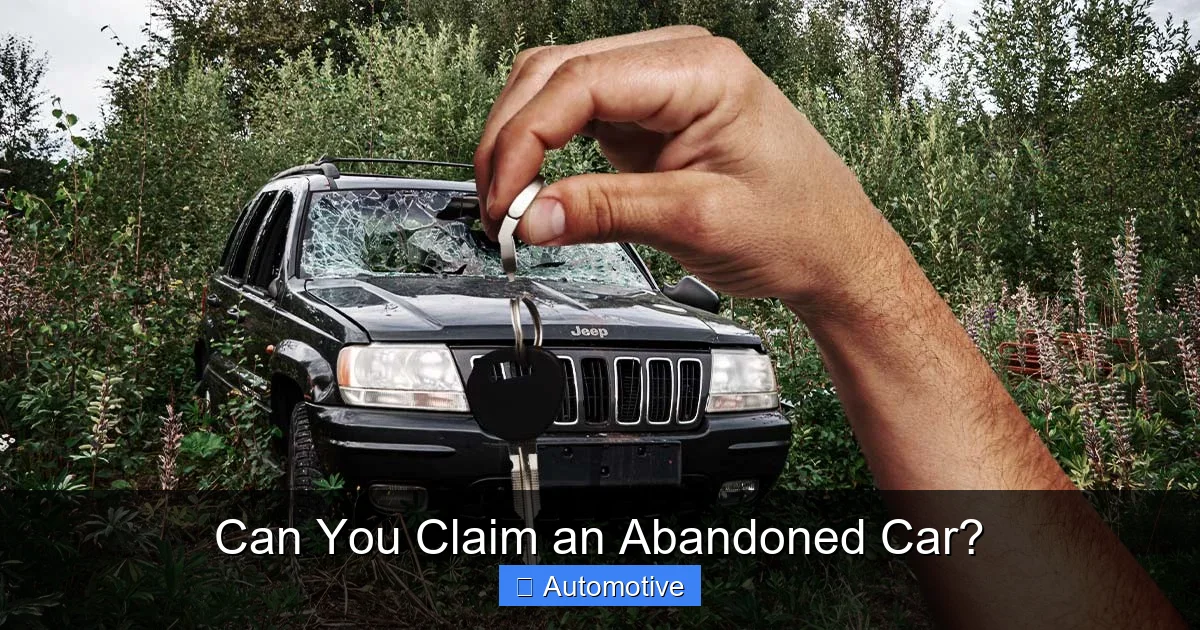
Visual guide about Can You Claim an Abandoned Car?
Image source: answersrepublic.com
Legal Definitions Vary by State (and Even by City)
There is no single, nationwide definition. In some states, a car is considered abandoned if it’s been left on public property for 24-72 hours. In others, it might take 30 days or more on private property. Many jurisdictions have different rules for highways versus residential streets versus private lots. Your city’s code enforcement office or your state’s Department of Motor Vehicles (DMV) website is the only authoritative source. They will have the exact statute. For example, in some areas, a car with expired tags parked on a public street might be deemed abandoned after just a few days, while the same car on someone’s rural farmland might not trigger any action for a year.
The “Reasonable Time” and Condition Factors
Beyond just time, condition plays a role. A car with missing wheels, broken windows, or severe damage might be declared abandoned more quickly. However, a car that looks just fine but hasn’t moved in months is also suspect. The key legal concept is that the owner has shown no intent to return. Evidence of this intent (or lack thereof) includes: expired registration, overgrown vegetation under the car, flat tires, dead battery, and accumulation of debris or tickets. But again, the final call is made by a police officer or code enforcement agent after an investigation.
The Legal Process: Can You Actually Claim It?
Okay, so you’ve confirmed a car meets the local legal definition of abandoned. What happens next? The vehicle enters a system controlled by the government. Here is the typical, step-by-step process you must follow. Skipping any step is illegal.
Visual guide about Can You Claim an Abandoned Car?
Image source: townsquare.media
Step 1: Reporting to Authorities
This is the mandatory starting point. You, as a concerned citizen or property owner, contact the non-emergency line of your local police department or the city’s code enforcement division. You report the vehicle’s exact location, make, model, color, and license plate (if any). They will log the report. An officer will visit the location. If they determine it’s abandoned, they will attach a bright colored sticker or tag to the vehicle. This tag is a legal notice to the owner that the car is scheduled for removal. It also starts the official clock on the waiting period before it can be legally towed and held.
Step 2: The Impound and Auction Process
After the tagging period (which could be 48 hours to 2 weeks), a contracted towing company will impound the vehicle to a secure storage lot. At this point, the vehicle is in the possession of the municipality or the towing company. The owner of record (according to the DMV) is notified by certified mail to the last known address. They have a set period (often 30 days) to claim it by paying all towing and storage fees. If they don’t, the vehicle is declared “unclaimed.”
Here’s where a potential claimant like you might enter the picture. Most jurisdictions sell unclaimed abandoned vehicles at a public auction, often online. You can bid on it like any other auction item. If you win, you get a bill of sale and an auction receipt. This is your key document. You then take these documents, along with a completed title application and fees, to the DMV to apply for a new title in your name. This is the only legitimate path to ownership.
Step 3: The Title Transfer Maze
Getting that new title is a paperwork marathon. You will need:
- The auction bill of sale/receipt.
- A completed “Application for Title or Registration” from your DMV.
- A valid ID.
- Payment for title fees and sales tax.
- Sometimes, a surety bond if the original title is completely missing or the owner cannot be located (this varies by state).
The DMV will process this and, if everything is in order, issue you a new title. You do not have a legal title until the DMV mails it to you. Do not invest significant money in repairs until you hold that physical title.
Step 4: When the Original Owner Shows Up
Here’s a major risk. At any point before the auction is final or before the DMV issues a new title, the original owner can reappear, prove ownership, pay the fees, and reclaim their vehicle. If you’ve already bought it at auction, you may be out your bid money and have to sue the auction house for a flawed sale. This is why reputable auctions are careful to follow all notification laws. Your protection comes from that official auction process.
Risks and Pitfalls of Trying to Claim an Abandoned Car
The process above is the “official” route. But many people are tempted by shortcuts. Here be dragons.
Visual guide about Can You Claim an Abandoned Car?
Image source: thumbs.dreamstime.com
Hidden Liens and Financial Baggage
This is the single biggest financial trap. A lien is a legal claim against the vehicle, usually by a bank for an unpaid loan or a mechanic for unpaid repairs. When you buy a car at an auction, you often get the car “as-is, where-is,” and any existing liens may transfer with the vehicle. If the previous owner defaulted on a $10,000 loan, that bank still has a claim on the car. If you try to title it, the lien will show up in the DMV system, and you cannot get a clean title until it’s paid off—which could cost you thousands. Always run a vehicle history report (like CARFAX or AutoCheck) using the VIN, even on an abandoned car, to check for liens and title brands (like “salvage” or “total loss”).
Liability and “Joyriding” Charges
If you simply hook up a trailer and tow away an abandoned car without reporting it and going through the official process, you are committing theft. You could be charged with grand theft auto or unauthorized use of a motor vehicle. If the car is on private property (like a vacant lot or an old farm), you could also face trespassing charges. Furthermore, if the car is somehow connected to a crime, you could become a person of interest. The police take stolen vehicle reports seriously, and a car matching the description of a recently reported stolen vehicle will land you in very hot water.
What to Do If You Find an Abandoned Car on Your Property
This is a very common scenario. A car gets left on your land—maybe by a former tenant, a squatter, or a friend who never came back. Your rights and responsibilities are slightly different, but the principle is the same: do not move it yourself.
Step-by-Step Action Plan for Property Owners
- Document Everything: Take photos and videos of the car, its license plate (if any), and its location on your property. Note the date you first noticed it.
- Check Local Laws: Look up your city/county ordinances on “abandoned vehicles on private property.” Some places require you to follow a specific notification process to the registered owner before you can dispose of it.
- Send a Certified Letter: If you can find the owner’s name and address through a license plate lookup (services like CARFAX can sometimes provide this), send a certified letter demanding they remove the vehicle within a specific, reasonable timeframe (e.g., 14 days). State that if they do not, you will have it removed and disposed of, and they will be responsible for the costs. Keep the return receipt.
- Call the Non-Emergency Police: After your certified letter period expires, call the police. Explain you have an unauthorized vehicle on your private property, you’ve attempted to contact the owner, and you need it removed. They may treat it as a trespassing matter and have it towed as an abandoned vehicle.
- Contact a Towing Company: You can also call a reputable towing company yourself. Explain it’s an abandoned vehicle on your private property. They will often require proof you’ve given notice (your certified letter receipt) and may have you sign a release. They will tow it to their lot, and the owner will be responsible for the fees. If the owner never claims it, the towing company may eventually sell it at auction, and you might get a small portion of the proceeds depending on your contract.
Never just push it into the street or onto public land. That makes it the city’s problem and could still expose you to liability if it causes an accident.
Alternatives to Claiming: Selling, Scrapping, Donating
Given the complexity and risk, the “claiming” route is often the least attractive. For most people finding an old, derelict car, these alternatives are faster, easier, and safer.
Selling to a Junkyard or Salvage Yard
This is the simplest path. You call a few local junkyards or salvage yards, describe the car (make, model, condition, location), and get a quote. They will often pay you a small amount for the scrap metal value, especially if the car has no title. They handle all the towing. The process is quick, you get cash in hand, and all liability transfers to the licensed business. You don’t need to worry about titles or liens. It’s a “clean” transaction. To get the best price, you might want to learn what factors affect a car’s scrap value, like current metal prices and the weight of the vehicle.
Donating to Charity
Many charities accept vehicle donations, even non-running ones. They often have partnerships with towing companies who will pick up the car for free. You may be eligible for a tax deduction based on the car’s estimated value (the charity will provide a receipt). This is a great option if you want a tax benefit and support a cause. The charity handles all the disposal or sale paperwork.
The “Title in Hand” Exception
There is one scenario where claiming is straightforward: if you find an abandoned car that already has a clear, signed title sitting inside it (or under the mat). This is rare but happens. If you have the previous owner’s properly signed title, you can often take it directly to the DMV with an application for title and get a new one in your name without the auction process. However, you must still ensure there are no liens listed on the title itself.
State-by-State Variations: Why Location Matters
To drive home how local the rules are, let’s look at three different states.
California: A Structured, Notice-Heavy System
In California, a vehicle is abandoned if left on public land for 72 hours or on private property without the owner’s permission. The process is rigorous. Police must tag the vehicle and send a 30-day notice to the registered owner via certified mail. After that, it can be sold at a public auction. The buyer must apply for a new title using the auction documents. California also has a specific “Junk Vehicle” program for cars that are severely damaged and only have value for parts or scrap.
Texas: Focus on Public Safety and Quick Removal
Texas law is concerned with removing hazards. A vehicle can be declared abandoned on public property if it’s inoperable, wrecked, or left for more than 48 hours. On private property, the landowner can have it removed after 24 hours of notice. The process involves a peace officer’s declaration and a storage facility holding period. Auctions are common. Texas also has a simpler process for obtaining a title for a vehicle you’ve possessed for a certain period (a “bonded title”), but this has strict requirements and is not specific to abandoned cars.
New York: The “Abandoned” vs. “Junk” Distinction
New York State makes a key distinction. An “abandoned vehicle” is one left on public property. A “junk vehicle” is one that is more than five years old, extensively damaged, and has no value except as scrap. The process for a junk vehicle can be faster, allowing the property owner to dispose of it after following specific notification rules. For standard abandoned cars, the police must affix a tag and wait a statutory period (often 7 days) before towing. The subsequent auction and titling process is similar to other states but with its own form numbers and fee schedules.
The Bottom Line: Is It Worth the Hassle?
For the vast majority of people, the answer is no. The romantic notion of finding a free car is almost always crushed by the reality of bureaucracy, hidden costs, and legal exposure. The time, money, and stress involved in navigating the proper channels—reporting, waiting, auction fees, DMV visits, potential lien searches—often far exceed the value of the derelict vehicle itself. You might end up with a title and a shell of a car that needs $5,000 in repairs just to be roadworthy, all while hoping no one with a $3,000 lien comes forward.
Your energy is better spent on the alternatives. Call a junkyard. Donate it. If you truly want a project car, use that same energy to hunt for a cheap, legal, titled vehicle on private seller sites or at actual car auctions where the title status is clear. Remember, if a deal seems too good to be true in the world of abandoned cars, it almost certainly is. The only “free” car is the one you get through the full, legal, reported process, and even then, you’ll pay in fees and sweat equity. Protect yourself, follow the law, and know that walking away is often the smartest move.
Frequently Asked Questions
How long does a car have to be sitting before it’s considered abandoned?
This varies dramatically. It can be as short as 24-72 hours on public property in some states or up to 30 days on private property in others. There is no universal rule. You must check the specific ordinance for your city, town, or county.
Can I keep an abandoned car if it’s on my own land?
No, not automatically. You must still follow legal procedures. You typically need to notify the registered owner (if identifiable) in writing and involve local law enforcement or code enforcement to have it officially declared abandoned and removed. Simply moving it to the back of your property does not transfer ownership.
What if the abandoned car has no license plates or VIN is missing?
This makes the process much harder and may prevent claiming it. The VIN is the primary identifier for the DMV and law enforcement. A missing VIN suggests the car may be stolen or severely compromised. You must report this to the police immediately. It is unlikely you will ever be able to obtain a legal title for such a vehicle.
Are there any fees to claim an abandoned car?
Yes, almost always. At a minimum, you will pay the auction purchase price (which covers towing and storage), a buyer’s premium, and then DMV fees for a new title, registration, and sales tax. These costs can easily exceed the value of the vehicle itself.
What happens to the original owner’s debt or tickets on the car?
Until the title is legally transferred to a new owner, the registered owner remains liable for parking tickets, toll violations, and any liens. If you try to title the car and a lien appears, the DMV will require you to pay it off or resolve it before issuing a clean title. The auction process usually clears known parking tickets tied to the vehicle’s impound.
Is it ever a good idea to try and claim an abandoned car?
It can be, but only in specific, controlled circumstances. A good scenario is a clearly abandoned vehicle with no liens, sold at a reputable municipal auction where you’ve inspected it and the total cost (auction price + fees) is well below its eventual value after repairs. For a typical junker on the side of the road, the risks and hidden costs almost always outweigh the potential reward. Selling it to a junkyard is almost always the better financial and legal decision.