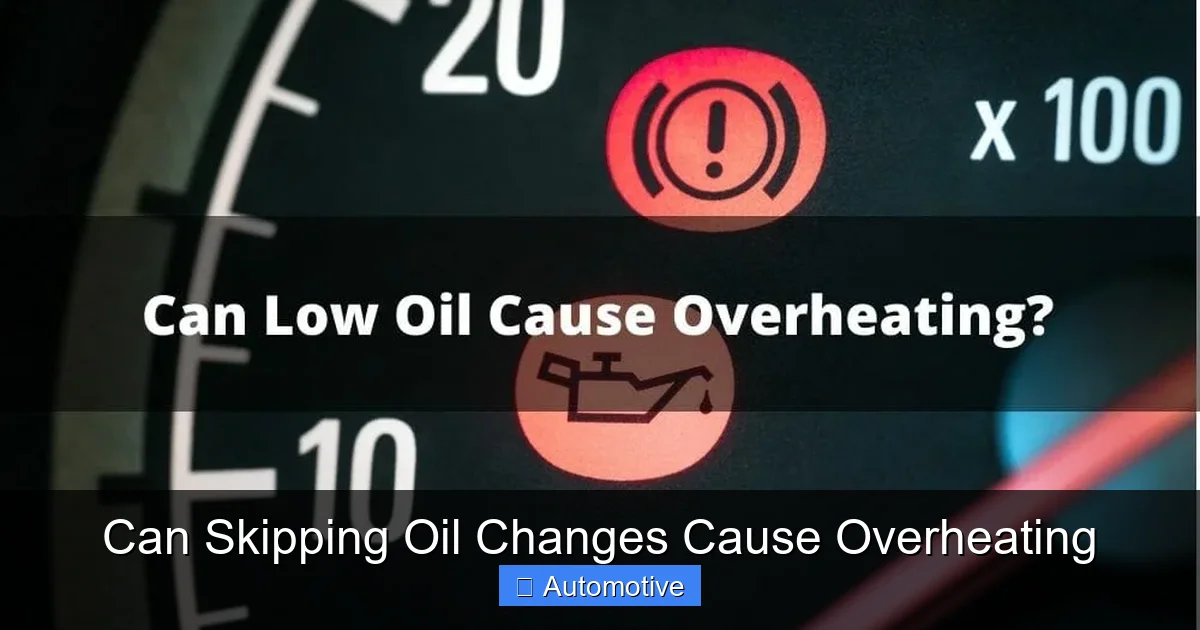
Can Skipping Oil Changes Cause Overheating

Contents


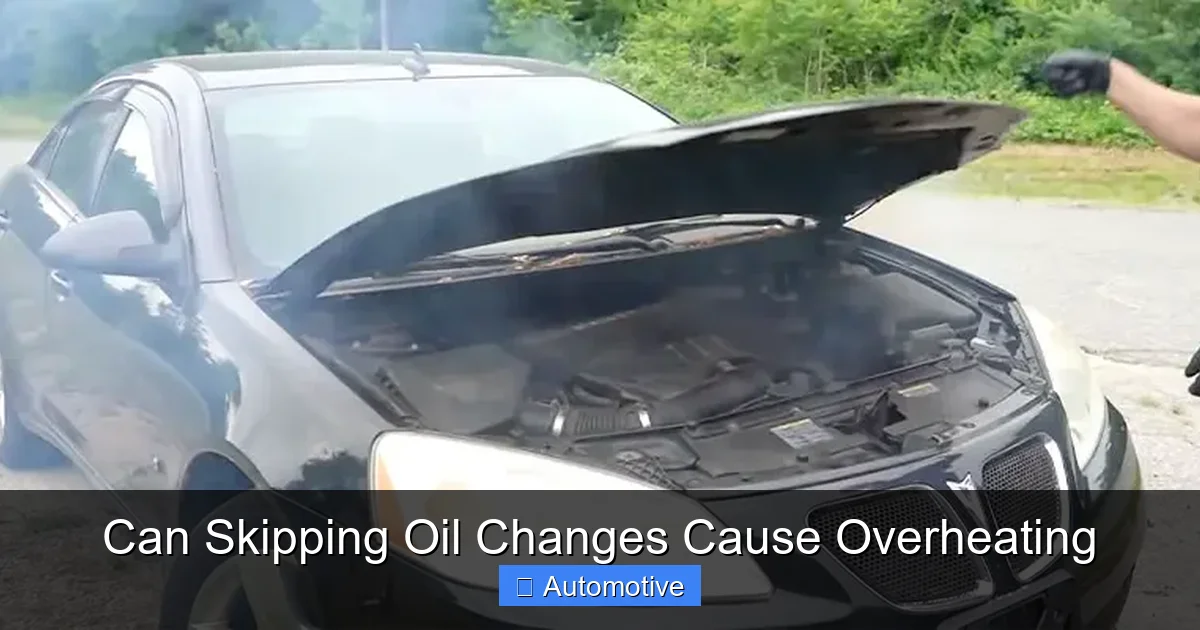
Skipping oil changes absolutely can cause your engine to overheat. As oil breaks down, it loses its ability to lubricate and, crucially, to carry heat away from critical components. This leads to increased friction, sludge buildup that insulates parts, and ultimately, a dangerous rise in engine temperature. Ignoring this simple maintenance task is a fast track to severe and costly engine damage.
Key Takeaways
- Oil is a Primary Coolant: Engine oil removes up to 40% of the heat generated by friction, working alongside the coolant system.
- Degraded Oil Loses Viscosity: Old, broken-down oil thins out and can’t form a proper lubricating film or absorb heat effectively.
- Sludge is an Insulator: Skipping changes causes sludge and deposits that coat engine parts, trapping heat instead of dissipating it.
- Overheating is a Symptom, Not the Cause: An overheating engine from old oil is a sign of systemic failure; damage to pistons, bearings, and seals is likely already occurring.
- Modern Engines are More Sensitive: Tighter tolerances and turbochargers in today’s cars make them more vulnerable to the effects of degraded oil.
- Prevention is Simple: Adhering to manufacturer-recommended oil change intervals is the single most effective way to prevent this type of overheating.
- Check Oil Regularly: Between changes, monitor oil level and condition. Low or dark, gritty oil is a red flag for potential overheating risk.
📑 Table of Contents
Introduction: The Unseen Connection Between Oil and Temperature
When your car’s temperature gauge starts to climb, your mind immediately jumps to the coolant system. Is the radiator leaking? Is the thermostat stuck? Is the water pump failing? These are all valid and common concerns. But there’s a critical, often overlooked component in the engine’s thermal management puzzle: the oil. Skipping oil changes doesn’t just wear out your engine—it can directly cause it to overheat.
Many drivers view oil solely as a lubricant, a slippery substance that keeps metal parts from grinding together. While that’s its primary job, oil is also a vital heat transfer fluid. The extreme environment inside your engine—where pistons slam, valves open and close at thousands of RPMs, and bearings spin at high speeds—generates an immense amount of friction and heat. Oil’s secondary, but equally important, role is to absorb this heat from hot spots and carry it away to the oil pan, where it can dissipate. When you skip oil changes, you sabotage this crucial cooling function.
This article will dive deep into the mechanics of how neglected oil leads to overheating. We’ll move beyond the simple “oil lube, coolant cool” understanding and explore the science of oil degradation, the formation of insulating sludge, and the real-world consequences for your engine’s health. By the end, you’ll understand why that little sticker on your windshield or the reminder in your owner’s manual isn’t a suggestion—it’s a critical line of defense against a catastrophic engine failure.
The Multifaceted Role of Engine Oil: More Than Just a Lubricant
Oil as a Heat Transfer Fluid
To understand how skipping oil changes causes overheating, we first need to appreciate the full job description of modern engine oil. Think of your engine as a tiny, contained factory of controlled explosions and violent mechanical motion. The combustion chamber alone can reach temperatures over 2,500°F (1,370°C). While coolant manages the bulk of the heat from the combustion process itself, oil is tasked with the heat generated by all the moving parts: the crankshaft bearings, camshaft lobes, piston rings, and valve train components.
Visual guide about Can Skipping Oil Changes Cause Overheating
Image source: hondatheotherside.com
Oil absorbs this friction-generated heat and circulates it. The oil pump forces it under pressure through narrow galleries and passages directly to these scorching-hot friction points. After soaking up the heat, the oil flows back to the sump (oil pan) at the bottom of the engine. Here, it’s exposed to airflow and, in many vehicles, is cooled by an oil cooler (a small radiator specifically for oil). This cycle is a fundamental part of your engine’s thermal balance. If the oil can’t do its job, those hot spots get hotter, and the overall operating temperature of the engine climbs. For a deeper look at how oil level specifically impacts this, see our article on can low oil cause car to overheat.
The Cleaning and Protective Functions
Oil also carries a powerful cocktail of additives. Detergents keep internal surfaces clean by suspending soot and combustion byproducts. Dispersants keep these contaminants in tiny particles so they don’t clump together. Antioxidants and anti-wear additives (like zinc and phosphorus) protect metal surfaces from oxidizing and welding themselves together under extreme pressure and heat. These additives are not infinite; they deplete over time and mileage. When you skip an oil change, you’re running on oil that is chemically exhausted, leaving your engine unprotected and dirty.
The Direct Link: How Skipping Oil Changes Leads to Overheating
Viscosity Breakdown and Loss of the Lubricating Film
Oil’s most important physical property is its viscosity—its resistance to flow. It must be thick enough to form a durable, cushioning film between metal parts (like the crankshaft and its bearings) but thin enough to flow quickly when cold and through tiny, precise passages. Modern oils are engineered as “multi-grade” (e.g., 5W-30) to handle a wide temperature range.

Visual guide about Can Skipping Oil Changes Cause Overheating
Image source: militarybrake.com
However, viscosity is not a permanent state. Heat, shear forces (from the oil pump and moving parts), and oxygen cause the long hydrocarbon molecules in oil to break down—a process called thermal and oxidative degradation. This “shearing down” of the oil causes its viscosity to drop. The oil becomes thinner, more like water than syrup. A thinner oil cannot maintain a sufficiently thick lubricating film under high pressure and heat. This leads to metal-to-metal contact, which creates a massive spike in friction and, consequently, heat. This is the first direct path from old oil to overheating: increased friction generates more heat than the cooling system can handle.
The Sludge and Deposit Nightmare
As oil degrades and its additives are depleted, it can no longer keep the engine’s internal surfaces clean. Combustion gases, which are supposed to be vented, can leak past piston rings (a condition called “blow-by”) and contaminate the oil with water vapor, fuel, and acidic byproducts. Fresh oil emulsifies and suspends these contaminants, keeping them in a solution that the oil filter can catch. Degraded oil loses this ability.
The result is the formation of sludge and varnish. Sludge is a thick, tar-like deposit that coats the tops of pistons, valve train components, and oil passages. This sludge is a fantastic insulator. It traps heat against metal parts that are supposed to be cooled by fresh oil flowing over them. Imagine wrapping your engine’s hottest components in a blanket of tar—that’s what sludge does. It prevents heat transfer, creating localized hot spots that can quickly lead to piston scuffing, valve seat recession, and bearing failure. This insulating effect is a major, often underestimated, way that skipping oil changes causes overheating.
Loss of Additive Package and Corrosion
The chemical additives in oil are specifically designed to handle the harsh environment inside an engine. Anti-wear agents form protective layers on metal surfaces. Neutralizers combat acids formed from combustion. Dispersants keep particles separate. When these additives are exhausted, the engine is left vulnerable.
Acidic byproducts, no longer neutralized, can begin to corrode internal metal parts. Corrosion products (tiny metal particles) then act as an abrasive, increasing wear and friction. Furthermore, without effective dispersants, microscopic soot particles can agglomerate into larger, harder particles that score cylinder walls. All of this—increased wear, abrasion, and corrosion—contributes to more friction and more heat, creating a vicious cycle that accelerates the onset of overheating.
Frequently Asked QuestionsWhat is Can Skipping Oil Changes Cause Overheating?
Can Skipping Oil Changes Cause Overheating is an important topic with many practical applications.