Can Low Oil Cause Overheating

Contents
- 1 Key Takeaways
- 2 📑 Table of Contents
- 3 Introduction: The Overheating Mystery
- 4 The Vital Functions of Engine Oil: More Than Just Lubrication
- 5 Coolant vs. Oil: Who’s Responsible for Cooling the Engine?
- 6 The Chain Reaction: How Low Oil Levels Lead to Overheating
- 7 Warning Signs: Is Your Low Oil Causing Heat Issues?
- 8 The Domino Effect: What Happens If You Keep Driving?
- 9 Your Action Plan: Prevention and Immediate Steps
- 10 Conclusion: The Bottom Line on Oil and Temperature
- 11 Frequently Asked Questions
Wiper Blade Refills

Car Windshield Wiper Blades

Car Dent Repair Kit

Car Tool Kit Set
Many drivers wonder if low oil directly causes overheating. While oil isn’t the primary cooling system, critically low oil levels can indeed contribute to engine overheating by increasing friction and reducing heat dissipation. Understanding this link is crucial for preventing severe engine damage.
Key Takeaways
- Engine oil primarily lubricates moving parts, reducing friction and the heat it generates.
- Low oil increases metal-on-metal contact, creating excess friction that the cooling system must handle.
- Overheating linked to low oil often presents as a burning smell, blue smoke, or unusual engine noises.
- Ignoring low oil levels can lead to rapid engine wear, seizure, and catastrophic failure.
- Regular oil checks, timely changes, and fixing leaks are the best defenses against oil-related overheating.
- Oil and coolant work together; problems in either system can cause the engine to overheat.
- Never dismiss oil pressure warnings or a hot engine—shut down immediately to prevent destruction.
📑 Table of Contents
- Introduction: The Overheating Mystery
- The Vital Functions of Engine Oil: More Than Just Lubrication
- Coolant vs. Oil: Who’s Responsible for Cooling the Engine?
- The Chain Reaction: How Low Oil Levels Lead to Overheating
- Warning Signs: Is Your Low Oil Causing Heat Issues?
- The Domino Effect: What Happens If You Keep Driving?
- Your Action Plan: Prevention and Immediate Steps
- Conclusion: The Bottom Line on Oil and Temperature
Introduction: The Overheating Mystery
You’re driving along, and suddenly the temperature gauge creeps into the red. Your first thought is usually the coolant. “Did I run out of antifreeze?” That’s a smart instinct, because low coolant is the number one culprit. But what about the oil? Can low oil cause overheating too? It’s a common question that sparks a lot of confusion.
The short answer is yes, but not in the way you might think. Engine oil isn’t the main player in cooling your engine—that’s the coolant’s job. However, oil plays a vital supporting role. When oil levels drop too low, it sets off a chain reaction that can absolutely lead to your engine running hot. Think of it like a team sport: if one key player is missing, the whole team suffers. In this case, the “team” is your engine’s health, and low oil is the missing player causing everyone else to work harder and generate more heat.
Understanding this connection is essential for every driver. It’s the difference between a minor top-up and a major engine rebuild. Let’s break down exactly how low oil and overheating are linked, what signs to watch for, and what you must do to protect your engine.
The Vital Functions of Engine Oil: More Than Just Lubrication
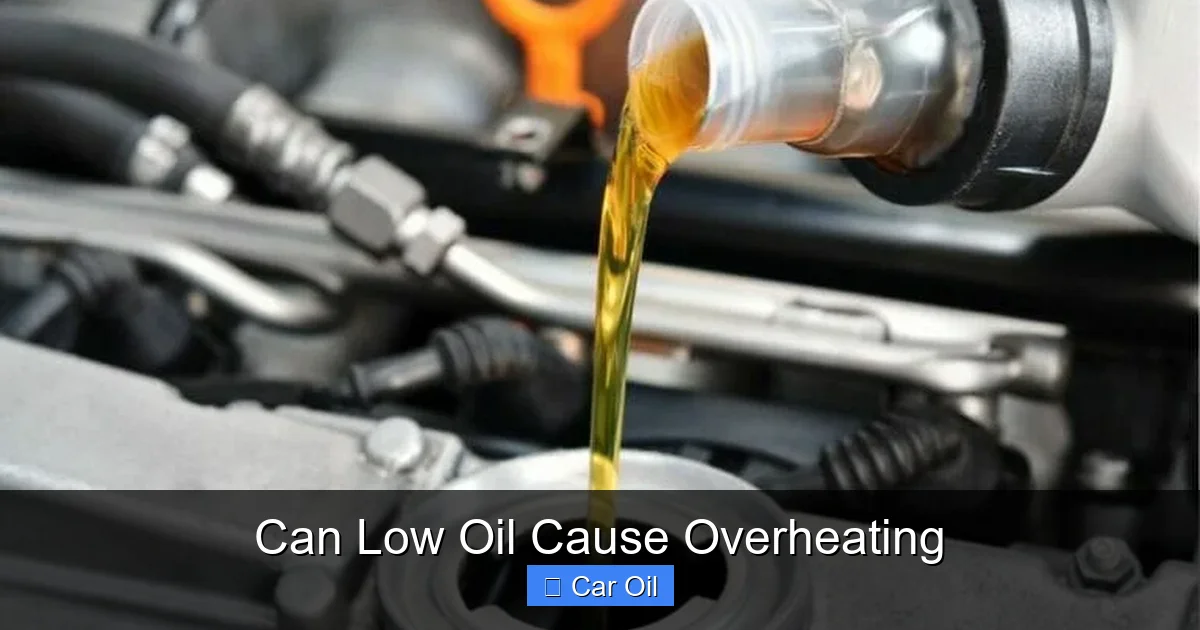
To grasp how low oil causes overheating, we first need to understand what oil actually does. Most people know it lubricates, but its roles are multifaceted. Engine oil is the lifeblood of your engine, performing four critical jobs that keep it cool and running smoothly.
Visual guide about Can Low Oil Cause Overheating
Image source: vehiclefreak.com
1. Lubrication: Reducing Friction and Heat
This is oil’s star performance. It forms a protective film between all the metal parts that move at incredible speeds—pistons, bearings, camshafts, valves. This film prevents direct metal-on-metal contact. Friction is the enemy here; it generates immense heat. By minimizing friction, oil directly reduces the amount of heat produced inside the engine.
2. Heat Absorption and Dissipation
Oil is a heat transfer fluid. It absorbs heat from the hottest, most tightly packed components like the piston crowns and cylinder walls. It then carries that heat away to the oil pan or, in many modern cars, through an oil cooler (a small radiator just for oil). This is a secondary cooling system that works hand-in-hand with the primary coolant system.
3. Cleaning and Protection
Oil suspends tiny particles of wear and combustion byproducts, carrying them to the oil filter where they’re trapped. This prevents sludge and deposits from forming, which can insulate parts and trap heat. Clean oil flows better and cools more effectively.
4. Sealing and Protection
Oil helps seal the microscopic gaps between piston rings and cylinder walls. This maintains compression and prevents hot exhaust gases from blowing past into the crankcase, which would raise internal temperatures.
So, when oil level drops, all these functions are compromised. The engine loses its primary defense against friction and its secondary heat removal system. That’s where overheating begins.
Coolant vs. Oil: Who’s Responsible for Cooling the Engine?
This is a critical distinction. Many people think the cooling system is only about the green or orange fluid in the radiator. That’s the coolant (or antifreeze), and its job is to handle the immense heat from the combustion process. It absorbs heat from the cylinder heads and block, circulates to the radiator, and releases it into the air. If the coolant system fails—due to a leak, broken water pump, or bad thermostat—the engine will overheat very quickly and dramatically.

Visual guide about Can Low Oil Cause Overheating
Image source: vehiclefreak.com
Oil, on the other hand, handles the heat from friction between moving parts. It’s a localized, point-of-contact cooling system. In a healthy engine, these two systems work in parallel. The coolant manages the macro-scale heat of combustion, while oil manages the micro-scale heat of friction.
Here’s the key point: a well-sealed, properly lubricated engine with good oil will actually run cooler than one with low oil, even if the coolant is perfect. Why? Because the oil is doing its job of minimizing friction-generated heat. If the oil is low, that friction heat skyrockets, and the coolant now has to deal with not just combustion heat, but all this extra, unnecessary heat from grinding metal parts. The cooling system gets overloaded. So, while low oil doesn’t replace a failed coolant system, it can absolutely push a borderline cooling system into failure.
For a deeper dive into the coolant system’s role and what happens when it fails, check out our detailed guide on can low antifreeze cause overheating.
The Chain Reaction: How Low Oil Levels Lead to Overheating
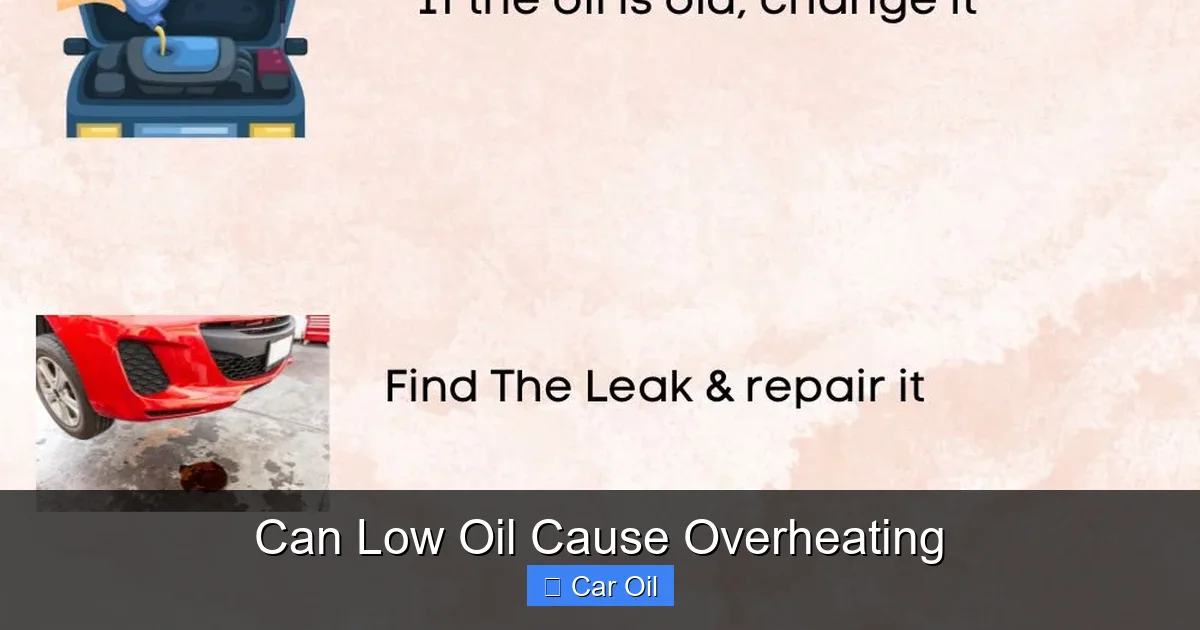
Let’s trace the domino effect step-by-step when your oil dipstick shows dangerously low.
Visual guide about Can Low Oil Cause Overheating
Image source: vehiclechef.com
Step 1: Increased Friction and Metal Contact
With insufficient oil, the protective film between components thins out or disappears entirely. Bearings, piston skirts, and cam lobes start to make direct contact. This is metal grinding on metal at high speeds. Friction coefficients skyrocket, converting kinetic energy into heat energy. This heat is generated right at the source—inside the combustion chamber and crankcase.
Step 2: Localized Hot Spots and Reduced Heat Transfer
Oil isn’t just a lubricant; it’s a heat conductor. Low oil means less fluid to absorb heat from those hot spots. The oil that is present gets hotter, faster, and its ability to carry heat away diminishes. Hot oil also thins out (loses viscosity), making it an even worse lubricant—a vicious cycle. Components like pistons and cylinders, which rely on an oil film for cooling, start to run at much higher temperatures than designed.
Step 3: Oil Degradation and Sludge Formation
Oil that gets too hot breaks down chemically. It oxidizes, loses its lubricating properties, and forms sludge and varnish. This gunk clogs oil passages, preventing what little oil is left from reaching critical areas. It also acts as an insulator, trapping heat inside components. An engine running on degraded, low oil is a recipe for disaster.
Step 4: Added Strain on the Entire Cooling System
The heat generated by friction isn’t confined to the oil system. It radiates throughout the engine block and heads. The coolant now has to absorb this extra heat load on top of the normal combustion heat. The radiator and cooling fans work harder, but if they’re already marginally effective (e.g., in traffic on a hot day), they can be overwhelmed. The temperature gauge climbs.
Real-World Example: The Towing Scenario
Imagine you’re towing a heavy trailer up a long hill. Your engine is under immense load, producing maximum combustion heat. The coolant system is working at 90% capacity. Now, add low oil. The extra friction from the heavily loaded bearings and pistons pushes the internal temperature over the edge. The coolant, already maxed out, can’t cope. The engine overheats, and you might be left stranded. This is why it’s so important to check both fluids before heavy-duty tasks.
Warning Signs: Is Your Low Oil Causing Heat Issues?
Overheating from low oil doesn’t always look like a classic coolant leak. The symptoms can be subtle at first. Here are the key red flags that your oil level is contributing to a heat problem.
1. The Smell of Burning Oil
A distinct, sharp, acrid odor—like cooking oil or burnt toast—is a major warning. It means oil is dripping onto hot exhaust manifolds or other components and burning off. This happens because low oil can splash onto parts it shouldn’t, or because gaskets and seals stressed by heat start to leak. If you smell this, stop driving immediately.
2. Blueish Exhaust Smoke
Thin, blue-tinged smoke from the tailpipe is a classic sign of oil burning in the combustion chamber. Low oil pressure can allow oil to seep past worn piston rings or valve seals. This burning oil adds to combustion heat and is a sure sign of serious internal issues. For more on this and other strange symptoms, see our article on can low oil cause a car to make noise, which also covers smoke signals.
3. Oil Pressure Warning Light
This is your most direct alert. The oil pressure light means pressure has dropped below a safe level, usually due to low oil or a failing pump. Do not ignore it. Shut the engine off within a minute or two. Driving with no oil pressure will destroy an engine in minutes.
4. Ticking or Tapping Noises
Lifters, rockers, and other valve train components rely on a steady supply of oil under pressure. Low oil leads to noisy ticking, especially on startup. This is “hydraulic lifter tick” and it’s a cry for help. The noise is the sound of metal components lacking lubrication and hitting each other, creating friction and heat.
5. Engine Feels Hot to the Touch (But Gauge is Normal)
Sometimes the temperature gauge might not show extreme heat, but the engine itself feels abnormally hot when you carefully touch the hood (use caution!). This can indicate localized overheating from friction, not a global coolant failure. It’s a subtle but important sign.
Recognizing these signs early can save you from a catastrophic failure. For a comprehensive list of symptoms and what they mean, our guide on can low oil cause car to overheat explained with key signs and solutions is an excellent resource.
The Domino Effect: What Happens If You Keep Driving?
Let’s be brutally clear: driving with low oil is one of the most destructive things you can do to an engine. The progression from low oil to a ruined engine is frighteningly fast.
Stage 1 (Minutes): Increased wear begins. Bearings and cylinder walls get scored. Oil temperature spikes. You might notice ticking noises or a burning smell.
Stage 2 (10-30 minutes): Friction heat becomes severe. Pistons can expand and seize in their cylinders (called a “heat seizure”). Bearings weld themselves to the crankshaft. Oil degradation accelerates, forming sludge that blocks passages.
Stage 3 (Total Failure): The engine locks up. A connecting rod might snap and punch through the engine block. This is “throwing a rod.” The engine is now a permanent, non-repairable paperweight. The cost of replacement far exceeds the car’s value in most cases.
One of the most insidious aspects is that this can happen without the temperature gauge ever hitting the red zone. The internal damage from friction is happening silently until the moment of catastrophic failure. That’s why the oil pressure light and burning smell are more urgent warnings than a slightly high temperature gauge in this scenario.
Your Action Plan: Prevention and Immediate Steps
Knowledge is power, but action is everything. Here’s your step-by-step plan to prevent oil-related overheating.
1. Check Your Oil Regularly and Correctly
This is non-negotiable. Check your oil at least once a month, and before long trips. Park on level ground, wait for the engine to cool (but not completely cold), pull the dipstick, wipe it, reinsert, and read. The level should be between the MIN and MAX marks. If it’s at or below MIN, add the correct oil type immediately. Don’t just guess—use your owner’s manual to find the right viscosity and specification (e.g., 5W-30, full synthetic).
2. Understand “Normal” Oil Consumption
Some cars burn a little oil between changes (up to a quart per 1,000 miles can be “normal” for high-mileage engines). If you’re adding oil frequently, you have a problem—likely worn seals, piston rings, or a leak. Get it diagnosed. For more on the causes of oil loss, read what can cause a car to leak oil.
3. Never Skip an Oil Change
Fresh oil maintains its cooling and lubricating properties. Old, degraded oil is thin, dirty, and ineffective. Sticking to your manufacturer’s oil change interval is one of the simplest, cheapest ways to prevent overheating and engine wear. Skipping changes is a direct path to low-oil-related problems. Our article on can skipping oil changes cause overheating explains this link in detail.
4. Address Oil Leaks Immediately
A small drip can become a big problem. Inspect your parking spot for oil spots. If you see one, have the leak repaired. Common leak points are the valve cover gasket, oil pan gasket, and front/rear main seals. Don’t just keep adding oil; fix the source.
5. React Instantly to Warnings
If the oil pressure light comes on, or you smell burning oil, shut the engine off within 60 seconds. Pull over safely. Let the engine cool for 15-20 minutes, check the oil level, and add oil if low. If the light returns after adding oil, or if you have no oil on the dipstick, call for a tow. Do not restart the engine.
6. Maintain Your Coolant System Too
Since oil and coolant work together, a failing coolant system will exaggerate any oil-related heat issues. Ensure your coolant is at the proper level and mix, and that your radiator, thermostat, and water pump are in good working order.
By following this plan, you make the chain reaction of low oil causing overheating virtually impossible.
Conclusion: The Bottom Line on Oil and Temperature
So, can low oil cause overheating? Absolutely, but through a indirect and vicious cycle of increased friction, reduced heat transfer, and system overload. It’s a silent partner in many overheating events, often overlooked until it’s too late. Your engine’s temperature is a combined result of combustion heat, friction heat, and the efficiency of both the coolant and oil systems.
The takeaway is simple and powerful: your oil level is as critical to temperature management as your coolant level. Make checking your oil a habit as automatic as checking your fuel gauge. Respect the oil pressure warning light like a siren. Stay on top of oil changes and leak repairs. This isn’t just about preventing a breakdown; it’s about protecting one of the most expensive components of your car from a preventable death. A quart of oil and five minutes of your time is a tiny price to pay compared to the thousands for a new engine. Treat your oil with respect, and it will keep your engine cool, clean, and running for the long haul.
Frequently Asked Questions
Can low oil alone make the temperature gauge rise?
Yes, it can. While low coolant is the most common cause, critically low oil increases internal friction and heat, which can overwhelm the cooling system and cause the temperature gauge to climb, especially under load.
How often should I physically check my engine oil?
You should check your oil at least once a month and before any long road trips. For older or high-mileage vehicles that may consume oil, checking it every two weeks is a wise precaution.
If I add oil, will an overheating engine immediately cool down?
Not necessarily. If the engine has already been severely damaged from running with low oil, adding oil won’t reverse the damage. However, if caught very early—at the first sign of overheating or oil light—topping up the oil can prevent further damage and allow the engine to return to a normal temperature.
Is it safe to drive a short distance if my oil is low but the temperature is normal?
No. Even if the temperature gauge reads normal, low oil is causing immediate internal damage through increased friction. You should add oil immediately or, if the level is extremely low or you see a leak, have the car towed to a mechanic. Driving any distance with low oil risks catastrophic failure.
Why does my engine overheat after an oil change?
This is rare but possible. Using the wrong oil viscosity (too thick or too thin) can affect lubrication and flow. An overfilled crankcase can cause the crankshaft to aerate the oil (create foam), which doesn’t lubricate or cool properly. Always use the oil grade specified in your owner’s manual and don’t overfill.
Can the wrong oil cause overheating?
Yes. Oil that is too thin for your engine (low viscosity) may not maintain a sufficient film under high stress and heat, leading to increased friction. Oil that is too thick may not circulate quickly enough to reach critical parts. Always use the manufacturer-recommended oil specification.